Axios Explains: Campus protests of 2024

Add Axios as your preferred source to
see more of our stories on Google.
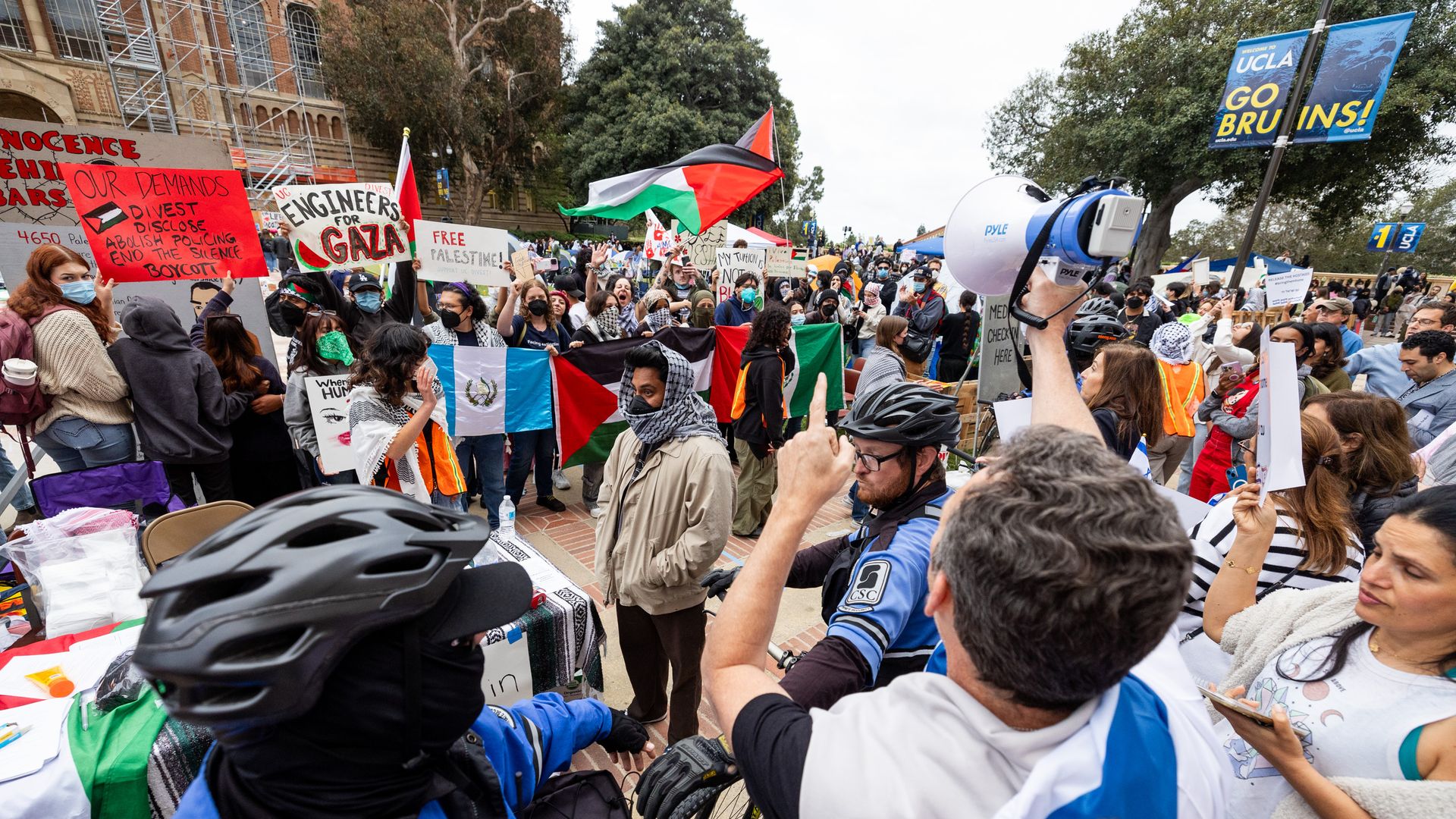
Protesters on opposites sides of the Israeli-Palestinian conflict confront each other on the UCLA campus Thursday in Los Angeles. Photo: Qian Weizhong/VCG via Getty Images
College demonstrations and encampments calling for a ceasefire in Gaza and divestment in Israel erupted this month across the nation, sparking arrests and faculty walkouts in solidarity.
The big picture: The protests over the treatment of Palestinian citizens in the Israel-Hamas war spread after a demonstration at Columbia University drew international attention when the university's president requested that the protesters be removed.
- Critics call the protests antisemitic and bigoted, and that they've led to harassment of some Jewish students. On some campuses, though, Jewish students and other minority groups have been among those organizing the protests.
Zoom in: From Loyola University New Orleans to the University of New Mexico, from UCLA to Northwestern University, encampments have popped up on more than three dozen campuses.
- Many university officials have struggled to balance the protesters' speech rights with preventing disruptions for the vast majority of students and faculty members who aren't protesting.
- On some campuses, the multiethnic demonstrations supported Palestinians as well as other communities that have felt marginalized. Indigenous students in Illinois, Latino students in California and Black students in Maryland in shows of solidarity.
- "We went through a similar story (as Palestinians)... displacing them from their traditional homelands," Koria Manning, a Neshnabé tribal member and a University of New Mexico anthropology student, told Axios as she attended a protest.
State of play: Universities are preparing for spring graduation ceremonies, which allow them to honor graduates, showcase their campuses and seek new donors.
- The encampments, like the one at Columbia, are threatening such ceremonies. The University of Southern California has already canceled its main commencement ceremony.
When the latest protests began
Columbia's protest was launched a day after Columbia president Nemat "Minouche" Shafik and other university leaders testified to Congress over rising tensions on their campuses because of the Israel-Hamas war.
- Some Jewish students have complained that the protests included antisemitic chants that made them feel unsafe.
- Pro-Palestinian demonstrators say Israel should be punished for its actions in Gaza, where 30,000 or so Palestinians have been killed as Israel's military has sought to root out Hamas militants after the terror group's Oct. 7 attack on Israel.
- Shafik said during the congressional hearing that the university would continue to crack down on unauthorized protests. Anyone who attends an unsanctioned event is sent a warning letter, she said, with potential further sanctions.
- More than 100 people occupied the campus' South Lawn when the New York police were involved, Shafik said in her request to Deputy Commissioner Michael Gerber. New York Mayor Eric Adams said the protesters had been there for more than 30 hours.
- After the Columbia mayhem, police and students at USC clashed, resulting in around 100 arrests. More protests popped up in solidarity with Columbia.
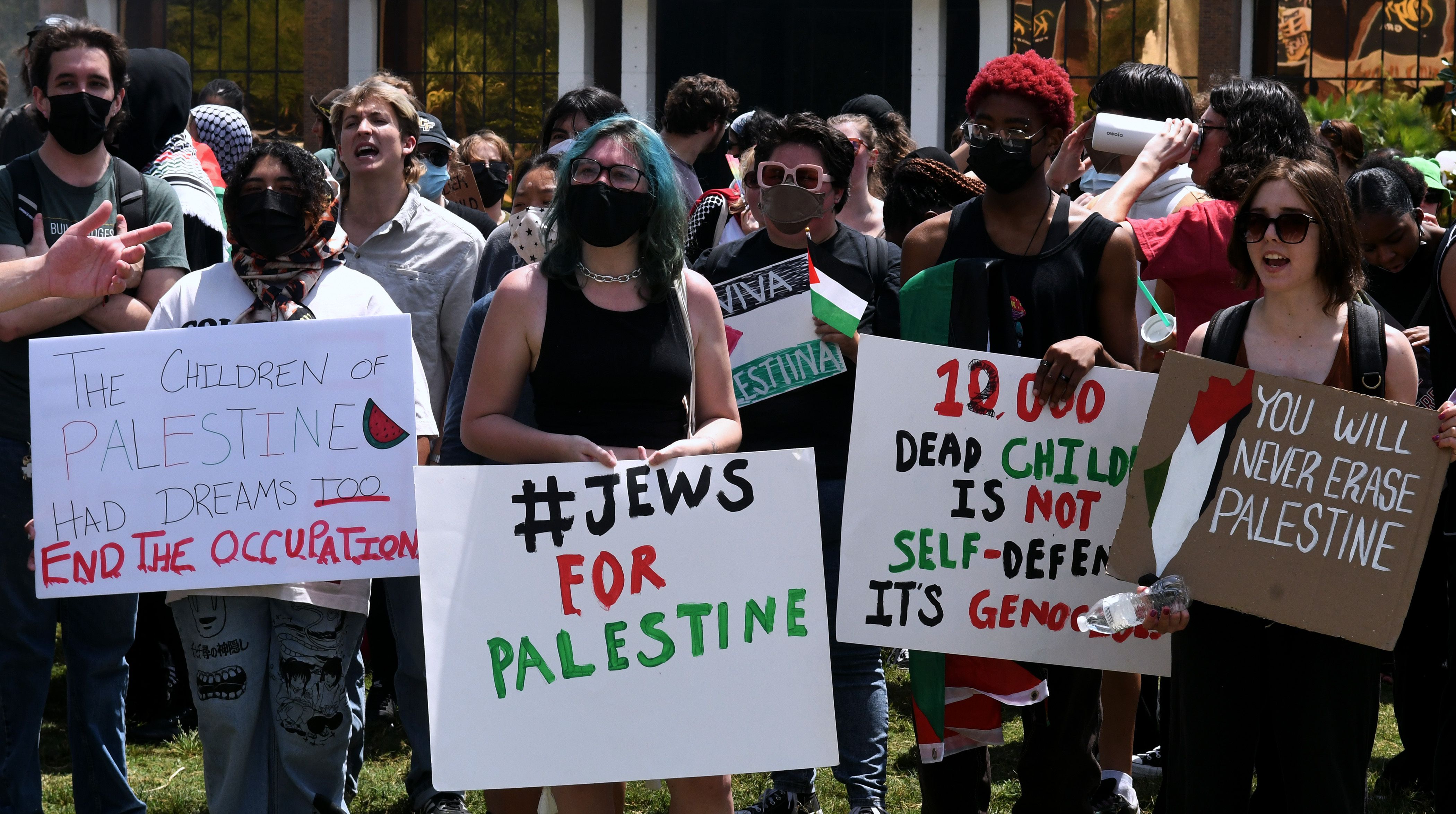
Behind the scenes: Protests expanded thanks to a loose network organized by Jewish Voices for Peace and Students for Justice in Palestine, James Zogby, founder and president of the Arab American Institute, tells Axios.
The protesters' demands
Zoom out: The demands of those in the encampments are similar.
- They want their universities to divest from companies with links to Israel.
- They are demanding an immediate ceasefire in Gaza.
- They want no free speech restrictions on protests seeking to bring attention to the tens of thousands of Palestinians killed in Gaza since the conflict began.
- Others want suspended students reinstated, more protections for Black and Latino students, and to end study abroad programs in Israel.
Reality check: Some experts have warned that divestment in Israel would have little impact on the targeted companies, CNN has reported.
- Any change in investment strategy or policy shift involving a specific country likely would require the approval of the schools' governing bodies after many public meetings.
Fears of antisemitism
The other side: Some Jewish students, parents, and donors say the protests are antisemitic, and have pointed to cases in which Jewish students have been targeted for harassment.
- Tova Friedman, a Holocaust survivor who was sent to Auschwitz as a child, told Axios her granddaughter left McGill University in Montreal because she didn't feel safe after protests erupted.
- "This all feels very familiar," Friedman said. "It's triggering. I don't think people understand this, and I'd like to speak to some of these students."
- Some students sympathetic to Israel's war in Gaza have held counter-protests in California and New York.
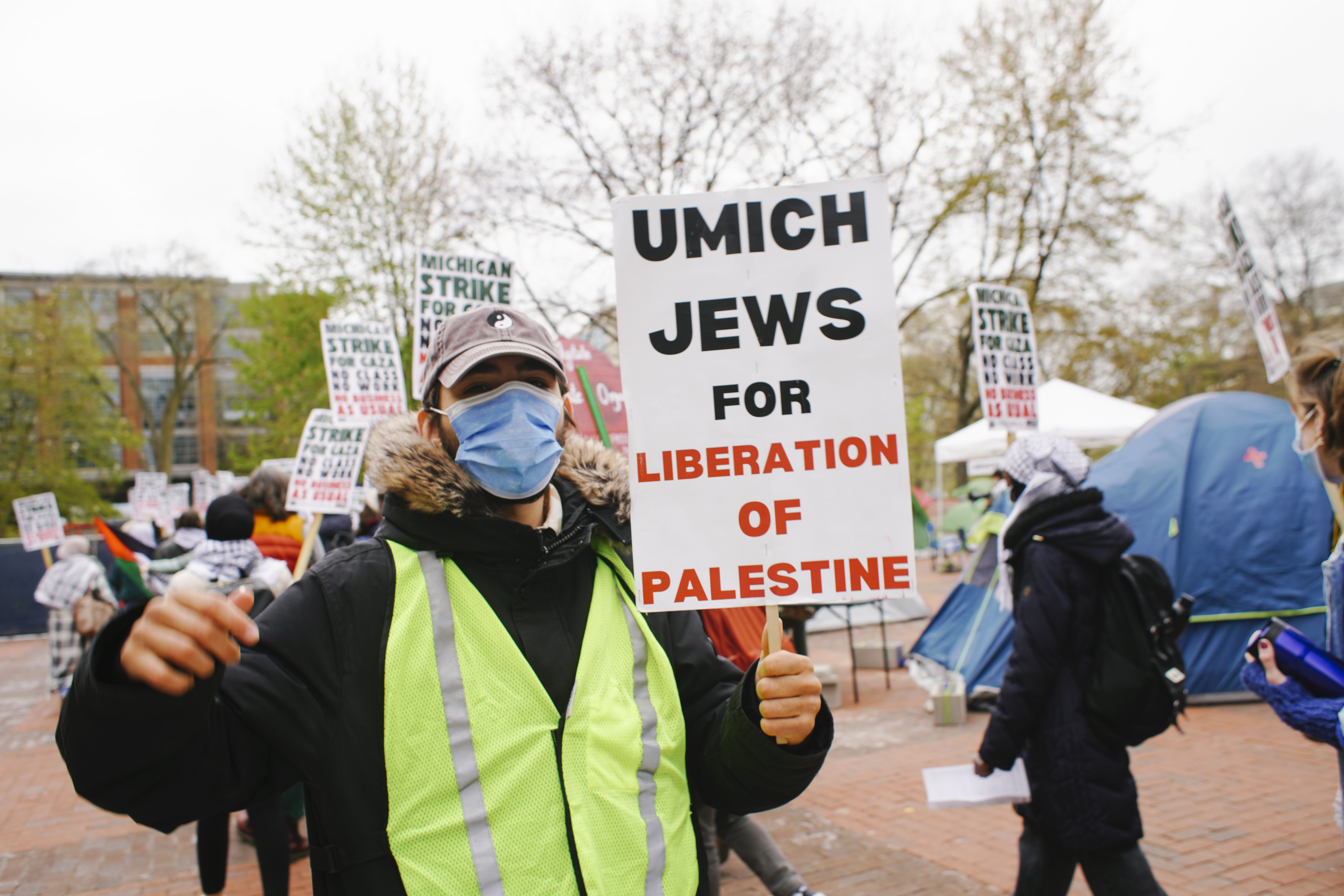
Yes, but: The anti-war demonstrations with criticism of Israel are also led by some Jewish students.
- Jewish students held a Passover Seder at the encampment at Columbia University, for example, calling for a ceasefire.
- Overall, most campus demonstrations have been largely peaceful and participants say most reject antisemitism. A Columbia protester seen in a January video saying, "Zionists don't deserve to live" was banned from campus last week.
- Students also point out that some Trump-supporting congressional Republicans who are linking the protests to antisemitism — such as House GOP conference chair Elise Stefanik (R-N.Y.) — also have referenced white supremacists' "great replacement" theory in campaign material.
The bottom line: The campus demonstrations could signal a new coalition building around policies in the Middle East — but pose challenges at a time of rising antisemitism and anti-Arab American hate crimes.
