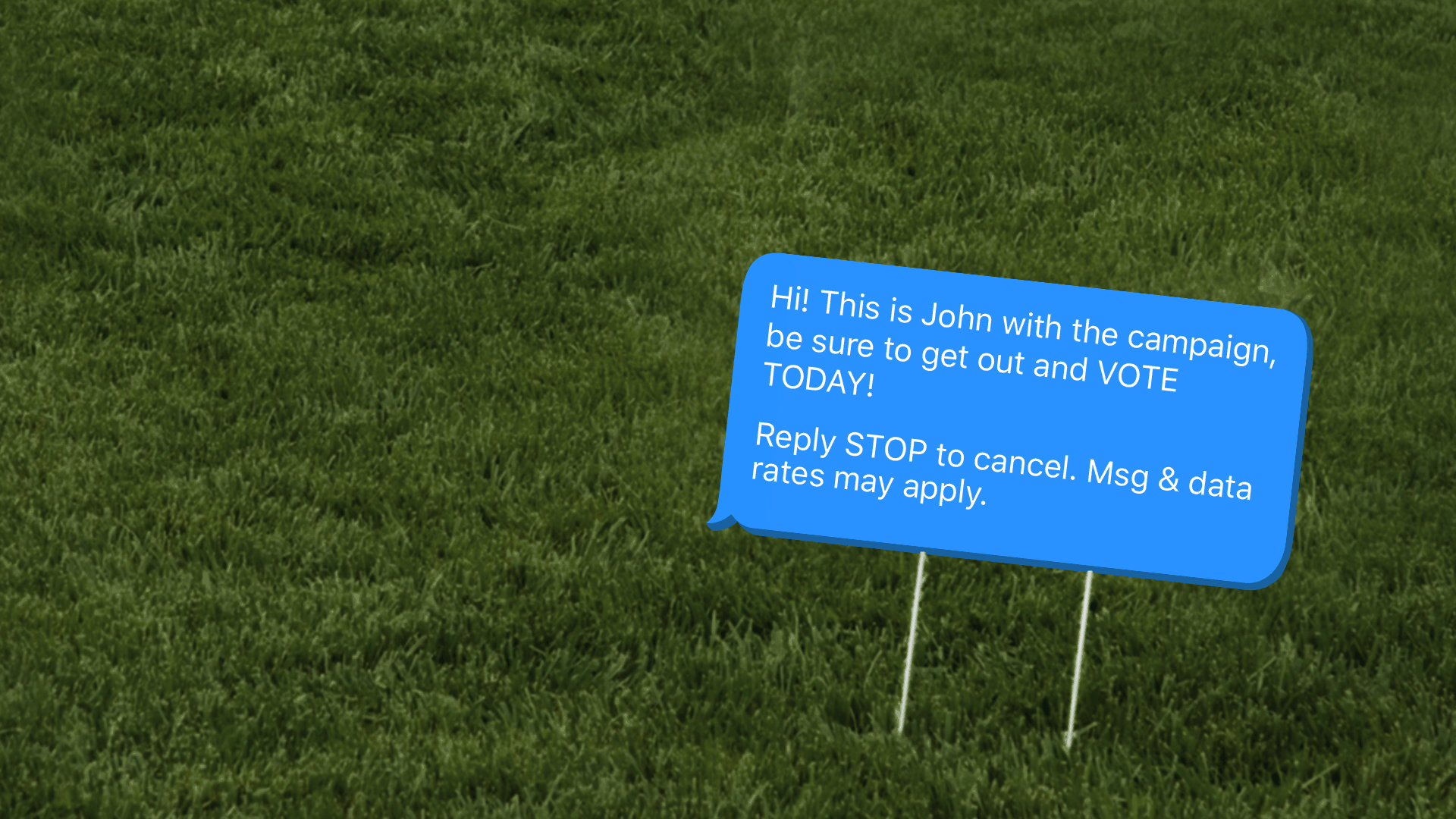
Americans are sick of the constant barrage of robotexts from political campaigns. So they're suing.
Staggering stat: Campaigns have already sent 90.5 million texts this election cycle, including some 68 million from Democrats and around 23 million from Republicans, Axios' Lachlan Markay reports from data by RoboKiller, a blocker app.
Arm, the British chipmaker owned by SoftBank, on Wednesday sued Qualcomm for breach of contract and trademark infringement, according to court documents.
Why it matters: This comes just months after reports that Qualcomm would seek to buy an ownership stake in Arm, whose prior agreement to be acquired by Nvidia was scrapped due to regulatory pressures.
Private equity keeps buying up data centers, despite the warnings of a veteran short-seller.
Driving the news: An investor group yesterday agreed to pay $1.5 billion for a 35% stake in Dallas-based DataBank, while Malaysian telco Time Dotcom reportedly short-listed final bidders for a data center unit that could be valued at around $600 million.
There's also the ongoing auction process for London-based data center operator Global Switch, which is expected to fetch more than $10 billion.
By the numbers: 2022 already is a record year for PE investment in data centers, per PitchBook.
The research group reports $41.5 billion of deal value as of Aug. 25, which doesn't include DataBank, topping the $36.8 billion from 2013 and last year's $27.7 billion tally.
The year's largest data center buyout was CyrusOne, which KKR and Global Infrastructure Partners took private for around $15 billion.
The big picture: Private equity's interest in data centers is largely about predictable cash flows. Plus, there's dry powder pressure tied to the infrastructure fundraising boom, and a PE belief that legacy location is a key differentiator.
There's at least one notable naysayer: Jim Chanos, who's raising several hundred million dollars for a fund that will short U.S. data center groups.
Yes, Chanos invests in public equities instead of in private equities. But his thesis would hold for both.
He basically believes that cloud giants like Amazon, Google and Microsoft will come to dominate the data center market. Not just by building massive facilities for their own services, but by cheaply leasing out space in those data centers to others that currently contract with traditional players.
For context, Chanos has made some very good short bets (e.g., Enron) and some very bad ones (e.g., Tesla).
The bottom line: This could become private equity vs. Big Tech. Or maybe the other way around.
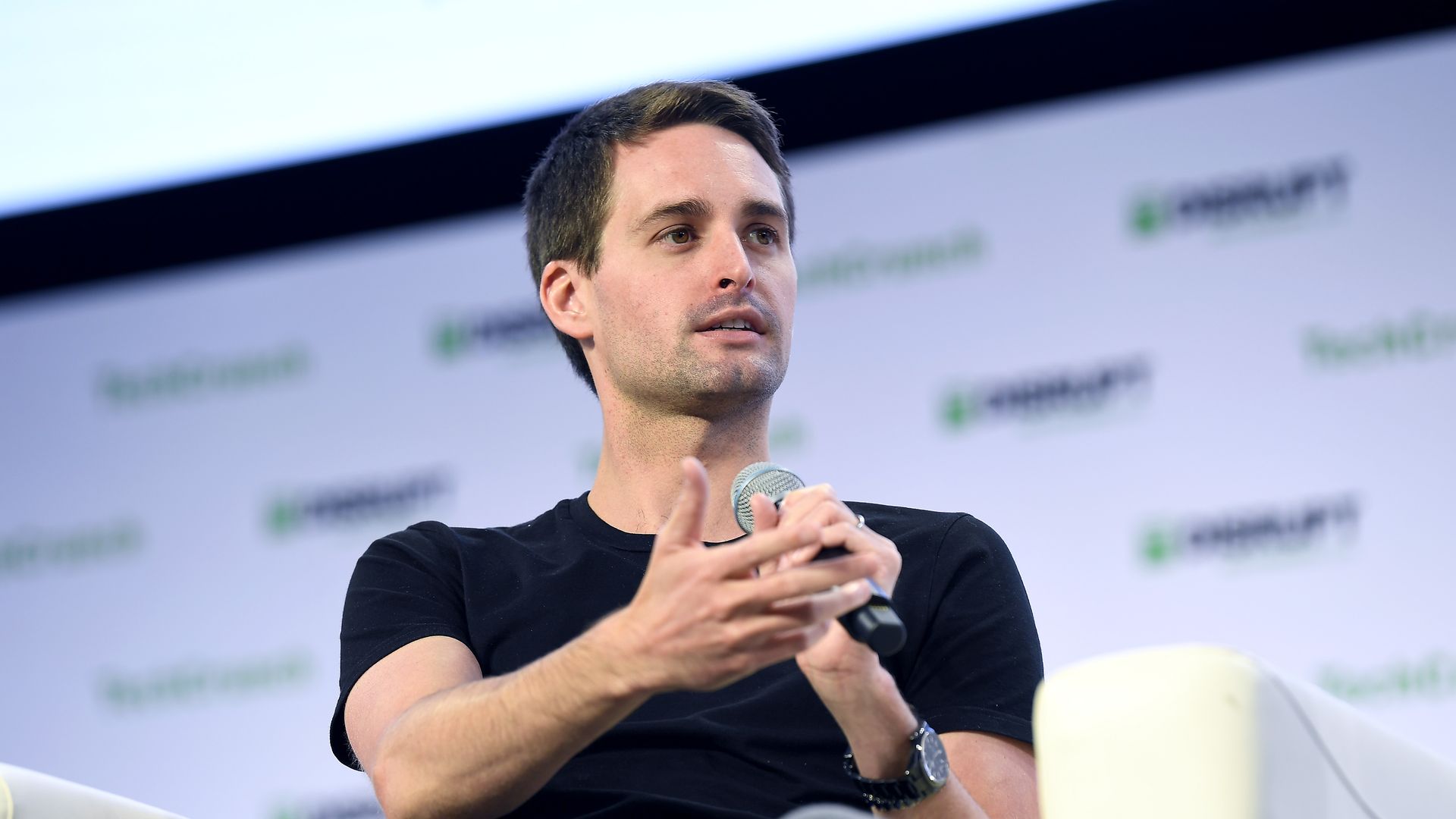
Snap Inc. CEO Evan Spiegel told staff in a memo on Wednesday that the company will undergo a major restructuring that includes a 20% reduction of its workforce and product pullbacks it anticipates will help save $500 million this quarter.
Why it matters: Shares in Snap have taken a plunge following a weak Q2 earnings report that came as a result of advertising headwinds attributed to macroeconomic trends, such as inflation and supply chain issues.
Zendrive, which uses smartphone sensors to measure and improve driver safety, has announced that it's spinning out a new company called Fairmatic, a commercial insurance service that taps such data to determine its pricing.
Why it matters: By relying on actual driving experience rather than more abstract underwriting methods, the company says it can save customers 10% to 20%.
Plug-in hybrid vehicles (PHEVs) are a good bridge car for drivers reluctant to go fully electric — but they also make a lot of sense for the broader industry, given problems like a lack of charging infrastructure and battery scarcity.
Why it matters: Lawmakers' efforts to get Americans to replace their gas-powered cars with EVs are about to run into two stubborn realities: Most consumers aren't ready to go electric, nor is the battery supply chain prepared to meet a surge in demand.
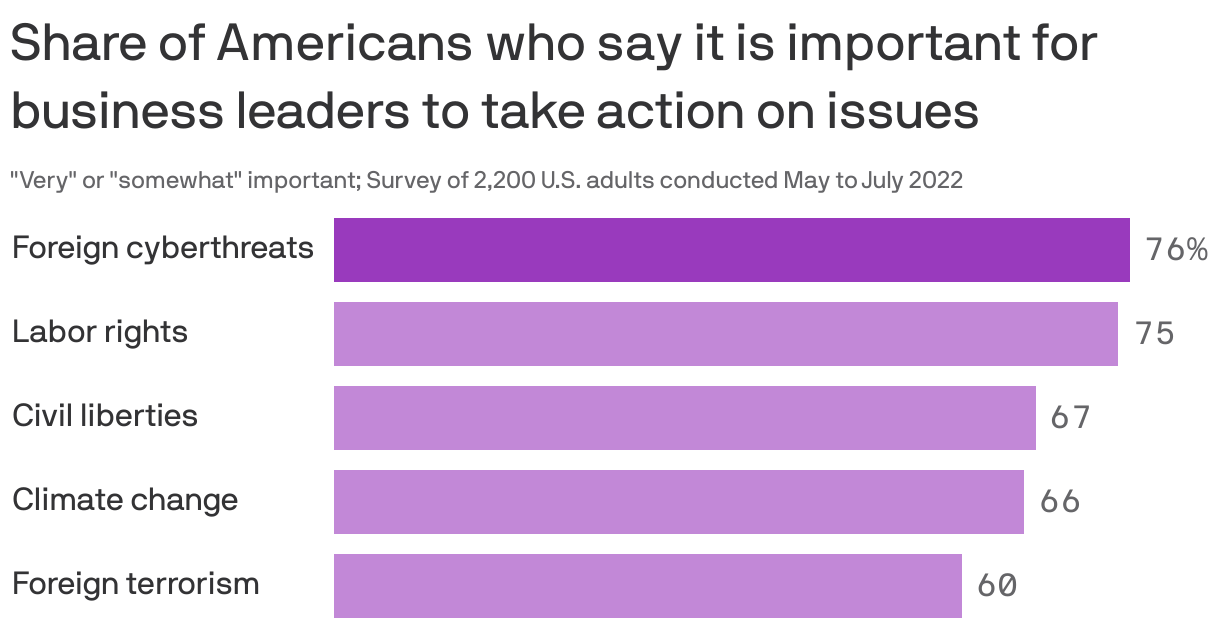
Reproduced from Morning Consult; Chart: Axios Visuals
Roughly 3 in 4 consumers say it's important for a business leader to discuss or take action against foreign cybersecurity threats, according to recent survey data from Morning Consult.
Why it matters: Many businesses have feared that discussing cybersecurity problems with the public would harm their brand's reputation. This new data suggests the tide could be turning.
By the numbers: 76% of survey respondents said in a series of three monthly surveys this year that it’s either “very” or “somewhat” important for business leaders to discuss or take action against foreign cyberthreats.
A similar share (75%) said the same about labor rights, while 67% said it was important for leaders to speak out or take action on civil liberties issues.
The survey was conducted among 2,200 adults in May, June and July, with a margin of error of 2 percentage points.
Between the lines: The results track with the increasing number of executives who have started to publicly discuss cyber incidents affecting their companies.
SolarWinds CEO Sudhakar Ramakrishna has said he is constantly advising leaders on how to speak to the public about their own incidents. Russian hackers infiltrated SolarWinds in 2020 to access the networks of nine federal agencies and about 100 private companies.
Earlier this year, identity management company Okta received scrutiny for not disclosing a security incident after a well-known cybercrime gang revealed details about it in underground hacking forums.
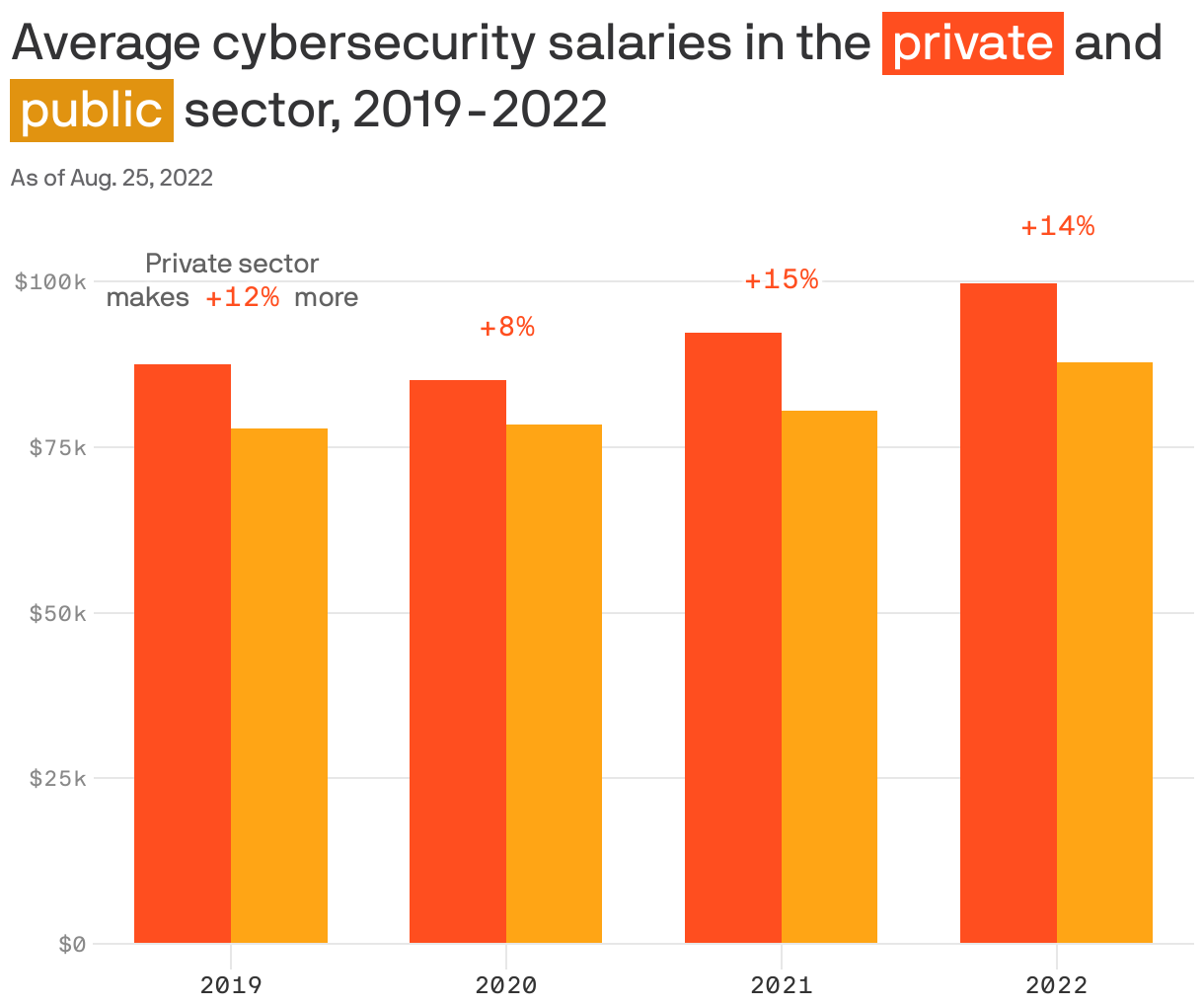
The gap between cybersecurity professionals' salaries in private industry and the public sector shows little sign of closing any time soon, per data from Lightcast.io, a labor market research firm.
Why it matters: The pay disparity makes the Biden administration's giant hiring challenges — filling thousands of security and other tech-related positions in government — that much harder.
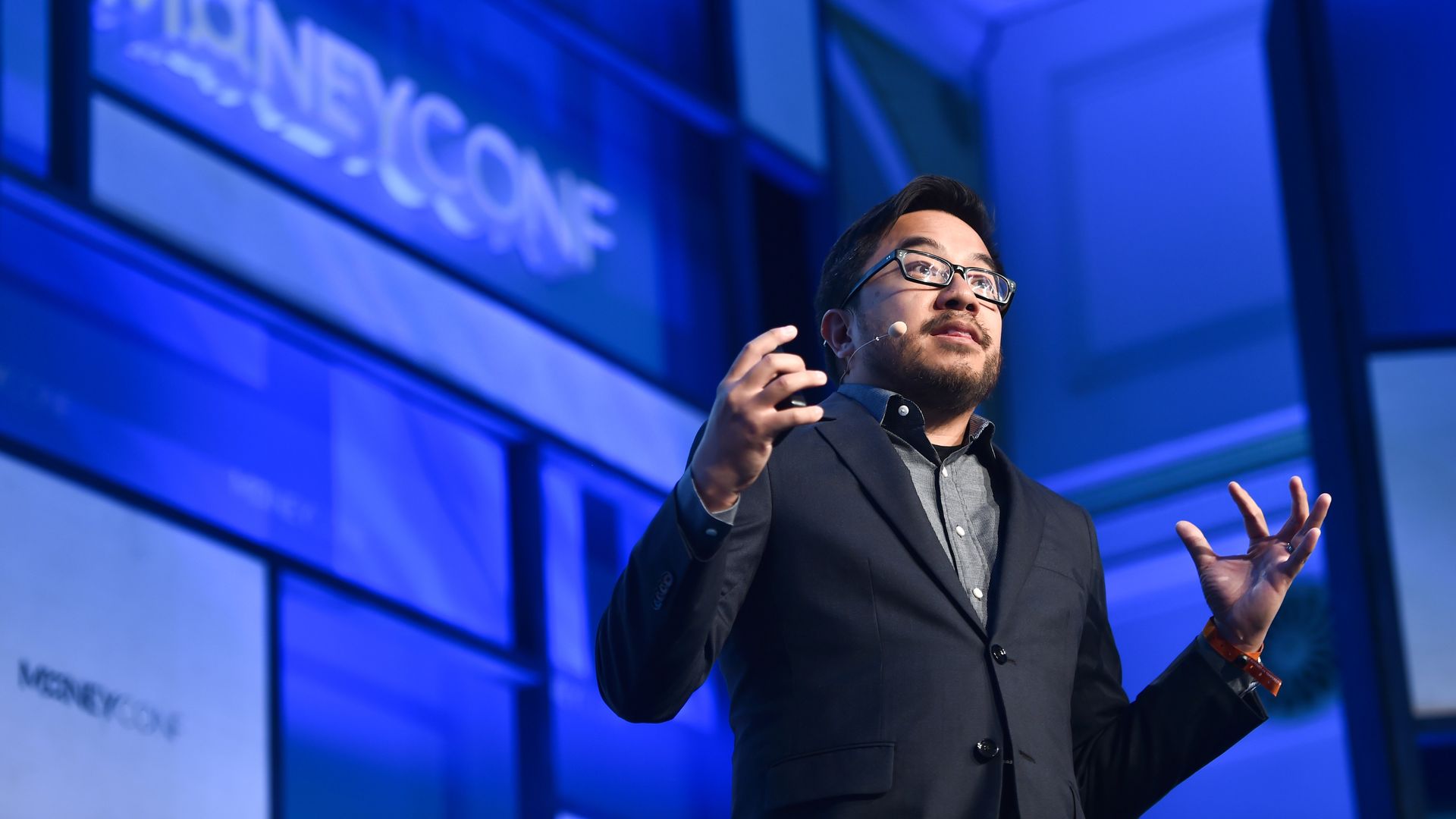
Garry Tan was a Y Combinator founder in the summer of 2008, back when the famed startup incubator was known for its exclusivity. But Tan has no plans to return YC to its limited roots, when he takes over as president and CEO early next year.
What Tan's saying: "There are some people who say only 10 or so companies matter per year and some say it's 100 or hundreds of companies per year that matter. I'm a believer in the hundreds."
Google hasn't yet approved Truth Social's Android app for distribution via its Play Store because of insufficient content moderation, a Google spokesperson tells Axios.
Driving the news: Truth Social CEO Devin Nunes last week claimed the decision about when the app would be available on Android "is up to Google," but Google insists that the ball is in Truth Social's court.
Why it matters: Musk's legal team is trying to leverage the allegations made by former Twitter security chief Peiter Zatko last week to defend Musk's attempt to walk away from his $44 billion takeover bid.
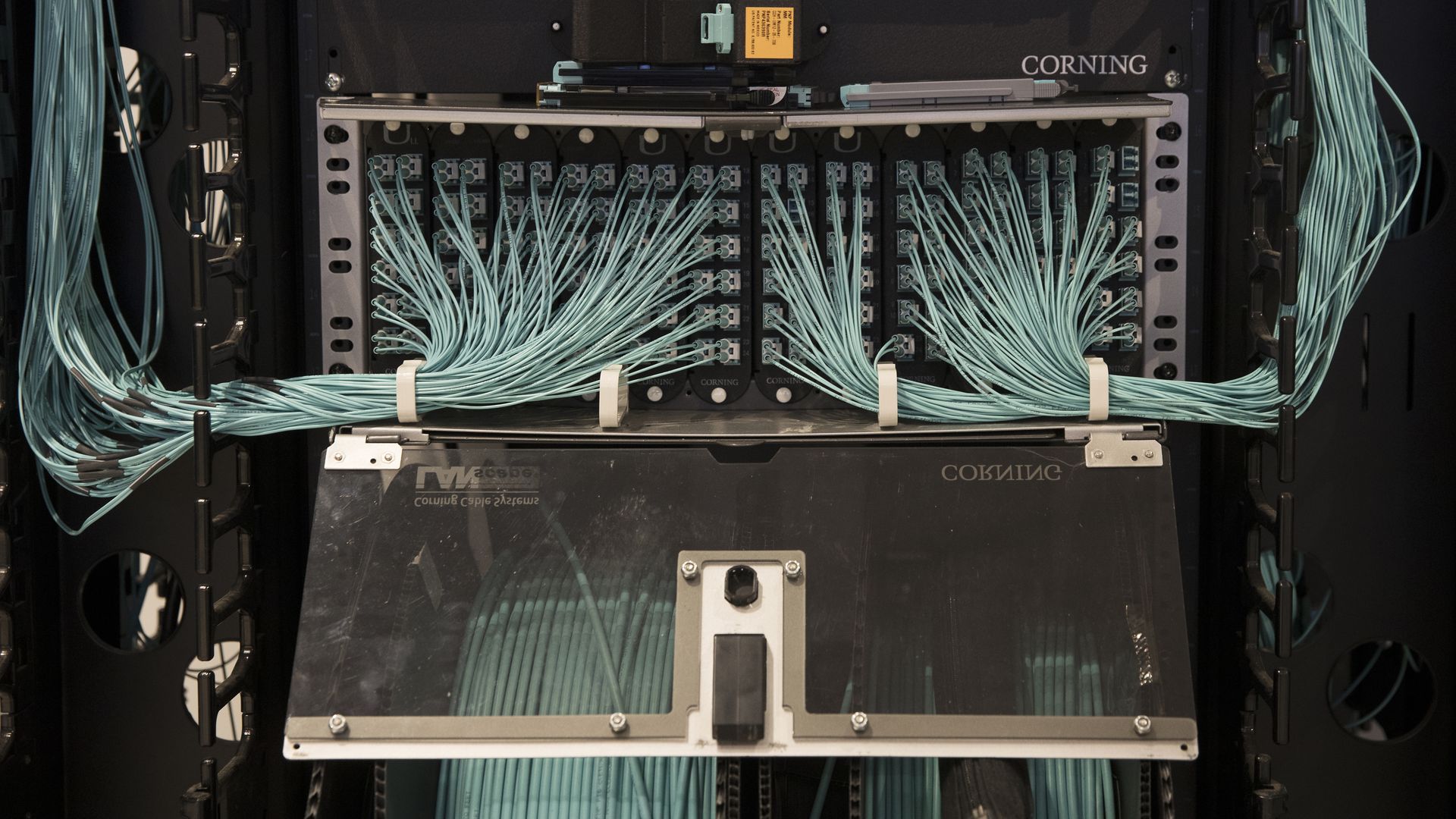
Corning said Tuesday it will build a new manufacturing facility outside Phoenix in response to a spike in demand for fiber-optic cable as the U.S. government ramps up a $42.5 billion internet funding program.
Why it matters: Building high-speed internet service to connect all Americans won't happen without the right equipment — and, thanks to the infrastructure funding law's "Buy America" provisions, it will need to be largely U.S.-made.
Most Americans can choose among several providers of home internet service, but that competition masks their much more limited options for true high-speed connections, advocates say.
The big picture: Home internet connections became even more essential during the pandemic, but there's still wide disagreement among trade groups, consumer advocates and government agencies about the extent of competition in the broadband market.
Among the Inflation Reduction Act's little-noticed yet potentially game-changing provisions: a big incentive for "smart glass," which can make buildings significantly more energy efficient.
Why it matters: Buildings account for 27% of annual global carbon dioxide emissions, by one estimate. While eco-friendly buildings aren't as sexy or exciting as electric cars, anything that makes them greener is a big win for hitting climate goals.



/2022/08/31/1661956369821.gif?w=3840)