Apple said Friday it plans to appeal a portion of the ruling in its legal battle with Fortnite creator Epic Games. It is also asking the judge to put on hold an injunction ordering Apple to make certain changes to its App Store policies.
Why it matters: While the court sided with Apple on many of Epic's claims, it did issue an injunction forcing Apple to let developers include in their apps a mention of payment options beyond Apple's in-app purchase system.
Open-world adventure game "Sable" may have a basic mission for players to follow, but its creators designed its gorgeous, quiet world to still hold unique surprises depending on how you play.
The details: "Sable" is the story of a young woman leaving her small village as part of a rite of passage to find a mask that best suits her.
State of play: Over 130 nations backed a 15% minimum global tax rate after years of negotiations. Smaller countries — such as Ireland, Hungary and Estonia — were against raising corporate tax rates because international businesses were attracted in locations that had lower tax rates, per CNBC.
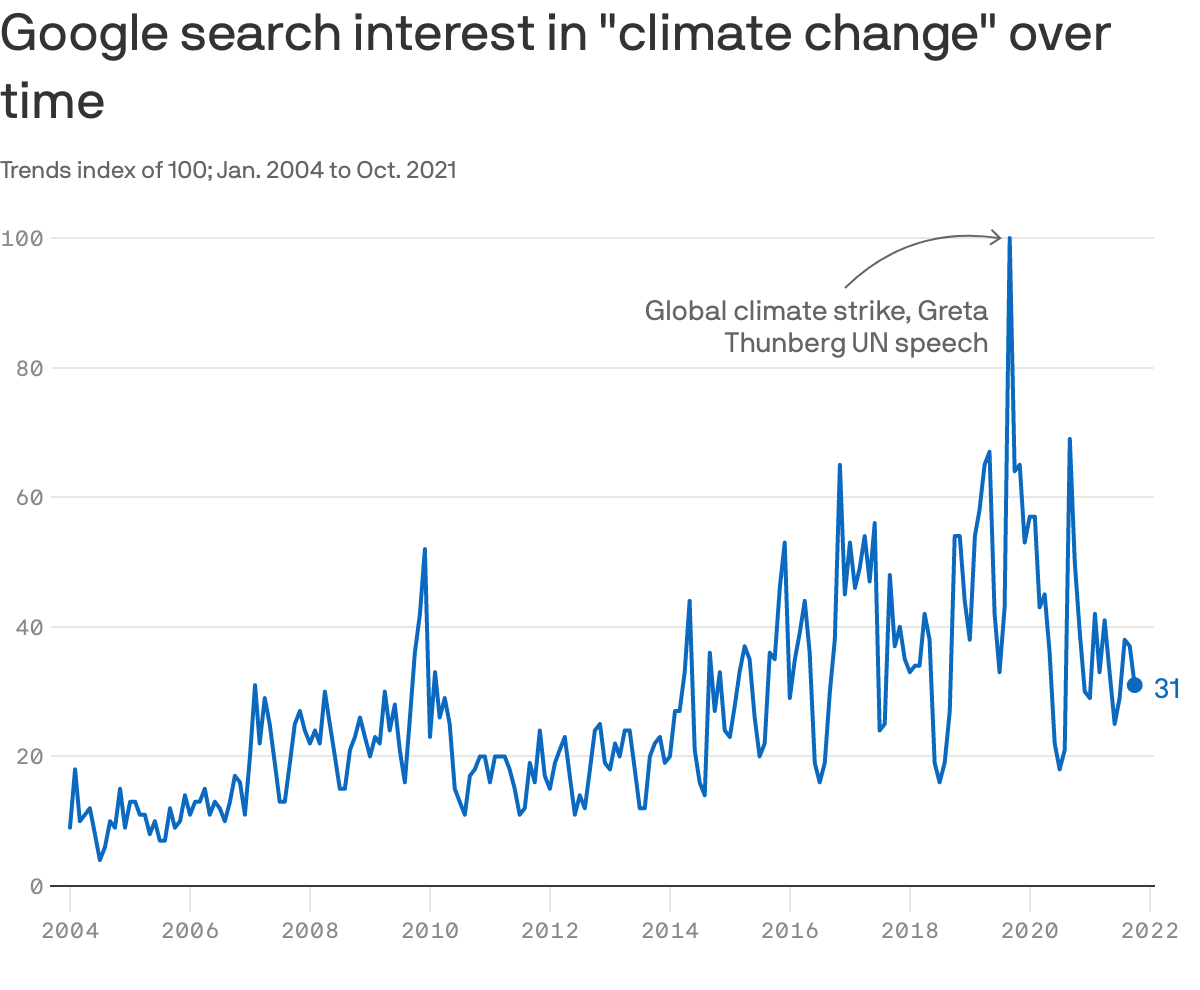
Google's new policy of demonetizing climate denial content marks a significant step in its efforts to rein in climate misinformation.
Why it matters: Videos promoting clear falsehoods about the existence of global warming or its causes have long found a home on YouTube, which Google owns.
While many tech firms have had their critics and whistleblowers, Facebook has a uniquely lengthy roster of ex-employees and former insiders who have sounded alarms over its practices.
Why it matters: These calls keep coming from people who were once inside the building. Such voices can carry more weight than outside agitators, though no one has yet found the key to kickstart large-scale Facebook reform.
One new strategy Democrats are trying ahead of the 2022 midterms: flooding voters' Facebook feeds with factual, positive news articles about President Biden's Build Back Better agenda.
Why it matters: While the 2016 and 2020 elections — and this week's congressional testimony — were all about Facebook and other social media being used for nefarious purposes, this tack tries to harness the Social Network for positive political gain.
In new court filings, California’s Department of Fair Employment and Housing has indicated that it plans to officially object to September’s proposed anti-harassment settlement between Activision Blizzard and the federal Equal Employment Opportunity Commission.
Why it matters: A scrapped settlement could extend the scrutiny Activision faces from myriad investigations and lawsuits while delaying or nixing a planned $18 million victims fund.
Mega-publisher Ubisoft is in need of a hit with the launch of today’s “Far Cry 6,” an already-divisive sequel that has the best shot of giving Ubisoft a 2021 blockbuster.
Why it matters: Ubisoft’s workplace issues — its failures and the internal and external efforts to address them — have rightfully gotten a lot of attention in the past year. They exist alongside deep creative problems that raise questions about Ubisoft’s future as a hitmaker.
Popular gaming platform Roblox has issued revised community standards, which, if enforced, would crack down on a wide range of activities, including depictions of weddings and just about anything tied to modern elections and politicians.
Why it matters: Roblox boasts some 40 million daily users, many of them kids, and has faced increased scrutiny about the content that its users are exposed to.
Google and YouTube on Thursday announced a new policy that prohibits climate deniers from being able to monetize their content on its platforms via ads or creator payments.
Why it matters: It's one of the most aggressive measures any major tech platform has taken to combat climate change misinformation.
YouTube decided last month to ban "harmful vaccine content" from the site, thereby cutting off a major vector of misinformation. Yet one especially high-profile and dangerous vaccine misinformation channel in Germany remains up and running.
Why it matters: When tech giants announce major policy changes, there's always a suspicion they're doing so for their domestic audience, and specifically for U.S. journalists and policymakers. Which makes it easy for them to ignore content made in Berlin.
Why it matters: "Forza Horizon 5", scheduled for release Nov. 9 by UK-based Playground Games, is the latest game to hire consultants and local artists to craft a culturally sensitive experience around Latino themes.
Snapchat on Thursday publicly addressed reports about young users buying fentanyl-laced counterfeit pills from drug dealers via its platform, announcing a new in-app tool called "Heads Up" that provides content to users from substance abuse experts when they search for drug-related keywords.
Why it matters: Snapchat has been able to avoid most of the regulatory and public relations headaches that its competitors have faced in the past few years by focusing on connections between close friends. But because its platform caters to young users, it's also vulnerable to problems related to minors and safety.
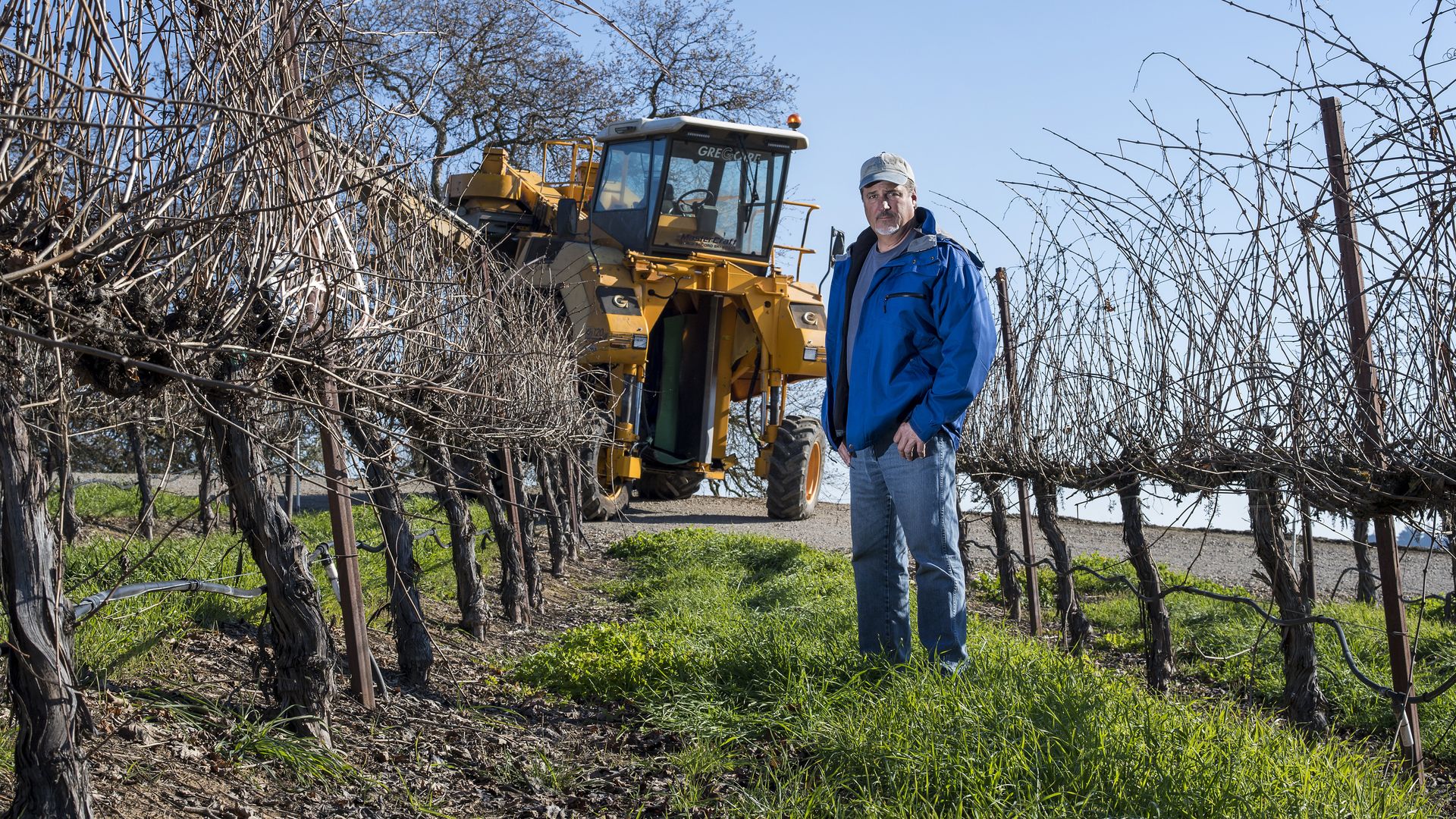
A shortage of agriculture workers is forcing winemakers in the U.S. and Europe to turn to robots for their autumn grape harvest, reports the Wall Street Journal.
Why it matters: Pandemic-related travel restrictions have cut down on the availability of migrant workers, exacerbating an existing labor shortage in viticulture.
While crops like soybeans and corn are routinely harvested by machine, winemakers have been slower to make the switch for fear of damaging the grapes.
In some wine-making regions of France, like Champagne, there are bans on machine harvesting in favor of traditional handpicking.
Yes, but: New research at UC Davis shows that not only can vineyards safely replace manual laborers by switching to machinery, they can also make better-tasting wine.
“The new system entails different trellises so the vine is higher up off the ground, so it has better flavor, it has better color, which winemakers desire,” one researcher told CBS Sacramento.
What's happening: French manufacturer Pellenc told the Journal that demand for automated grape harvesters, which had been going up 5% to 10% a year, shot up about 20% this year.
The machines can be expensive — about $100,000 or more — but growers can recoup the cost over several seasons.
The bottom line: Labor shortages everywhere — including vineyards — are pushing producers toward automation.
Openings for tech jobs like engineer or software developer have spiked as an already tight U.S. job market weathers the economy-wide effects of the pandemic.
The big picture: Tech workers were in high demand pre-pandemic, and the COVID era's rapid moves to digital further intensified that need.
Twitter Wednesday said it was selling its mobile ad network called MoPub to ad tech giant AppLovin for $1 billion in cash.
Why it matters: Twitter says it will use the proceeds from the sale to bolster the development of its owned and operated products and to boost its own internal advertising products.
Starting in 2023, owners of some premium General Motors vehicles will be able to push a button and navigate hands-free in 95% of driving situations — including highways, subdivisions and city streets.
Why it matters: Ultra Cruise —the next-generation assisted-driving technology that GM introduced Wednesday — is a giant step forward in the automaker's goal of "zero crashes, zero emissions and zero congestion."

















/2021/10/07/1633629000864.gif?w=3840)








/2021/10/06/1633549523276.gif?w=3840)