Amazon's first-quarter results blew past analyst expectations for both earnings and revenue on Thursday.
Why it matters: Amazon's business is more successful than ever as people still rely on its services while slowly digging out from the COVID-19 pandemic. Sales surged 44% year-over-year to $108.5 billion and shares jumped 3.5% in extended trading.
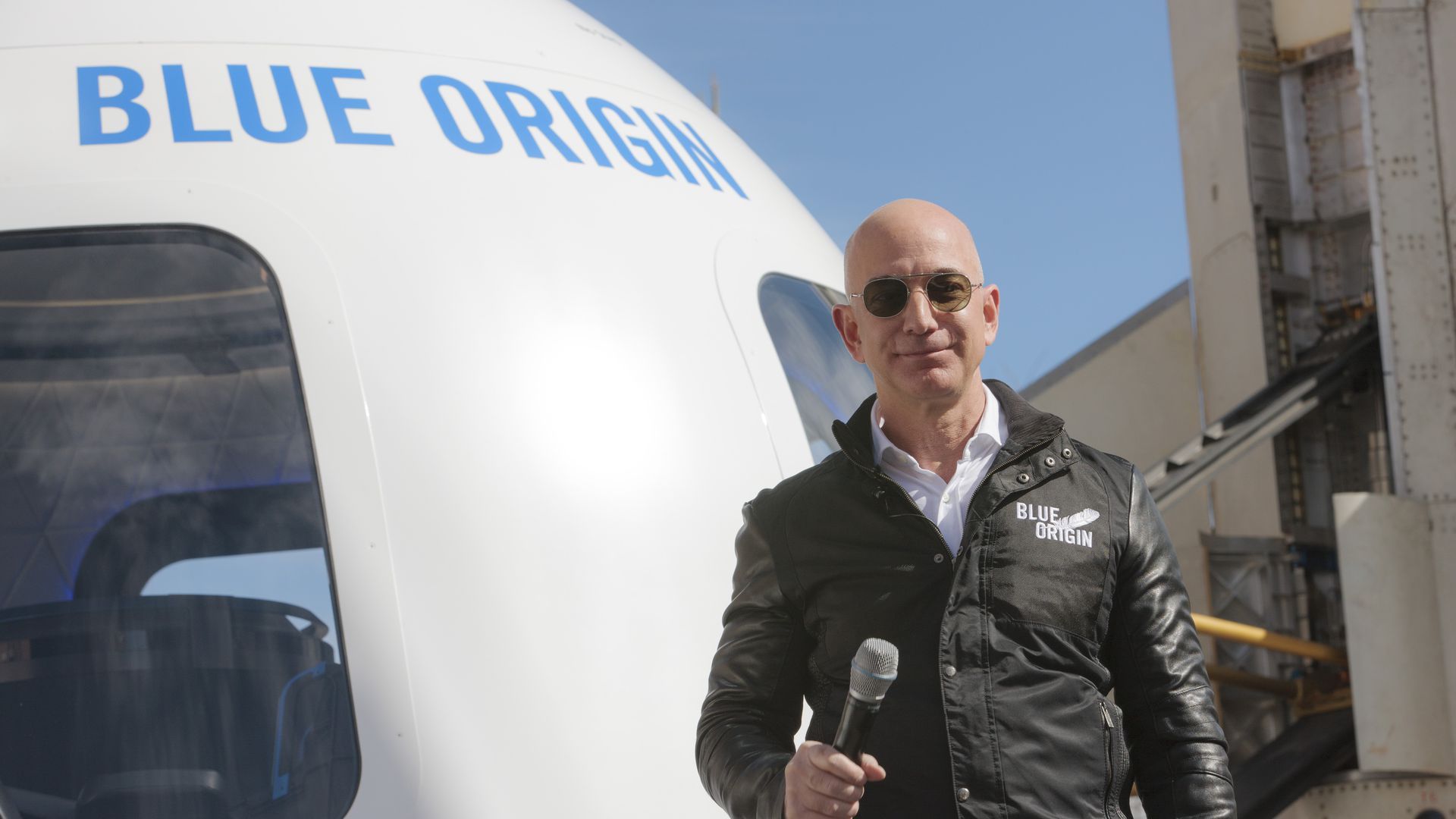
Jeff Bezos' space company Blue Origin teased the start of ticket sales for its New Shepard rocket on Thursday.
Driving the news: In a video, Jeff Bezos wears a cowboy hat (channeling Kimbal Musk) and drives a Rivian, an electric truck contracted by Amazon, to a New Shepard test flight landing site.
Twitter's stock was down nearly 10% in after-hours trading on Thursday, after the company issued weak second quarter guidance on revenue growth. The tech giant also reported user growth just shy of Wall Street expectations.
Yes, but: Twitter still reported strong ad sales growth, a sign of the resiliency of its core business throughout the pandemic.
Zoë Roth, the centerpiece of the "Disaster Girl" meme, has made nearly half a million dollars after selling the original copy as a non-fungible token (NFT), the New York Times reports.
Why it matters: The market for ownership rights to digital art and media as NFTs has recently soared in popularity.
Verizon is seeking a buyer for its digital media unit, including Yahoo and AOL, per WSJ. Among those kicking tires is Apollo Global Management.
Why it matters: It's the highest-profile case of a tech company wanting to become a media content company, and then bolting once it fully grasps the economics of being a media content company.
Snap Inc. has launched an initiative to redesign its core camera technology to make it better able to capture a wide range of skin tones, the company tells Axios.
Why it matters: Around 5 billion pictures are taken using Snapchat's camera each day. Those images form the starting point for how many people see themselves, their friends and their world.
Facebook's earnings call Wednesday was a huge departure from its pitch to investors over the past year. Instead of reiterating its progress in trust and safety, the tech giant touted investments in innovation and new technology.
Why it matters: A slew of public relations crises over the past year had clouded Facebook's ability to position itself to stakeholders as a tech innovator.
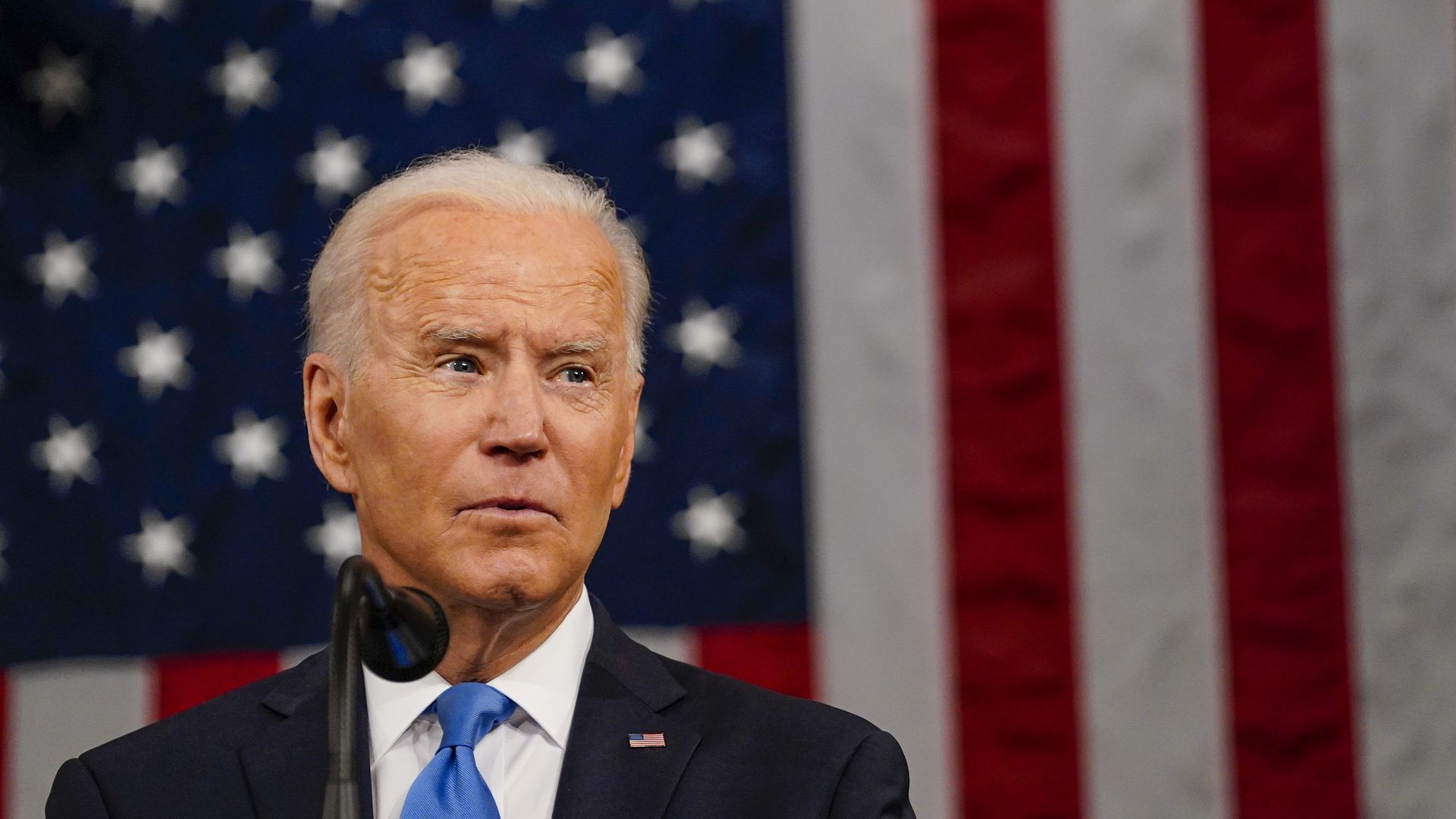
A coalition of groups is calling on President Biden to create a task force that can explore ways to crack down on deliberate disinformation campaigns in ways that don't unduly limit free expression.
Why it matters: The spread of false information around elections, health, climate and other pivotal issues has had a huge impact on American institutions, but civil liberties groups say it is critical to find solutions that maintain free speech protections.
Apple's latest quarterly results greatly exceeded Wall Street expectations, as sales of the iPhone, Mac and iPad all came in far ahead of expectations. The iPhone maker saw total sales outside the U.S. account for more than two-thirds of its nearly $90 billion in quarterly revenue.
Why it matters: Apple is seen as a bellwether for the broader tech industry and is also a huge driver of demand for chips, screens and other components.
Qualcomm executives told Axios on Tuesday that they are seeing demand for semiconductors exceed supply in all of their businesses, from cars to smartphones to networking gear, but they expect the shortage to start easing, at least for them, by the end of the calendar year.
Why it matters: A global chip shortage is hampering supply of all kinds of goods, but most notably the auto industry which is having to cut car production due to a lack of required semiconductors.
More game developers have had projects delayed than in past years due to COVID-19, according to a recent state of the industry survey from Game Developer Conference organizers.
Why it matters: Delays are an inevitable part of development, but there's been a noticeable jump since pandemic's arrival. According to GDC's findings, 44 percent of the over 3,000 respondents polled said their games have been subject to delays. Compare that to last year's responses at 33 percent.
Volt Capital, a venture capital firm focused on the cryptocurrency industry, tells Axios that it raised $10 million for its first fund.
Why it matters: Volt plans to maintain its focus on early-stage startups, which are being increasingly ignored by venture capital firms that are raising ever-larger funds.
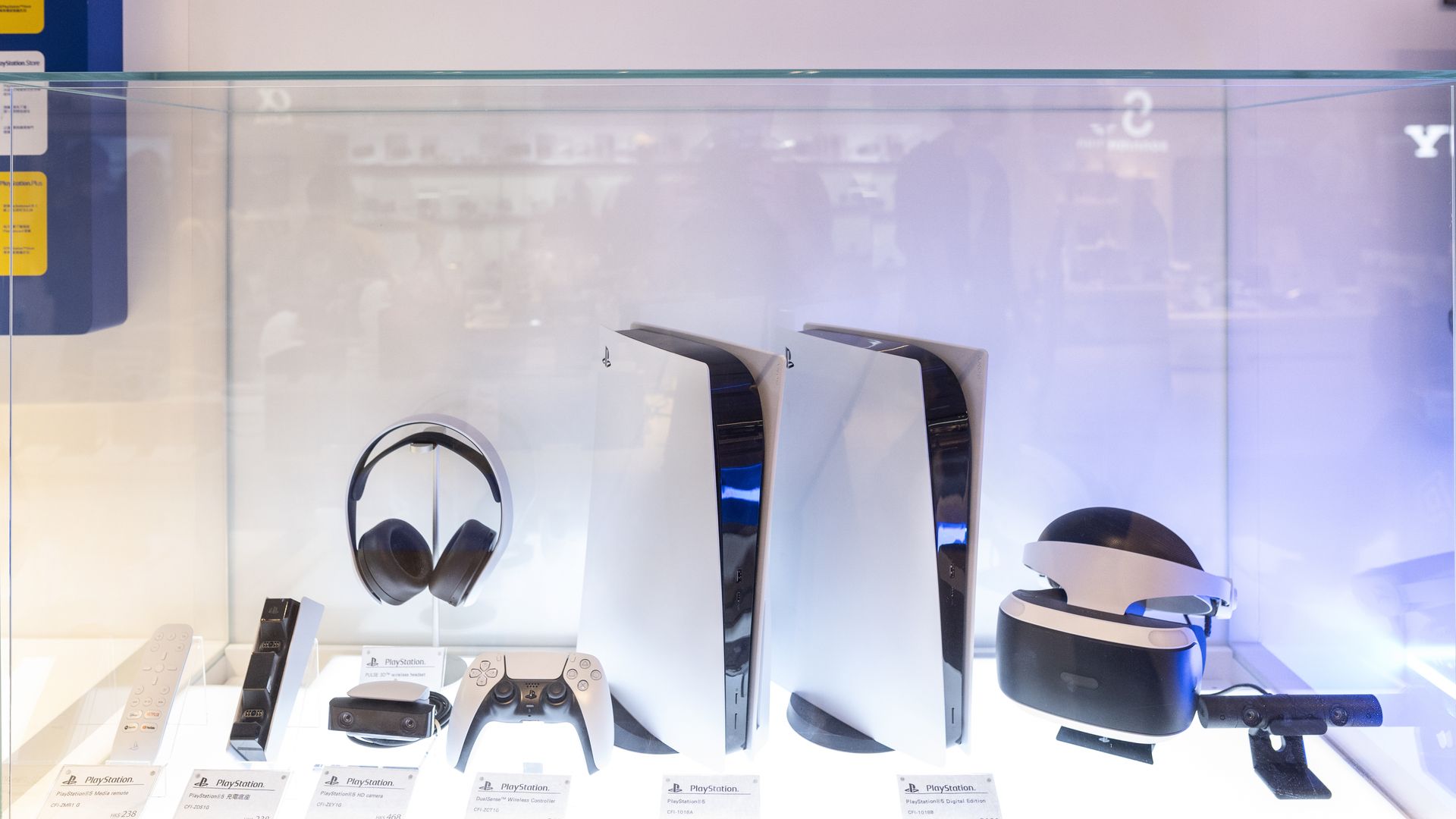
Sony shipped 7.8 million PlayStation 5s between the new console’s November 2020 launch and the end of March, with demand outstripping supply, the company said in its latest financial reports.
Why it matters: The video game business has boomed since the onset of the coronavirus pandemic, but a shortage of semiconductors threatened to slow down the manufacturing of new game consoles, including the PS5.
Wing, the drone unit of Google-parent Alphabet, is teaming up with a Virginia Girl Scout troop to offer airborne delivery of Thin Mints, Samoas and other cookies during the pandemic.
Why it matters: Orders are down 50% this year due to lower foot traffic downtown. Plus, Wing says the arrangement is helping teach the scouts about drone technology.
Spotify on Wednesday reported strong Q1 revenue growth, fueled by positive subscriber additions and strong ad sales, as well as lowered headwinds from foreign exchange rates.
The big picture: The Swedish tech giant noted that increased subscriber growth and user engagement can be attributed in part to the better-than-expected performance of "The Joe Rogan Experience," a podcast it acquired exclusively for over $100 million.
Tech giants are facing increasingly hostile foreign governments that are taxing their profits, attempting to halt their acquisitions, labeling them as monopolies and passing laws to limit their powers.
Why it matters: Big Tech's international policy challenges mean companies are positioning themselves for regulatory fights overseas while the U.S. is still struggling to figure out what it wants to do.