Uber provided a look into its food delivery business — Uber Eats — as part of its IPO filing on Thursday.
By the numbers: $7.9 billion in gross bookings for 2018, up from $3 billion in 2017. This translates to $1.5 billion in revenue, up from $587 million in 2017, and $757 million in adjusted net revenue in 2018, up from $367 million the prior year.
Uber on Thursday filed for its long-awaited IPO, on the heels of a recent listing for smaller ride-hail rival Lyft.
The bottom line: Uber filed to raise $1 billion, but that is said to be a placeholder for actual plans to raise $10 billion. That latter number would be the eighth-largest U.S. IPO of all time.
Facebook spent 3 hours detailing its efforts to fight misinformation on Wednesday, highlighting points of improvement but leaving unanswered the overarching question of whether users are safer than they were 2 years ago.
The good: Facebook is getting better at both detecting and removing some types of content, with a particular focus on efforts to subvert democratic elections.
Dan and Sen. Ted Cruz (R-Texas) discuss allegations of political bias against social media platforms like Facebook and Twitter, which was the subject yesterday of a Capitol Hill hearing that Cruz chaired.
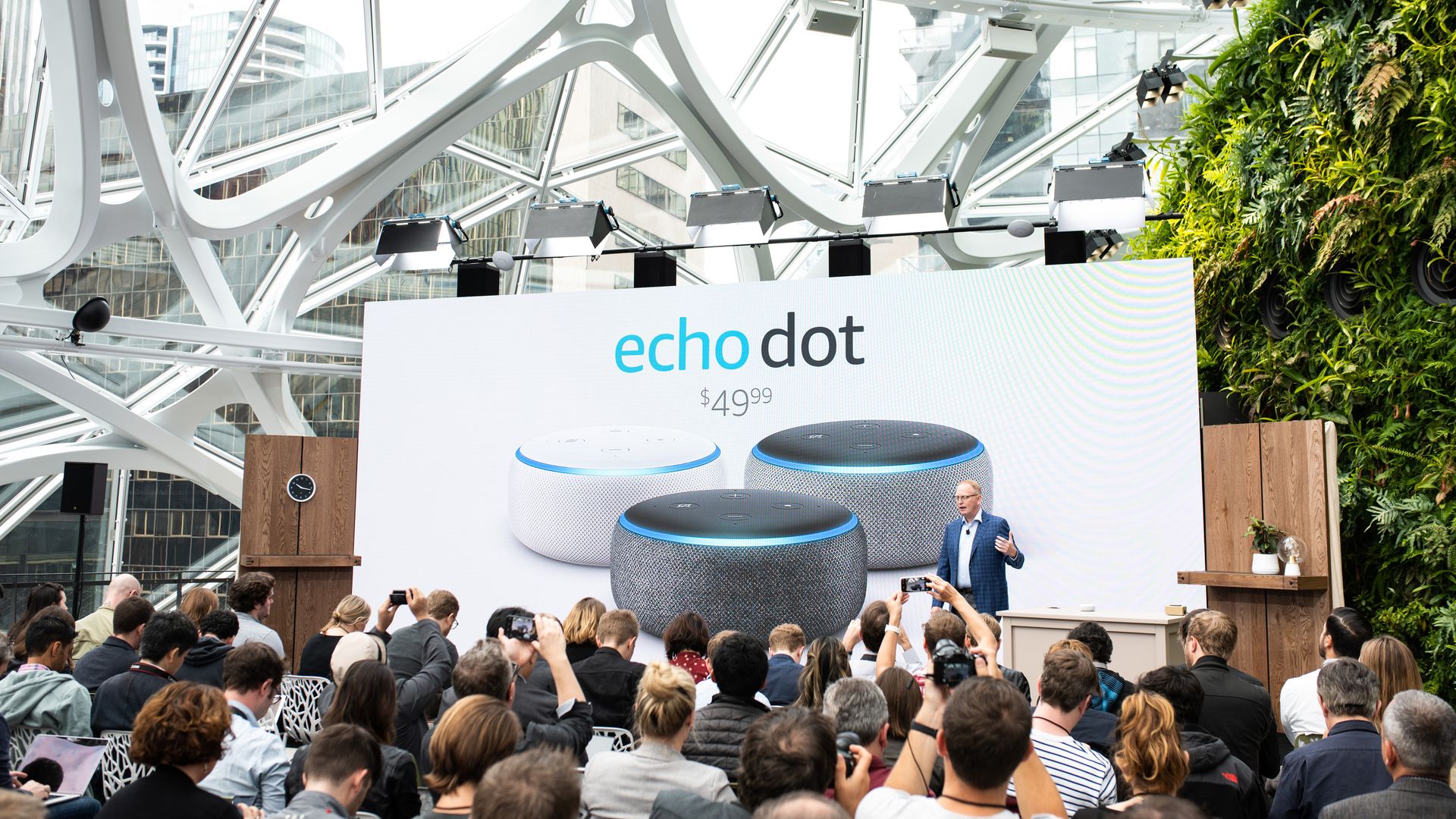
Amazon employees listen to, transcribe and annotate Echo users' interactions with the smart speaker in order to "eliminate gaps in Alexa’s understanding of human speech and help it better respond to commands," Bloomberg reports.
Why it matters: Alexa, Amazon's virtual assistant, may "live in the cloud," according to Amazon's advertisements, but this work highlights the vital role humans still play in training software algorithms for smart devices — and how many users might be unaware of such work.
Amazon CEO Jeff Bezos is slated to meet with federal prosecutors in New York as early as next week to discuss his claim that Saudi Arabia was behind an infamous National Enquirer report that included intimate text messages and exposed his extramarital affair, CNN reports Wednesday.
Details: Citing sources familiar with the matter, CNN reported that prosecutors at the Southern District of New York are looking to obtain access to Bezos's electronic devices to examine the allegations made by Bezos's private investigators. His attorneys and investigators have reportedly provided federal authorities with documents and other material relating to the investigation, but not his devices. A spokesman for American Median Inc., the tabloid's parent company, told CNN: "American Media does not have, nor have we ever had, any editorial or financial ties to Saudi Arabia."
Using local census data and satellite imagery, Facebook says it has developed a high-definition map of every building in most of Africa, a first step in its plan to plot the entire world's population.
Why it matters: Detailed maps of where people live can help aid workers quickly respond to natural disasters or disease. They're also vital to Facebook's plans to distribute the internet around the world — and, by extension, get more people on the platform.
YouTube TV announced Wednesday it is increasing its prices to $50 per month after striking a major multi-year distribution agreement with Discovery Communications to provide channels like HGTV, Food Network, TLC, Animal Planet, Travel Channel, and more.
Why it matters: This is the latest in a series of price hikes for digital TV packages called "skinny bundles." The price hikes, which are occurring as the skinny bundle packages add more channels, show that it's difficult for smaller digital TV packages to compete with the bloated and expensive Pay-TV packages that they sought to displace.
More than 3,500 Amazon employees have signed a demand letter to develop a detailed climate plan based on the e-commerce giant's current and future environmental impacts, outlining6 demands to reduce their collective carbon footprint.
Our thought bubble: The letter, including the criticism of Amazon’s services for oil companies, underscores the complicated relationship between Big Tech and climate change, per Axios' Ben Geman. Tech giants have been some of the biggest players driving the growth in corporate renewable power procurement and making sustainability commitments.
Uber on Thursday will disclose plans to raise $10 billion in its IPO, as first reported by Reuters. This would set up an investor road-show for the week of April 29, and a listing in early May.
Why it matters: The S-1 filing should provide us with a much more complete understanding of Uber's finances, which to date have been selectively self-disclosed.
At a press event at its headquarters in Menlo Park, California, Facebook announced a grab bag of new measures aimed at improving the reliability of the news that circulates on its platforms.
Why it matters: Facebook, along with Google's YouTube, Twitter and other online platforms, is facing a crisis of trust and rising doubts in its ability to control the spread of inaccurate information and hate speech.
Breathless media coverage of when and how AVs will be deployed has largely ignored the reality that AVs can only drive on roads that have been mapped, mostly in cities.
Why it matters: If AVs were deployed today, they would be unable to navigate millions of miles of U.S. roads that are unmarked, unlit or unpaved, and the technology needed to do so is still nascent.
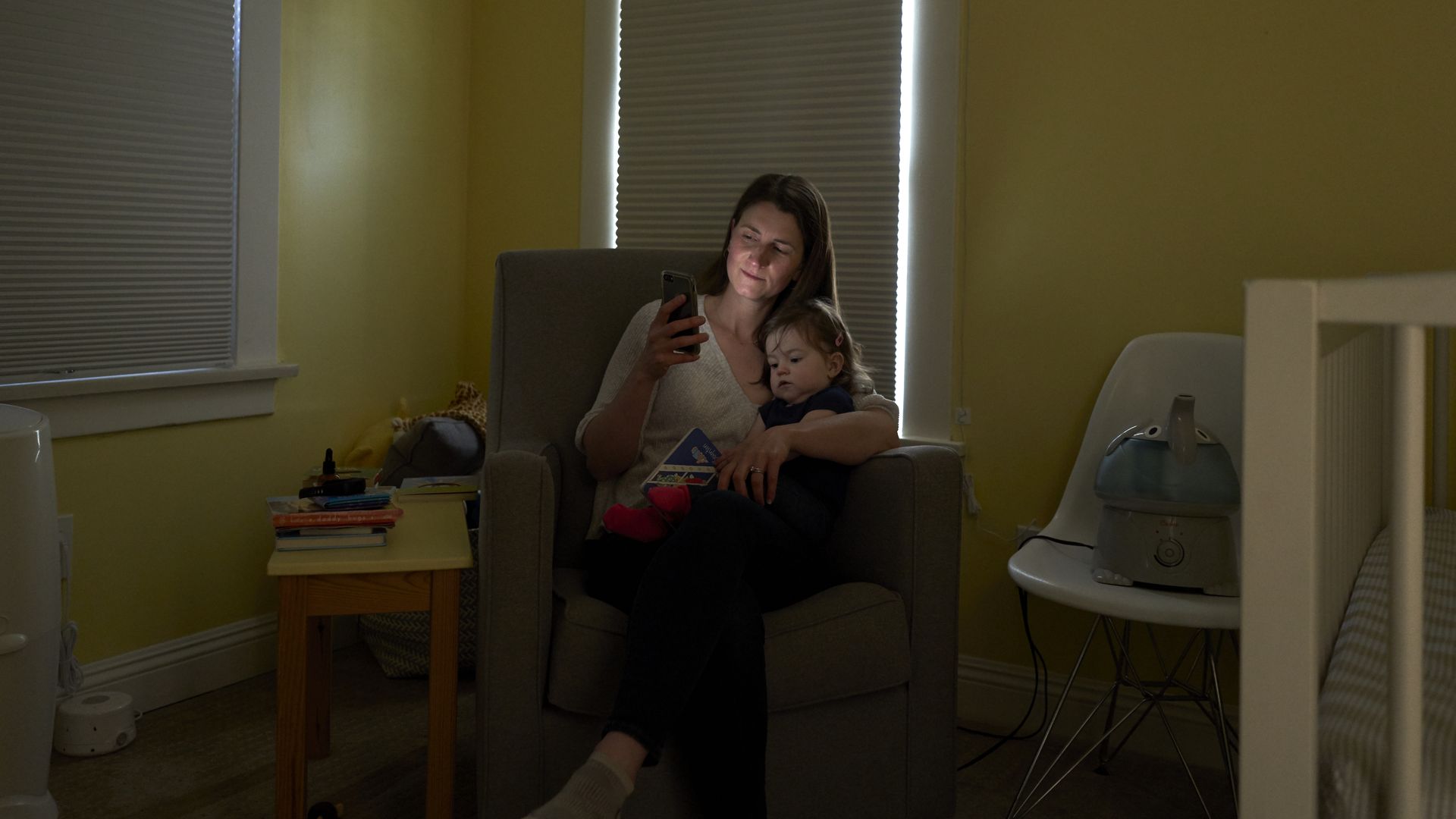
As apps to monitor moms' health proliferate, employers and insurers can pay to keep tabs on the vast data, the Washington Post's Drew Harwell reports.
Why it matters: An employer can pay "to gain access to the intimate details of its workers’ personal lives, from their trying-to-conceive months to early motherhood."
A new global wave of government rule-making for online platforms has some experts and advocates sounding a "be careful what you wish for" alarm before proposals get baked into law.
Why it matters: Once governments take a bigger role in deciding who can say what online, many of the new plans for limiting the distribution of hate speech, violent content and misinformation could also be used to narrow free speech and privacy rights, curtail political dissent and harm the internet in other unintended ways.
A drumbeat of studies has pushed back hard against concern over the accelerated automation of factories and other businesses, predicting that — just as industrial age advances have always done — robots will produce many more jobs than they destroy.
But in three new papers, two leading U.S. labor economists say that is not how automation has played out over the last three decades — nor will it in the future if left to its own devices.








/2019/04/09/1554835966459.gif?w=3840)