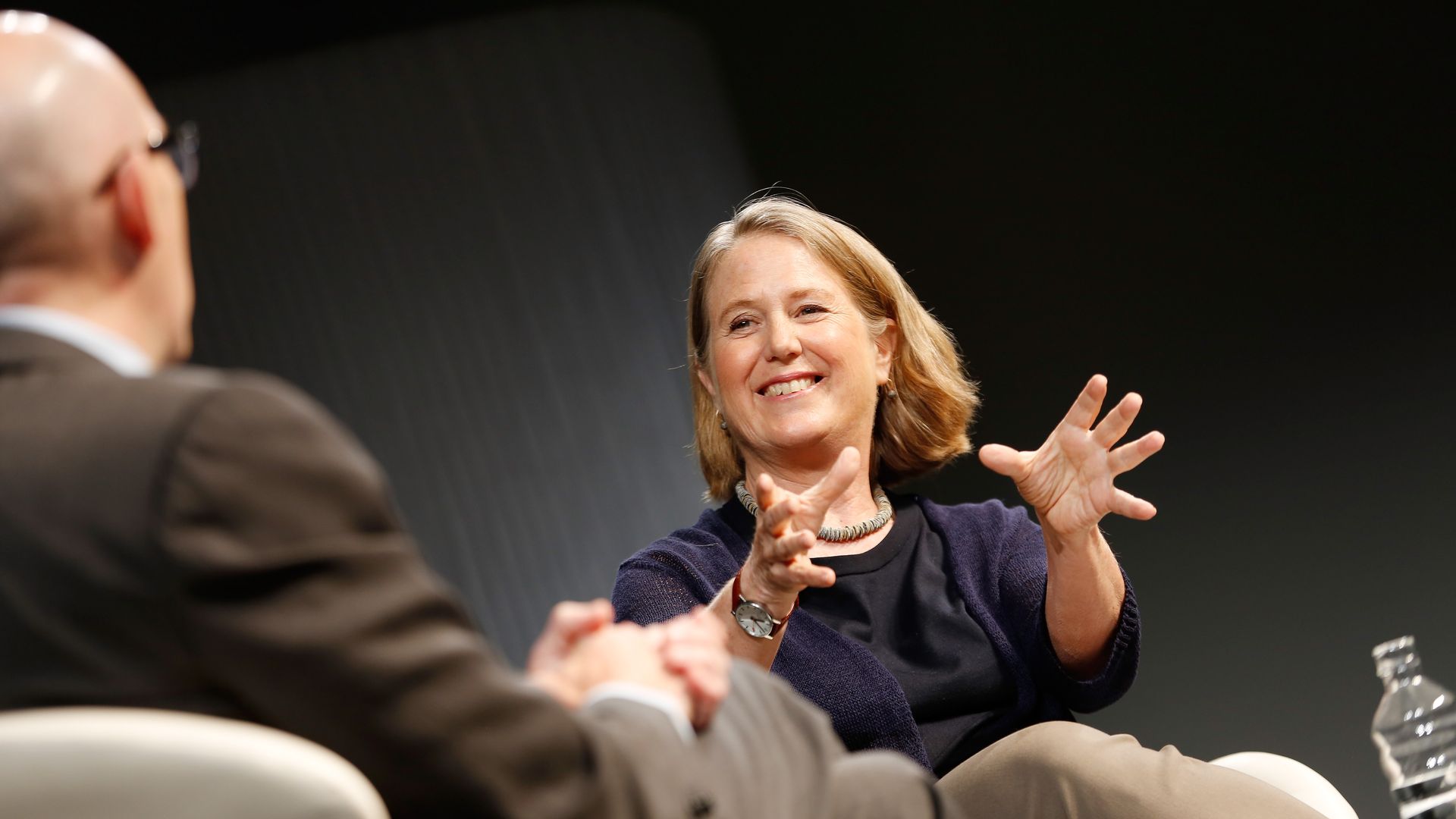
Diane Greene is stepping down as the head of Google's cloud computing business, three years after taking the role. She will be replaced by Thomas Kurian, who has been president of Oracle since late 2014 before exiting in September.
Greene will remain as CEO through January continue to serve as a director on parent company Alphabet's board.
Thought bubble: Greene brought tons of industry credibility at a time when Google needed to establish itself as a cloud player, but much work remains as Google continues to battle Amazon and Microsoft. Her departure also means the exit of one of the company's top female leaders at a time where it is under the microscope with regards to gender issues
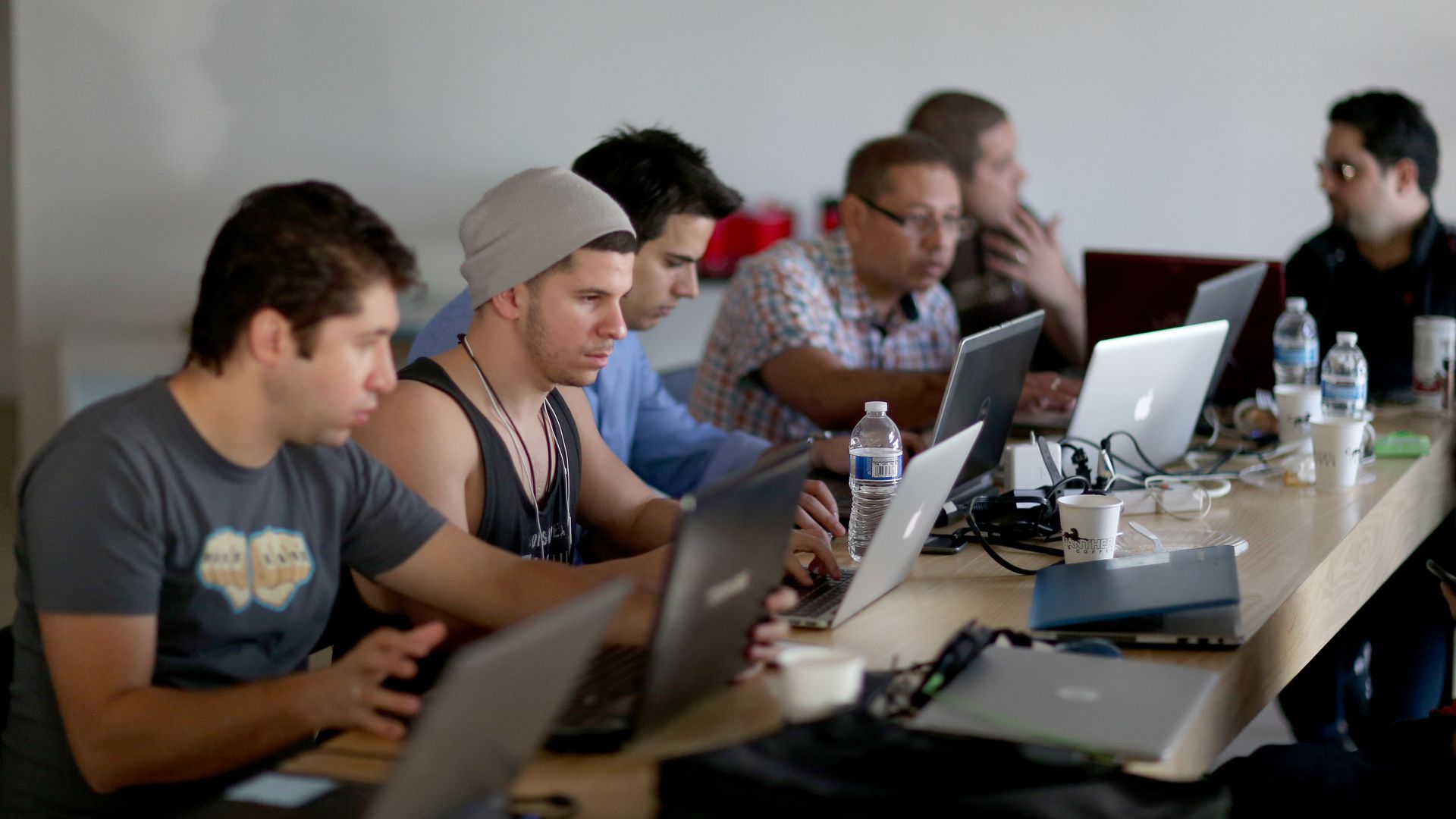
Transportation agencies in San Antonio, Baltimore, Fairfax and the state of Delaware have hosted hackathons and open data challenges, as did the recent InnoTrans conference in Berlin. These are opportunities for programmers, coders and designers to turn their ideas into practical transportation solutions in the form of web and mobile apps, data visualizations and algorithms for improved transit performance.
The big picture: Transit systems across America have seen a steady decline in ridership over the past five years, with an average drop of 5% in bus ridership from 2016 to 2017. These hackathons are only one of the newest ways cities are approaching the modernization of their transportation offerings — in addition to connecting public transit with Uber and Lyft, hosting bike and scooter shares, and launching smart phone apps that plan and track public transit rides.
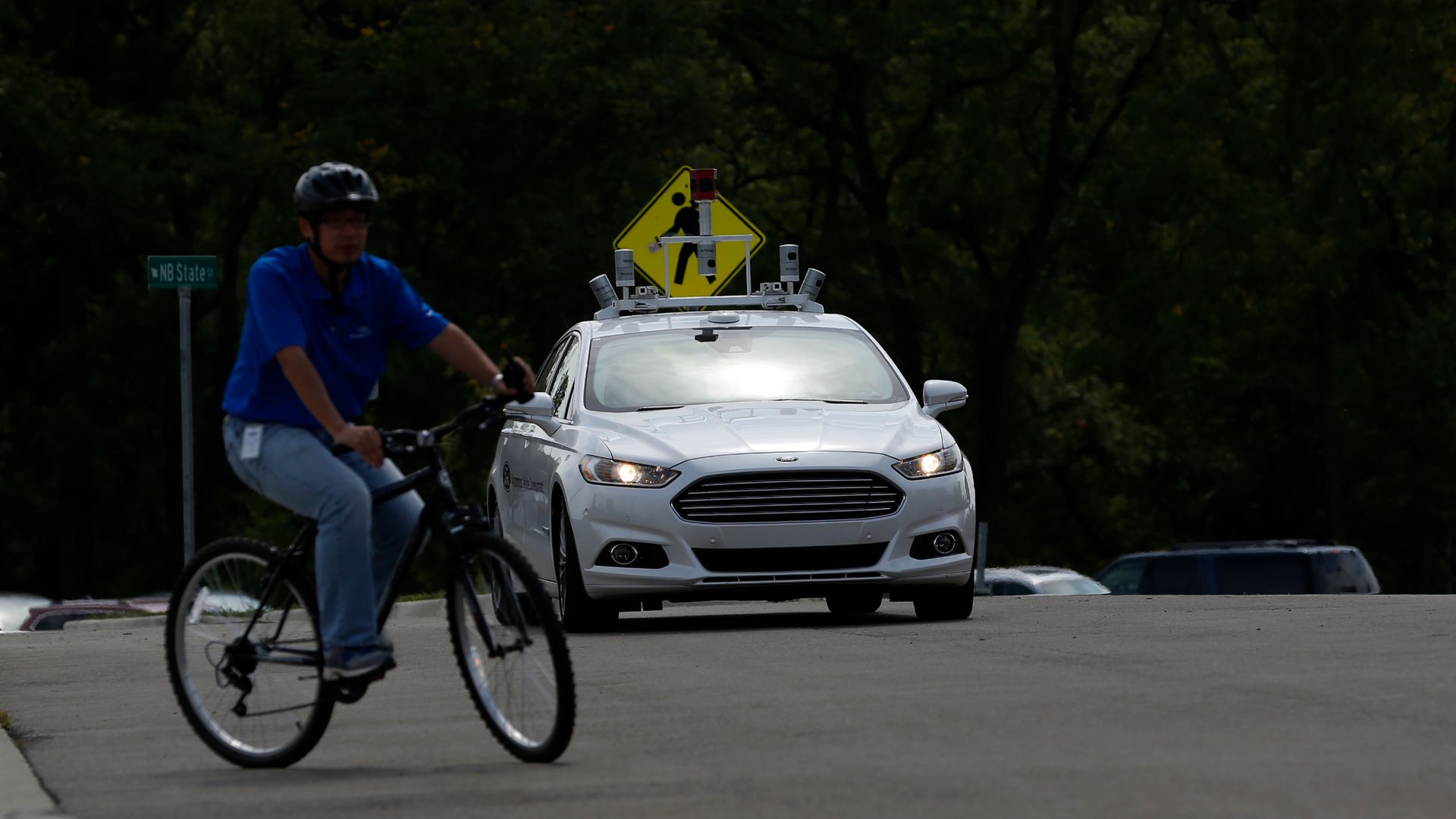
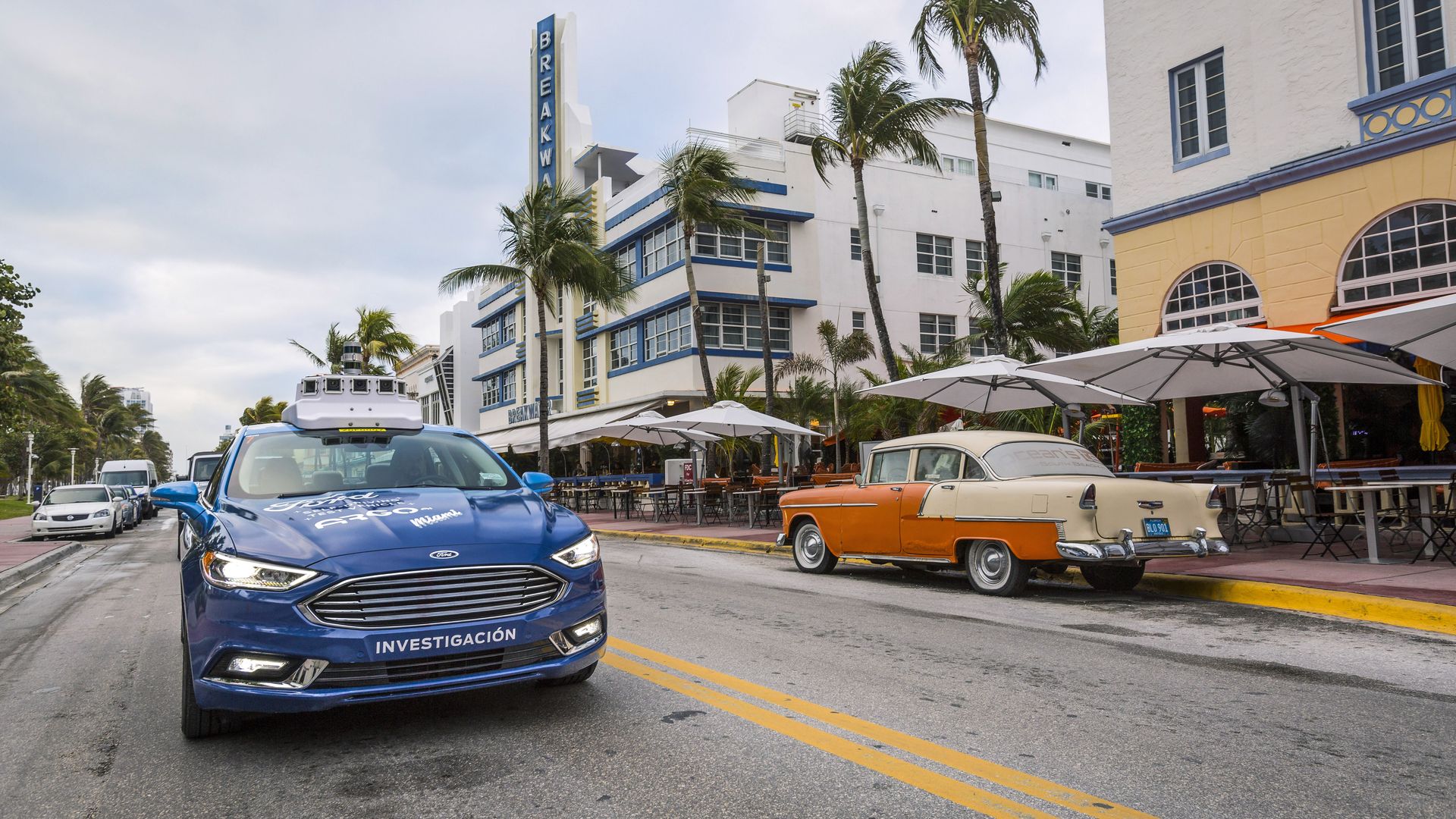
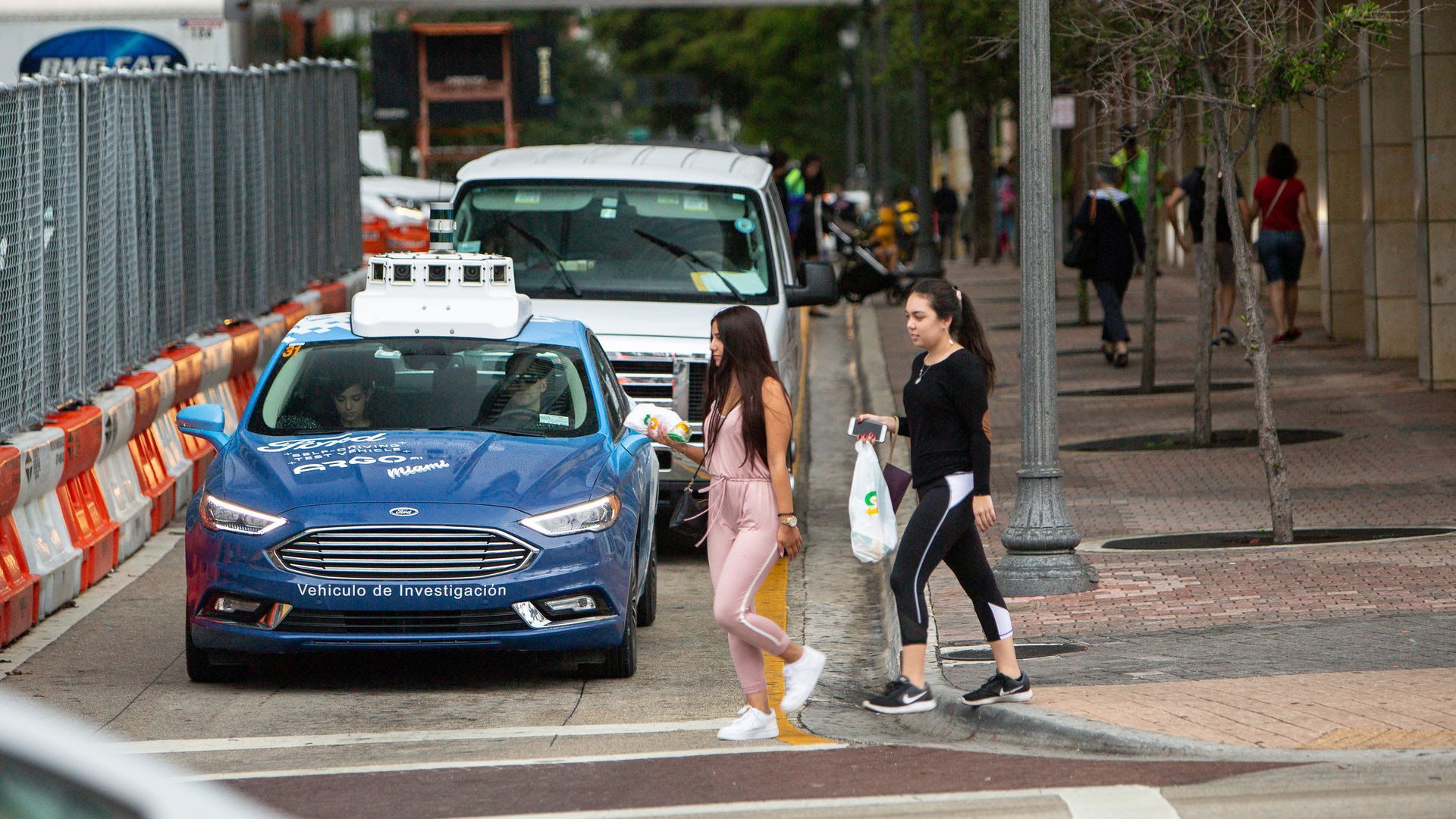
This week I traveled to Miami for some seat time in Ford's autonomous test vehicles. I rode in 3 separate Ford Fusions, each with a different pair of safety drivers up front.
Details: The AV's safety drivers kept their hands and feet ready to react, but only once did they opt to take control.
While Ford's autonomous vehicles are learning to drive on Miami's bustling streets, the company is simultaneously mapping out a business strategy for the driverless future by tapping local merchants for input on its first purpose-built AV.
Why it matters: The U.S. market for AVs will be $332 billion by 2026, according to Ford. About 40% could be for goods delivery including small businesses that are often constrained because they can't afford to hire drivers or buy delivery vehicles for only sporadic use.
AV developers are using their test vehicles to collect data on the interactions between vehicles, pedestrians and cyclists, but that data is currently specific to West Coast cities like San Francisco.
The big picture: The cultural norms of driving vary widely from one region to the next. To operate safely and be deployed widely, AVs will need to draw on global data sets that are locally customized and continuously updated to account for both changing behaviors and new modes of transportation, like electric scooters.
In the pinnacle of football season, The Weather Channel is forecasting football weather in mixed reality to help viewers understand the conditions the players endure at the stadium, shown in their newest mixed reality video exclusively obtained by Axios.
Why it matters: The channel plans to use immersive mixed reality technology in 80% of their programming by 2020 to give their reporting more of a competitive edge.
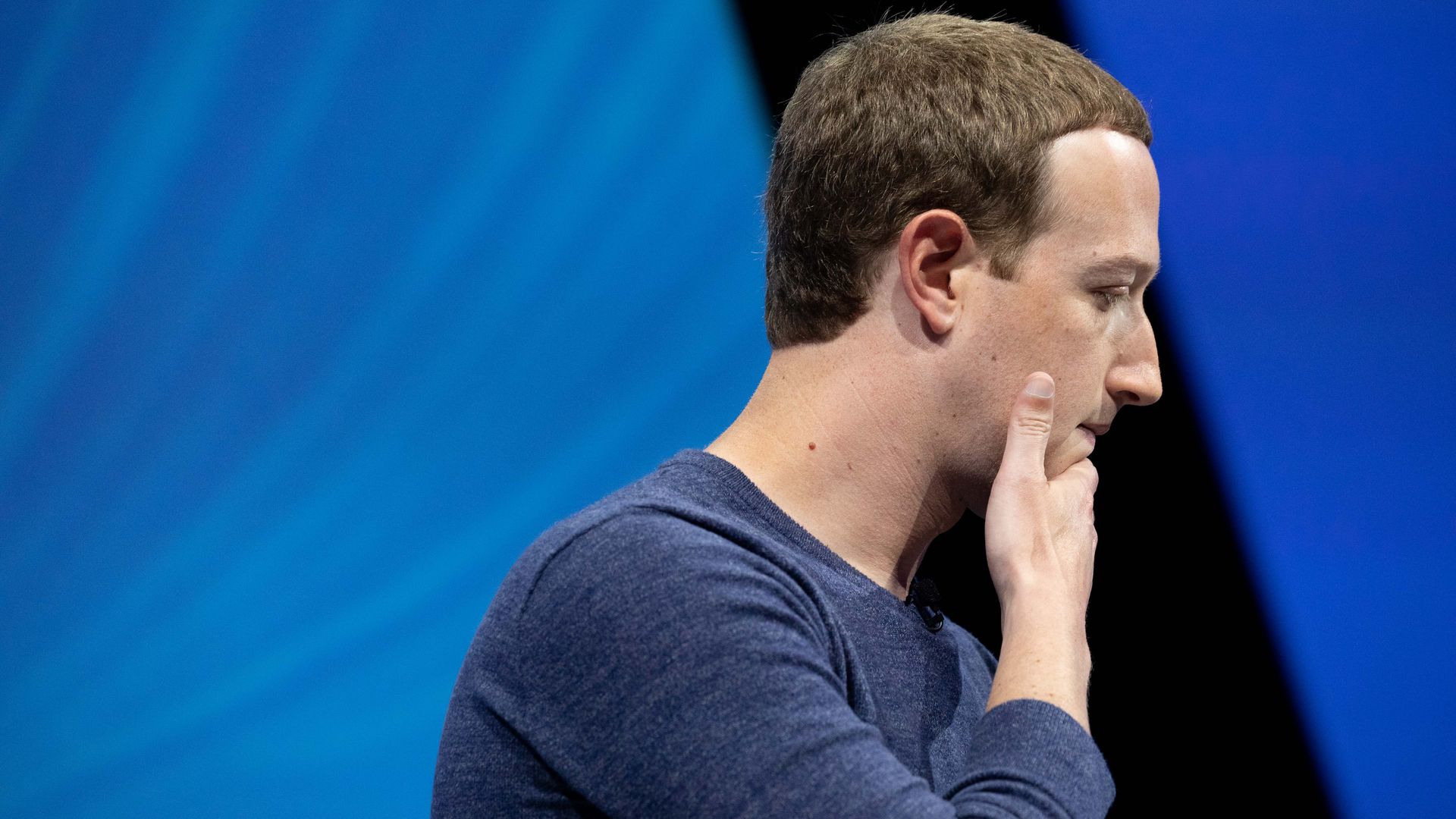
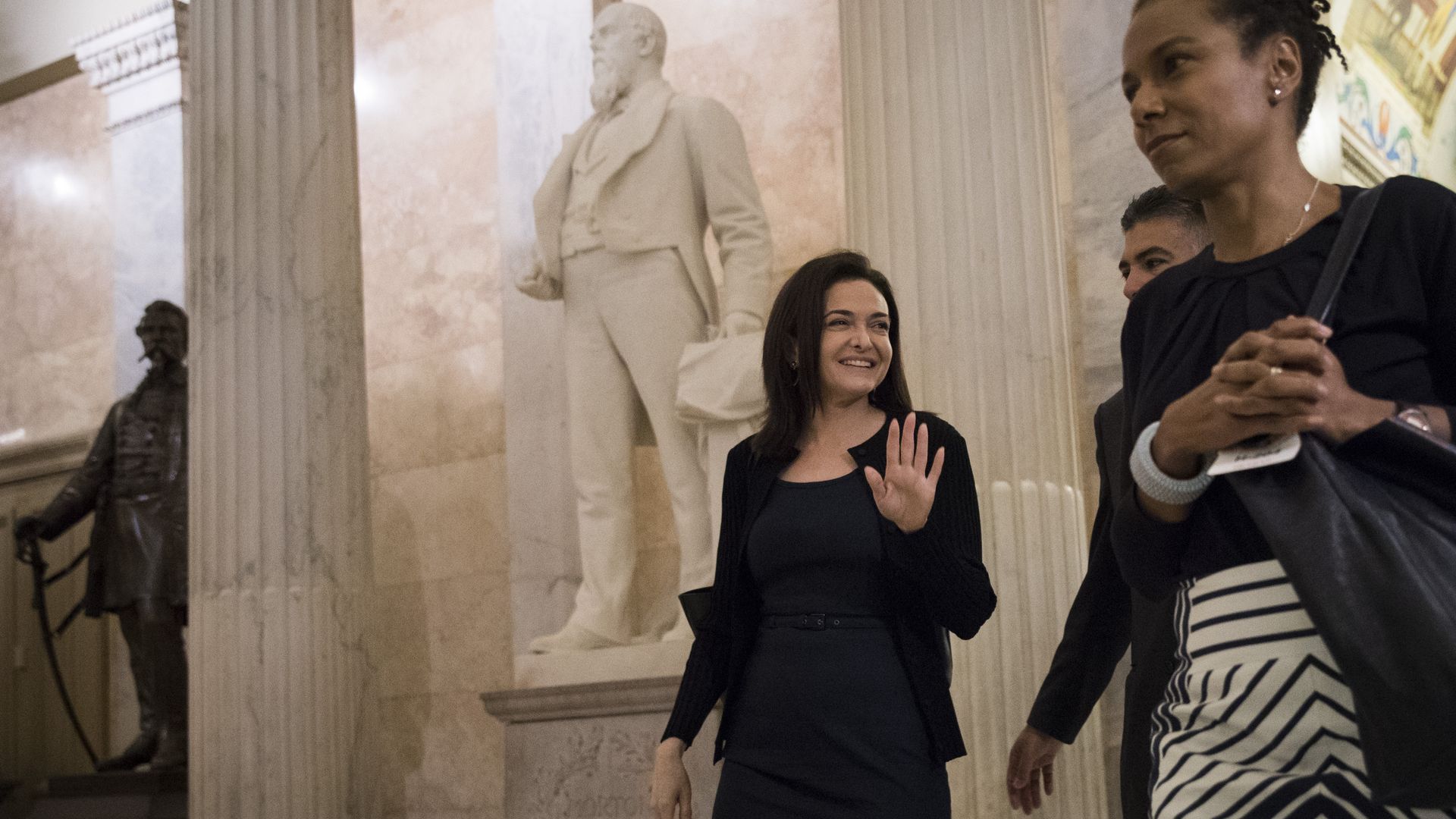
Facebook CEO Mark Zuckerberg said Thursday that he and COO Sheryl Sandberg were unaware of the company's involvement with a Washington, D.C.-based opposition research firm that had tried to link an anti-Facebook campaign to billionaire philanthropist George Soros.
Why it matters: Sharp-elbowed political consultants are common in the world of corporate lobbying. But a long series of crises, including the Cambridge Analytica privacy breaches and the election-meddling misinformation campaigns, have eroded Facebook's morale and run down its credibility reserves, giving the company's leaders little room to maneuver.
Michigan’s term-limited governor, Rick Snyder, has negotiated AV research partnerships with the governments of four countries—China, the U.K., the Netherlands and Australia—and two key auto-making regions in Canada and Europe.
Why it matters: Snyder wants to position Michigan as the convening authority when it comes to harmonizing global standards for self-driving cars. By luring foreign entities to conduct and share research in Michigan he's pushing back against the notion that California is the epicenter of autonomous vehicle development.
A Pennsylvania philanthropist and former hedge fund executive named David Magerman was the initial donor behind a high-profile campaign urging regulators to break up Facebook, he confirmed to Axios for the first time on Thursday.
Why it matters: Magerman has given more than $400,000 to the campaign — "Freedom from Facebook" — because he believes Facebook has too much power over how the world communicates. A Republican-oriented consulting firm hired by Facebook had tried to link the campaign to billionaire philanthropist George Soros.
In today's podcast, Dan examines how the effects of the walkouts at Google on forced arbitration regarding sexual harassment with Axios Chief Technology Correspondent Ina Fried.
The two also address the fallout at Facebook following the New York Time's bombshell report on leadership. Plus, in the "Final Two": Uber's big speed bump on the way to an IPO and President Trump's very challenging electoral map for 2020.
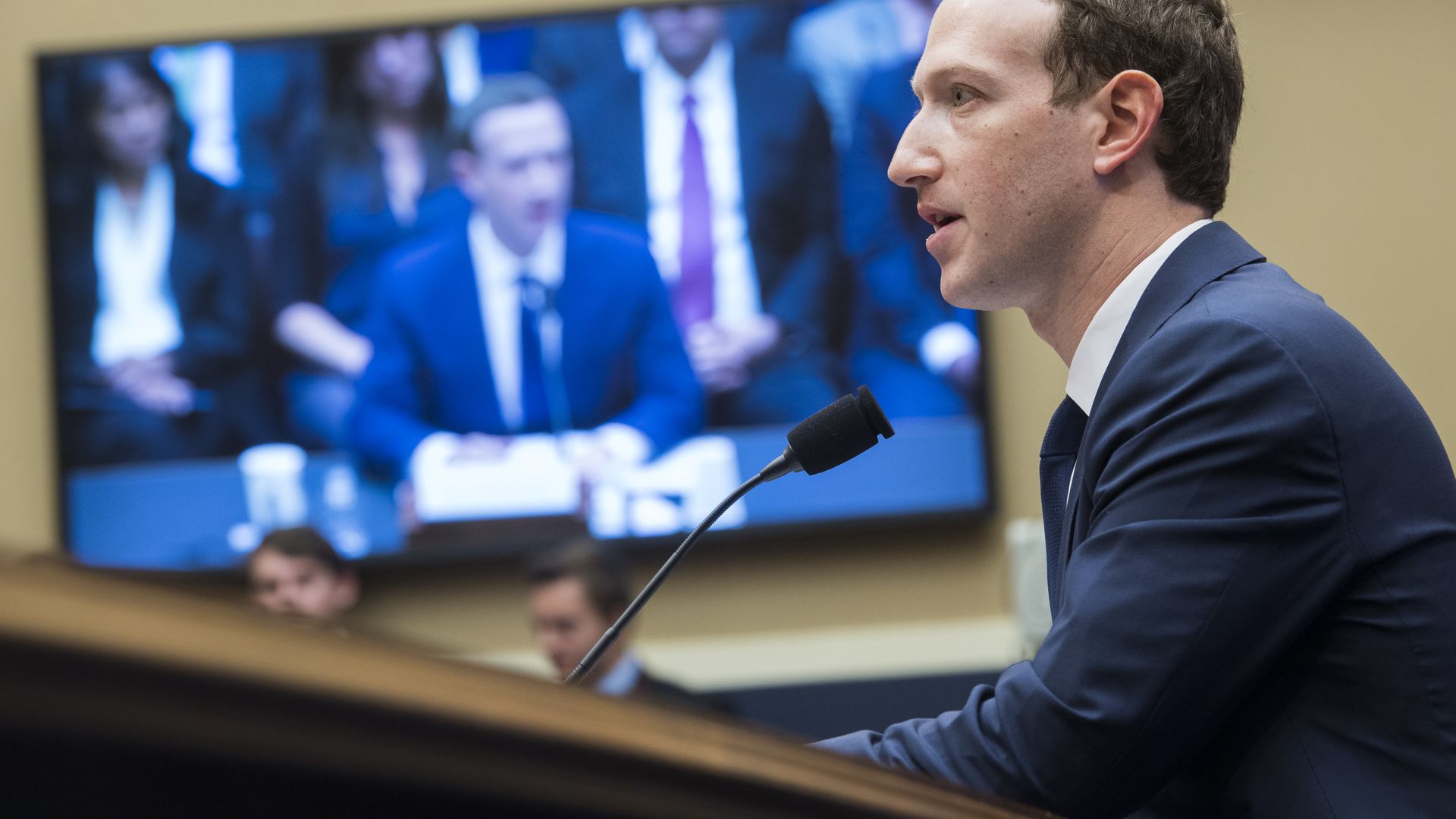
Speaking to reporters Thursday, Facebook CEO Mark Zuckerberg said he didn't know about Facebook's relationship with a Washington-based opposition research firm that The New York Times reported Facebook was working with and that those DC-based opposition research tactics are "not the kind of thing we want to be involved with here."
Why it matters: The event was intended to unveil new content policies and procedures, but Zuckerberg spent much of the call addressing questions about the Times story and Facebook's relationship with Definers Public Affairs, the research firm. It's a defensive position that Zuckerberg and his company have been stuck in since last year.
Microsoft reported slight gains in employee diversity on Wednesday, with the representation of women significantly higher than in past reports, thanks to the inclusion of LinkedIn.
By the numbers: With the business network included, Microsoft reported that women made up 28% of staff, up one percentage point.
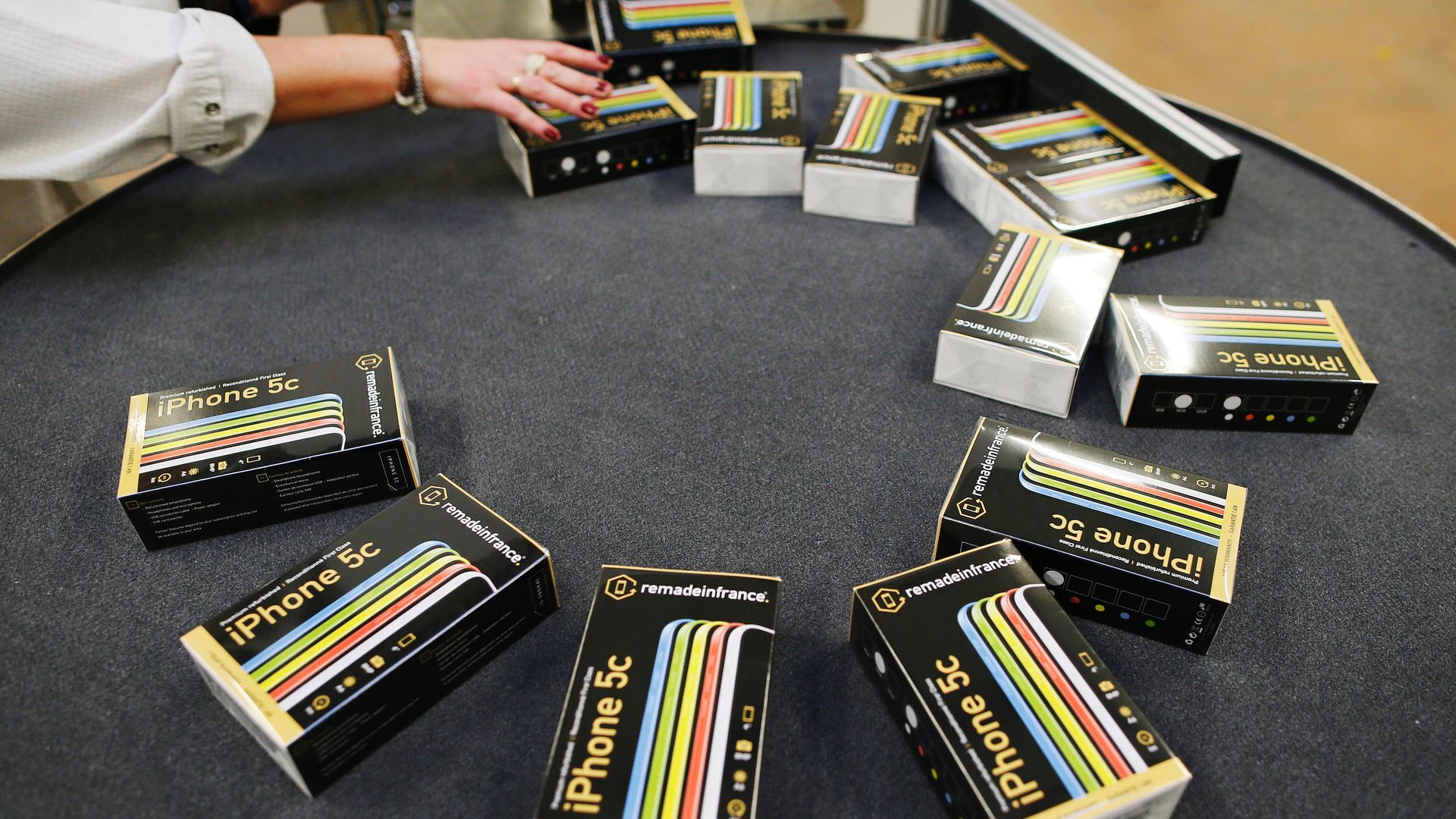
As the smartphone market matures, people are holding onto their phones longer in developed countries. What's more, even the phones they are done with are increasingly "good enough" for users in emerging markets.
What's new: According to Counterpoint Technology Market Research, the global market for refurbished phones grew 10% in the second quarter of 2018, compared to the market for new smartphones, which dropped 1% from a year ago.
Facebook has ended its contract with Definers Public Affairs, a consulting firm that came under fire on Wednesday after the New York Times published an investigation focused in part on the tactics it had used to take on critics of the social giant.
The big picture: The Times story portrayed Facebook CEO Mark Zuckerberg and COO Sheryl Sandberg as disengaged from some of the key debates over speech and misinformation at the company.
A new Department of Homeland Security task force devoted to heading off supply chain cybersecurity threats against communications infrastructure will meet for the first time Thursday.
Why it matters: Supply chain attacks — hackers sabotaging the security of hardware or software to attack the system in which it's installed — have been at the top of mind for many in the government, with recent dust ups involving allegations against ZTE and Huawei as well as a widely disputedBloomberg story.
Responding to a bombshell New York Times piece, the president of George Soros' Open Society Foundations, Patrick Gaspard, said Facebook's "methods threaten the very values underpinning our democracy" in a letter addressed to Facebook COO Sheryl Sandberg.
The backdrop: The Times article alleged — among other things — that Facebook utilized a Republican-oriented public relations group to help navigate Washington politics during its user privacy controversies. That group also reportedly singled out Soros, who is often targeted by the right, and Open Society as "the unacknowledged force behind what appeared to be a broad anti-Facebook movement."
Ford is developing a broad transportation service platform to take advantage of what it says is a $332 billion business opportunity for autonomous vehicles.
Why it matters: Amid all the hype about autonomous vehicles, little attention is paid to the business case for driverless cars. Ford’s plan is to keep its AVs running nearly round-the-clock by catering to both ride-hailing consumers and business customers.
As Facebook navigated security, privacy, and hate-speech controversies after the 2016 election, a new investigation from the New York Times found that the company pursued a "delay, deny and deflect" approach while top executives orchestrated a counterpunching campaign against critics, rivals and proponents of regulation.
The big picture: The Times report exposes the company to new criticisms from its employee base, more primed than ever to protest over the company’s political actions. Most striking for outsiders is the story’s depiction of CEO Mark Zuckerberg and COO Sheryl Sandberg as evasive or sometimes asleep at the switch.
COLUMBUS, Ohio — When Amazon began its nationwide search for a place to house its second headquarters, choosing an up-and-coming city in the Midwest seemed to a lot of people like the perfect option: At a time of much scrutiny of Big Tech, Amazon would earn political points. And amid much worry about economies in the heartland, a city on the rise would get a top-notch anchor employer.
What really happened: HQ2 finalists from the heartland never had a chance.






/2018/11/15/1542310092897.gif?w=3840)