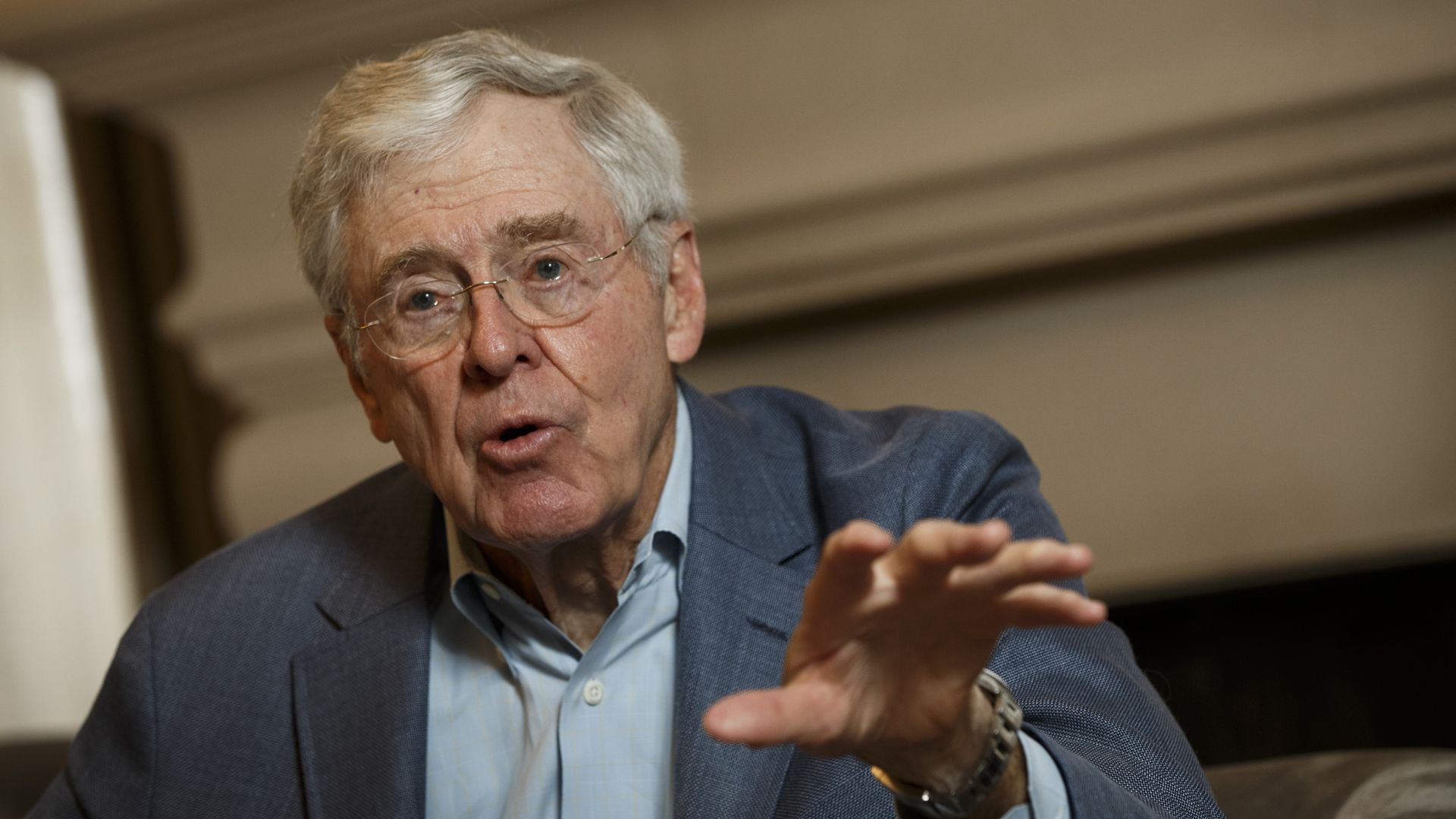
A group affiliated with the Koch Network — owned by billionaire conservative brothers Charles and David Koch — said Tuesday that it would be a "reckless idea" for the Trump administration to slap new regulations on Google and other major tech companies.
Why it matters: The Kochs are major players in Republican politics who have also taken opportunities to distance themselves from President Trump.
The Trump administration could take a number of routes as it considers regulating Google — as well as Facebook and Twitter — over what it perceives as an anti-conservative bias in the way its search engine surfaces news.
The bottom line: There’s little that the White House could do without Congress. But there have never been more proposals on regulating large web platforms circulating around Washington than there are right now — even if they are long shots.
President Trump widened his charges against tech companies this afternoon and said Google, Twitter and Facebook "are really treading on very, very, troubled territory and they have to be careful."
Why it matters: This morning, Trump went after Google for favoring left-leaning news over right-leaning publications. The president has now targeted Twitter and Facebook as well as Google, fueling even more speculation around possible government intervention in the operations of the three most popular social media companies — one of which he relies on daily to reach his base.
Instagram will begin offering users the option of using more secure third-party authentication apps, such as Google Authenticator, to log in to Instagram, the service's co-founder and CTO, Mike Krieger, announced Tuesday.
The big picture: The announcement underlines the pressures social media companies are facing to confront misinformation campaigns on their platforms that can weaponize political beliefs to influence politics in the U.S. And it's not just about Russia — in just the last few weeks Twitter, Google, and Facebook alike have unveilednewlydiscovered misinformation campaigns on their platforms, some of which are linked to Iran.
You probably haven't heard of AnchorFree. But, its product, HotspotShield, has had a major impact around the globe as a way for people to keep their internet use a private matter, in what is a consumer version of a virtual private network (VPN).
Why it matters: As users around the world grow more conscious of how much their online activity is monitored — by governments, platforms, service providers and advertisers — VPNs are booming in popularity.
Dan is joined by Axios executive editor Mike Allen to break down President Trump's new tech fight. Plus, his Final Two on what's next in trade wars and why teens are upset with their screens.
A group of media professionals is launching Progress News Network (PNN), a daily 2.5 minute newscast slated to reach 35–40+ year-olds with broadcast-like videos that they plan to promote on Facebook through ads, Axios has learned.
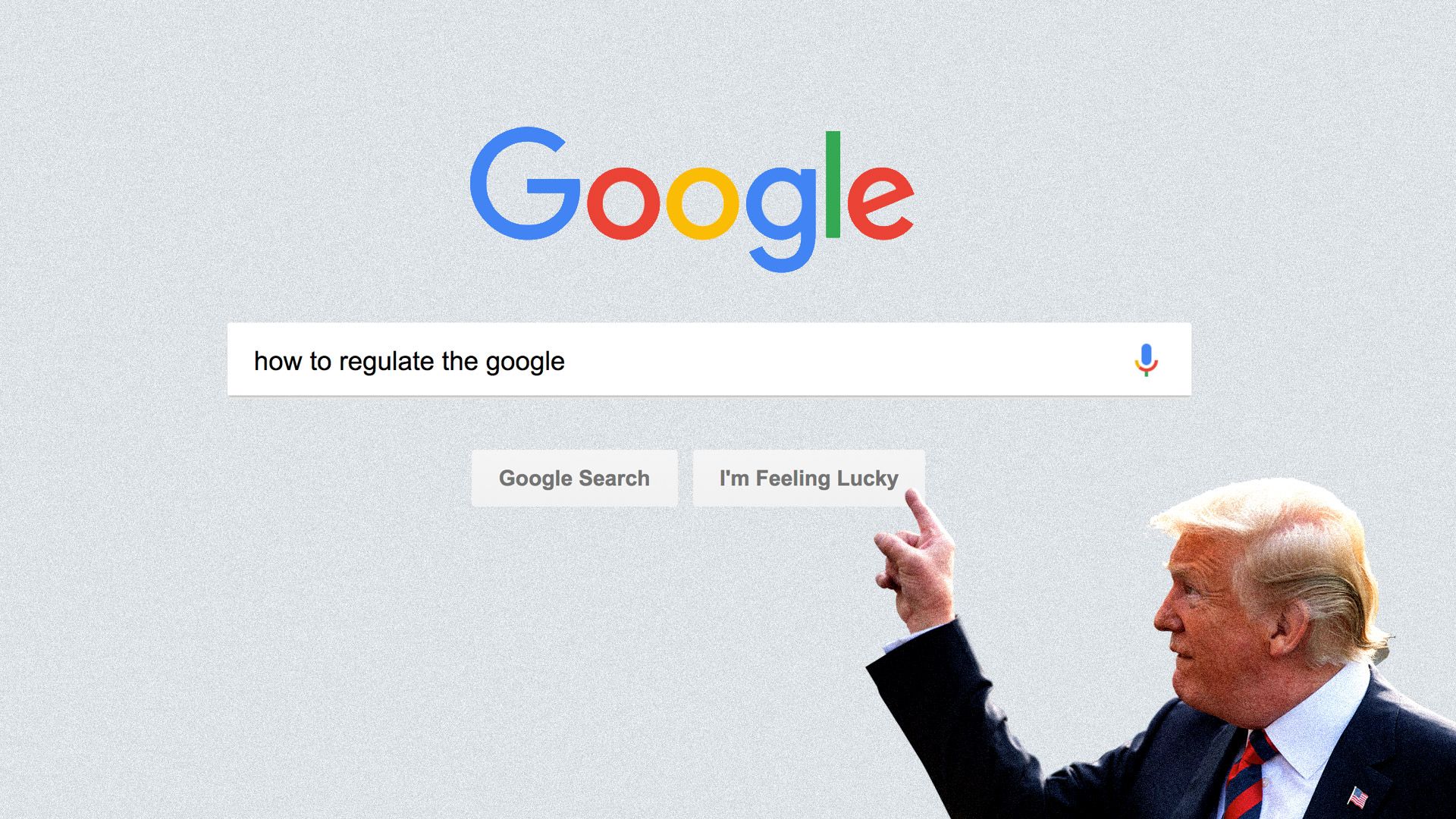
President Trump tweeted this morning that Big Tech platforms, specifically Google, are suppressing conservative voices and news, while Trump economic adviser Larry Kudlow later added that the administration is "taking a look" at whether Google searches should be regulated.
Why it matters: As Axios' David McCabe points out, "Nobody has presented strong evidence that the engineers at Silicon Valley companies manipulate algorithms to intentionally disadvantage conservatives because of a personal political bias, despite such claims being made for years."
Matthew Ball, the former head of strategy for Amazon Studios who is considered one of the most authoritative voices on big media business — particularly streaming, just published Part 4 of his Media REDEF series explaining the business of Netflix.
The bottom line: Most view Netflix's massive spending as reckless, but Ball argues it isn't if you consider how it's driving an unprecedented growth that could eventually allow Netflix to surpass Facebook in engagement and Pay-TV in penetration. At that point, they will have the leverage to increase prices, bringing them closer to profitability and making the massive spend worthwhile.
Larry Kudlow, President Trump's chief economic adviser, told reporters outside of the White House this morning that the administration is "taking a look" at whether Google searches should be subject to government regulation, per The Washington Post.
The big picture: Kudlow's statement joins a controversial pair of tweets by President Trump this morning, adding high drama to a joint Capitol Hill appearance next week by Facebook, Google and Twitter.
President Trump seemed to float potential regulation for Big Tech platforms —specifically Google — in a Tuesday morning tweet, claiming that they suppress conservative voices and news.
"Google search results for 'Trump News' shows only the viewing/reporting of Fake New Media. In other words, they have it RIGGED, for me & others, so that almost all stories & news is BAD. Fake CNN is prominent. Republican/Conservative & Fair Media is shut out. Illegal? 96% of results on 'Trump News' are from National Left-Wing Media, very dangerous. Google & others are suppressing voices of Conservatives and hiding information and news that is good. They are controlling what we can & cannot see. This is a very serious situation-will be addressed!"
The big picture: Trump's tweet comes just weeks after Big Tech began a push against far-right conspiracy theorist Alex Jones and his website InfoWars — and a week before some of the top executives in Big Tech are set to head back to Capitol Hill.
Almost a year after Facebook, Google and Twitter first testified together in front of Congress for Russian meddling, the three social media giants will be returning to Capitol Hill Sept. 5 to talk about censorship and election interference. But this time, they're better prepared.
Why it matters: Many recall Mark Zuckerberg's positive performance during televised Facebook hearings in April following the Cambridge Analytica scandal, but the last time these three companies faced Congress together, the reviews were brutal.