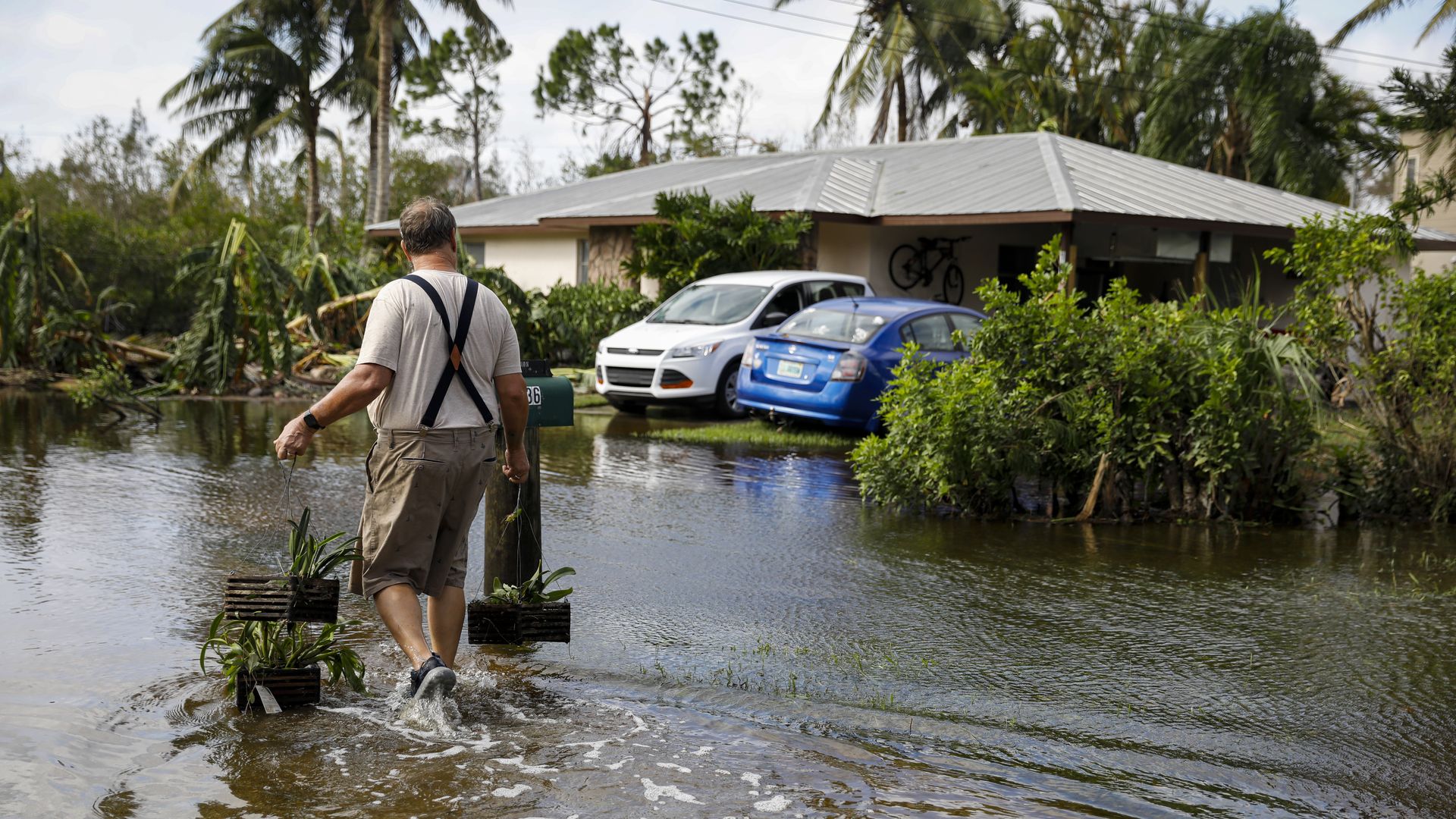
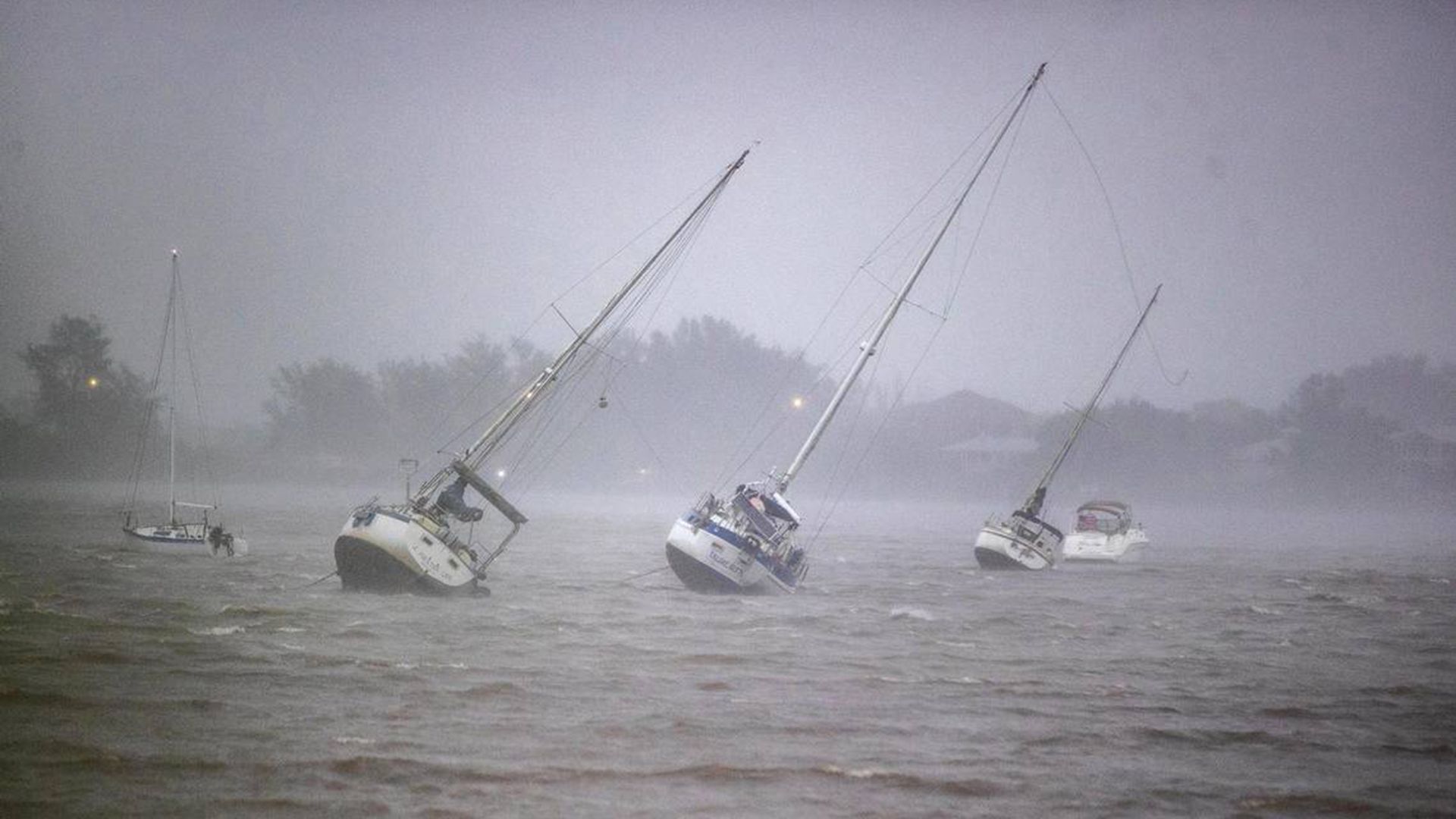
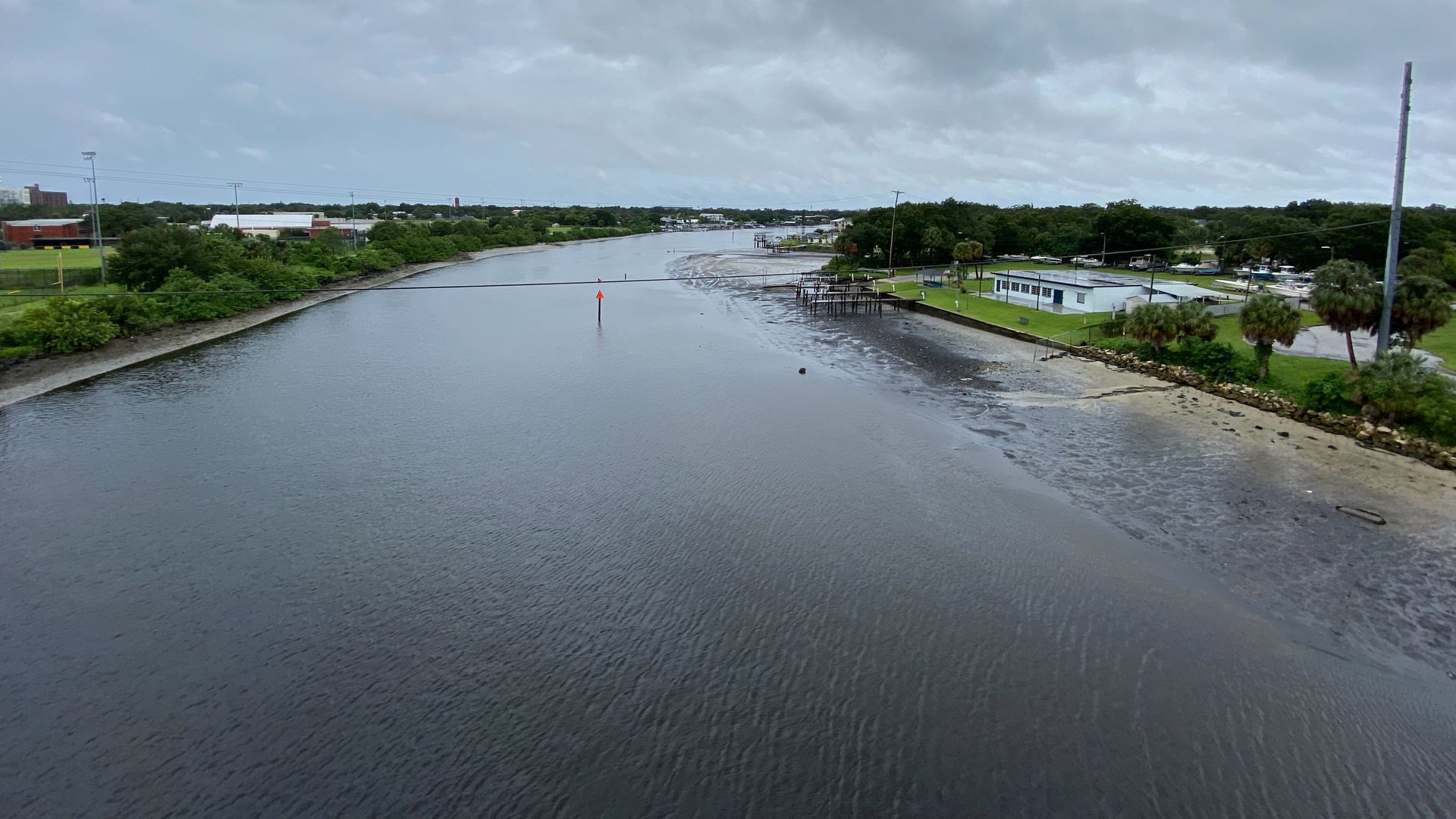
Recovery efforts are underway in Florida in the aftermath of devastating Hurricane Ian, which continued to move northeast as a tropical storm across the state Thursday on its way to the Carolinas.
Driving the news: More than 2.6 million in the state were without power Thursday after Ian brought strong winds, "life-threatening, catastrophic" flooding, and storm surges as high as 12 feet in some areas.
Why it matters: NASA's undertaking — called the Double Asteroid Redirection Test (DART) — marked the first time humans have changed the course of a celestial body and was a major milestone in the space agency's planetary defense mission.
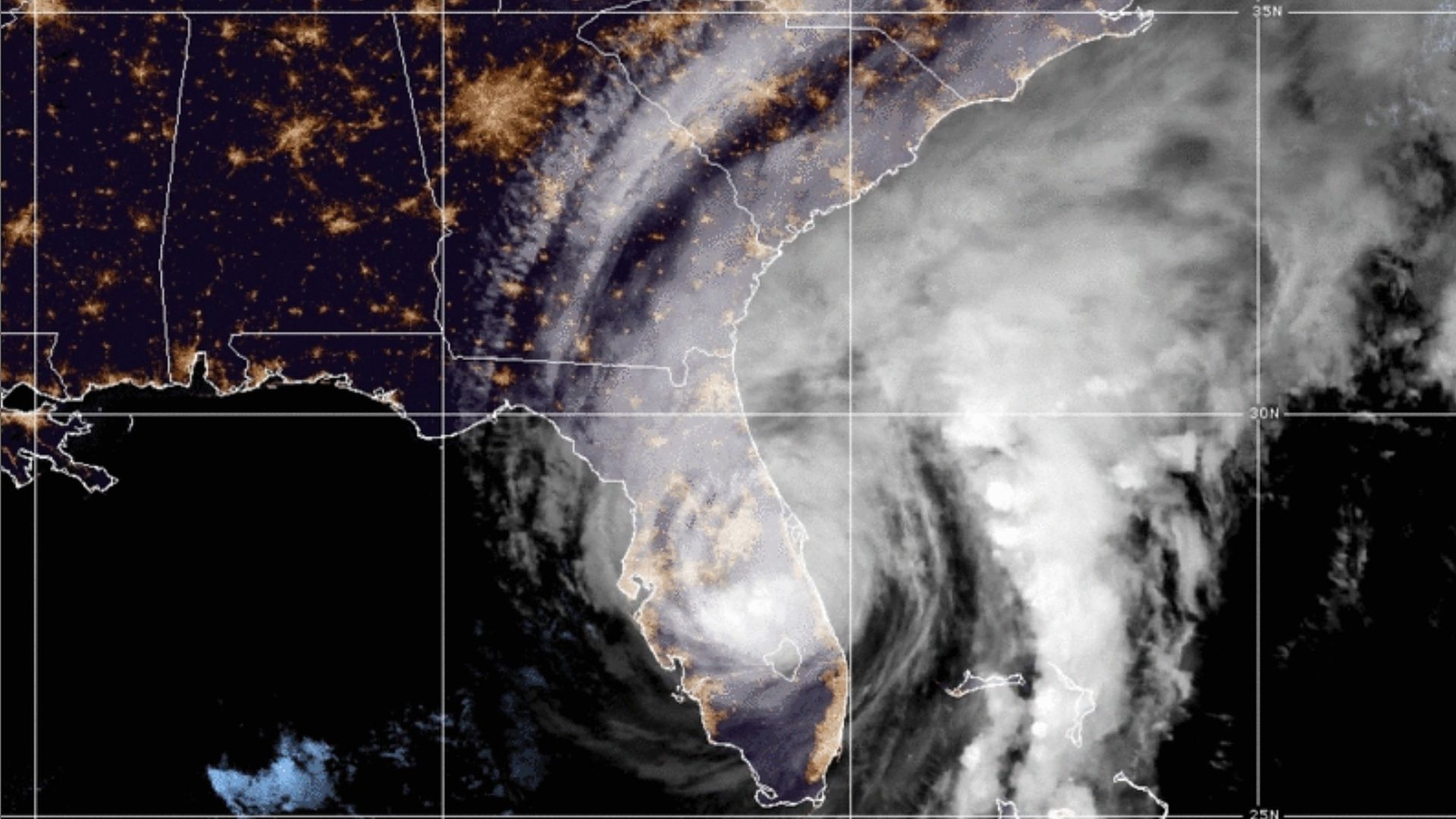
Hurricane Ian weakened to a tropical storm early Thursday, but the National Hurricane Center warned it's still battering the Florida Peninsula with strong winds, heavy rains and storm surge.
Driving the news: Since making landfallas a high-end Category 4 storm Wednesday afternoon, Ian has knocked out power to nearly 2.5 million people as it inundated densely populated coastal communities known for attracting tourists and retirees — including Fort Myers, Cape Coral, Naples and Sanibel Island.
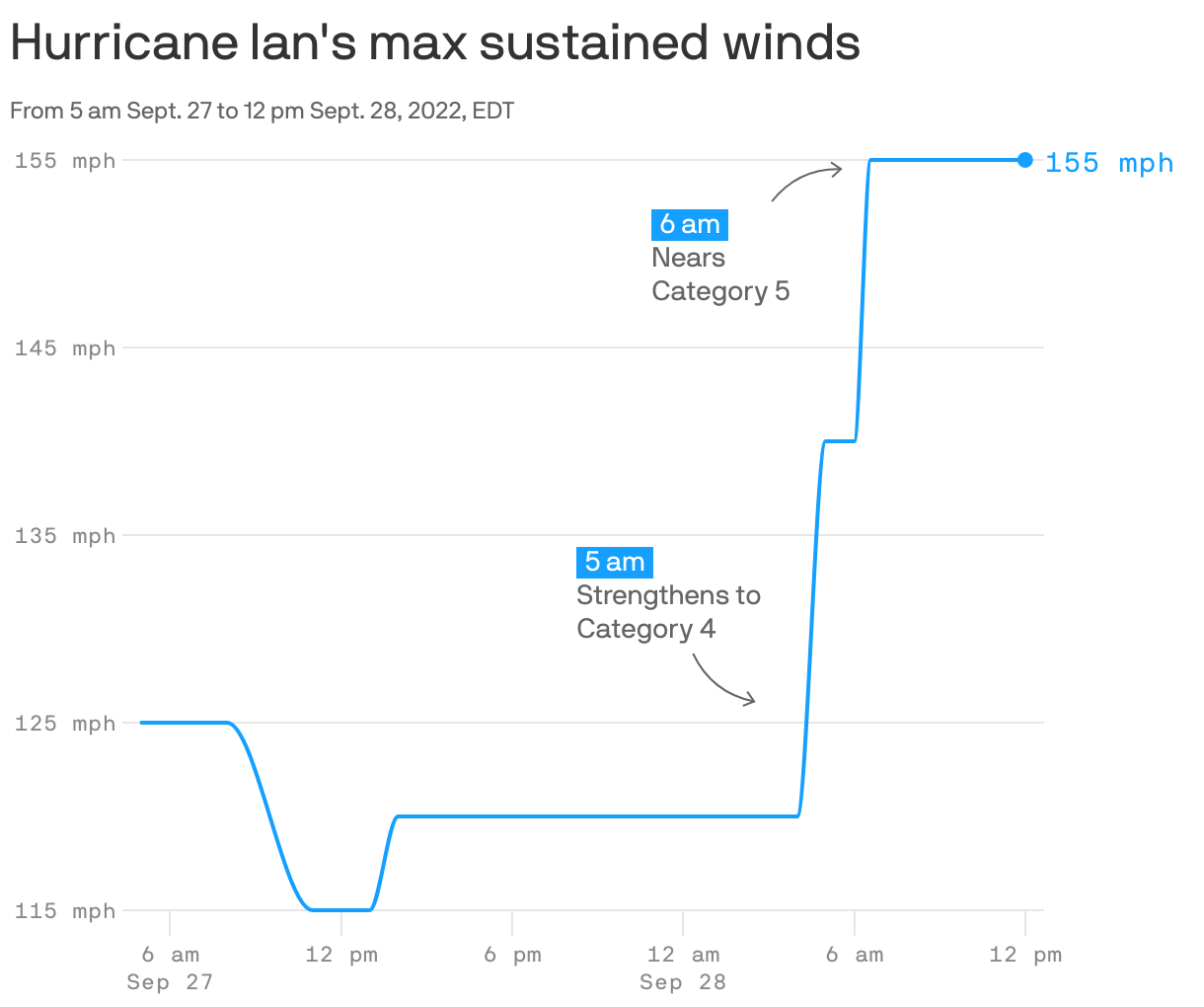
Data: National Oceanic and Atmospheric Administration; Note: Category 5 intensity begins at 157 mph; Chart: Madison Dong/Axios Visuals
Hurricane forecasters' worst nightmare came true on Wednesday morning, when what had been a Category 3 storm Tuesday night suddenly jumped almost to Category 5.
Why it matters: It used to be rare for storms to keep strengthening until landfall, let alone do so rapidly. Now it is not — and studies show this is a dangerous sign of climate change.
Hurricane Ian was pummeling communities across the Florida Peninsula on Thursday morning, a day after making landfall as a major Category 4 storm.
The big picture: Ian weakened to a Category 1 storm overnight, but it was still posing a serious threat with its heavy rains, powerful winds, storm surge and life-threatening flooding as it churned toward Georgia and South Carolina, knocking out power to over 2 million Floridians in its wake.
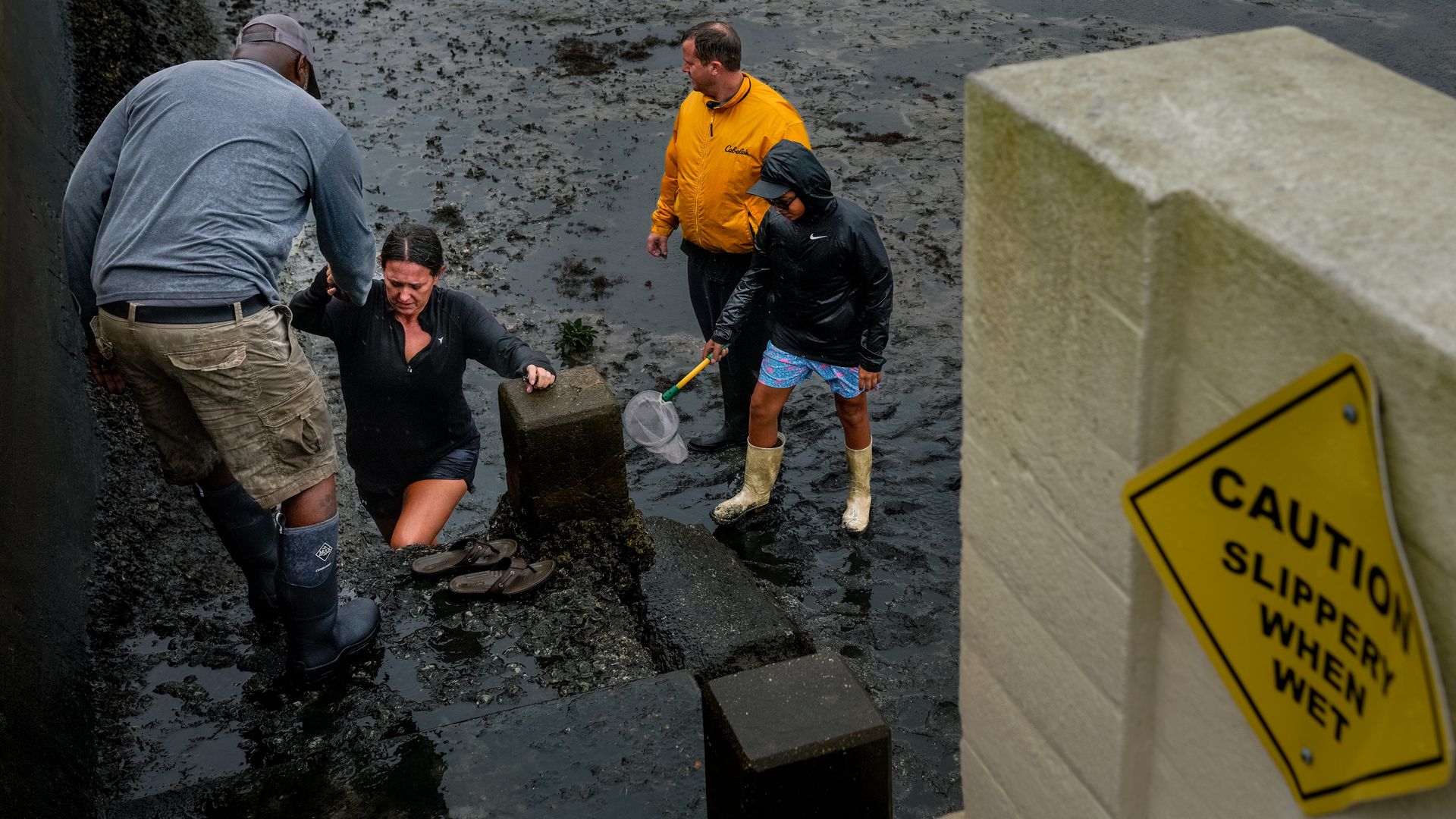
Hurricane Ian was flooding some areas of Florida's west coast with storm surges that could reach up to 18 feet above ground level as it moved across the peninsula after making landfall Wednesday afternoon, the National Hurricane Center said.
Why it matters: Surge numbers that high — 12 to 18 ft — would be unprecedented for the region and some of the highest on record in the U.S.
Much attention has focused on Hurricane Ian's storm surge flooding coastal areas of Florida, setting records in coastal areas like Fort Myers and Naples.
But the National Hurricane Center warned in an advisory Wednesday that "widespread, life-threatening catastrophic flash and urban flooding, with major to record flooding along rivers, is expected to continue across central Florida" — damage that will last after the storm moves away.
Oil and gas companies should not use the impending landfall of Hurricane Ian to raise gas prices, President Biden warned in a speech Wednesday.
Driving the news: Biden said Ian provided "no excuse" for price increases at the pump and that he would ask officials to look into potential "price gouging" if gas companies are found using the storm as a reason to raise rates.
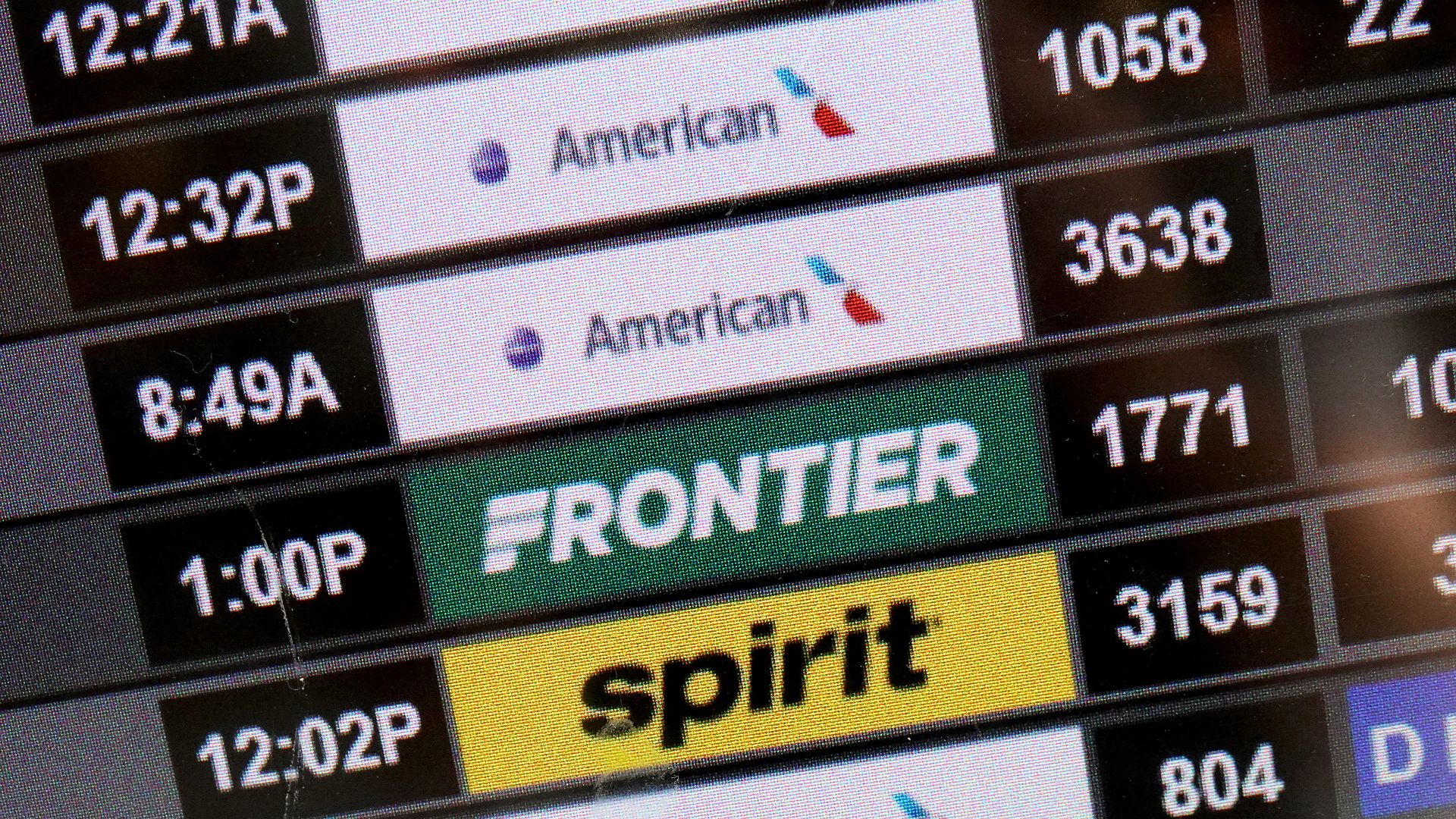
More than 2,000 flights into, within or out of the U.S. were canceled as of mid-morning Wednesday as Hurricane Ian prepares to make landfall in Florida, according to flight tracking website FlightAware.
By the numbers: Florida's Orlando International Airport had canceled at least 316 scheduled departure flights as well as 385 arrival flights, per the tracker.
Several tornadoes were reported to have struck Florida after Hurricane Ian rapidly intensified on Tuesday night.
The big picture: Ian's outer bands spawned tornadoes along the east coast of Florida as it reached Category 3 intensity Tuesday ahead of an expected ramp-up to a Category 4 on Wednesday. The tornado threat to southeast Florida counties continued overnight as the major hurricane moved closer.
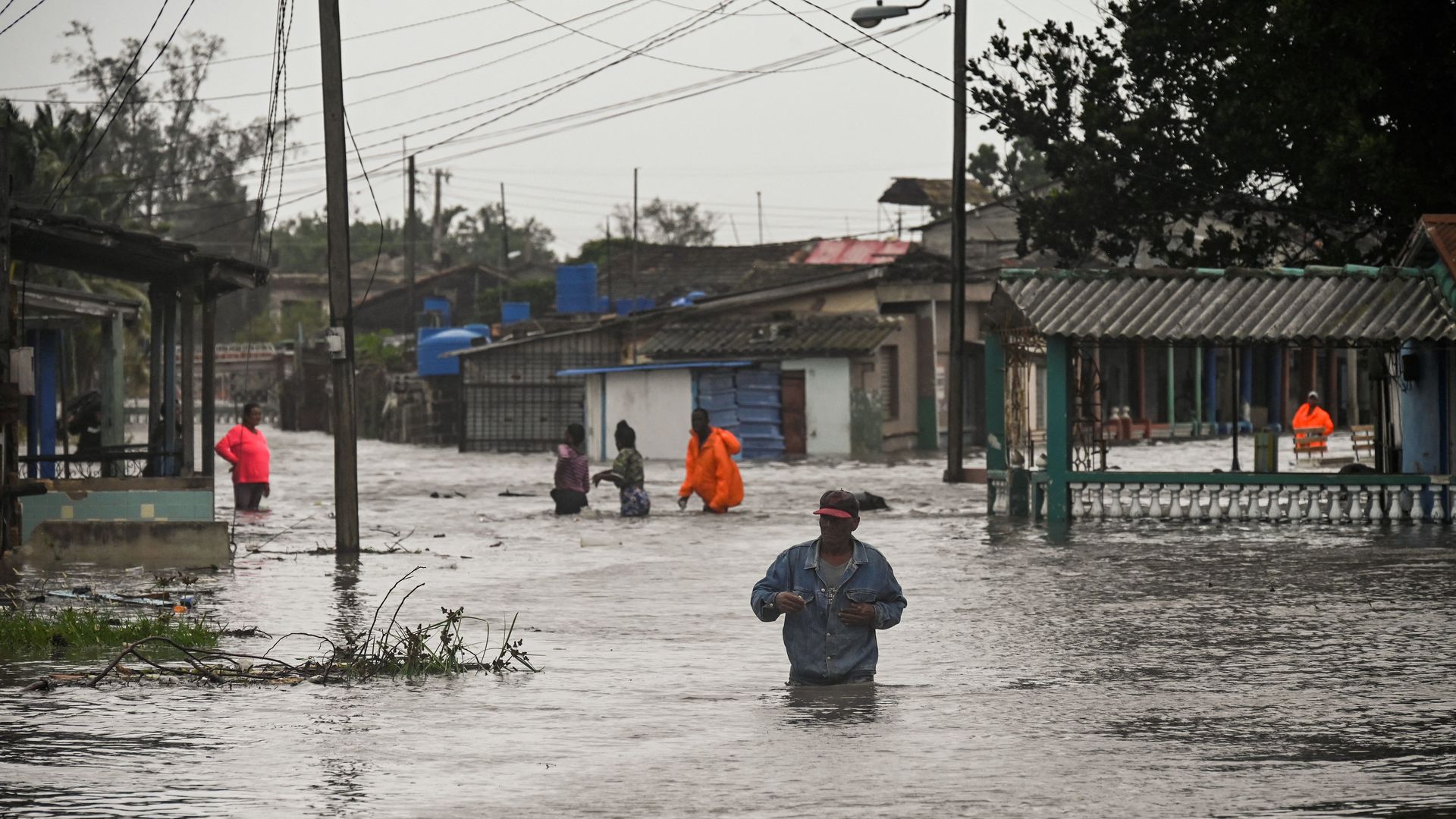
All of Cuba was without power late Tuesday after Hurricane Ian swept through in the morning and severely flooded the Caribbean island.
The latest: Work was under way to restore power to the nation of 11 million after the electrical grid collapsed due to the major hurricane, per a statement from Cuba's Electric Union.