A federal judge on Thursday paused the Trump administration's designation of Anthropic as a supply chain risk, marking an early legal victory for the embattled company.
Why it matters: Anthropic argued that the designation was causing immediate and irreparable harm as business partners rethink their contracts and federal agencies remove Claude.
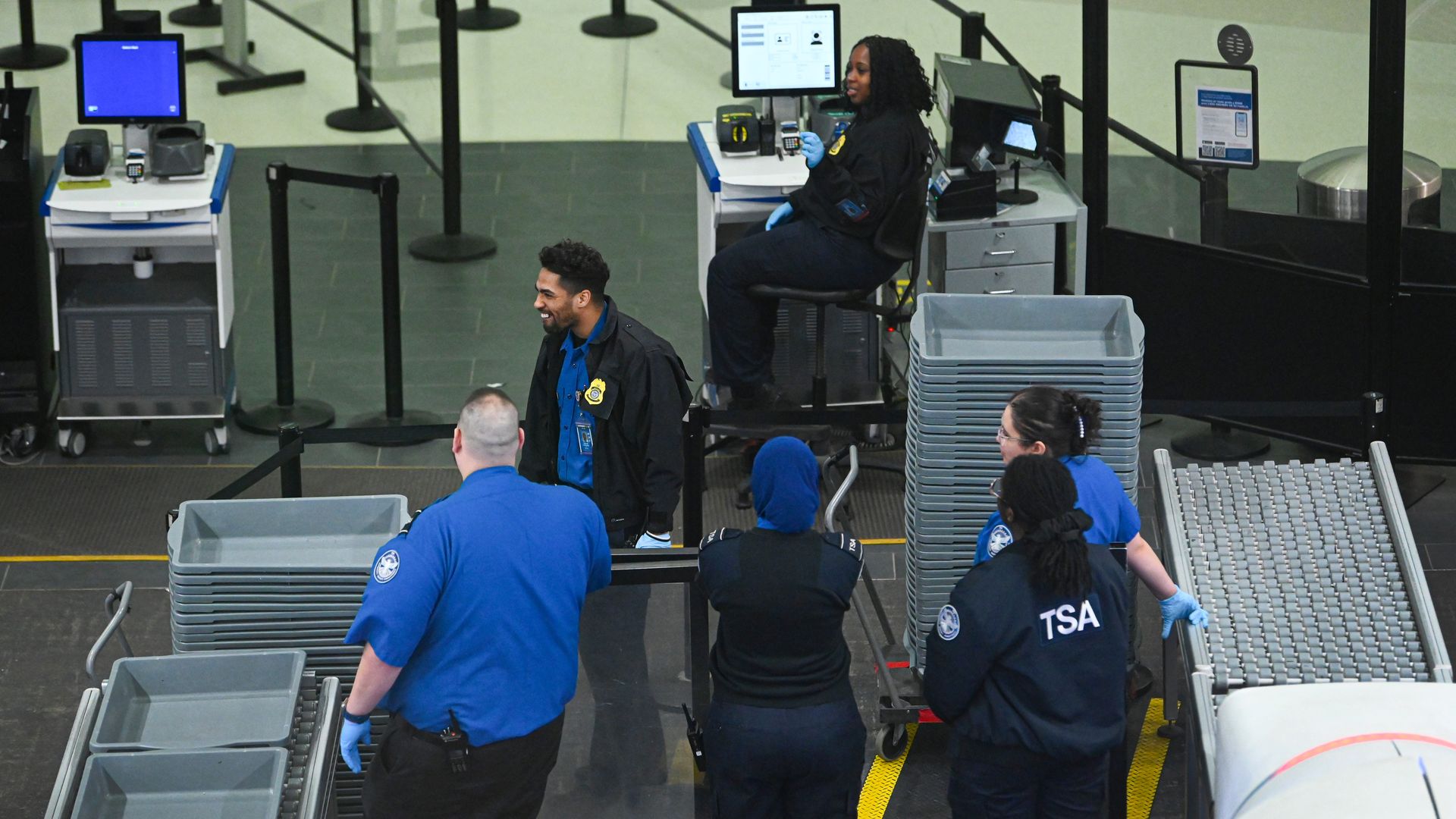
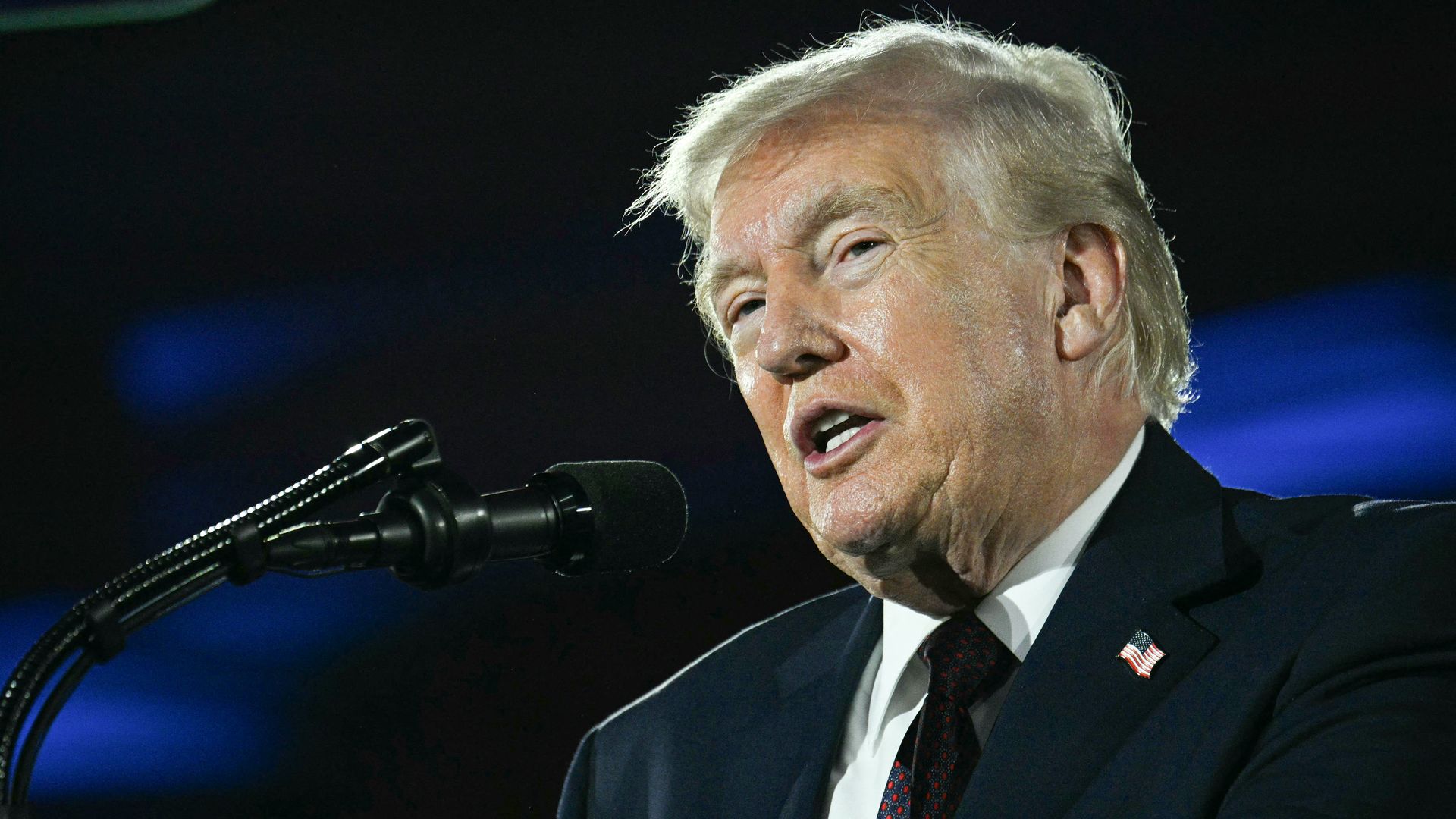
President Trump announced Thursday that he would sign an order to circumvent Congress and restore pay for TSA workers.
Why it matters: The maneuver could help ease widespread delays and disruptions at U.S. airports that have threatened to raise voter ire. It also undermines efforts to strike a deal in the Senate to end the DHS shutdown, now well into its second month.
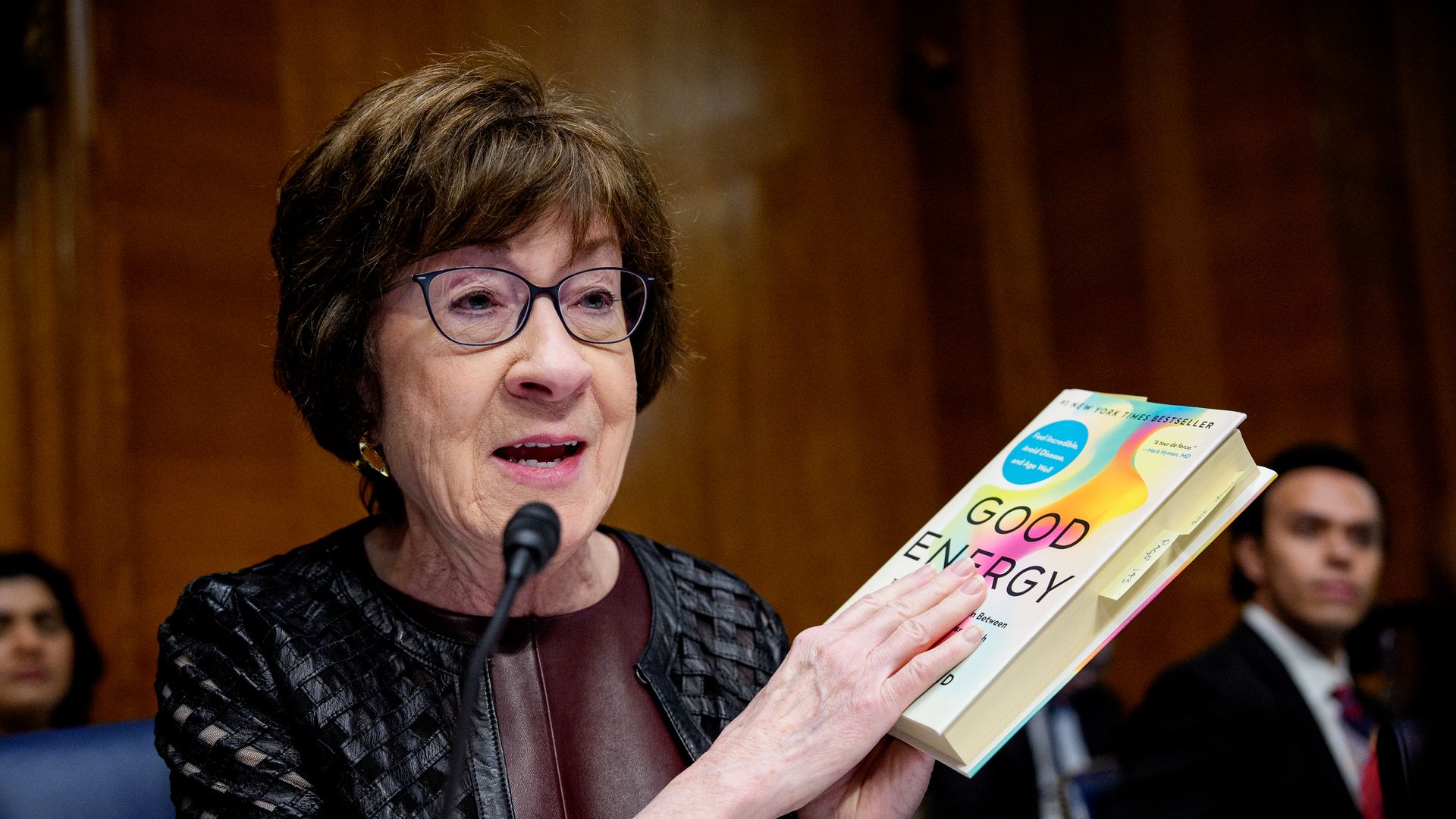
A super PAC supporting Sen. Susan Collins (R-Maine) has reserved $12.5 million in airtime for two months this summer, according to a person familiar with the matter.
Why it matters: Pine Tree Results will use the ad buy to try to define either Gov. Janet Mills or oyster farmer Graham Platner immediately after Democrats vote in the June 9 primary, which has already turned nasty.
Crypto investors will soon have a new path to home financing, as Better Home & Finance and Coinbase today introduced a new product tied to Fannie Mae-backed mortgages.
Why it matters: The move is the latest sign of crypto pushing further into mainstream finance — and shows how digital assets are beginning to plug into traditional systems like the U.S. mortgage market.
President Trump's political team is meeting with his Cabinet late Thursday to discuss plans for top officials to fan out across the country to stress what the administration is doing to help the economy, sources tell Axios.
Why it matters: Trump's team believes the economy — above all other issues, including any anxiety over the president's actions on Iran or immigration — will drive voter sentiment heading into the November elections.
HOUSTON — Several top energy executives and a federal regulator had a message Thursday for Americans angry about soaring electricity bills: Help is on the way.
Why it matters: The cost of electricity — which has spiked across much of the country over the past year — has become a top-tier political issue, with Democrats making it a focus of their affordability push.
President Trump extended the deadline for negotiations with Iran and paused his threat to bomb Iranian energy facilities by another 10 days.
Why it matters: The Trump administration through a group of mediators, Pakistan, Egypt and Turkey, has asked Tehran to hold a high-level meeting this week to discuss a U.S. proposal for ending the war.
House Democrats chose not to force a vote this week to block President Trump from unilaterally waging war with Iran in part out of fear that they still lacked the votes to pass the measure, Axios has learned.
Why it matters: The move is frustrating the Democratic grassroots, with some progressive groups and lawmakers fuming over the fact that another vote won't be possible until mid-April.
President Trump said Wednesday he won't call the conflict in Iran a "war" because "you are supposed to get approval,"suggesting the label itself could trigger congressional authority the administration says it doesn't need.
The big picture: But the fiery operation has been widely characterized as a war (one that's cost hundreds of lives and billions of dollars), including by the president himself as recently as Thursday.
HOUSTON — The top U.S. electricity regulator publicly prodded tech companies on Thursdayto engage more as they race to power a massive buildout of AI data centers.
Why it matters: Big Tech is moving fast to lock in power — but must navigate a slower, more complex grid it doesn't fully understand.
House Speaker Mike Johnson (R-La,), Freedom Caucus members and other FISA-skeptical lawmakers went to the White House this morning for a briefing on reauthorizing the surveillance authority, four sources told Axios.
Several school systems in areas targeted most aggressively by President Trump's immigration crackdowns have seen dramatic increases in student absences, Axios has found.
Why it matters: Enrollment data in Charlotte, Chicago, Minneapolis, California, Florida and Texas show thousands of students were suddenly absent when ICE came to town — the latest signs of how the raids have rippled through communities.
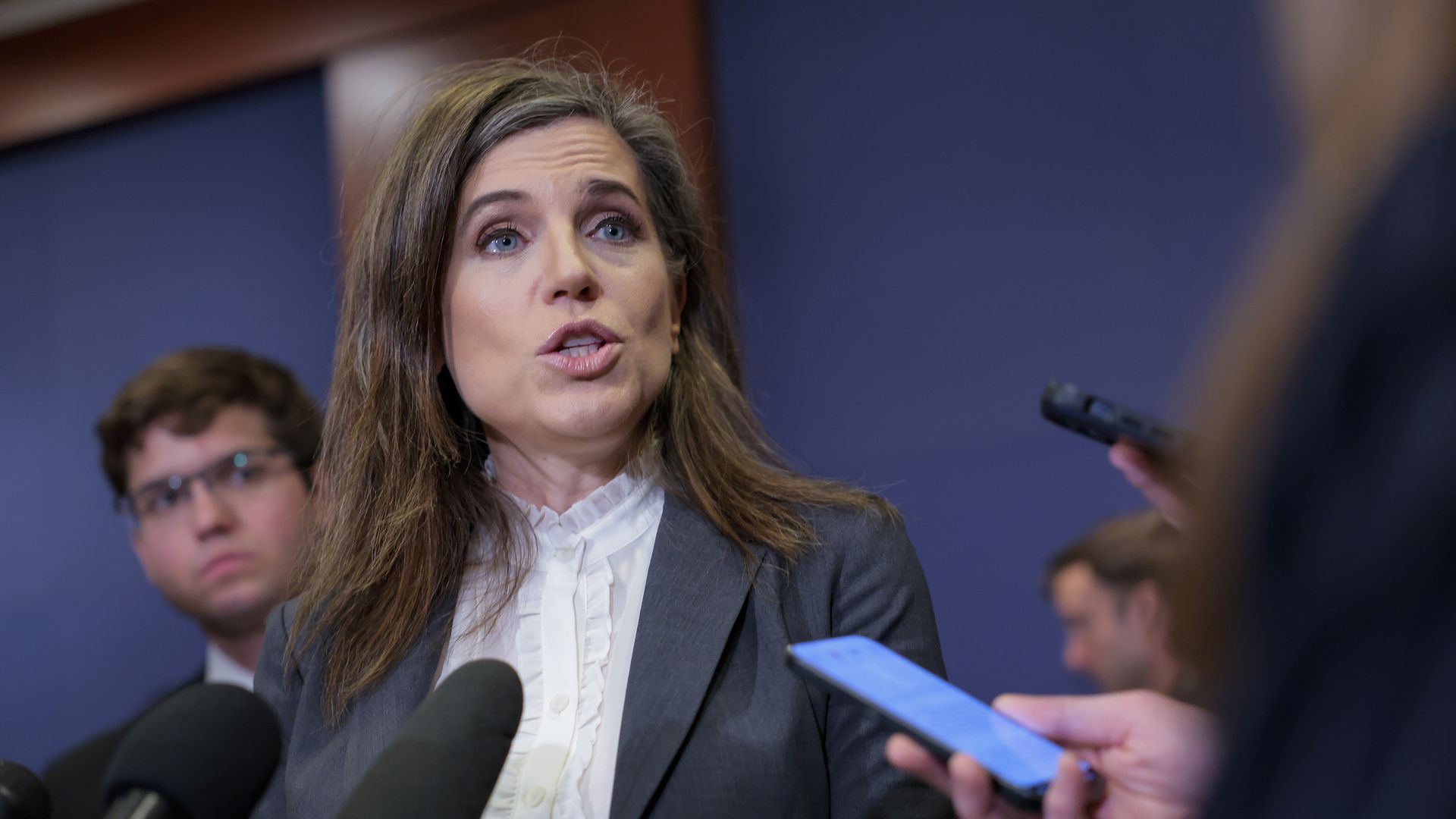
Rep. Nancy Mace (R-S.C.) told Axios she will "most likely" vote for House Democrats' resolution to constrain President Trump from waging war with Iran the next time it comes up for a vote.
Why it matters: The vote is symbolic — even if the measure passed both chambers, Trump could veto it — but Mace's support puts the House one step closer to a major rebuke of the administration's Middle East operations.
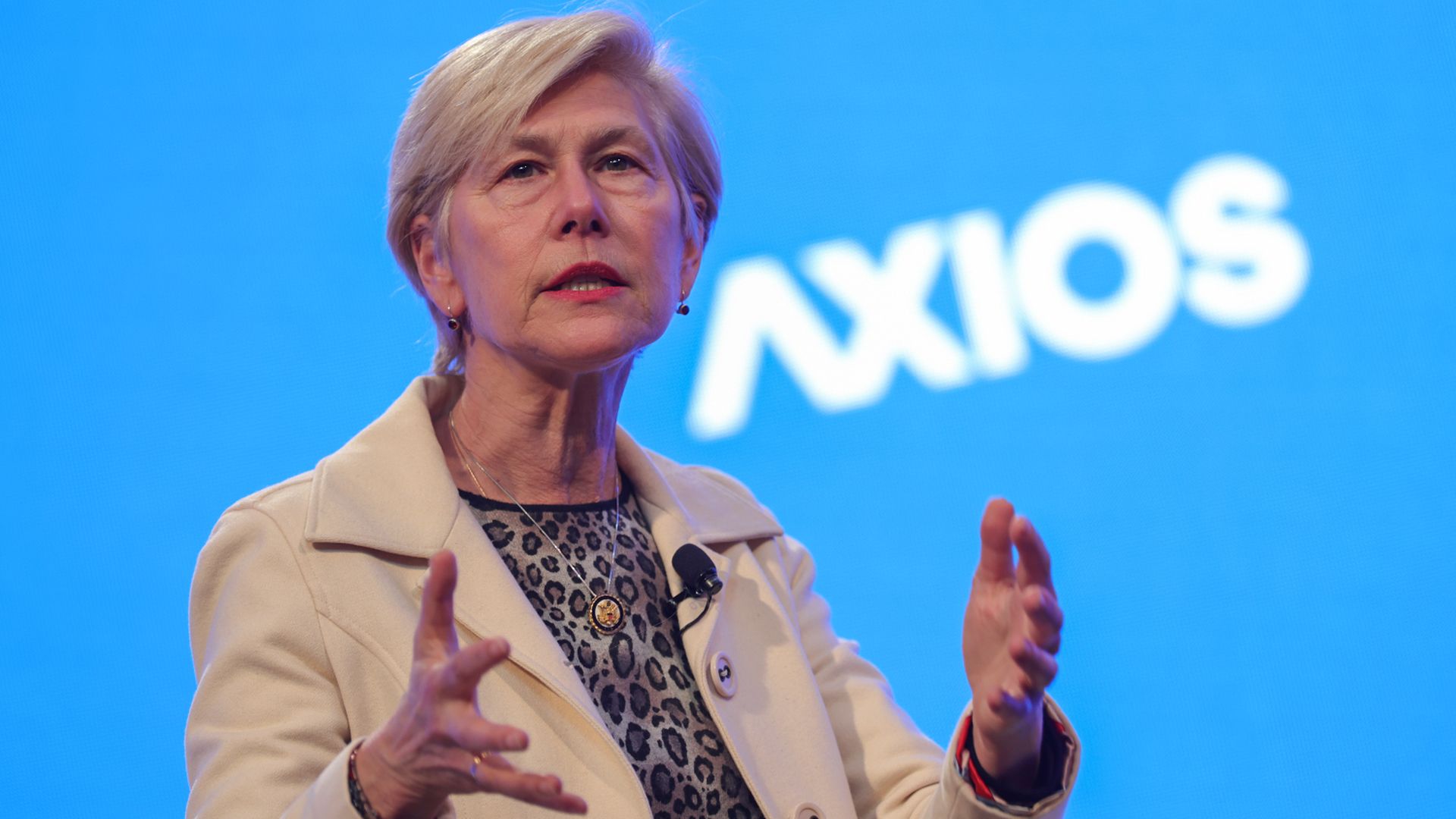
Washington, D.C. — AI regulation is already happening at the state level and should be preserved, Rep. Deborah Ross (D-N.C.) said at the Axios AI+DC Summit.
Why it matters: The White House is proposing limits on states to determine how AI should be monitored and implemented, setting up a potential clash as states push ahead with their own laws.
Axios' Maria Curi and Ashley Gold spoke to Ross and D.C. chief technology officer Stephen Miller at the March 24 event, which was sponsored by Anthropic.
What they're saying: Many states are aligned in acknowledging the technology should be managed.
"The Constitution reserves a lot of power to the states in particular areas" including public safety, which can pertain to issues that AI touches like deepfakes, election interference, and regulating how technology shows up in mental health care, Ross said.
"There's a tremendous amount of common ground" when it comes to regulating AI, Ross told Curi, citing Utah and Alabama.
Zoom in: Even as state and national lawmakers debate regulation, local governments are already putting AI to work.
Case in point: "If you call 311 today, the first voice you hear is AI asking what you're calling about," Miller told Gold.
"The outcomes are actually being improved," he said. "We're being faster. We've simplified the government and we're being more reliable."
Content from the sponsor's segment:
In a View From the Top conversation, Anthropic head of economics Peter McCrory told Axios publisher Nicholas Johnston that AI "usage is diffusing throughout the economy very rapidly … much faster than past technologies in the 20th century."
McCrory added that his advice for policymakers regarding AI is twofold.
First, "focus on the data. We need a richer picture of AI adoption and diffusion."
Second, "it's useful to think about the right policy response matched to the situation as it might unfold," he added. "The policies that are suitable to the most disruptive scenario might not be those that are most applicable to the more prosaic scenario."
HOUSTON — The stunning Middle East supply disruption could lower hurdles to building a long-planned Alaskan gas pipeline and export project that the White House covets.
Why it matters: "That's probably our single most important energy infrastructure project of this whole administration," Energy Secretary Chris Wright said at CERAWeek on Tuesday.
President Trump on Thursday called on the Iranian regime "to get serious soon" in negotiations with the U.S. "before it is too late."
Why it matters: The Trump administration through a group of mediators — Pakistan, Egypt and Turkey — has asked Iran to hold a high-level meeting this week to discuss a U.S. proposal for ending the war.
At a Senate hearing earlier this month, economist Martha Gimbel compared a wonky thing, the U.S. Treasury market, to something very relatable, a Hallmark rom-com.
Why it matters: She hit at the essence of what's confounding experts in government debt:
Why haven't bond investors penalized the U.S. for its erratic policymaking and weakening institutions by meaningfully driving up the country's borrowing costs?
The big picture: Gimbel and other experts believe that the answer is that there's not yet a good alternative to the enormous market for Treasurys, so investors stick with the "cleanest dirty shirt."
"People think that U.S. Treasurys are the only large safe asset, so people are still buying them," Ugo Panizza, an economist and director of the International Center for Monetary and Banking Studies, told Axios earlier this year.
The U.S. is "currently the boyfriend at the beginning of the Hallmark movie in the big city, where the girlfriend is still going out with him, even though she knows that it's wrong," Gimbel, executive director of the Yale Budget Lab, put it.
"But at some point, it, she's going to go home to the small town and find the nice firefighter and realize that there's another option."
"And we don't know when that will happen."
Between the lines: Metaphors are good for getting people's attention on issues that are hard to grasp.
Gimbel even got a laugh out of the room — no small feat at a hearing before the Senate Subcommittee on Fiscal Responsibility and Economic Growth.
What to watch: If investors ever find a better option than Treasurys, that would be a huge problem given that we are borrowing a lot of money right now.
The latest: The energy shock driven by the Iran war has helped drive up the yields on U.S. debt.
The MOVE Index, which tracks volatility in the Treasury market, is spiking above its 52-week average — as it has during other moments of economic shock.
"Investors' concerns include an unsustainable American fiscal position, rising inflation risk and a growing uncertainty about war," RSM chief economist Joseph Brusuelas wrote in a note Wednesday.
Data: Bloomberg via RSM US; Chart: Emily Peck/Axios
How it works: There are reasons for investors to be wary of buying sovereign debt.
Governments are hard to sue, and it's difficult to enforce your claims against them.
"They can do things that private companies can't, like pass laws and inflate their currencies," Panizza and University of Virginia international law professor Mitu Gulati explained in a piece for Reuters last summer.
Zoom out: That's why the countries that attract the most investors are the trustworthy ones with strong institutions. They are rewarded with lower borrowing costs.
17th-century England is the textbook example. It was able to borrow more because it had effective institutions that checked the king's temptations, per a well-known paper from 1989.
This helped the country become a superpower.
What they're saying: The U.S. is still considered exceptional among investors, says Layna Mosley, a professor of politics and international affairs who directs the Princeton Sovereign Finance Lab.
The bottom line: Investors still see the U.S. as the safest bet around, but if ever a new hometown hottie materializes — watch out.
Here are two hard truths the Pentagon and Anthropic won't state bluntly about their feud over unfettered AI use in warfare:
Anthropic's AI is vastly better for warfare than any other AI on the market. It could take ChatGPT, Gemini or Grok months to come close, insiders tell us.
Anthropic will take a massive, long-term financial hit if it remains blacklisted by the government as a "national security supply chain risk." We're talking tens of billions of dollars in direct and indirect contracts in the coming years, the insiders say.
Why it matters: Anthropic is suing the Trump administration for nixing use of Claude, the company's large language model, after the company refused to allow its AI to be used for fully autonomous warfare or mass surveillance of Americans (which the Pentagon says is already illegal).
Opposition to prediction markets is gathering pace in Congress, with another bill set to be introduced Thursday that would impose a sweeping ban.
Why it matters: Prediction markets now offer the chance to risk money on sports, politics, news and entertainment throughout the country — but critics say it is gambling and is rife with insider trading.
California Gov. Gavin Newsom says the idea that he and Kamala Harris don't like each other is "preposterous," but acknowledges the former vice president took a shot at him in her bestselling book last year.
"I think it created some color for the book," Newsom said on the latest episode of "The Axios Show," referring to Harris' claim that he didn't return her call when then-President Biden dropped out of the 2024 race.
"It certainly helped her book sales — not my component part, but that book has done unbelievably well," Newsom added.
Driving the news: Newsom and Harris are atop most polls of potential Democratic presidential candidates for 2028 after a multi-decade rivalry in California politics.
Silicon Valley confidence and Washington anxiety clashed at Axios' AI+DC Summit on Wednesday.
Why it matters: The AI industry says this technology will create new jobs, boost productivity and transform daily life for the better. But Americans are worried about their kids, their power bills and their livelihoods.
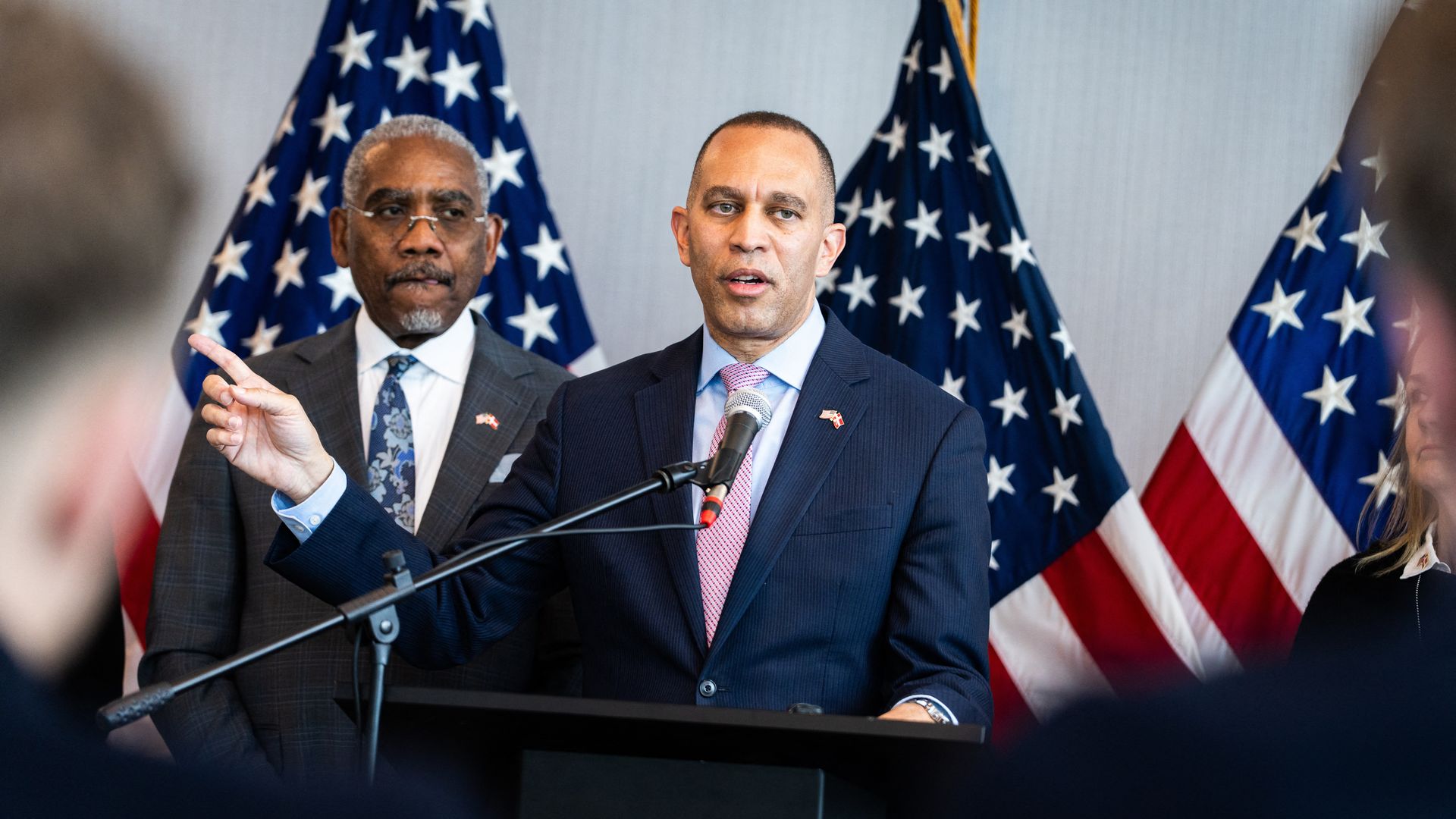
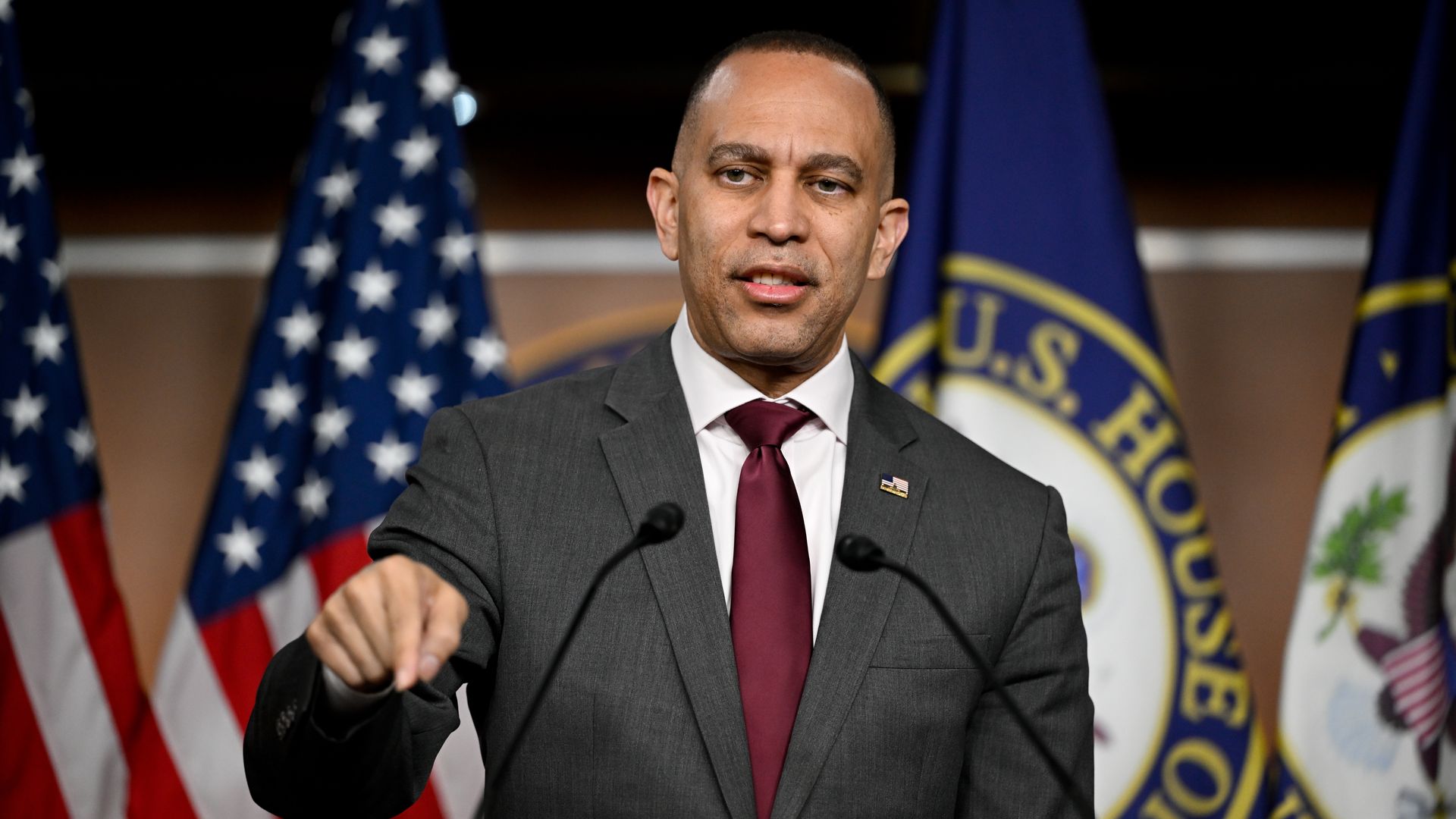
House Minority Leader Hakeem Jeffries (D-N.Y.) and some of his rank-and-file members are articulating increasingly discordant ideas of what "due process" looks like for Rep. Sheila Cherfilus-McCormick (D-Fla.).
Why it matters: Those divisions could spill out into public view very soon, with Cherfilus-McCormick — who has denied all wrongdoing — set to face a public House Ethics Committee hearing Thursday.