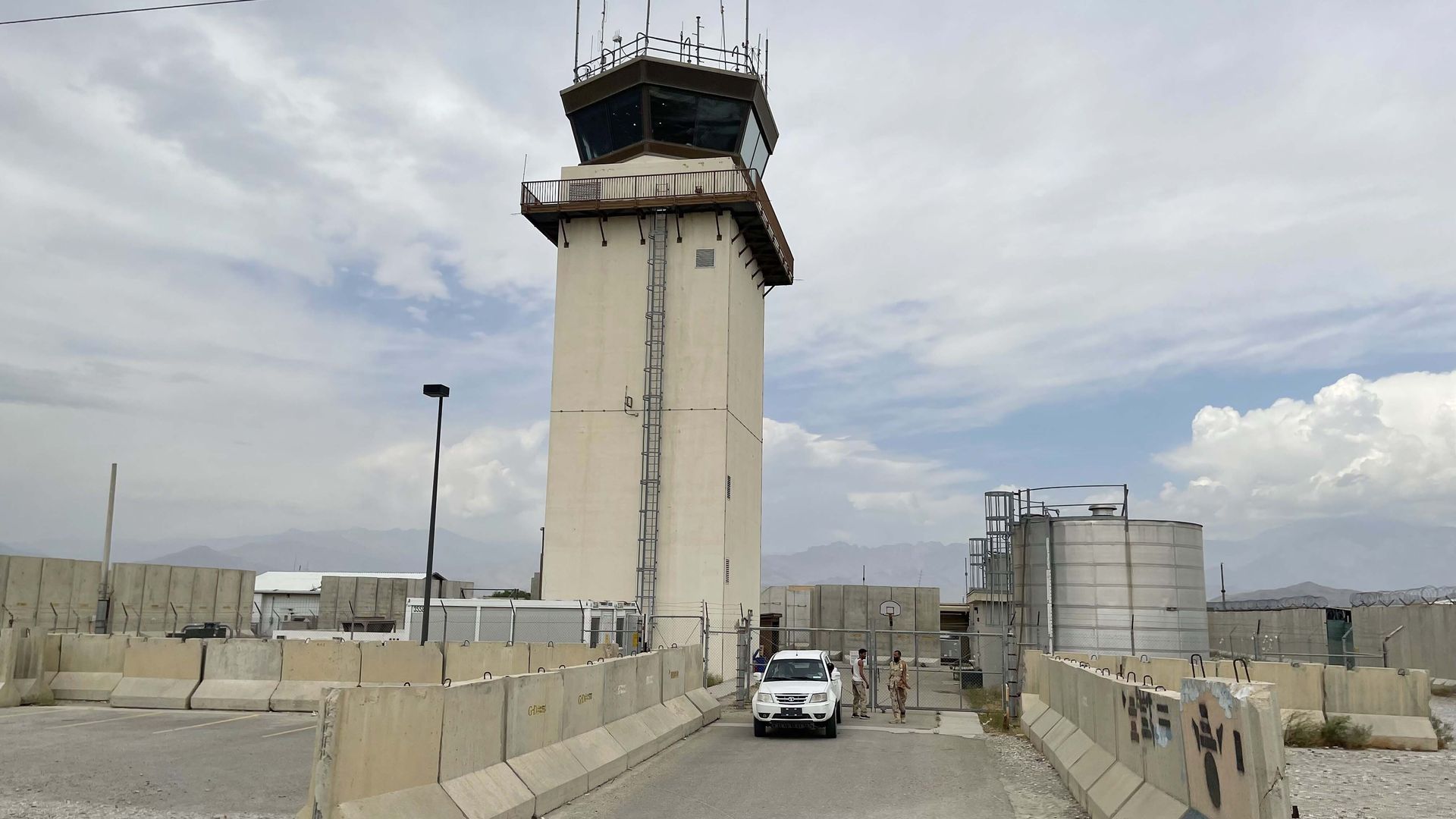
The Taliban captured Bagram Air Base on Sunday and released thousands of prisoners, including many senior al Qaeda operatives.
Why it matters: The prisoners were some of the Taliban's most hardened fighters and could pose a threat not only to Afghan citizens but to American security interests.
From shuttle flights aboard armed helicopters to finding a Kevlar helmet and flak vest in a bedroom closet, my five visits to the U.S. Embassy in Kabul showed me time and again the value of the only safe haven inside that danger zone.
Why it matters: Diplomats who fled the high-walled garrison already worked in difficult conditions. Huddled at Afghanistan’s last free airport, they're even less capable of saving the nationals who helped them — or the women and businesspeople who flourished with their aid over the past 20 years.
Some Trump-to-Biden swing voters are showing early signs of souring on President Biden despite his big win with a $1.2 trillion bipartisan infrastructure package clearing the Senate.
Why it matters: Democrats are counting on Biden's brand of governance and handling of COVID-19 and the economy to save them in next year's midterm elections.
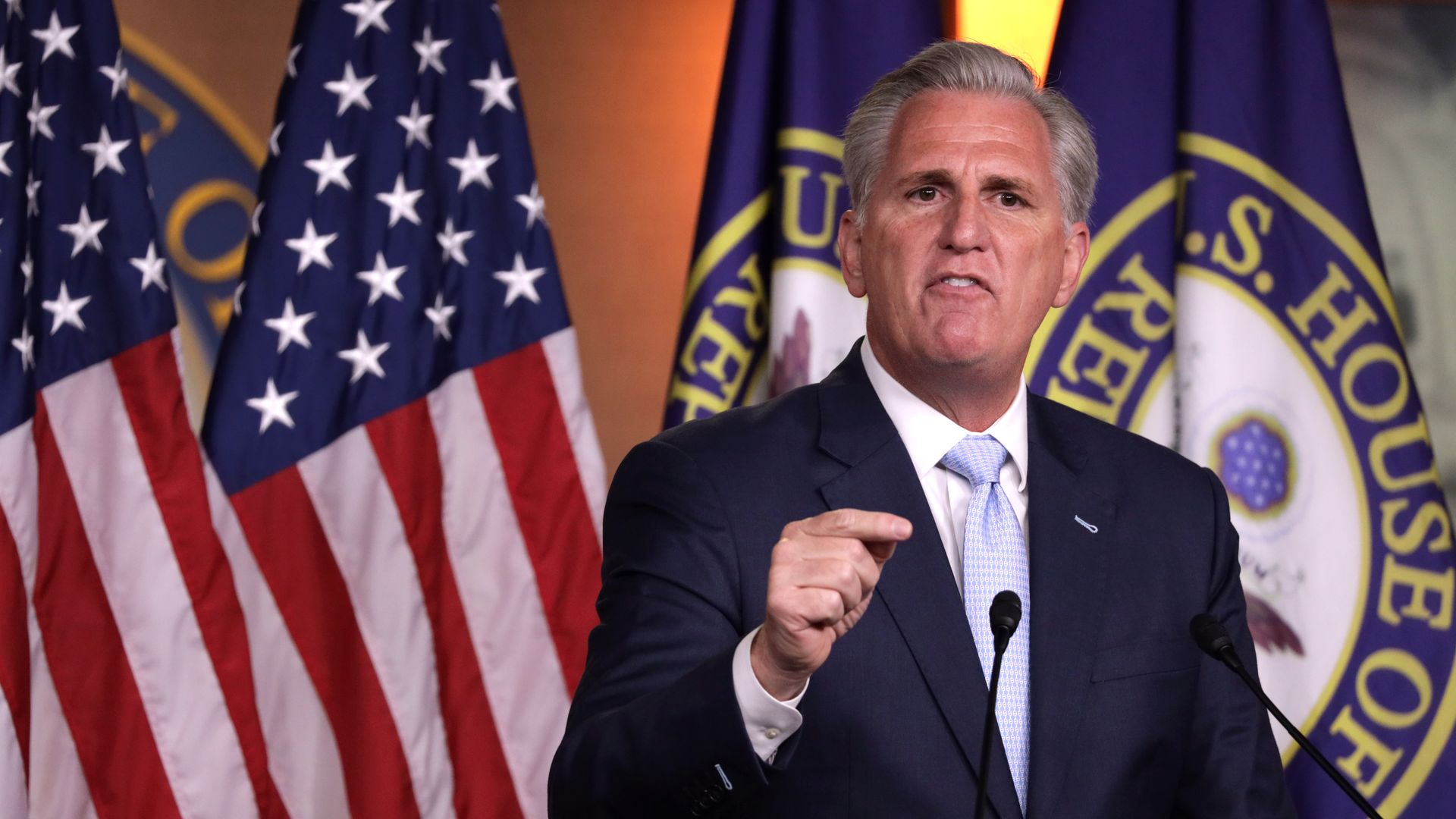
House GOP Leader Kevin McCarthy has been maintaining a deliberate silence about how his caucus should approach the $1.2 trillion bipartisan infrastructure bill.
Why it matters: It passed the Senate last week with the support of 19 Republicans, including Minority Leader Mitch McConnell (R-Ky.). But it faces an uncertain future in the House, with even Democrats divided over what they want.
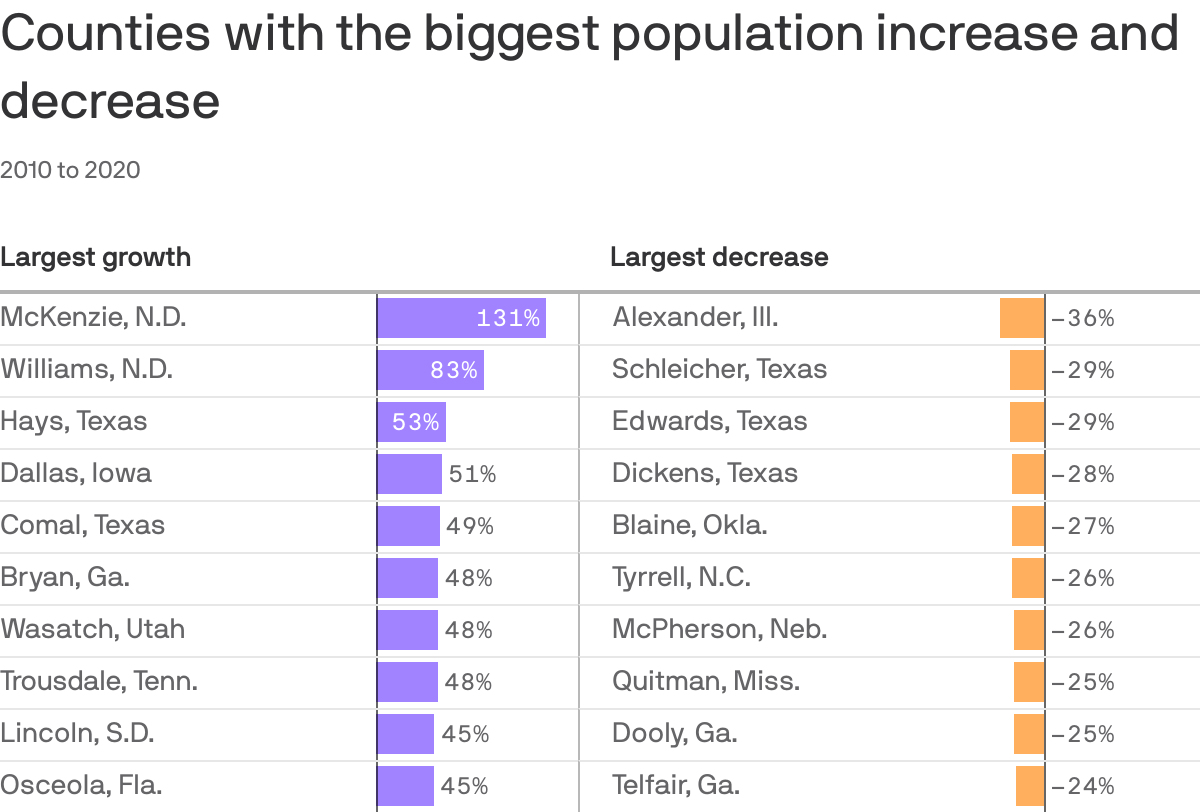
Data: U.S. Census Bureau; Chart: Danielle Alberti/Axios
Bigger population jumps than expected in major cities. More diversity. Booming suburbs. Dwindling rural areas. All may make it harder — but not impossible — for Republicans to manipulate district lines to strengthen their power in states including Texas and Georgia, experts say.
Why it matters: The first results of the 2020 census are a balm for Democrats anxious about Republican gerrymandering efforts.
Between the lines: Some of the fastest-growing counties in the last decade are near blue cities in red states — like Hays and Comal counties in Texas and Bryan County, Georgia.
Meanwhile, almost all of the shrinking counties are moving toward Republicans, Claire Low, the National Democratic Redistricting Committee's targeting and analytics director, told Axios.
"If the maps are fair, Democrats will gain seats," NDRC president Kelly Burton told Axios.
The trends in Texas, where Republicans control redistricting, “basically makes the gerrymanders uglier and more complex," Texas Civil Rights Project staff attorney Joaquin Gonzalez told Axios.
What we're watching: Of note is just how much growth there's been in major cities like New York City and Chicago — both situated in states where Democrats control redistricting.
"It's better for Democrats that there are more seats going to the cities and that they can dilute the power of rural Republican areas in those states more easily," Cook Political Report's David Wasserman told Axios.
New York state Sen. Michael Gianaris (D), who represents western Queens, said the results make it likelier that redder, upstate areas — not blue New York City — lose a seat. He credited high population counts to city campaigns to get people to fill out the census — also protecting the state against losing more House seats.
So far, fears of a significant undercount of the Hispanic population due to the Trump administration's efforts to not count undocumented immigrants haven't played out in the data, Wasserman said.
That's another good sign for Democrats, who tend to be favored by Latino voters.
What's next: The Austin area has grown substantially over the decade — and Wasserman and Low say Texas Republicans may try to concentrate that population into already blue districts to keep surrounding GOP seats as red as possible.
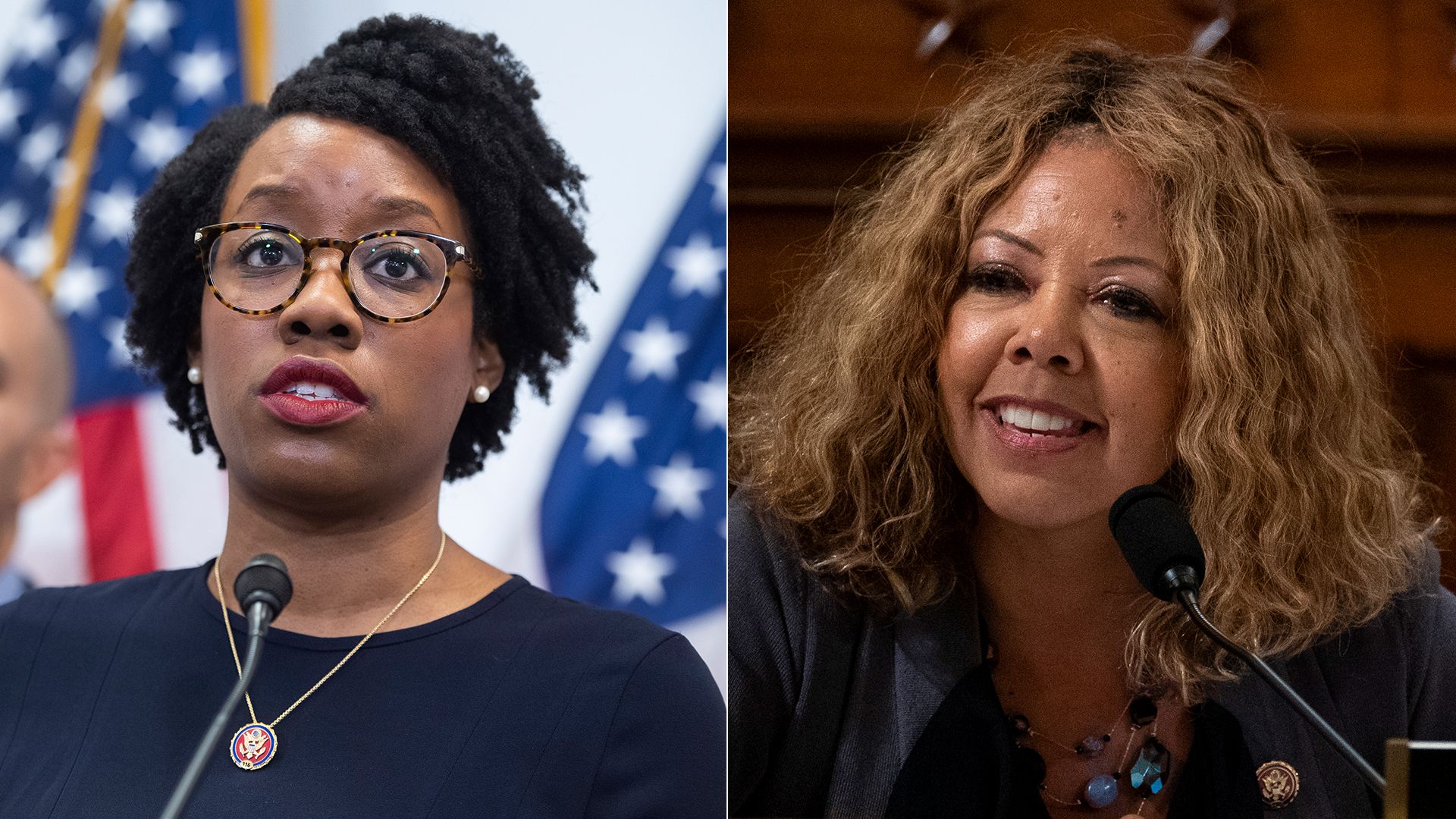
Democrats are prioritizing two competitive House seats held by Black women in their party — Reps. Lauren Underwood in Illinois and Lucy McBath in Georgia — as new census data shows how demographic shifts are shaping the midterms.
Why it matters: Each of these swing districts covers a majority white area that Republicans are eager to take back. Elections experts predict both districts could change dramatically — but in different ways — because of the 2020 count.
As Taliban leaders continue to meet inside the presidential palace in Kabul and Ashraf Ghani has left the country, the U.N. Security Council has called an emergency meeting for Monday morning.
The big picture: Secretary General António Guterres is scheduled to brief the security council as Taliban leaders continue to call for an "unconditional surrender" with little remaining pushback.
NIH Director Francis Collins told "Fox News Sunday" claims that undocumented immigrants crossing the Southern border have played a major role in the U.S. spread of COVID-19 are a "distraction."
What he's saying: "It's an issue, but it is certainly not the cause of our current dilemma," Collins told host Chris Wallace. "We've got enough of a problem with our own citizens who have refused to roll up their sleeves, so maybe that would be a better thing to focus on if we are trying to end this."
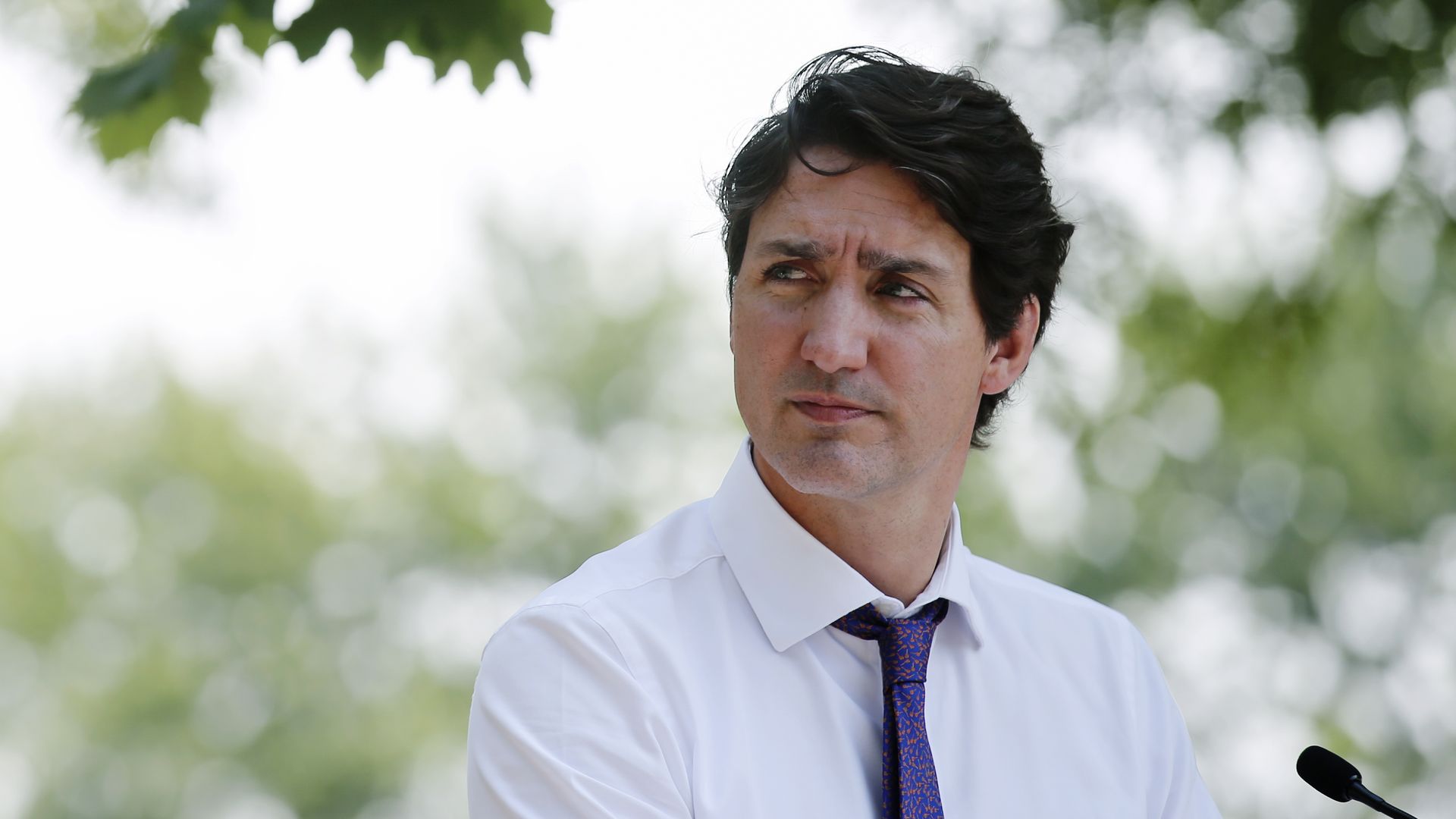
Canadian Prime Minister Justin Trudeau on Sunday officially called for an early national election for Sept. 20, a wager that voters will reward his government's handling of the COVID-19 pandemic, the Wall Street Journal reports.
The big picture: Trudeau is hoping to secure a parliamentary majority to help him push through his progressive agenda. He has governed Canada with a minority of legislative support in parliament for the past two years.
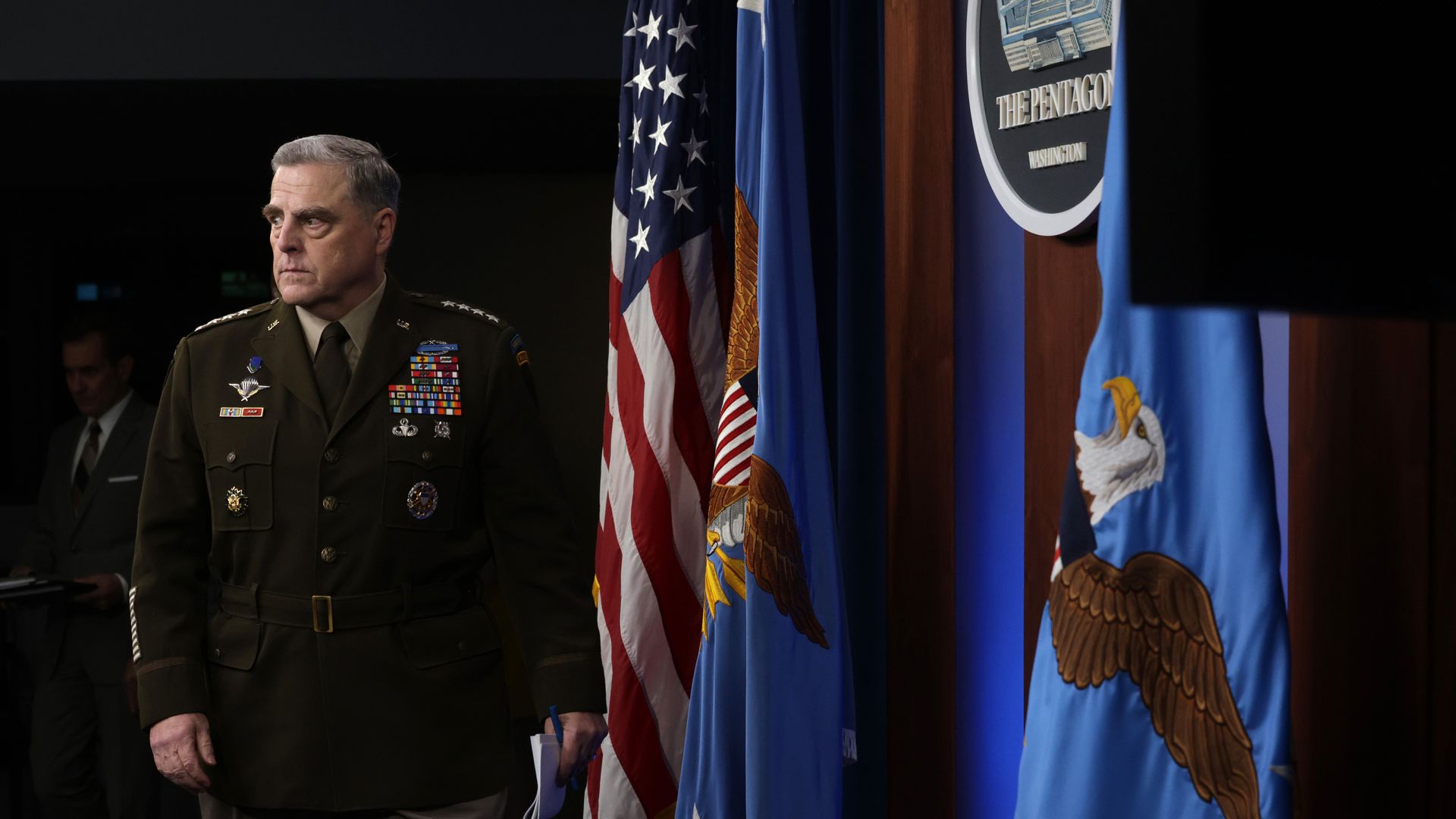
Chairman of the Joint Chiefs of Staff Mark Milley told senators Sunday that a previous assessment of how soon terrorist groups will likely reconstitute in Afghanistan will speed up because of what's happening there now, according to three sources on the phone call.
Why this matters: Protecting the U.S. against terrorist threats to the homeland was an original reason for engaging the U.S. in this 20-year war.
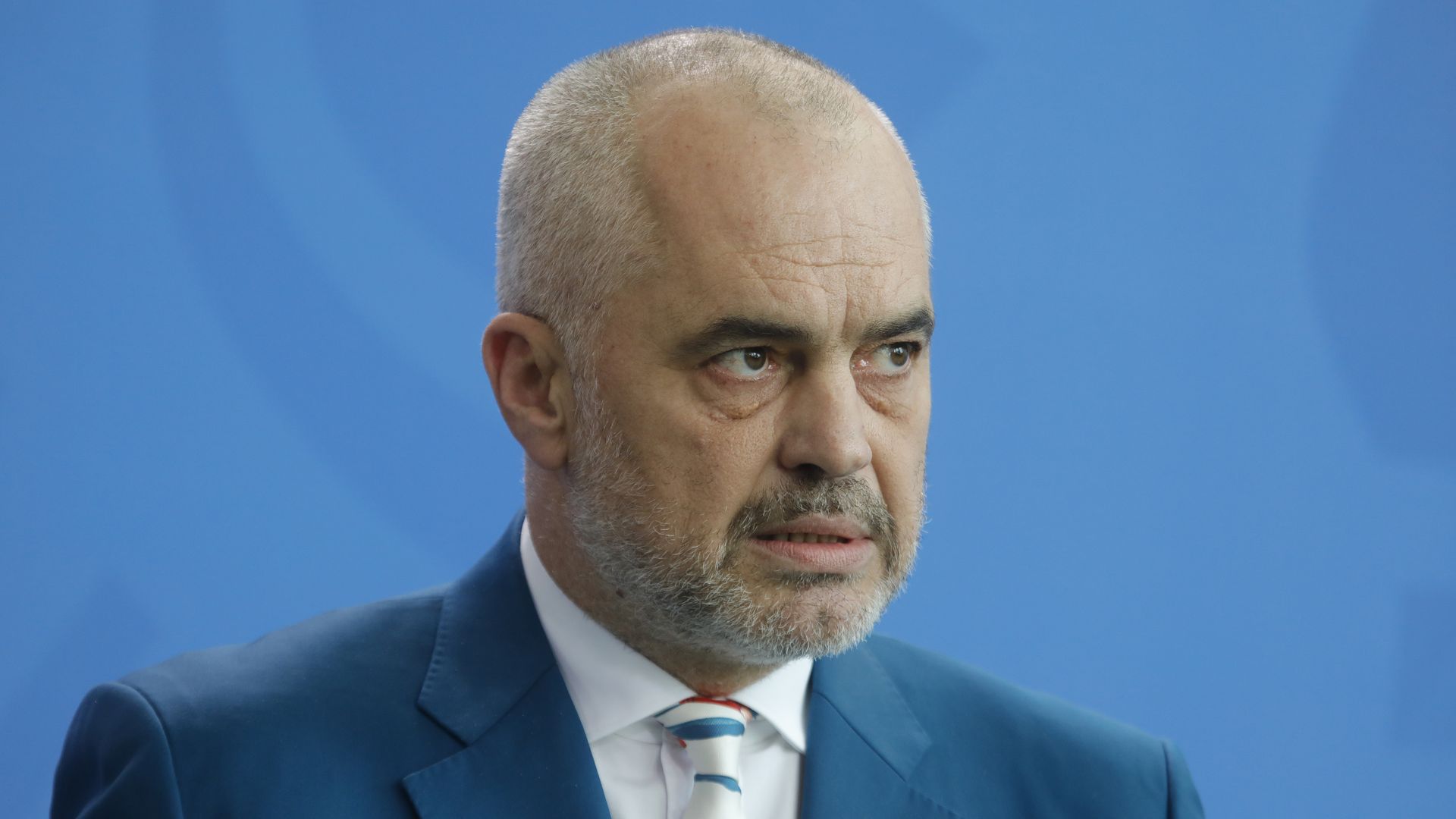
Albanian Prime Minister Edi Rama wrote on Facebook on Sunday his country would "serve as a transit country for a certain number of Afghan political immigrants" who have the U.S. as their final destination and face the threat of violence from the Taliban as the U.S. withdraws from Afghanistan.
Why it matters: The announcement comes as the Taliban launched a lightning offensive to take over Afghanistan, with nearly every major city in the country falling under their control.
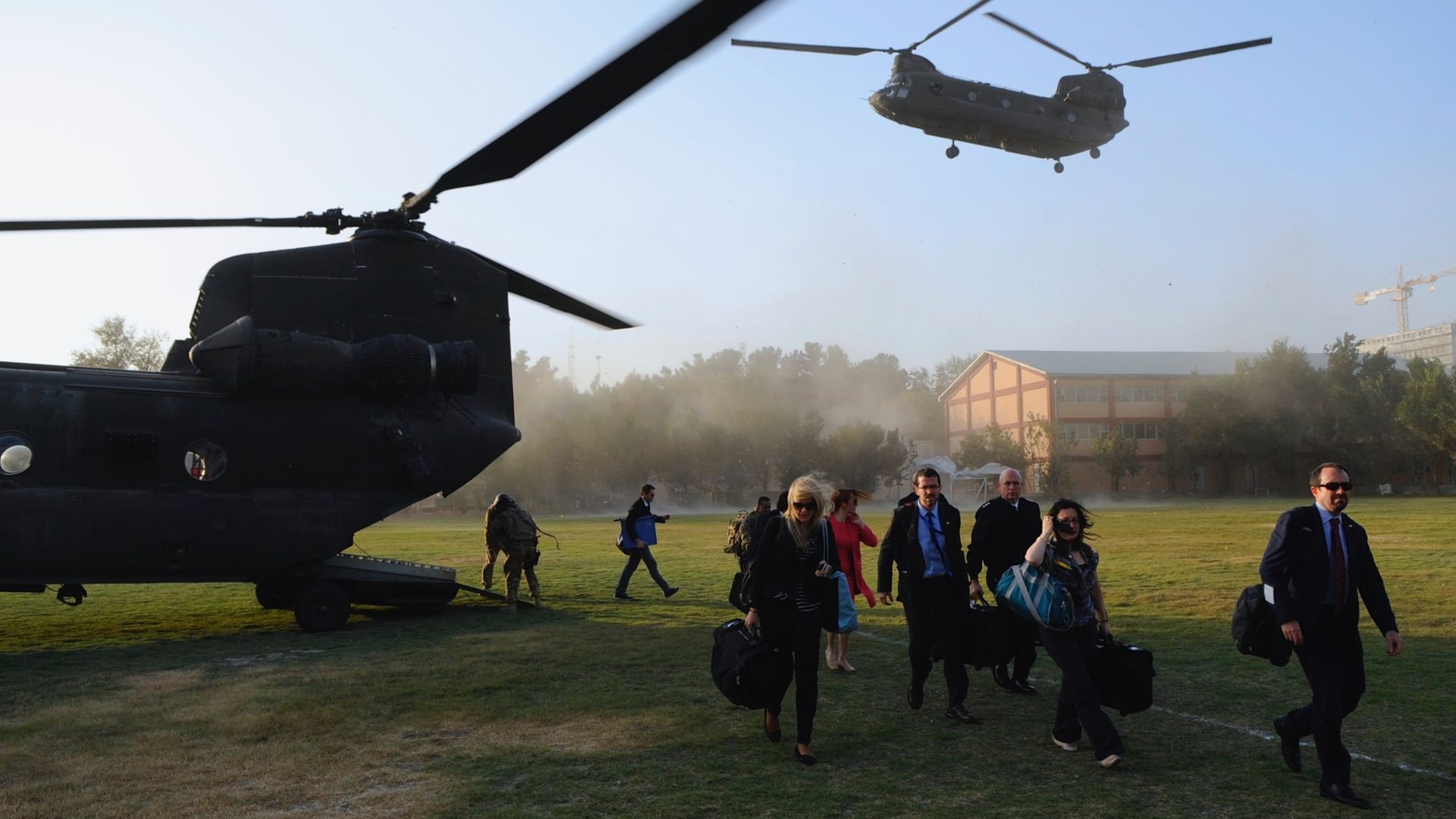
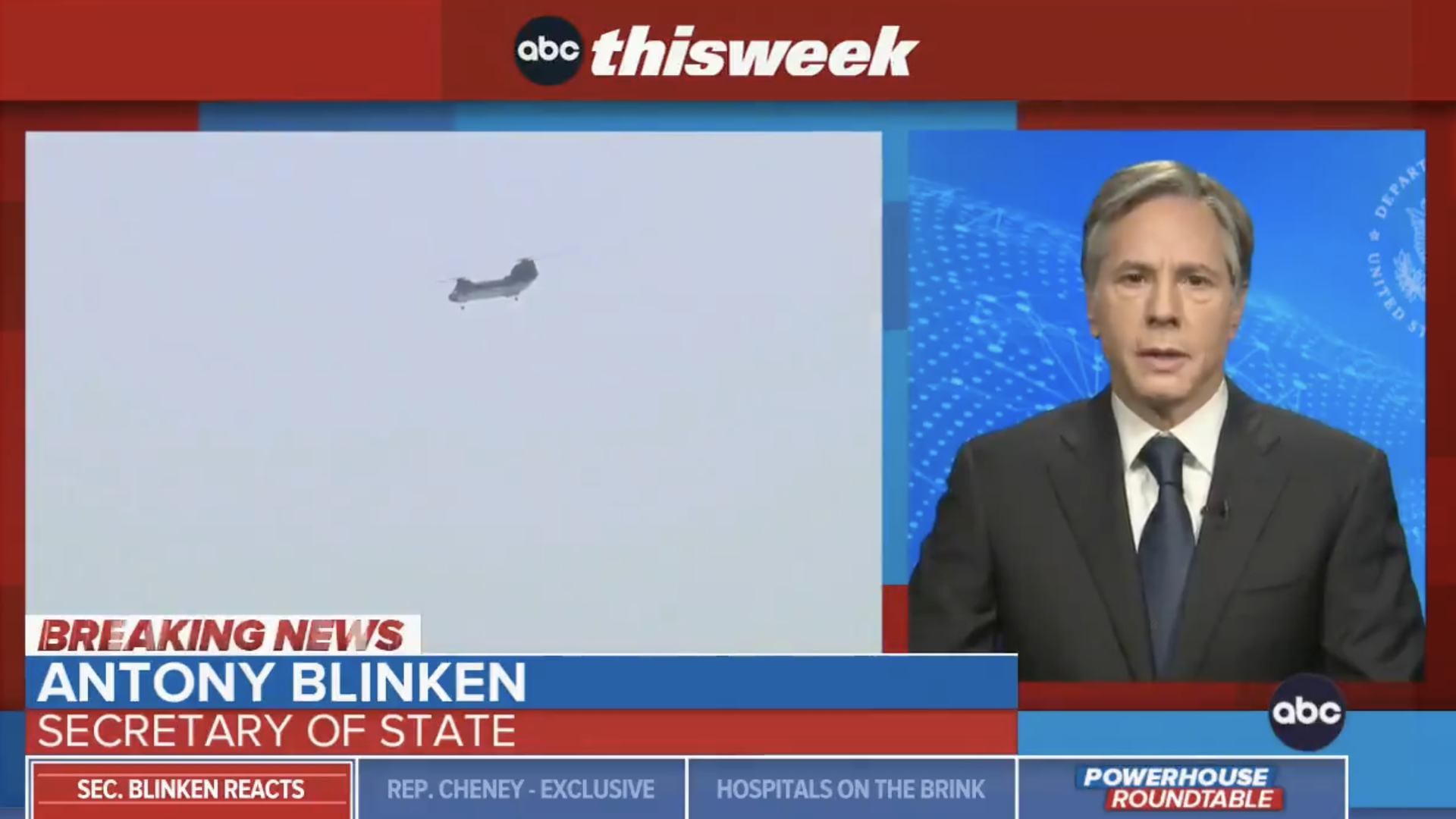
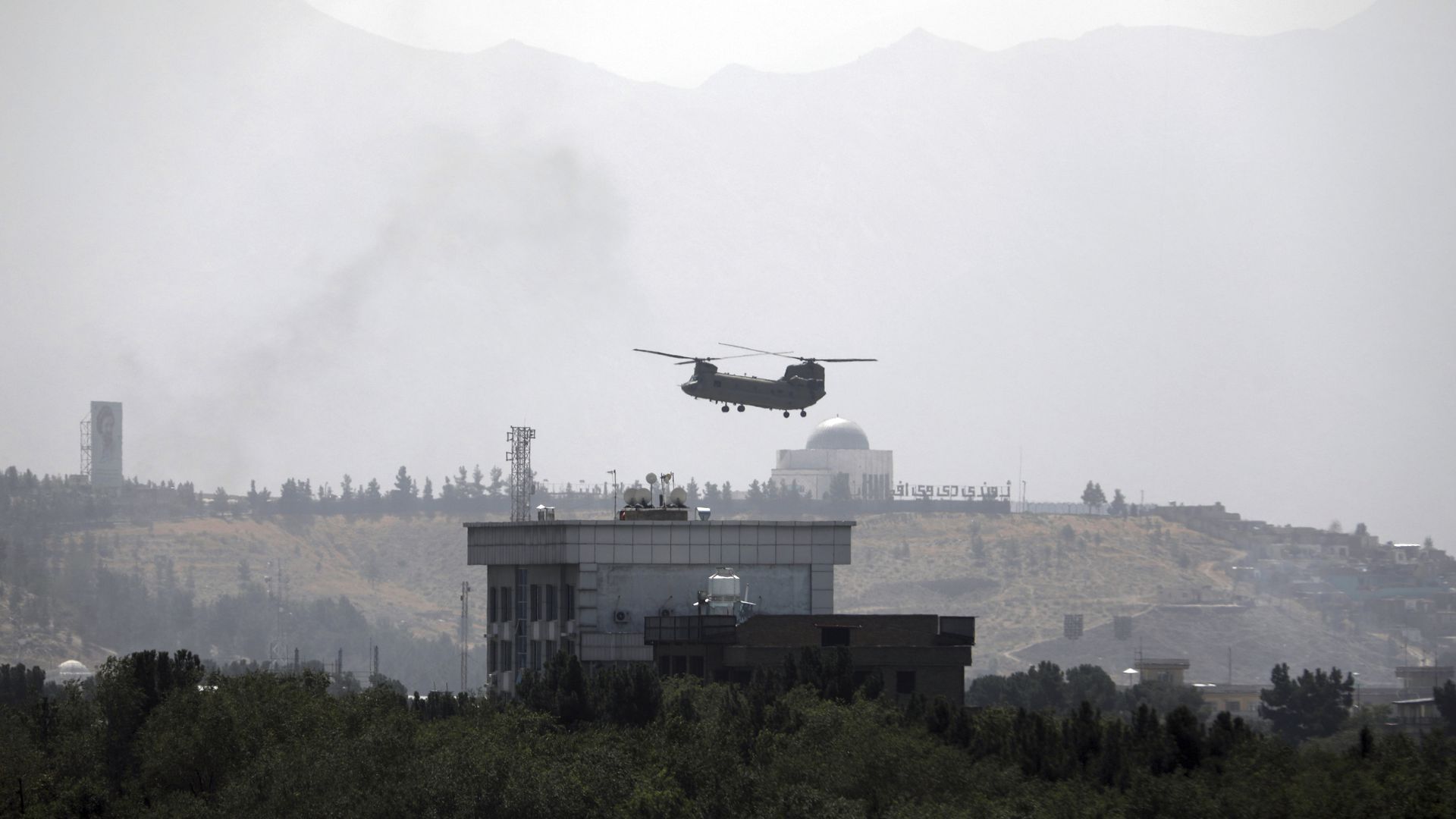
As video emerged on Sunday of military helicopters landing near the U.S. embassy in Kabul to rapidly evacuate U.S. personnel, Secretary of State Antony Blinken assured: "This is manifestly not Saigon."
Driving the news: Blinken made the rounds on the Sunday shows to defend President Biden's resolute withdrawal of the U.S. military as Kabul nears complete surrender to the Taliban.
Rarely has an American president's predictions been so wrong, so fast, so convincingly as President Biden on Afghanistan. Usually military operations and diplomacy are long; the outcomes, foggy. Not here.
Flashback: Just five weeks ago, President Biden assured Americans: "[T]he likelihood there’s going to be the Taliban overrunning everything and owning the whole country is highly unlikely."
White, non-Hispanic Americans now account for less than six in 10 people in the U.S. — a more precipitous drop over the past decade than experts expected — and they're no longer the racial-ethnic majority in 13% of U.S. counties.
The big picture: America's identity is shifting with its population.
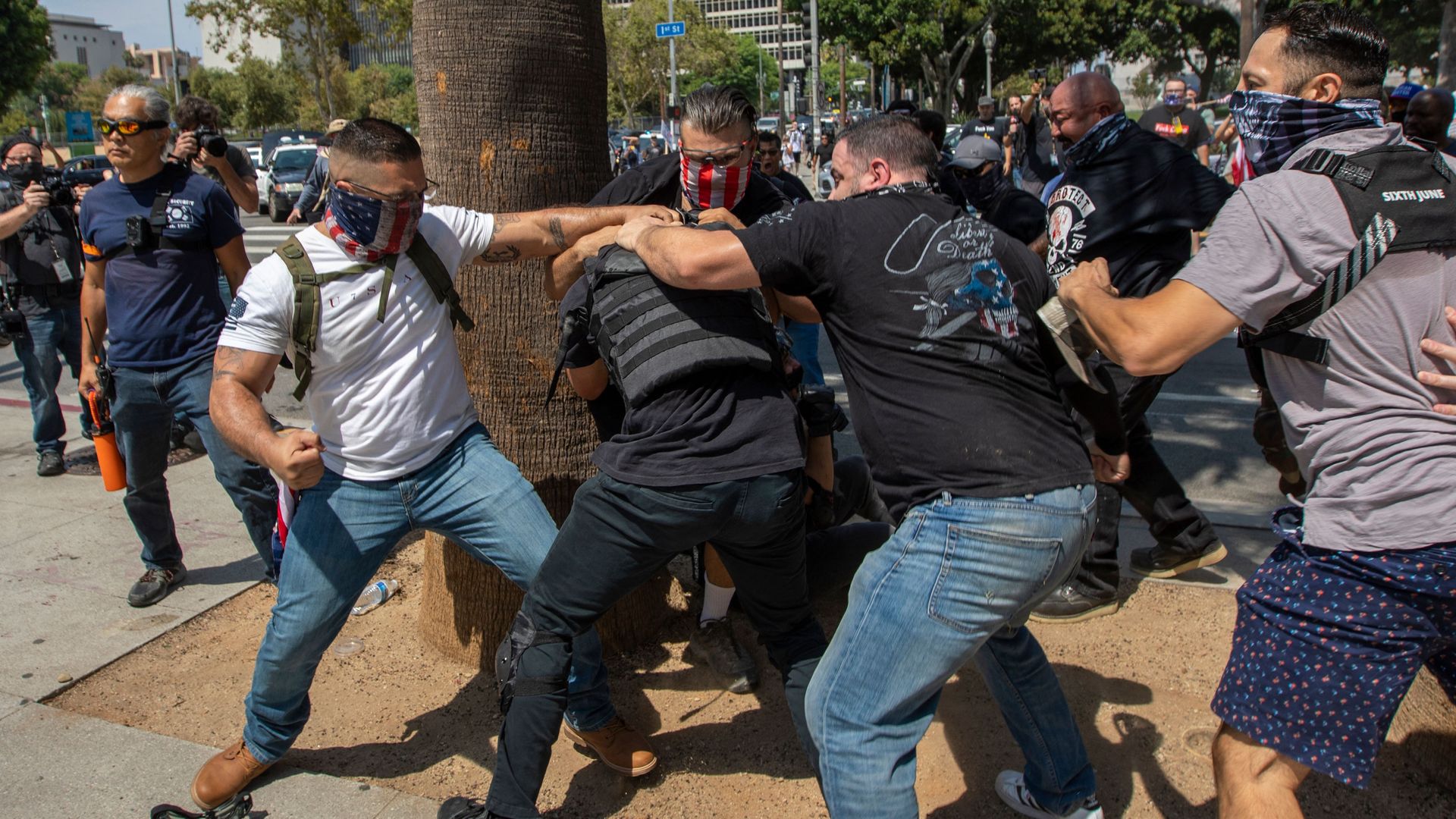
A man was stabbed and a journalist said he was assaulted during a protest against COVID-19 vaccinations outside Los Angeles' City Hall on Saturday.
Driving the news: A fight broke out after several hundred demonstrators rallied outside the City Hall and a small group of counterprotesters gathered nearby about 2pm local time, per the Los Angeles Times.
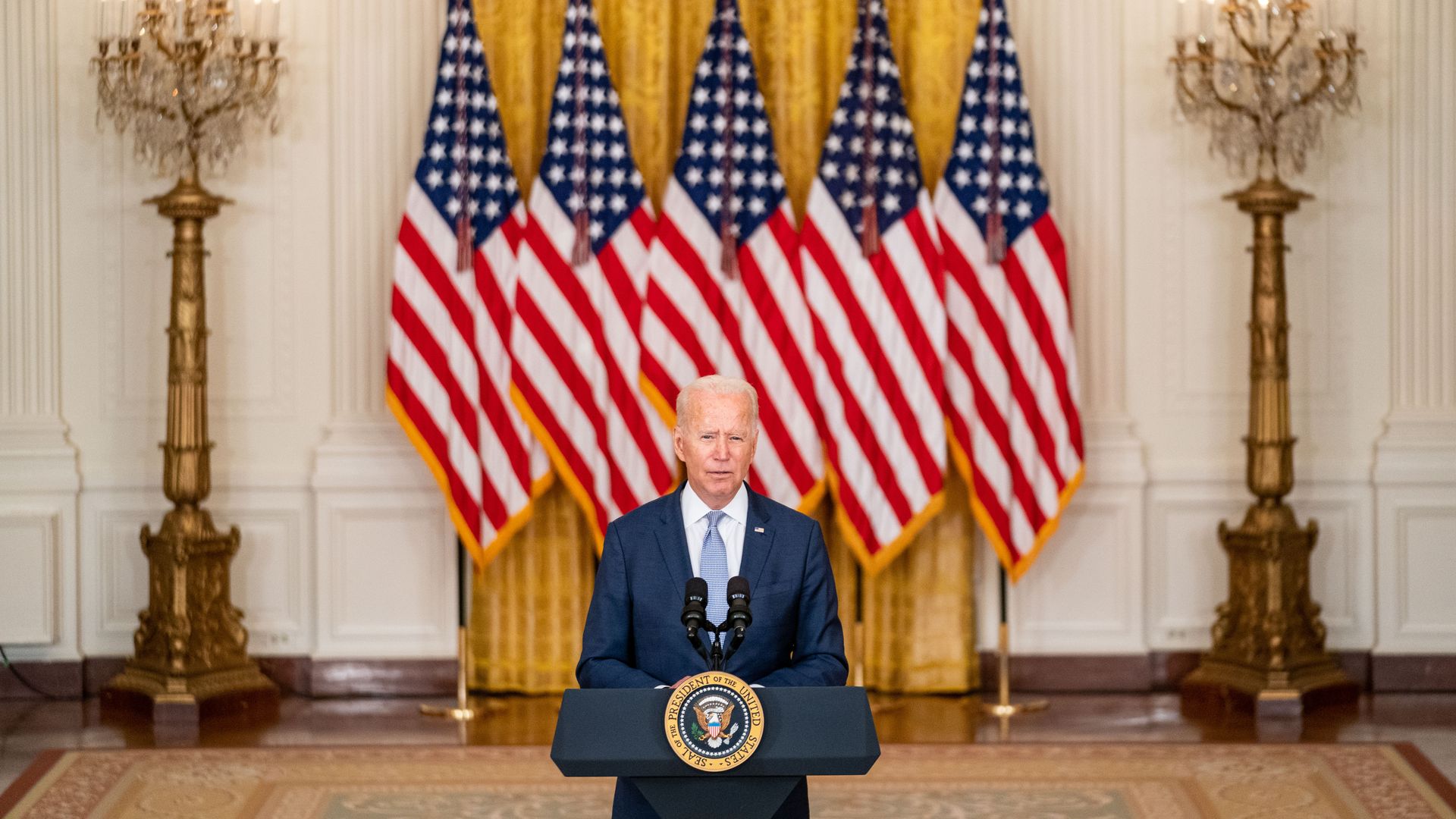
President Biden on Saturday doubled down on his long-standing rationale for withdrawing the U.S. military from Afghanistan as the threat of Kabul falling to the Taliban looms large.
Driving the news: Biden blamed his predecessor, former President Trump, for empowering the Taliban and leaving them "in the strongest position militarily since 2001." Trump responded with a statement blaming Biden for the situation unfolding in Afghanistan.