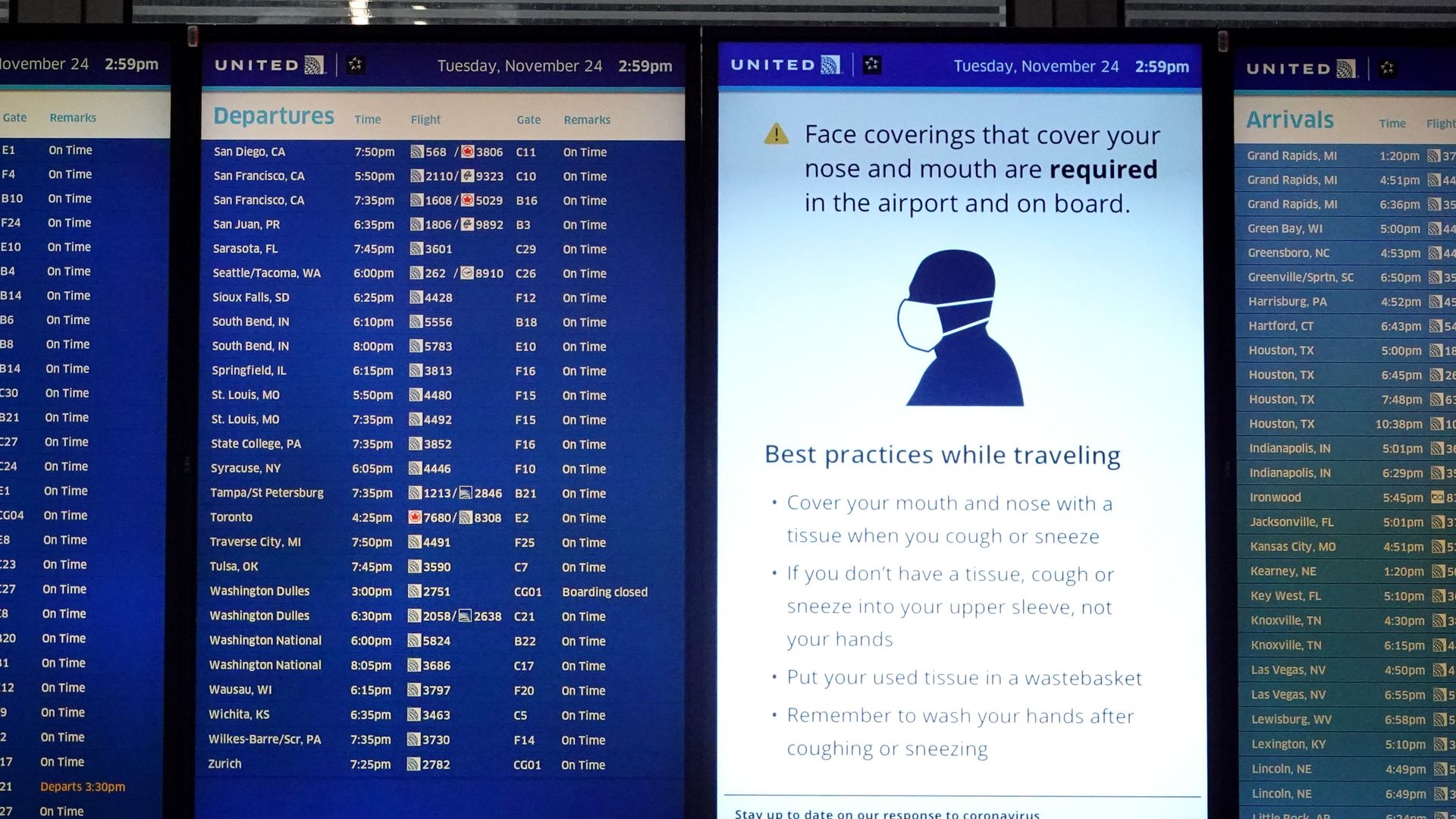
A group of Senate Republicans on Friday pressed the Centers for Disease Control and Prevention to stop requiring masks for fully vaccinated people on public transportation.
Why it matters: The CDC lifted mask requirements for fully vaccinated people in nearly all indoor spaces last month. Transportation is one of the few exceptions.
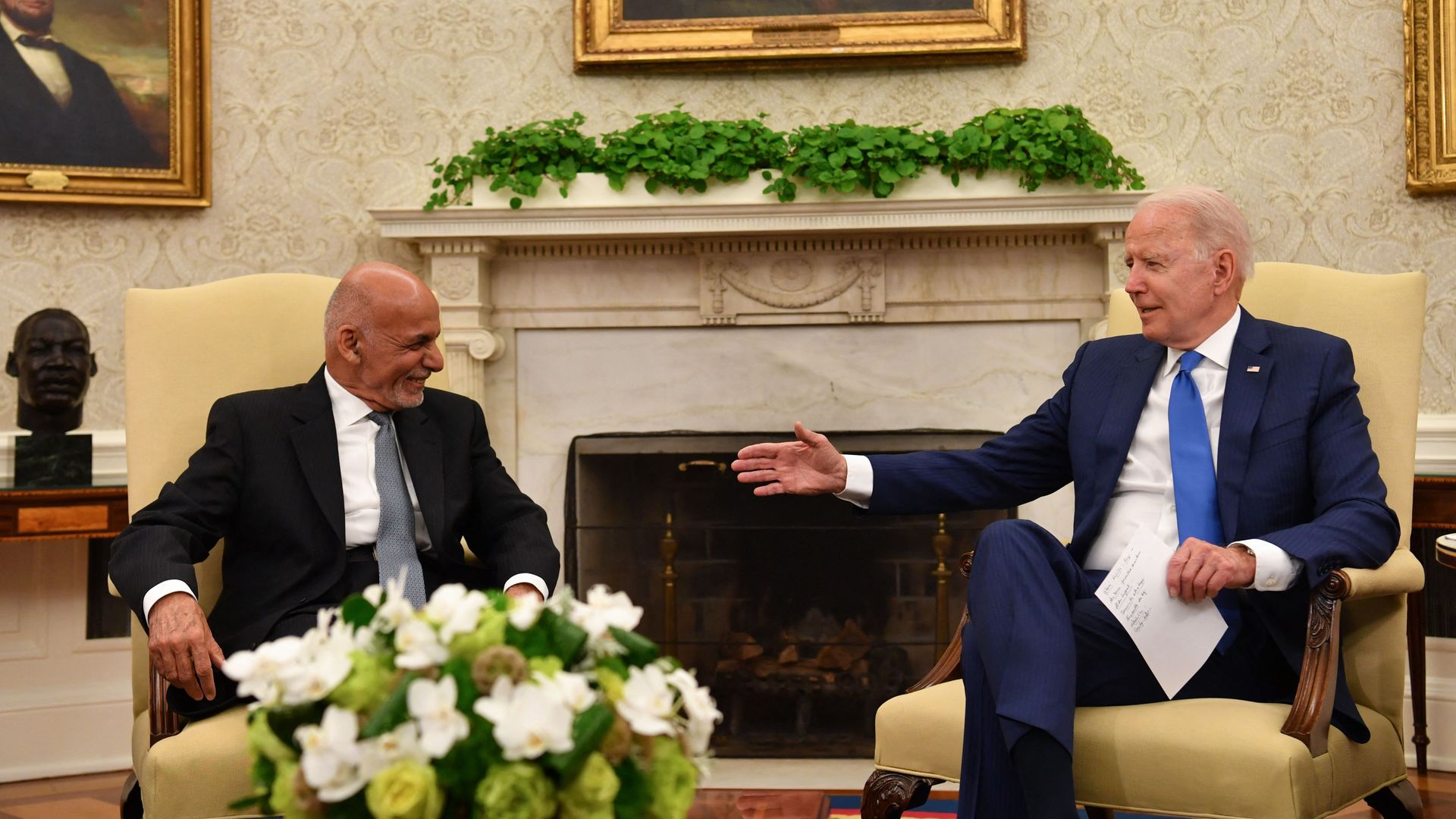
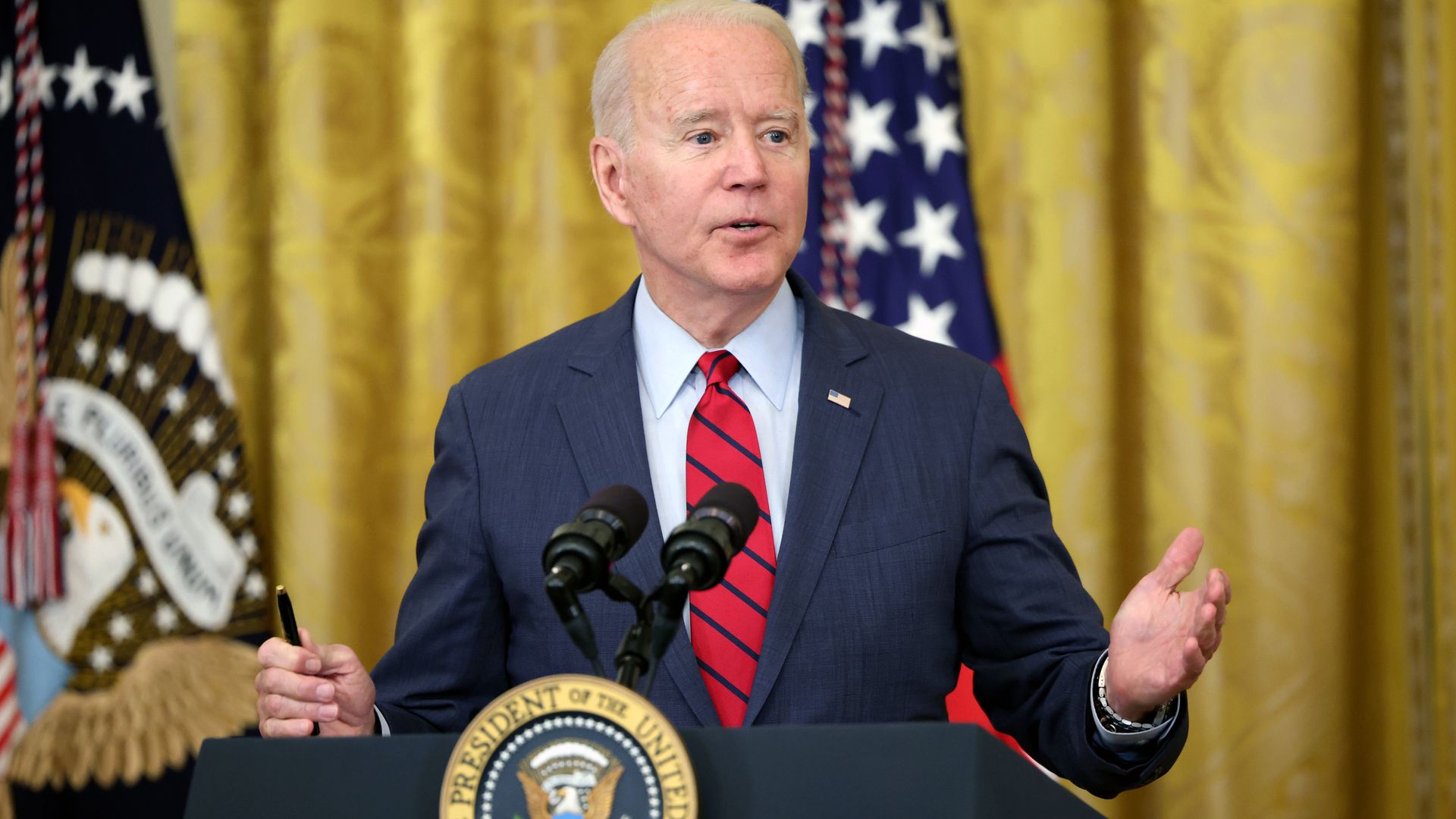
President Biden assured President Ashraf Ghani on Friday that the United States would maintain a "sustained" partnership with Afghanistan following the U.S. troop withdrawal.
The big picture: The oval office meeting comes as Afghanistan faces increasingly dire threats from a violent insurgency.
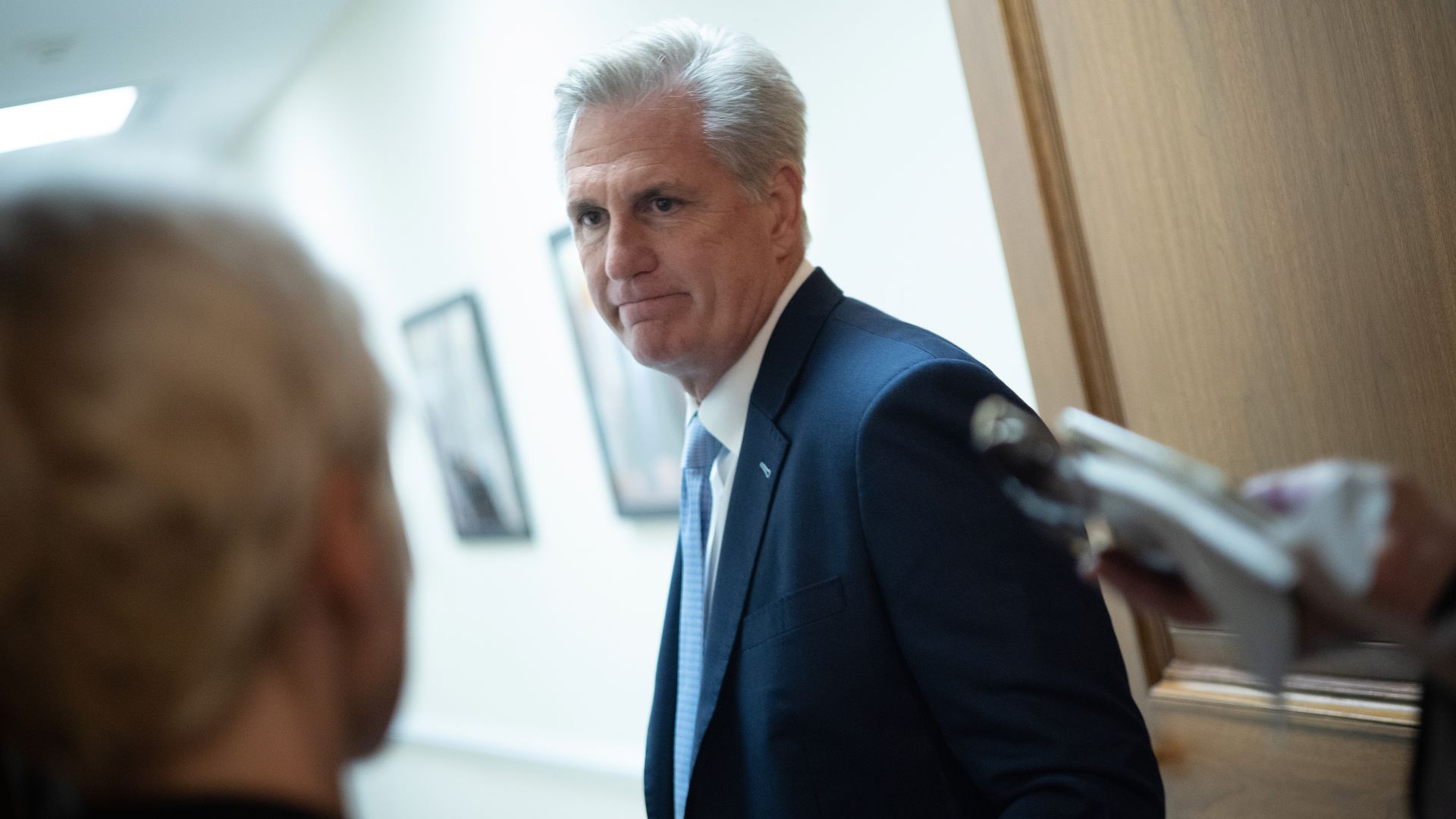
Capitol Police officers asked House Minority Leader Kevin McCarthy (R-Calif.) to publicly denounce some members of his delegation for their comments on the Capitol insurrection in a meeting Friday, the Washington Post reports.
Why it matters: Officer Michael Fanone, who suffered a heart attack and traumatic brain injury after being attacked by Trump supporters during the Jan. 6 riots, has wanted to meet with McCarthy and other Republicans since they opposed the creation of a 9/11 style commission to investigate the attack, according to AP.
The U.S. government on Friday released a landmark report, mandated by Congress, examining "unidentified aerial phenomena" witnessed by U.S. military personnel over recent years.
Driving the news: While the report found no evidence of aliens, it did find that UAPs could pose a threat to national security. The report issued by the intelligence community and the Department of Defense did not definitively determine what the military personnel saw.
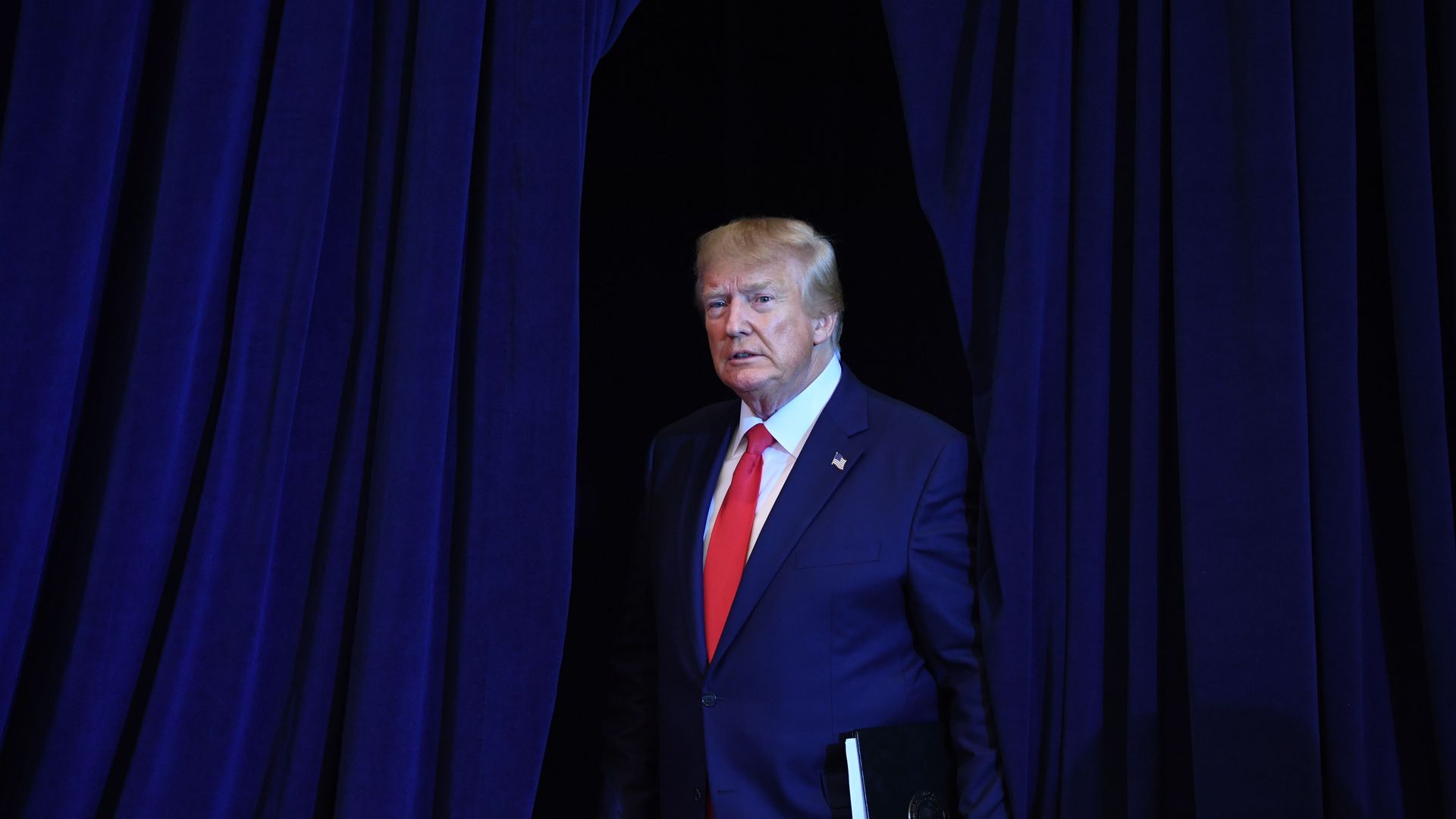
A lawyer for the Trump Organization said Friday that Manhattan prosecutors expect to bring criminal charges against the company as soon as next week, NBC News reports.
Why it matters: The charges are part of the Manhattan district attorney's office investigation into former President Trump's business dealings, such as benefits provided to the company's top executives.
President Biden signed legislation on Friday designating the Pulse nightclub a national memorial.
Why it matters: The 2016 mass shooting at the Orlando, Florida gay club that left 49 people dead and more than 50 people injured is one of the deadliest attacks in modern American history.
Attorney General Merrick Garland announced Friday that the Department of Justice is suing the state of Georgia over its voting restrictions, alleging that a law passed this spring discriminates against Black voters.
Why it matters: It's the first major action the Biden administration has taken in response to the wave of voting restrictions that Republican-led states have sought to impose in the wake of President Biden's election.
The Supreme Court on Friday ruled 6-3 that certain Alaskan tribal groups that are not officially recognized as tribal governments are eligible to receive some of the $8 billion in tribal funds under the CARES Act Congress passed in response to the coronavirus pandemic.
What happened: The Court ruled that since Alaska Native corporations (ANCs) are considered Indian tribes under Indian Self-Determination and Education Assistance Act, they should be considered Indian tribes under the CARES Act and be eligible for funding.
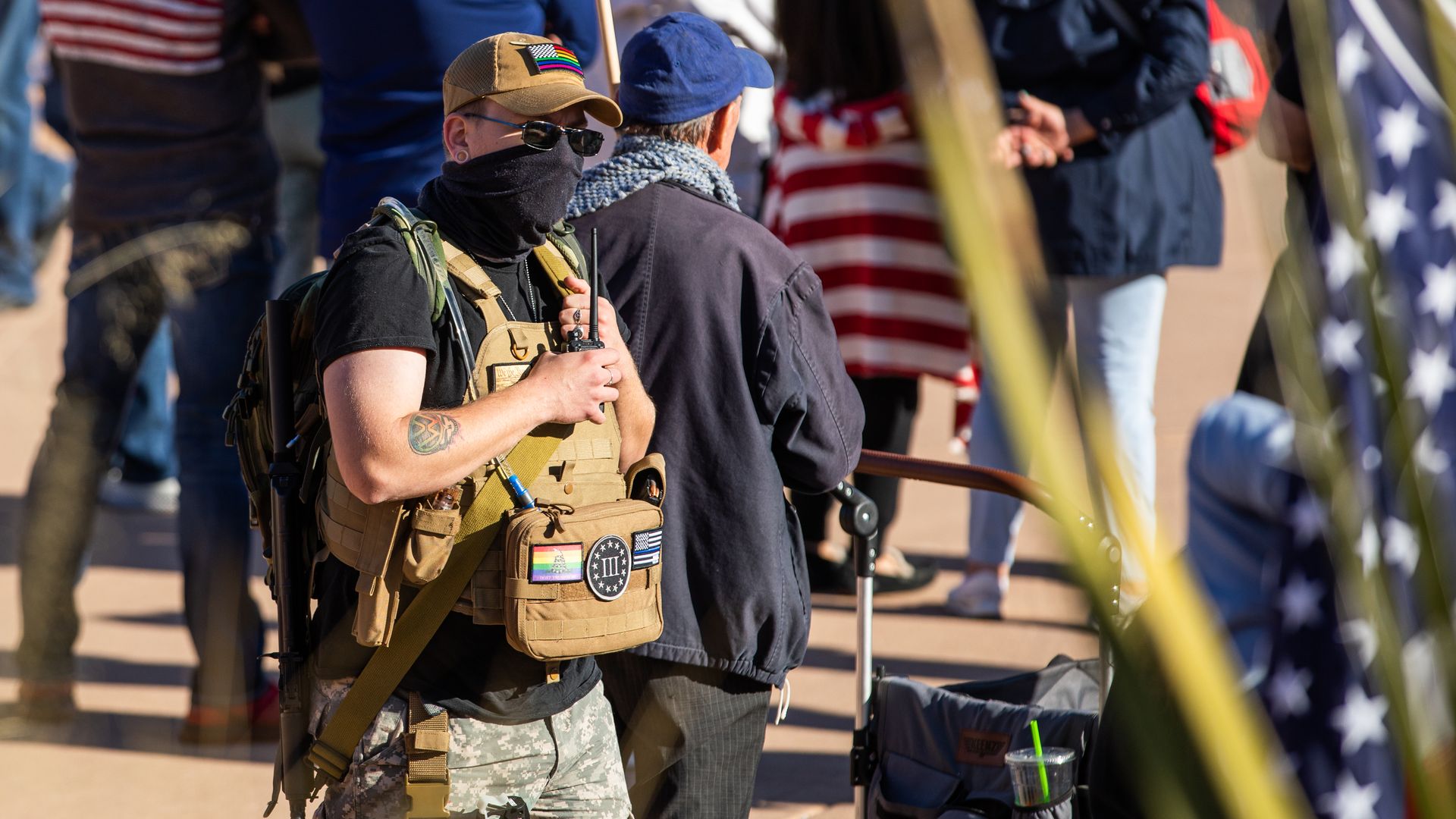
Canada's government added the far-right, anti-government militia group the Three Percenters to its list of terrorist entities on Friday, according to CBC.
Why it matters: People who have identified themselves as Three Percenters members have been charged with conspiracy in the Jan. 6 Capitol attack.
Capitol Hill infrastructure negotiations have taken on a complexity that matches their planetary and political stakes.
Driving the news: President Biden and a bipartisan Senate group yesterday unveiled the bare bones of an eight-year, $1.2 trillion infrastructure package that includes energy and transit provisions.
President Biden announced on Friday that he would appoint Jessica Stern, executive director of OutRight Action International, as U.S. special envoy for LGBTQ rights at the State Department.
Why it matters: Stern currently serves as head of an organization that specializes on addressing human rights violations against the LGBTQ community. As U.S. envoy, she will focus on promoting and protecting the rights of LGBTQ people around the world.
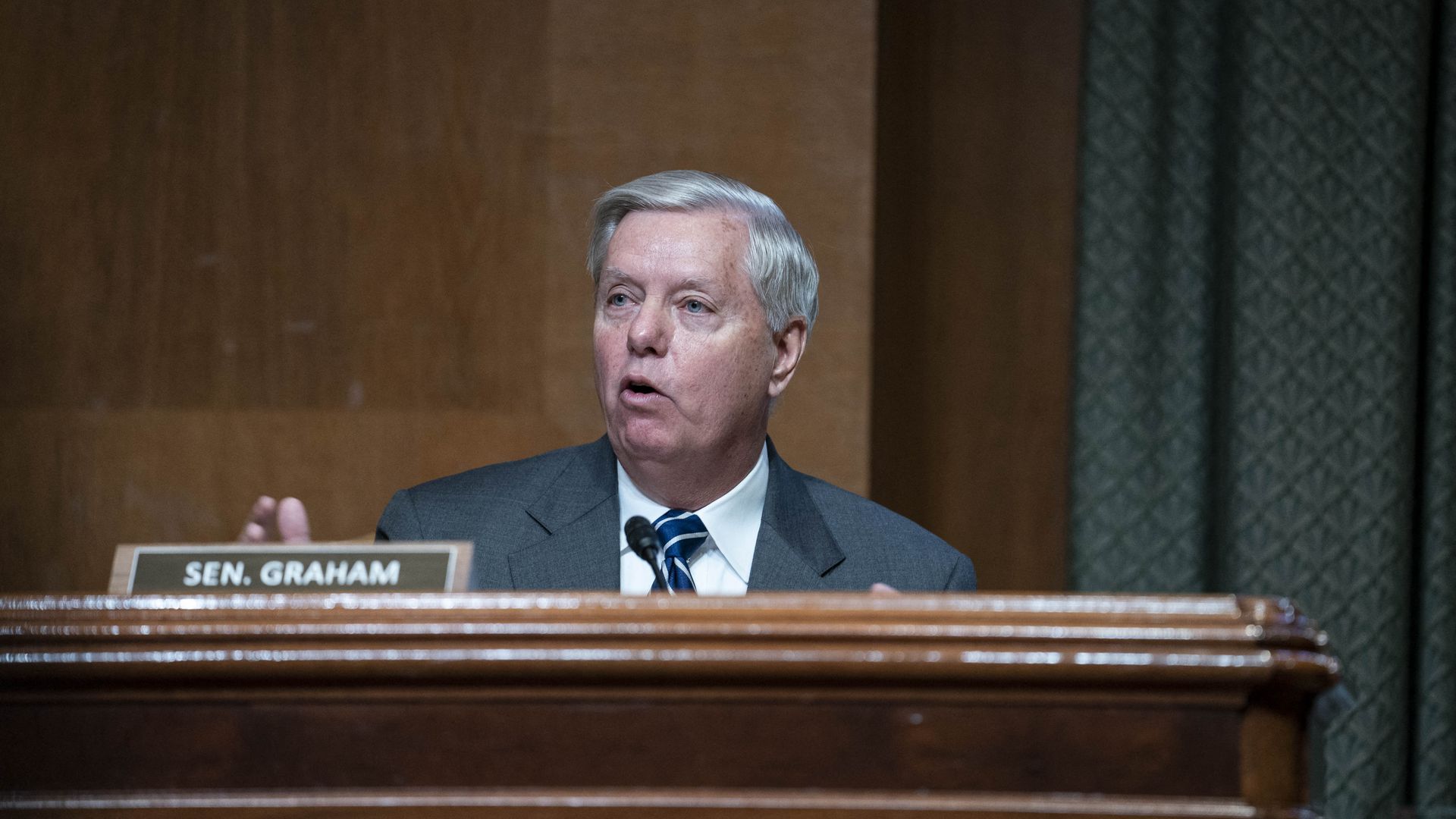
Sen. Lindsey Graham (R-S.C.) told Politico Thursday that he will not support the $1.2 trillion bipartisan infrastructure deal that President Biden struck with 10 senators, after Biden and House Speaker Nancy Pelosi demanded it be passed alongside a budget resolution with key Democratic priorities.
Why it matters: The bipartisan infrastructure bill needs every Democrat and 10 GOP votes — meaning five more than the number of Republicans that have already signed on — in order to overcome a legislative filibuster in the Senate.
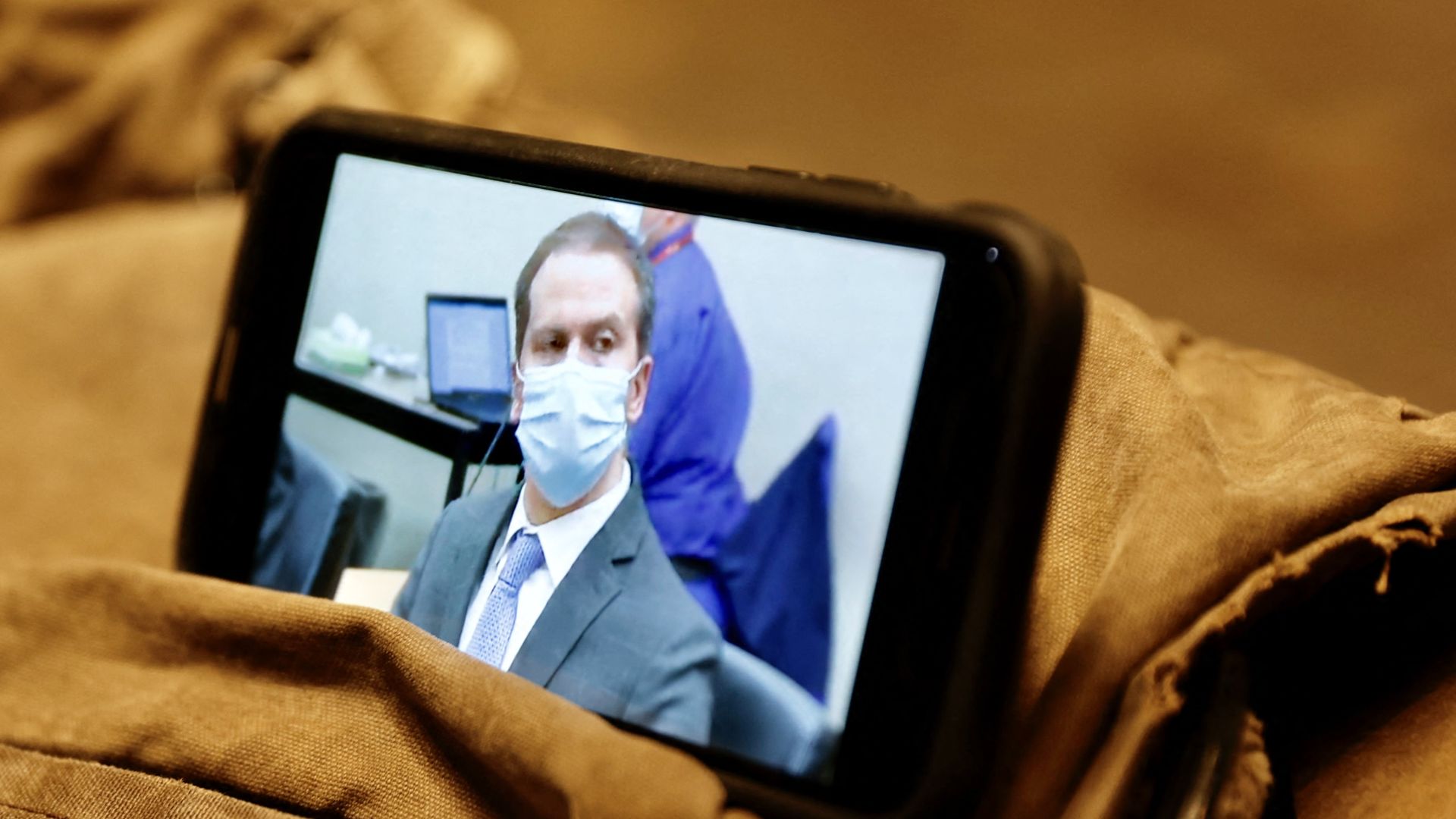
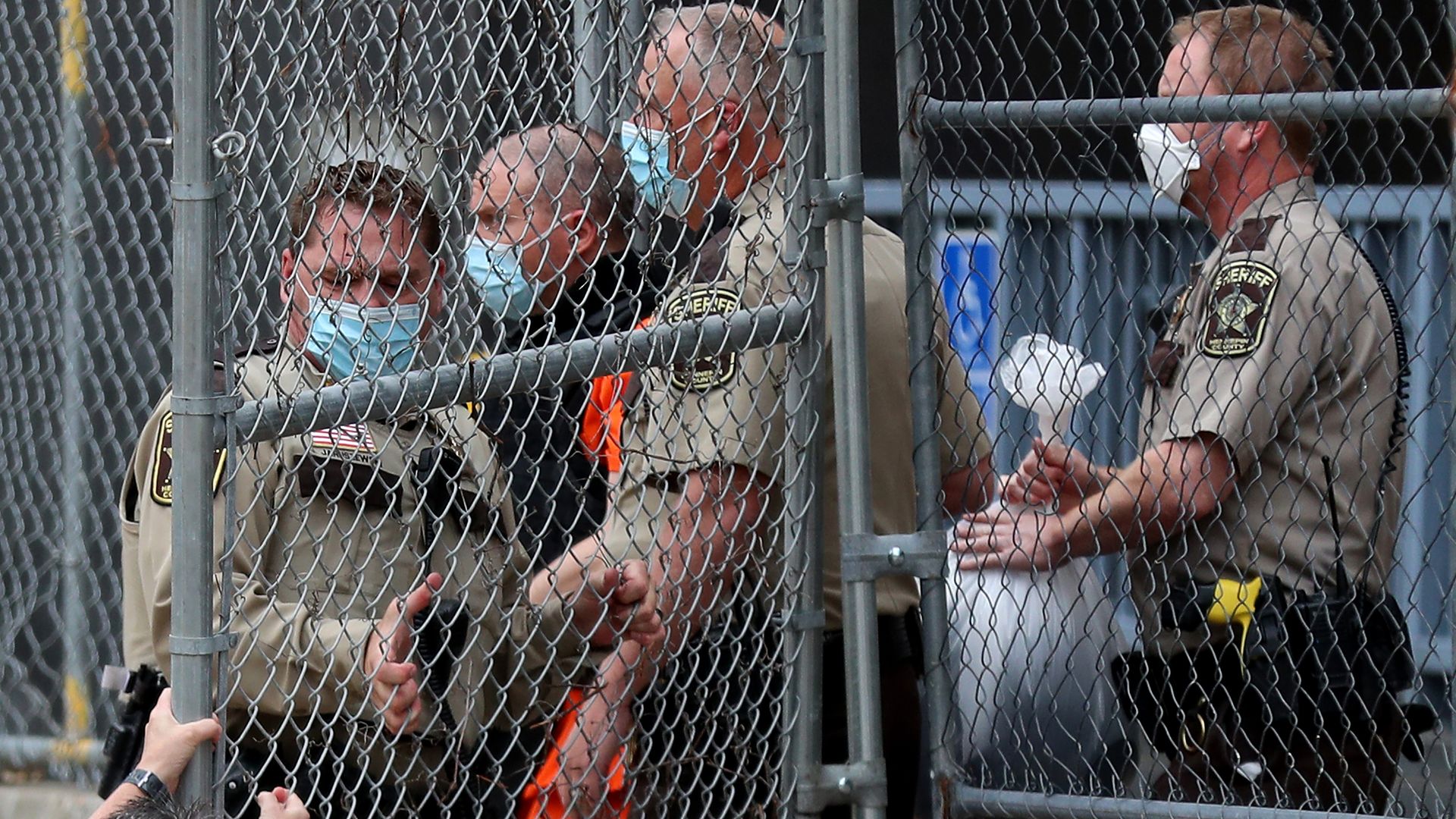
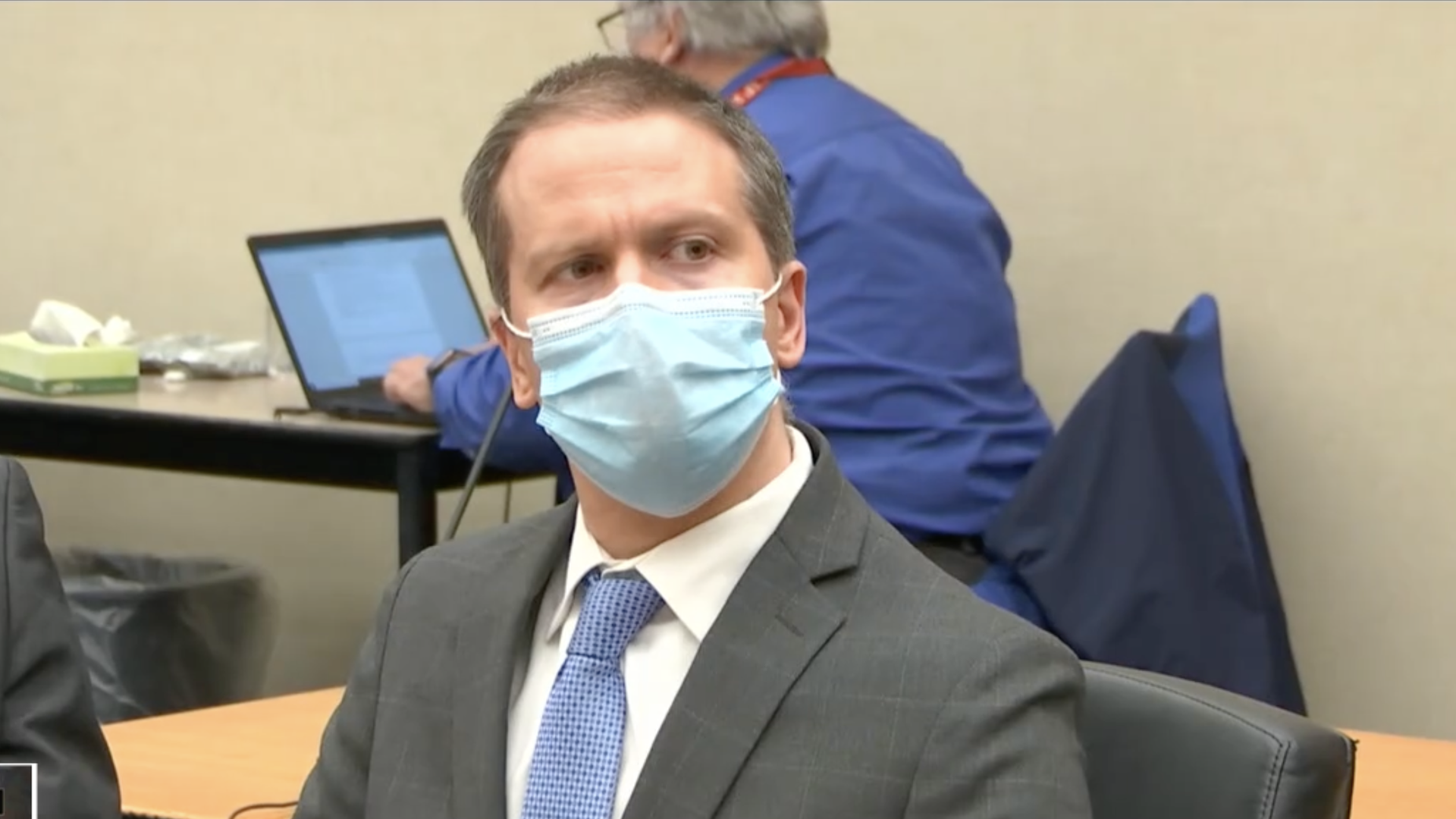
Judge Peter Cahill will decide Friday how long ex-Minneapolis cop Derek Chauvin should spend behind bars for murdering George Floyd.
State of play: Chauvin's attorney, Eric Nelson, has argued that his client should only receive probation as he was part of a "broken system." State prosecutors are asking for a 30-year sentence.
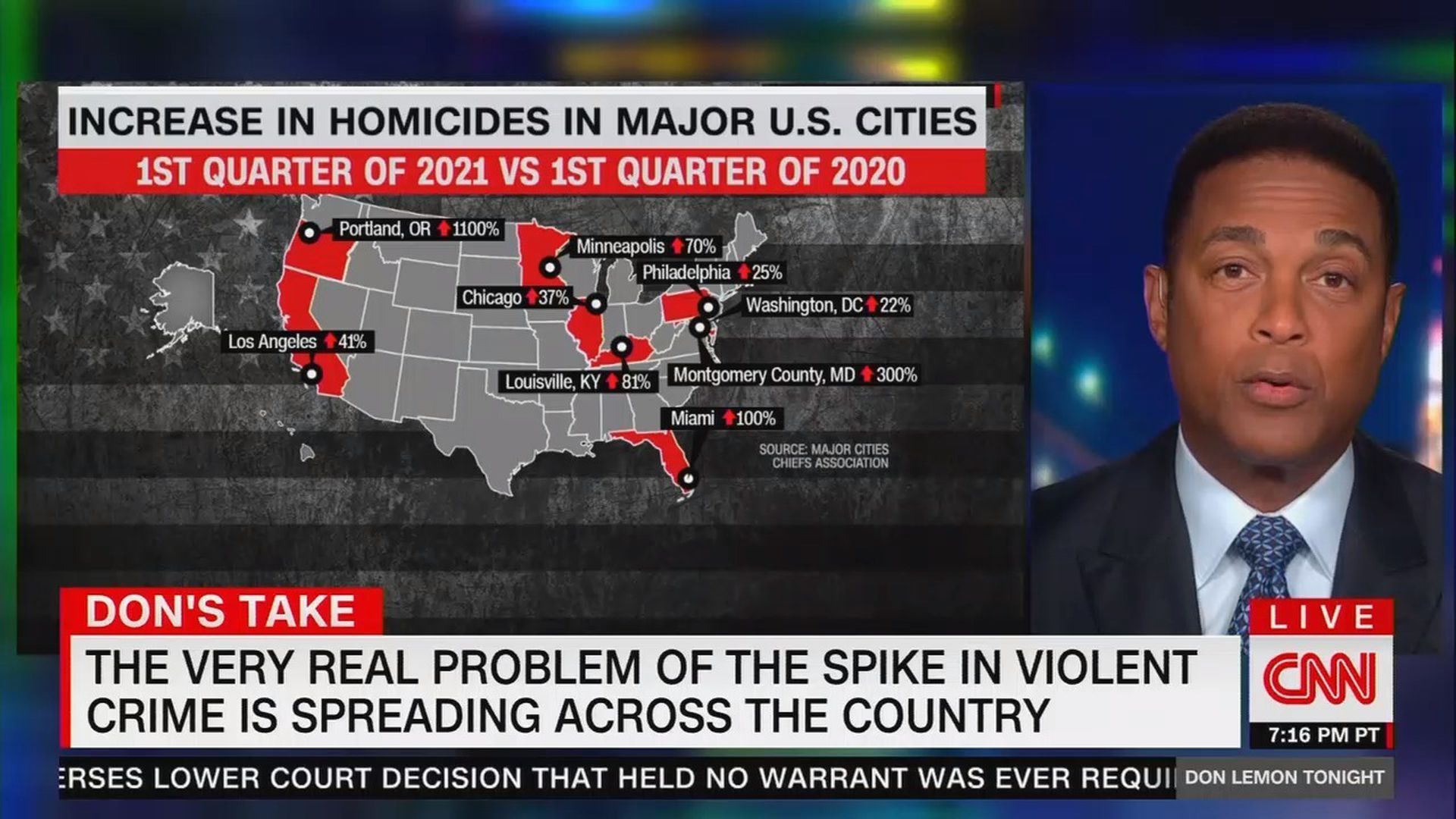
As crime spikes, cops are quitting nationwide, often blaming the constant harassment and stress of ordinary people and powerful politicians turning against their profession.
Why it matters: The killings by police in 2020 turned many Americans — including liberal activists and many in the media — into harsh critics of law enforcement, with loud calls to defund the police. A year later, there’s a cop shortage, and Democrats are scrambling to reverse their rhetoric and some policies.
Former Vice President Pence, in a significant speech at the Reagan Library in California last evening, declared that the Constitution "affords the vice president no authority to reject or return electoral votes submitted to the Congress by the states."
Driving the news: "I understand the disappointment many feel about the last election," Pence said. "I can even relate. Remember, I lost reelection too. But there's more at stake than our party or our political fortunes."
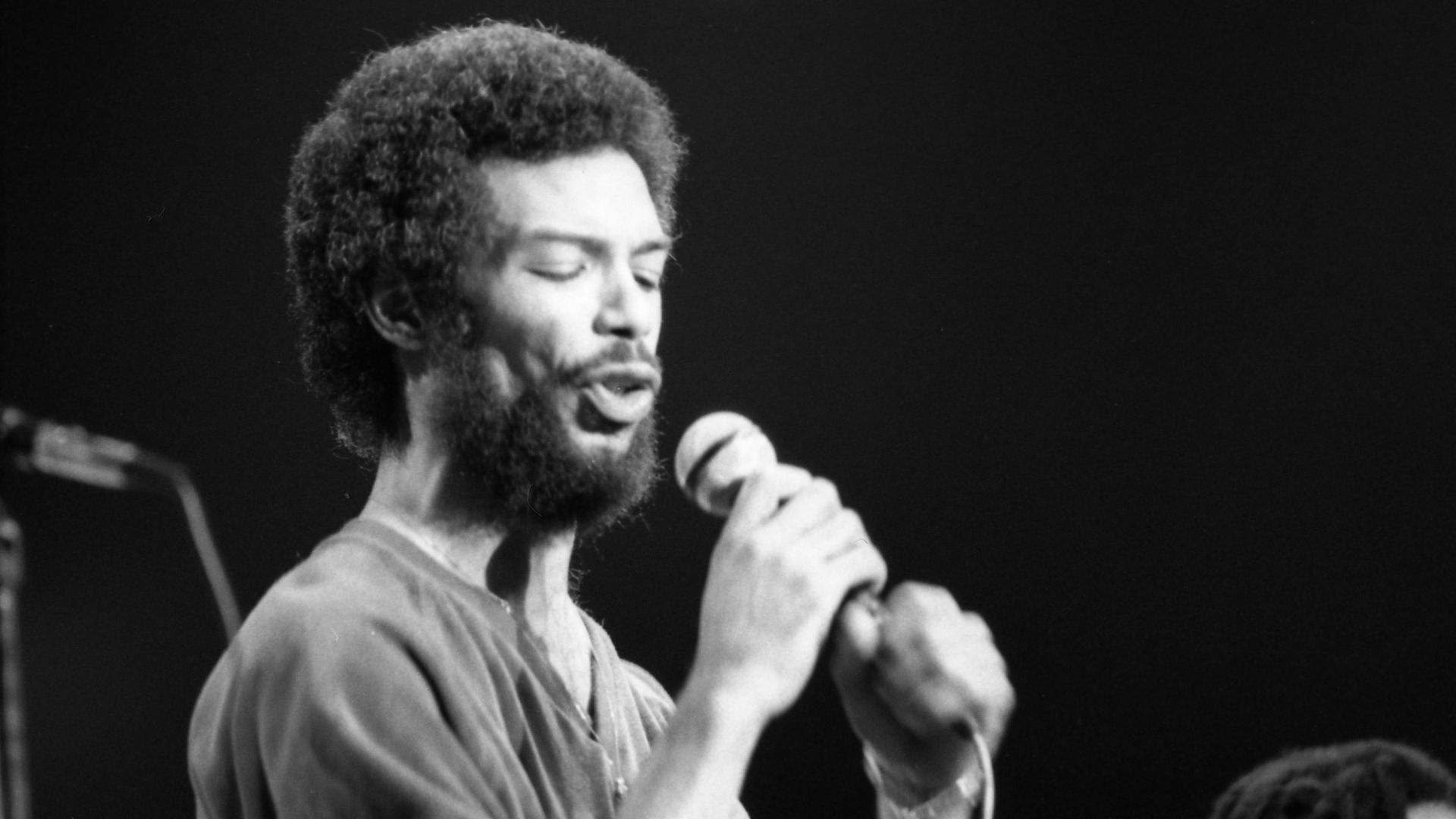
A spoken-word tune that tackled police brutality, inequality, racism, consumerism, and the shortcomings of the media became an anthem a half-century ago, amid violent uprisings, from Camden, N.J. to Albuquerque, N.M.
Driving the news: With the 50th anniversary of its release, Gil Scott-Heron's "The Revolution Will Not Be Televised" is being celebrated for its enduring influence on slam poetry, hip hop and the modern protest movement.
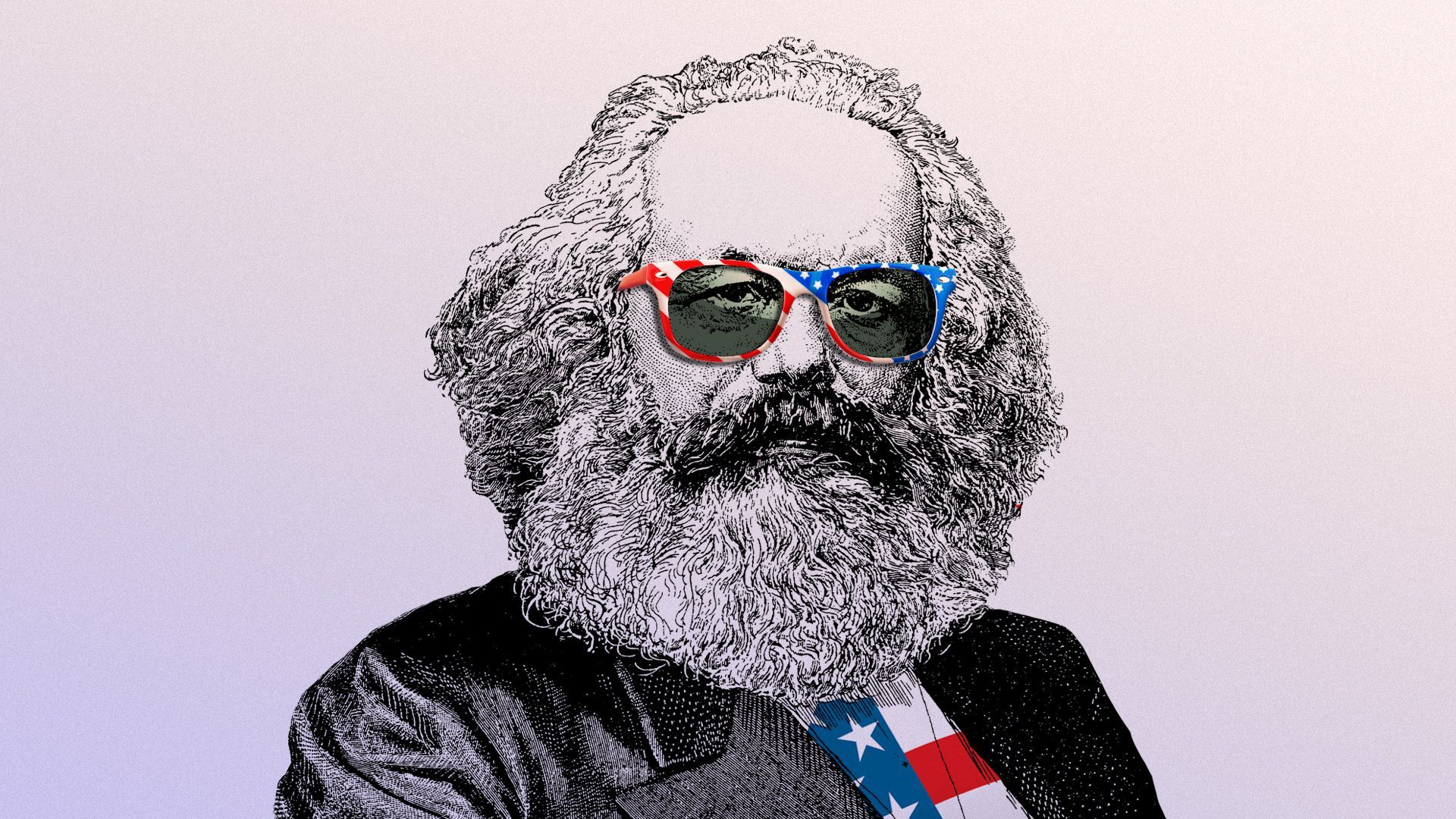
Just half of younger Americans now hold a positive view of capitalism — and socialism's appeal in the U.S. continues to grow, driven by Black Americans and women, according to a new Axios/Momentive poll.
Why it matters: The pandemic has caused millions of Americans — including many younger Republicans — to re-evaluate their political and economic worldview. That's likely because of two factors: a renewed focus on deep societal inequalities and the tangible upsides of unprecedented levels of government intervention.
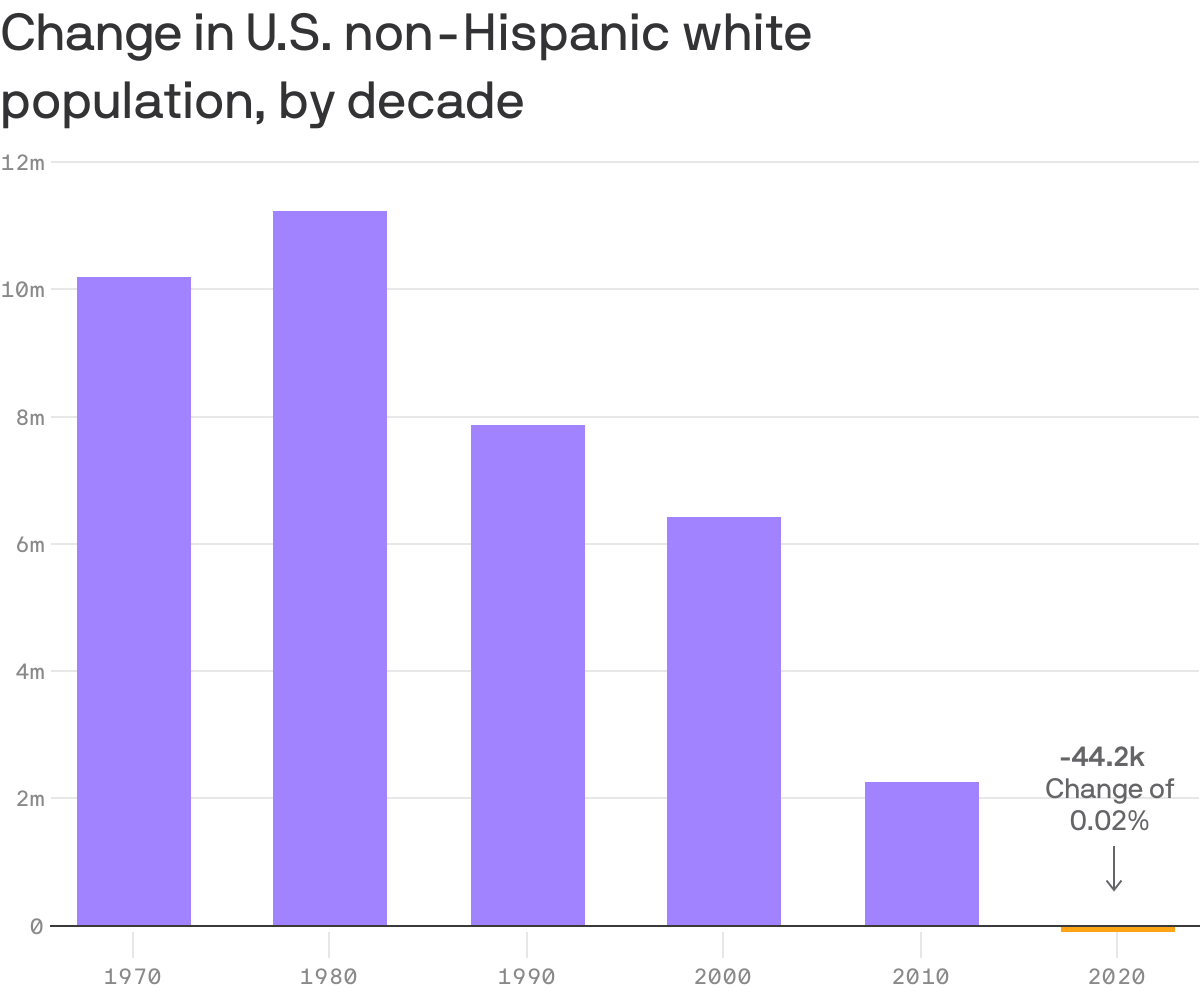
Data: U.S. Census Bureau via Brookings Institute; Chart: Sara Wise/Axios
The latest census is expected to show the first decline in history for the nation's non-Hispanic white population, according to an analysis of U.S. Census Bureau data by the Brookings Institution's William Frey.
Why it matters: The U.S. is rapidly moving toward a majority-minority population — with the racial and ethnic diversity most apparent in younger cohorts. "This really is moving in a direction that’s going to favor the issues and the political agendas of these younger people," Frey told Axios.
The filibuster is often painted as an archaic Senate rule carved in stone. In reality, it's evolved over time.
Why it matters: Washington’s attention has been fixed to the filibuster amid a 50-50 Senate and critical debates over infrastructure and voting rights. Proponents bill it as a crucial fixture designed to protect the minority; critics pillory it as a tool of obstruction.
Several Democratic lawmakers are moving away from calls to eliminate the filibuster while privately discussing alternatives to bypass it, Axios has learned.
Why it matters: These talks have ramped up in earnest following the Republicans’ move Tuesday to block a measure to protect and expand voting rights.
President Biden declared victory in announcing the bipartisan infrastructure package. Now comes the hard part: negotiating with his own party on the separate reconciliation bill.
Why it matters: By trying to simultaneously pass two massive spending bills, Biden and congressional leaders are attempting a legislative feat that will likely require Congress to work through its August recess — and potentially well into the fall, according to lawmakers and senior staffers.