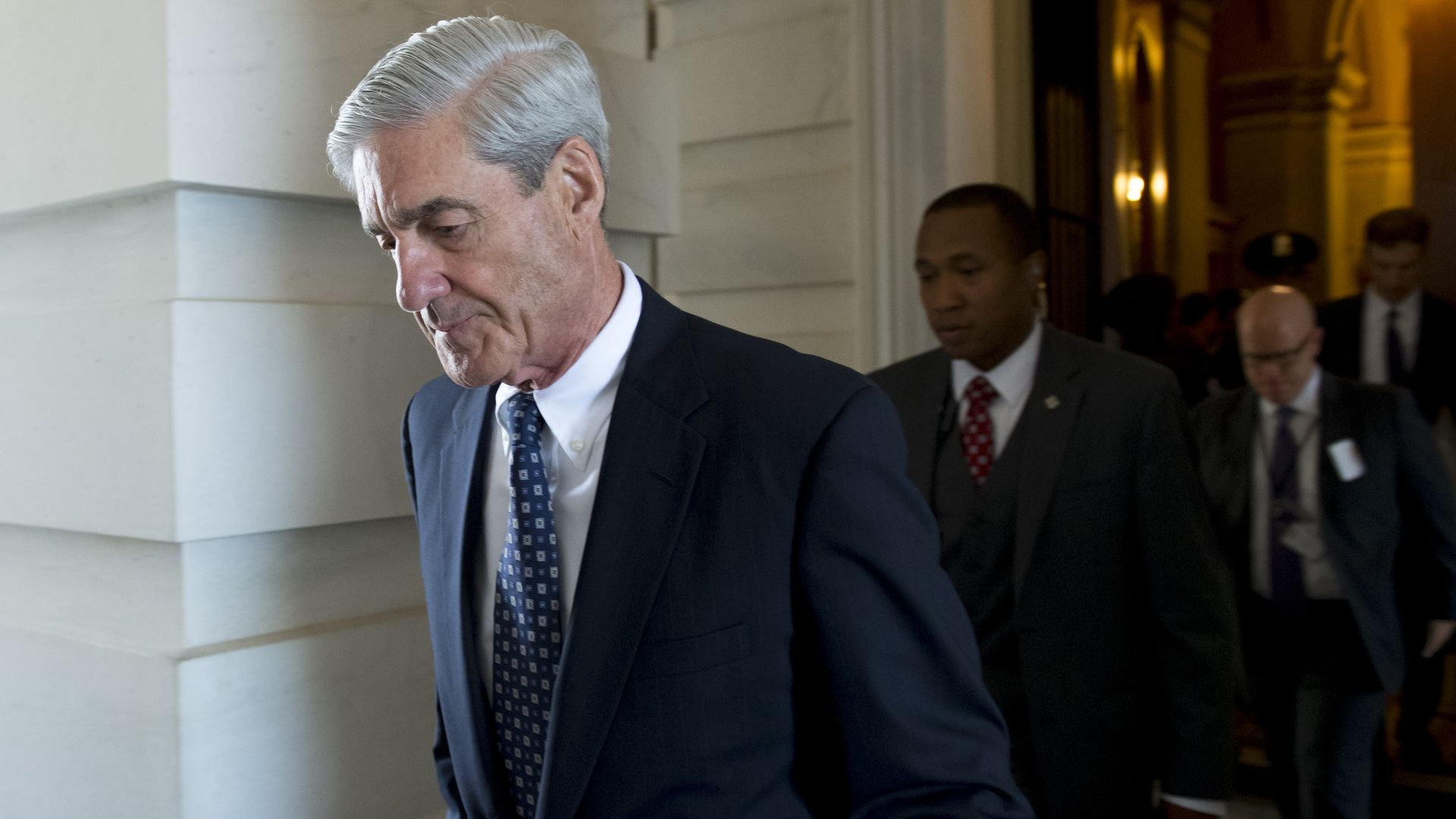
On March 9, 2017, then-FBI director James Comey briefed the Gang of 8 on the FBI's investigation into Russian interference in the 2016 election, including the "principal U.S. subjects of the investigation," according to a redacted version of the Mueller report.
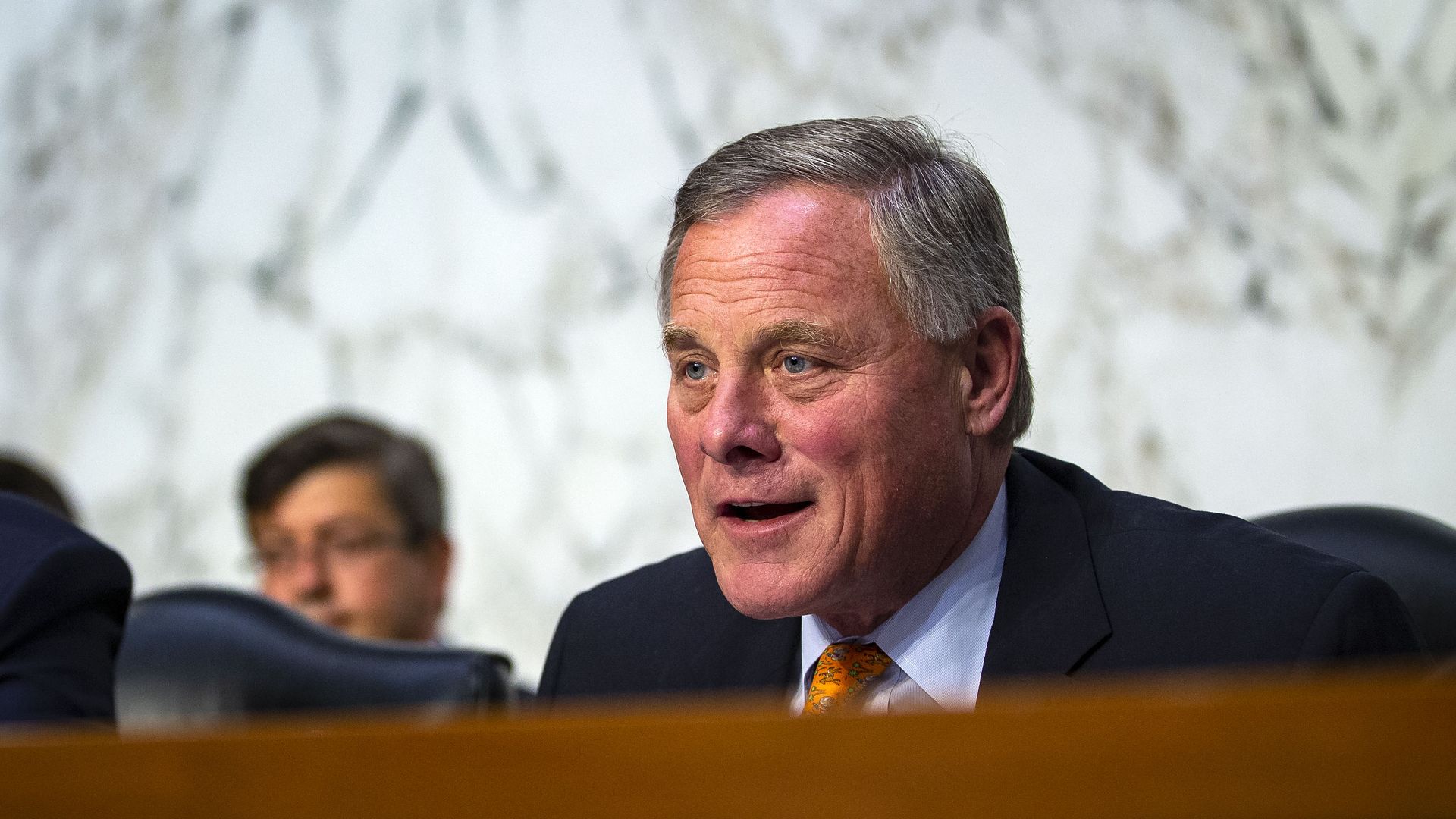
What's new: On March 16, Senate Intelligence Committee Chairman Richard Burr (R-N.C.) informed the White House counsel's office of the existence of "4-5 targets" in the Russia investigation, according to meeting notes written by Don McGahn's then-chief of staff, Annie Donaldson. Mueller does not make clear whether Donaldson was present at Burr's briefing.
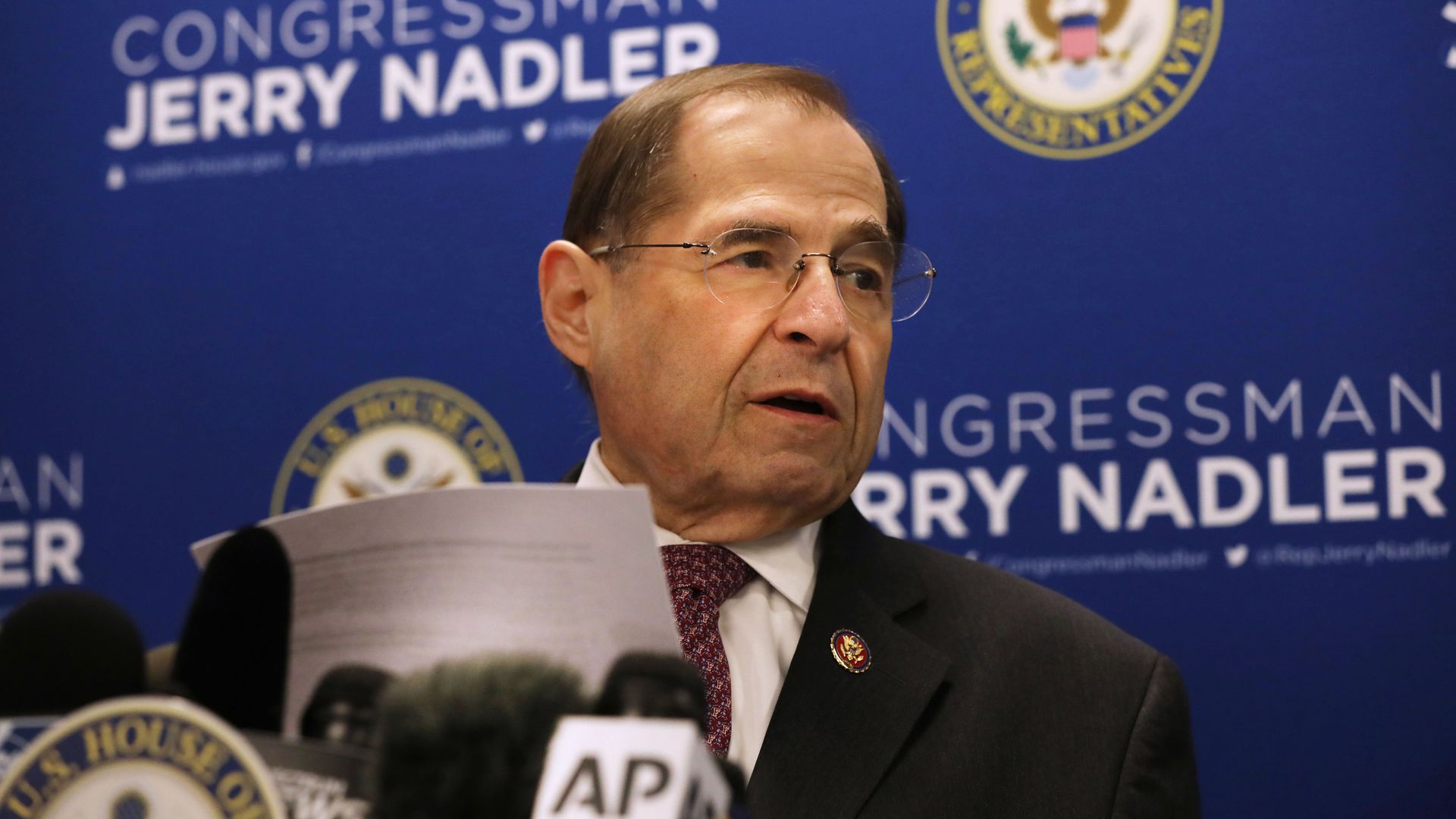
Democratic congressional leaders, infuriated over the Justice Department’s release of a redacted version of special counsel Robert Mueller's report, assailed Attorney General William Barr on Thursday, accusing him of creating a crisis of confidence in his independence, while calling on Mueller to publicly testify before Congress about his work.
The big picture: This is sets up what is expected to be a drawn-out clash between the Trump administration and Democrats, who have raised concerns over President Trump's conduct detailed in the report. Democratic-led House committees are also working to obtain the elemental evidence from Mueller's probe to bolster their own investigations into Trump and his inner circle.
Special counsel Robert Mueller's report explored 10 episodes where actions by President Trump could have been considered obstruction of justice — but then explains why he couldn't reach a conclusion in each case.
The big picture: If you've been wondering what all of this actually adds up to, this is your best place to start. It gives the clearest picture yet of Trump's actions as well as why Mueller didn't take a position on them — though the report comes close to rendering judgment on Trump's attempts to oust Mueller or rein him in.
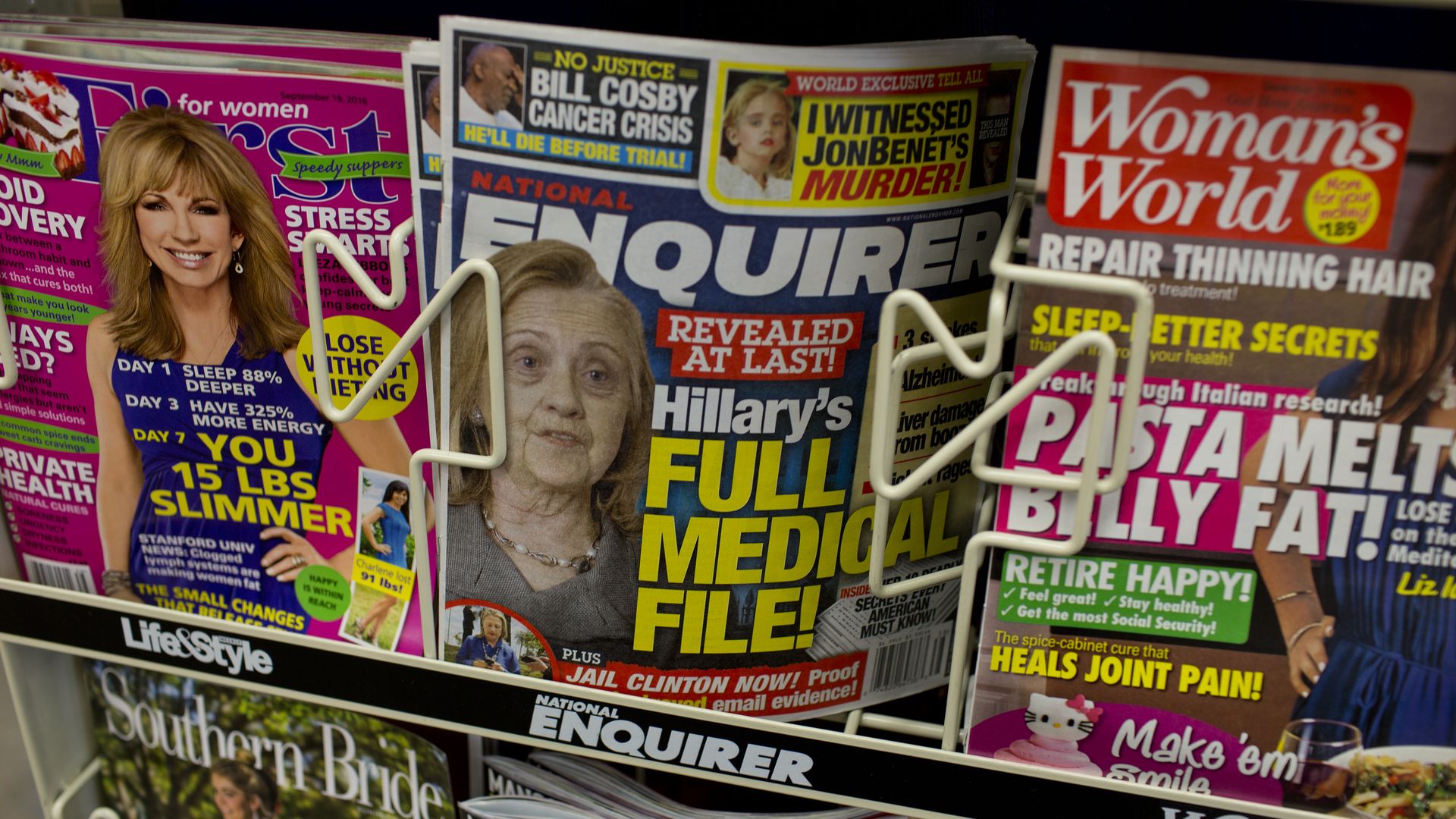
The National Enquirer and 2 of its sister publications — owned by American Media Inc. — will be sold for $100 million to James Cohen, the chief executive of Hudson News, a travel retailer best "known for its airport newsstands," as reported by the Washington Post.
The bottom line: American Media's hedge fund manager, Anthony Melchiorre, was reportedly frustrated by the National Enquirer's reporting tactics, according to the Post — hence the sale. Last year, American Media admitted to making a $150,000 payment "in concert with" Trump's presidential campaign to suppress a story about Trump's alleged affair with former Playboy model Karen McDougal. The move also downsizes AMI's considerable debt.
Editor's note: This story has been corrected to indicate the National Enquirer has been purchased by James Cohen,the CEO of Hudson News (not Hudson News).
The first part of special counsel Robert Mueller's redacted report addresses Russian interference in the 2016 election and any role the Trump campaign may have played in those efforts.
What to know: Mueller defines election interference as comprising of 2 sets of efforts: The social media disinformation campaign carried out by a Russian troll farm known as the Internet Research Agency, and the hacking and dissemination of Democratic emails by Russian intelligence officers. He narrowly defines "coordination" as an "agreement—tacit or express—between the Trump Campaign and the Russian government on election interference."
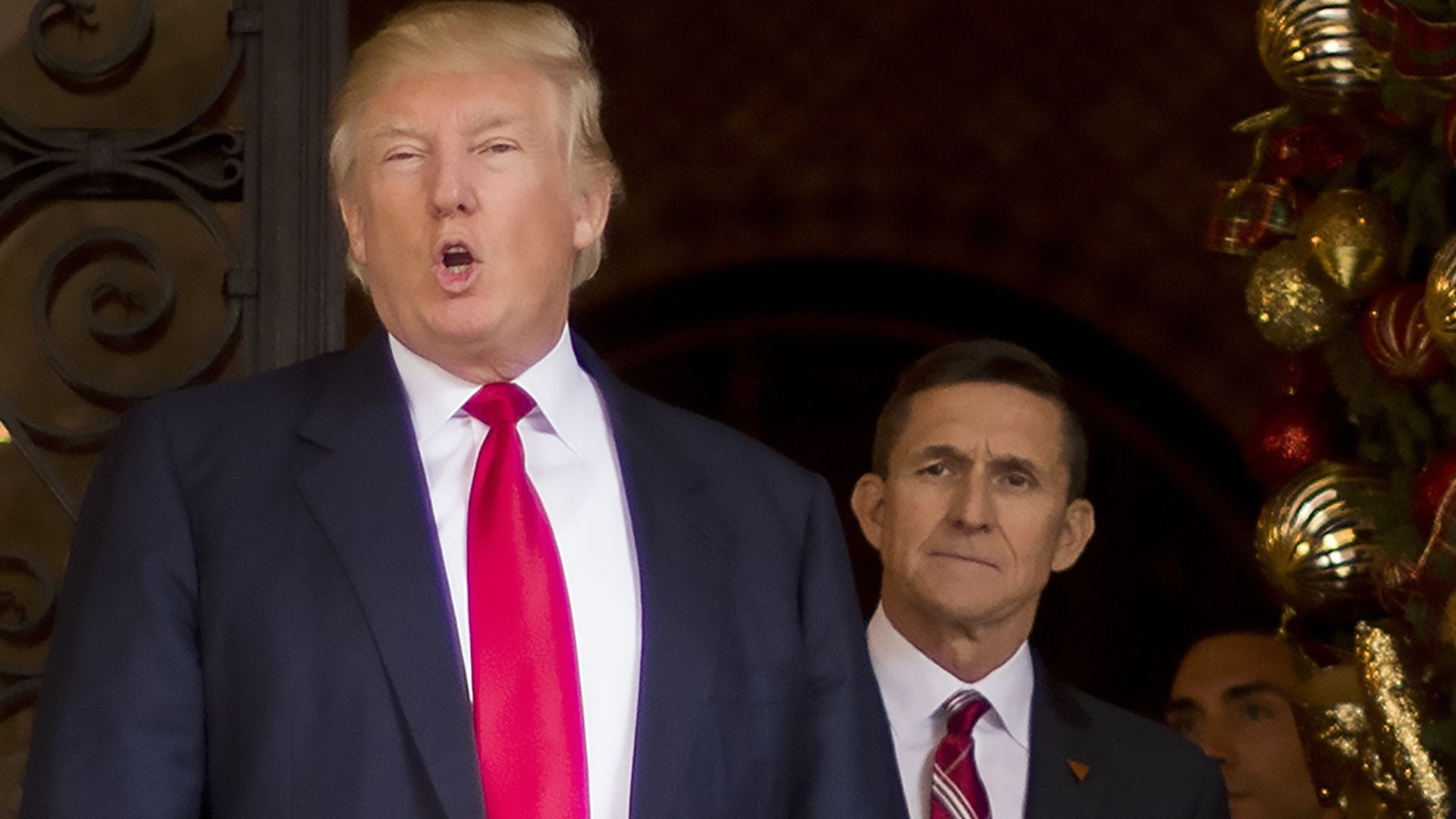
After requesting Russia release Hillary Clinton's deleted emails in July 2016, then-candidate Donald Trump repeatedly asked Michael Flynn to hunt down the emails, according to the Mueller report released Thursday.
Why it matters: Trump has always claimed he was joking when he requested the emails from Russia, but opponents will likely see this as confirmation Trump was not joking. Flynn took the requests seriously enough to contact individuals already looking for the emails.
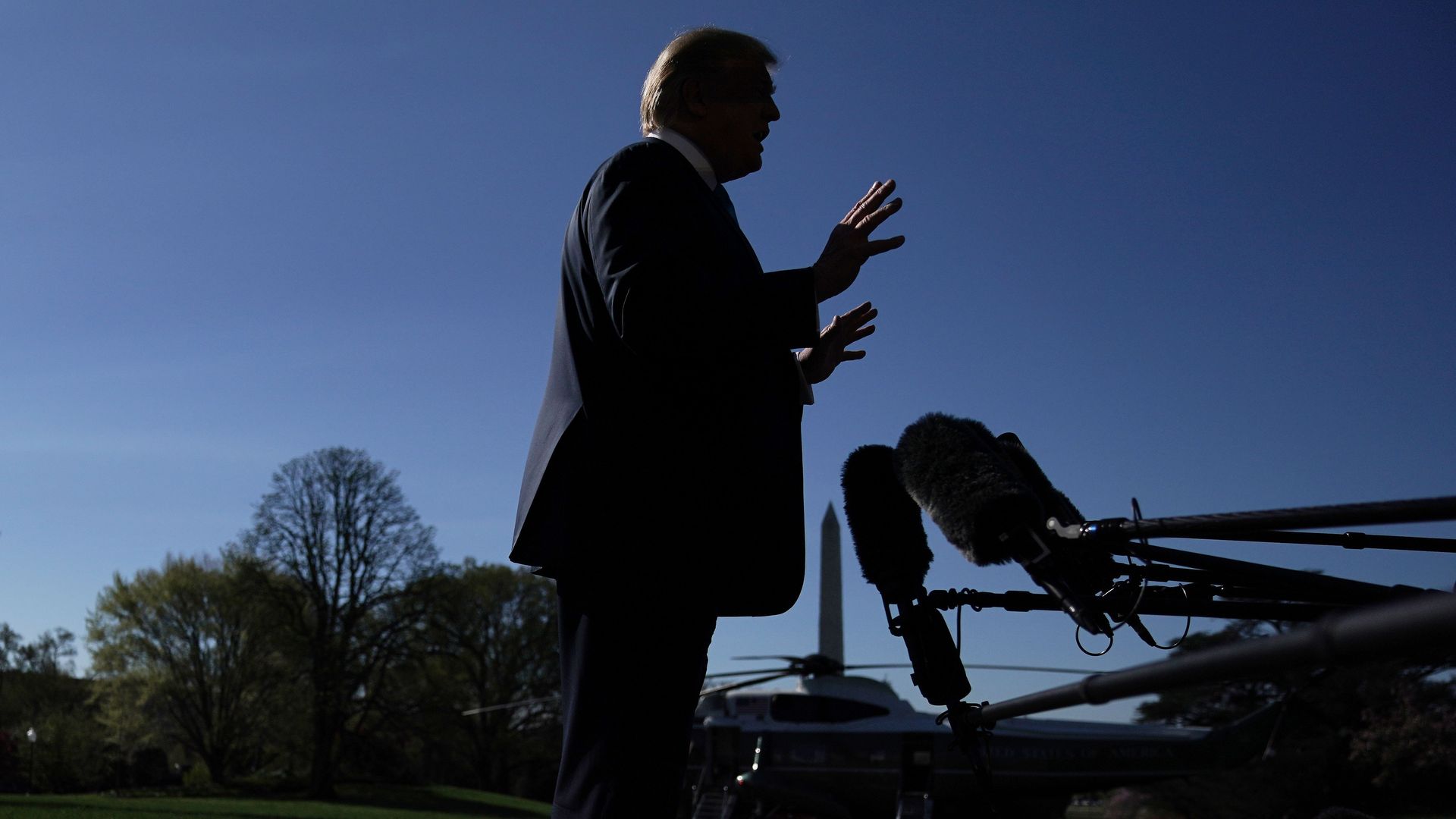
President Trump’s legal team is calling the results of Robert Mueller's investigation into Russian interference in the 2016 presidential election “a total victory for the President,” according to a statement they released Thursday.
The bottom line: Their statement defends the president's decision to fire former FBI Director James Comey and rehashes Trump's "no collusion, no obstruction" comments.
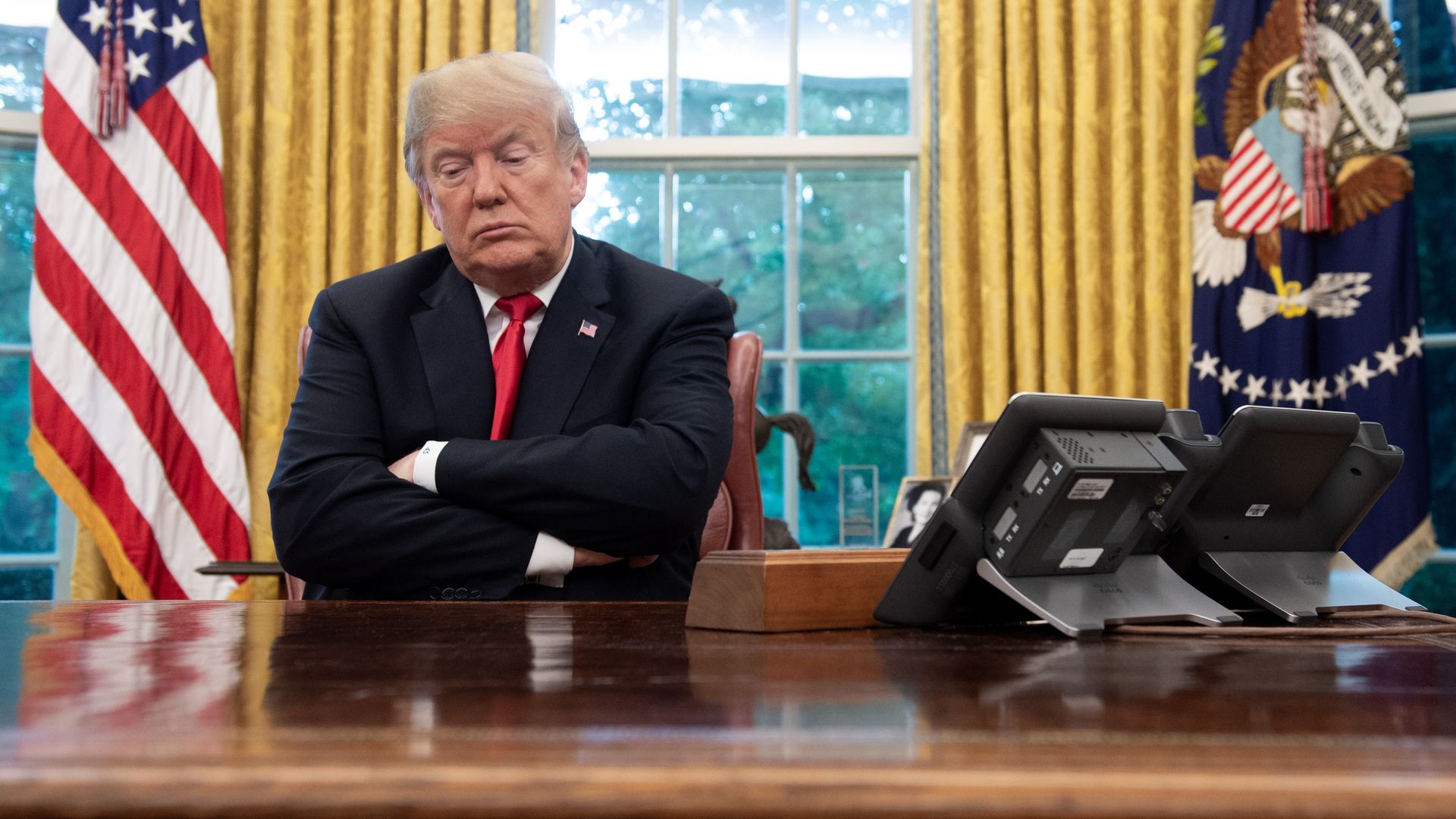
The redacted version of the Mueller report provides a glimpse into the Oval Office on May 17, 2017, the day that special counsel Robert Mueller was appointed to his position, as Trump reacted to the news of Mueller's new job from then-Attorney General Jeff Sessions.
"Oh my God. This is terrible. This is the end of my presidency. I'm fucked."
The big picture: Mueller's report notes that Trump became angry at Sessions, lambasting him for recusing himself from the Justice Department's Russia investigation and calling Mueller's appointment "the worst thing that ever happened to [him]." Sessions' stature never recovered in Trump's eyes, despite hanging on in his position for more than a year despite repeated public attacks from the president.
The second part of special counsel Robert Mueller's redacted report focuses on whether President Trump obstructed justice while in office, especially as it pertains to his campaign and administration's navigation of the fallout from potential Russian interference in the 2016 presidential election.
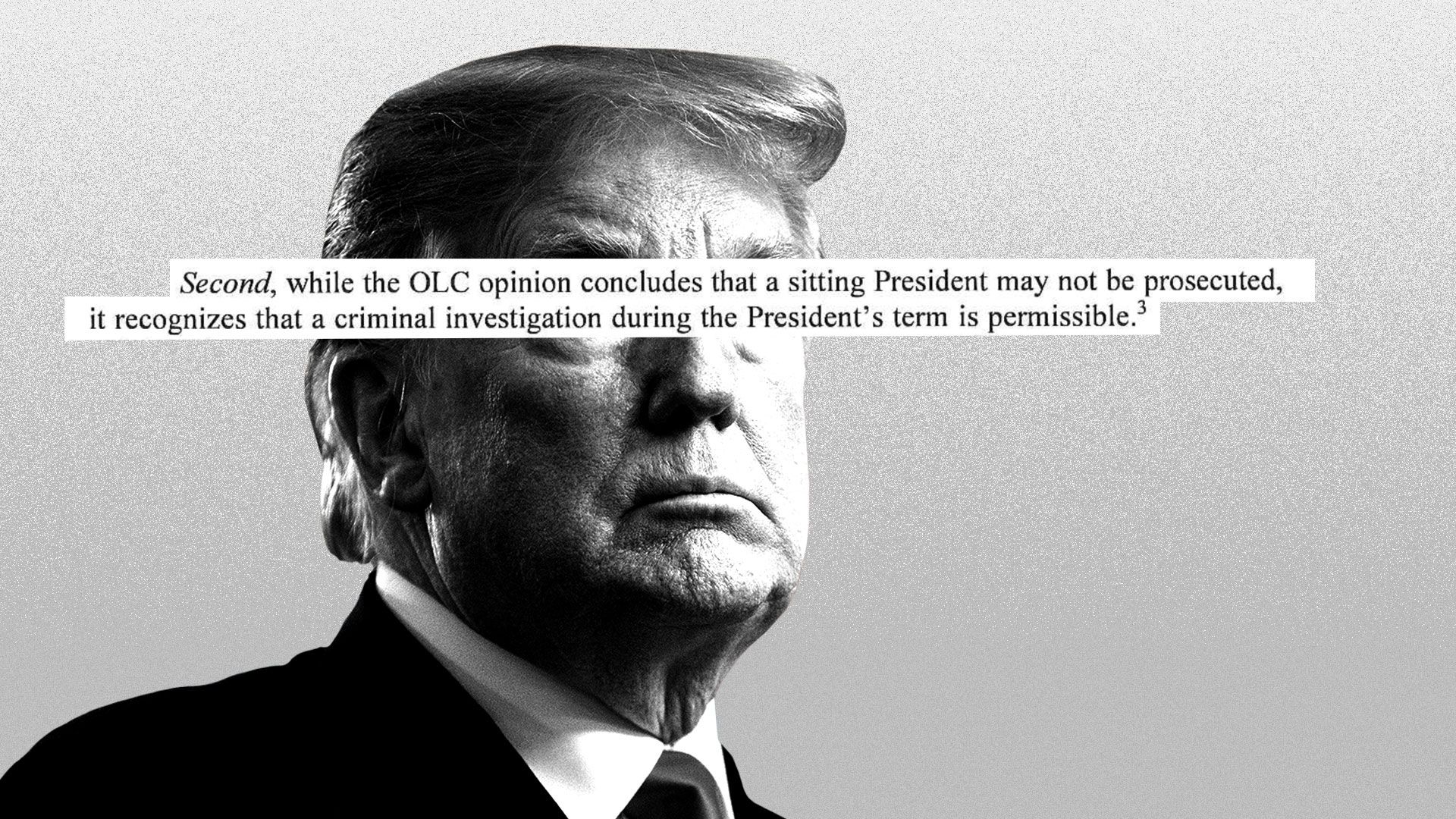
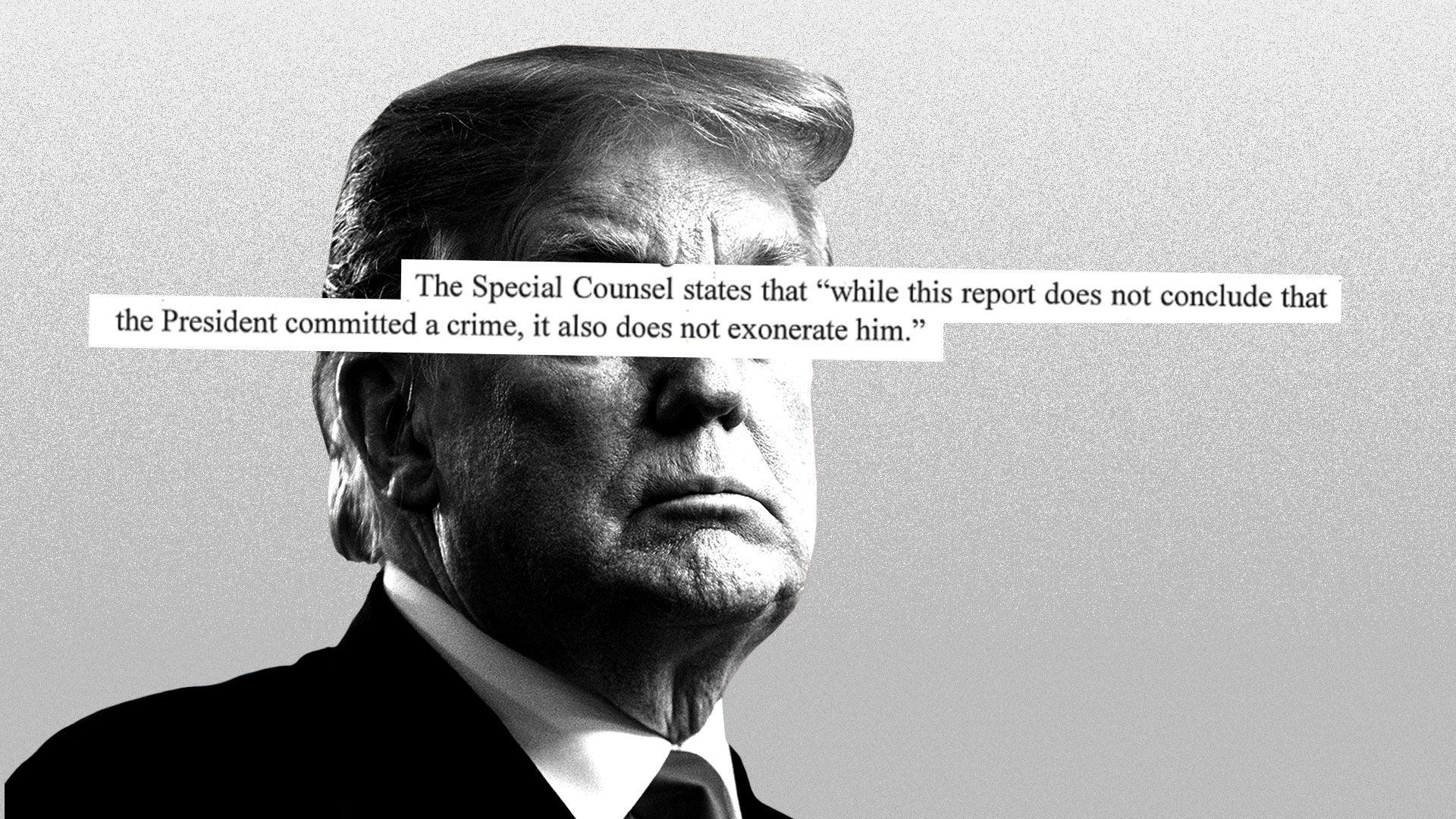
The big picture: As Axios' David Nather writes, Trump ultimately wasn't charged with obstruction because Mueller didn't want to "place burdens on the President's capacity to govern" and believed Trump wouldn't have an opportunity to clear his name, according to the report. But he also couldn't clear Trump completely because "the facts and the applicable legal standards" made it impossible to state that Trump "clearly did not commit obstruction of justice."
Special counsel Robert Mueller didn't want to "place burdens on the President's capacity to govern" and believed President Trump wouldn't have an opportunity to clear his name, according to the report released today.
But he also couldn't clear Trump completely — because "the facts and the applicable legal standards" made it impossible to state that Trump "clearly did not commit obstruction of justice."
At his press conference on the release of special counsel Robert Mueller's report Thursday, Attorney General Bill Barr shed some light on why he decided the evidence Mueller set out was "not sufficient to establish" that President Trump obstructed justice.
What he's saying: "Apart from whether the acts were obstructive, this evidence of non-corrupt motives weighs heavily against any allegation that the President had a corrupt intent to obstruct the investigation," Barr said on Thursday morning.
Mueller witnesses and their lawyers say that they expect the special counsel's report to include a mass of detailed scenes in which President Trump lashed out about Mueller, Jeff Sessions, Rod Rosenstein and the FBI.
The big picture: They believe that if Mueller's report presents the material in the same relentlessly detailed way as his prosecutors asked the questions, the accumulation could lead a casual observer to think that the president tried to obstruct justice.
Bob Bauer, NYU law professor and former Obama White House counsel, told me this is the No. 1 thing he'll look for in the Mueller report:
His focus: Whether the extraordinary amount of time that former Trump White House counsel Don McGahn spent with the Mueller team — at least 30 hours — "included any attention to issues in addition to those of collusion and obstruction."
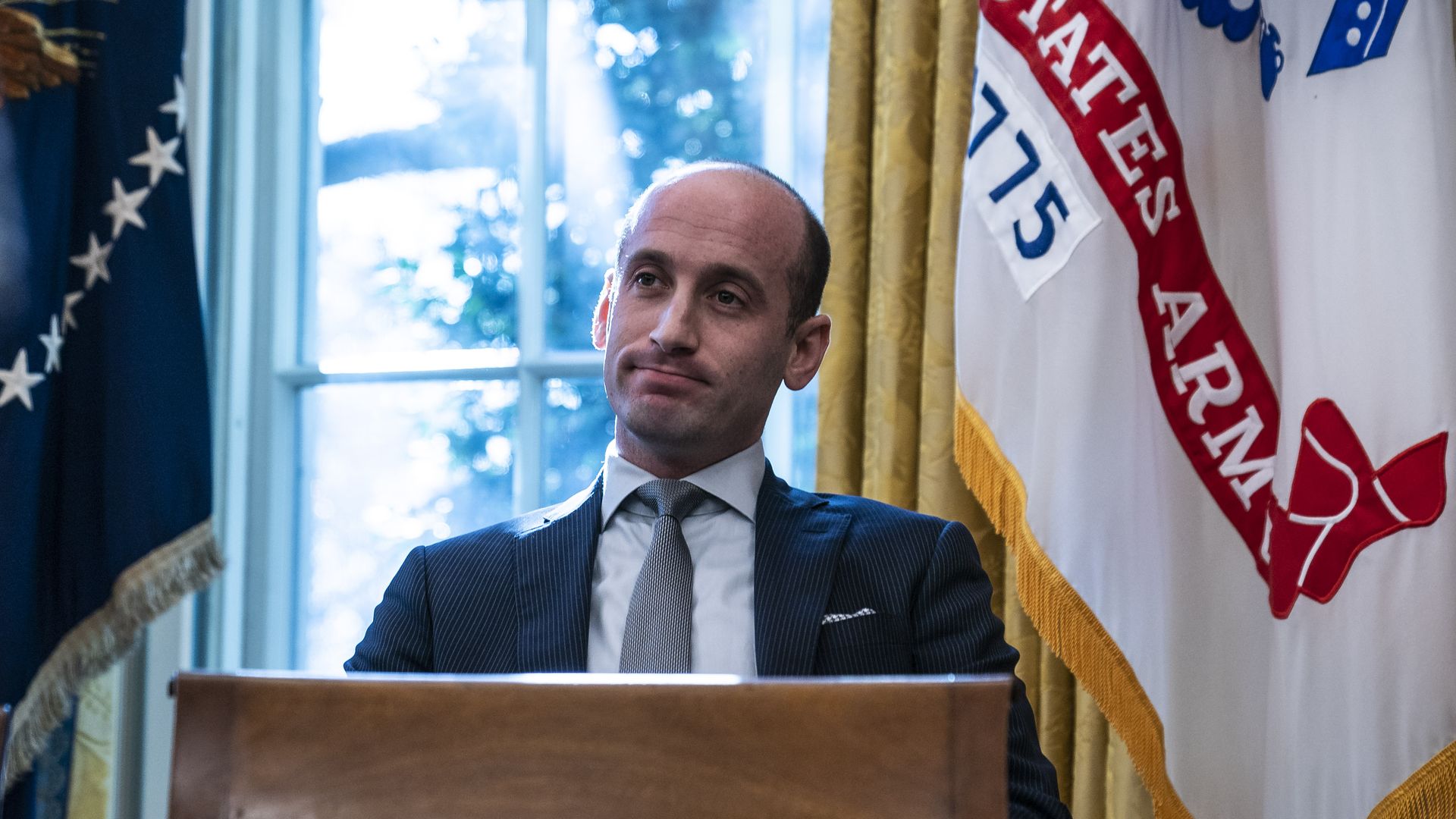
House Oversight chairman Elijah Cummings sent a letter Wednesday inviting White House senior policy adviser Stephen Miller to appear before the committee to testify on the Trump administration's immigrationpolicies.
"I am inviting you to testify before the committee because it appears that you are one of the primary moving forces behind some of the most significant — and in my view, troubling — immigration policies coming out of the Trump White House."
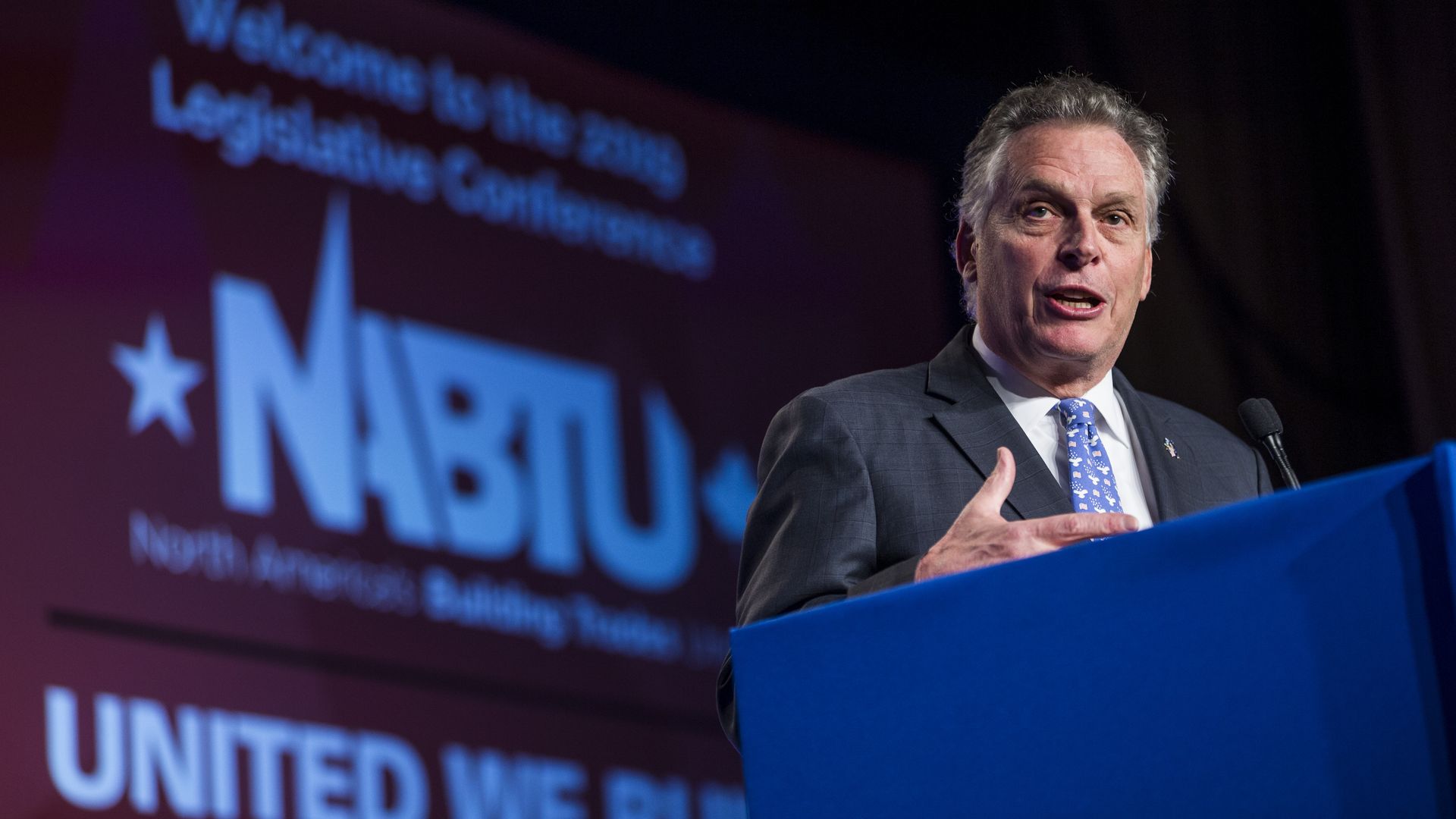
Former Virginia Gov. Terry McAuliffe, who has been mulling a presidential run for months, told CNN's Chris Cuomo in an interview late Wednesday that he will not be seeking the Democratic nomination in 2020.
Why it matters: McAuliffe said he's laser-focused to help Virginia Democrats flip the narrowly divided GOP-controlled General Assembly, where Republicans hold a 2-seat margin in both chambers, in this year's legislative contests. Virginia Democrats are trying to recover from a political turmoil after 2 of their top state leaders admitted earlier this year to wearing blackface in the past and another accused of sexual assault.