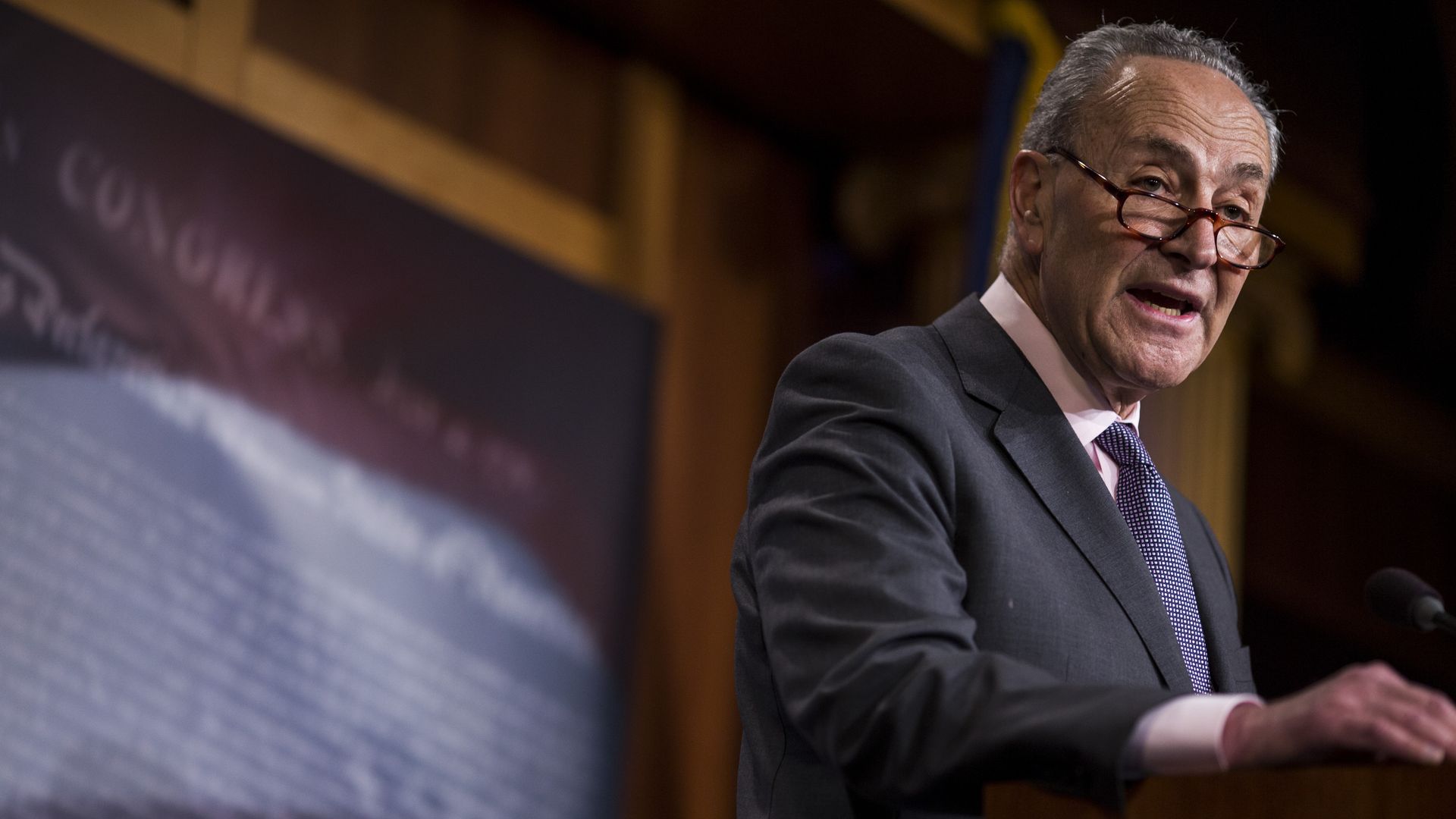
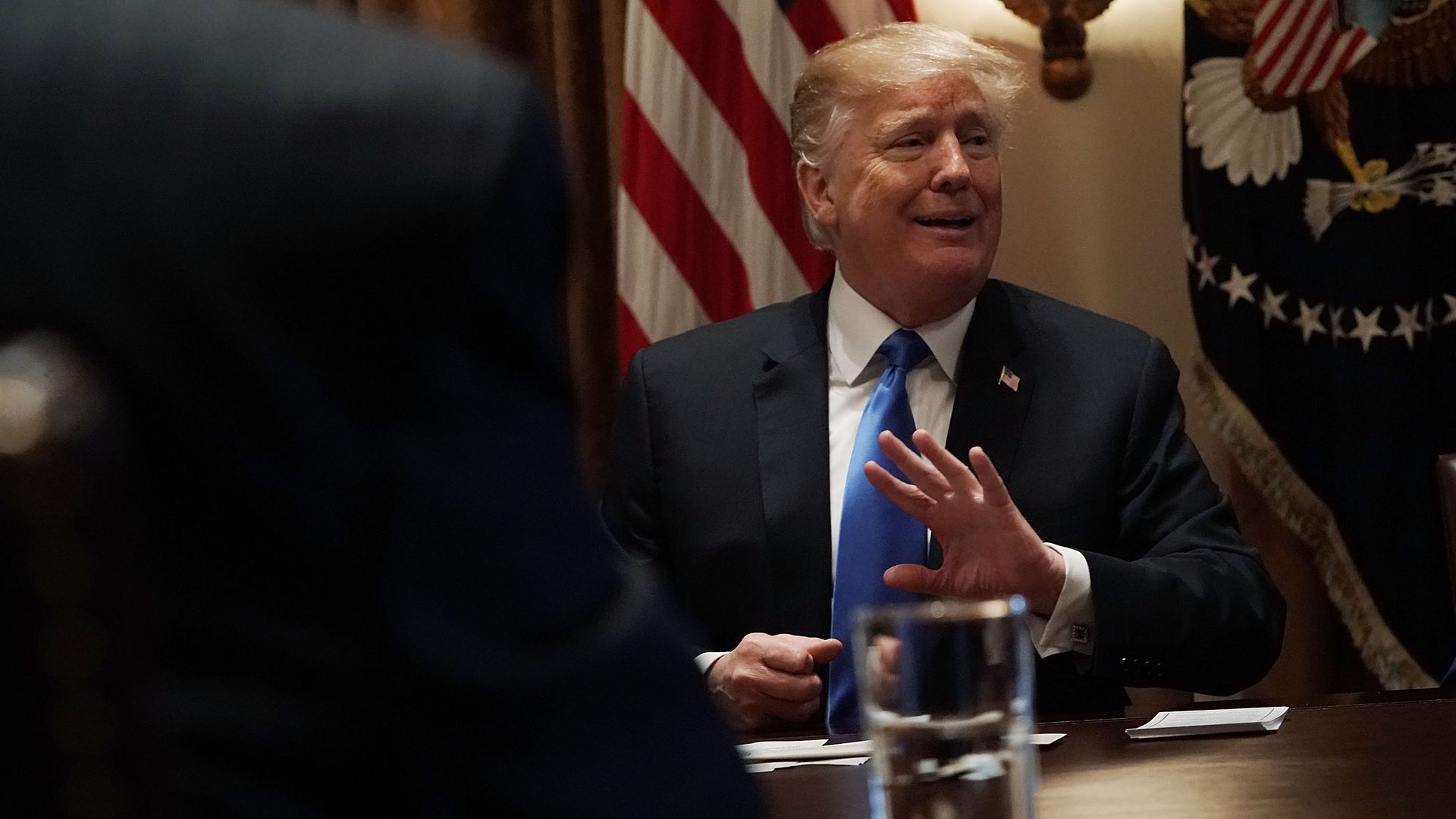
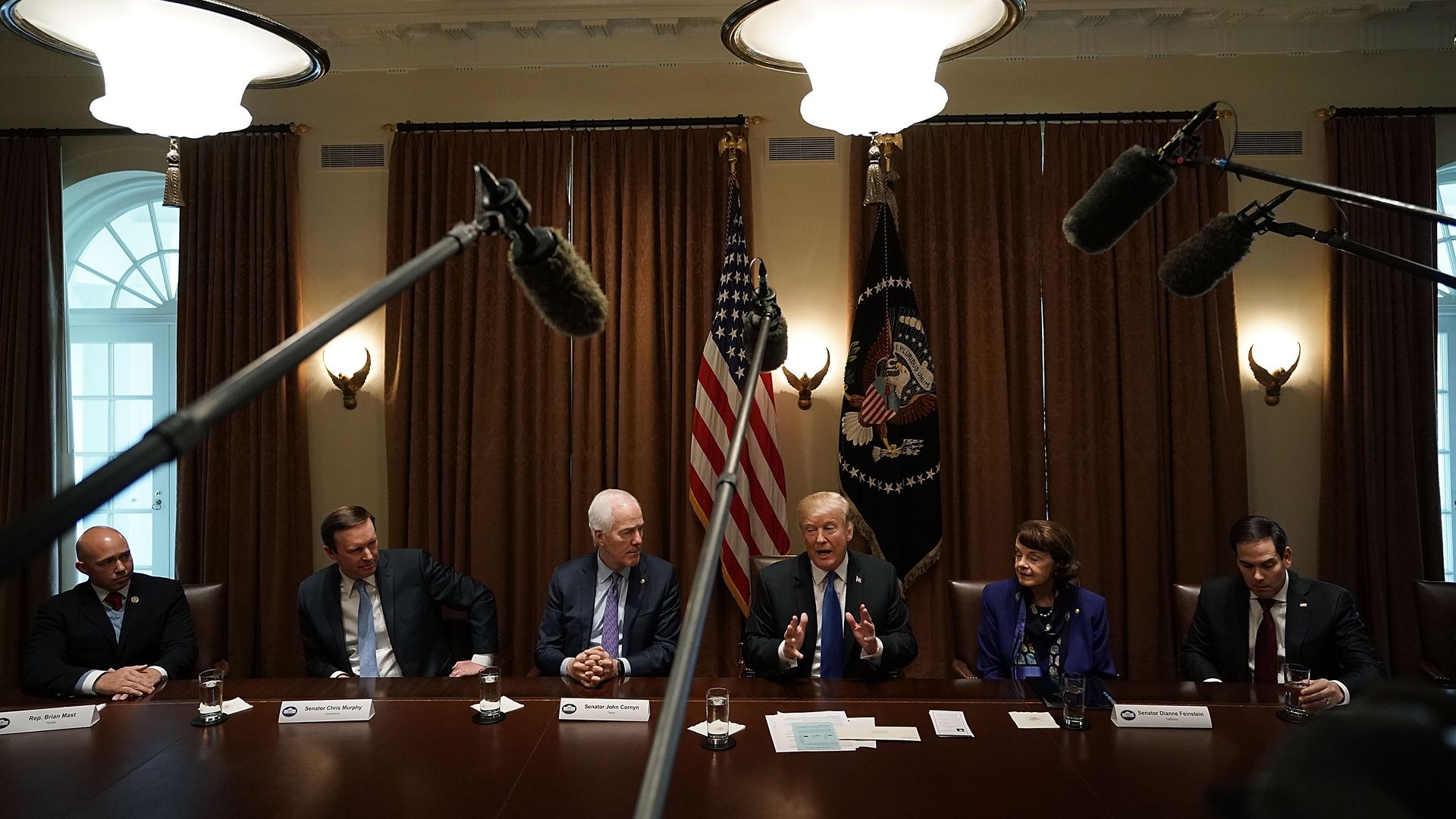
"With the camera lights on, his instincts were to do the right thing," said Senate Minority Leader Chuck Schumer in an interview with CNN's Wolf Blitzer. The senator criticized Trump for changing his opinion on a solution to prevent gun violence across the nation:
"It makes one feel that when America ... is crying out to prevent future Parklands, the president just succumbs to the group that puts the most heat on him. In this case, the NRA."
President Trump's tariffs could target everyday items like bourbon and orange juice, Politico reports, directly affecting "Republican-run states."
Why it matters: Trump is confident. "[T]rade wars are good, and easy to win," he said. But Bill Reinsch, a senior fellow at the Center for Strategic and International Studies, told Politico a trade war could bring "more industries into the fray" as "one set of retaliation prompts another and then another."
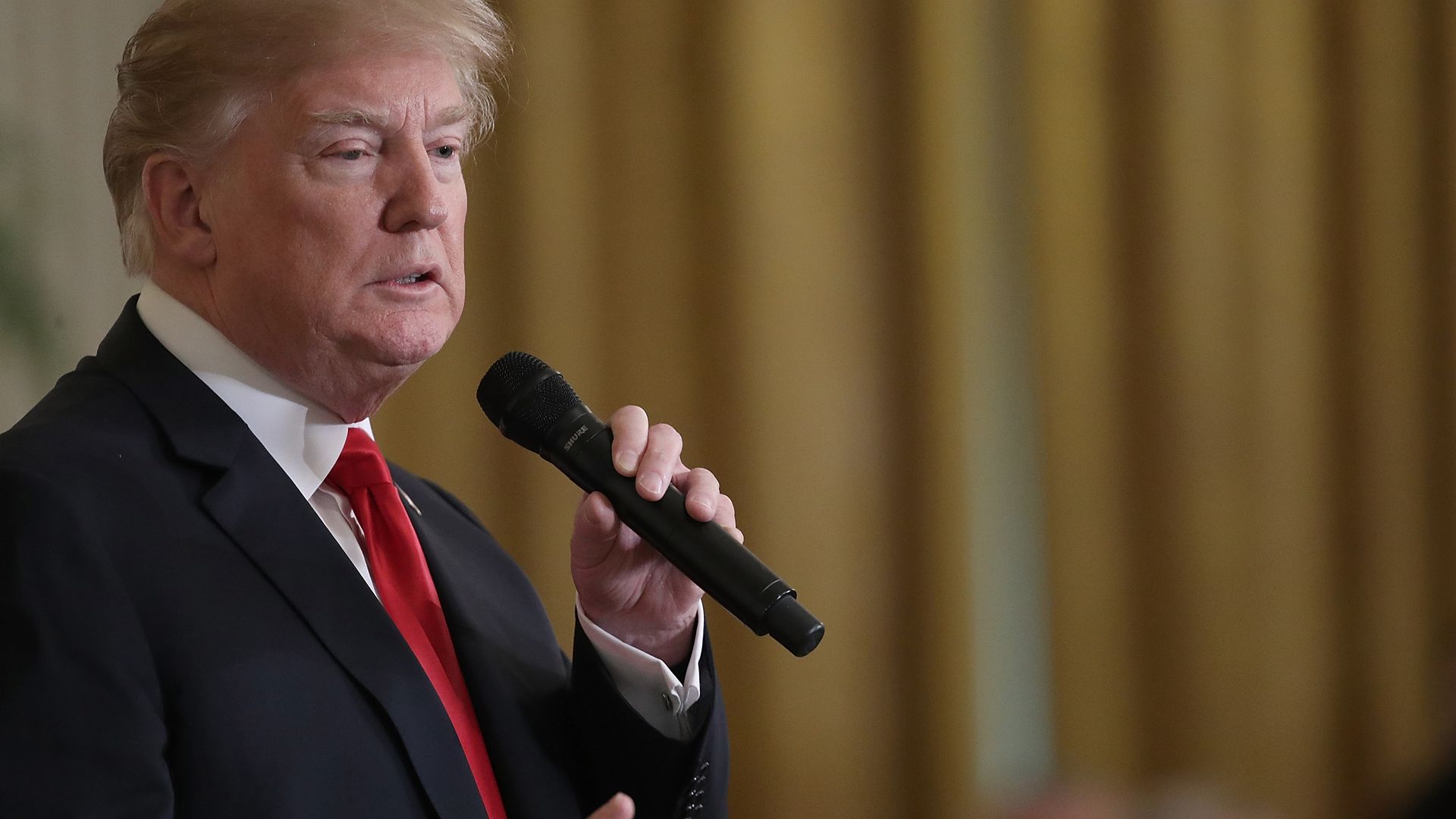
President Trump met with NRA Executive Director Chris Cox on Thursday, after a roundtable on Wednesday during which Trump took positions that are anathema to the group.
Between the lines: This is another reason to believe Trump's shifts on guns, like his shifts in a similar meeting on immigration, will be fleeting. Trump tweeted after the meeting: "Good (Great) meeting in the Oval Office tonight with the NRA!"
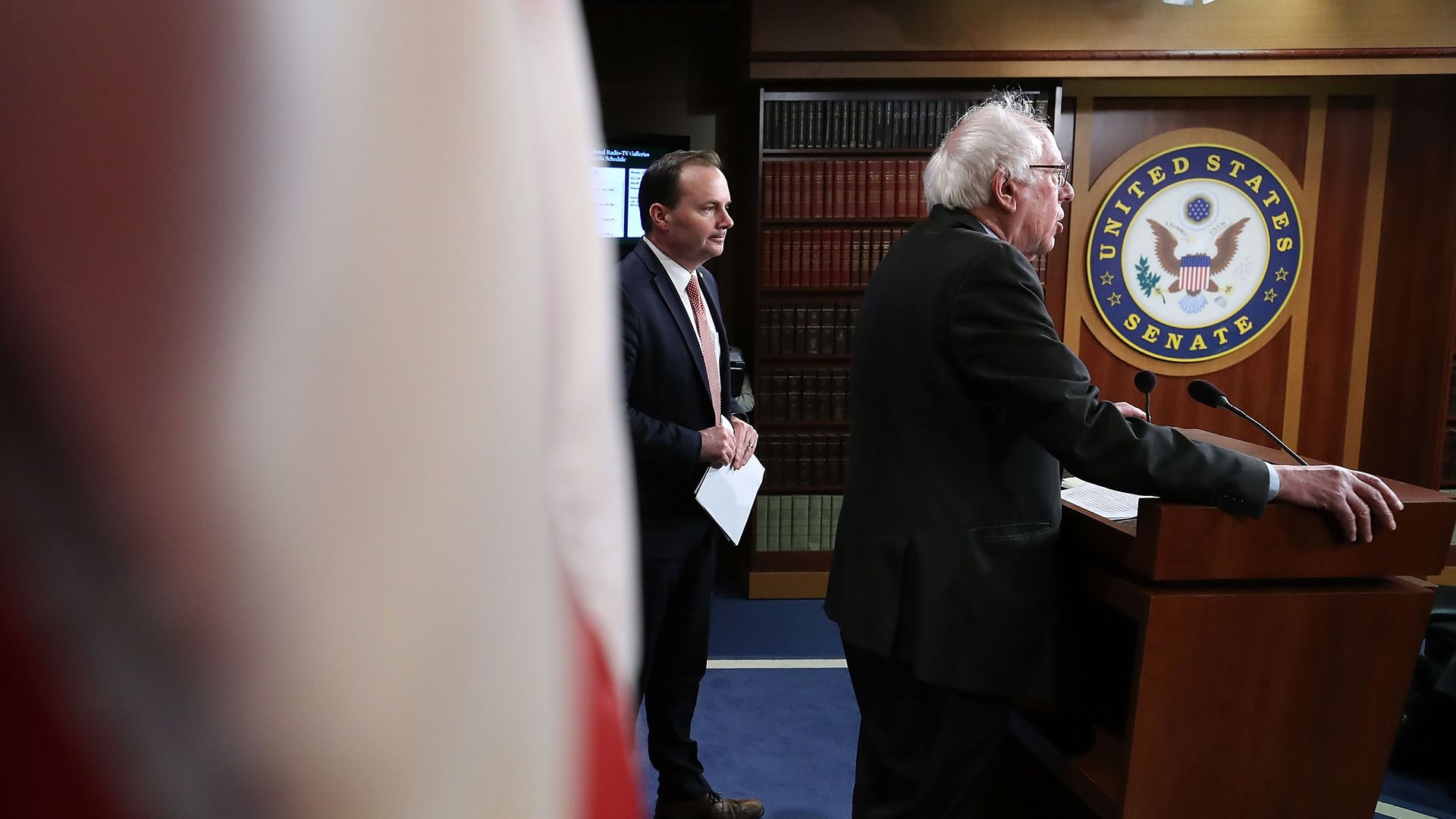
A bipartisan resolution was introduced in Congress on Thursday by Sens. Bernie Sanders, Chris Murphy, and Mike Lee, to end U.S. support for the Saudi-led coalition in the war in Yemen.
Why it matters: Yemen has been completely torn apart by the conflict between the Houthi rebel forces and the Saudi-led coalition which supports President Abdrabbuh Mansour Hadi. The U.S. military has been supporting the Saudi coalition since the Obama administraiton. Sanders, Lee, and Murphy argue that Congress did not approve involvement, and therefore the U.S. should not be involved "beyond providing desperately needed humanitarian aid."
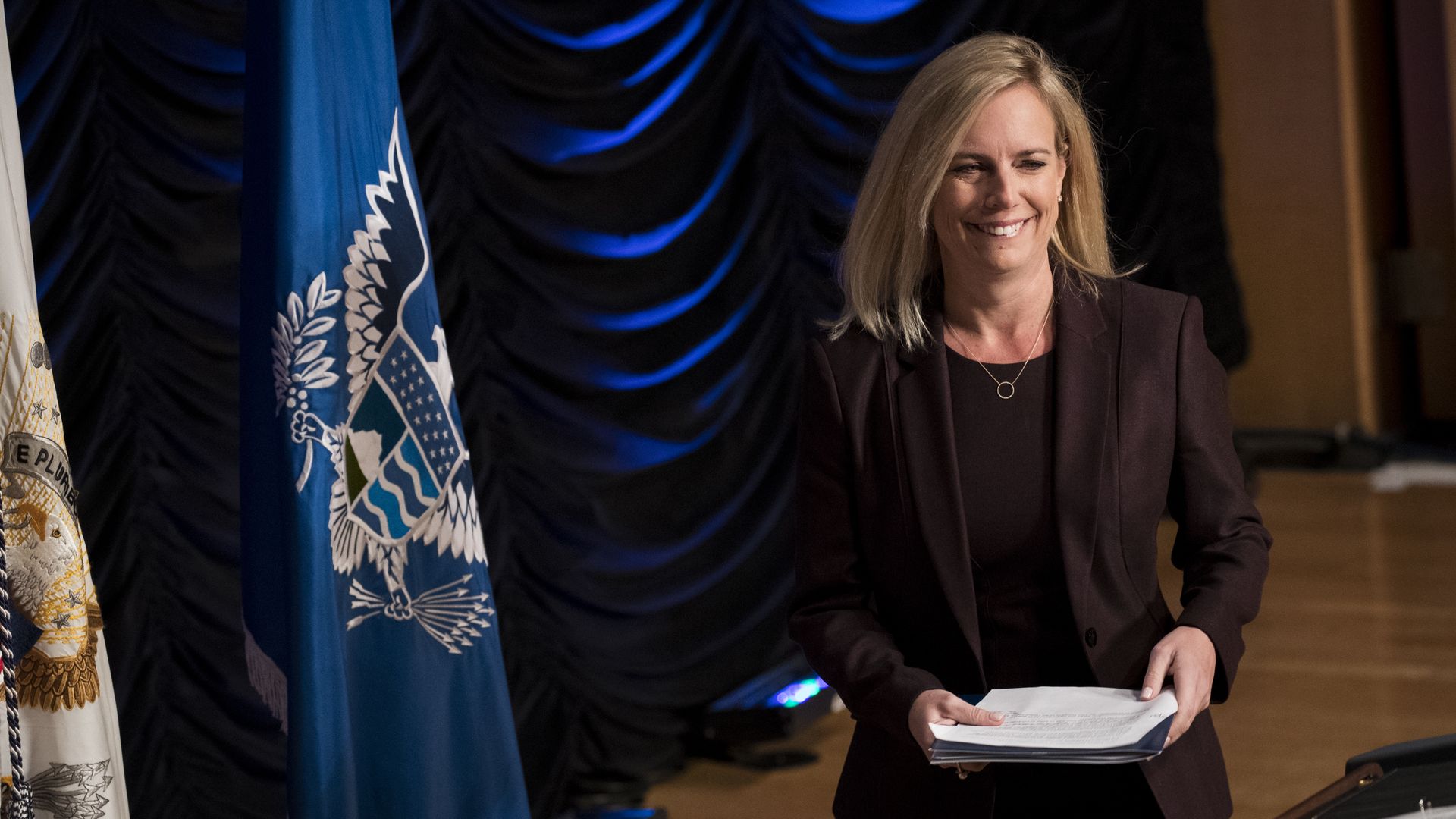
The Department of Homeland Security has postponed proposing an end to the H-4 work visa, which lets the spouses of H-1B workers with pending green cards find employment in the United States, according to a court filing. They now plan to issue the proposal in June — instead of their original goal of February — after USCIS "reevaluated the rule and determined that significant revisions to the draft proposal were necessary."
Why it matters: The Trump administration and DHS faced several setbacks in their attempts to crack down on immigration policies in February — from DACA, to the travel ban, to defunding sanctuary cities. Now, the spouses of these H-1B holders will face at least a few additional months in legal limbo before USCIS offers clarity regarding their work authorization.
Editor’s note: This article has been updated to more accurately reflect that this potential policy change would only affect the spouses of H-1B holders with pending green cards.
President Trump said on Thursday that the U.S. will be announcing new tariffs on steel and aluminum imports "sometime next week."
"People have no idea how badly our country has been mistreated...We’re bringing it all back.”
— President Trump
Why it matters: Trump's announcement would impose 25% tariffs on steel and 10% on aluminum and will be in effect “for a long period of time," said the president. The announcement came as a surprise to many administration officials. Per Axios' Jonathan Swan, this mirrors "a truly remarkable breakdown in process."
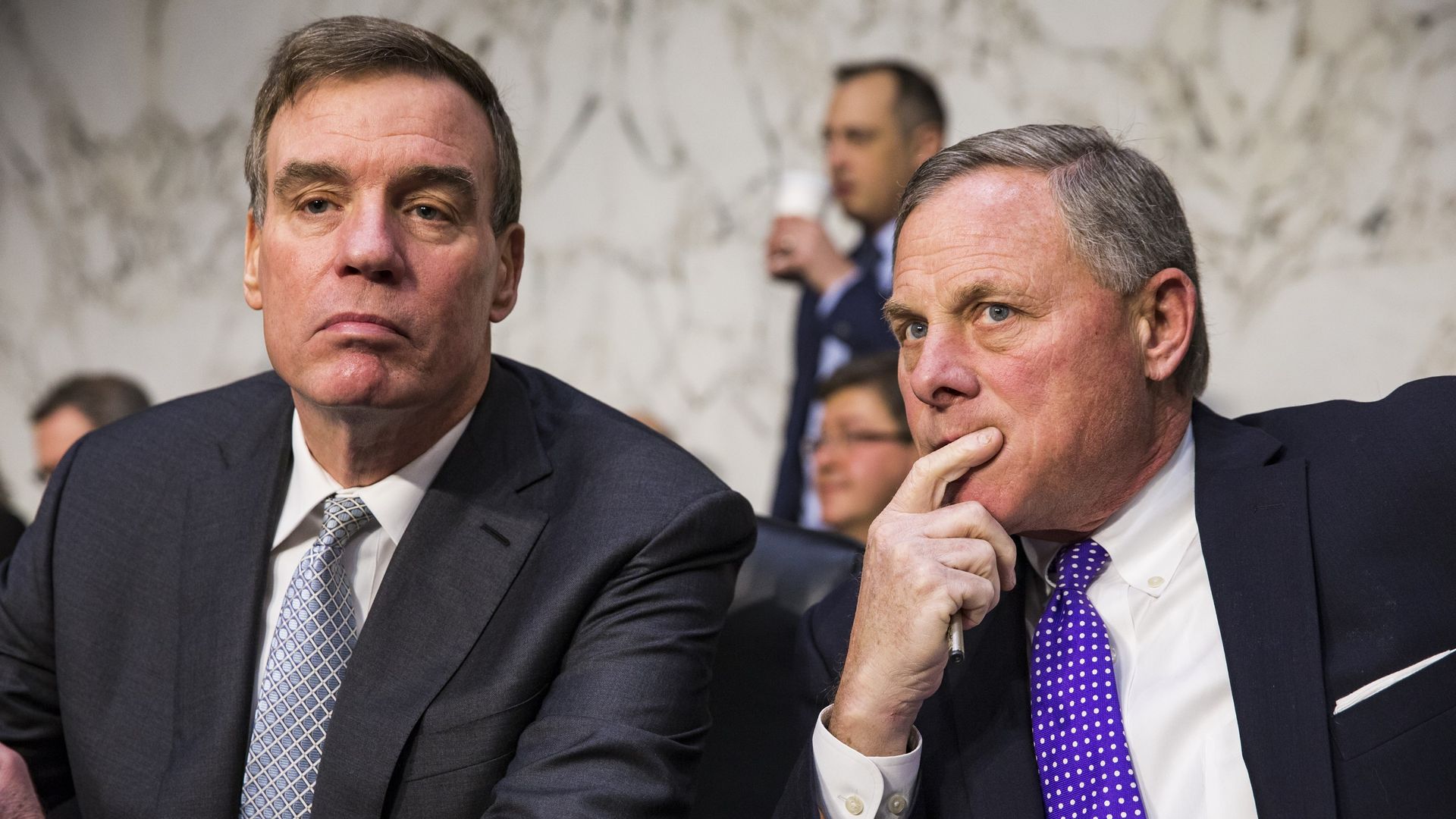
The Senate Intelligence Committee believes that Republican members of the House Intelligence Committee leaked text messages between a lobbyist and Sen. Mark Warner, Senate Intel's vice chair, that detailed attempts to set up a meeting with Trump-Russia dossier author Christopher Steele, per the NYT. The leak concerned Warner and Senate Intel Chair Richard Burr so much that they felt the need to meet with House Speaker Paul Ryan to voice their concerns about partisan actions by their House counterparts.
Why it matters: The House Intelligence Committee, led by Rep. Devin Nunes, has been the center of a number partisan controversies surrounding the Russia investigation — most notably, the competingmemos regarding alleged government surveillance abuses. Partisan rancor runs so deep internally that committee Republicans reportedly want to build a wall to separate their staff from Democratic staff.
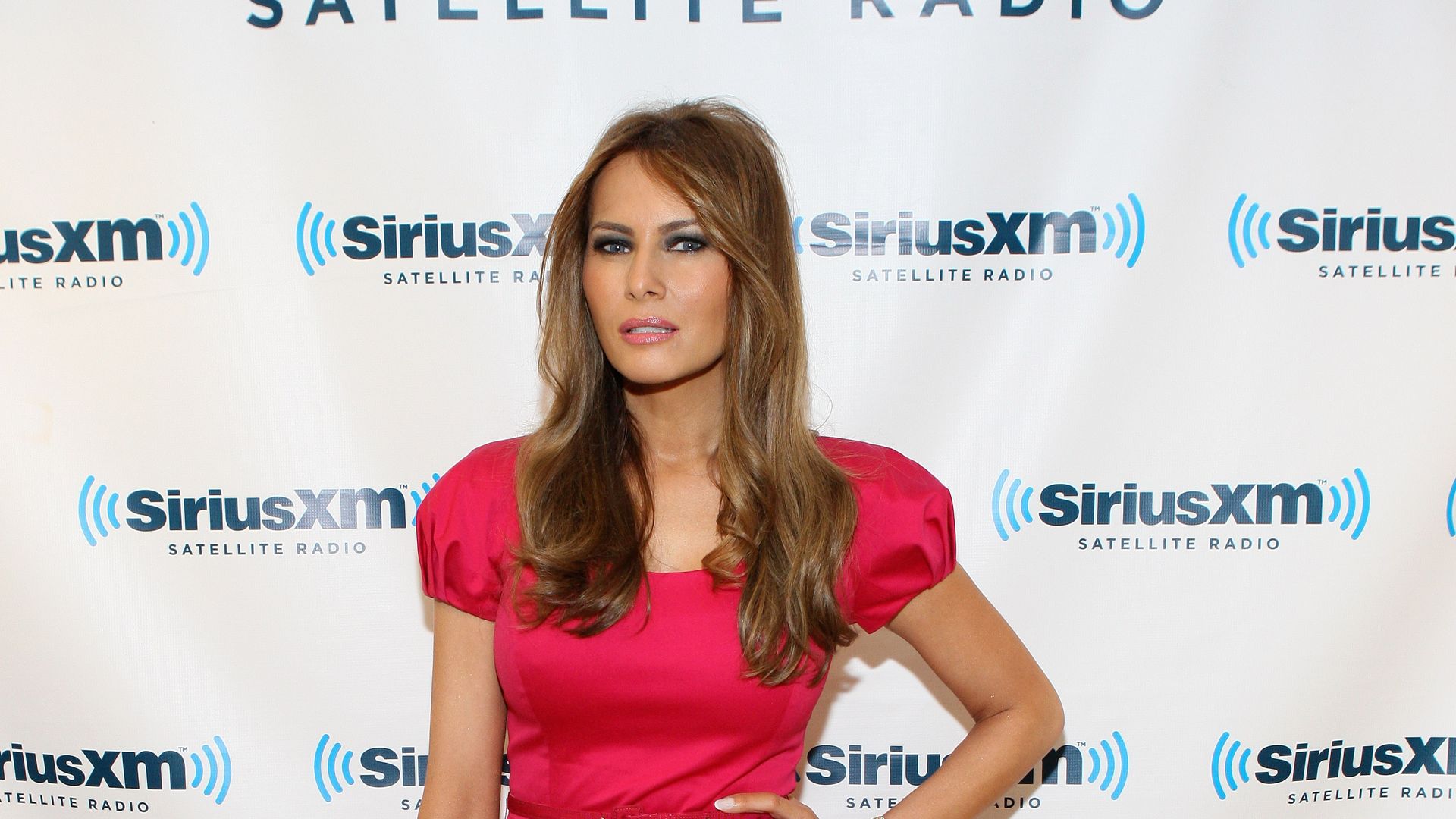
First Lady Melania Trump was granted a green card in 2001 under the EB-1 visa, created for those with "extraordinary ability" and "sustained national and international acclaim" such as top academic researchers, athletes and entertainers, according to the Washington Post. She was one of five Slovenians to receive that visa that year, which gave her the ability to sponsor her parents — who are now in the end stages of obtaining U.S. citizenship — for legal residency.
Reality check: Meanwhile, President Trump has been ardently calling for an end to family-based (or "chain") immigration, similar to how Melania may have sponsored her family. Additionally, the Department of Homeland Security under her husband has been calling for tougher scrutiny toward employment-based visas.
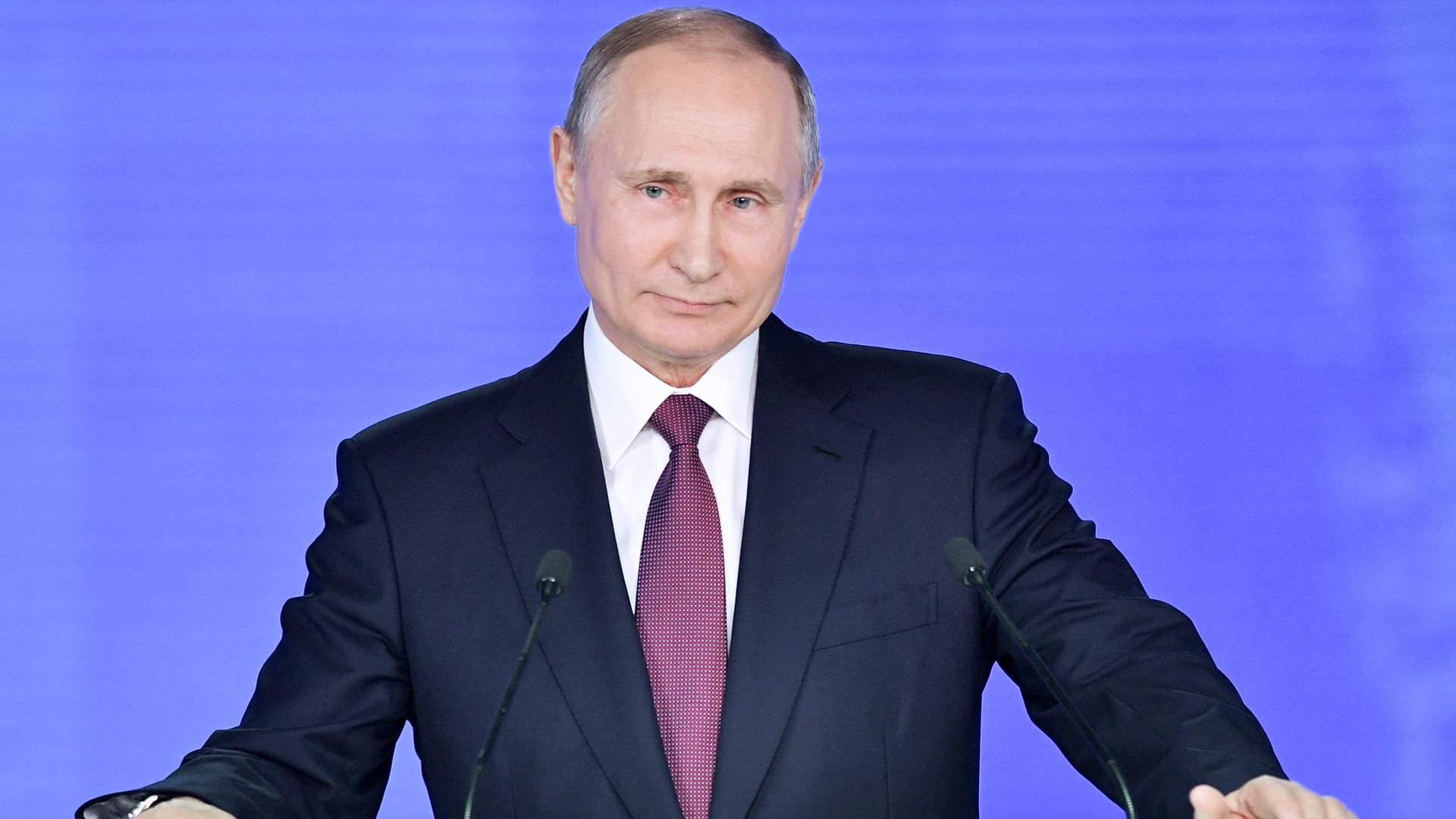
Our national conversation about Russia is alternating between indifference and hysteria. For most of the quarter century since the breakup of the USSR, we have treated Russia as a country in a state of long term, even terminal decline — “too sick to matter.”
Now, we are told, Russia has emerged as the biggest threat to the United States. Almost daily we learn new details about Russian cyber and information operations that have flooded our media with fake news and threatened the integrity of our elections, striking at the heart of American democracy.
Why it matters: Russia, our intelligence chiefs tell us, is poised to keep interfering in the U.S. and in our allies and neighbors. From Syria to France to Mexico to Venezuela, Russia is trying to expand its global footprint.
After a crazy 24 hours, sources close to President Trump say he is in a bad place — mad as hell about the internal chaos and the sense that things are unraveling.
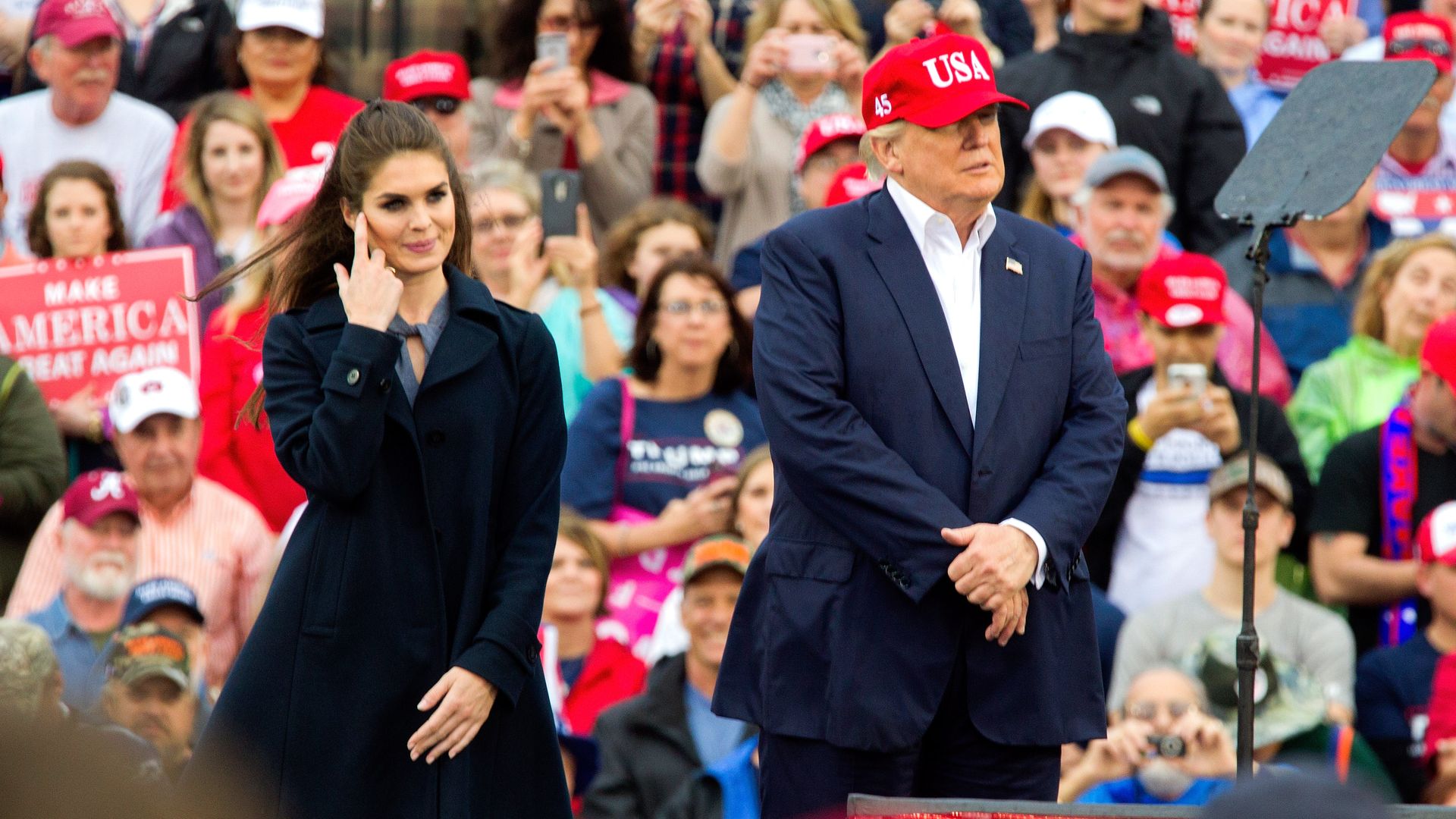
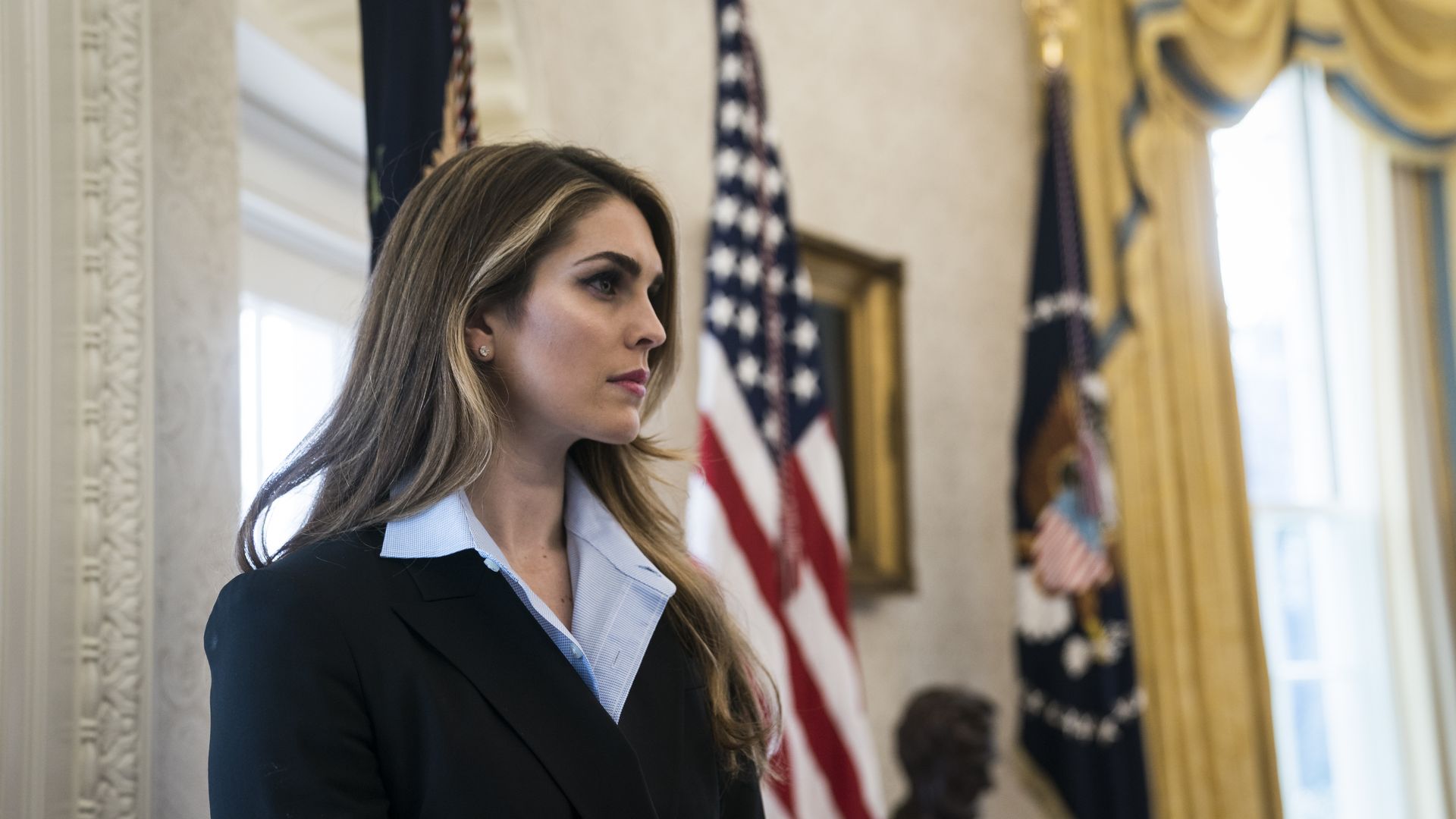
The big picture: Hope Hicks leaving is obviously a huge blow to him. Every time he reads about Attorney General Jeff Sessions, his head explodes. The staff is just trying to ride out the storm.
Likely midterm voters in swing states don’t perceive a direct employment benefit from international trade, according to polling by Firehouse Strategies, a Republican firm, and Optimus, a data consultancy:
Key stat: About half of those surveyed said they were willing to pay more for cars if that helped the U.S. steel and automotive industries.
No decision has been made on Hope Hicks' replacement as White House communications director, but here are some people who could be in the mix, according to my conversations with the inner circle:
Of the more than 360 access-related gun bills proposed by Congress since the Sandy Hook shooting in 2012, only one has become law, according to an Axios analysis of congressional bill data from ProPublica.
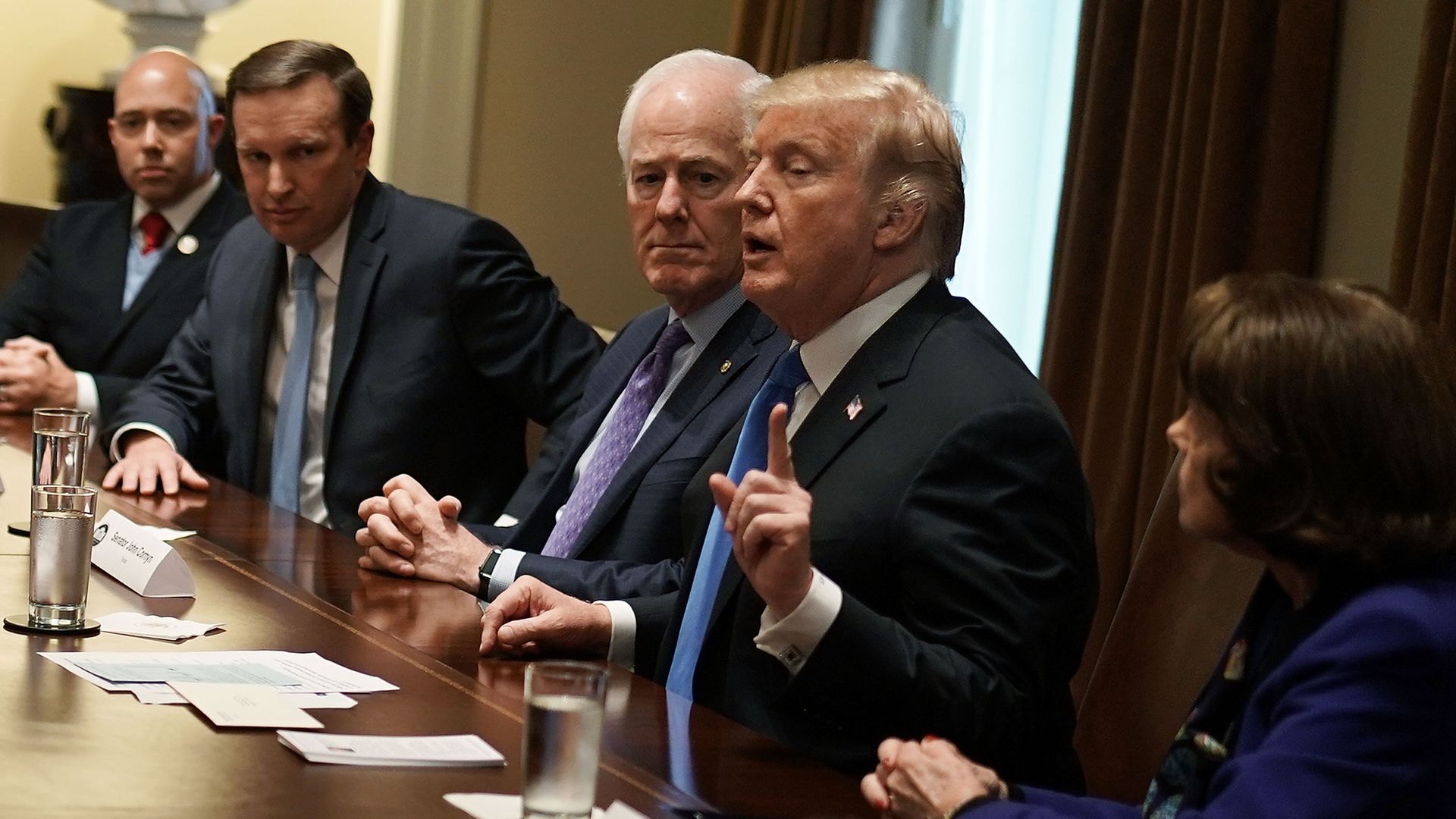
Yesterday's White House meeting on gun control was a stunning display of Trump leaving his party behind and siding instead with Democrats. Senate Republicans immediately dismissed Trump's directive to put together a broader gun package, instead hoping — and assuming — that he'll change his mind and come around to their side of the issue.
Why it matters: If Trump sticks with his proposals, it'll set up a huge clash between his dealmaking and Republican desires not to cave on one of the party's most defining issues.
The NRA and members of the GOP pushed back on President Trump's comments during a bipartisan meeting at the White House on Wednesday.
Why it matters: During the meeting, Trump encouraged several things that the NRA wouldn't agree with, including taking guns away from owners without due process. He also told lawmakers: "I’m a fan of the NRA, there’s no bigger fan...but that doesn’t mean we have to agree on everything."
More than 80% of blacks, 75% of Hispanics, and nearly 50% of whites,
85% of Democrats and 21% of Republicans.
Between the lines: The 57% figure is about the same as Trump disapproval numbers, (55% according to the RCP average). The findings seem to indicate that almost all of the country either approves of Trump's performance, or believes he's a racist.