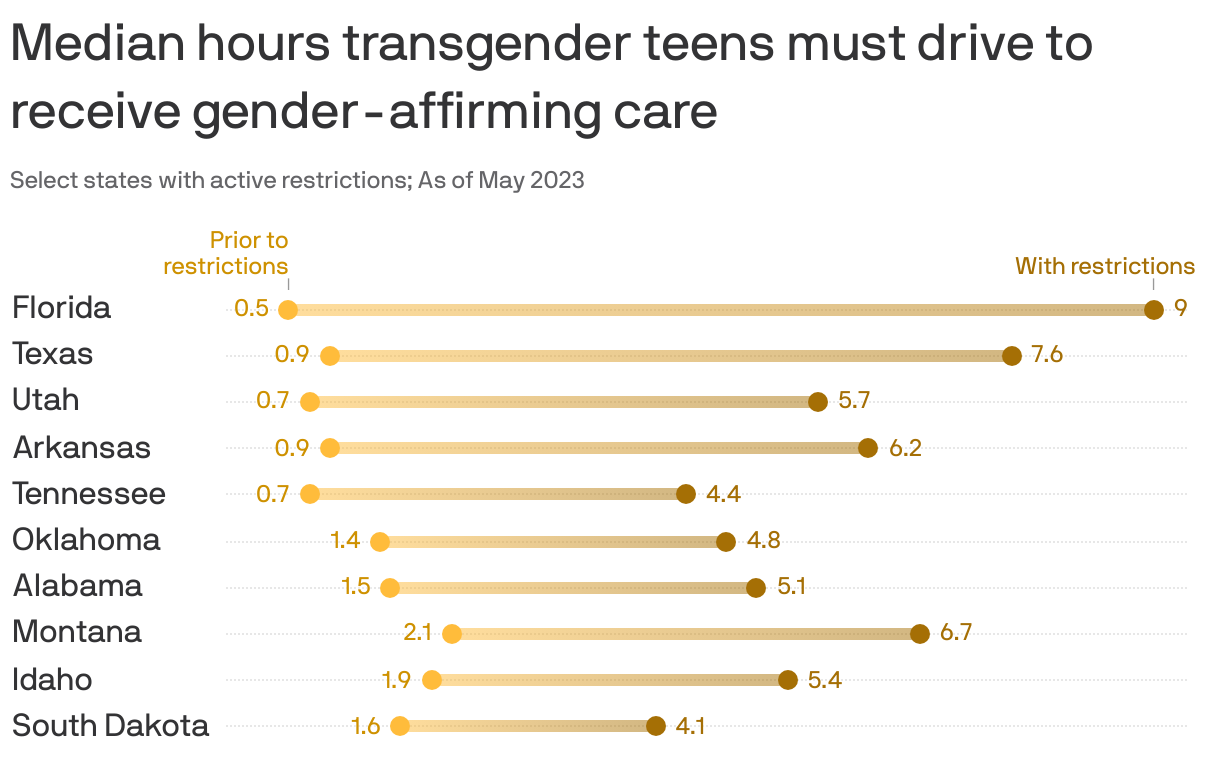
Data: JAMA; Note: Includes U.S. transgender teens ages 13-17; Chart: Tory Lysik/Axios Visuals
State bans on gender-affirming care for youths have left more than a quarter of kids under 18 in need of such services at least a four-hour drive away from the nearest clinic that provides them, according to a new JAMA study.
Driving the news: 70 clinics were inactive as of May in the 20 states that imposed restrictions on gender-affirming care, per the report published Tuesday.
Hospitals are struggling to discharge recovering patients to less intensive settings amid staffing shortages at nursing homes and home health agencies, a new report from WellSky finds.
Why it matters: Patients who remain hospitalized longer than necessary can reduce the overall capacity of the facility, limit the ability to treat new patients and even cause canceled or delayed procedures, the report noted.
House GOP appropriators are loading up their spending bills with anti-abortion and anti-gender affirming care measures that threaten Speaker Kevin McCarthy's goal of passing 12 separate appropriations bills.
Why it matters: Unless the full Republican conference and the Democratic Senate are in agreement on the riders, it's time to start planning for a government shutdown at the end of September.
Mounting frustration with hospitals' billing practices are stirring reform efforts in Congress, state legislatures and within the Biden administration. But not everyone agrees on where to start.
Why it matters: Some measures under discussion could cost hospitals hundreds of billions of dollars, by paring payments that critics say are excessive and costing taxpayers and patients.
U.S. Sen. Alex Padilla (D-Calif.) on Tuesday introduced a bill seeking to lift barriers to mental health care among Latinos.
Why it matters: The pandemic exacerbated mental health needs in the U.S., especially among Latinos, whose rates of depression, anxiety and suicide have grown since 2020.
The U.S. outranks other developed nations in the percentage of rural adults who skip medical care because they can't afford it, per a new Commonwealth Fund analysis of 11 high-income countries.
About 15%, or nearly 46 million people, live in outlying areas in the U.S., and rural Americans have poorer health outcomes than their urban counterparts, in part due to access issues.
The Biden administration today proposed strengthening requirements so that health insurers cover behavioral health at the same level as physical health.
Why it matters: Advocates have long argued that health plans are not adequately covering mental health services, despite a 2008 law intended to ensure parity. The issue has become a priority for policymakers as the aftereffects of the pandemic become clear.
Why it matters: The number of women seeking to freeze their eggs surged after the onsetof the pandemic, but sky-high costs, coupled with a lack of insurance coverage, have put some fertility treatments out of reach for many people.
Cigna Healthcare is facing a federal class action lawsuit which alleges the company used algorithms to "deny payments in batches of hundreds or thousands at a time," as part of an almost completely automated claims decision process.
The suit was filed in California's eastern district on Monday, alleging violations of California law, which require medical professionals to conduct "thorough, fair, and objective" reviews of insurance claims.
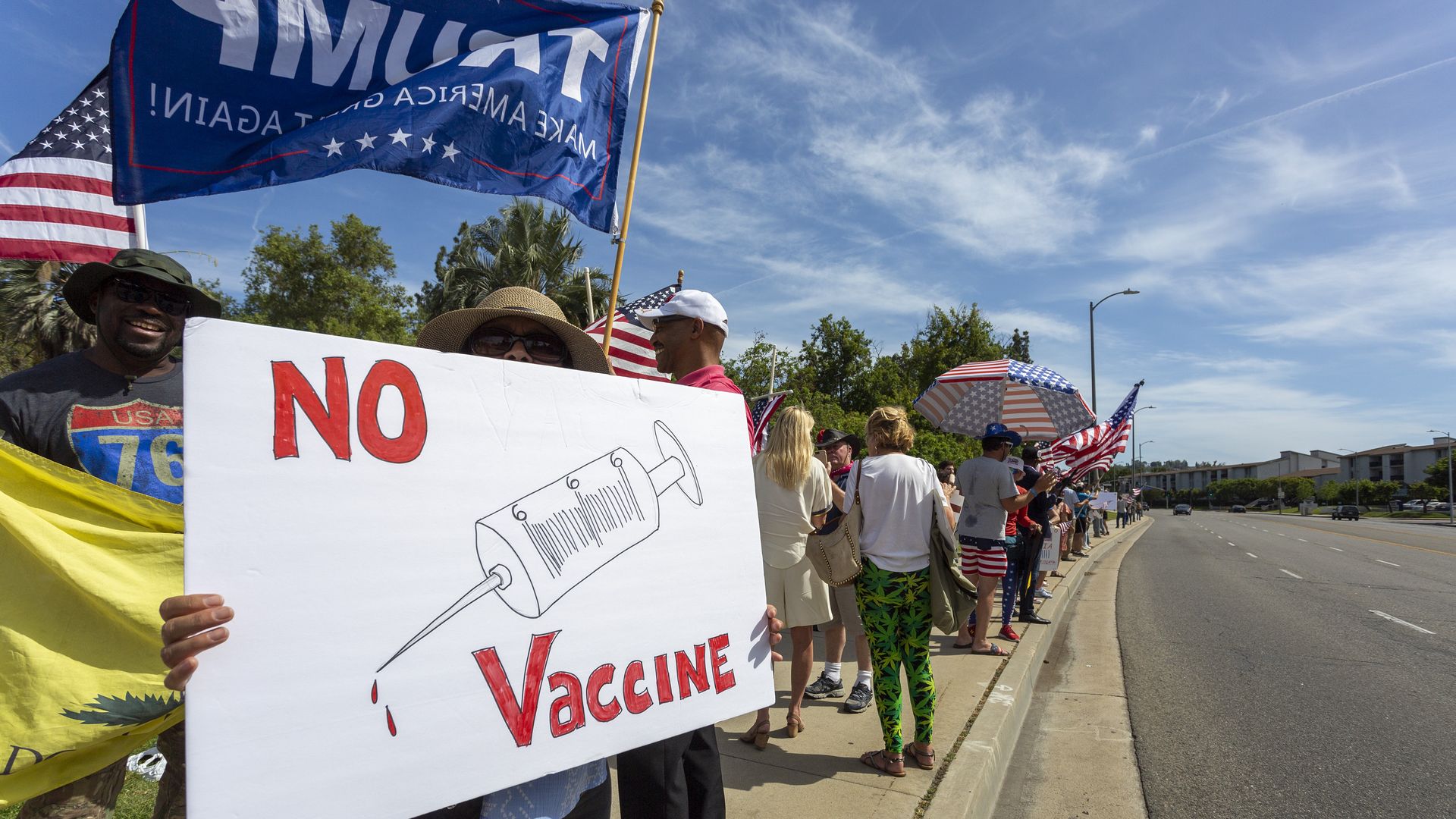
Registered Republicans experienced a "significantly higher" rate of excess deaths than Democrats in Florida and Ohio in the months after COVID-19 vaccines were made widely available, a new study has found.
Why it matters: The Yale researchers note in their study, published in the journal JAMA Internal Medicine Monday, the findings "suggest that well-documented differences in vaccination attitudes and reported uptake between Republican and Democratic voters may have been a factor in the severity and trajectory of the pandemic."