The Biden administration on Thursday launched an effort under its new science agency ARPA-H to help surgeons better remove cancerous tumors without damaging nerves, blood vessels and other healthy tissue.
Why it matters: It's the first cancer program for the multi-billion-dollar Advanced Research Projects Agency for Health and is paired with the "cancer moonshot" as part of President Biden's "unity agenda" aimed at cutting the cancer death rate in half over 25 years.
The expanding health care services offered by brick-and-mortar pharmacies may help them fend off competition from mail order pharmacies, according to a new J.D. Power study.
Why it matters: While traditional pharmacies are facing increased competition from digital players, including big names like Amazon and Mark Cuban, the pandemic experience made patients more accustomed to getting quick, routine care at their neighborhood drug store.
The Senate Finance Committee on Wednesday approved a measure aimed at reforming pharmacy benefit manager practices on a broad bipartisan vote of 26-1.
Why it matters: The move adds to the flurry of activity in both chambers aimed at PBMs, which serve as negotiators between drug manufacturers and insurers, working out rebates with drugmakers and securing the details of their plan coverage.
A trio of policy experts from Stanford’s Hoover Institution are launching a new free-market health care plan this week that they're hoping will become the go-to Republican message for 2024 campaigns, with a focus on expanding health care choices.
Why it matters: Ever since the Affordable Care Act "repeal and replace" effort failed in 2017, Republicans have struggled to find a unifying vision for health care they can put forwardin presidential and congressional races.
A lesser-known fertility option is gaining traction: using donor embryos.
Why it matters: As the use of in vitro fertilization (IVF) has gone up, there's been an increase in the amount of unused embryos, and in embryo donor rates.
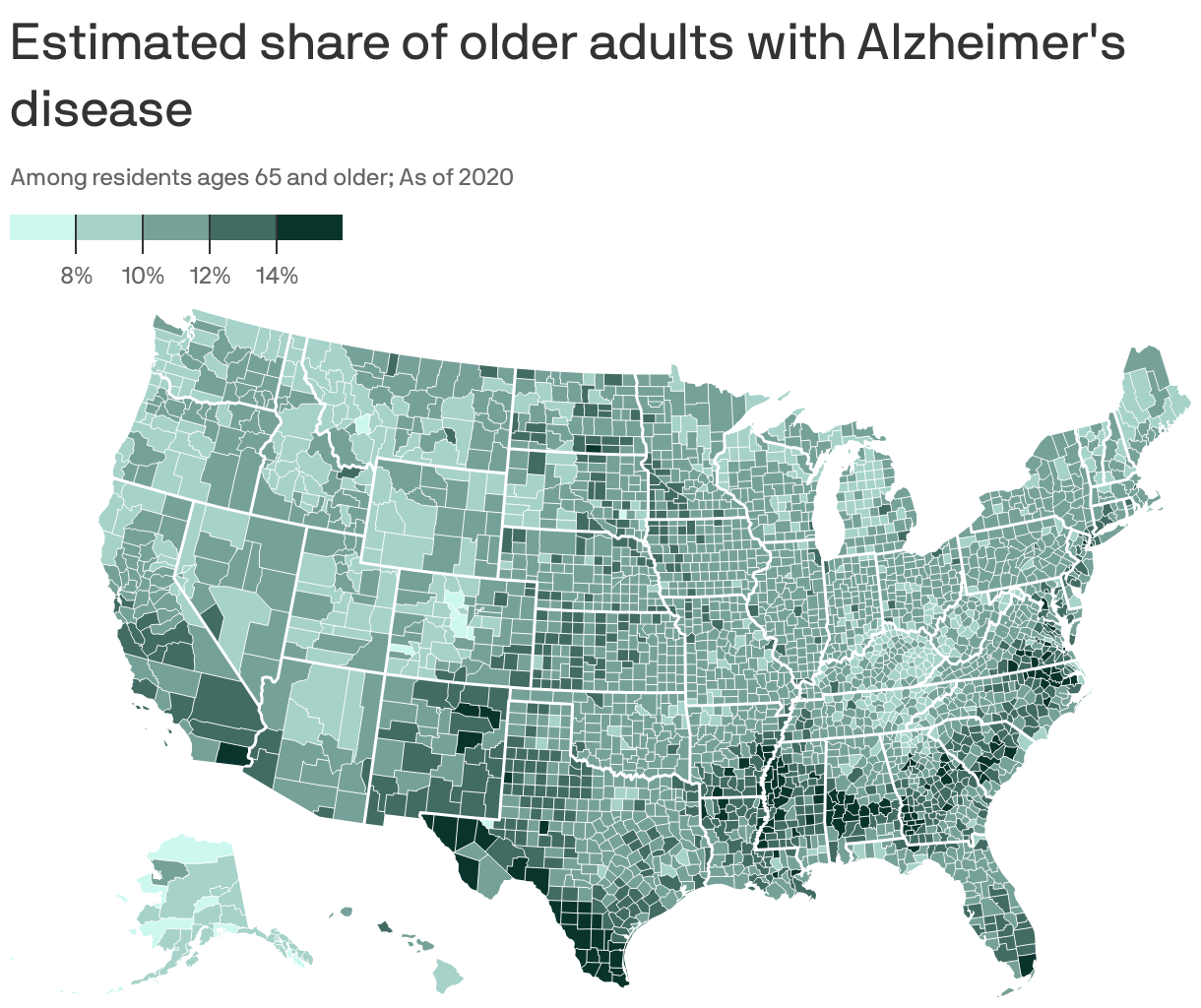
Data: Dhana, et al., 2023, “Prevalence of Alzheimer’s disease dementia in the 50 U.S. states and 3,142 counties”; Map: Kavya Beheraj/Axios
The Eastern and Southeastern U.S. have the country's highest prevalence of Alzheimer's disease, per a new study.
Why it matters: It's critical for public health officials, policymakers and others to have a clear look at the number of Alzheimer's cases in a given area, the authors say — in part because caring for those with the disease cost an estimated $321 billion nationwide last year, much of which came via Medicare and Medicaid.
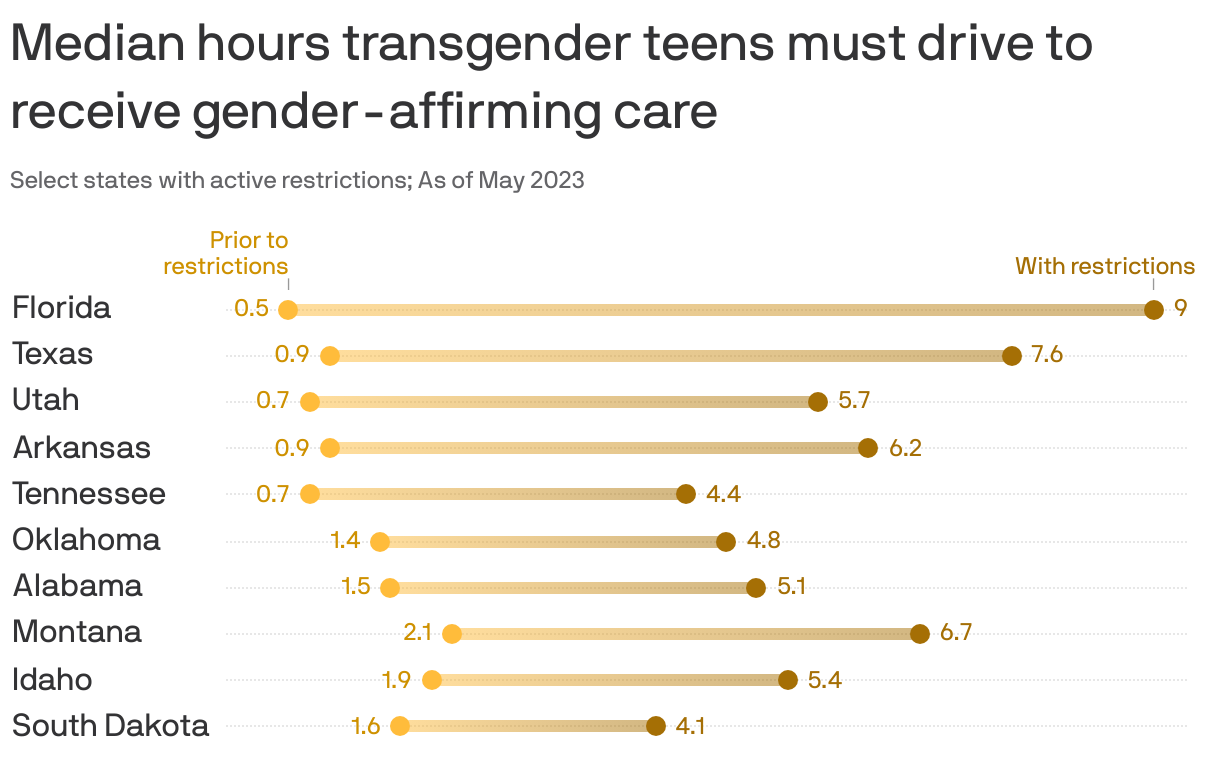
Data: JAMA; Note: Includes U.S. transgender teens ages 13-17; Chart: Tory Lysik/Axios Visuals
State bans on gender-affirming care for youths have left more than a quarter of kids under 18 in need of such services at least a four-hour drive away from the nearest clinic that provides them, according to a new JAMA study.
Driving the news: 70 clinics were inactive as of May in the 20 states that imposed restrictions on gender-affirming care, per the report published Tuesday.
Hospitals are struggling to discharge recovering patients to less intensive settings amid staffing shortages at nursing homes and home health agencies, a new report from WellSky finds.
Why it matters: Patients who remain hospitalized longer than necessary can reduce the overall capacity of the facility, limit the ability to treat new patients and even cause canceled or delayed procedures, the report noted.
House GOP appropriators are loading up their spending bills with anti-abortion and anti-gender affirming care measures that threaten Speaker Kevin McCarthy's goal of passing 12 separate appropriations bills.
Why it matters: Unless the full Republican conference and the Democratic Senate are in agreement on the riders, it's time to start planning for a government shutdown at the end of September.
Mounting frustration with hospitals' billing practices are stirring reform efforts in Congress, state legislatures and within the Biden administration. But not everyone agrees on where to start.
Why it matters: Some measures under discussion could cost hospitals hundreds of billions of dollars, by paring payments that critics say are excessive and costing taxpayers and patients.