More than 100 people at the U.S. Embassy in Kabul have been diagnosed with COVID-19, at least one person has died and several others have been medically evacuated out of the country, CNN reports.
State of play: Effective immediately, all embassy personnel will be placed on lockdown and only permitted to leave their quarters to get food or to exercise outdoors, according to CNBC.
Why it matters: COVID-19 cases across the U.K. are on the rise amid the spread of the highly transmissible COVID-19 Delta variant. The B.1.617.2 variant, first detected in India, is expected to become the dominant strain in the U.S. in three to four weeks, some researchers say.
Public health officials are renewing calls for COVID-19 vaccinations, as a more infectious variantthat can be thwarted with available vaccinesis spreading rapidly in the United States.
Why it matters: The B.1.617.2 (or Delta) variant was first detected in India and is expected to become the dominant strain in the U.S. in three to four weeks, some researchers say. If vaccination rates continue to slow, the variant could fuel surges in pockets of the country this fall.
Spectrum Health and Beaumont Health have signed a merger agreement that would combine a health insurance company and 22 hospitals into one tax-exempt system with almost $13 billion in annual revenue.
Why it matters: This deal would form the largest hospital system in Michigan, raising new concerns about what would happen to hospital and physician prices if the merger is ultimately approved.
The Biden administration will invest $3.2 billion to foster the development of antiviral pills to help fight against COVID-19, the Health and Human Services department announced Thursday, with hopes the medication becomes available to the public as soon as the end of this year.
The big picture: Researchers had tested existing antivirals like remdesivir in hospitals on patients with severe COVID-19, but they produced underwhelming results and little to no benefit.
The Supreme Court Thursday morning tossed aside conservatives' latest challenge to the Affordable Care Act, rejecting the Trump administration’s bid to get the entire health care law thrown out.
Why it matters: The 7-2 ruling will allow the ACA, which covers some 20 million people and has been the law of the land for 11 years, to continue operating. It also shows there are some limits to how much of the Republican agenda can be accomplished through the courts, even with a solid conservative majority.
Japan announced Thursday it is easing the pandemic-related state of emergency in Tokyo and six other areas starting next week, citing the decline of daily coronavirus cases, AP reports.
Why it matters: The announcement comes a month before the Summer Olympics, which will be held in Tokyo in July. Doctors and prominent executives had called for the games to be canceled during an uptick in cases at the time.
The nation's top physician's groupon Wednesday called for policies to better diagnose and treat long-haul COVID-19 and endorsed guidelines for guiding any future vaccine mandates and credentials.
Driving the news: The American Medical Association's House of Delegates, which represent the nation's doctors, called for tools to improve the assessment, diagnosis, and awareness of post-viral syndromes.
If anyone's incentivized to drive down hospital costs, it's state employee health plans. But that's often not where they're focused, per a new study by Georgetown's Center on Health Insurance Reforms.
Why it matters: Hospital prices are cited most frequently by state plans as their top cost driver, but they're more likely to target other forms of health care spending when it comes to curbing costs.
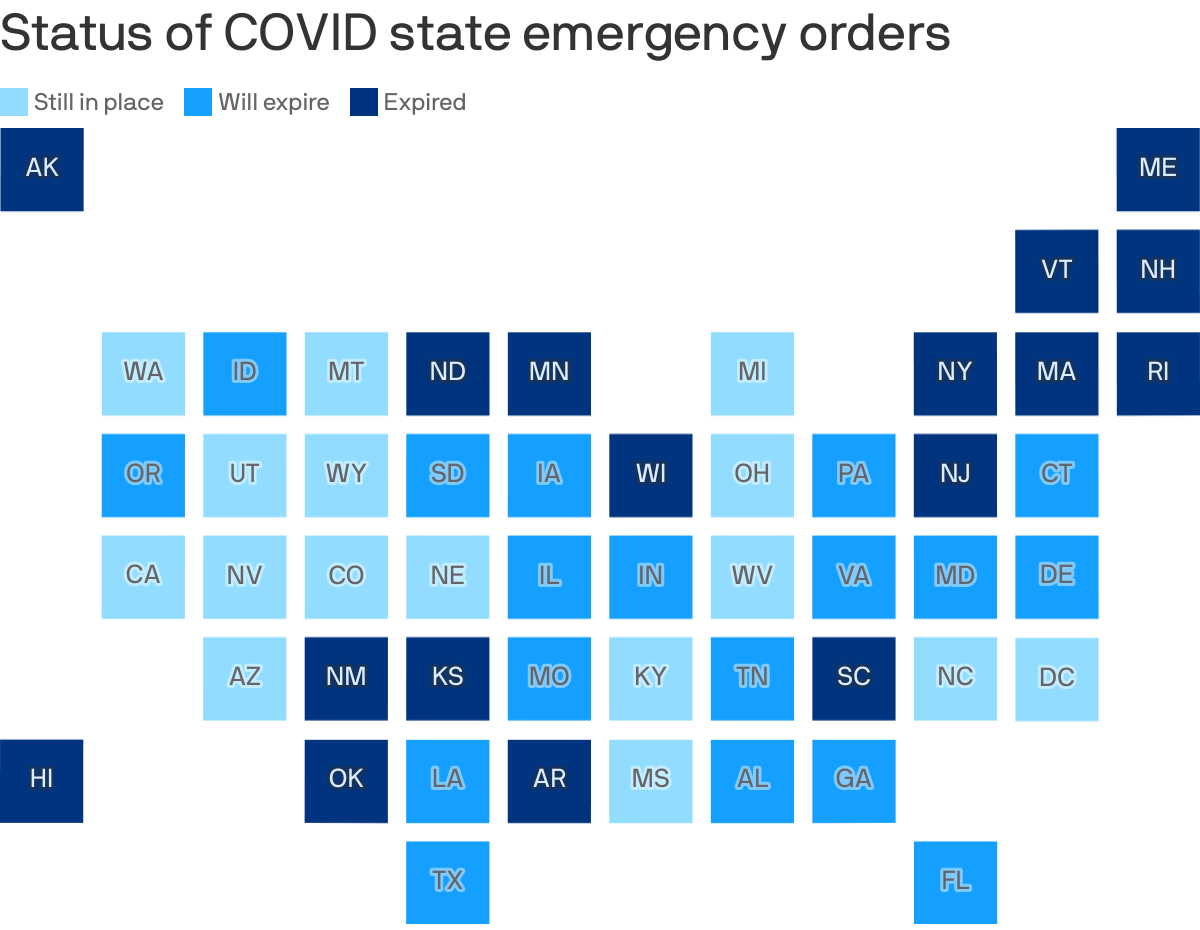
Data: National Academy for State Health Policy and various governor declarations; Chart: Sara Wise/Axios
Soon, more than half the states will have ended their formal emergency declarations for the pandemic — which could have ripple effects across the economy.
Why it matters: Lifting those orders will allow businesses to serve more customers, but will also end certain safety nets, including expanded food and housing assistance, as well as eviction protections.
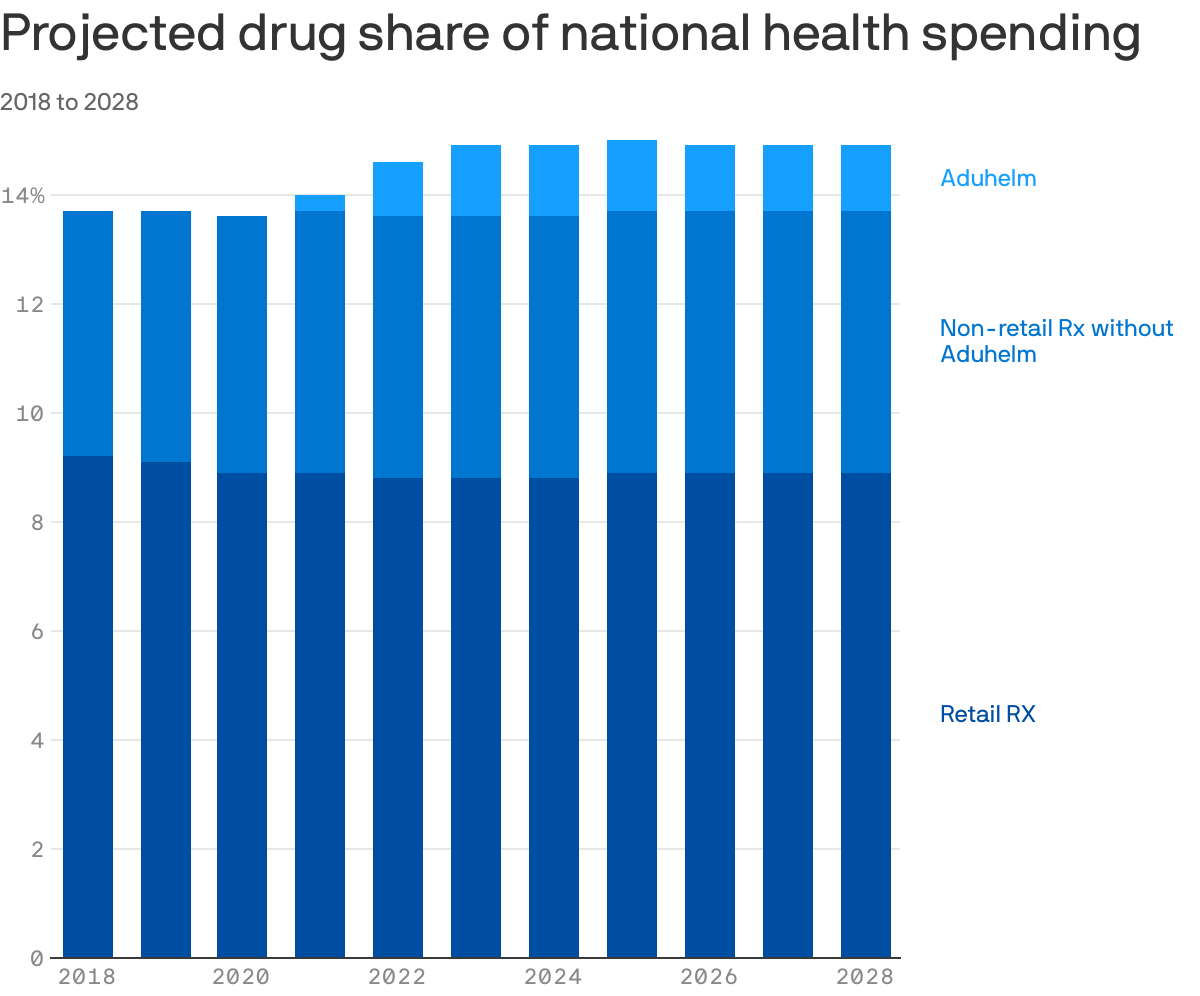
Aduhelm, the Alzheimer's treatment controversially approved by the FDA, won't just put Medicare's budget in peril. The $56,000-per-year drug could single-handedly represent one percentage point of all health care spending by next year, according to an analysis from Altarum.
Why it matters: Americans already pay more for health care than any other country. But since Aduhelm is not close to being a cure — and not even proven to halt the progression of Alzheimer's — "the resultant growth in spending will therefore be sustained for the foreseeable future," Altarum researchers wrote.
Montana Gov. Greg Gianforte (R) announced Wednesday that he'll donate the first quarter of his salary to One Health Bighorn, a facility that treats people for substance abuse.
The big picture: The multimillionaire has pledged to give his entire salary, about $120,000, to nonprofits. "We face a drug epidemic in our state, and while there's no silver bullet to end it, we can combat it by promoting treatment and recovery for Montanans struggling with addiction," Gianforte said in a statement, per AP.