The COVID-19 pandemic is rife with scientific and medical uncertainty, including debates about the ethics of using experimental treatments.
The big picture: As the global pandemic continues, the tension between providing the best available care for patients and performing trials to determine whether that care is effective risks complicating the medical response.
The New England Journal of Medicine yesterday published the first political editorial in its 208-year history, arguing that America's leaders have bungled the response to COVID-19, leading to unnecessary death and economic hardship.
Axios Re:Cap goes deeper with Eric Rubin, an immunologist and infectious disease expert who serves as NEJM's editor-in-chief.
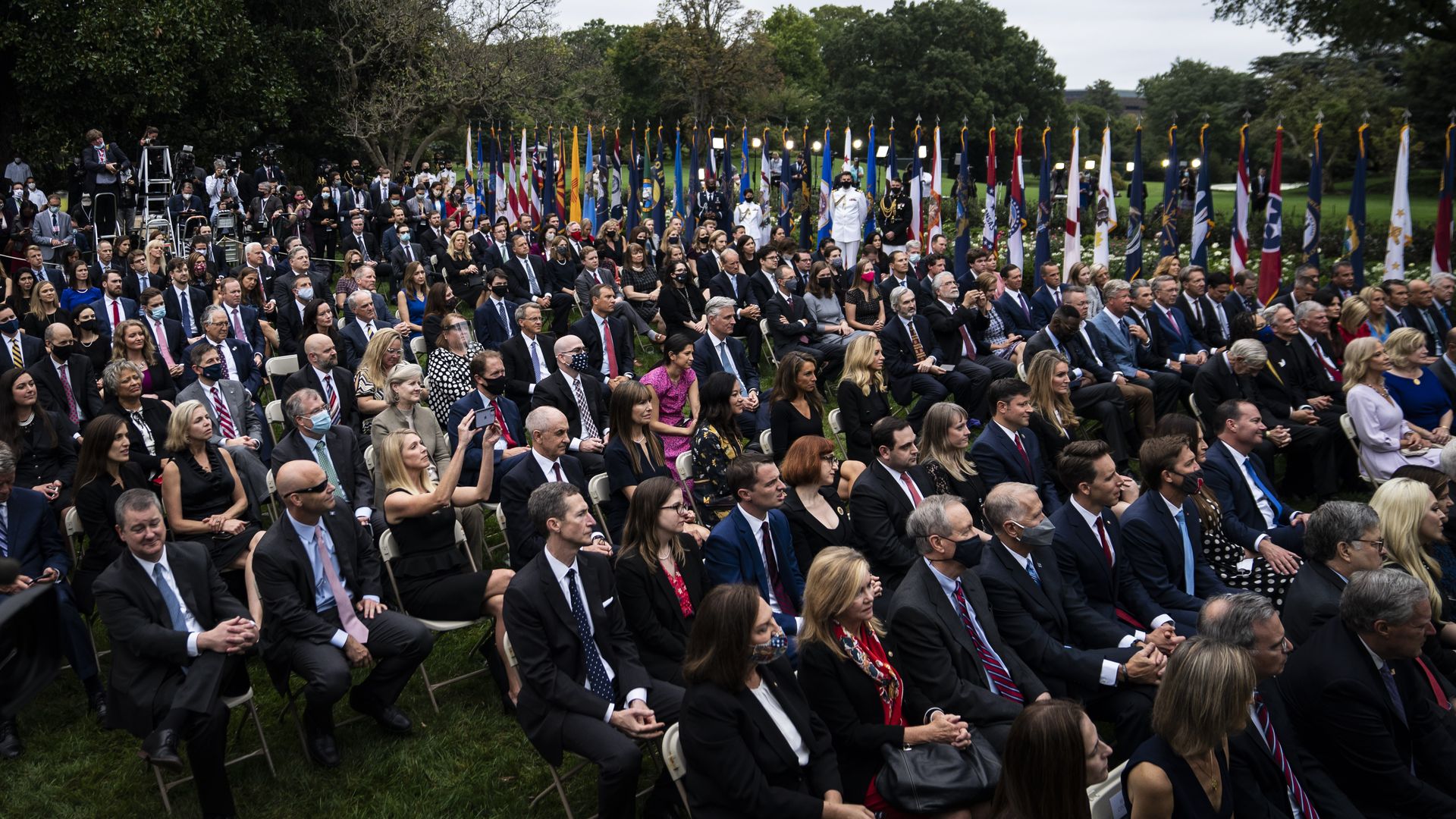
The Washington, D.C. Department of Health on Thursday asked attendees and White House staff at the Rose Garden celebration for the introduction of Supreme Court nominee Amy Coney Barrett on Sept. 26 to seek medical advice and get tested for COVID-19 by their local health department.
Why it matters: The outbreak tied to the White House contributed to an increase in the District's caseload. D.C. experienced a 26% increase last week, rising from some 40 new cases per day to about 50.
The full 7th U.S. Circuit Court of Appeals on Thursday blocked a lower court's ruling that extended the deadline for counting absentee ballots in Wisconsin to Nov. 9 as long as they are postmarked by the Nov. 3 election.
Why it matters: The ruling, if it stands, is a win for Republicans who had sought to curb the amount of time allowed to count ballots in this decisive battleground state. Wisconsin is expecting 2 million absentee voters due to the pandemic.
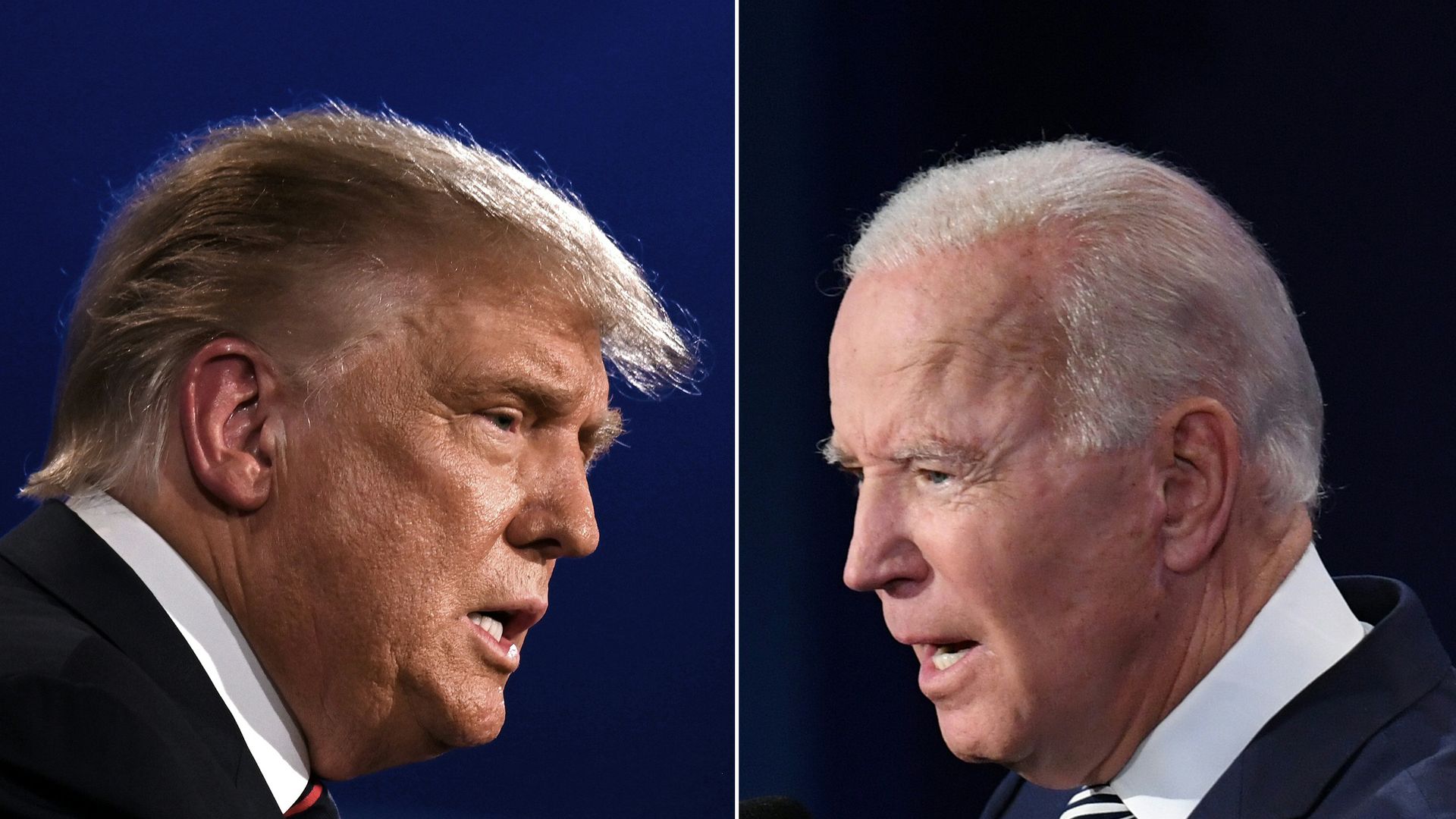
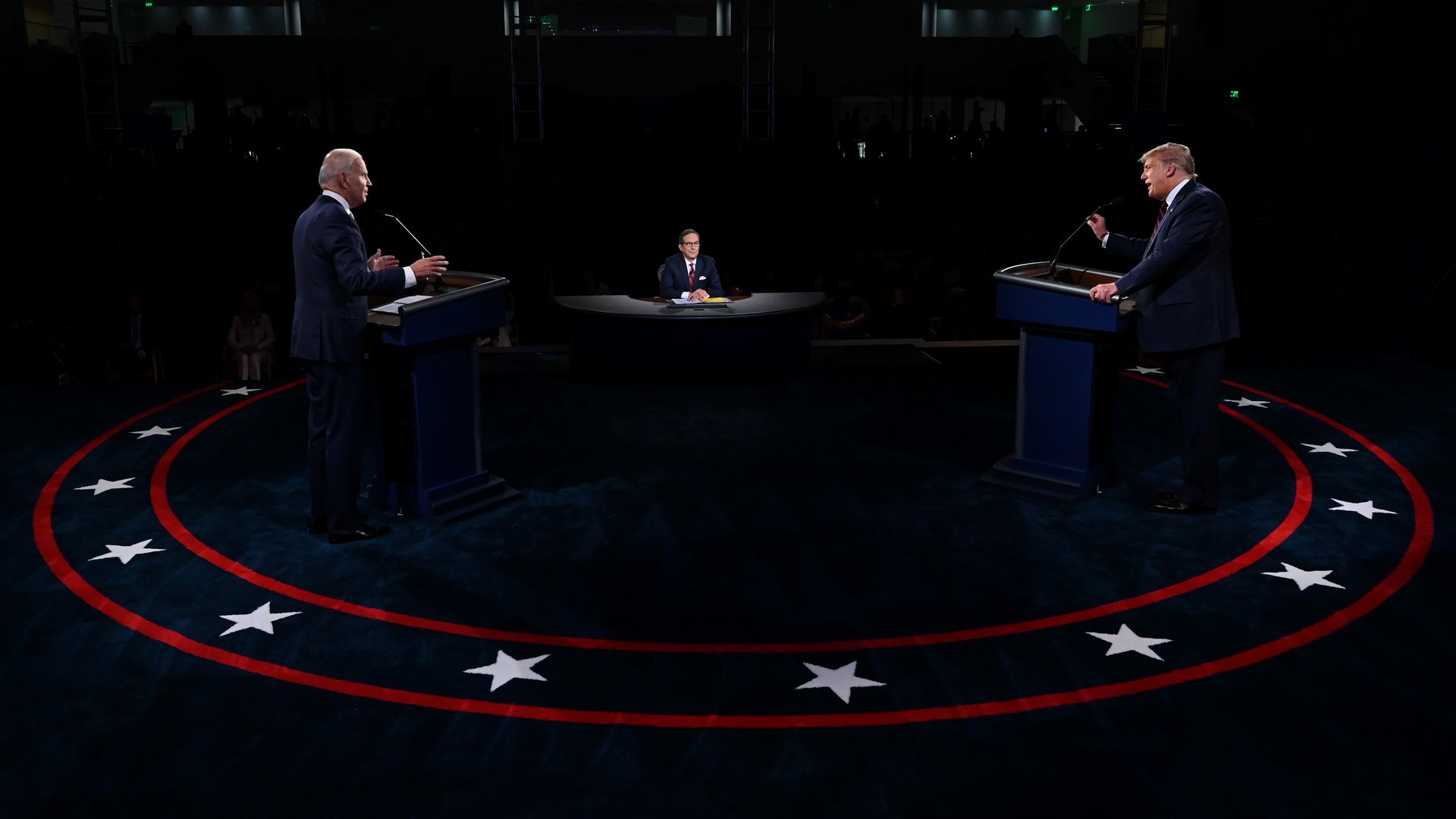
After President Trump announced he would not participate in a virtual debate next week, Joe Biden's campaign released a statement Thursday that the former vice president would instead "find an appropriate place to take questions from voters directly."
The state of play: The Commission on Presidential Debates announced the town hall would be entirely virtual "for the health and safety of all involved" as Trump continues to recover from coronavirus.
Growth of normal tumor cell clusters in a mouse lung (l ) compared to growth of tumor cell clusters when they are prevented from expressing epigen (r). Photo: Kevin Cheung/FredHutch
A signal between breast cancer cells could be a target for new drugs to block the cells from clustering, migrating and metastasizing, researchers said in early findings published in Cell last week.
Why it matters: Metastatic tumors kill nearly 43,000 people from breast cancer, 33,000 from prostate cancer and 135,720 from lung cancer in the U.S. every year. Scientists are seeking ways to prevent a person's cancer from spreading to other organs and becoming more deadly.
The cost of job-based health insurance averaged more than $21,000 for families and almost $7,500 for individuals in 2020 — roughly 4% higher than 2019, according to new survey data from the Kaiser Family Foundation.
The big picture: These costs only accounted for coverage offered heading into 2020, and therefore didn't factor in the coronavirus pandemic. And although the 4% growth rate was the lowest since 2017, it still exceeded the average growth of workers' wages (3.4%) and general inflation (2.1%) — meaning employer health care continues to eat away at people's budgets.
President Trump, who continues to battle a coronavirus infection, told Fox Business' Maria Bartiromo on Thursday that he will not take part in a virtual second presidential debate, with his campaign later saying he would do two in person debates later on this month.
What he's saying: "I'm not going to waste my time on a virtual debate. It’s not what debating is all about. ... It’s ridiculous," the president said.
The DNC War Room on Thursday will begin airing a new TV ad, "Had Enough?," that takes on President Trump's claim that his administration has done a "great job" on the pandemic.
The state of play: This is a six-figure buy in swing states and D.C. on both broadcast and cable.
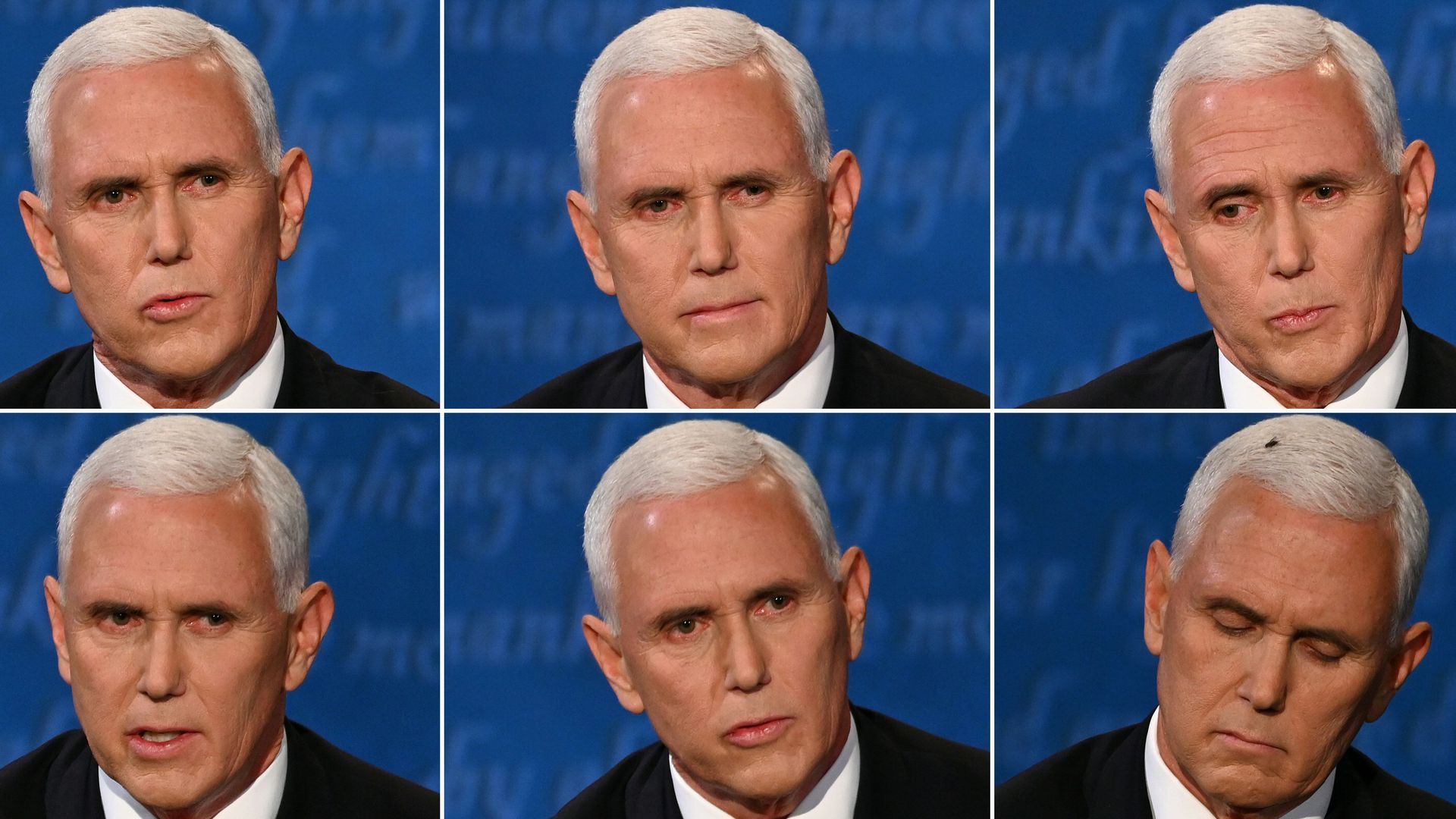
Vice President Mike Pence described a world in which he and President Trump led Americans' heroic effort to defeat the coronavirus during last night's vice presidential debate. The problem is, he described a world that doesn't exist.
Why it matters: The coronavirus is very much not in control in the U.S., and America's failed response begins with the individual actions of the president and the vice president themselves.
Science has won out over politics in the race for a coronavirus vaccine — for now.
Why it matters: The Food and Drug Administration's end run around the White House on vaccine guidance earlier this week may end up boosting public confidence, which is very important in light of widespread vaccine skepticism.
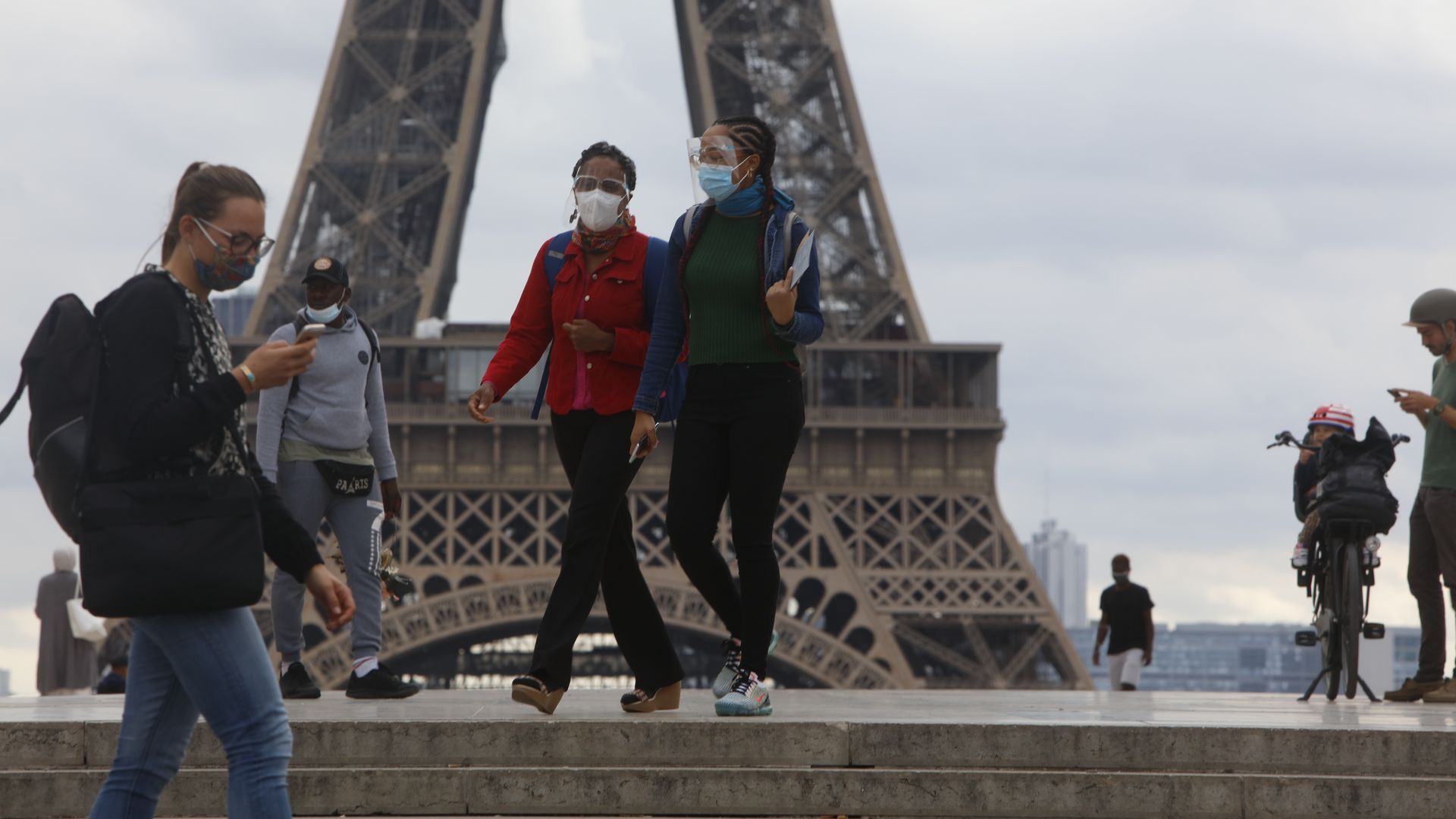
The number of coronavirus cases exceeded 6 million in Europe Wednesday, per AFP, as the World Health Organization warns that the continent is experiencing "rising COVID-19 fatigue."
The big picture: Cases are surging across the U.K., France, Italy, Spain and Germany, with records set in several European countries in the past week.
Sen. Kamala Harris said at Wednesday's vice presidential debate that the Trump administration does not have a plan to protect health coverage for people with pre-existing conditions, looking into the camera and declaring: "If you have a pre-existing condition — heart disease, diabetes, breast cancer — they're coming for you.
Why it matters: The Biden campaign has consistently sought to make the Trump administration-backed lawsuit against the Affordable Care Act — which protects coverage for pre-existing conditions — a core election message, particularly as the U.S. continues to struggle to control the pandemic. Health care has been proven to be one of the issues that resonates most with voters.
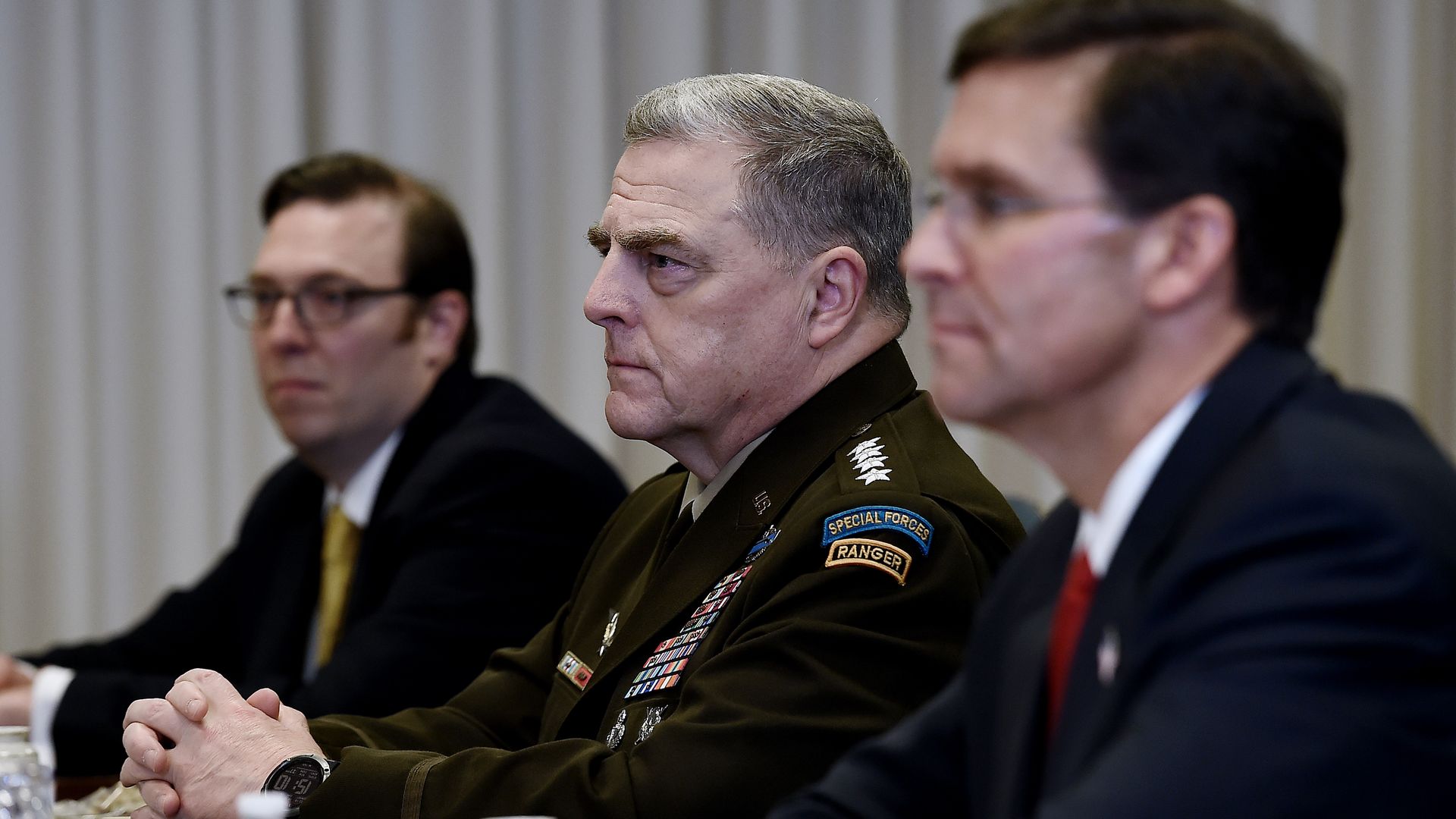
The No. 2 Marine general, Gary Thomas, tested positive for COVID-19 on Wednesday, a day after he and other senior military leaders began quarantining due to possible exposure to the virus.
Driving the news: Mark Milley, chairman of the Joint Chiefs of Staff, and other senior military leaders, including Thomas, entered quarantine after Adm. Charles Ray, vice commandant of the Coast Guard, tested positive for the coronavirus on Tuesday, per the New York Times and the Wall Street Journal.