Editors of the prestigious New England Journal of Medicine on Wednesday published a scathing rebuke of the Trump administration over its "astonishing" failure to respond to the coronavirus pandemic, writing that "this election gives us the power to render judgment" of current U.S. leadership.
Why it matters: The world's top medical journal has never before condemned or supported a political candidate, according to the New York Times, making Wednesday's editorial a first in the publication's 208-year history.
The coronavirus pandemic is revealing entrenched inequalities in everything from health care to economic opportunity.
Why it matters: The growing sense that there is something fundamentally unfair about American life is one of the biggest challenges the country faces. If COVID-19 is permitted to widen those inequalities unchecked, the political and economic ramifications could be dire.
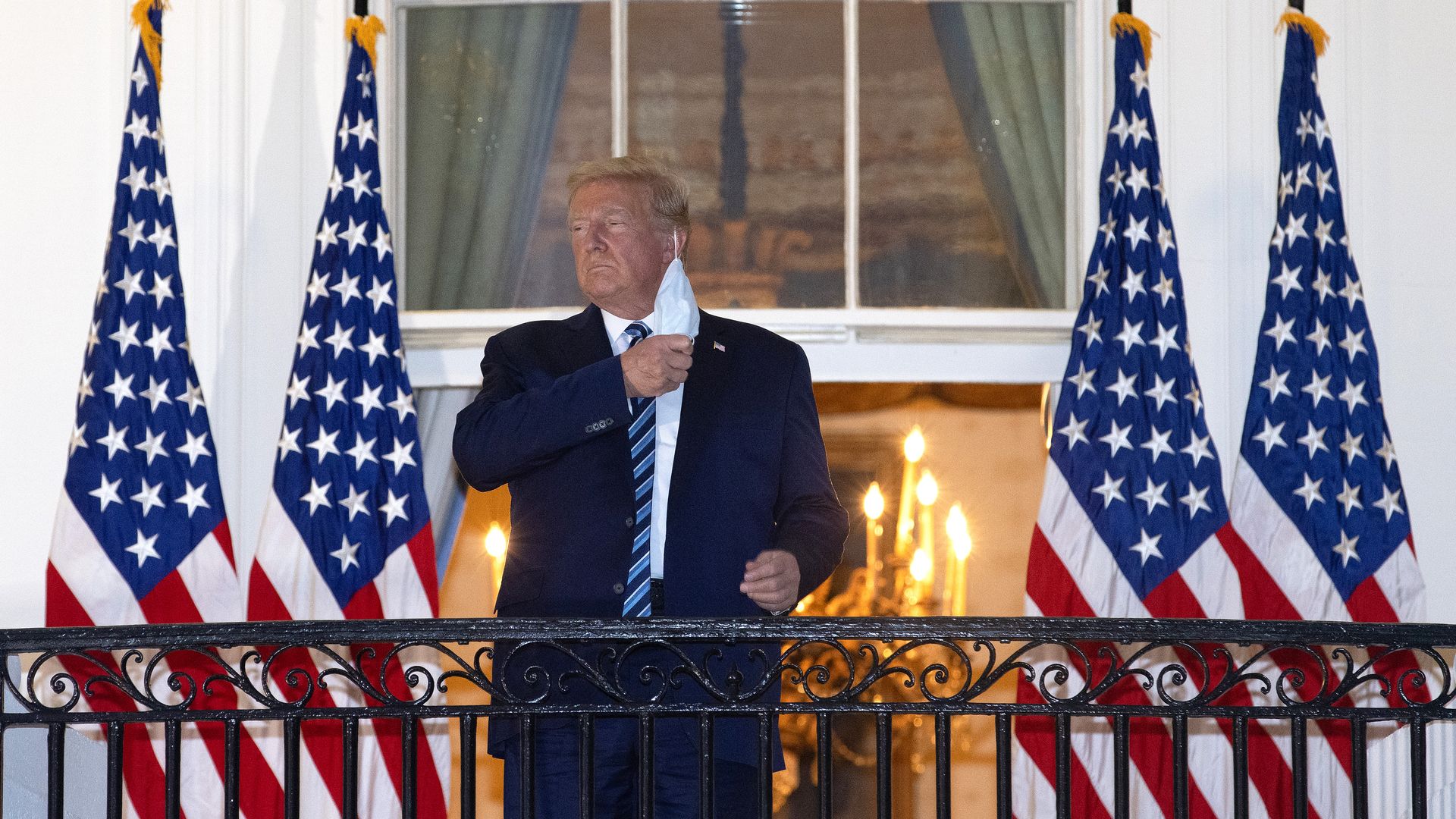
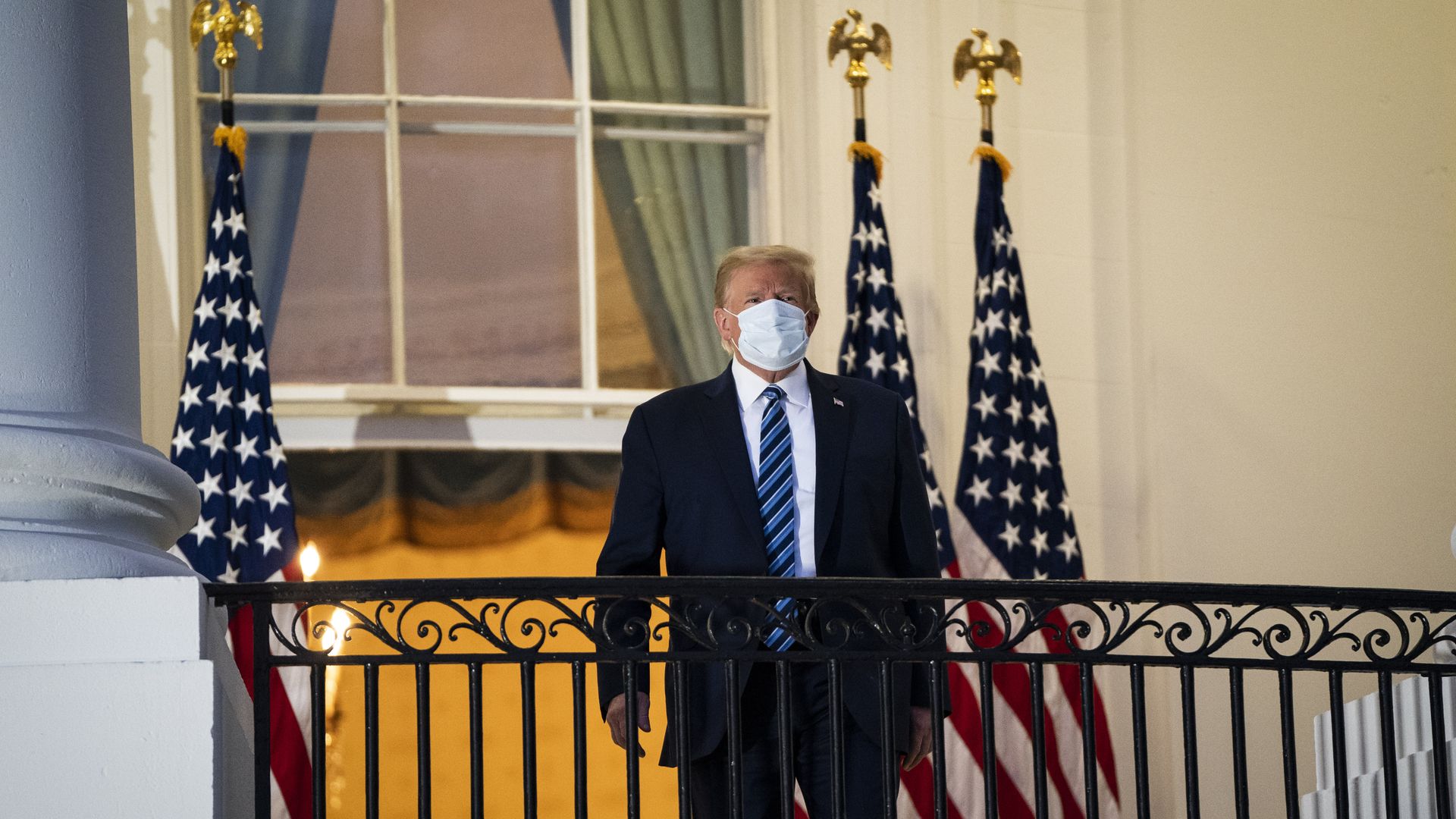
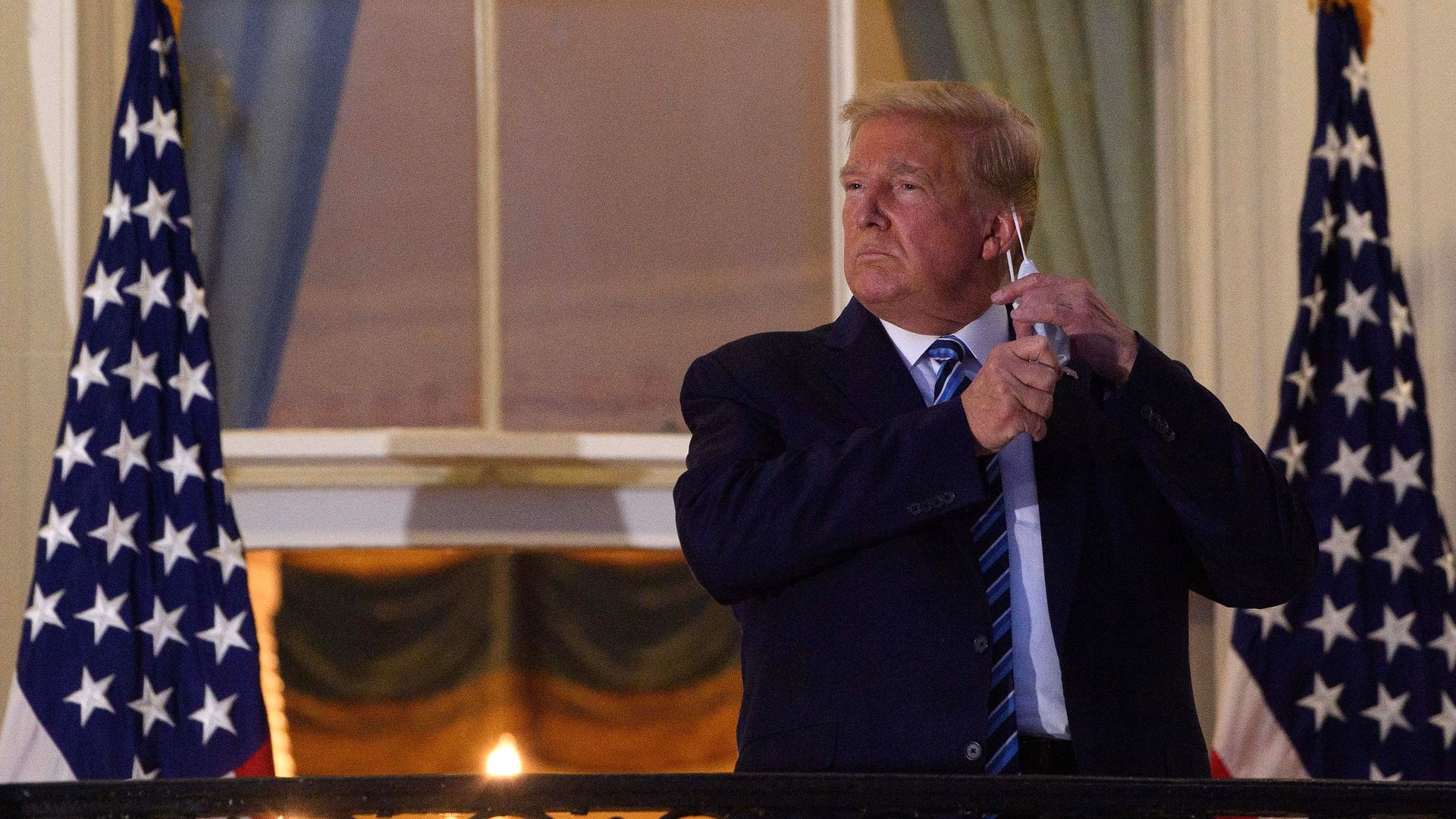
President Trump has been "symptom-free" from the coronavirus for over 24 hours, White House physician Sean Conley said in a Wednesday update.
The state of play: Conley's letter also says that Trump has not received or needed supplemental oxygen since his initial hospitalization and that lab tests on Monday showed the president has signs of coronavirus antibodies in his blood that were not present last Thursday.
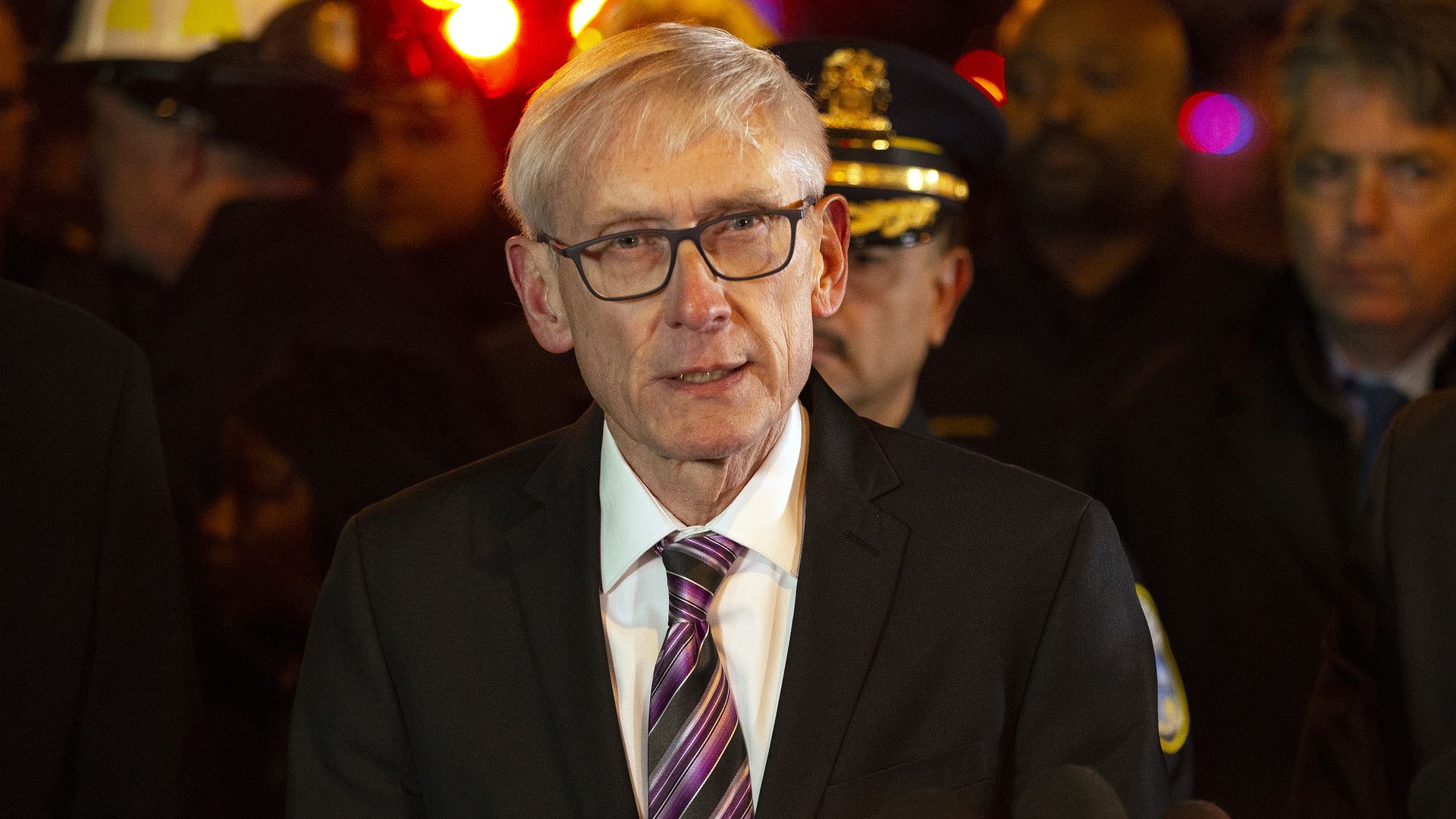
Wisconsin Gov. Tony Evers (D) announced on Wednesday that a field hospital will be opened at the state fairgrounds near Milwaukee to expand care for coronavirus patients after hospitalizations more than doubled in the past month.
Driving the news: Health officials attribute the state's increase to university and K-12 school reopenings and overall public fatigue on mask-wearing and social distance practices, AP reports.
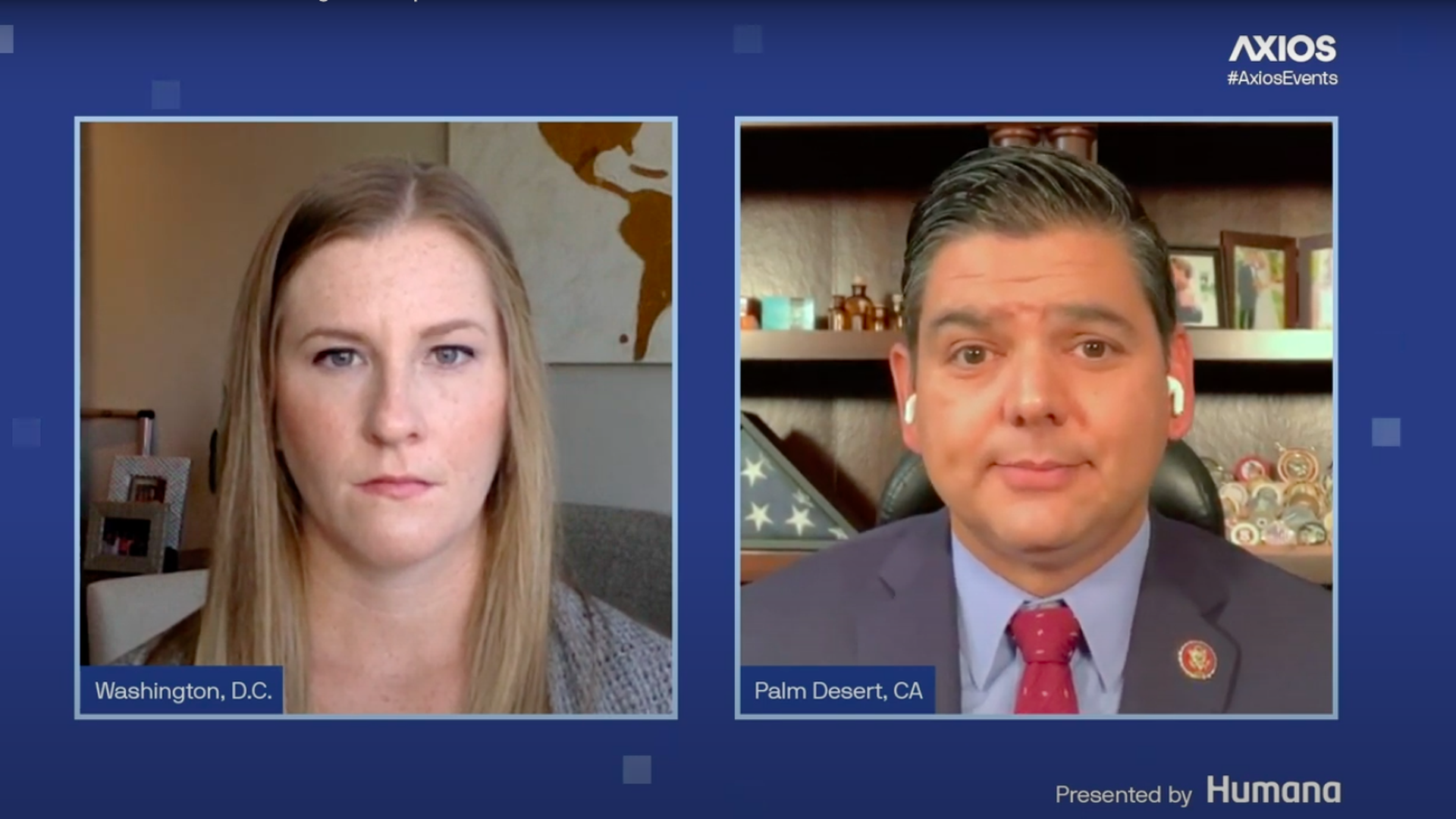
Rep. Raul Ruiz (D-Calif.) said Wednesday that not passing another coronavirus stimulus package has left holes in state and local infrastructure to adequately fight the pandemic.
Driving the news: This week President Trump ended coronavirus stimulus negotiations with Congress until after the election. Districts with communities of color have desperately needed the aid.
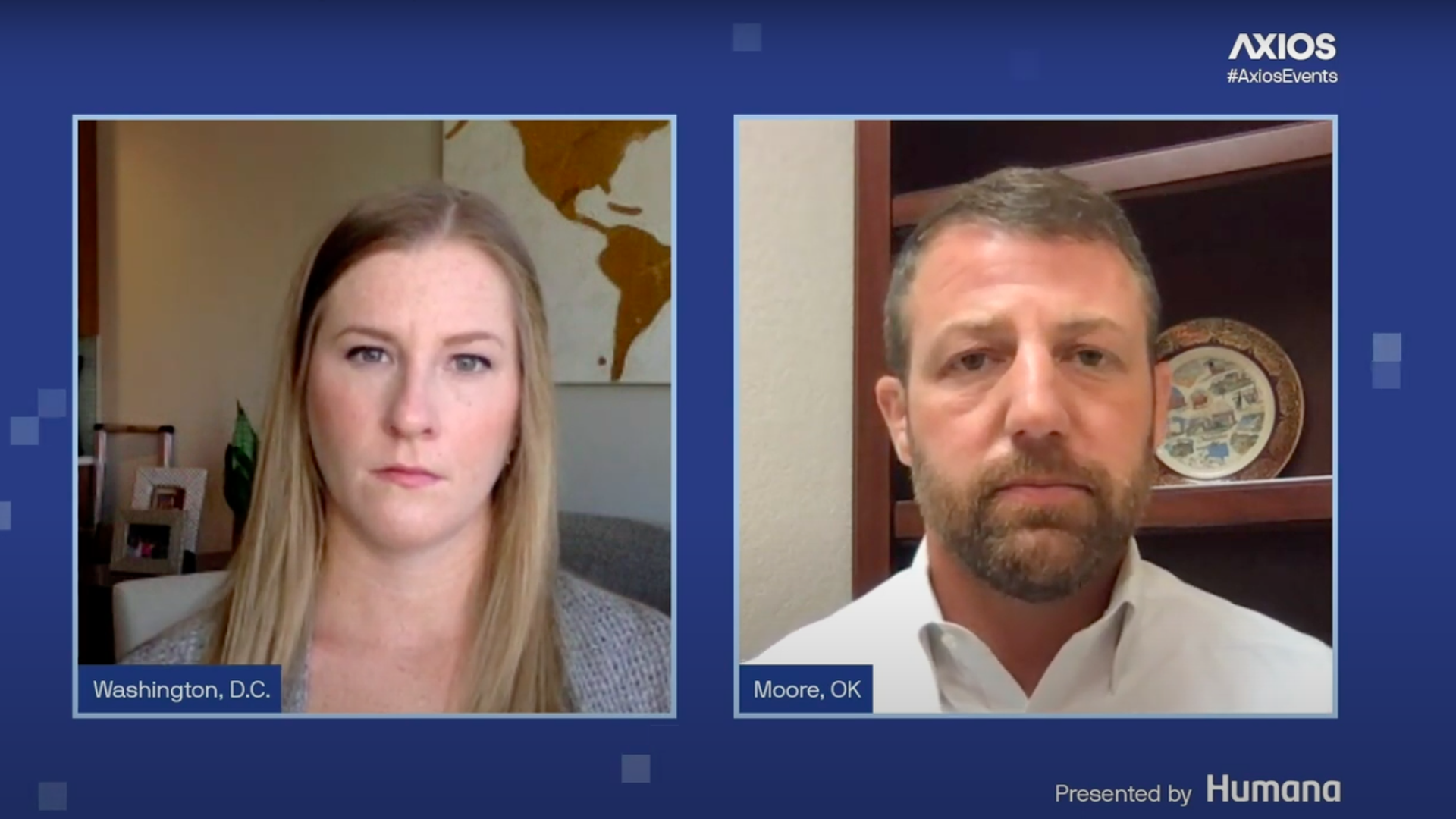
Rep. Markwayne Mullin (R-Okla.) at an Axios event on Wednesday advocated for better technology and more funding for the Indian Health Service to fight the coronavirus, after the lags in care disproportionately affected the death and case rate of Native Americans.
The big picture: The death rates for alcohol-related illnesses, diabetes and liver disease are already three to five times higher for Native Americans, who largely rely on Indian Health Service hospitals, than for other races combined, the New York Times reports.
The White House denied Wednesday that President Trump worked in the Oval Office on Tuesday while still suffering from coronavirus, despite an assertion otherwise from by White House economic adviser Larry Kudlow.
The state of play: Kudlow told CNBC's "Squawk Box" that Trump had worked in the Oval with unspecified "extra precautions" to protect against the spread of the virus.
Skepticism toward science fell globally during the COVID-19 pandemic, according to new survey data commissioned by 3M.
The big picture: Science is having a moment as researchers race to create COVID-19 vaccines and treatments and people seek information about how to curb transmission of the virus.
The U.S.pays several times more for insulin than any other developed country, according to a new RAND report.
Note: The chart above is comparing the U.S. to the other most expensive countries. The average OECD price, excluding the U.S., was about 11 times less than what the U.S. paid in 2018.
President Trump’s cavalier attitude toward the coronavirus is already making the pandemic worse in his own backyard, and the failure to reach a deal on a new round of stimulus will likely make it worse all across the country, for months.
Why it matters: Heading into the winter months without a new round of stimulus in place will leave vulnerable workers without a financial safety net if they get sick — and because of that, experts say, it will likely make the pandemic itself worse.
New Zealand now has active no coronavirus cases in the community after the final six people linked to the Auckland cluster recovered, the country's Health Ministry confirmed in an email Wednesday.
The big picture: The country's second outbreak won't officially be declared closed until there have been "no new cases for two incubation periods," the ministry said. Auckland will join the rest of NZ in enjoying no domestic restrictions from late Wednesday, Prime Minister Jacinda Ardern said, declaring that NZ had "beat the virus again."
NIAID director Anthony Fauci warned during a virtual event hosted by American University Tuesday evening that models show unless necessary precautions are taken for this fall and winter, "we could have 300,000–400,000 COVID-19 deaths" in the U.S.
The big picture: More than210,8oo Americans have died from the coronavirus, Johns Hopkins data shows. Cases have been rising across the country in recent weeks. Fauci said the U.S. isn't experiencing a second wave. "We're facing a resurgence of the wave we began with," he said, per an American University live tweet from the event. He expects a vaccine to become available by late summer or in the fall of next year.