A global initiative to ensure equitable distribution of coronavirus vaccines now includes most of the world — but not the U.S., China or Russia.
Why it matters: Assuming one or more vaccines ultimately gain approval, there will be a period of months or even years in which supply lags far behind global demand. The COVAX initiative is an attempt to ensure doses go where they're most needed, rather than simply to countries that can produce or buy them at scale.
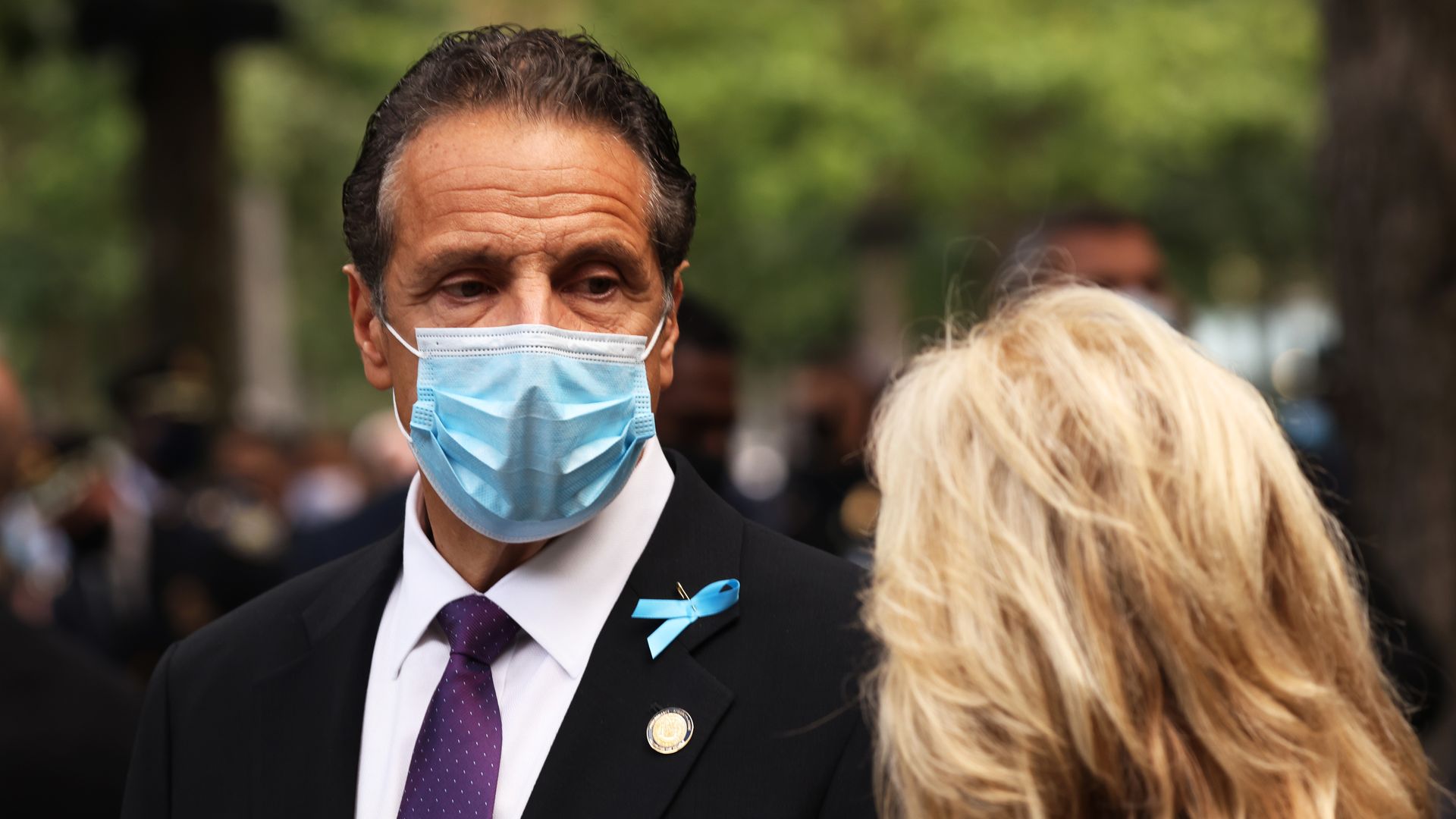
New York Gov. Andrew Cuomo (D) said Thursday that the state will move forward with its own review process of coronavirus vaccines even if the Food and Drug Administration approves one or more for distribution and public use.
Why it matters: The motion could sow further public doubt that the federal government could release a vaccine based on political motives rather than safety and efficacy.
The sudden uncertainty surrounding the future of the Affordable Care Act could be an enormous political liability for Republicans in key states come November.
Between the lines: Millions of people in crucial presidential and Senate battlegrounds would lose their health care coverage if the Supreme Court strikes down the law, as the Trump administration is urging it to.
The coronavirus is surging once again across the U.S., with cases rising in 22 states over the past week.
The big picture: There isn't one big event or sudden occurrence that explains this increase. We simply have never done a very good job containing the virus, despite losing 200,000 lives in just the past six months, and this is what that persistent failure looks like.
Prime Minister Benjamin Netanyahu announced plans for a "full lockdown" after Israel reported a new daily coronavirus cases record of 6,923 infections Wednesday.
Why it matters: Israel last Friday became the first developed country to re-enter lockdown. While schools, retailers and other businesses closed for the three-week measure, there are exemptions including for people to pray, go to work, exercise and protest. The new two-week restrictions that still needs Cabinet's full approval aims to address this, AP notes. "The goal is to reduce the rate of infection, and the goal is literally to save many lives in Israel," Netanyahu said.
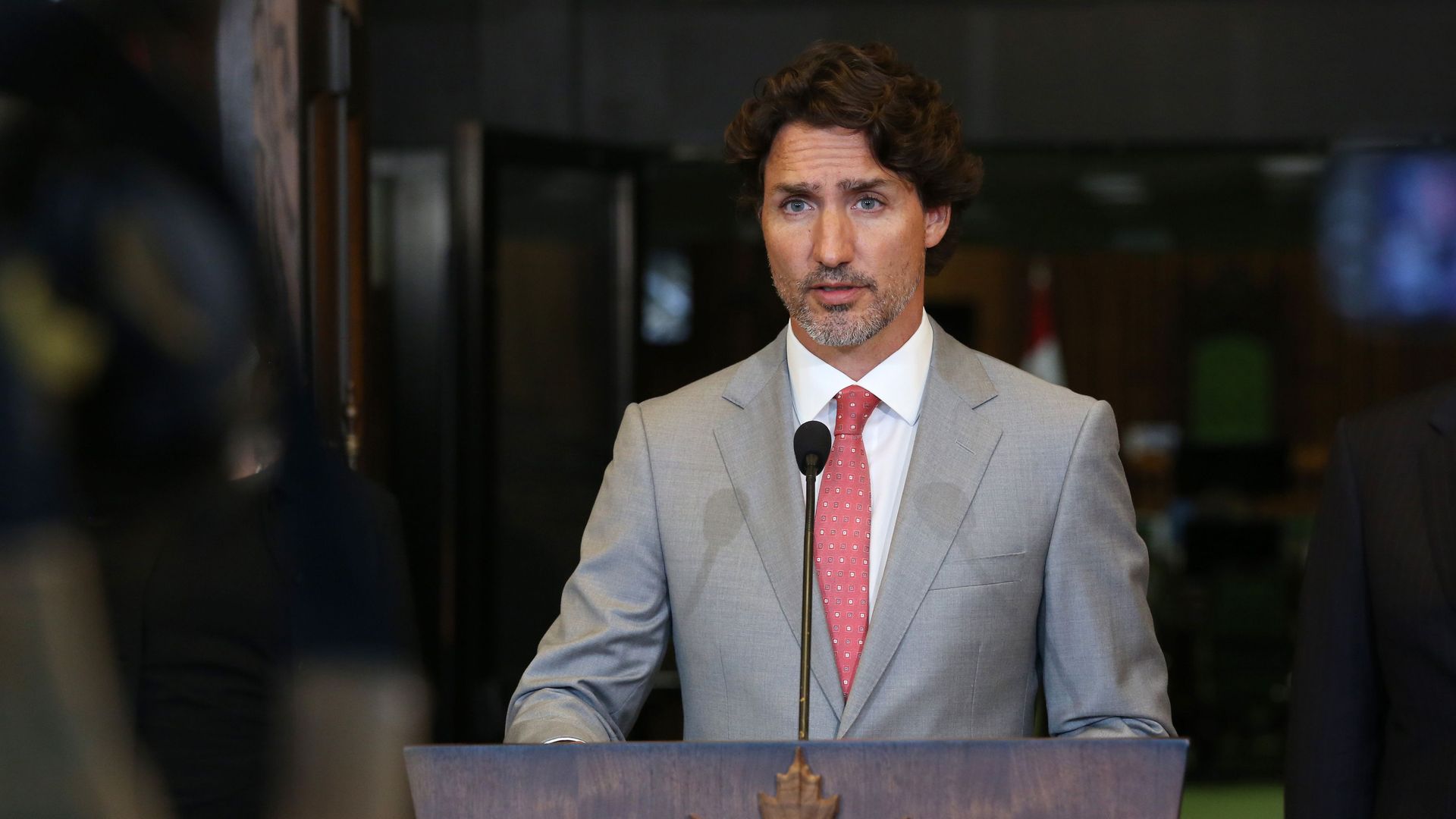
Prime Minister Justin Trudeau said during a televised address on the coronavirus pandemic Wednesday that for Canada's four biggest provinces, "the second wave isn’t just starting, it's already under way."
Driving the news: Daily case numbers have gone from roughly 300 cases a day in mid-August to 1,248 by Tuesday, with most outbreaks in British Columbia, Alberta, Ontario and Quebec, CBC notes. "We're on the brink of a fall that could be much worse than the spring," Trudeau said. "It's all too likely we won't be gathering for Thanksgiving, but we still have a shot at Christmas." Over 147,700 Canadians have tested positive for COVID-19.
Some of the same technological advances that have enabled us to partially weather the economic and health tolls of the pandemic may be paradoxically discouraging us from taking fuller measures.
Why it matters: Thanks to tech like video chat and automation, a large portion of the population has been able to mostly escape the effects of the pandemic — and even thrive in some cases. But far too many of us risk being left further behind as the virus spreads.
Missouri Gov. Mike Parson (R) and First Lady Teresa Parson tested positive for coronavirus, the governor's office announced Wednesday.
The big picture: The 65-year-old Parson is the second governor known to have contracted COVID-19, after Oklahoma Gov. Kevin Stitt (R). Ohio Gov. Mike DeWine (R) tested positive in August prior to meeting with President Trump, but it was later determined to be a false positive.
Americans' political affiliations could determine which source they trust for information about the coronavirus, with 51% of Republicans saying they trust President Trump over CDC scientists, according to a Quinnipiac poll out Tuesday.
Why it matters: It's another indication of how partisan politics have consumed the national conversation about the virus, and how Trump's attacks on his own health officials have affected public opinion.
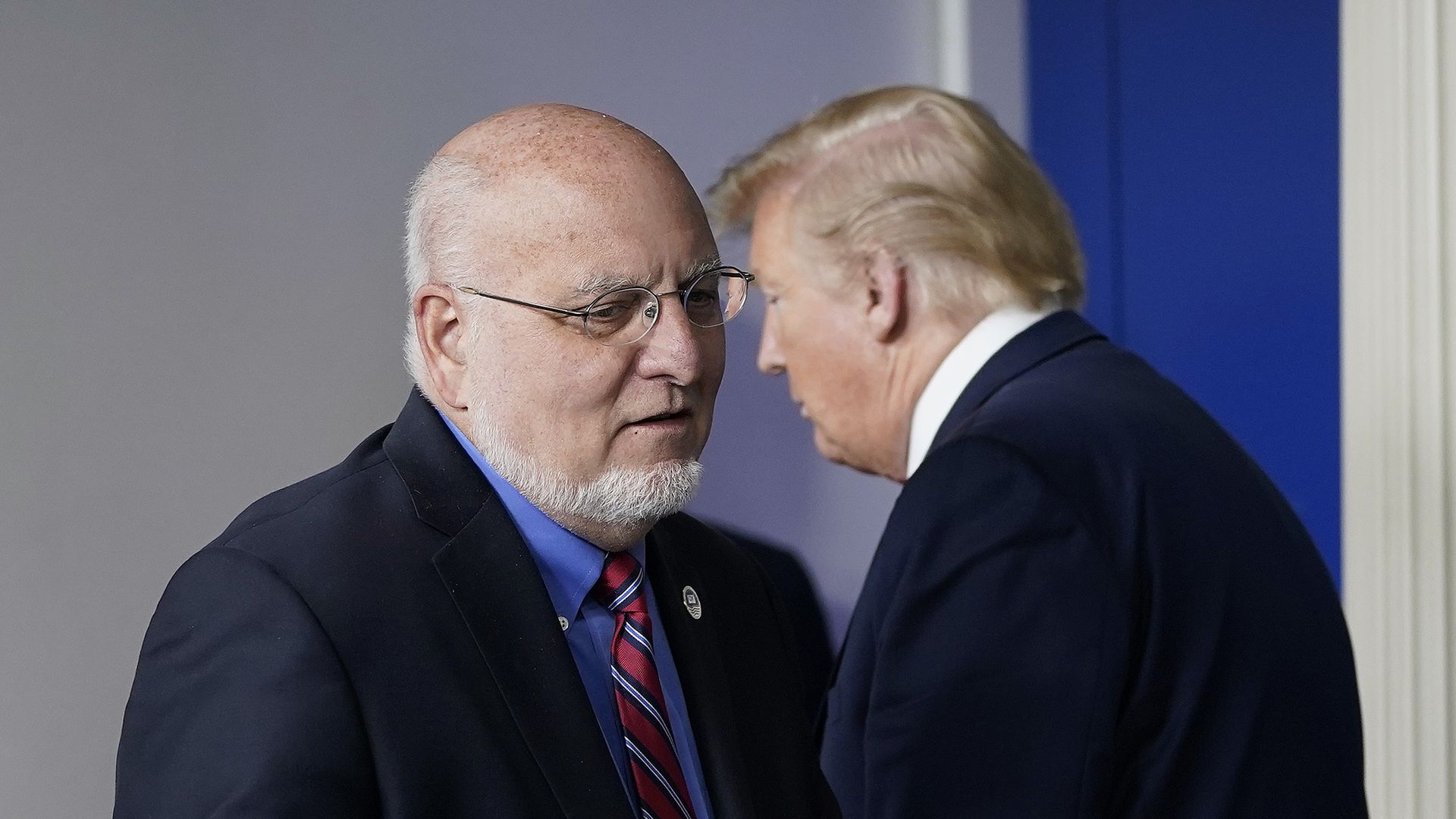
CDC Director Robert Redfield said at a Senate hearing Wednesday that preliminary data shows that over 90% of Americans remain susceptible to COVID-19 — meaning they have not yet been exposed to the coronavirus.
Why it matters: The U.S. surpassed 200,000 coronavirus deaths this week — the most recorded in the world — and over 6.8 million Americans have contracted the virus so far.
Top health expert Anthony Fauci rebuked Sen. Rand Paul (R-Ky.) at a hearing on Wednesday over his suggestion that New York's COVID-19 infection rate is low because the population there has reached herd immunity.
The big picture: Paul, a libertarian who has criticized government lockdown measures as "authoritarian," has clashed with Fauci in previous hearings. Paul accused Fauci of being a "big fan" of New York Gov. Andrew Cuomo and his lockdown restrictions, while Fauci said the Kentucky senator has repeatedly "misconstrued" his comments.
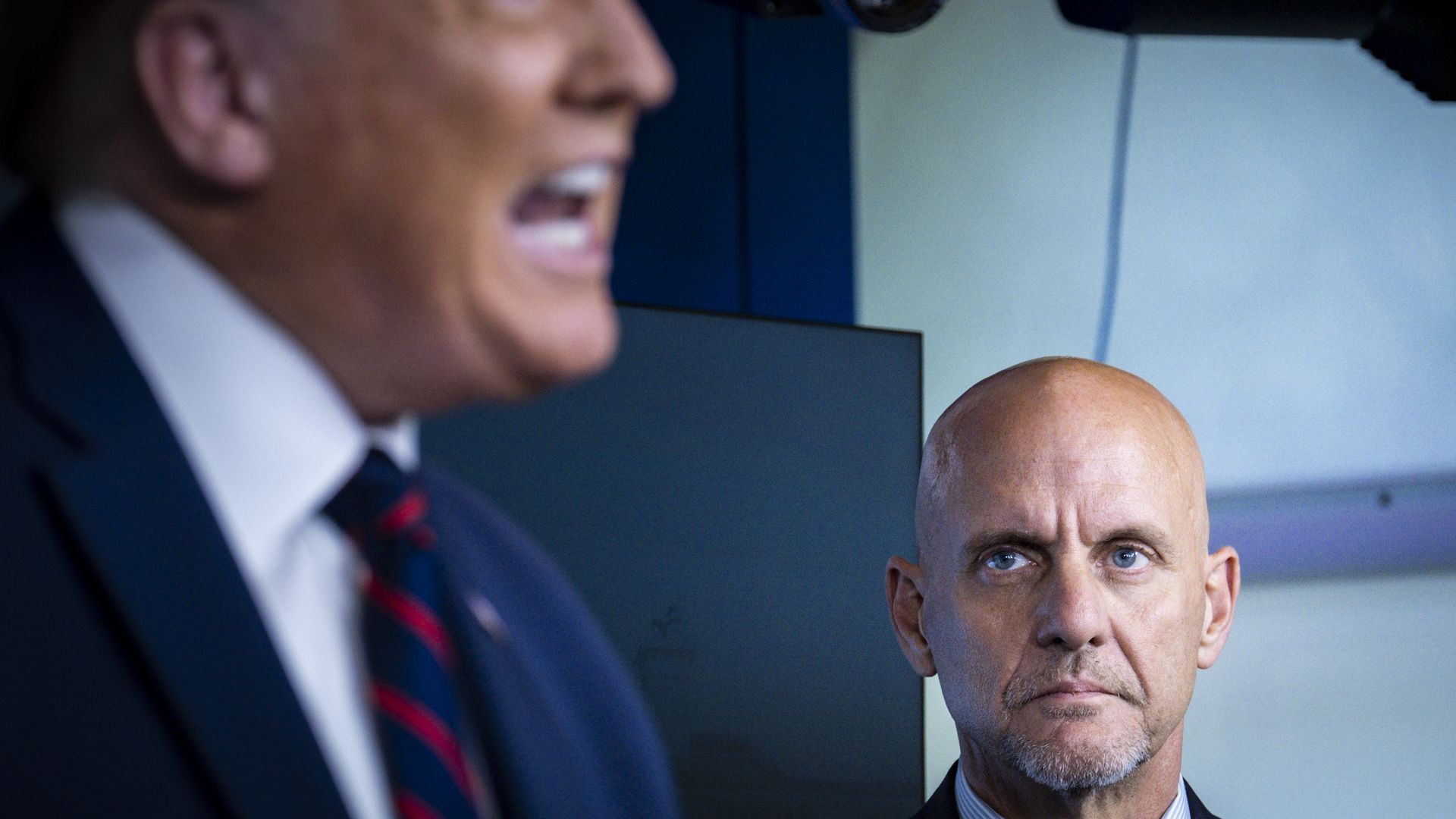
Food and Drug Administration Commissioner Stephen Hahn promised that "science will guide our decision" for a coronavirus vaccine at a Senate hearing on Wednesday.
Why it matters: More Americans are expressing doubt about a first-generation vaccine, despite President Trump's efforts to push an unrealistic timeline that conflicts with medical experts in his administration.
Johnson & Johnson has begun phase 3 trials in the U.S. for its one-shot coronavirus vaccine, with plans to enroll the most participants of any trial yet.
The big picture: Johnson & Johnson's vaccine has several advantages over its competitors that make it a promising option for mass distribution: The company is initially testing it as one dose and it does not have to be frozen for storage.
The Food and Drug Administration plans to toughen the requirements for a coronavirus vaccine emergency authorization, which would make it more difficult for one to be ready by the election, the Washington Post reported Tuesday.
Why it matters: Public skepticism of an eventual vaccine keeps increasing as President Trump keeps making promises that are at odds with members of his own administration.
Why it matters: Health systems are being forced to limit who gets tested, sometimes limiting tests to the most essential patients — which is far from an ideal testing strategy.
Hospitals are approaching the deadline to repay coronavirus relief loans from the federal government, but their finances are still suffering as the pandemic drags on, Kaiser Health News reports.
The big picture: Hospitals — especially rural hospitals that were suffering before the pandemic — are hoping Congress will grant them an extension.
GoodRx, a price comparison app for prescription drugs at local pharmacies, on Tuesday night raised $1.14 billion in its IPO, Axios has learned.
By the numbers: GoodRx priced its shares at $33 a piece, above its $24-$28 per share offering range, which will give it an initial market cap of around $12.7 billion.






/2020/09/23/1600866721277.gif?w=3840)