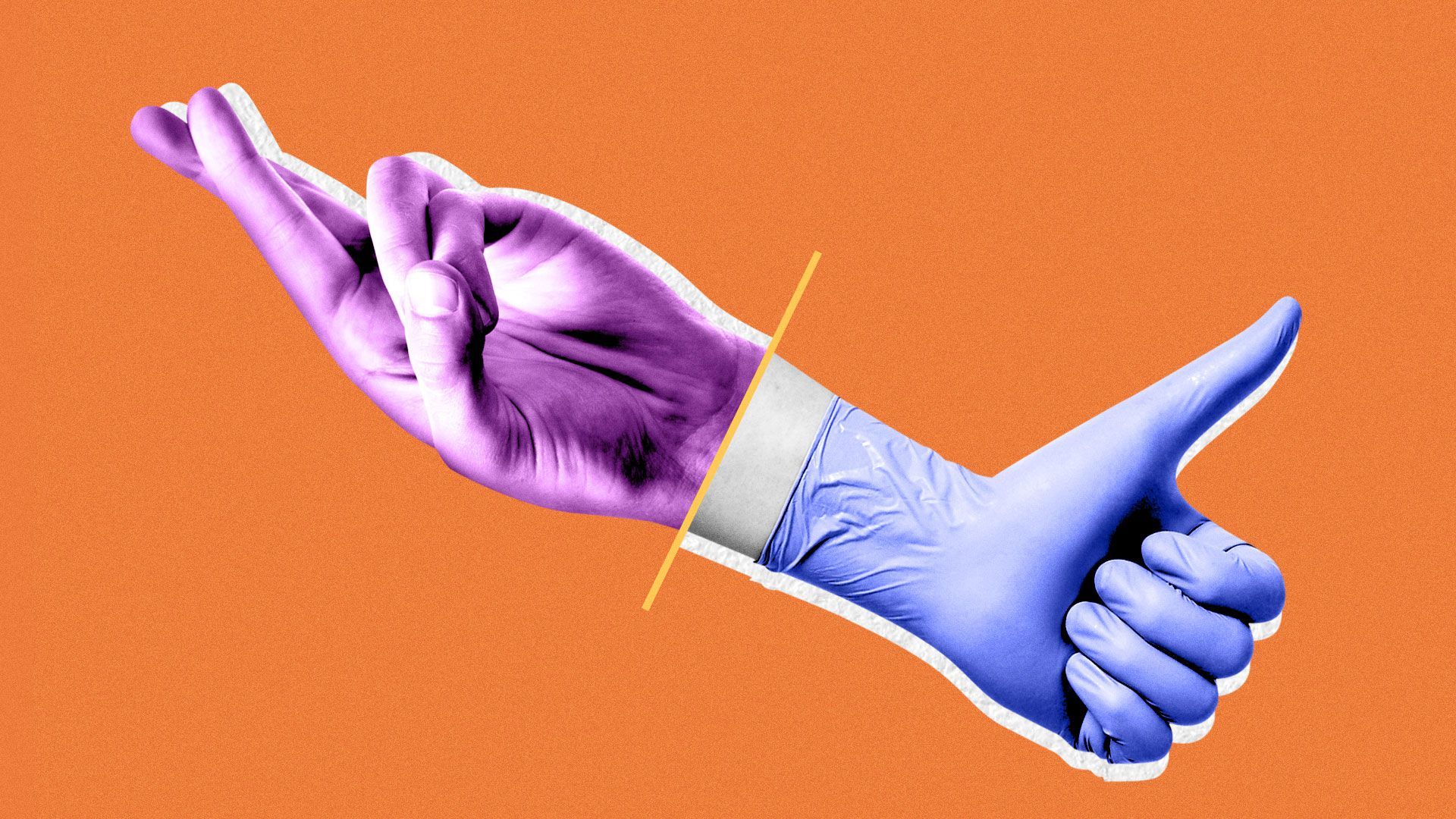
Some of the same technological advances that have enabled us to partially weather the economic and health tolls of the pandemic may be paradoxically discouraging us from taking fuller measures.
Why it matters: Thanks to tech like video chat and automation, a large portion of the population has been able to mostly escape the effects of the pandemic — and even thrive in some cases. But far too many of us risk being left further behind as the virus spreads.
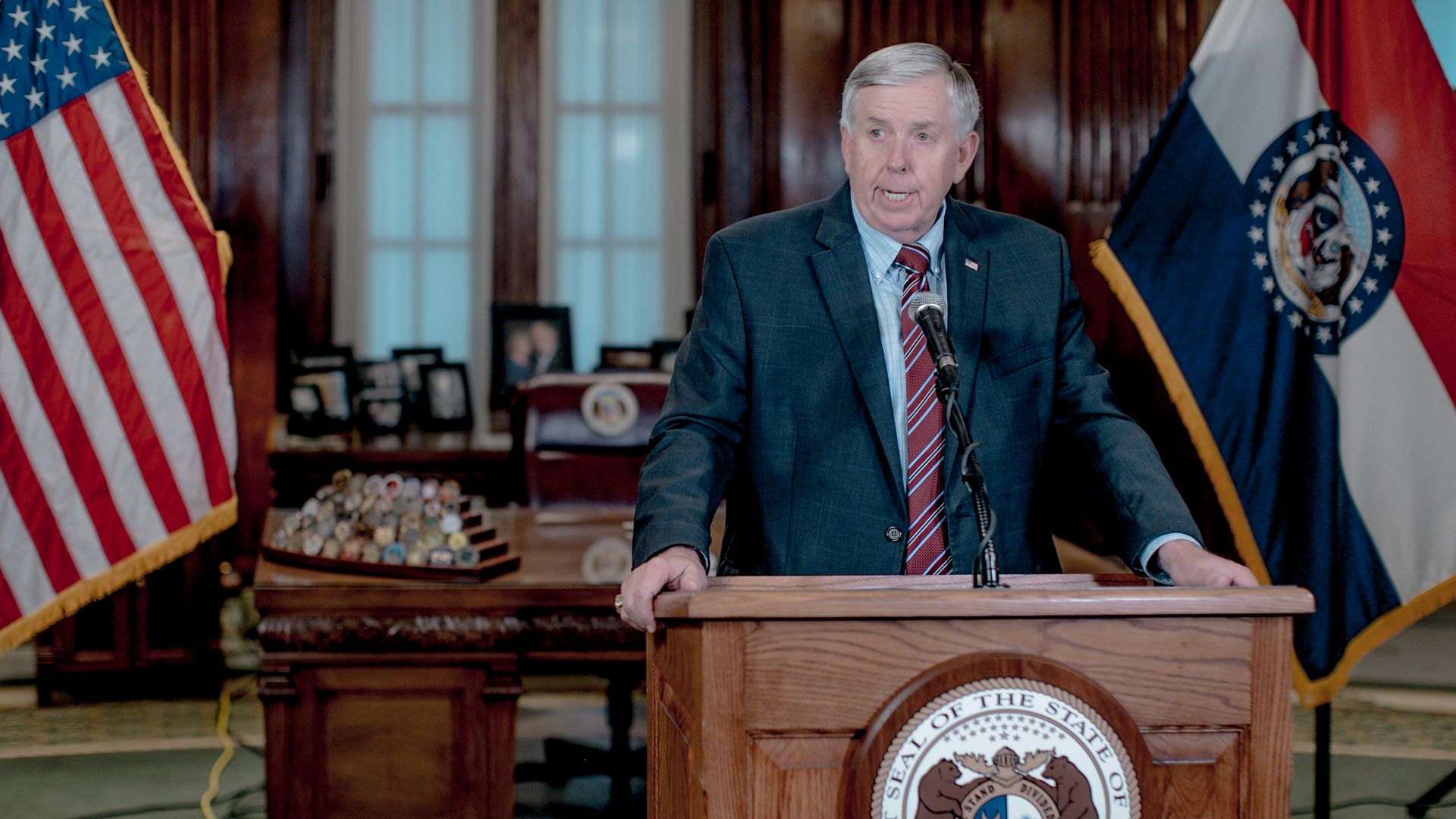
Missouri Gov. Mike Parson (R) and First Lady Teresa Parson tested positive for coronavirus, the governor's office announced Wednesday.
The big picture: The 65-year-old Parson is the second governor known to have contracted COVID-19, after Oklahoma Gov. Kevin Stitt (R). Ohio Gov. Mike DeWine (R) tested positive in August prior to meeting with President Trump, but it was later determined to be a false positive.
Americans' political affiliations could determine which source they trust for information about the coronavirus, with 51% of Republicans saying they trust President Trump over CDC scientists, according to a Quinnipiac poll out Tuesday.
Why it matters: It's another indication of how partisan politics have consumed the national conversation about the virus, and how Trump's attacks on his own health officials have affected public opinion.
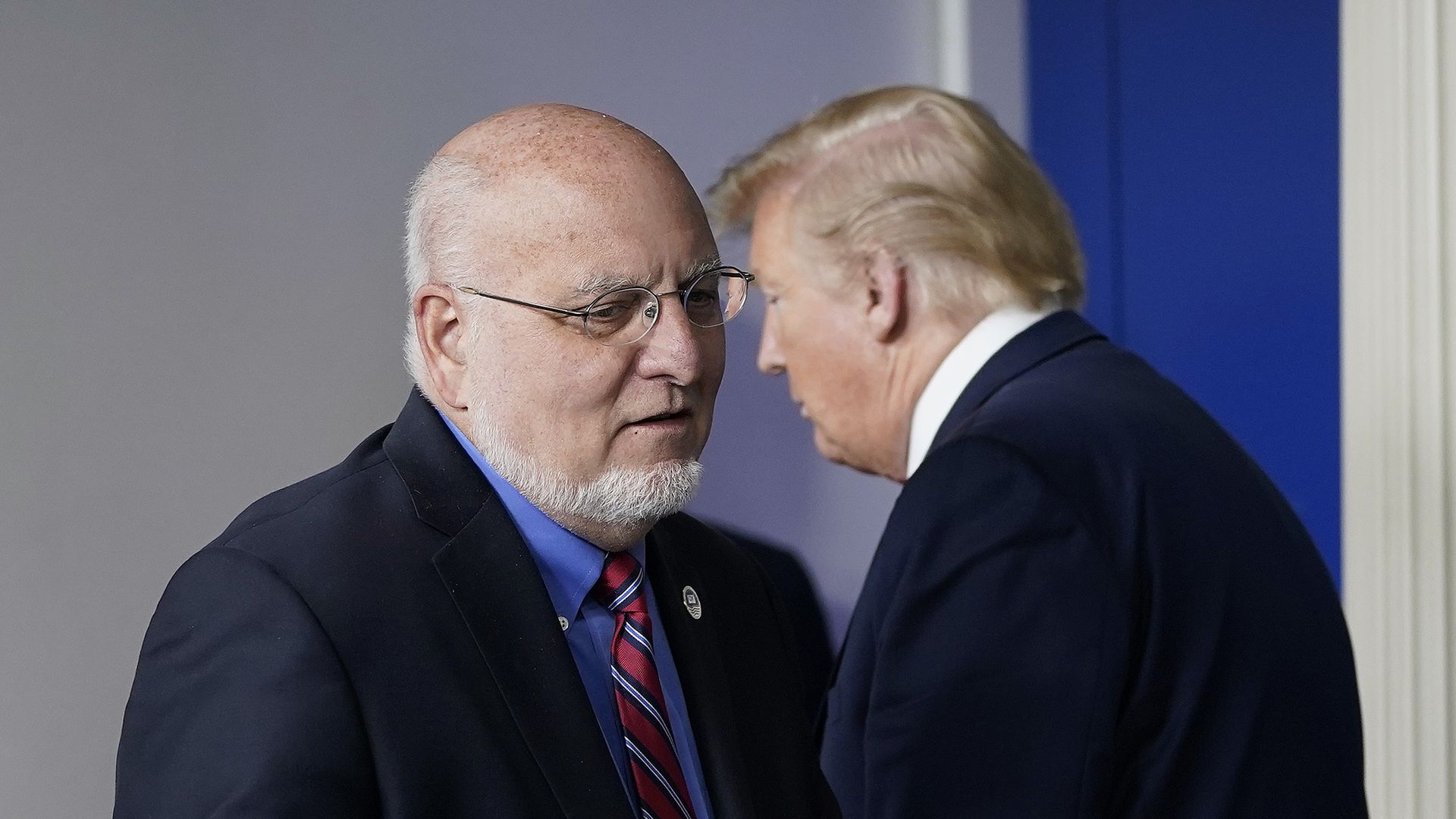
CDC Director Robert Redfield said at a Senate hearing Wednesday that preliminary data shows that over 90% of Americans remain susceptible to COVID-19 — meaning they have not yet been exposed to the coronavirus.
Why it matters: The U.S. surpassed 200,000 coronavirus deaths this week — the most recorded in the world — and over 6.8 million Americans have contracted the virus so far.
Top health expert Anthony Fauci rebuked Sen. Rand Paul (R-Ky.) at a hearing on Wednesday over his suggestion that New York's COVID-19 infection rate is low because the population there has reached herd immunity.
The big picture: Paul, a libertarian who has criticized government lockdown measures as "authoritarian," has clashed with Fauci in previous hearings. Paul accused Fauci of being a "big fan" of New York Gov. Andrew Cuomo and his lockdown restrictions, while Fauci said the Kentucky senator has repeatedly "misconstrued" his comments.
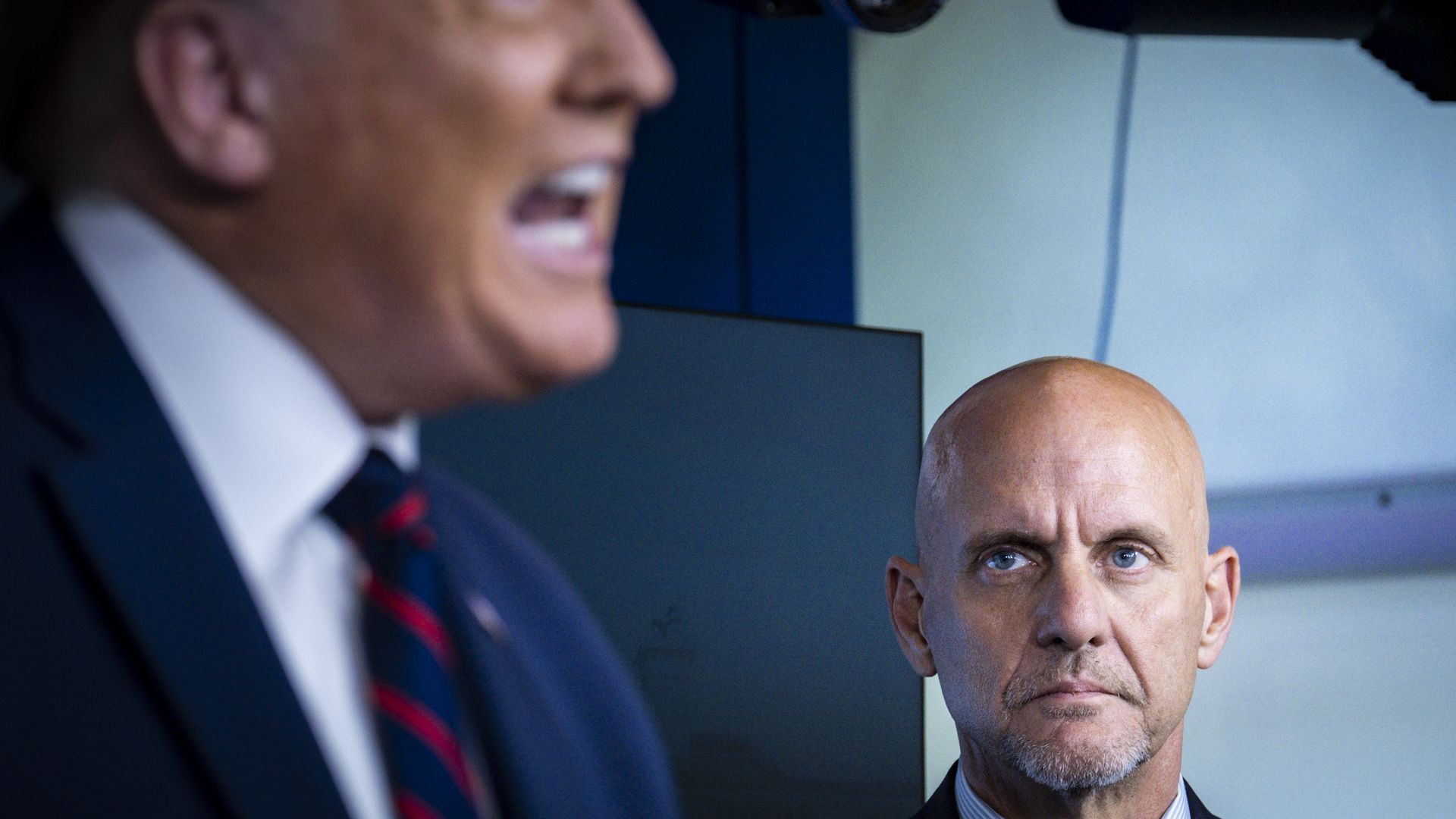
Food and Drug Administration Commissioner Stephen Hahn promised that "science will guide our decision" for a coronavirus vaccine at a Senate hearing on Wednesday.
Why it matters: More Americans are expressing doubt about a first-generation vaccine, despite President Trump's efforts to push an unrealistic timeline that conflicts with medical experts in his administration.
Johnson & Johnson has begun phase 3 trials in the U.S. for its one-shot coronavirus vaccine, with plans to enroll the most participants of any trial yet.
The big picture: Johnson & Johnson's vaccine has several advantages over its competitors that make it a promising option for mass distribution: The company is initially testing it as one dose and it does not have to be frozen for storage.
The Food and Drug Administration plans to toughen the requirements for a coronavirus vaccine emergency authorization, which would make it more difficult for one to be ready by the election, the Washington Post reported Tuesday.
Why it matters: Public skepticism of an eventual vaccine keeps increasing as President Trump keeps making promises that are at odds with members of his own administration.
Why it matters: Health systems are being forced to limit who gets tested, sometimes limiting tests to the most essential patients — which is far from an ideal testing strategy.
Hospitals are approaching the deadline to repay coronavirus relief loans from the federal government, but their finances are still suffering as the pandemic drags on, Kaiser Health News reports.
The big picture: Hospitals — especially rural hospitals that were suffering before the pandemic — are hoping Congress will grant them an extension.
GoodRx, a price comparison app for prescription drugs at local pharmacies, on Tuesday night raised $1.14 billion in its IPO, Axios has learned.
By the numbers: GoodRx priced its shares at $33 a piece, above its $24-$28 per share offering range, which will give it an initial market cap of around $12.7 billion.

/2020/09/23/1600866721277.gif?w=3840)