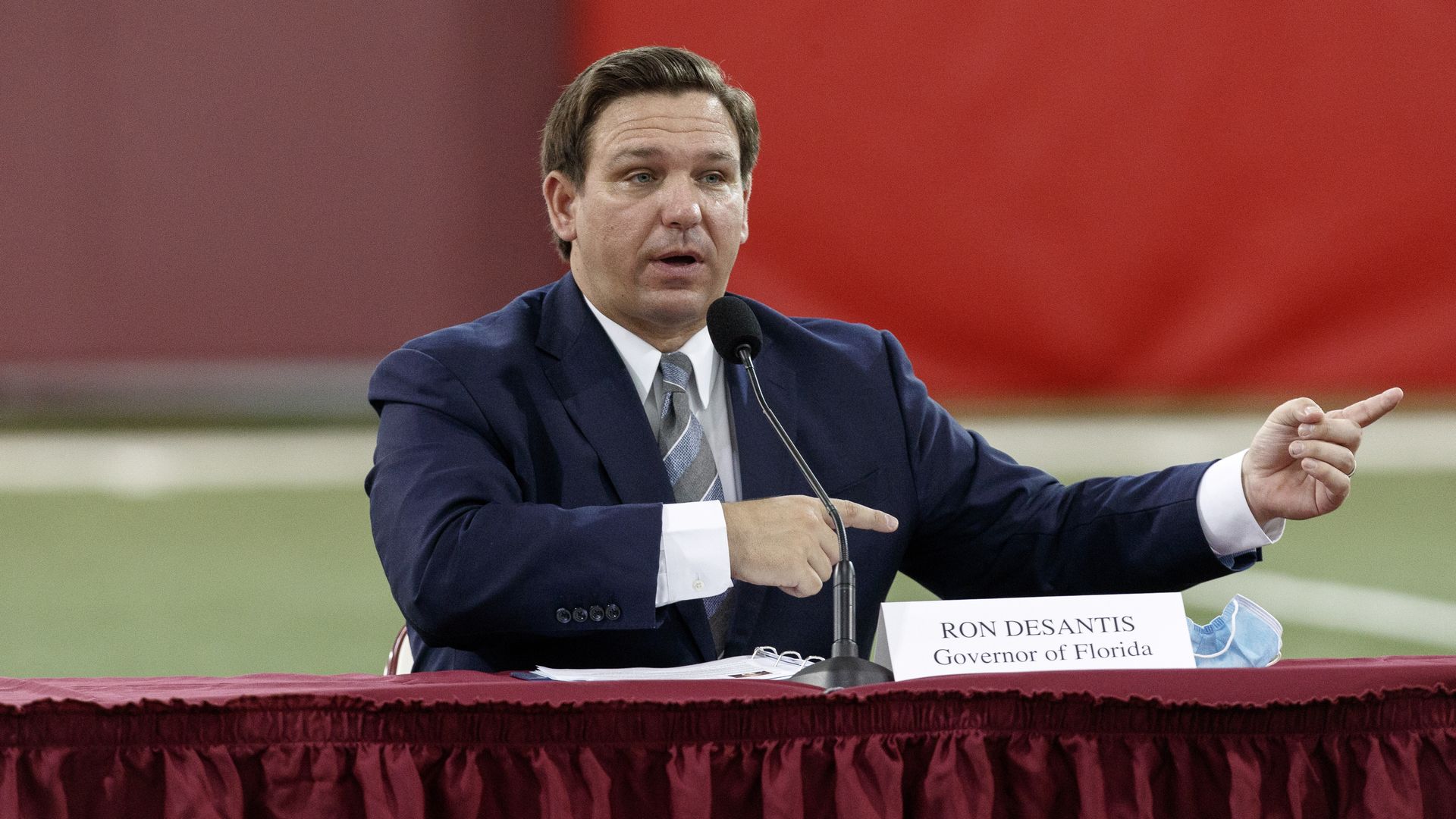
Florida Gov. Ron DeSantis (R) announced Friday the state will completely reopen its economy, allowing restaurants to operate at full capacity and barring localities from ordering businesses to close.
Airlines could soon have another tool to help disinfect their airplanes and protect passengers from the coronavirus.
Why it matters: Air travel remains severely depressed since the beginning of the coronavirus pandemic. The industry won't recover until passengers feel confident they won't be infected in flight by fellow travelers.
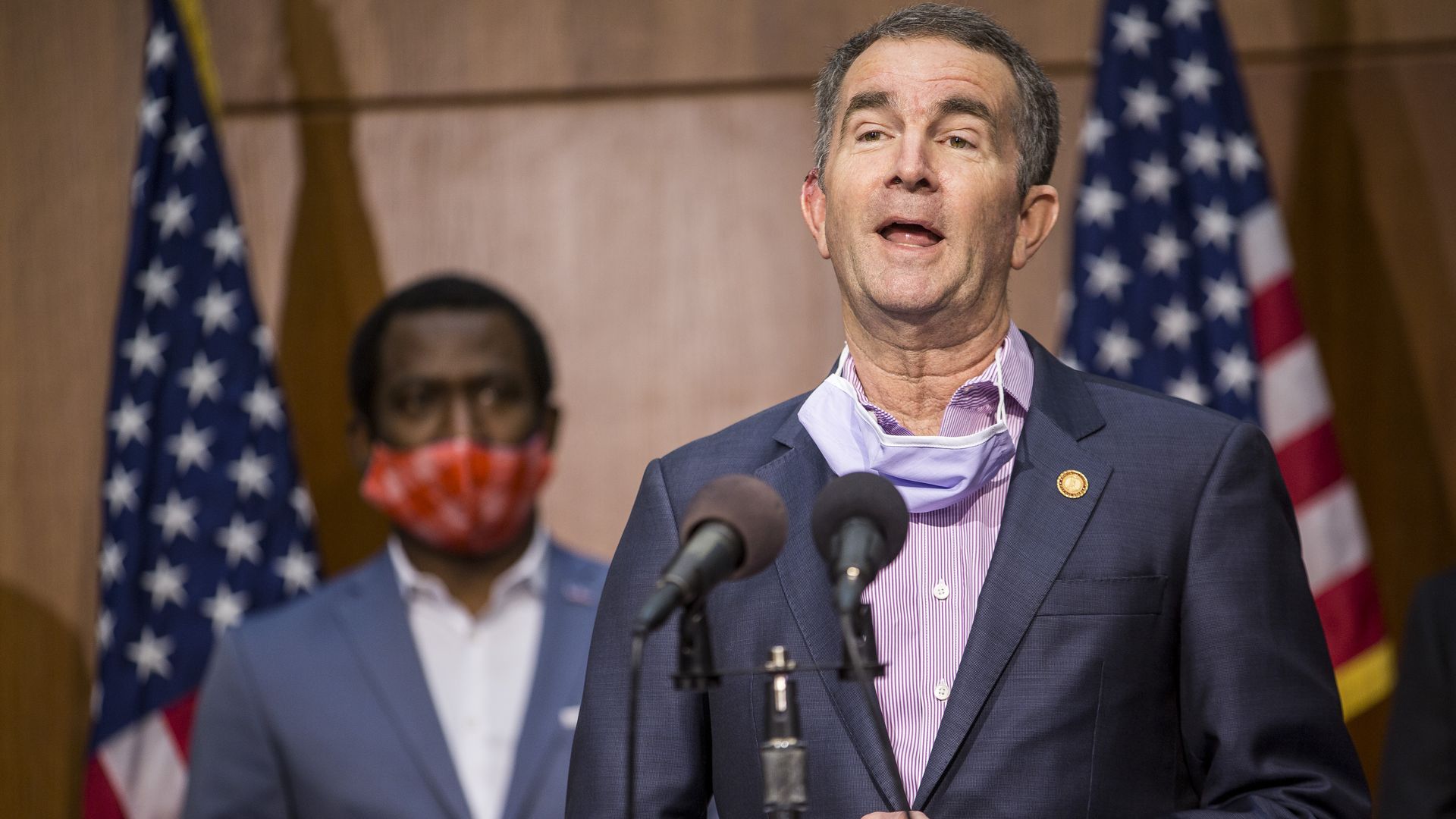
Virginia Gov. Ralph Northam (D) and his wife, Pamela, both tested positive for coronavirus, his office announced on Friday.
The state of play: The Northams were tested after one of their staff "who works closely within the couple's living quarters" tested positive. The governor is asymptomatic, while his wife is "experiencing mild symptoms." They plan to isolate at home for 10 days.
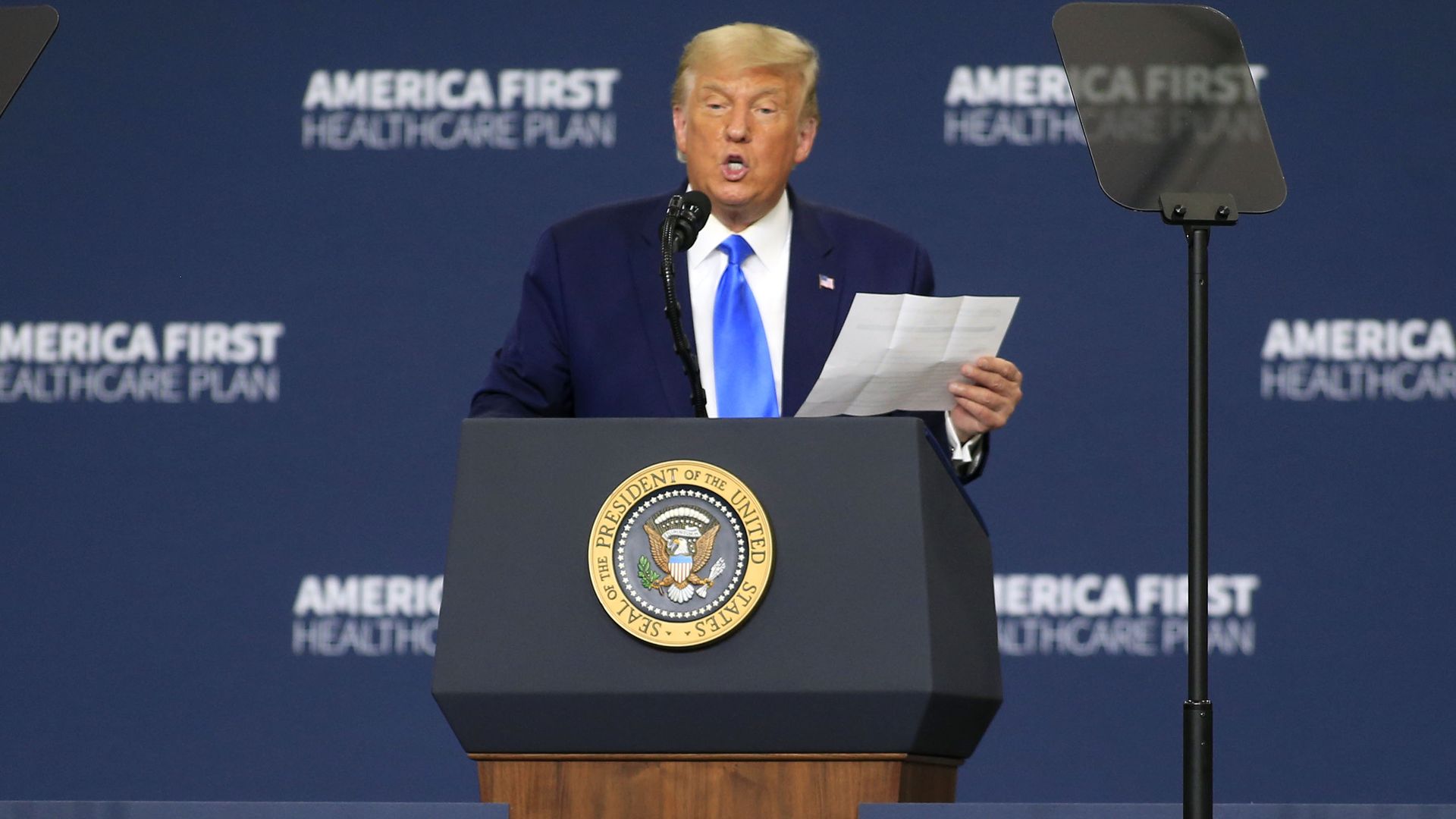
President Trump issued an executive order on Thursday pledging to protect Americans with preexisting conditions — which is not only toothless but also is only necessary if a Trump-backed lawsuit successfully dismantles the Affordable Care Act.
Why it matters: The presidential election is a month and a half away, and Republicans learned the hard way in 2018 that threatening the ACA's preexisting conditions protections is politically perilous.
People in their 20s accounted for more than 20% of all COVID-19 cases between June and August, analysis from the Centers for Disease Control and Prevention shows, bringing the median age of coronavirus patients to 37, down from 46 in the spring.
Why it matters: Young people are less vulnerable to serious illness, but they contributed to community spread over the summer, the analysis says — meaning they likely infected older, higher-risk people, especially in the South.
Schools in Southern and Midwestern states are most at risk of coronavirus transmission, according to an analysis by Coders Against COVID that uses risk indicators developed by the Centers for Disease Control and Prevention.
The big picture: Thankfully, schools have not yet become coronavirus hotspots, the Washington Post reported this week, and rates of infection are lower than in the surrounding communities. But that doesn't mean schools are in the clear, especially heading into winter.
President Trump outlined his ambitions for health care policy in a North Carolina speech Thursday, promising "the highest standard of care anywhere in the world," before signing an executive order guaranteeing protections for pre-existing conditions and then pledging to ban surprise medical bills.
Reality check: The only reason that pre-existing conditions protections, which are guaranteed under the Affordable Care Act, are at risk is because a Trump-backed lawsuit against the law is pending before the Supreme Court. Trump's executive order offers few details, and executive orders in and of themselves don't change policy. The order "simply declares it's national policy to protect coverage of people with preexisting conditions," Politico writes.
A global initiative to ensure equitable distribution of coronavirus vaccines now includes most of the world — but not the U.S., China or Russia.
Why it matters: Assuming one or more vaccines ultimately gain approval, there will be a period of months or even years in which supply lags far behind global demand. The COVAX initiative is an attempt to ensure doses go where they're most needed, rather than simply to countries that can produce or buy them at scale.
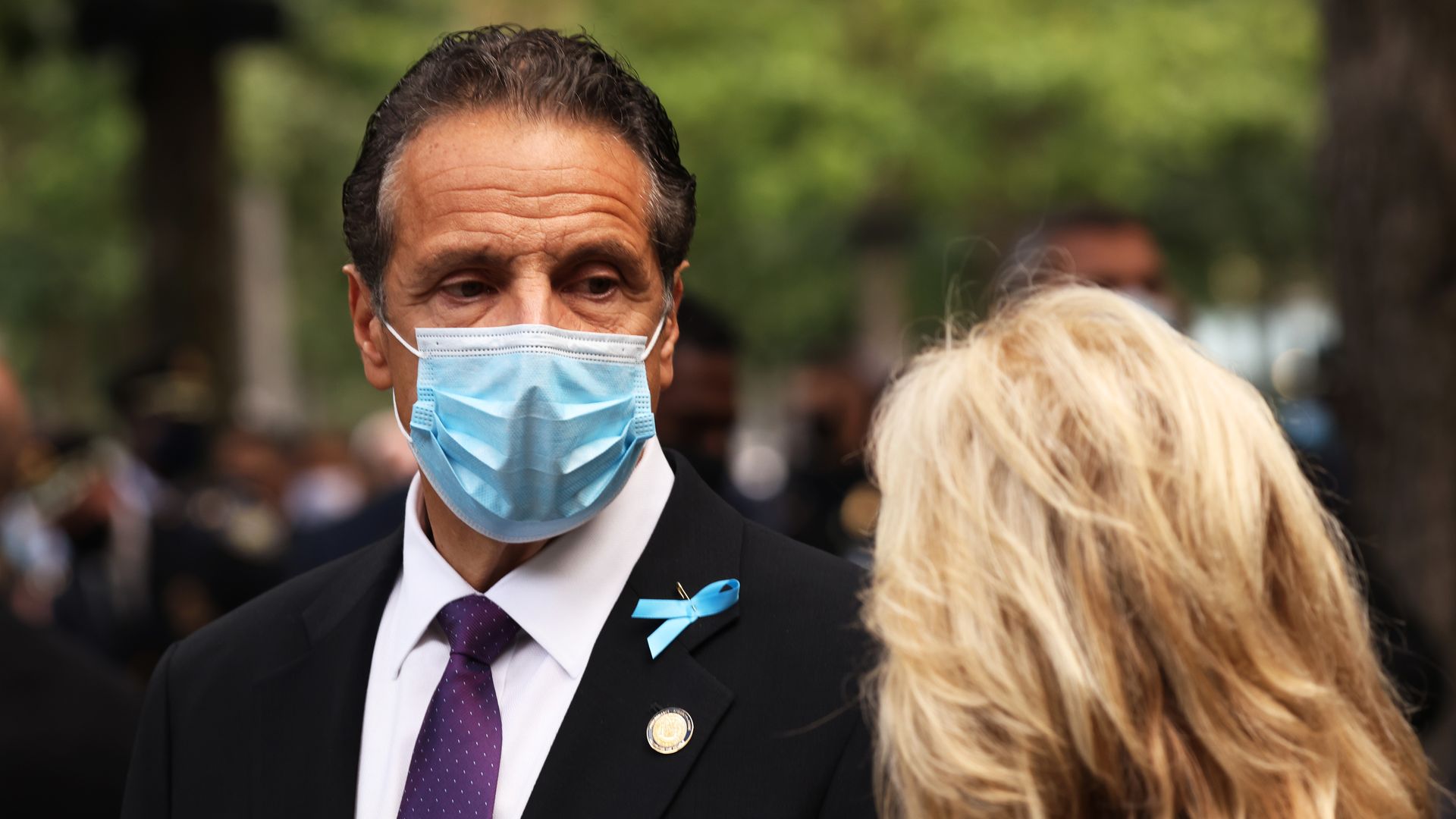
New York Gov. Andrew Cuomo (D) said Thursday that the state will move forward with its own review process of coronavirus vaccines even if the Food and Drug Administration approves one or more for distribution and public use.
Why it matters: The motion could sow further public doubt that the federal government could release a vaccine based on political motives rather than safety and efficacy.
The sudden uncertainty surrounding the future of the Affordable Care Act could be an enormous political liability for Republicans in key states come November.
Between the lines: Millions of people in crucial presidential and Senate battlegrounds would lose their health care coverage if the Supreme Court strikes down the law, as the Trump administration is urging it to.
The coronavirus is surging once again across the U.S., with cases rising in 22 states over the past week.
The big picture: There isn't one big event or sudden occurrence that explains this increase. We simply have never done a very good job containing the virus, despite losing 200,000 lives in just the past six months, and this is what that persistent failure looks like.
Prime Minister Benjamin Netanyahu announced plans for a "full lockdown" after Israel reported a new daily coronavirus cases record of 6,923 infections Wednesday.
Why it matters: Israel last Friday became the first developed country to re-enter lockdown. While schools, retailers and other businesses closed for the three-week measure, there are exemptions including for people to pray, go to work, exercise and protest. The new two-week restrictions that still needs Cabinet's full approval aims to address this, AP notes. "The goal is to reduce the rate of infection, and the goal is literally to save many lives in Israel," Netanyahu said.
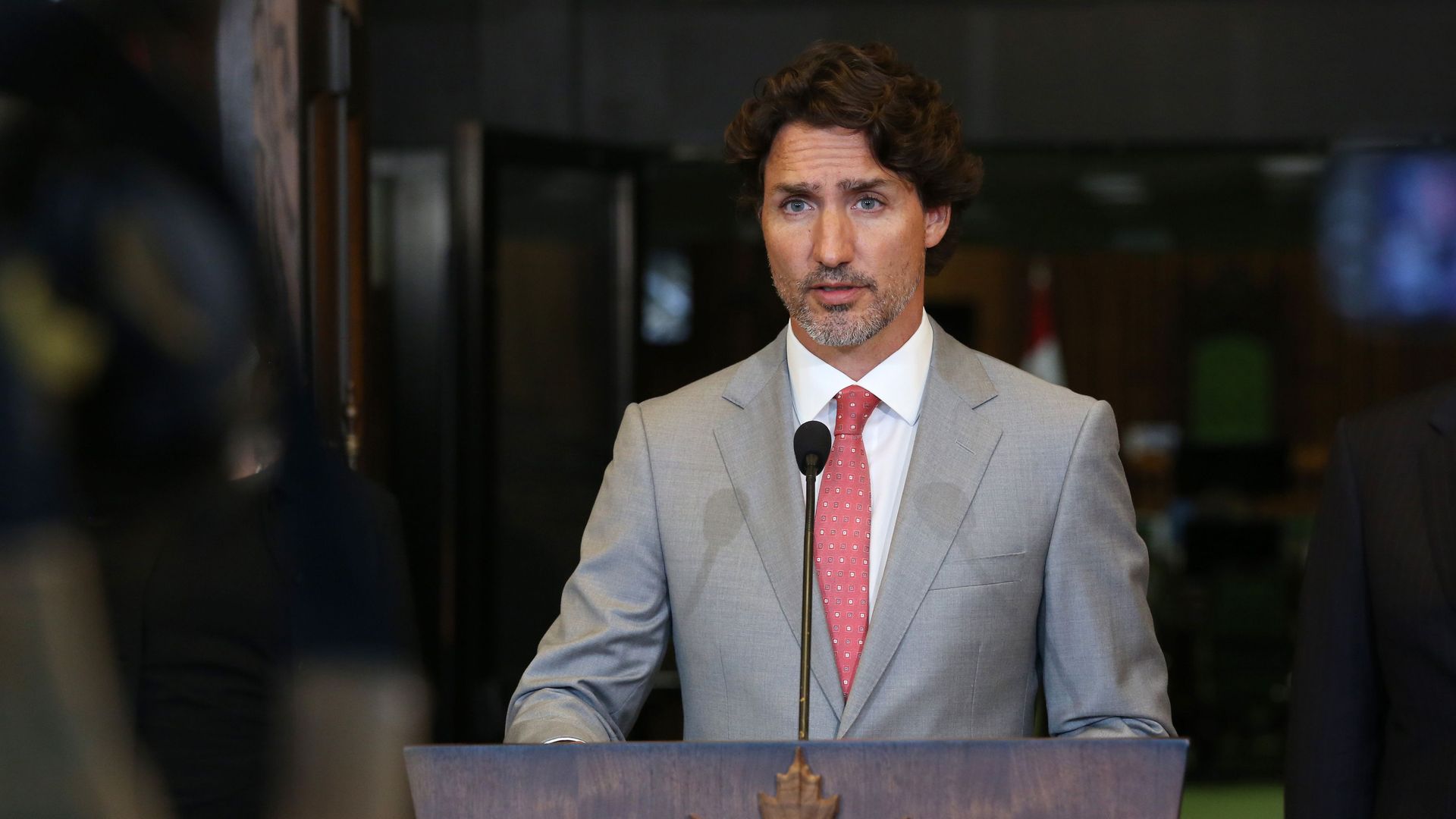
Prime Minister Justin Trudeau said during a televised address on the coronavirus pandemic Wednesday that for Canada's four biggest provinces, "the second wave isn’t just starting, it's already under way."
Driving the news: Daily case numbers have gone from roughly 300 cases a day in mid-August to 1,248 by Tuesday, with most outbreaks in British Columbia, Alberta, Ontario and Quebec, CBC notes. "We're on the brink of a fall that could be much worse than the spring," Trudeau said. "It's all too likely we won't be gathering for Thanksgiving, but we still have a shot at Christmas." Over 147,700 Canadians have tested positive for COVID-19.