OpenAI, Anthropic and security researchers are investigating tens of thousands of incidents in which their frontier models took steps that outside evaluators would consider problematic, sources told Axios.
Why it matters: The sheer number of incidents, which occurred in recent months in internal testing and the real world, indicates that the problem is orders of magnitude more complex than what is publicly known.
President Trump told voters to pretend he's on the ballot. Apparently they're listening: Republicans coast to coast are getting pulled under by a violent undertow fueled by Trump's unpopularity.
Why it matters: It's looked bad for Republicans all year, but this week felt different — like the political environment was disintegrating in real time, one ominous data point after another.
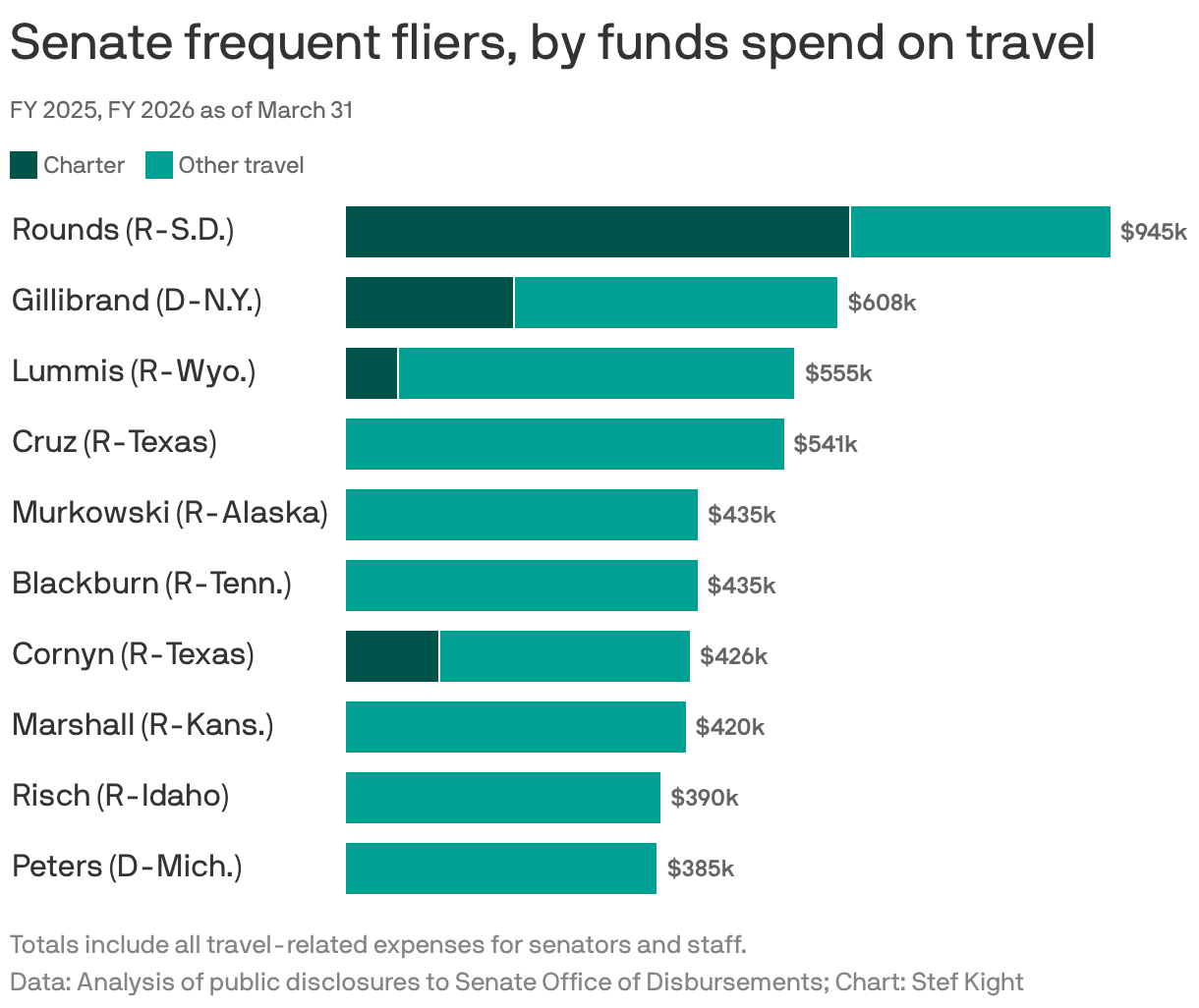
Sen. Mike Rounds (R-S.D.) has spent more taxpayer money on travel than any other senator's office since the fall of 2024 — including $625,000 on private charter companies, according to an analysis of public disclosures provided to Axios.
Why it matters: Senators routinely fly between Washington and their home states on taxpayers' dime. But only a handful regularly rely on private flights.
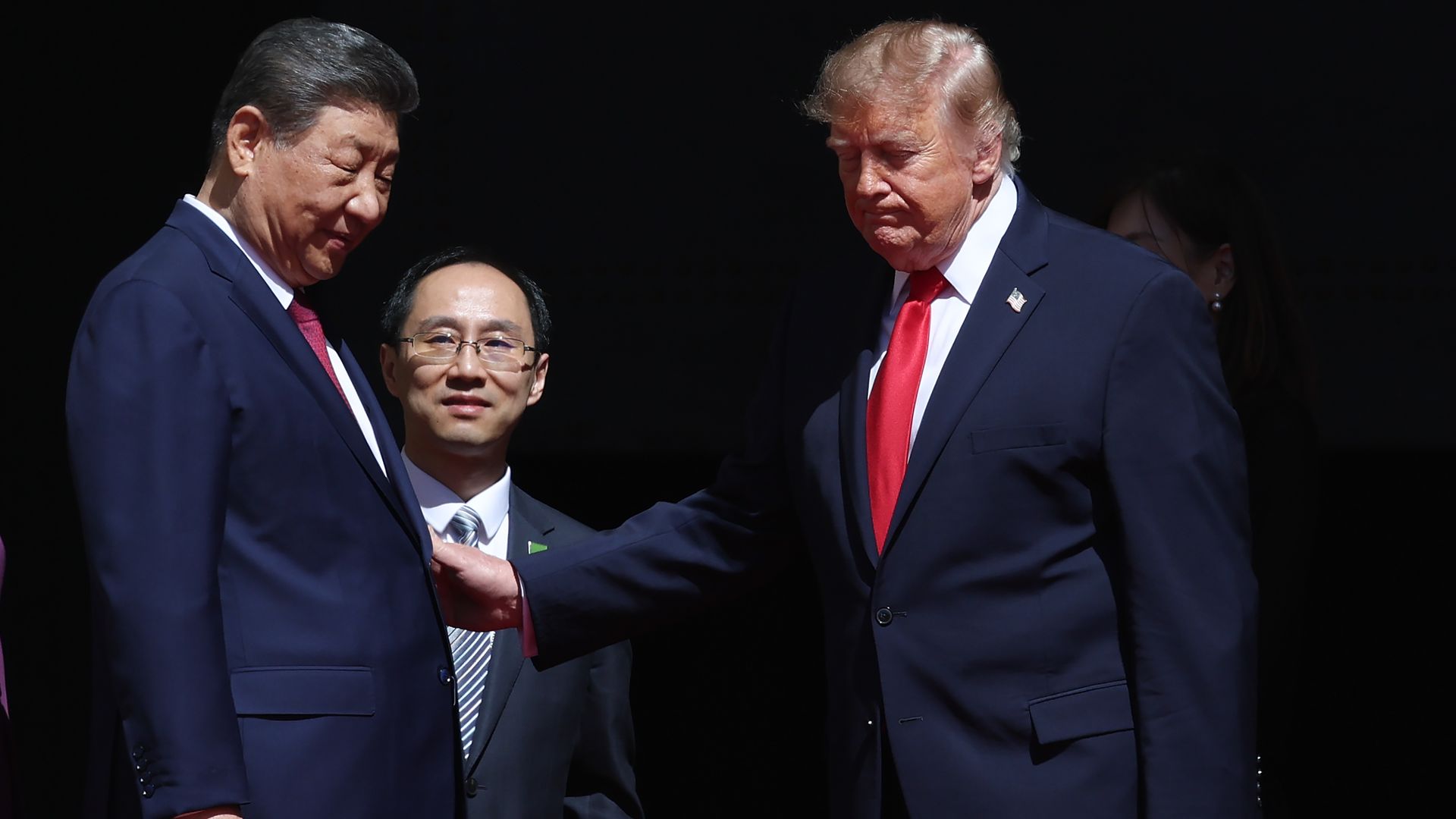
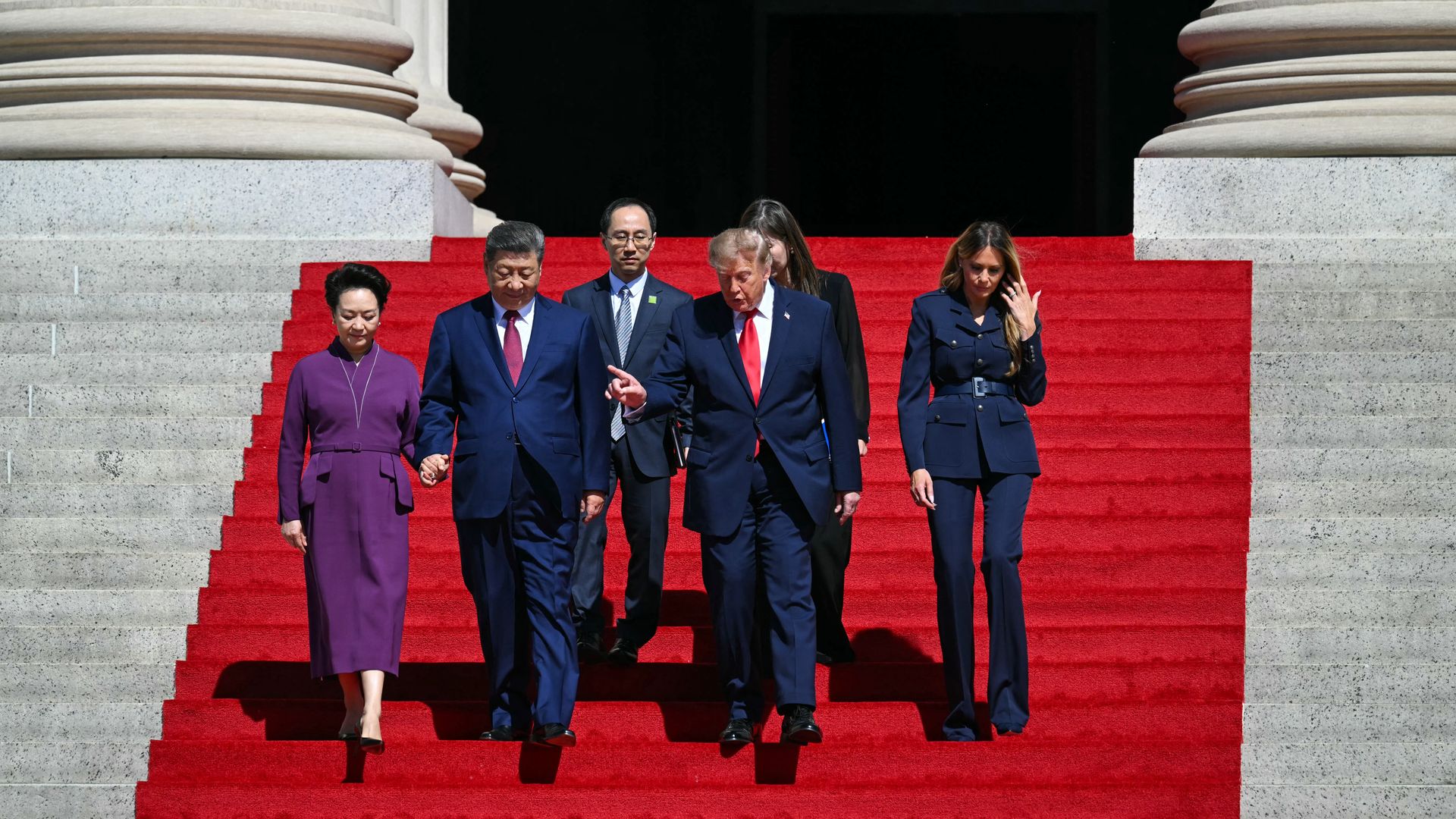
The U.S. and China have agreed to set up a dialogue on artificial intelligence, with a communications channel to help defuse serious incidents, the White House said overnight.
Why it matters: President Trump has said the main thing that matters in the AI race is beating China — but the pact acknowledges that they're serious competition, too.
The U.S. and China have reached a deal to lower tariffs on $30 billion of "non-sensitive goods" as part of a trade package agreed at this week's summit between President Trump and Xi Jinping, the White House said.
Why it matters: Such a deal would mark a thaw in the trade war that engulfed the two countries last year.
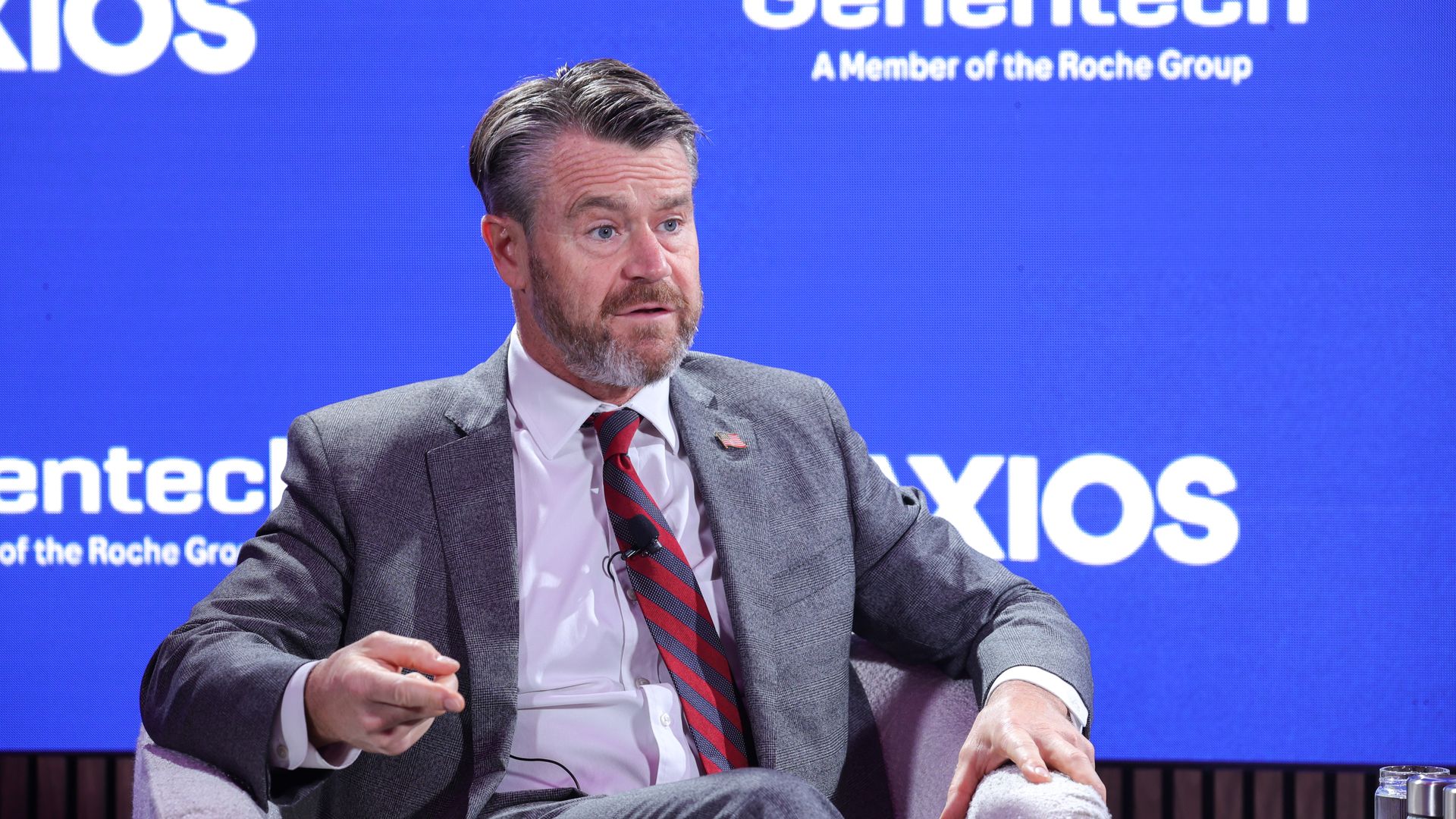
WASHINGTON — China is ahead of the U.S. on biomanufacturing, presenting a national security challenge for policymakers, Sen. Todd Young (R-Ind.) said at an Axios event.
Why it matters: America's biopharma industry and patients depend on a major U.S. rival for essential drugs and critical supply chains, compounding pressure on the Food and Drug Administration to modernize its regulatory process.
Axios' Stef Kight and Caitlin Owens spoke with Rep. April McClain Delaney (D-Md.), Healthcare Leadership Council president and CEO Maria Ghazal and Young. The Sept. 23 event was sponsored by Genentech.
What they're saying: Young said that the same biotech advancements that contribute to American drug development could also "lead to threats to our own warfighters and the American people."
"In order to get to those innovative technologies and ensure we're safe from any intrusion from biotech threats that might come from China or others, we need to get better at biomanufacturing… and we are behind," Young said.
McClain Delaney said China is devoting significantly more government resources to biotech and called on the U.S. government and private sector to work together to ensure "we lead the standard-setting in the biotech arena."
Yes, but: Ghazal said cutting off collaboration with Chinese companies could limit drug and treatment innovations that benefit U.S. patients.
"If we restrict ourselves too much, China will really … have the upper hand," Ghazal said.
What's next:Young suggested the Trump administration expand its proposed AI hotline with China to include "things that can create existential risks for the American people," including biological threats.
Content from the sponsor's segment:
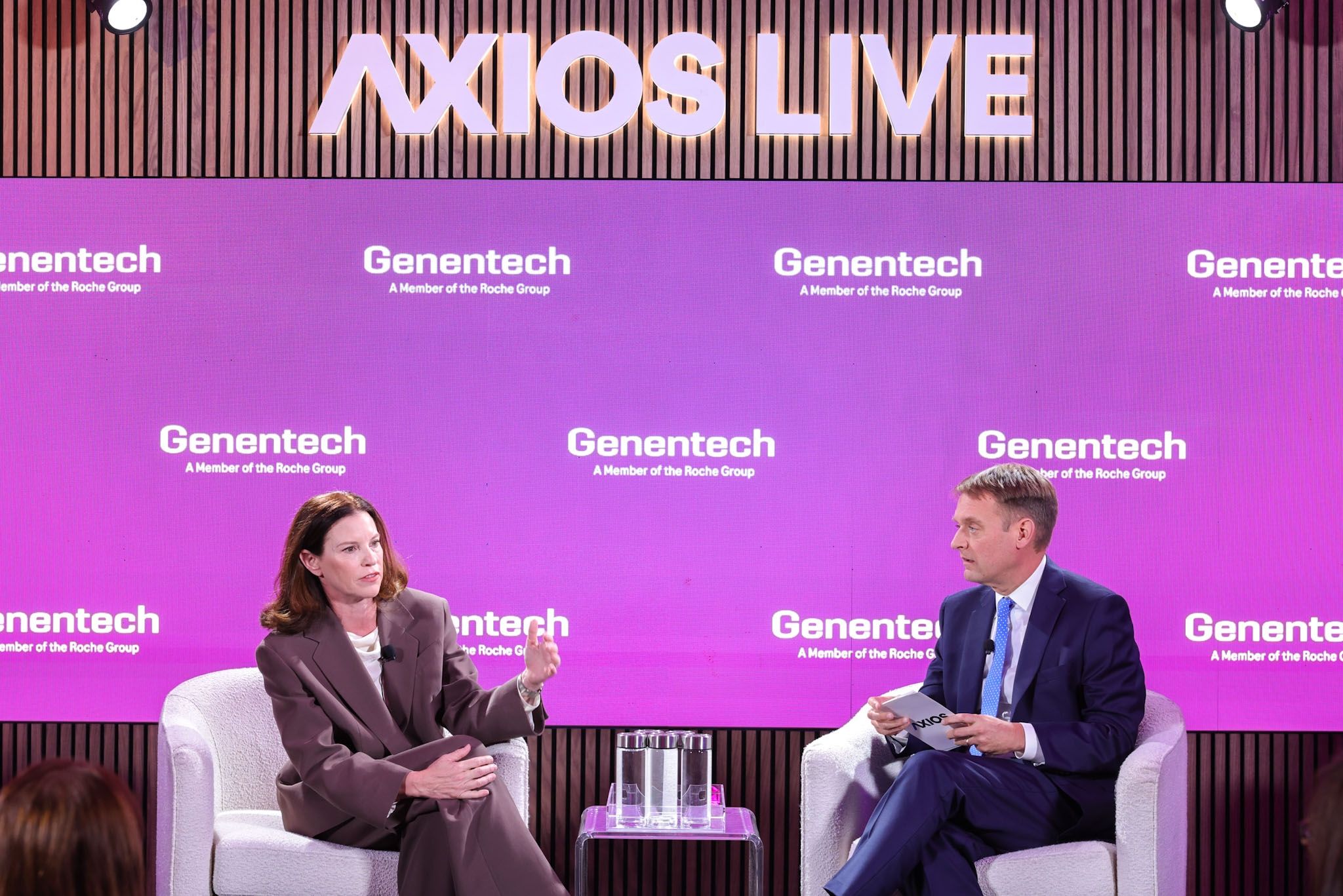
Genentech CEO Ashley Magargee (left) with Axios publisher Nicholas Johnston. Photo: Bryan Dozier for Axios
During a View From the Top conversation, Genentech CEO Ashley Magargee said the biotech company's use of AI can condense some early-stage research from years to months, with the goal of getting care to patients faster.
"We're going to be able to diagnose patients earlier and earlier, before even they have symptoms that emerge," she said.
Axios recently reported on how venture capital was involved in a $31 million Ponzi scheme whose victims included NFL star Travis Kelce and several retired NBA players.
Now we've learned that a venture capitalist was the key whistleblower.
CVC Capital Partners and Japanese buyout firm NSSK have submitted around a $3.2 billion nonbinding takeover bid for Tokyo-listed Kobayashi Pharmaceutical.
Why it matters: Kobayashi was at the center of a 2024 contamination scandal that was tied to kidney failure and deaths.
AI is improving affiliate commerce infrastructure, automating how shoppers find products, how brands discover creators and how creators turn content into shoppable posts.
Why it matters: U.S. affiliate marketing spend is expected to grow 11.3% to $13.81 billion this year, per eMarketer, raising the stakes for companies that can make that money easier to deploy.
Foreign investors bought a record $426 billion in stocks and investment fund shares in the second quarter, according to data from the Bureau of Economic Analysis out Thursday.
Why it matters: The AI boom is attracting loads of overseas money, and the flood of dough counters a prevailing notion that the U.S. is losing ground with foreign investors.