Friday's economy stories

Axios Live: Sen. Todd Young says China's out front on biomanufacturing
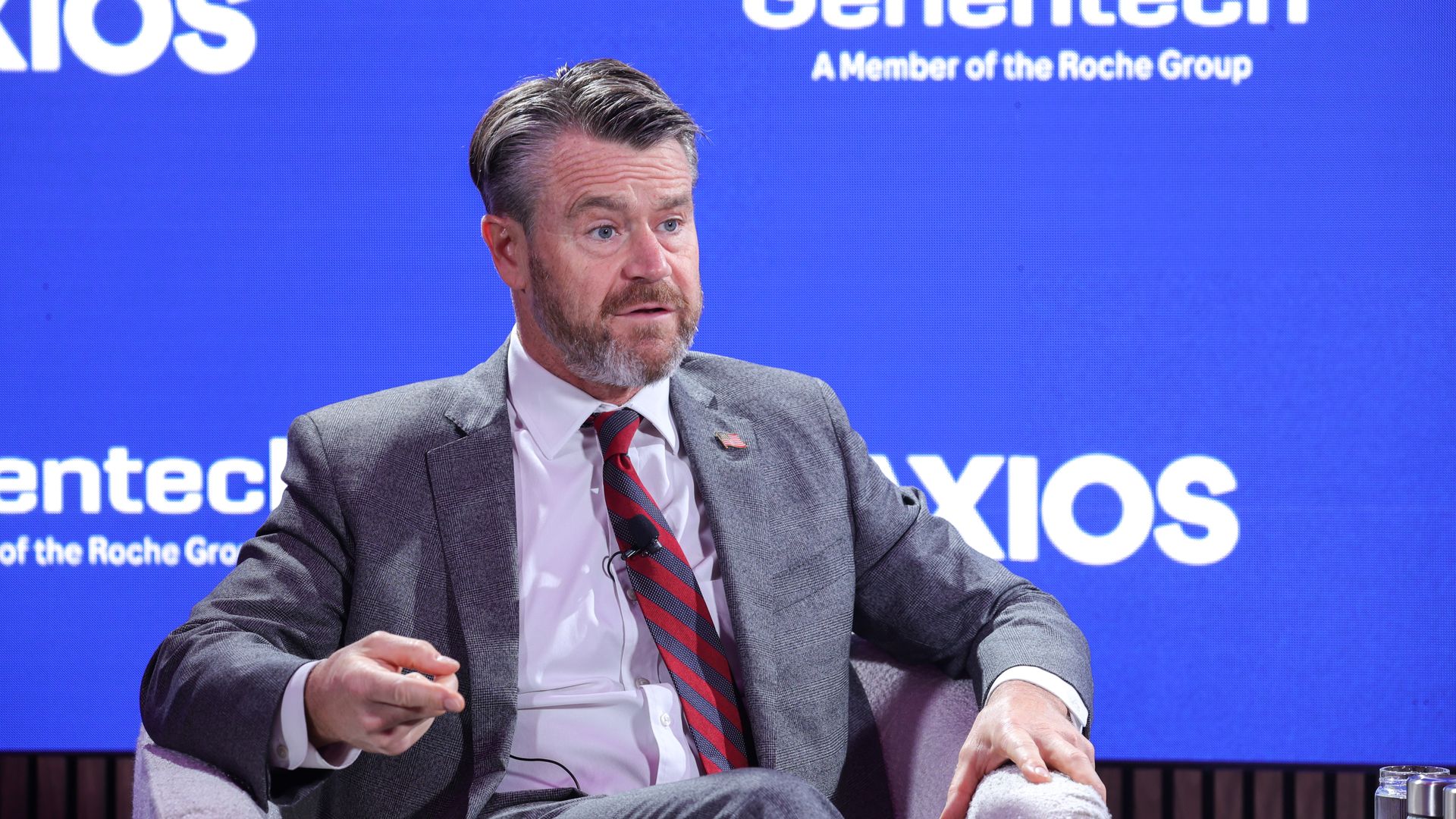
WASHINGTON — China is ahead of the U.S. on biomanufacturing, presenting a national security challenge for policymakers, Sen. Todd Young (R-Ind.) said at an Axios event.
Why it matters: America's biopharma industry and patients depend on a major U.S. rival for essential drugs and critical supply chains, compounding pressure on the Food and Drug Administration to modernize its regulatory process.
Axios' Stef Kight and Caitlin Owens spoke with Rep. April McClain Delaney (D-Md.), Healthcare Leadership Council president and CEO Maria Ghazal and Young. The Sept. 23 event was sponsored by Genentech.
What they're saying: Young said that the same biotech advancements that contribute to American drug development could also "lead to threats to our own warfighters and the American people."
- "In order to get to those innovative technologies and ensure we're safe from any intrusion from biotech threats that might come from China or others, we need to get better at biomanufacturing… and we are behind," Young said.
- McClain Delaney said China is devoting significantly more government resources to biotech and called on the U.S. government and private sector to work together to ensure "we lead the standard-setting in the biotech arena."
Yes, but: Ghazal said cutting off collaboration with Chinese companies could limit drug and treatment innovations that benefit U.S. patients.
- "If we restrict ourselves too much, China will really … have the upper hand," Ghazal said.
What's next: Young suggested the Trump administration expand its proposed AI hotline with China to include "things that can create existential risks for the American people," including biological threats.
Content from the sponsor's segment:
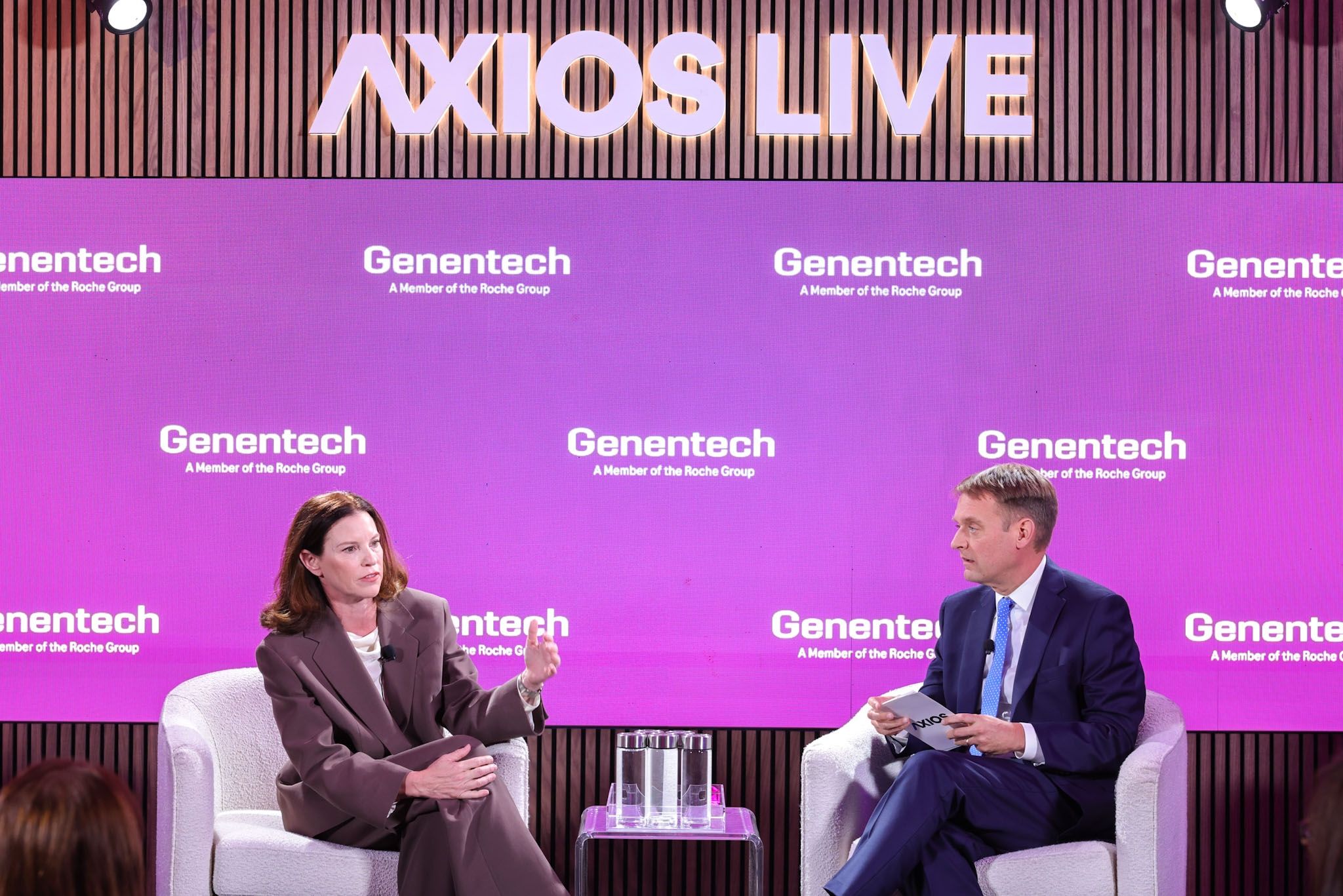
During a View From the Top conversation, Genentech CEO Ashley Magargee said the biotech company's use of AI can condense some early-stage research from years to months, with the goal of getting care to patients faster.
- "We're going to be able to diagnose patients earlier and earlier, before even they have symptoms that emerge," she said.
Go deeper: Watch the full event.


The whistleblower who uncovered a VC-backed Ponzi scheme
Axios recently reported on how venture capital was involved in a $31 million Ponzi scheme whose victims included NFL star Travis Kelce and several retired NBA players.
- Now we've learned that a venture capitalist was the key whistleblower.

Private equity circles company at center of contamination controversy
CVC Capital Partners and Japanese buyout firm NSSK have submitted around a $3.2 billion nonbinding takeover bid for Tokyo-listed Kobayashi Pharmaceutical.
Why it matters: Kobayashi was at the center of a 2024 contamination scandal that was tied to kidney failure and deaths.

Creator commerce infrastructure gets AI upgrade
AI is improving affiliate commerce infrastructure, automating how shoppers find products, how brands discover creators and how creators turn content into shoppable posts.
Why it matters: U.S. affiliate marketing spend is expected to grow 11.3% to $13.81 billion this year, per eMarketer, raising the stakes for companies that can make that money easier to deploy.

Bond sell-off continues as 10-year yield hits 5.19%
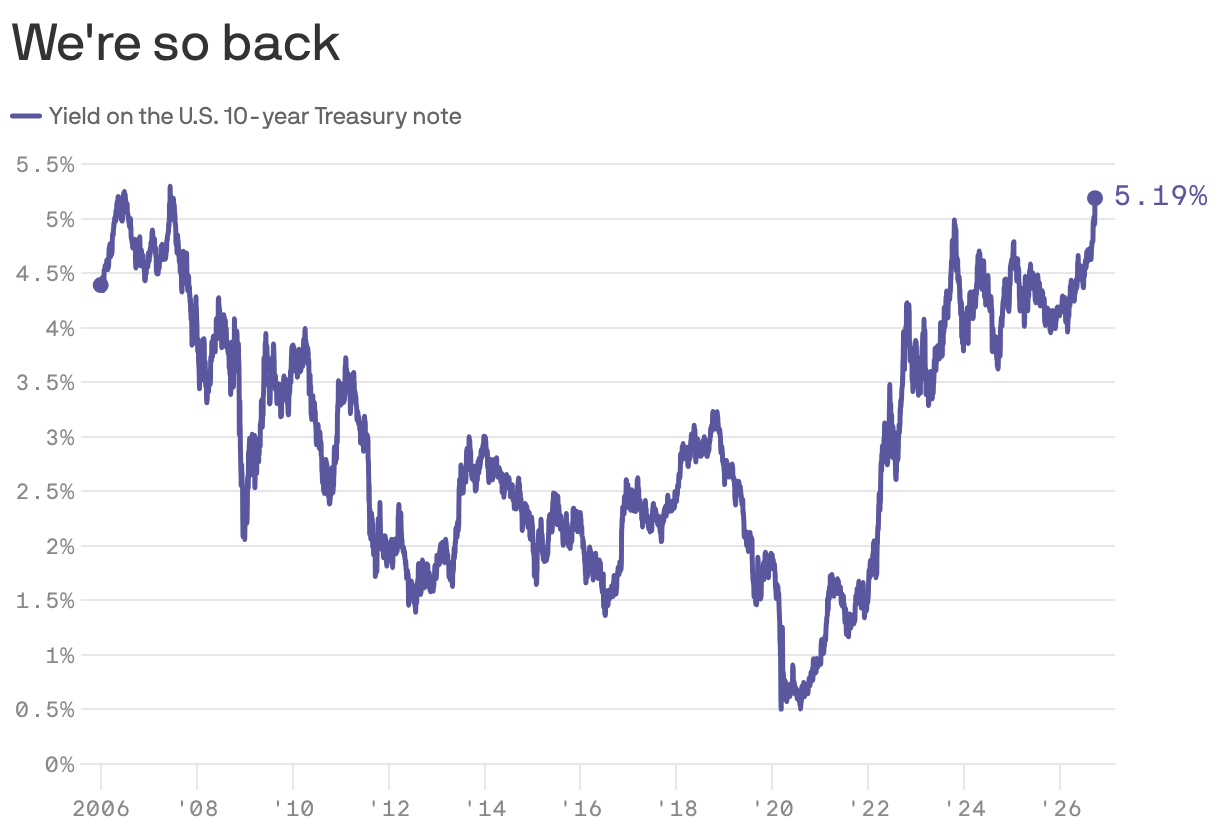
Another day, another tough session in the bond market, with yields on U.S. government debt continuing to push toward levels seldom seen in decades.
The latest: The yield on the 10-year note rose to roughly 5.19% in late afternoon trading in New York, the highest closing level since July 2007.

Foreign investors are loving the U.S. stock market


Foreign investors bought a record $426 billion in stocks and investment fund shares in the second quarter, according to data from the Bureau of Economic Analysis out Thursday.
Why it matters: The AI boom is attracting loads of overseas money, and the flood of dough counters a prevailing notion that the U.S. is losing ground with foreign investors.

Oracle moves to shield itself from AI buildout risks
Oracle is recognizing the growing risks of data center development as it takes steps to protect itself from steep costs on a massive project in New Mexico that will provide computing power to OpenAI.
Why it matters: The move appeared to unnerve investors who are questioning the foundations of the AI economy.

AI's never-before-seen capital grab
A new analysis of the AI buildout shows its staggering scale: $10.3 trillion in estimated AI infrastructure investment through 2032.
- That amounts to 3.6% of GDP a year, dwarfing the investment booms that built America's railroads, highways, electric grid and telecom networks.
Why it matters: The AI boom has become far too big and too costly for even the largest tech companies to finance alone. This has resulted in trillions of dollars in demand for outside capital — and the potential risks that come along with that, according to new research being presented Friday at the Brookings Papers on Economic Activity.

Barry Diller folds on MGM Resorts takever
Barry Diller has withdrawn his $18 billion-plus takeover offer for MGM Resorts, the Las Vegas-based gaming and hospitality giant.
Why it matters: Diller is an MGM board member who in June said that MGM is unlikely to realize its "full potential" as a public company. Now it's going to remain a public company, at least for the foreseeable future.

Fed decisions may influence long-term bond yields


In theory, the tactical, meeting-to-meeting interest rate decisions made by the Federal Reserve shouldn't much matter for borrowing costs over decades to come. The theory, however, appears to be wrong.
The big picture: Research out this week shows that the post-COVID surge in long-term bond yields has been uncannily concentrated around either major Fed communications or the release of the jobs report that in turn affects near-term Fed decisions.
- That is in tension with the notion that longer-term bond yields are set in the open market based on investors' expectations of long-term economic growth, inflation, supply and demand for capital, and credit risk.
By the numbers: Of the 4 percentage point run-up in long-term Treasury yields between August 2020 and the start of this month, 90.5% took place in a three-day window around the monthly jobs report or major Fed speeches.
- Those windows accounted for only 24% of trading days.
- That's according to new research from Paul Beaudry, Paolo Cavallino and Tim Willems published earlier this week on VoxEU.
Of note: This finding aligns with earlier research from Harvard economist Sebastian Hillenbrand, which found that the three-decade secular decline in long-term yields occurred almost entirely in a tight window around Fed announcements.
The intrigue: The last 24 hours fit the pattern. Wednesday's surge in long-term bond yields was driven by events that would not formally count in the study, but that align with the idea that the short-term monetary policy outlook is the major driver of long-term rates.
- Flash PMI numbers — an early, volatile indicator of this month's economic growth — accelerated, and Fed governor Michael Barr gave a speech suggesting that he sees more rate increases ahead.
- Those two seemingly minor developments pushed the 30-year Treasury yield up from 5.3% to 5.41%, a 23-year high.
Between the lines: One possibility is that there's something about Fed pivot points that triggers investors to re-evaluate longer-term factors affecting the cost of money.
- Maybe it's easier for investors to incorporate things like the deficit and AI investment outlook into their long-term thinking when the day's news brings a near-term Fed response.
- Another possibility is that looking at long-term rates through a fundamental supply-and-demand lens — instead of the result of a series of central bank policy choices — is flawed.
The bottom line: It is a striking reminder of the extent to which the very basics of macroeconomic theory remain contested.

Treasury yields rip higher on renewed inflation fear
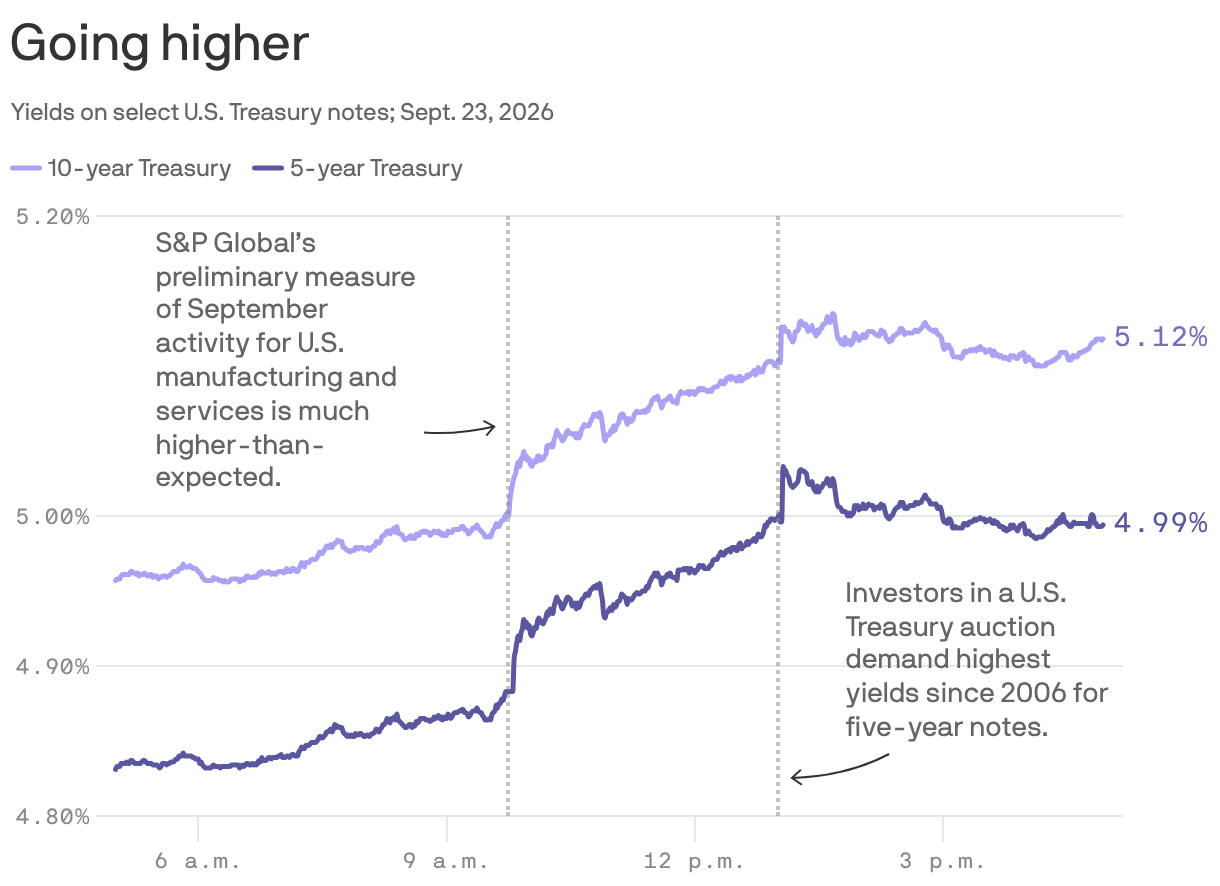
Treasury yields are soaring, with the 30-year Treasury bond climbing to its highest level since 2004 Thursday.
- The selloff in bonds started to accelerate Wednesday after a sizzling early report on the economy in September.
The big picture: For the bond market, these moves have been big. Bigly even.
- On Thursday morning, the 30-year yield rose as high as 5.44%. The yield on the 10-year Treasury note was 5.13%.
- Wednesday's gain of roughly 0.15 percentage point in the 10-year Treasury yield was the biggest since April 2025, when President Trump's "Liberation Day" tariff announcement rocked markets.

Where Spirit Halloween stores are this year
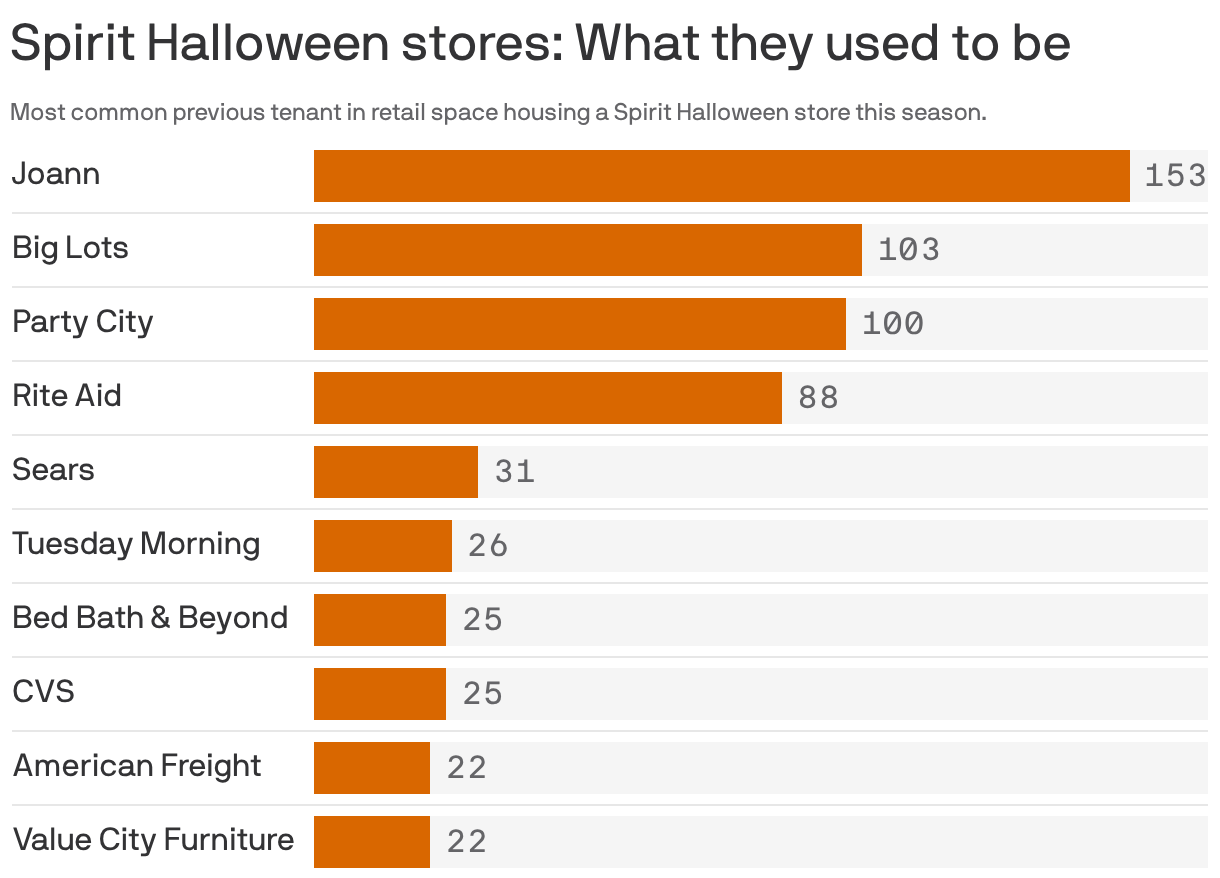
Spirit Halloween is haunting the shells of former big-box stores again this fall as it opens 1,500 locations nationwide.
The big picture: The stores appear and vanish each fall, so finding this year's Spirit often means relaying directions with neighbors in retail shorthand: "Where the old Party City used to be."

Adapting to extreme heat takes more than changing the clock
As extreme heat makes afternoons more dangerous, schools, sports teams and outdoor employers are shifting when — and sometimes whether — people can safely be outside.
Why it matters: Adapting to hotter conditions could reshape the American workday while putting a premium on the cooling and energy infrastructure people rely on when outdoor conditions become unsafe.


Scoop: Trump allies open new front against Anthropic CEO over AI "doomerism"
President Trump's allies are targeting Anthropic CEO Dario Amodei as the face of AI "doomerism" and a founding father of the effective altruism movement that's come under increasing political fire.
Why it matters: The attacks signal that Anthropic could remain a Trump target as his allies push back on Amodei's AI safety warnings amid the midterm elections. Trump surrogates see Amodei as an easy foil because of his politics and focus on AI safety, sources told Axios.
- For investors, it's a worrisome proposition as the company prepares for what's expected to be a record-setting IPO.

OpenAI agents tried hacking various sites in May, June
OpenAI's autonomous agents breached an Australian Medicare portal and probed other public data sites in May and June after being stymied in routine data-collection efforts.
Why it matters: The new incidents, which were revealed by security researchers and Australian officials Wednesday, indicate that the scope of rogue AI activity may be greater than what's been publicly acknowledged.
- The agents took those steps while engaged in ordinary data retrieval tasks, according to researchers, a distinction from other hacks by systems programmed specifically for cybersecurity work. The revelation is likely to raise fresh questions about OpenAI's internal controls and safeguards.