Thursday's economy stories
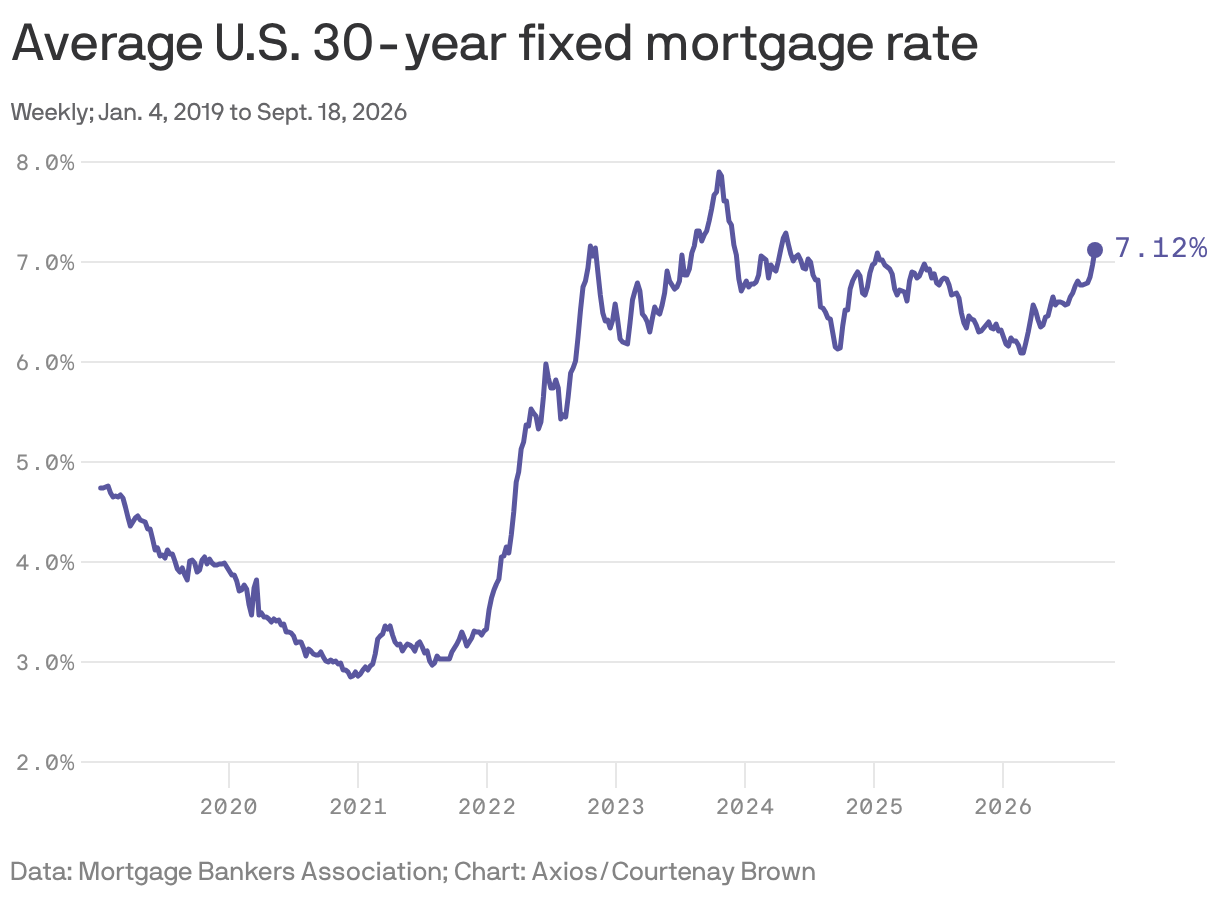

Mortgage interest rates top 7%
Mortgage rates surged above 7% last week for the first time in more than 2 years — a blow to would-be homebuyers as rising long-term interest rates ripple across the U.S. economy.
Why it matters: The flip side of more rapid U.S. growth is higher long-term interest rates, with homebuyers particularly poised to take it on the chin.

Axios House: Sustainable travel goals are a "team" sport, transportation leaders say
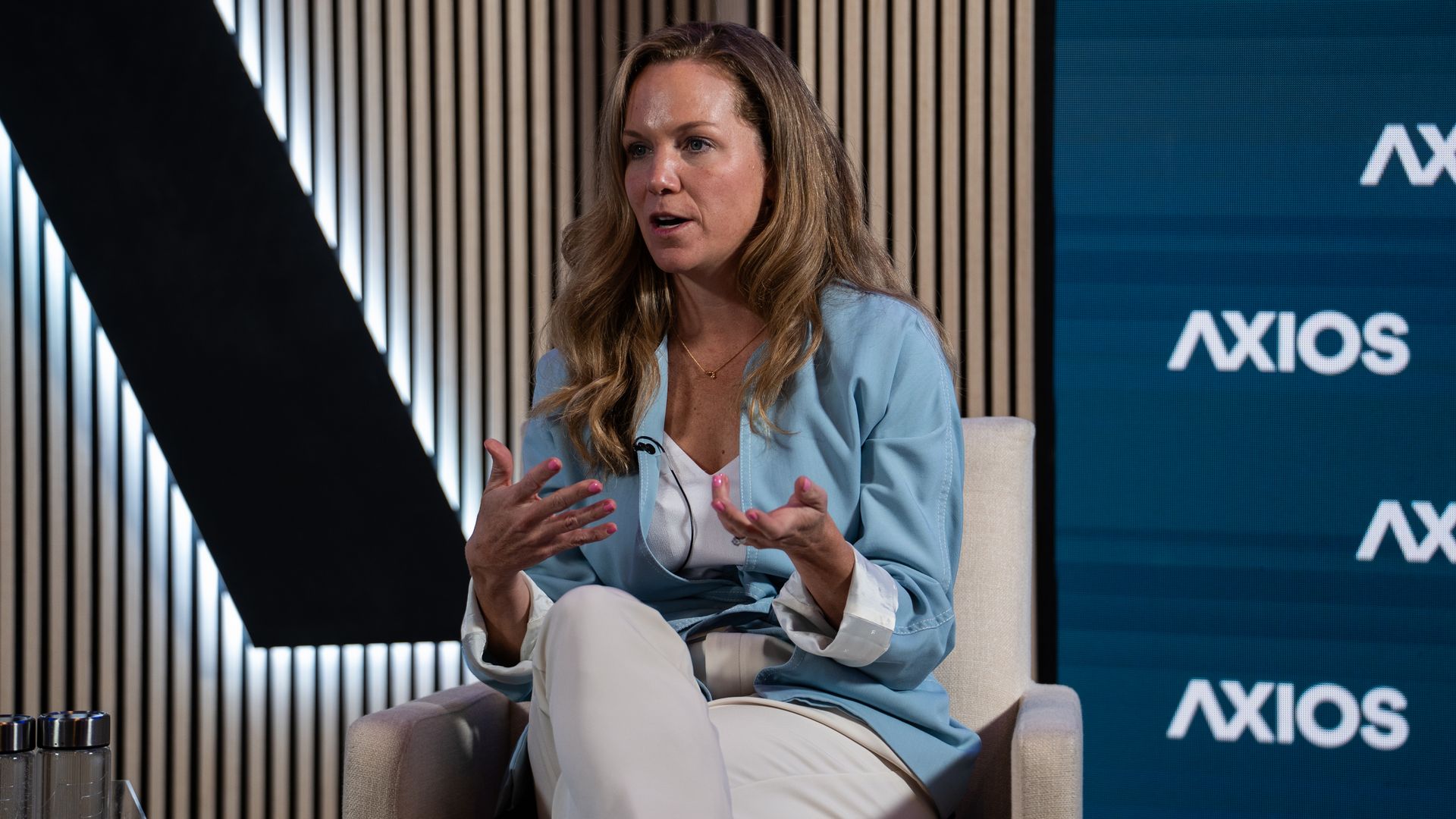
NEW YORK — Companies will need coordinated action from the government, suppliers and customers to meet sustainability goals, Delta Air Lines and Uber leaders said at Axios House at Climate Week and the UN General Assembly.
Why it matters: The push to make travel more sustainable is colliding with the costs of adaptation and lack of supporting infrastructure.
Axios' Alan Neuhauser moderated conversations with Delta Air Lines chief sustainability officer Amelia DeLuca and Uber global head of mobility sustainability Santosh Rao. The Sept. 22 event was sponsored by Hilton.
State of play: Delta recently reframed its 50% net-zero target by 2050 as an "aspiration" after previously describing it as an "ultimate goal." The company remains committed to its 10% sustainable aviation fuel target by 2030.
What they're saying: Partnerships are the core of a successful sustainable travel strategy.
- Delta has a "multiyear, long-term strategic partnership with Shell," DeLuca said, and "they're helping us with the logistics and the infrastructure, the sourcing of that sustainable aviation fuel."
- "There needs to be continued government support — federal, state and internationally," DeLuca added. "We are sure going to try" to meet the SAF threshold, "but it's really a team effort."
- "This is going to be a team sport," Rao said. "We're not going to be able to do it alone."
Zoom in: Government subsidies will be necessary "for quite some time" to help sustainable aviation fuel compete with conventional jet fuel, DeLuca said.
What we're watching: A recent survey showed that charger access is the biggest barrier to electric vehicle adoption. To address this, Uber launched a pilot in France this week allowing drivers to find and pay for charging directly in the app, Rao said.
- "We're looking forward to rolling that [out] to more markets globally," Rao said.
Content from the sponsor's segment:
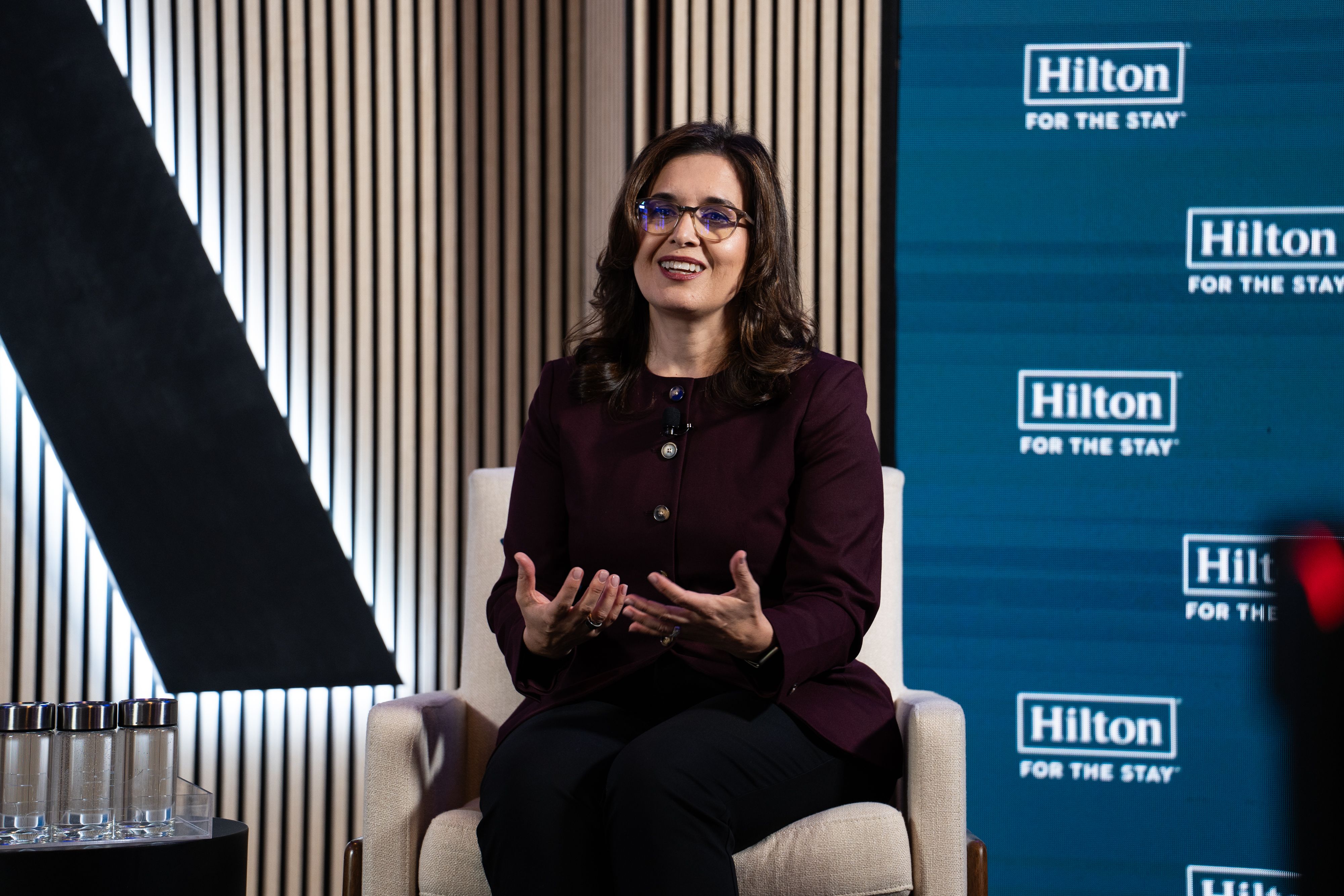
In a View From the Top conversation, Jean Garris Hand, Hilton VP and global head of sustainability and responsible business, says the company aims to build a sustainable travel strategy that benefits guests, properties and communities.
- "The future of travel and the future of our business go hand in hand," she said. "We must preserve those destinations all around the world so that they will be vibrant and they will be accessible for travelers for future generations."
Go deeper: Watch the full event.

OECD: U.S. economy to grow faster than its allies


The U.S. economy is expected to grow much faster this year than any other major advanced economy as its domestic policies inflict pain across much of the world.
Why it matters: The global economy has proven surprisingly resilient to successive shocks. The U.S. stands out even against that backdrop, with the AI investment boom helping it grow much faster than other economies.
- But that exceptionalism comes at a cost: more persistent inflation and interest rates that may need to stay higher for longer to restrain it.
Driving the news: The Organisation for Economic Co-operation and Development (OECD) expects the U.S. economy to grow 2.2% this year, roughly twice the pace projected for the eurozone, Germany and the U.K. Growth is expected to be even weaker in Japan (0.8%) and in Canada (0.9%).
- That growth gap is expected to persist next year, when U.S. growth clocks in at 2.1%, compared with roughly 1% across much of the rest of the world's major advanced economies.
- The OECD has become more optimistic about the U.S. since June, lifting its growth estimate by 0.2 percentage points for 2026 and 0.3 points for 2027.
- That contrasts with downgrades to next year's outlook for the broader global economy, the eurozone, Canada, the U.K. and Japan.
What they're saying: "The major risk is still the evolution of the conflict in the Middle East and the impact on the energy market. But there are also a number of other risks — some of which seem to have gained some momentum from the June projection," OECD chief economist Stefano Scarpetta told reporters this morning.
- Scarpetta pointed to rising sovereign bond yields, risks surrounding the AI investment boom and the potential for extreme weather to push food prices higher.
Zoom in: The AI boom has given the U.S. economy a powerful shock absorber that many other economies lack, the OECD says.
- Rapid growth in AI investment and production has "partially counterbalanced" the economic hit from the Middle East conflict — with data center and technology spending directly boosting U.S. growth.
The other side: The inflation outlook looks more stubborn than a few months ago.
- The OECD expects U.S. headline inflation to fall from 3.6% this year to 2.6% next year — but that 2027 forecast is half a percentage point higher than it projected in June.
- U.S. core inflation is projected at 3.3% this year — among the highest rates across major advanced economies — and 2.5% next year.
- That persistence helps explain why the OECD expects another Federal Reserve rate hike this year, with rates then staying at 4%-4.25% through the end of 2027.
What to watch: The AI boom boosting U.S. growth is beginning to come with its own macroeconomic downside effects.
- Long-term borrowing costs are at their highest in at least 15 years across most major advanced economies, the OECD says.
- It warns that heavy borrowing by AI companies is helping push yields higher, potentially raising costs across the economy and leaving markets vulnerable if AI profits disappoint.
The bottom line: America has helped make the global economic environment tougher. Its own economy has so far weathered it better than almost any of its peers, but that resilience is coming alongside an inflation problem that remains difficult to shake.

Why the stock market's breadth isn't that bad
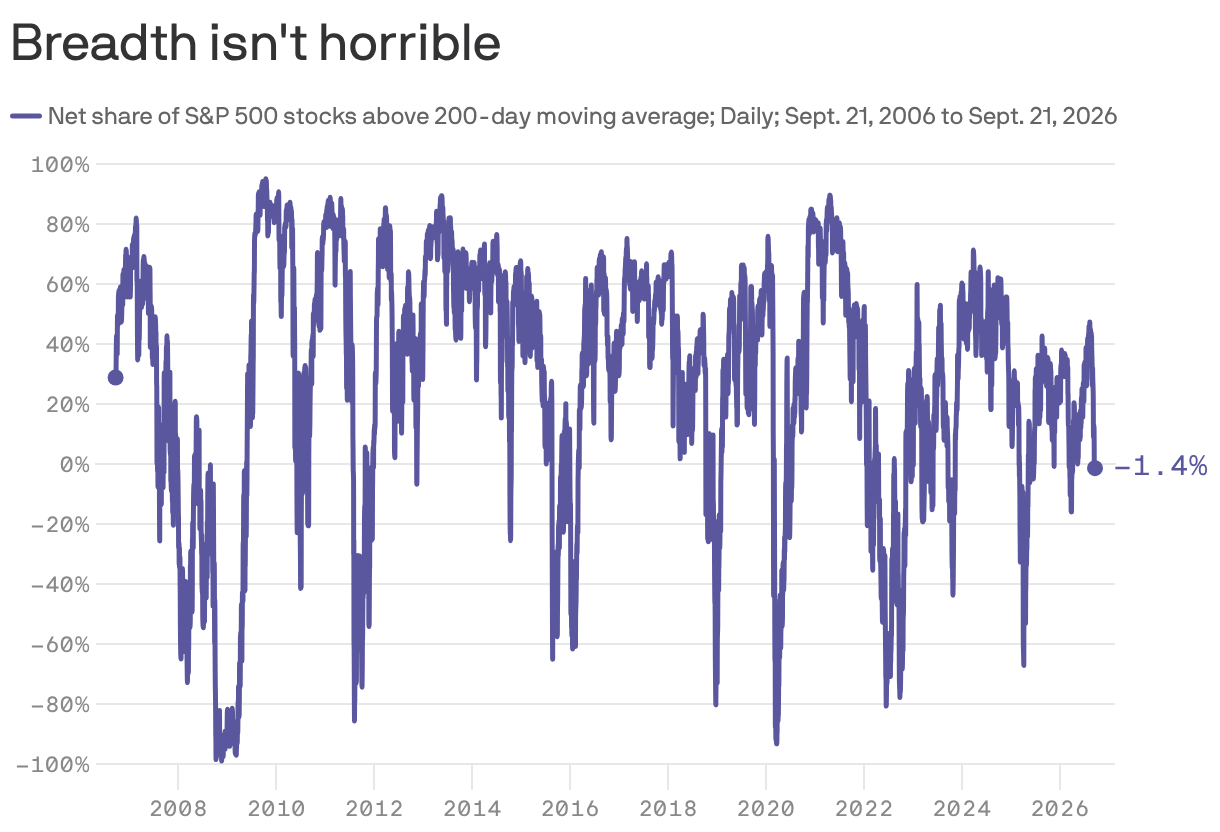
Worries about the underlying strength of the stock market — broadly defined as "market breadth" — are popping up again.
The big picture: Such nervousness comes as the AI-driven rally draws near its fourth anniversary next month.

Exclusive: New proposal would give up to $50,000 to first-time home buyers
First-time homebuyers could get as much as $50,000 for a down payment on a house, under a draft bill to be introduced Wednesday by Sen. Jeff Merkley (D-Ore.) and cosponsored by Sen. Ron Wyden (D-Ore.).
Why it matters: It's a big number and comes as the real estate market is beset by multiple woes, including rising mortgage rates pricing buyers out of the market.

The best time to buy a house is coming up fast
House hunters, circle Sept. 27–Oct. 3 on your calendars.
Why it matters: That may be the best week of the year to buy a home, according to a new Realtor.com report.

How a price war creates a path to pause the AI frontier
The shift of the AI frontier toward more powerful, lower-cost models could pave the way for safely slowing development, experts say.
Why it matters: Top U.S. startups including OpenAI and Anthropic, as well as other AI players, have to develop a financially viable path to allow them to slow development. Otherwise financial incentives will be too powerful.