Mortgage interest rates top 7%

Add Axios as your preferred source to
see more of our stories on Google.
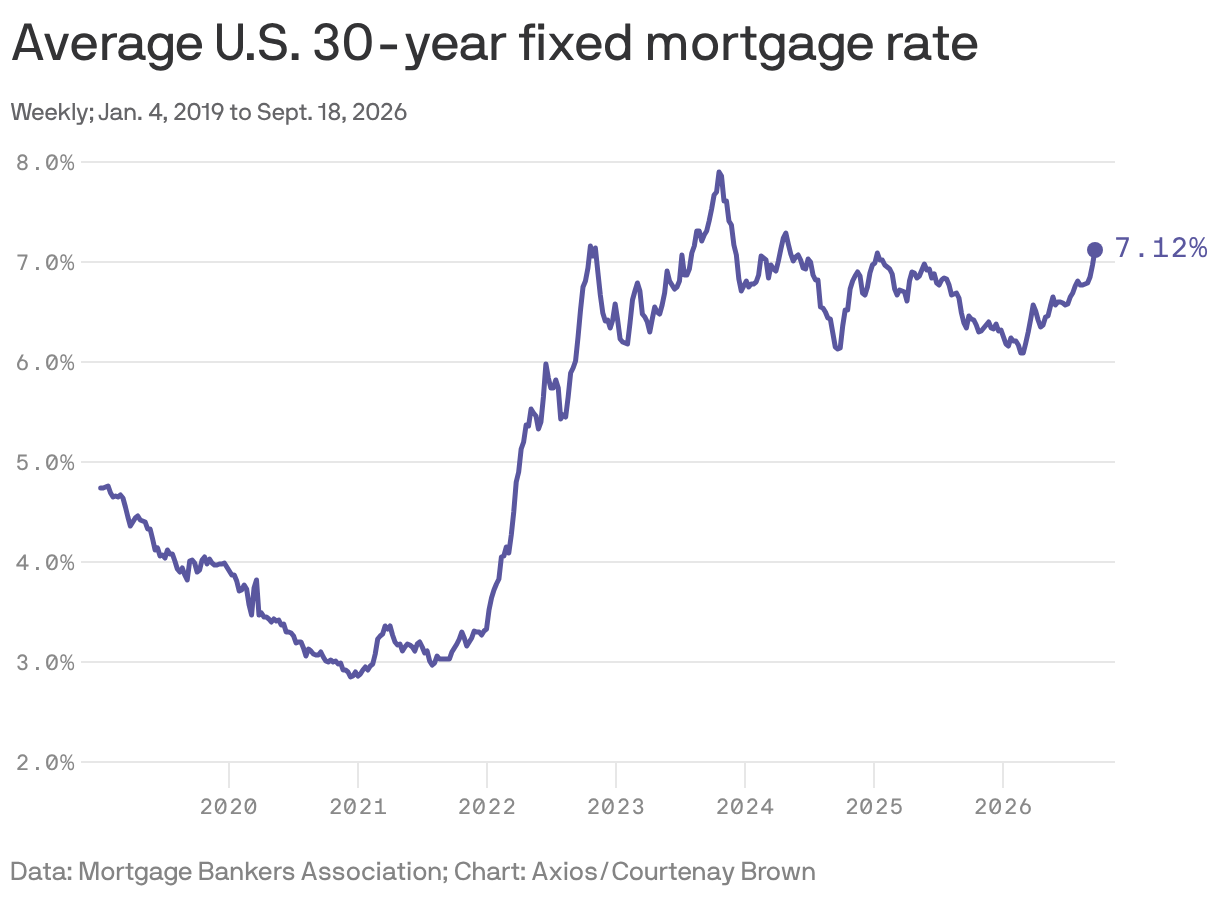
Mortgage rates surged above 7% last week for the first time in more than 2 years — a blow to would-be homebuyers as rising long-term interest rates ripple across the U.S. economy.
Why it matters: The flip side of more rapid U.S. growth is higher long-term interest rates, with homebuyers particularly poised to take it on the chin.
Driving the news: The average rate on a 30-year fixed-rate mortgage surged to 7.12% last week, the Mortgage Bankers Association said on Wednesday, up from 6.97% the prior week and the highest since May 2024.
- The bond market selloff that has pushed mortgage rates higher shows no signs of relenting.
- The 10-year U.S. Treasury yield, to which mortgage rates are tied, was up 0.17 percentage points Wednesday afternoon to 5.12%, which would be the highest since July 2007 if it holds until the market close.
- It comes a week after the Federal Reserve raised interest rates amid growing bets that it will need to keep pushing rates higher to contain inflation.
State of play: Fed governor Michael Barr spoke on housing this morning and said that he sees more rate increases as likely to be justified to bring inflation under control.
- "We needed to recalibrate monetary policy to reflect the balance of risks to our mandate goals," Barr said at an affordable housing conference in Chicago.
- "In my view, given changes to the economy, we were out of position, and we made an adjustment in the right direction. In my base case, further policy adjustments are likely to be needed to ensure inflation comes down to target in a timely fashion."
Of note: Barr discussed the root causes for housing affordability, and he mostly zeroed in on supply-side factors like local zoning restrictions and the dearth of productivity gains in construction.
- As for the role of the Fed in pushing mortgage rates upward, he said that the central bank's "short-term policy rates affect longer-term borrowing rates, including those for mortgages, but many other things affect mortgage rates as well."
- "Mortgage rates are generally lower when inflation is lower, and we are working toward that goal."
