Wednesday's economy stories
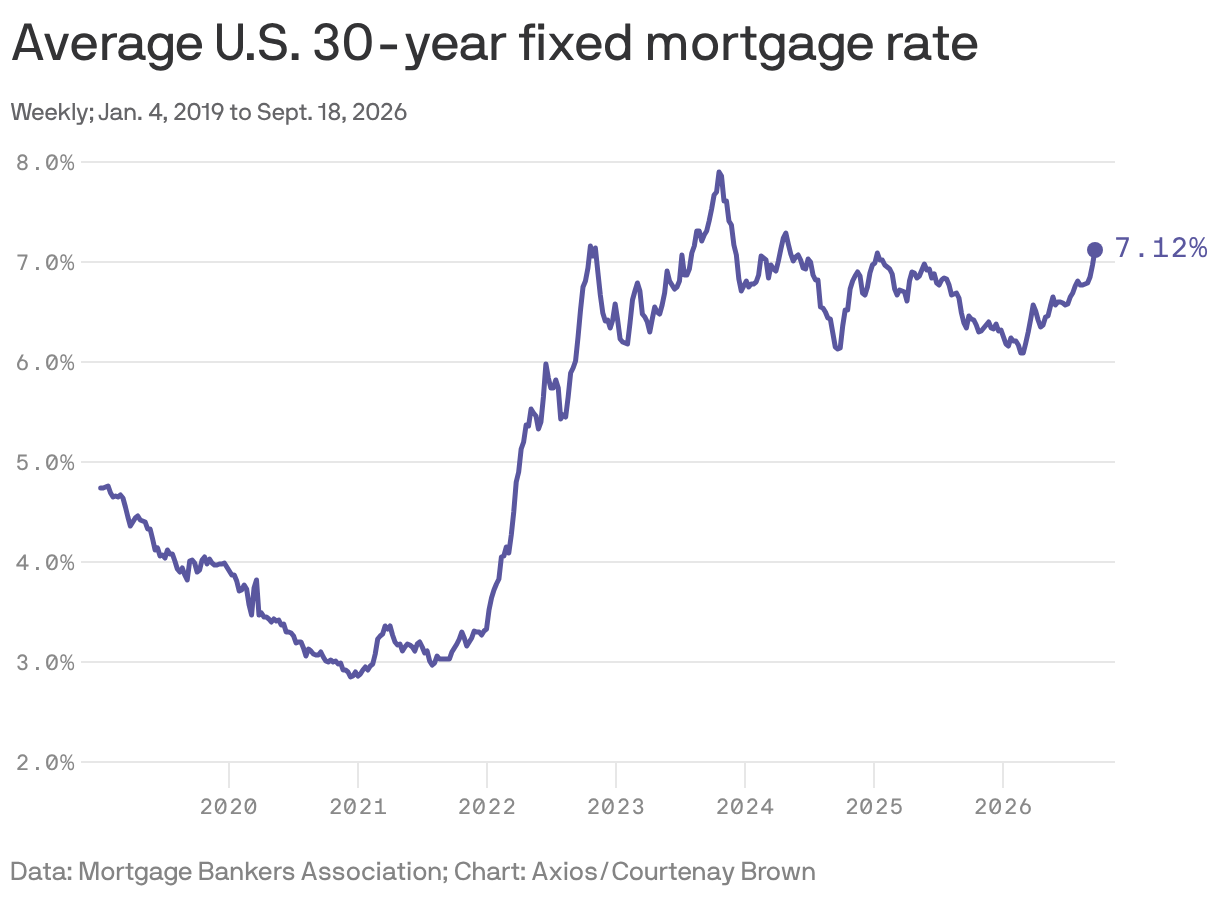

Mortgage interest rates top 7%
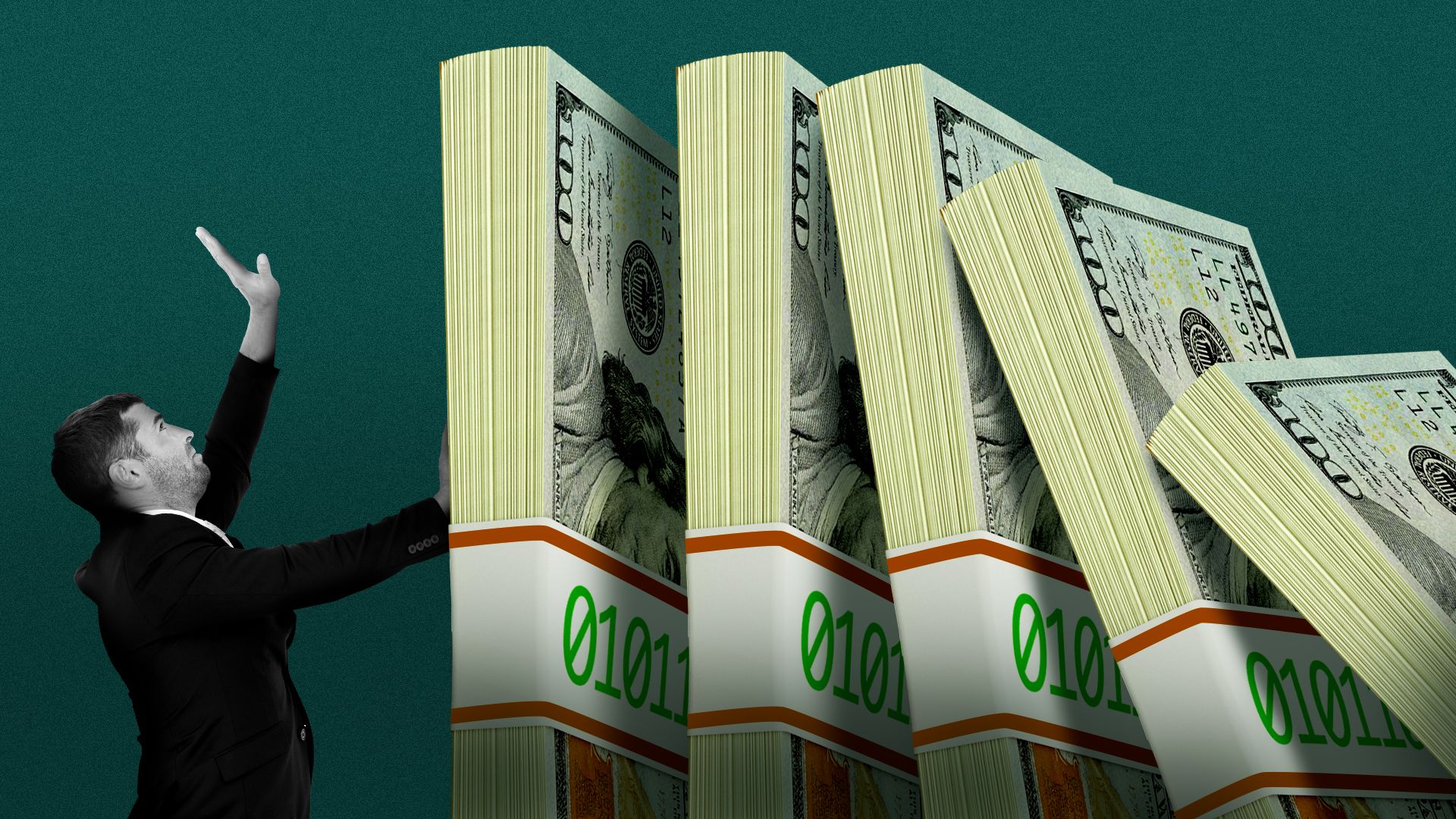
Mortgage rates surged above 7% last week for the first time in more than 2 years — a blow to would-be homebuyers as rising long-term interest rates ripple across the U.S. economy.
Why it matters: The flip side of more rapid U.S. growth is higher long-term interest rates, with homebuyers particularly poised to take it on the chin.

Axios House: Sustainable travel goals are a "team" sport, transportation leaders say

NEW YORK — Companies will need coordinated action from the government, suppliers and customers to meet sustainability goals, Delta Air Lines and Uber leaders said at Axios House at Climate Week and the UN General Assembly.
Why it matters: The push to make travel more sustainable is colliding with the costs of adaptation and lack of supporting infrastructure.
Axios' Alan Neuhauser moderated conversations with Delta Air Lines chief sustainability officer Amelia DeLuca and Uber global head of mobility sustainability Santosh Rao. The Sept. 22 event was sponsored by Hilton.
State of play: Delta recently reframed its 50% net-zero target by 2050 as an "aspiration" after previously describing it as an "ultimate goal." The company remains committed to its 10% sustainable aviation fuel target by 2030.
What they're saying: Partnerships are the core of a successful sustainable travel strategy.
- Delta has a "multiyear, long-term strategic partnership with Shell," DeLuca said, and "they're helping us with the logistics and the infrastructure, the sourcing of that sustainable aviation fuel."
- "There needs to be continued government support — federal, state and internationally," DeLuca added. "We are sure going to try" to meet the SAF threshold, "but it's really a team effort."
- "This is going to be a team sport," Rao said. "We're not going to be able to do it alone."
Zoom in: Government subsidies will be necessary "for quite some time" to help sustainable aviation fuel compete with conventional jet fuel, DeLuca said.
What we're watching: A recent survey showed that charger access is the biggest barrier to electric vehicle adoption. To address this, Uber launched a pilot in France this week allowing drivers to find and pay for charging directly in the app, Rao said.
- "We're looking forward to rolling that [out] to more markets globally," Rao said.
Content from the sponsor's segment:
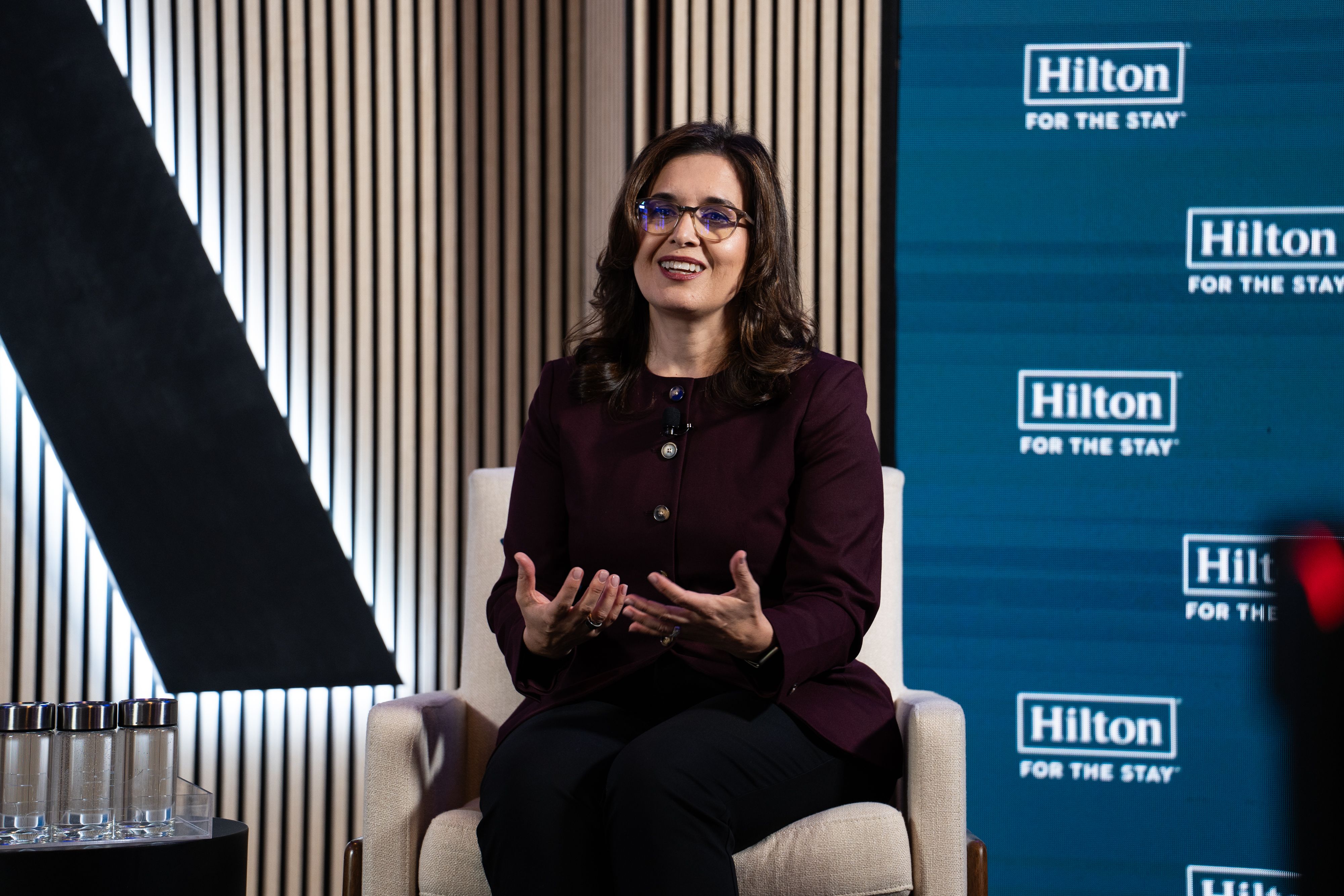
In a View From the Top conversation, Jean Garris Hand, Hilton VP and global head of sustainability and responsible business, says the company aims to build a sustainable travel strategy that benefits guests, properties and communities.
- "The future of travel and the future of our business go hand in hand," she said. "We must preserve those destinations all around the world so that they will be vibrant and they will be accessible for travelers for future generations."
Go deeper: Watch the full event.

OECD: U.S. economy to grow faster than its allies


The U.S. economy is expected to grow much faster this year than any other major advanced economy as its domestic policies inflict pain across much of the world.
Why it matters: The global economy has proven surprisingly resilient to successive shocks. The U.S. stands out even against that backdrop, with the AI investment boom helping it grow much faster than other economies.
- But that exceptionalism comes at a cost: more persistent inflation and interest rates that may need to stay higher for longer to restrain it.
Driving the news: The Organisation for Economic Co-operation and Development (OECD) expects the U.S. economy to grow 2.2% this year, roughly twice the pace projected for the eurozone, Germany and the U.K. Growth is expected to be even weaker in Japan (0.8%) and in Canada (0.9%).
- That growth gap is expected to persist next year, when U.S. growth clocks in at 2.1%, compared with roughly 1% across much of the rest of the world's major advanced economies.
- The OECD has become more optimistic about the U.S. since June, lifting its growth estimate by 0.2 percentage points for 2026 and 0.3 points for 2027.
- That contrasts with downgrades to next year's outlook for the broader global economy, the eurozone, Canada, the U.K. and Japan.
What they're saying: "The major risk is still the evolution of the conflict in the Middle East and the impact on the energy market. But there are also a number of other risks — some of which seem to have gained some momentum from the June projection," OECD chief economist Stefano Scarpetta told reporters this morning.
- Scarpetta pointed to rising sovereign bond yields, risks surrounding the AI investment boom and the potential for extreme weather to push food prices higher.
Zoom in: The AI boom has given the U.S. economy a powerful shock absorber that many other economies lack, the OECD says.
- Rapid growth in AI investment and production has "partially counterbalanced" the economic hit from the Middle East conflict — with data center and technology spending directly boosting U.S. growth.
The other side: The inflation outlook looks more stubborn than a few months ago.
- The OECD expects U.S. headline inflation to fall from 3.6% this year to 2.6% next year — but that 2027 forecast is half a percentage point higher than it projected in June.
- U.S. core inflation is projected at 3.3% this year — among the highest rates across major advanced economies — and 2.5% next year.
- That persistence helps explain why the OECD expects another Federal Reserve rate hike this year, with rates then staying at 4%-4.25% through the end of 2027.
What to watch: The AI boom boosting U.S. growth is beginning to come with its own macroeconomic downside effects.
- Long-term borrowing costs are at their highest in at least 15 years across most major advanced economies, the OECD says.
- It warns that heavy borrowing by AI companies is helping push yields higher, potentially raising costs across the economy and leaving markets vulnerable if AI profits disappoint.
The bottom line: America has helped make the global economic environment tougher. Its own economy has so far weathered it better than almost any of its peers, but that resilience is coming alongside an inflation problem that remains difficult to shake.

Why the stock market's breadth isn't that bad
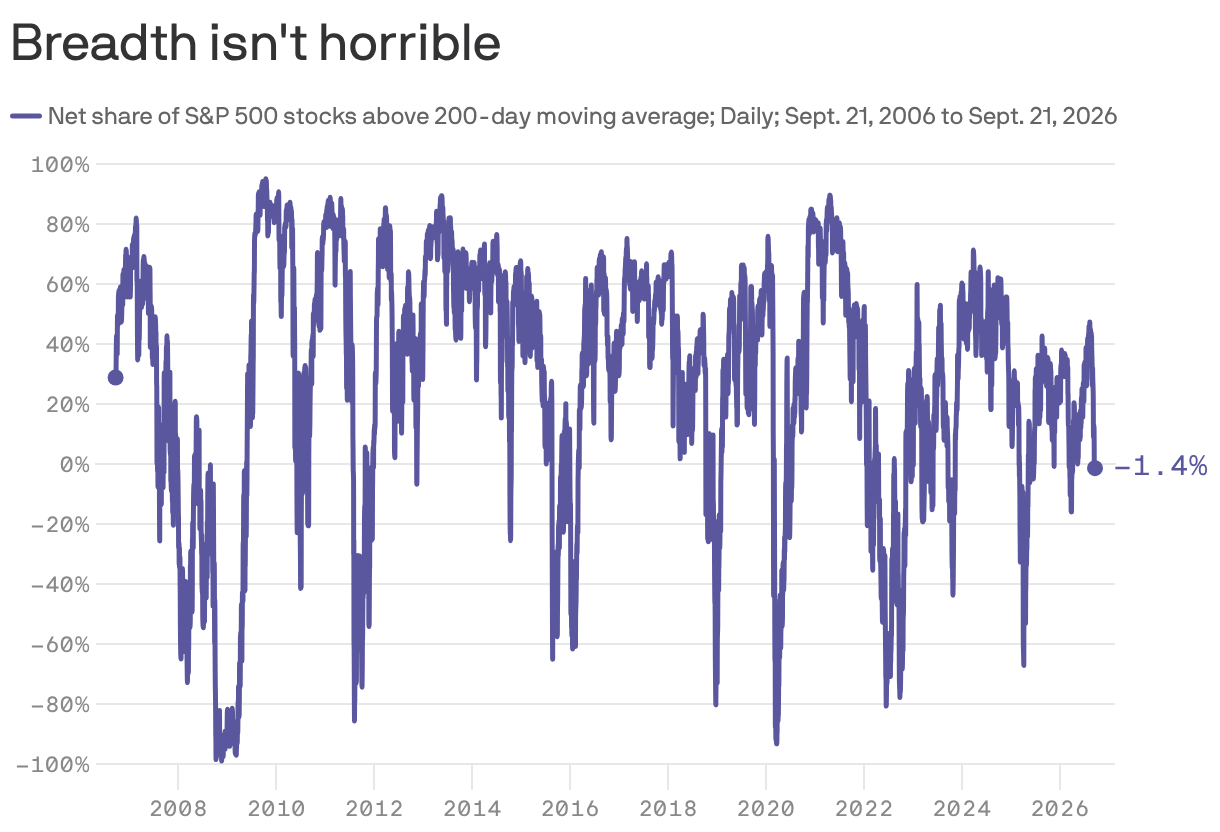
Worries about the underlying strength of the stock market — broadly defined as "market breadth" — are popping up again.
The big picture: Such nervousness comes as the AI-driven rally draws near its fourth anniversary next month.

Exclusive: New proposal would give up to $50,000 to first-time home buyers
First-time homebuyers could get as much as $50,000 for a down payment on a house, under a draft bill to be introduced Wednesday by Sen. Jeff Merkley (D-Ore.) and cosponsored by Sen. Ron Wyden (D-Ore.).
Why it matters: It's a big number and comes as the real estate market is beset by multiple woes, including rising mortgage rates pricing buyers out of the market.

The best time to buy a house is coming up fast
House hunters, circle Sept. 27–Oct. 3 on your calendars.
Why it matters: That may be the best week of the year to buy a home, according to a new Realtor.com report.

How a price war creates a path to pause the AI frontier
The shift of the AI frontier toward more powerful, lower-cost models could pave the way for safely slowing development, experts say.
Why it matters: Top U.S. startups including OpenAI and Anthropic, as well as other AI players, have to develop a financially viable path to allow them to slow development. Otherwise financial incentives will be too powerful.

Trump backs ban on diesel exports
President Trump said Tuesday that he has called for a ban on U.S. diesel exports, while Treasury Secretary Scott Bessent confirmed the administration is examining whether a full or partial ban is feasible.
Why it matters: Trump's endorsement marks a shift for an administration that has resisted calls to restrict fuel exports, as record diesel prices squeeze farmers and truckers and fuel Republican concerns ahead of the midterms.
- Economists and energy analysts the move could lower diesel prices for Americans in the short term but would likely raise prices globally including eventually in the U.S.

Trump orders AI rebrand as "super intelligence"
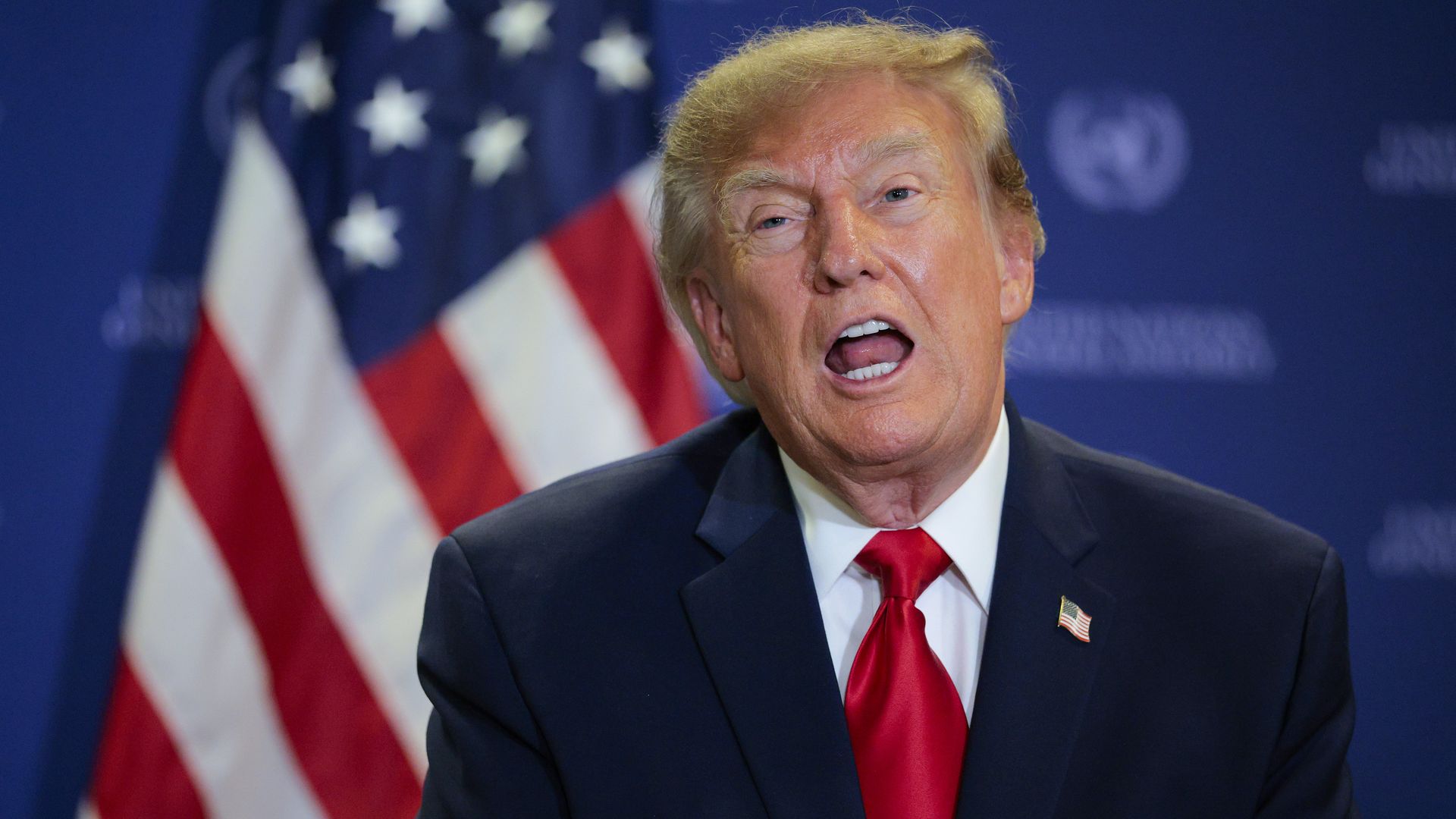
President Trump said Tuesday he is directing "all United States documents" to refer to AI as "super intelligence."
Why it matters: Trump used his United Nations General Assembly speech to dismiss AI safety warnings and frame the race to beat China as an existential, must-win competition.

Cheap, powerful models are the new AI frontier
AI companies have competed on having the best and often most dangerous models for years. Now, they're pivoting to a new focus: cost.
Why it matters: The biggest risk to the AI boom is demand, and recent innovations to make models cheaper while maintaining powerful levels of intelligence have offered a bullish signal.
- As the prices of top models from OpenAI, Anthropic and others come down, usage is increasing dramatically, a trend that points to the kind of demand that will be necessary to justify trillions of dollars in spending.

Exclusive: Atlantic Council launches Power of Sports Center with Kalshi backing

The Atlantic Council is launching a new organization to strategically elevate the importance of policy and statecraft involving sports on a global scale, Axios has learned.
Why it matters: Sports operate at the nexus of geopolitics, financial power, technology and media, creating space for an influential policy voice across key sectors.

Exclusive: Trump adviser ties high gas prices to refining
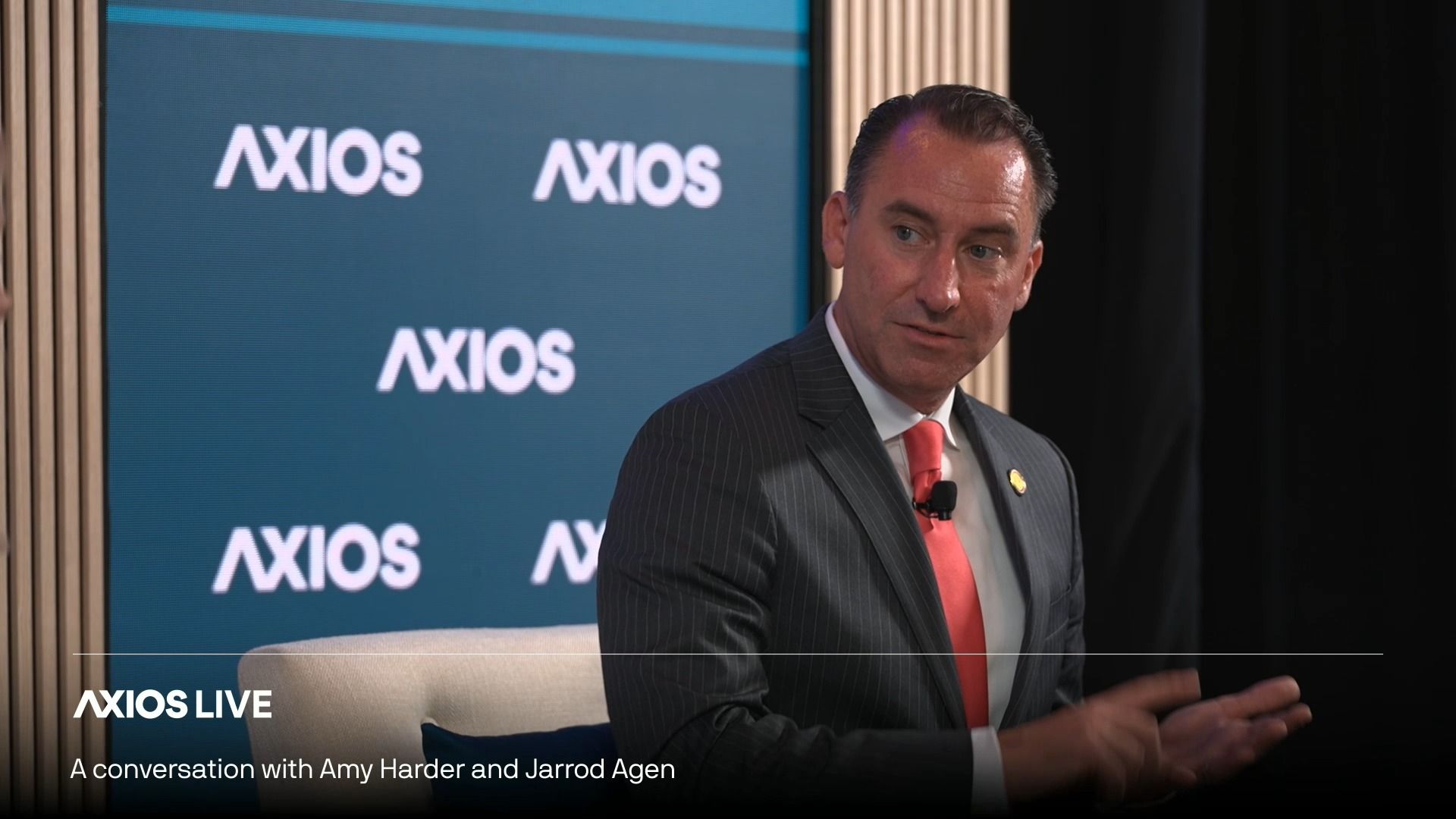
The affordability of gasoline remains "the top issue that the president looks at," Trump energy adviser Jarrod Agen said at an Axios House event Tuesday.
Why it matters: The Trump administration is championing energy savings from its deregulatory push as overseas conflicts, including the Iran war, rattle oil markets, driving up fuel costs and threatening an expensive winter for millions of households.


The hidden cost of supply chain resilience


For decades, businesses assumed that shipping lanes would stay open, trade agreements would endure, and major international relationships would remain stable.
- Those assumptions look less certain than they have in decades, with big economic consequences.
Why it matters: The economy increasingly rewards resilience over efficiency — a shift that increases costs, complicates investment decisions and may weigh on long-term growth.
- It helps explain why what seemed to be a one-off inflationary burst amid the pandemic re-opening half a decade ago has instead become a sustained era of elevated inflation.
- Just as the era of globalization from the 1990s to 2020 created an ongoing downward tug on prices for goods — decades of structural disinflation — this era has become one where supply chain stresses create structural inflation.
What's new: Businesses can no longer assume the rules, trade pacts and geopolitical stability that underpin the economy will still be intact in the near term.
- Companies are responding to a more volatile world by carrying more inventory, lining up backup suppliers and building more flexibility into their supply chains — choices that would have looked unnecessarily expensive a decade ago.
- It's a sharper break from the lean, "just-in-time" model that helped make global commerce faster, cheaper and more efficient.
What they're saying: "In a volatile world, optionality is key. Redundancy is key," Shawn Nelson, CEO of couch manufacturer LoveSac, told investors earlier this summer.
- The furniture company is starting to manufacture some of its couches in the U.S., but is also keeping overseas production — giving it multiple places to turn when tariffs, freight disruptions or other shocks hit.
Mentions of sourcing alternatives on S&P 500 company earnings calls surged as shortages and shipping disruptions exposed the risks of relying too heavily on a single supplier or region during the pandemic.
- They retreated as those strains eased, but never returned to pre-pandemic levels, and jumped again in 2025 as tariffs and geopolitical uncertainty put supply chain resilience back in focus.
- "In the first half of the year, we added new sources for over 50 constrained parts, and we plan to add another 50 in the second half of 2026, increasing the number of multi-sourced components by 15% this year alone," Honeywell Aerospace CEO Jim Currier said last month.
- The aerospace manufacturer's chief financial officer later added that the company is spending four times as much on multi-sourcing compared to the prior year and bringing production in-house.
Of note: Kratos Defense & Security Solutions CEO Eric DeMarco said last month that the defense manufacturer is making sure it has vetted alternatives for every supplier, including "their backup and the backup to the backup."
What it means for prices


The leaner, pre-2020 supply chains were built upon powerful financial and economic logic.
- Maintaining relationships with multiple backup suppliers, constant rerouting of supplies, building bigger inventory buffers — it all comes at a cost, which ultimately shows up in prices.
By the numbers: The era of peak globalization led to cheaper stuff for Americans. From February 1997 to February 2020, for example, the Consumer Price Index for durable goods fell 19%, or about 0.9% per year compounded.
- That amounted to a persistent downward pull on overall inflation, uninterrupted for 23 years.
- In the 6.5 years since then, by contrast, durable prices have risen 17.5%, or about 2.5% a year.
Zoom out: Getting away from super-lean supply chains may prove to have benefits. Some in the Trump administration have spoken of the advantages.
- "We treated efficiency as a substitute for resilience, and consumption as a measure of prosperity," Treasury Secretary Scott Bessent said in a May speech. "In the name of efficiency, we began to celebrate 'just in time' while neglecting 'just in case.'"
The bottom line: Corporations are reacting rationally to a more volatile world, and resilience is important — but not free. The costs are being borne every time Americans go to a store.


Venture capital's role in a major Ponzi scheme
Last week you might have seen headlines about how NFL star Travis Kelce got swindled by a Texas hedge fund manager who was running a Ponzi scheme.
- Deep in the details is how venture capital played a key role in the deception.

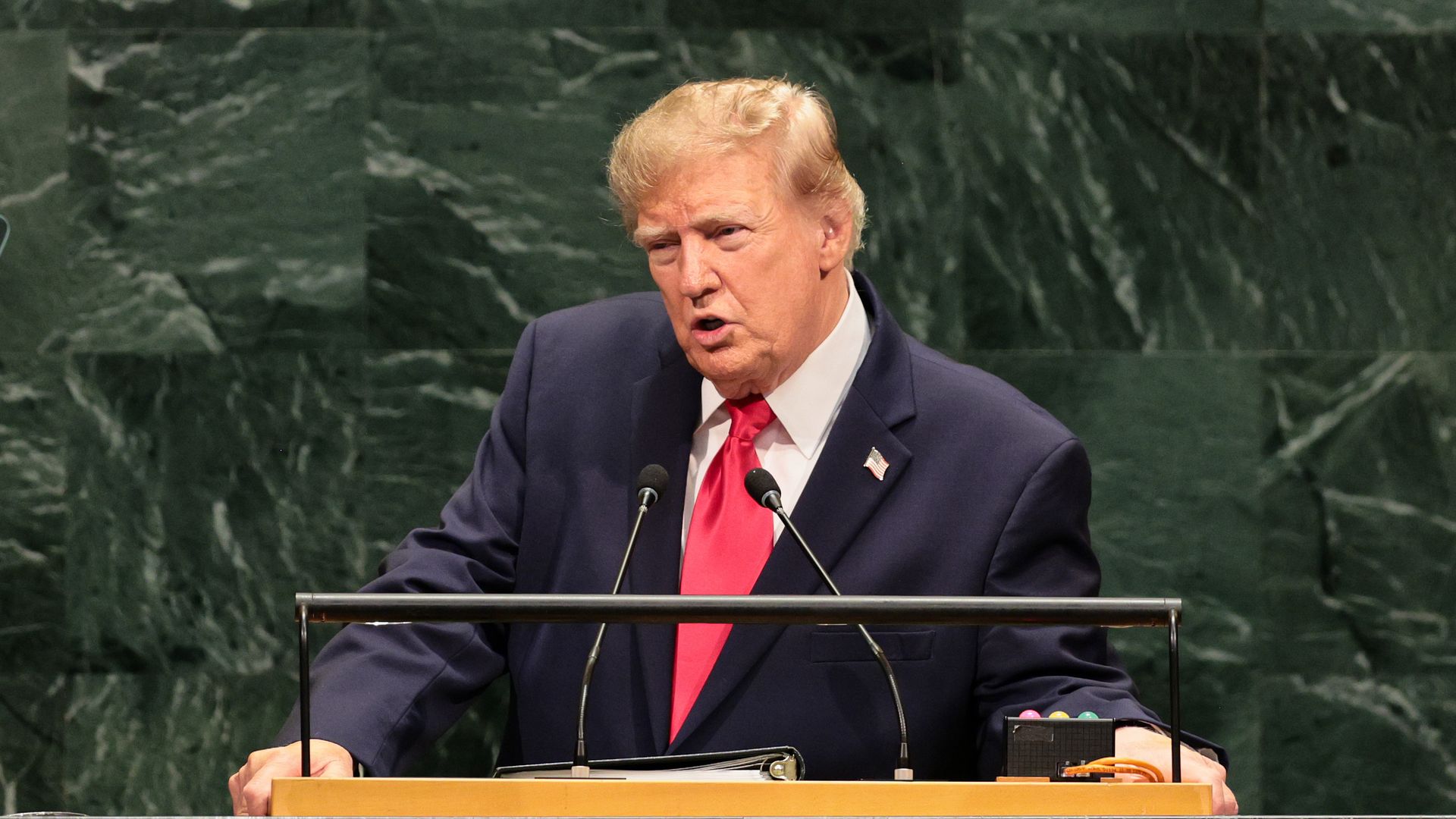
Trump says he faces a decision whether to "annihilate" Iran in UN speech
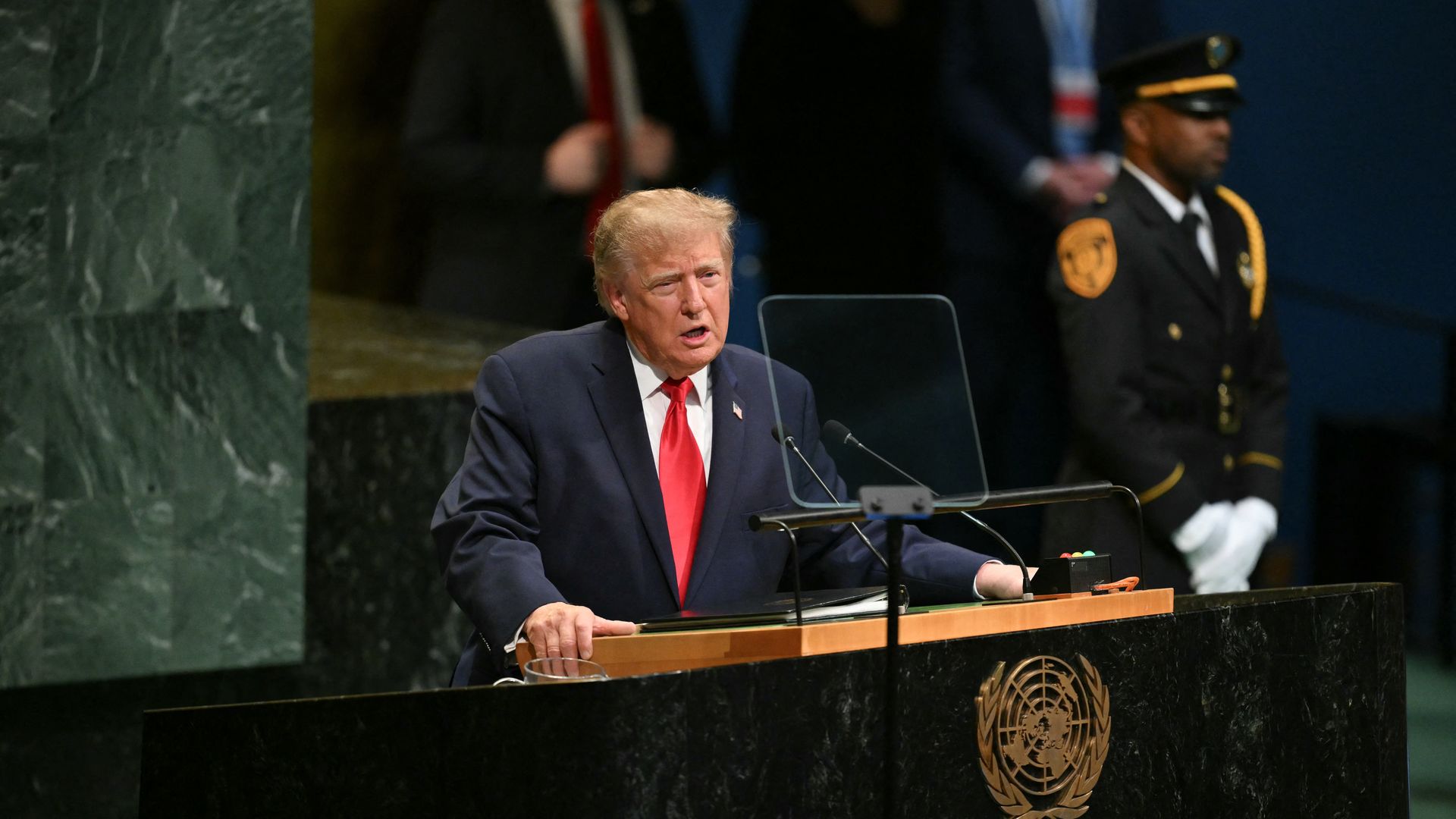
President Trump predicted Tuesday at the UN General Assembly that Iran and the U.S. will strike a deal after the midterms — his latest prediction after repeatedly claiming throughout the war that it was nearly over.
The big picture: The shadow of his Iran war — one that's scattered global supply chains — loomed large over Trump's speech to adversaries and allies alike. The ties with those allies are historically strained, taut from the pull of tariffs, conflict and Trump's threats.

The rising price tag of romance
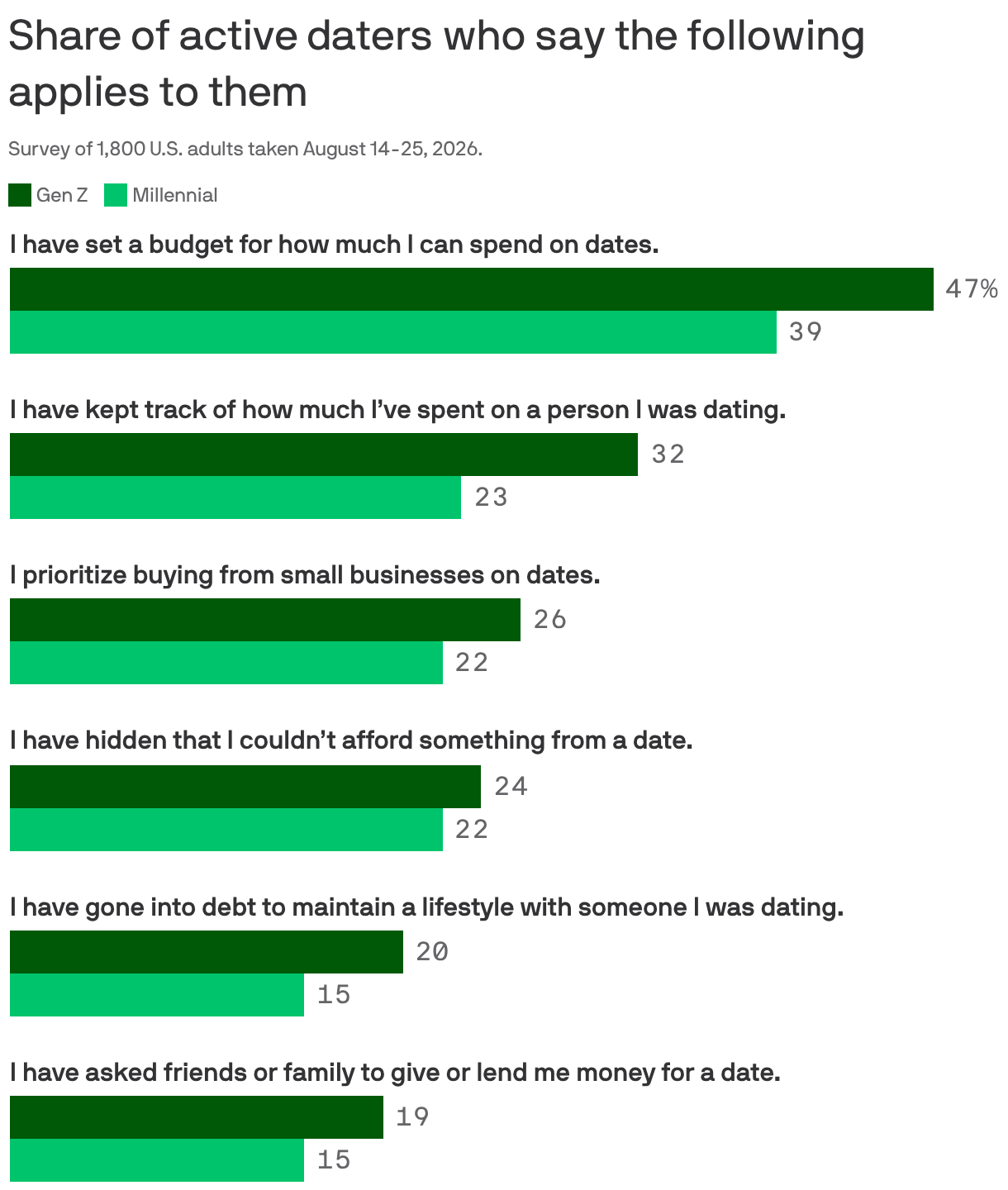
Rising costs are changing dating for more than eight in 10 Gen Z and millennial daters, leaving some to stop courting altogether, per new data from Zelle.
The big picture: Young Americans are pushing off milestones under cost pressures — and the milestones themselves, from getting hitched to buying a home, are getting pricier once they get there.

Global disruptions mean booming refinery profits
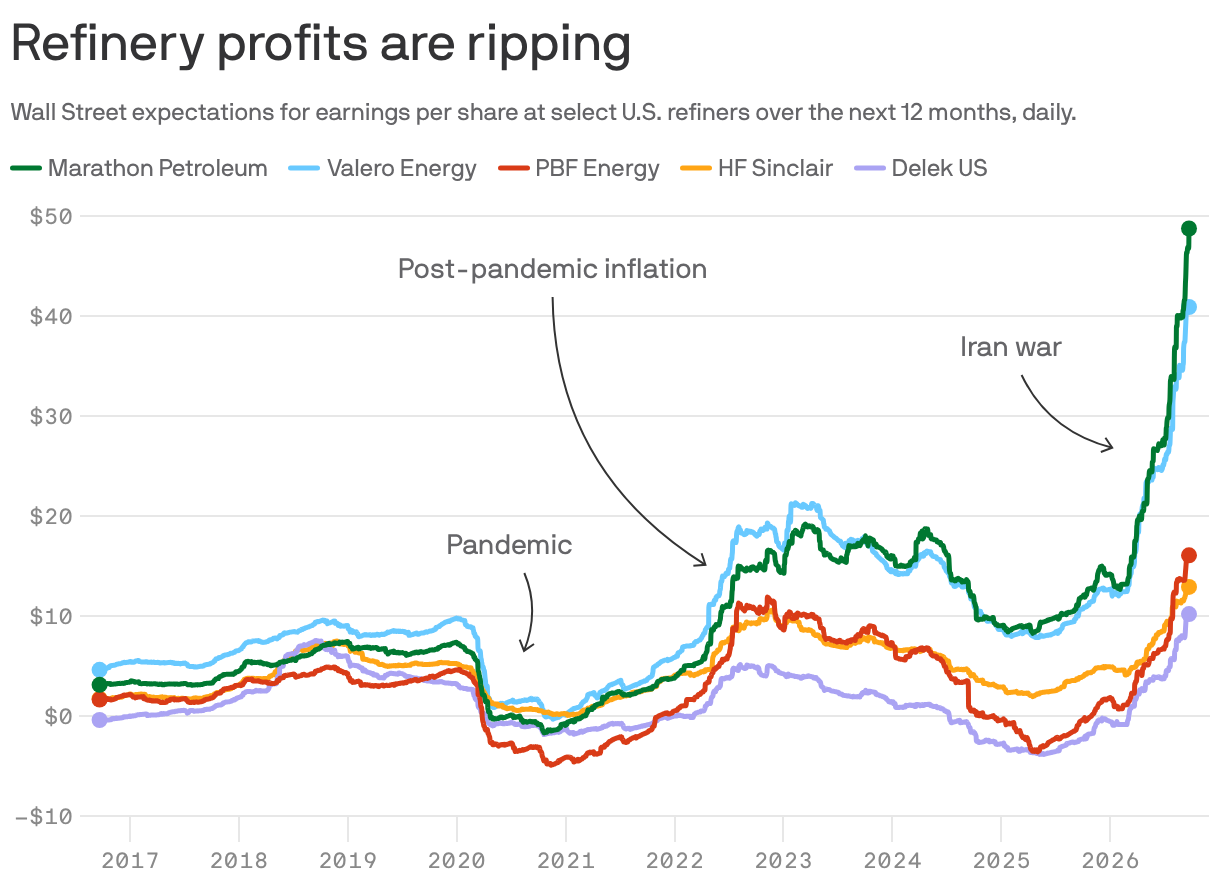
The global scramble to secure fuel supplies — diesel, above all — is supercharging profit expectations for refineries.
Why it matters: While painful at the pump, surging fuel prices have made refinery stocks a bright spot for the market.
- Of the 126 subindustry groups represented in the S&P 500, oil and gas refining and marketing is by far the best performer of 2026, rising 145.4% through Friday's close, according to FactSet data.

Homebuilders say they struggle to find workers amid ICE crackdowns


In a new survey, homebuilders around the country say ramped-up Immigration and Customs Enforcement crackdowns are creating huge headaches for their businesses.
Why it matters: The labor strain comes on top of other challenges for the industry: rising mortgage rates, higher prices for key inputs driven by tariffs and the Iran war, as well as growing competition for resources with builders of data centers.

Peloton expands treadmill lineup in bid to regain momentum
Peloton is debuting its first foldable treadmill — also its most affordable one ever — and new AI-powered coaching tools in a deeper push into running.
Why it matters: The fitness brand — which has been struggling to stem a slide in subscribers since its post-pandemic peak — wants to broaden its image beyond its trademark bikes and classes.