A diesel export ban could lower prices — then make things worse


Add Axios as your preferred source to
see more of our stories on Google.
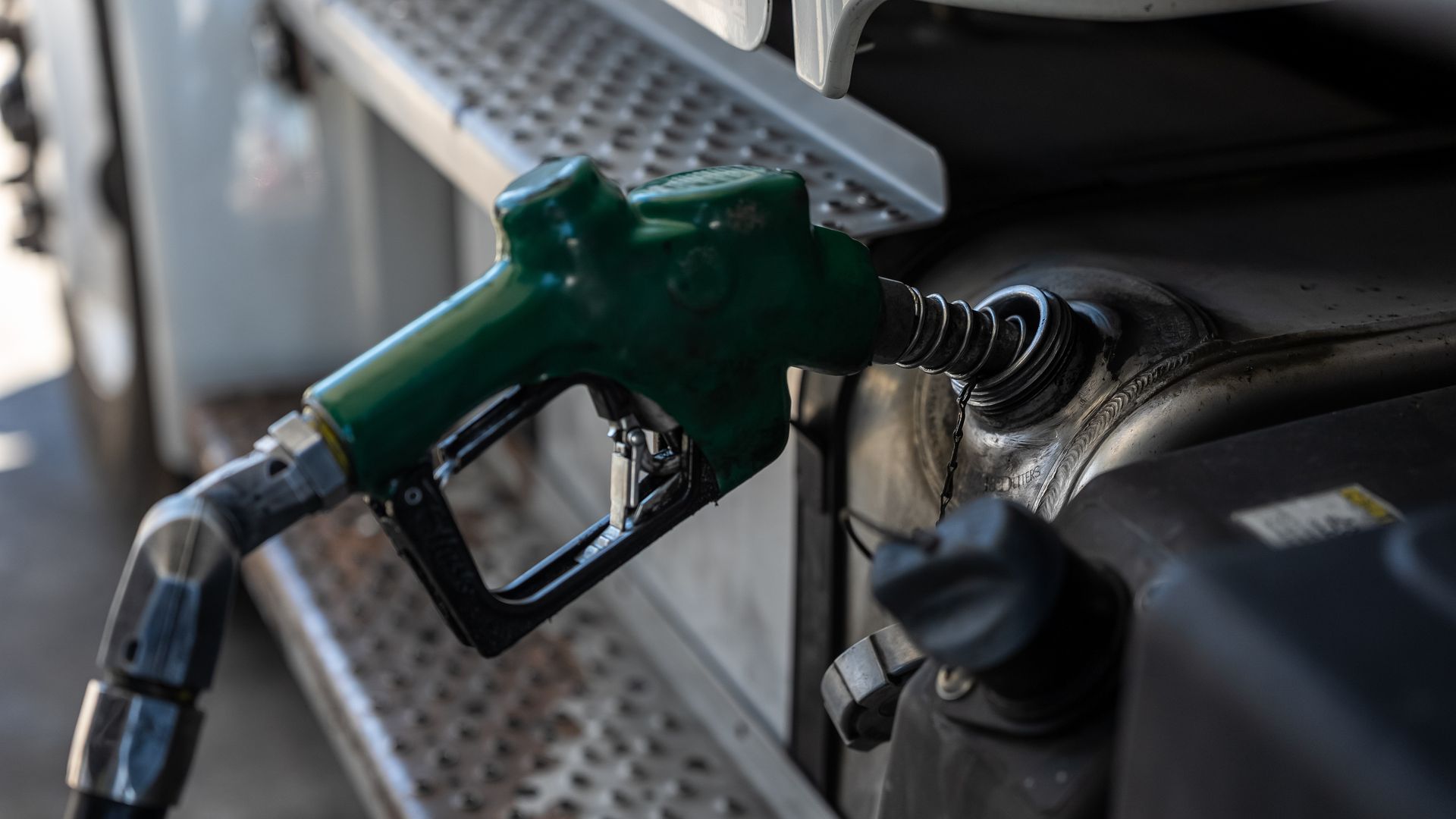
A tractor-trailer refuels at a Chevron truck stop in Tracy, Calif., as U.S. diesel prices climb above $6 a gallon for the first time. Photo: David Paul Morris/Bloomberg via Getty Images
The amount of diesel that Americans buy in a single day costs roughly $321 million more than it did a year ago — driving a new round of chatter about an export ban to preserve domestic supplies.
Why it matters: Investors and economists warn that it could backfire spectacularly, driving up prices globally and potentially putting further upward pressure on domestic interest rates.
Driving the news: Senate Majority Leader John Thune (R-S.D.) said Tuesday he was "open" to the discussion about an export ban, something the White House and the Department of Energy have largely downplayed.
- With retail diesel prices up 16% in just the last month and the midterm elections less than seven weeks away, some are calling on the government to do anything it can to push prices down.
What they're saying: The White House did not rule out an oil export ban in a statement to Axios.
- "President Trump remains committed to unleashing American energy dominance, cutting costs, and putting more money back in the pockets of hardworking American families," Taylor Rogers, a White House spokeswoman, said in an email.
- "As the U.S. continues to maintain full control of the Strait of Hormuz, oil and gas prices will fall back to pre-conflict levels."
As long as record prices persist, so will speculation that it's a live option, Axios Future of Energy author Ben Geman reports.
- "I think the odds of a diesel export ban announcement before [the] midterms is high," SoFi chief market strategist Liz Thomas said on X. Rapidan Energy Group, however, sees only 35% odds.
Yes, but: The question is how much long-term pain the economy can take just to lower prices a few cents for a few weeks.
How an export ban works
Export bans set by the government completely stop shipping of specific goods out of a country.
- In this case, the U.S. would stop American-made diesel from being sold overseas, keeping more fuel at home.
- This would instantly relieve pricing pressure by reserving more of the supply for the U.S. market, pushing domestic diesel costs down, at least for a time, according to the Brookings Institution.
How it works: Congress could pass legislation to enact restrictions. Additionally, the president has emergency powers to enforce export bans, according to the Congressional Research Service.
- Depending on the mechanism, the government could look to ban the exports outright or use a licensing system similar to procedures already in place — just with tighter controls and restrictions.
Context: The U.S. rarely imposes export bans outright. Instead, the government usually imposes requirements that allow or limit exports depending on the product and its destination.
- For example, the U.S. requires a license for horses exported by sea to any country. However, the Bureau of Industry and Security will deny any applications that involve horses intended for slaughter.
- Crude oil exports were once heavily restricted — though not completely banned — for decades before Congress lifted the limits in 2015, per the Energy Information Administration.
The argument against export bans
The main argument against an export ban is that it would push diesel prices substantially higher in the rest of the world, which would feed back into the U.S. economy.
- Refiners would take a hit, making less money from exporting fewer barrels outside the U.S., Saxo Bank's Ole Hansen wrote in a market commentary Wednesday morning. This could ultimately lead to refineries cutting production because they'd have fewer places to send the diesel, which would offset some of the initial benefits to Americans.
- Geopolitical uncertainty would rise. "The United States became the supplier of last resort for the free world's distillate over a decade, and a ban announced to get through a midterm tells every buyer from Mexico to Germany that American supply is politically conditional," NinjaTrader's Tracy Shuchart wrote on X.
- Bond markets could suffer if other countries sell U.S. Treasuries to pay suddenly higher fuel prices.
The bottom line: An export ban may lower diesel costs, but the dip might not last long and could ultimately backfire on the U.S.
Go deeper: Record diesel prices squeeze food, transport
