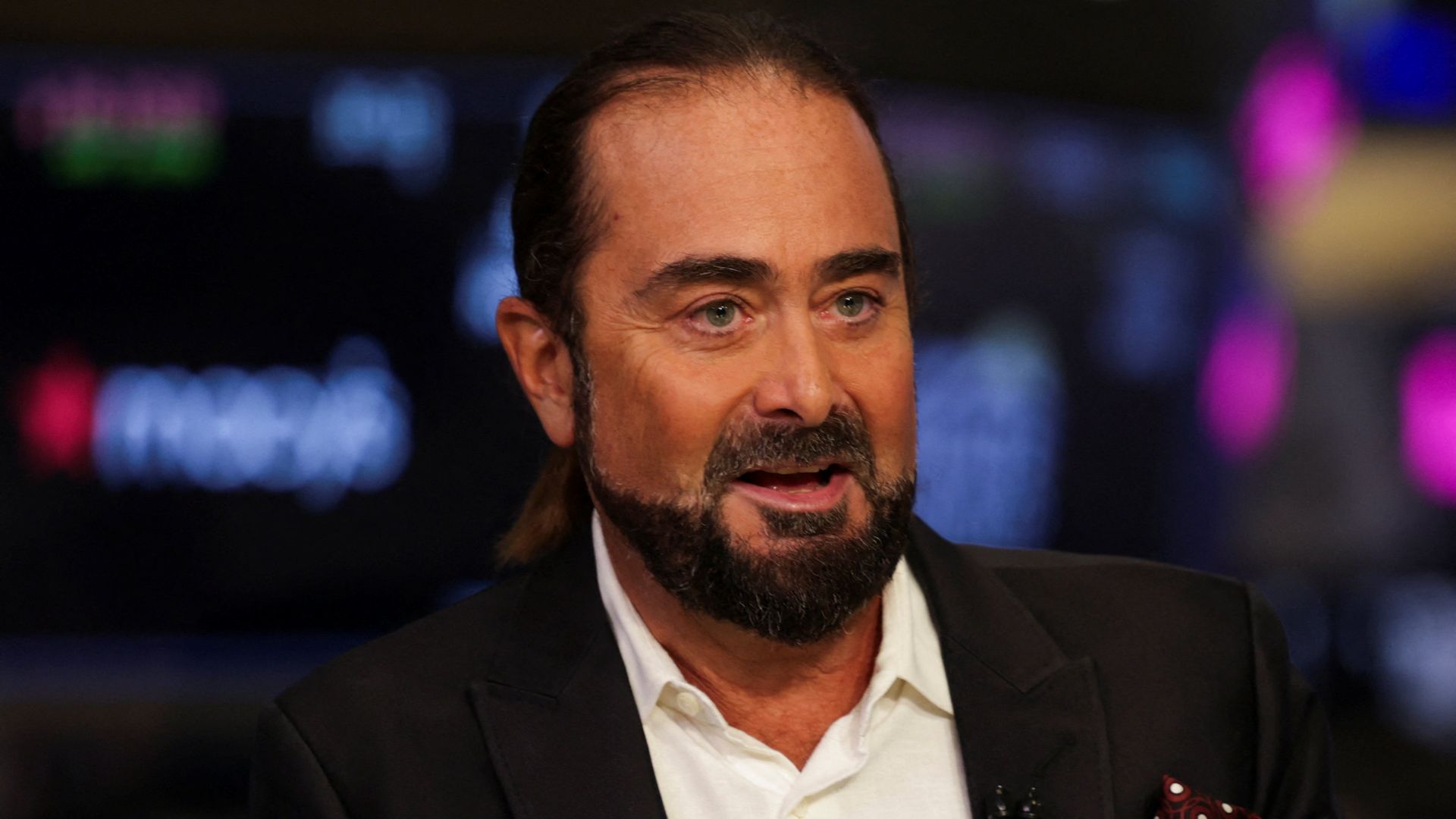
Luke Pettit, who was instrumental in launching Trump Accounts for children, will leave the Treasury Department for the private sector in October after the next milestone for Trump Accounts, the kickoff of auto-enrollment.
Pettit, who formerly was a senior adviser to Sen. Bill Hagerty (R‐Tenn.), was Assistant Secretary for Financial Institutions and, beginning last year, Acting Under Secretary for Domestic Finance.
Pettit also worked on fast-evolving AI policy as leader of the Office of Cybersecurity and Critical Infrastructure Protection.
Why it matters: The world's largest chip company has resisted calls to slow AI development over safety fears — arguing now that technological guardrails can keep rogue AI agents under control.
Joe Baratta is stepping down as Blackstone's global head of private equity strategies, most likely at year-end.
Why it matters: Baratta is in charge of the private equity market's biggest book, helping to build it over three decades, and his departure seems to signal Blackstone's hierarchical shift away from star dealmakers.
The historic immigration surge that reshaped the U.S. population after the pandemic left a big imprint on the economy: boosting growth with surprisingly little disruption to native-born workers — but also adding to rent inflation.
Why it matters: Those findings — unveiled in new research presented at the Brookings Papers on Economic Activity last week — offer the most detailed economic postmortem yet of one of the largest immigration waves in modern U.S. history.
By the end of the week, we should know a good bit more about how the labor market and inflation performed in late summer.
Driving the news: On Tuesday, the Labor Department will release the August Job Openings and Labor Turnover data, giving a fine-grained reading on the evolution of the job market.
Wednesday will bring some of the first September data on private payrolls, from ADP. The government's September jobs report is due out Friday.
Also Wednesday, the Commerce Department is set to release August data on personal income and consumption spending, alongside the Personal Consumption Expenditures Price Index that the Fed targets.
Between the lines: These data points will help determine whether the Fed raises interest rates at a second consecutive meeting in late October.
The central bank will also have more September inflation data in hand before that meeting, due out in the weeks ahead.
By the numbers: Analysts expect that measure of inflation to tick up on a month-over-month basis. The consensus projection of forecasters surveyed by Bloomberg is for a 0.3% rise in core prices and 0.5% in overall prices, compared with 0.2% and 0.4%, respectively, in July.
The consensus forecast is for a solid 98,000 jobs added in September and an unemployment rate unchanged at 4.1%.
Weekly jobless claims have been hovering near multi-decade lows in recent weeks, supporting the idea that the labor market is in good shape and may even be accelerating.
Of note: Wednesday is also the end of the third quarter (and the U.S. government's fiscal year).
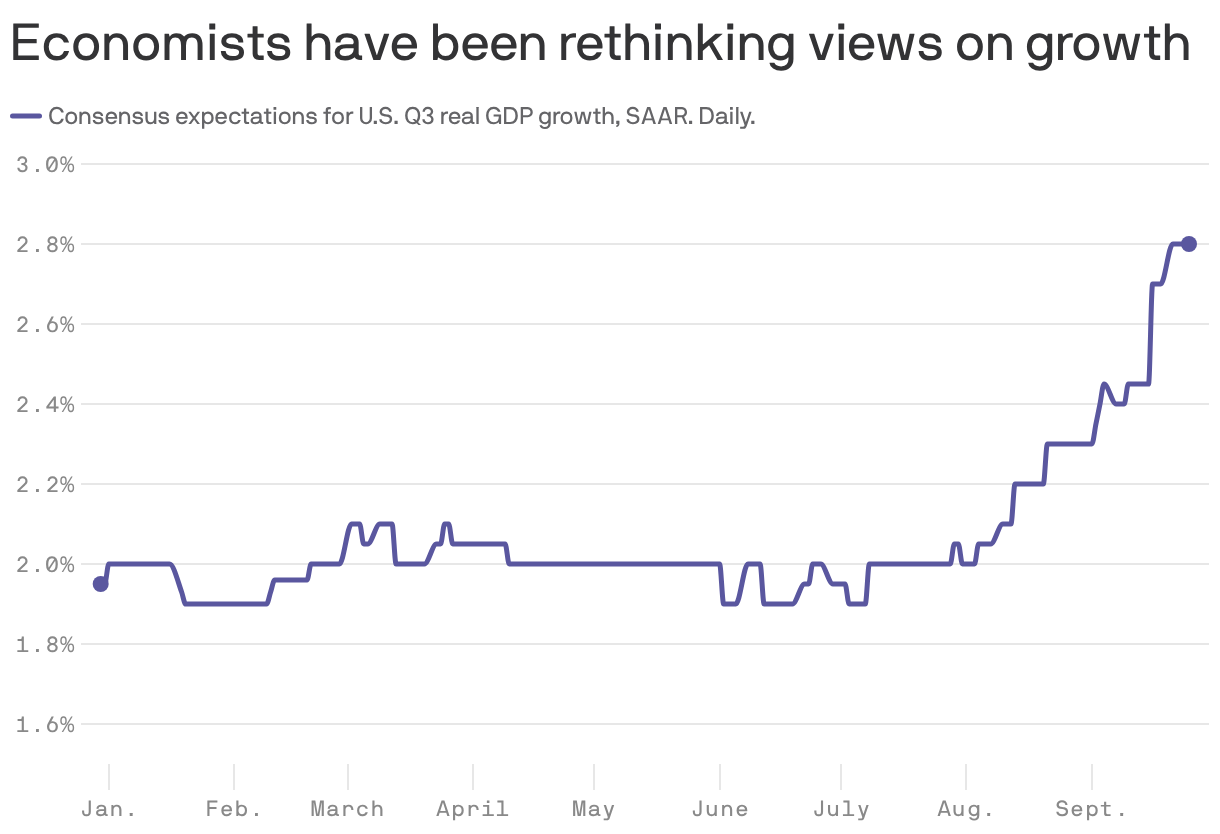
It looks like it has been a blockbuster quarter for growth. The Atlanta Fed's GDPNow tracker puts its real-time estimate at 5%. That would be the strongest GDP growth since the fourth quarter of 2021.
Some of the world's foremost AI researchers and policy leaders — including at OpenAI, Anthropic and Microsoft — are warning that AI's growing ability to automate its own development could rapidly speed up its progress.
Why it matters: Such a rapid scale-up in capabilities would leave governments and institutions with little time to prepare for or respond to the consequences, they say.
David Zervos, a longtime Wall Street strategist known for his out-of-consensus views on markets and the economy, is joining the Trump administration as a senior adviser to Treasury Secretary Scott Bessent.
Why it matters: Zervos has spent much of his career challenging conventional thinking on markets and monetary policy and brings a distinctly out-of-consensus voice inside the administration.
Why it matters: While the energy spike caused by the Iran war is a big deal, some analysts stress that the main takeaway of the bond market's recent turn should be that the U.S. economy is simply far stronger than many previously thought.