Friday's economy stories

With Allbirds AI pivot, a familiar strategy takes flight


Back in the 1990s, companies could slap a ".com" on their names and watch their stocks fly — it's happening now, this time with AI and a stock with the ticker BIRD.
Why it matters: It's a sign of a frothy stock market: Small companies and investors are trying to cash in on the rise of AI and the exuberance of meme traders.
Where it stands: The stock price of the former hipster/techie sneaker company Allbirds closed at $10.91 on Thursday, up more than 300% since announcing it was getting into the AI business.
- Myseum, a self-described "privacy-first social media and technology innovator," announced Wednesday afternoon that it was changing its name to Myseum.AI — its stock, valued at just a few dollars, also got a bump.
Catch up quick: Don't worry, you can still buy those wool Allbirds sneakers that used to be a thing.
- The company, once valued at $4 billion, sold off all its assets — the sneakers, the brand name — in March for $39 million. The website is still there.
Between the lines: Typically, in that kind of situation, the remaining public company shell would delist and return whatever value was left to stockholders.
- Allbirds is trying something else.
Zoom in: Now calling itself NewBird AI, the company says it expects to receive $50 million in financing from an unnamed investor that it will use to buy GPU compute capacity — and presumably sell that to other companies.
- That is pennies in the AI infrastructure business where the barrier to entry starts in the billions of dollars. "A drop in the bucket," as William Blair analysts noted.
By the numbers: Still, investors were into it!
- On Wednesday, after the pivot news broke, retail traders bought up $5.2 million worth of Allbirds stock, according to data from Vanda.
- It's relatively a small amount, and observers note that trading is pretty thin. Still, it's the most action that stock has had since its debut, when retail bought about $5 million.
- Vanda doesn't have data on automated trading or institutional dollars, but it's likely they piled in, too.
The latest: On Thursday, retail took profit — selling $950,000.
Zoom out: The stock jumped on "some combination of a very shallow float, automated momentum and unchecked hype," per William Blair's note. The firm said it was dropping its coverage.
Flashback: Back in the late 1990s, companies tried to signal that they were totally up on this new internet thing by slapping a ".com" or an "e-" or a "net" on their name. And if you already had it in your name, all the better.
- Internet.com Corp, which went public in 1999, rode the dot-com wave and its shares surged from $14.
- One paper from 2001, titled "A Rose.com by Any Other Name," found that the name changes did drive up stock prices. At least for a time.
The big picture: Allbirds is also likely hoping to attract some of the investor money sloshing around to to fund AI infrastructure, says Mark Malek, chief investment officer at Siebert Financial.
- He notes that there was a similar rush by companies again during the dot-com era that were seeking to build the internet pipes needed for the nascent technology.
- Some of them were existing public companies looking to pivot. These kinds of "reverse mergers," where a shell of a public company gets into a new business, "always existed on the fringe," he says.
- There have been a few in recent years that got into bitcoin and blockchain, too.
The bottom line: AI is a real technology having a surreal moment.
Editor's note: This story has been corrected by removing a reference to Mecklermedia and to reflect that Internet.com Corp. went public in 1999.


The economic outlook just got a bit brighter
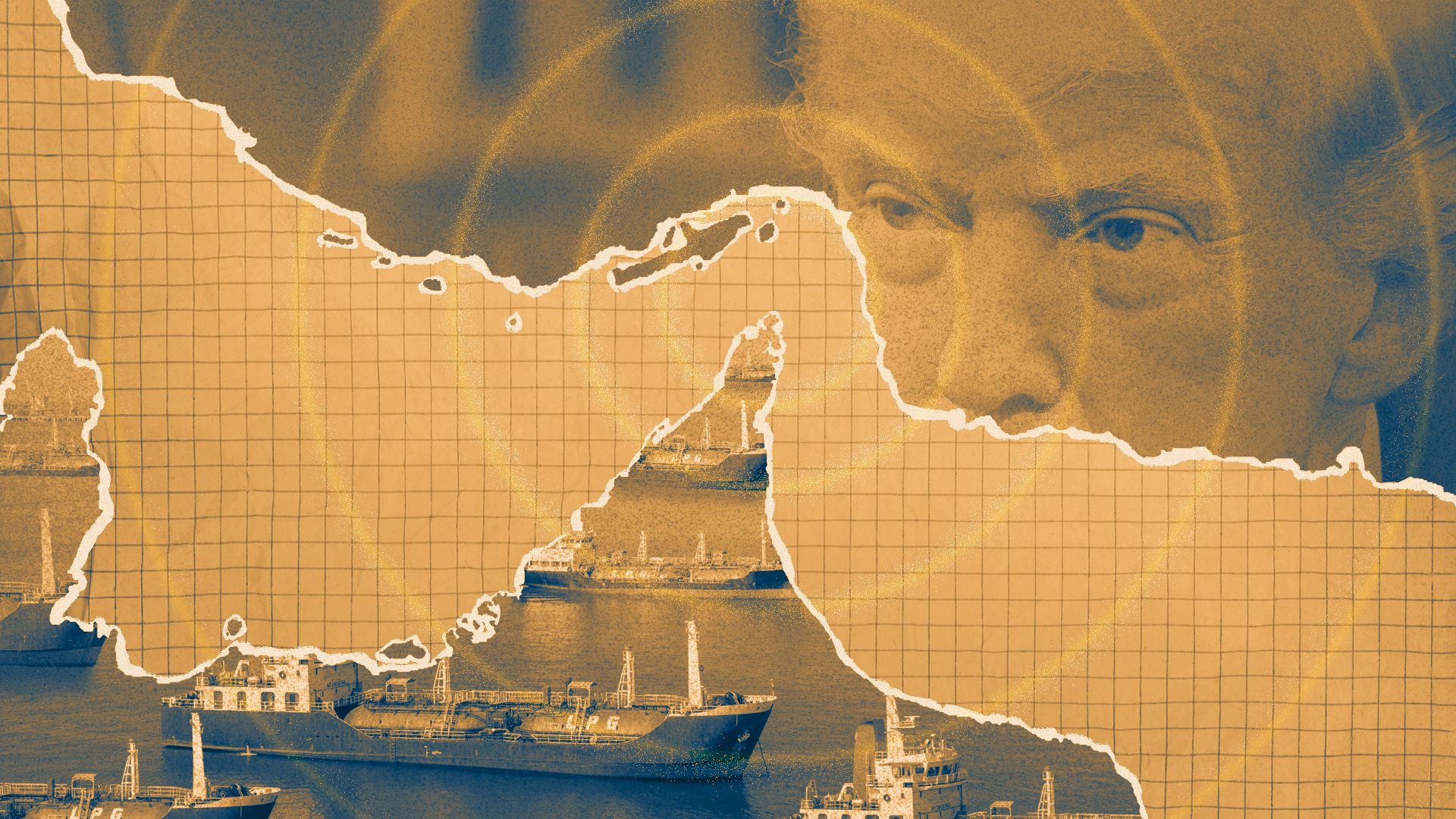
The blockage to energy supplies through the Persian Gulf appears to have ended. If it holds, it takes a massive weight off the world economy.
Why it matters: The possibility of a prolonged disruption to the supply of crude oil, liquefied natural gas, fertilizer and other commodities looks to be off the table.
Oil prices plunge on claims Strait of Hormuz is open


Oil prices dropped over 10% Friday after President Trump and Iran's foreign minister claimed the Strait of Hormuz — the world's most critical energy shipping lane — is open for transit.
Why it matters: The steep selloff signals traders see a real sign that the unprecedented throttling of oil and petroleum product flows could significantly ease.
The S&P 500 keeps hitting all-time highs


The S&P 500 has hit a new all-time high 204 times so far this decade, per data compiled by RBC.
The big picture: All-time highs, like the ones we hit Thursday, aren't as rare as you think.
- But they were far less common in the stagflation 1970s and the post-dot-com bubble 2000s.

Reed Hastings to step down from Netflix board

Netflix co-founder Reed Hastings, 65, will not stand for re-election to the board when his current term expires in June, the company announced Thursday.
Why it matters: Under Hastings' tenure, Netflix grew to become one of the most powerful media companies in the world.

Unions bash AI as opposition grows: "We believe in human beings"
Union leaders are escalating their anti-AI rhetoric, portraying the industry's leaders as profit-hungry "oligarchs" eager to replace humans.
Why it matters: The contours of the emerging AI economy are still shapable — and the labor movement is eager to influence what it looks like.
Prediction markets regulator vows to investigate insider trading

The chair of the Commodity Futures Trading Commission vowed Thursday to investigate insider trading in prediction markets and bristled at the suggestion that he would impose regulations favoring the Trump family.
Why it matters: Prediction markets like Kalshi and Polymarket are facing growing pressure to prevent insiders from profiting from their knowledge on issues like politics, sports and war.
Rumors of the dollar's demise look much exaggerated
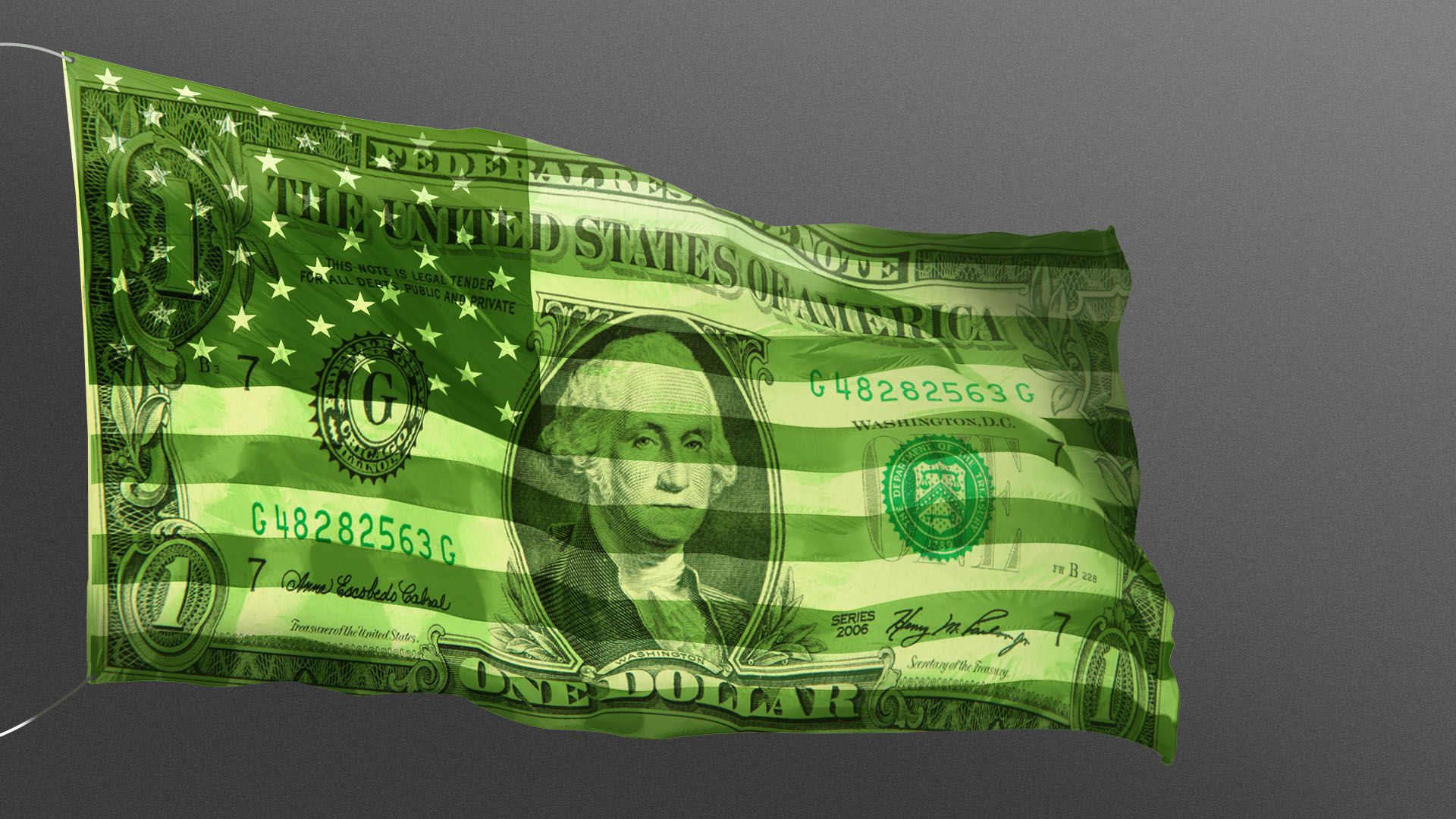
The Iran war may well be heightening countries' desire to diversify away from the U.S. dollar. But desire alone won't change the underpinnings of global commerce.
The big picture: There has been plenty of chatter about the breakdown of the petrodollar system under which Middle East oil exporters accumulate and redeploy dollars, and about the world's broader reliance on the dollar as a reserve currency. But there's not much evidence of an accelerating shift along those lines.
- Indeed, the war has coincided with a surge in the dollar's value on currency markets.
Exclusive: New AI jobs risk paper posits less doom and gloom

Workers whose jobs are most vulnerable to automation — data-entry keyers, bookkeepers and more — are already using AI for three times as many of their relevant tasks as workers in less-exposed jobs, according to a new study by OpenAI.
Why it matters: The research, first seen by Axios, shows that those workers are using AI for only a fraction of what it could theoretically do.
- The researchers posit a less doom-and-gloom outcome: Workers might not automatically be on the frontlines of a jobs bust, even as AI use expands.
- Paradoxically, it could ultimately expand demand for certain types of work.
By the numbers: OpenAI sorts the 900+ occupations that cover nearly all of U.S. employment into four buckets.
- 18% face the highest near-term automation risk, relative to other groups (think data-entry, bookkeeping, customer service)
- 24% of roles could see employment shrink, even as those jobs are still human-led (HR specialists)
- 12% of jobs could see employment expand because of AI (software developers, for one)
- 46% face the least threat of immediate change (teachers, home-health aides)
The intrigue: Signs of disruption aren't evident in unemployment data yet.
- Workers in the highest-automation-risk jobs have seen a smaller rise in unemployment than have workers in the "less immediate change" category, OpenAI finds.
- The paper cautions: "These categories are not job loss forecasts. They are a map for understanding where near-term labor market pressure may emerge first."
Zoom in: Workers in the most vulnerable categories are using AI more than those in any other bucket for the tasks most central to their work. Yet they've barely closed the gap between current usage and what AI could hypothetically do in their jobs.
- AI could theoretically handle 90% of tasks in the highest-risk occupations. But those workers are currently using it for less than a quarter of that, according to OpenAI usage data.
Yes, but: Whether AI ultimately destroys or creates jobs hinges on a critical tension — when AI makes a task easier to perform, people may simply consume more of it.
- "When coding tools first came out, people assumed maybe we would always write a fixed amount of code," OpenAI chief economist Ronnie Chatterji tells Axios.
- "Now I'm writing code, you're writing code — you produce more of something, and more people might demand it and pay for it."

Renewable energy gets an Iran war boost

Early signs are emerging that the energy shock could aid the global spread of renewable power, batteries, electric cars and other climate-friendly tech.
Why it matters: The throttling of oil and gas transit — together with higher prices — has short- and long-term consequences for use and economics of different fuels.

Exclusive: Walmart pushes beyond prescriptions in GLP-1 race

Walmart is making a play to own what it calls the "last mile" of the GLP-1 boom, telling Axios exclusively it's launching a platform that goes beyond prescriptions to combine virtual care and nutrition.
Why it matters: Weight-loss treatments like Ozempic, Wegovy and Zepbound are exploding, but the real friction is everything around them. The retail giant is betting it can simplify that fragmented system.


Behind the Curtain: The kids aren't AI-right

America, we have a problem: Young adults are scared and unprepared for the AI revolution upending their early career choices and prospects.
- They tell pollsters they're frightened, even angry, about AI's fast arrival. They're rightly unnerved by a tough job market for college grads. And most aren't remotely equipped by schools to be AI-savvy.
Why it matters: This is a growing problem for just about everyone — kids, educators, employers and politicians.

Iran war's ripple effects hit key U.S. trading partners
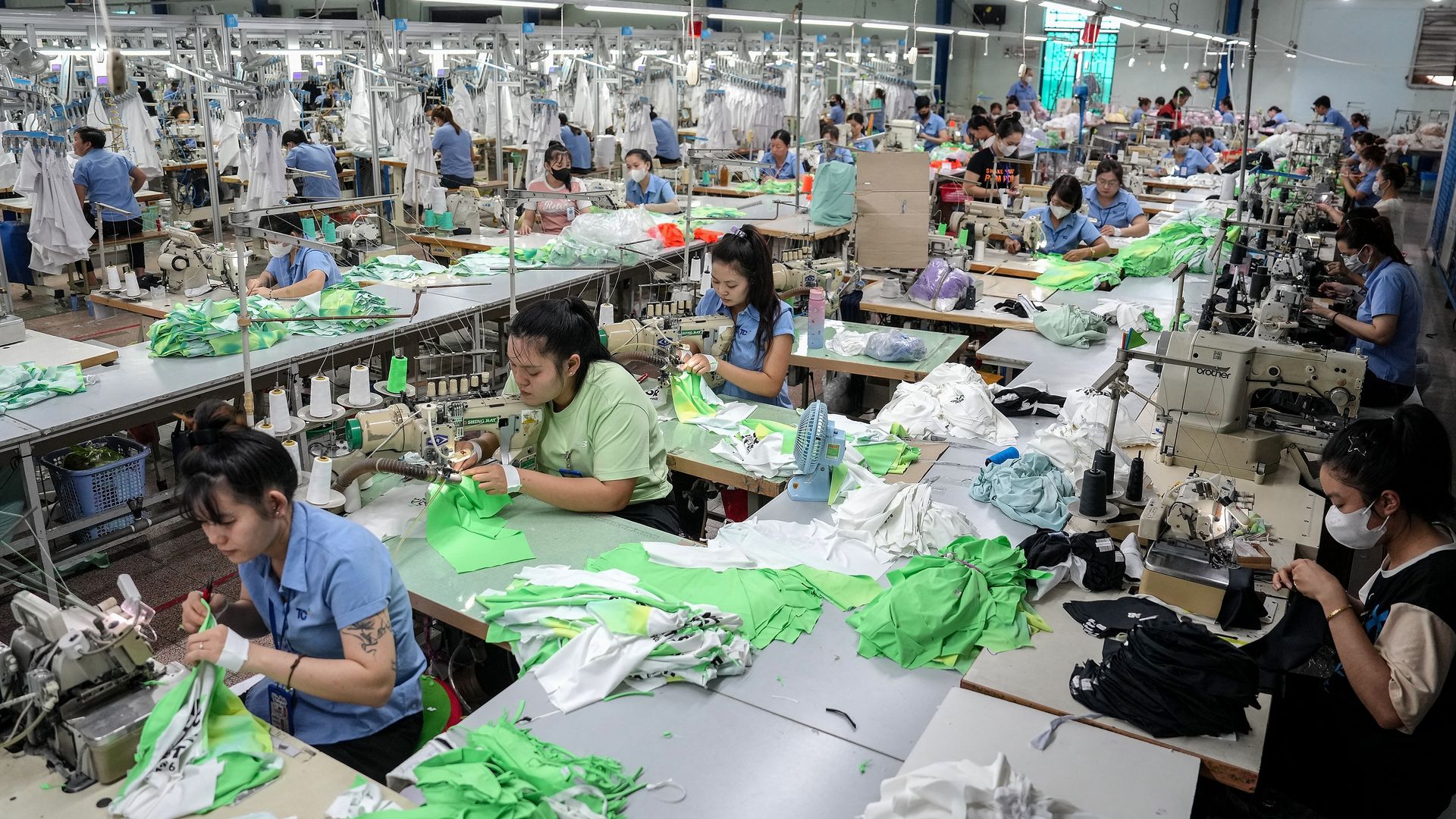
The Iran war is hurting countries far from the Middle East that have no direct involvement in the conflict — and while the U.S. has largely escaped the worst economic impacts, experts warn this could soon change.
Why it matters: As American and Iranian negotiators inch toward a peac deal, the conflict is hurting countries the U.S. relies on for key imports.