The logic behind the U.S. blockade

Add Axios as your preferred source to
see more of our stories on Google.
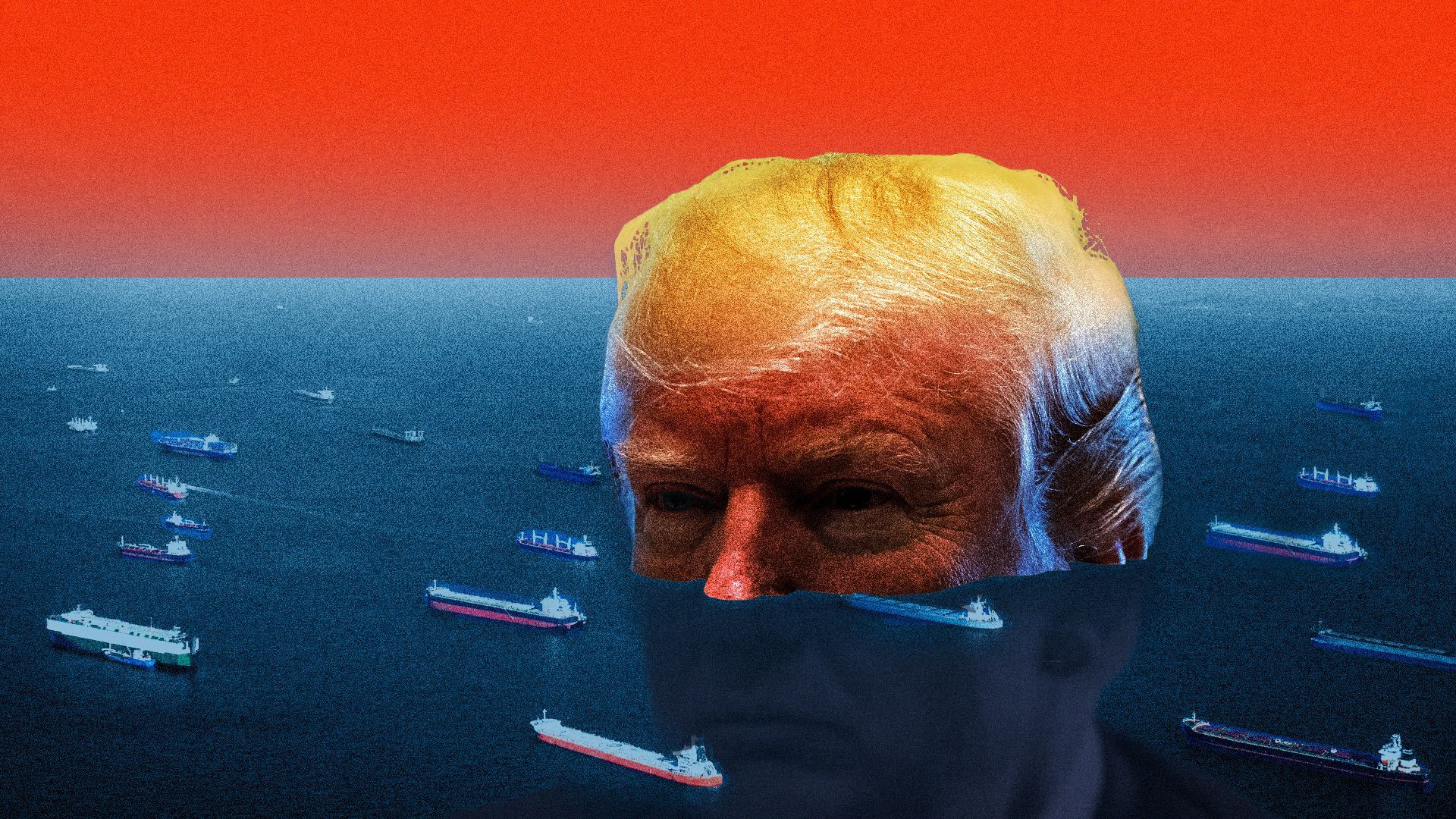
Illustration: Lazaro Gamio/Axios
A deal is still possible to end the war — and a U.S. naval blockade against Iranian ports is set to take effect in a few hours.
Why it matters: A successful blockade could force Iran to make concessions to end hostilities and open the Strait of Hormuz to all.
- Even opponents of the war and Trump appear to support the idea.
Friction point: Until there is a resolution, the blockade would also take millions of barrels of oil off the market, pushing up prices for everyone in a global market.
The latest: Brent crude oil futures are back above $100 per barrel — up 7% from Friday. Both futures on the S&P 500 and European stocks were lower Monday morning.
- The yield on the 10-year Treasury rose overnight to 4.32%.
The big picture: Since the war began, the strait has been selectively closed, with Iran getting to decide who transits through, typically vessels carrying oil and gas to China, Turkey, Pakistan and India.
- Iran has been exporting more oil during the war than it was before it started, as the Wall Street Journal noted.
Zoom in: Selective closure has been "one of the perverse outcomes of the war to date," says Edward Fishman, author of "Chokepoints" and director of the Center for Geoeconomics at the Council on Foreign Relations.
- The White House hasn't tried to stop that flow, fearing that shutting it down would further spike prices.
- Policy experts and former officials believe that was a mistake akin to the U.S. failing to fully embargo Russian oil in the wake of its invasion of Ukraine in 2022.
Follow the money: Oil and gas exports account for about 15% of Iran's GDP. Cutting that to zero would "implode" the country's economy, "and — with it — the Ayatollahs' already shaky hold on power," Robin Brooks, a Brookings fellow and former chief economist at the Institute of International Finance, argued in a Substack last month, pushing for a move like this.
- "There's no doubt in my mind this'll bring the mullahs to the negotiating table in good faith," Brooks says Monday morning in a post, adding that he thinks the rise in oil prices would be manageable.
How it works: The U.S. would interdict vessels moving through the Iranian ports and coastal areas — stop the ships and either force them to turn around or seize them, as American forces did to Venezuelan vessels earlier this year.
- The blockade begins at 10am Monday, per U.S. Central Command.
- Like the U.S. decision to walk away from the talks in Pakistan this weekend, the blockade is part of the ongoing negotiations, a U.S. official tells Axios. And Trump could resume strikes if it doesn't force Iran's hand.
What to watch: It echoes a proposal called "Open for All or Closed to All," floated last month by Richard Haass, who led the Council on Foreign Relations for two decades before stepping down in 2023.
- "With a blockade...their economy will be choked...and the U.S. and our allies are no worse off than we were after the Iranians started holding the Strait hostage," James Stavridis, former NATO supreme commander and current vice chair of the Carlyle Group, posted Sunday.
Yes, but: Iran can withstand the pain for the short term, while the world will struggle with even higher prices, other analysts are arguing.
- "This is fine by the Iranians. It prolongs the chokehold on the global economy," Vali Nasr, a former U.S. official and a professor at Johns Hopkins University, tells the Financial Times.
- "Instead of forcing compliance, this blockage could in fact increase escalation without delivering any meaningful short-term economic pressure on Iran," says Pamela Munger, head of market analysis for Europe at Vortexa, a shipping analytics firm.
- The threat only creates more uncertainty and pressures "the already tight squeeze on oil flows."
- There are also concerns over how the U.S. deals with vessels from other countries that transit those ports. "If we actually interdicted a Chinese vessel, it would risk pulling China into the war," Fishman says.
The bottom line: The U.S. now must fight to return to the status quo that existed before it started this conflict.
