Iran war's ripple effects hit key U.S. trading partners

Add Axios as your preferred source to
see more of our stories on Google.
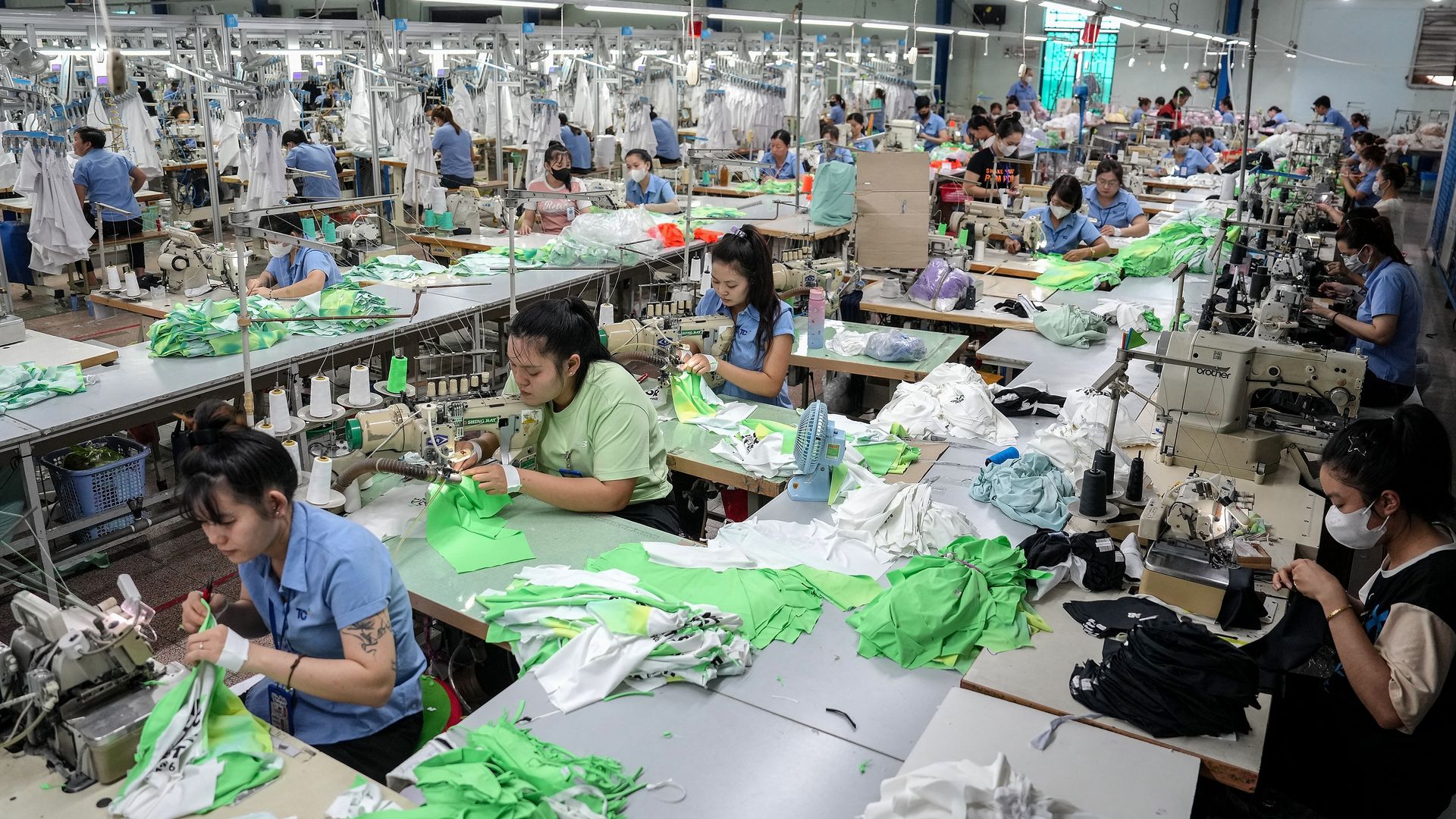
Vietnamese garment factory workers stitch apparel at a factory in Ho Chi Minh City. Photo: Huu Kha/AFP via Getty Images
The Iran war is hurting countries far from the Middle East that have no direct involvement in the conflict — and while the U.S. has largely escaped the worst economic impacts, experts warn this could soon change.
Why it matters: As American and Iranian negotiators inch toward a peac deal, the conflict is hurting countries the U.S. relies on for key imports.
The big picture: Nations from Australia to Germany are being affected.
- Obsidian Risk Advisors' Brett Erickson tells Axios the situation is so bad in Asia, "there's a very real possibility" that some countries will experience "Cuba-like blackouts, where there's just not enough oil and energy to keep the lights on."
Here's how the Iran war is affecting three key U.S. trading partners:
Philippines
This Southeast Asian nation that's a key supplier of electronics and semiconductors to the U.S. last month declared a national emergency and implemented a four-day workweek in response to rising fuel costs.
- The Philippines is "arguably the most vulnerable to the current crisis due to its extreme reliance on imported energy, particularly from the Middle East," supply chain expert Christopher Tang tells Axios.
- The country imports about 98% of crude oil from the Middle East, where Iran's closure of the Strait of Hormuz has forced energy suppliers to seek alternative routes.
Threat level: "As a major supplier of semiconductors, electronic components, and agricultural goods like coconut oil to the U.S., any domestic instability in the Philippines has immediate 'knock-on' effects for the American tech sector," Tang, a distinguished professor of business administration at UCLA, says via email.
- "While the U.S. Supreme Court recently struck down certain reciprocal tariffs that provided some relief to Filipino exporters, the threat of production halts due to energy rationing remains a significant risk for the U.S. electronics supply chain."
Vietnam
The biggest supplier of clothing to the U.S. has been forced to enact emergency measures that include suspending an environmental energy tax until at least the end of June, significantly increasing coal-fired output and urging citizens to work from home.
State of play: Vietnam imports an estimated 80%–85% of oil from the Middle East and Tang said rerouting shipments around the Cape of Good Hope due to the war increased shipping costs by 30%-50% and delayed arrivals by up to three weeks.
- This "led to a critical shortage of shipping containers and a sharp rise in freight costs, which threatens to drive up prices for American consumers," says Tang, who notes Vietnam also provides "a steady flow" of electronics, textiles and furniture to the U.S.
Germany
"Germany remains a critical player (in) the U.S. industrial supply chain, particularly for high-value pharmaceuticals, chemicals, motor vehicles, and specialized machinery," Tang says.
- The Western European nation is facing severe supply chain disruptions and officials warn the war is harming Germany's energy-intensive chemical and automotive sectors and hurting economic growth.
- Germany has responded to these threats with such measures as reducing fuel tax and a "worker relief" bonus scheme.
What we're watching: "For the United States, a weakened Germany means potential shortages of critical pharmaceutical inputs and advanced machinery parts," Tang says.
- U.S. trade investigations into European structural excess capacity has further complicated Germany's economic recovery.
The bottom line: "If the conflict does not end soon, shortages and cost increases of goods from these countries would occur in the U.S. during the second half of this year," Tang says.
