The petrodollar faces its biggest test

Add Axios as your preferred source to
see more of our stories on Google.
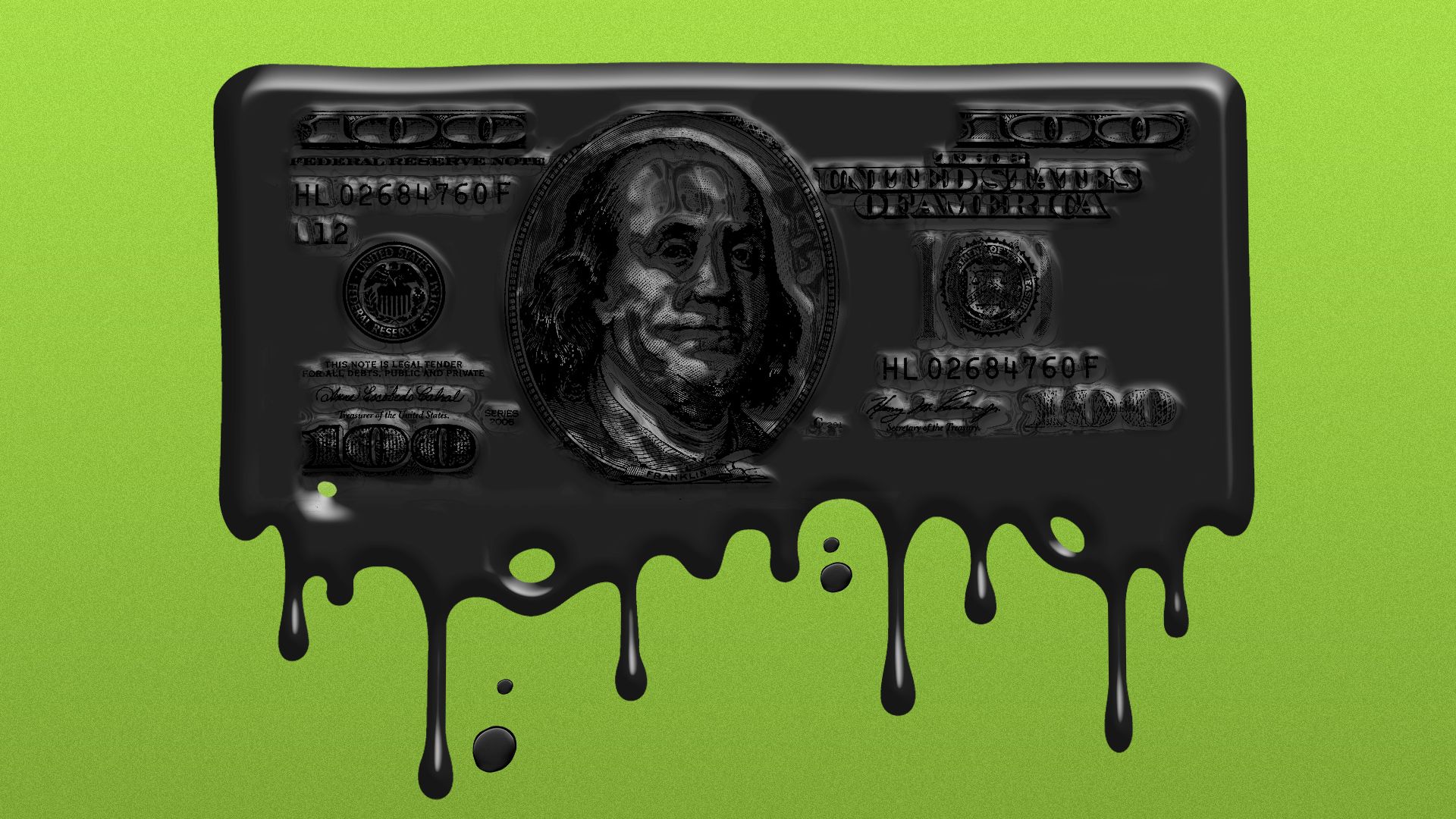
Illustration: Aïda Amer/Axios
The fate of the "petrodollar" hangs in the background of the energy shock from the Iran war.
How it works: The term refers to the fact that oil trades globally in dollars: billions and billions of them spent every day all around the world.
- The oil market creates a permanent, built-in global demand for dollars.
- It's a big reason the U.S. currency sits at the center of the world financial system.
- "When you think about the dollar as the world's dominant currency, the petrodollar is right at the heart of that," says Edward Fishman, author of "Chokepoints" and director of the Center for Geoeconomics at the Council on Foreign Relations.
The intrigue: There are a few risks now. Iran currently sells oil priced in the Chinese currency, the yuan, and if sanctions lift, it could start selling even more oil that is not denominated in dollars.
- Plus, Iran is also seeking to charge a toll on traffic through the Strait of Hormuz.
- There's talk of the toll being charged in yuan or crypto.
- A non-dollar toll would be a threat to the petrodollar system, says Fishman.
Zoom in: There's a lot of nervousness among global companies trying to navigate the situation in Iran, says Safiya Ghori-Ahmad, senior director with APCO Worldwide, a public affairs and strategic communications firm.
- "What that leads to over time is diversification away from the dollar."
Yes, but: It's something that economists have warned about for a long time, but for the moment the dollar dominates the oil market and economy. No one is saying this would change overnight.
- Iran may even be seeking to toll the strait in order to get more dollars, Brad Setser, a senior fellow at the Council on Foreign Relations, tells Axios.
The bottom line: This is a defining moment for "Pax Dollar," says Ken Rogoff, the Harvard economist and former chief economist at the International Monetary Fund who warned that the U.S. ripping up trade agreements could destabilize the dollar in a recent book, "Our Dollar, Your Problem."
- What's happening now, he says, is more momentous: "This is really bigger than 'Liberation Day.'"
