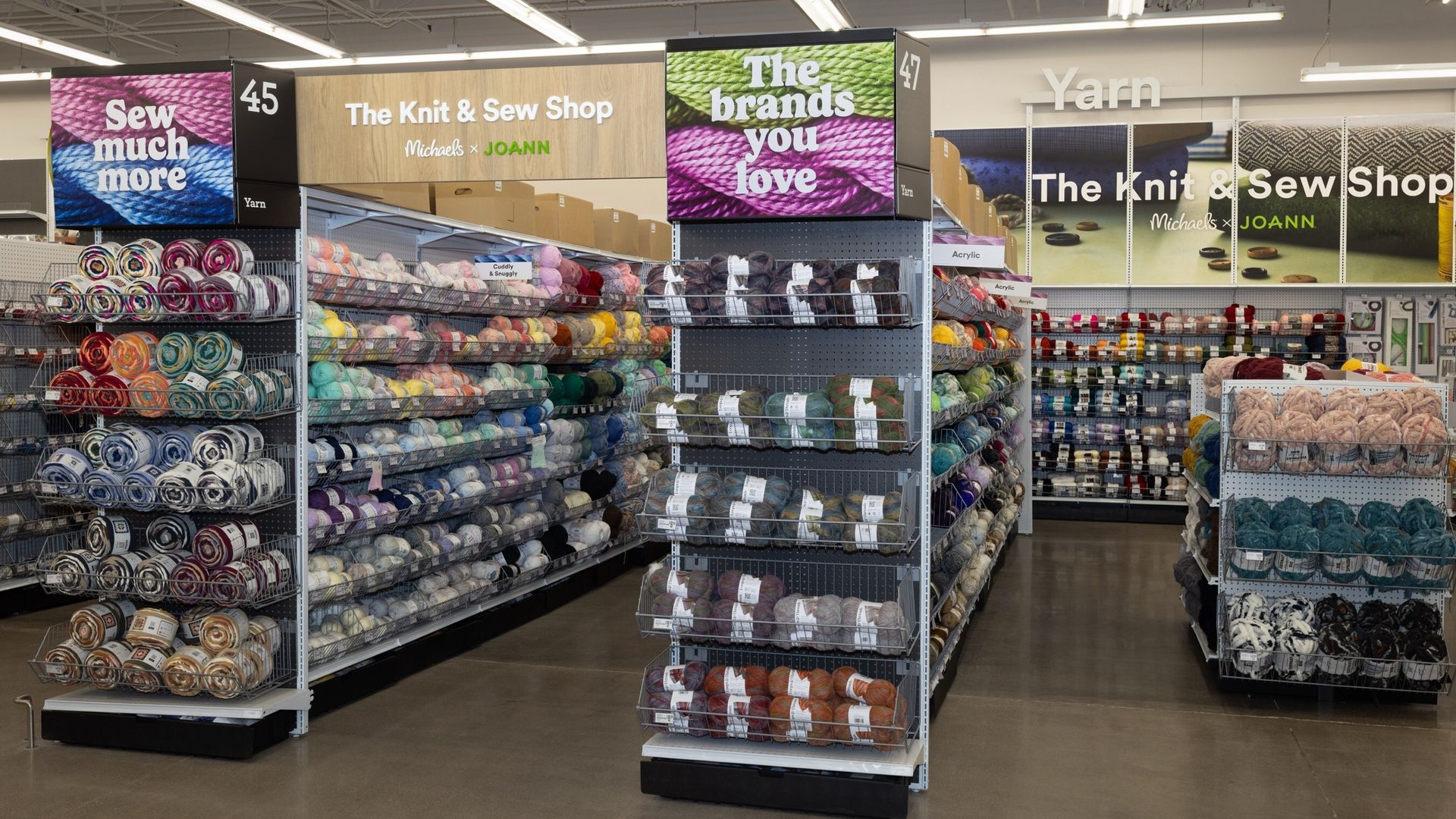
Michaels is trying to remake itself into North America's largest specialty retailer for party supplies and fabric — just as tariffs threaten to raise the cost of both.
Why it matters: The Texas-based retailer wants fuel for its turnaround, even as it contends with trade risks and the same retail headwinds that sank Party City and Joann.
The U.S. has become a major beneficiary of foreign investment in the last few years. It's a wave the Trump administration is looking to ride further — if some of the internal contradictions of its strategy don't trip things up.
The big picture: There's a simple mental model of what foreign direct investment (FDI) looks like: A big, multinational company in the U.S. or Europe builds a factory somewhere labor is cheaper. But that story is outdated, according to new research from McKinsey.
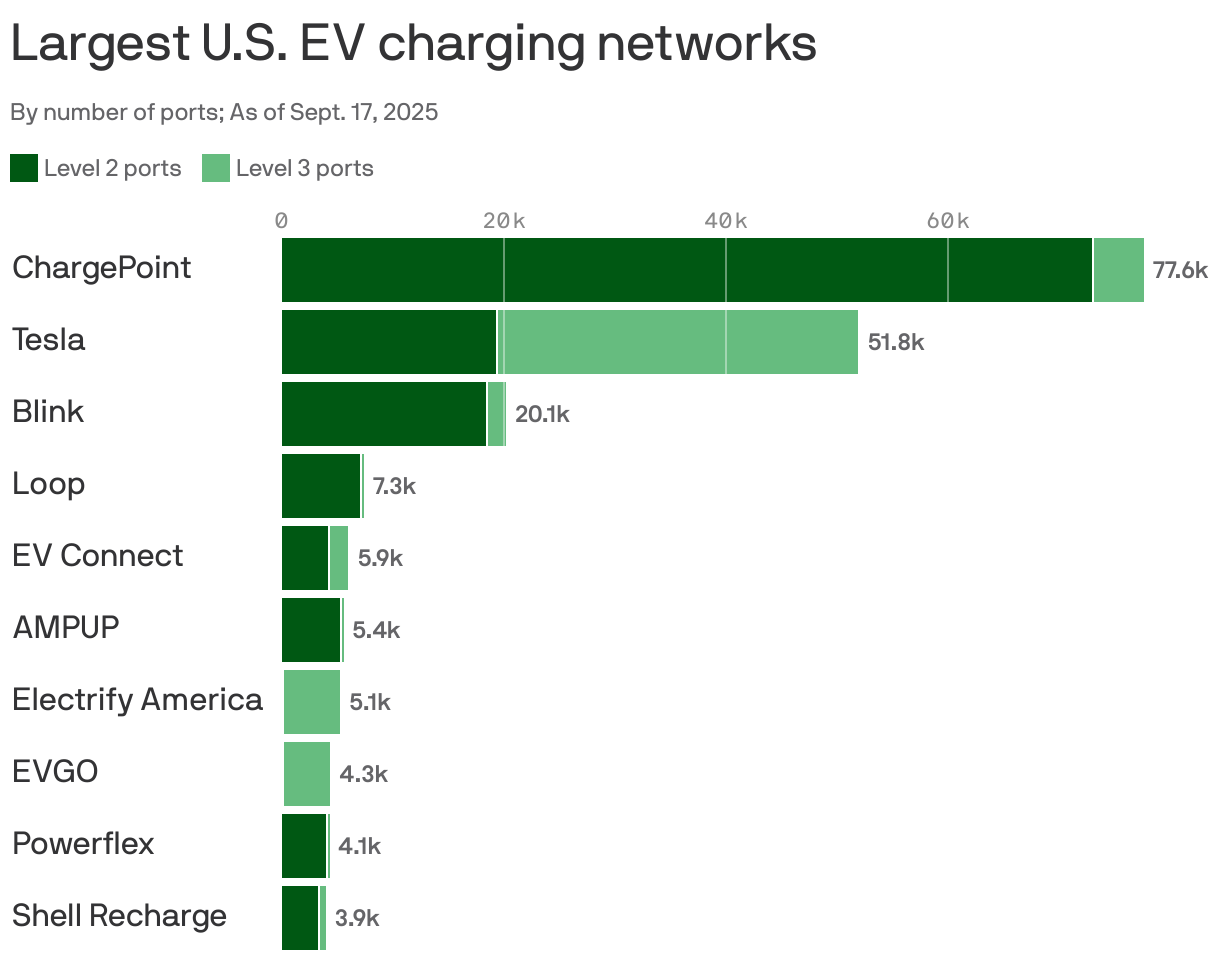
There's a shakeout coming in the EV charging industry as financial challenges mount for some of the early players, according to analysts at Bloomberg Intelligence.
Why it matters: Companies that dominated the charging business to date aren't the ones that will lead the next phase of growth, per their 2026 EV charging outlook.
Electric vehicle sales are expected to plummet after tax credits disappear Sept. 30, but there could be a silver lining: It's an opportunity for charging infrastructure to catch up with demand.
Why it matters: Worries about where to charge have long been a hindrance to EV adoption.
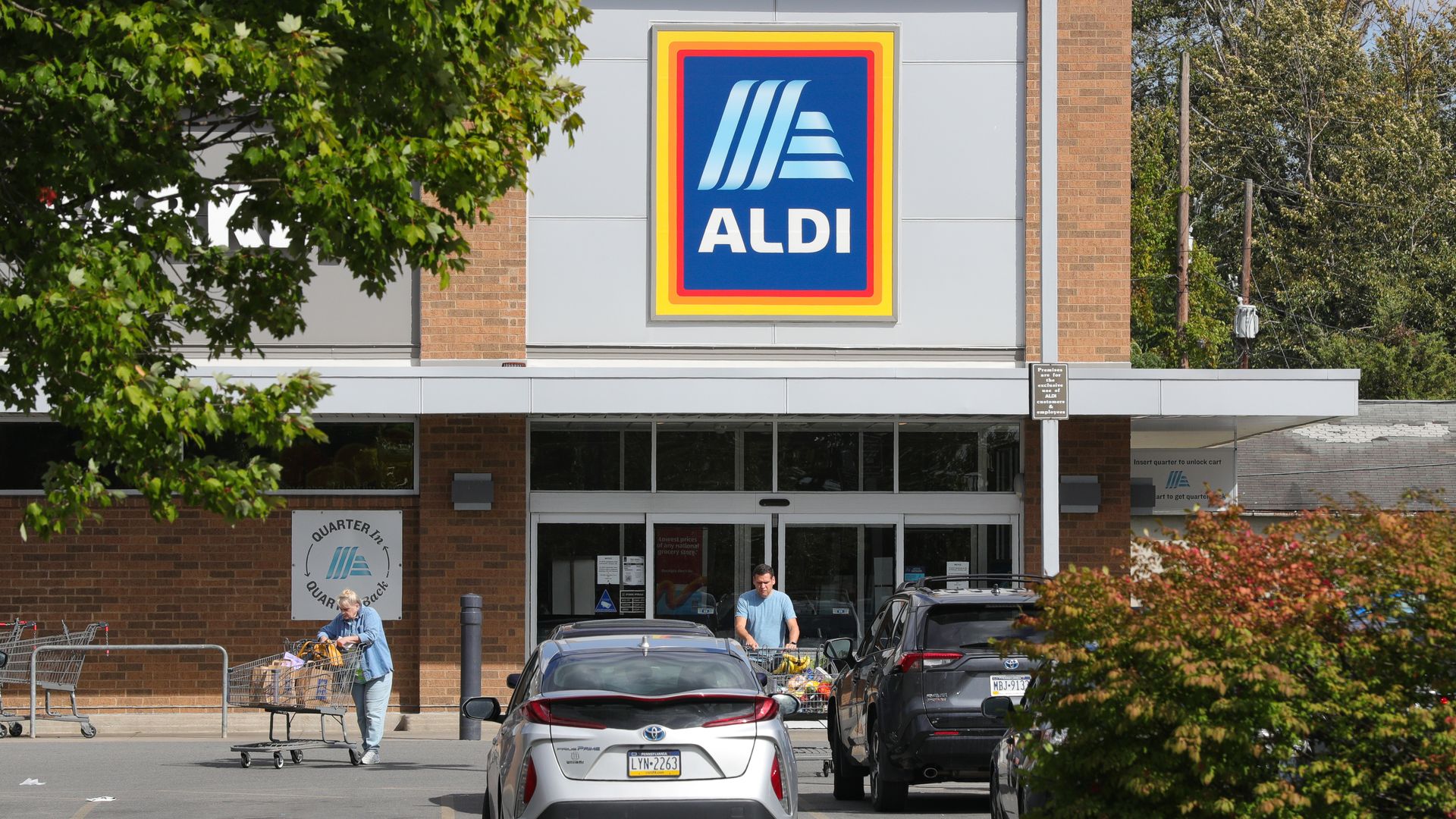
Aldi is rolling out its biggest packaging refresh yet, stamping its name on nearly every private-label product, the discount grocer said Wednesday.
Why it matters: The refresh comes as Aldi faces a lawsuit from Mondelēz International alleging its packaging "blatantly copies" Oreos, Wheat Thins and Ritz.
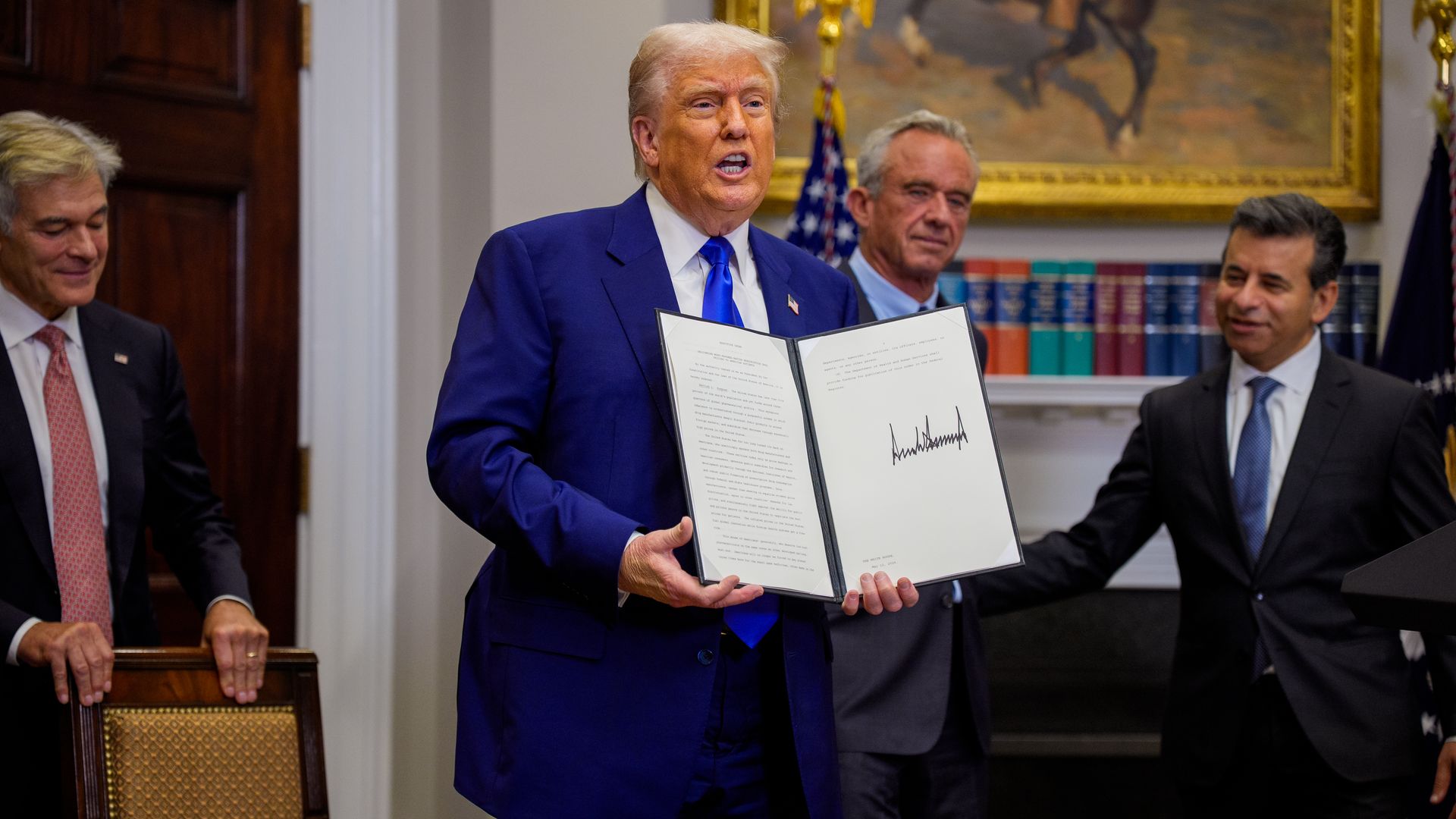
Big drug companies so far are responding to President Trump's demand they commit to his "most favored nation" pricing policy by raising prices abroad without cutting them in the U.S.
Why it matters: That only gets halfway toward Trump's goal of ending what he calls "global freeloading" and getting other developed countries to foot more of the cost while lowering costs for Americans.
An index that measures the confidence of small-business owners surged to its highest level since 2017.
Why it matters: The index, published by the U.S. Chamber of Commerce on Wednesday, is somewhat surprising given that other indicators are showing the labor market is deteriorating and inflation is worsening.
AI is supposed to make work easier, but instead it has generated a new problem: "workslop."
Why it matters: The term, coined by researchers in the latest Harvard Business Review, describes low-quality AI-generated content — memos, reports, emails — that's clogging up employees' lives and wasting their time.
President Trump claimed Tuesday night that ABC told White House officials that Jimmy Kimmel's show had been canceled over his comments in the wake of Charlie Kirk's killing.
The big picture: Trump made the claim in a Truth Social post about an hour before "Jimmy Kimmel Live!" returned to air on ABC following a brief suspension, as Sinclair and Nexstar continued to preempt the show across ABC affiliate stations.
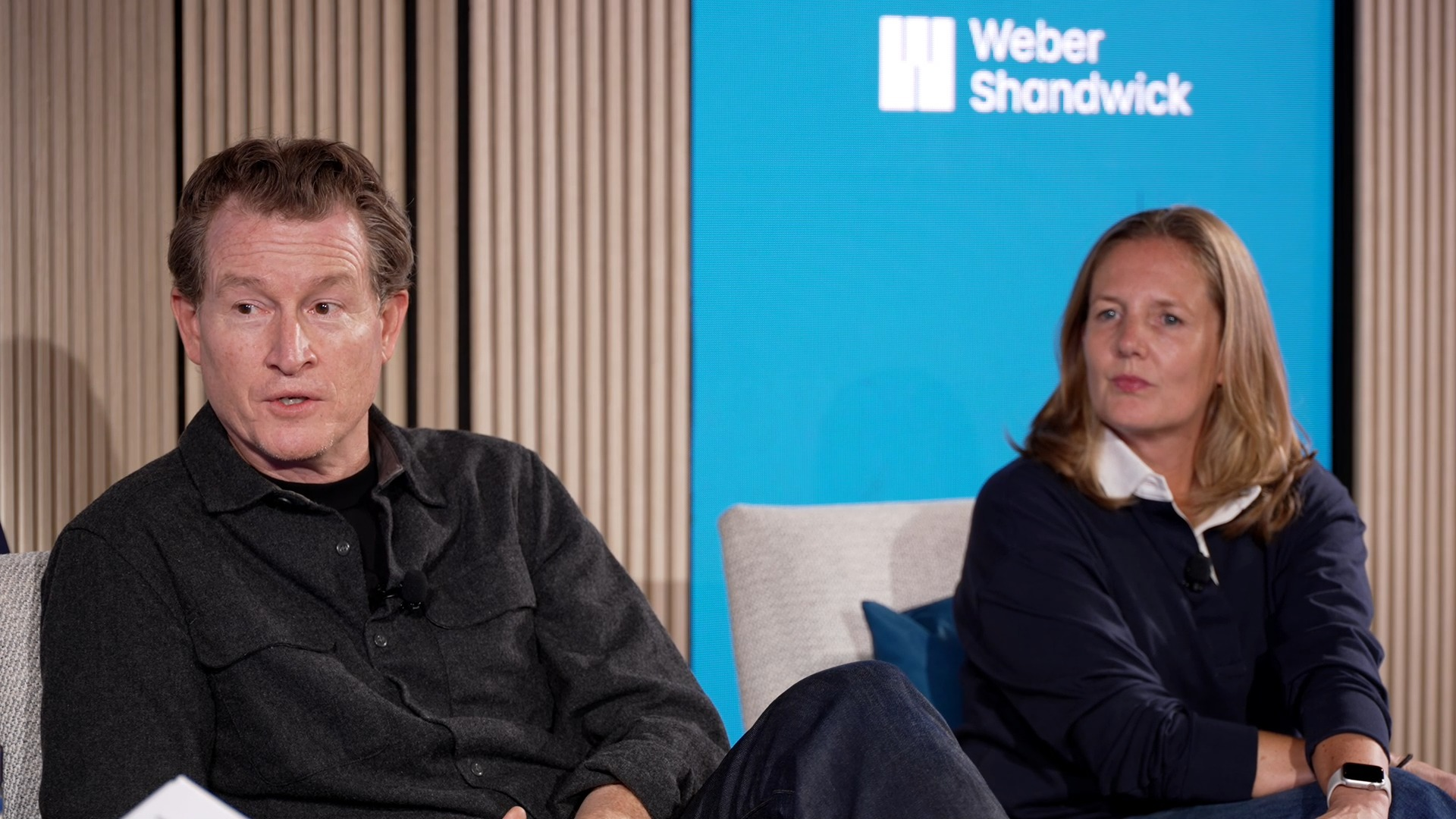
"It's a hell of a target-rich environment right now," for leaders who are unafraid to speak up on political and environmental issues, Patagonia CEO Ryan Gellert said Tuesday at an Axios House event during NYC Climate Week.
Why it matters: A lot of U.S. business leaders are afraid of triggering the Trump administration's wrath, but the Patagonia CEO is continuing in the company's tradition of speaking up on environmental and social issues.
NEW YORK – From turning crops into sustainable aviation fuel to recycling carbon fiber, repurposing resources is crucial to driving the clean energy transition, sustainability leaders said at Axios House at Climate Week and the UN General Assembly on Monday.
Why it matters: Resource conservation can convert waste into value, helping industries cut emissions and reach sustainability goals.
Axios' Amy Harder, Ben Geman and Chuck McCutcheon hosted conversations with Delta Air Lines chief sustainability officer Amelia DeLuca, World Resources Institute president and CEO Ani Dasgupta, and McLaren Racing sustainability director Kim Wilson. The event was sponsored by Suntory Global Spirits.
Today, sustainable aviation fuel (SAF) is derived from soy and other crops, but DeLuca said future sources could include materials such as corn or wood waste. She stressed SAF's "value chain approach," which affects corporations, farmers and rural communities.
"You've got a whole rural community that's like, 'I actually don't know where my future is,'" DeLuca said. "Sustainable aviation fuel, it's not just a blip. It's not a five-year thing. This is a multiple-decades' worth of a product that we're going to need as an industry that also helps those communities, and that's again where you have that win, win, win."
Meanwhile, Wilson noted that McLaren Racing pioneered the use of recycled carbon fiber in the racing industry, which can reduce emissions by up to 90%.
After discovering that materials accounted for a significant portion of its footprint, McLaren Racing worked with a supplier to recycle aerospace waste.
"The thing about new materials is you have to think about how do we not compromise between on-track performance … for sustainability, but we also need to find ways to balance that and innovate," Wilson said.
McLaren Racing has already used recycled carbon fiber for non-safety-critical parts in Austin and Silverstone and is exploring what's next.
Separately, Dasgupta said technology is transforming the clean energy transition "at a scale and speed and price that we didn't even think possible."
However, Dasgupta noted that "technology itself doesn't produce good outcomes. We need to orchestrate that outcome." He said collaboration across industries and tech innovators is needed to help ensure a smooth transition.
Sponsored content:
In a View From the Top conversation, Kim Marotta, Suntory Global Spirits' chief environmental sustainability officer and head of enterprise risk management, addressed the importance of industry collaboration in resource conservation.
"You can't do it one company alone, you can't do it one farmer alone, you can't do it one community alone," she said. "When we look at our watersheds, so many of our peers and competitors are in those watersheds, so we don't compete against each other. … We have projects in Mexico where we have Pernod Ricard, Brown-Forman, almost every one of our peers and competitors involved in replenishing the water in that watershed for the long term."
A North Carolina tribe, whose legitimacy has been questioned by other tribal nations, is seeking to obtain federal recognition through the latest annual defense authorization bill.
Why it matters: The Lumbee Tribe seeks federal recognition to unlock millions of dollars in funding for Native American programs, while other tribes argue that shortcutting the process by using Congress with the Lumbee's past would set a bad precedent.
The Federal Reserve cut interest rates last week due to concern that the job market is slowing, altering the balance of risks for the economy, chair Jerome Powell said in a speech Tuesday.
The big picture: The combination of a softening labor market and elevated tariff-driven inflation has made for a complex set of tradeoffs for the Fed — but Powell and his colleagues see the risks of the former as rising, hence a return to rate-cutting mode.
The job market is worse than it looks. Tariffs' effects on inflation are probably a one-time bump.
The big picture: Those two sentences, in a nutshell, explain why the Fed has resumed its interest rate cuts — even as inflation has ticked up, the unemployment rate remains low, and the stock market is at new highs.
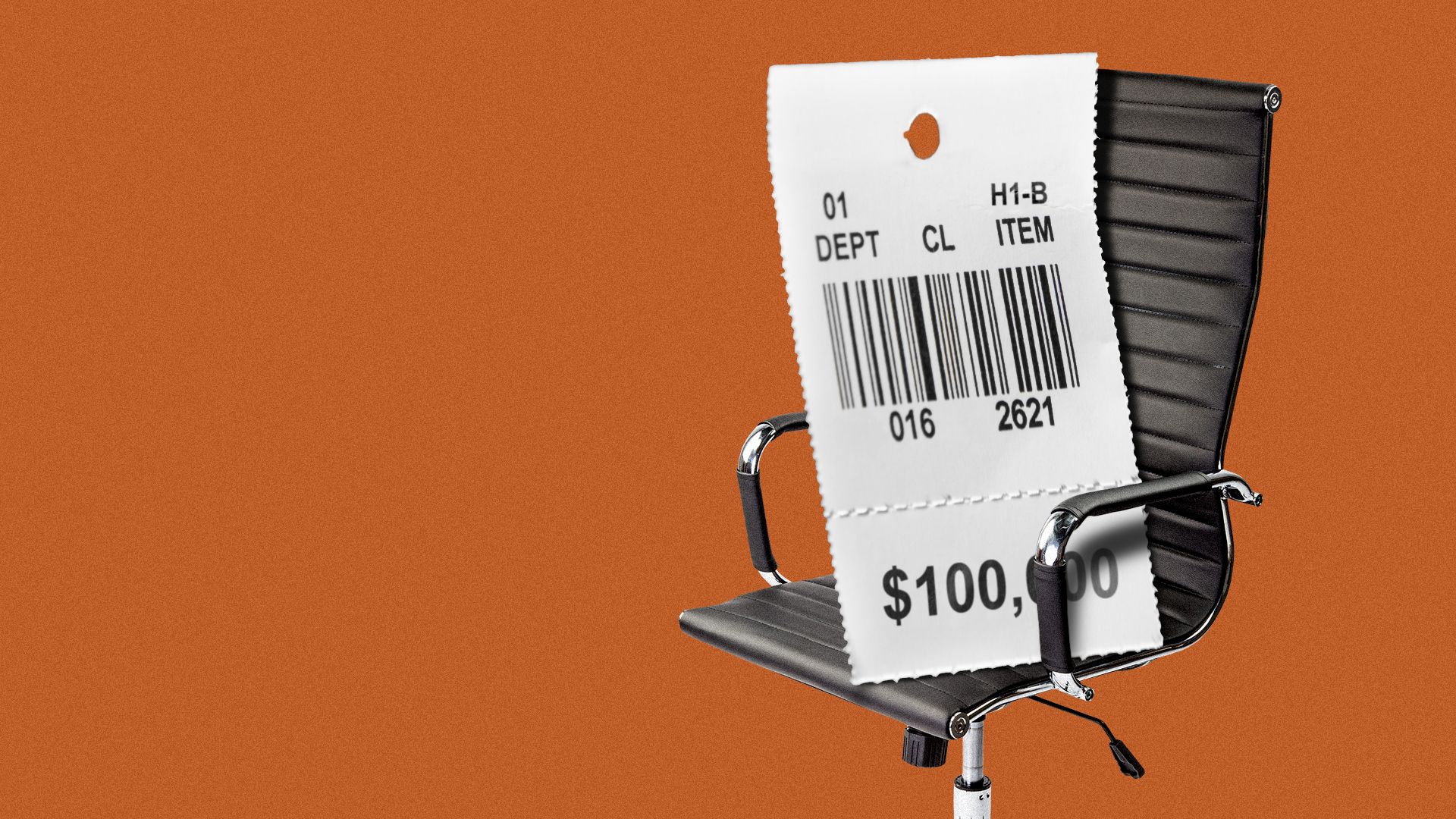
Venture capitalists are buzzing over the Trump administration's plan to charge $100,000 for H1-B visas, and it hasn't quieted down after White House clarification that these will be one-time fees on new applications.
The big picture: Most VC reaction seems to be negative. Both because of the financial burden it could place on startups, making it that much harder to compete with richer incumbents, and also because of the longer-term risks it presents to American innovation.
Why it matters: Drops in violence mark progress in cities long hit hardest by crime, but the Trump administration is using crime rates as a pretext to send troops to expand federal control overblue cities.
Stripe is in talks to repurchase shares from venture capital backers at a $106.7 billion valuation, Axios has learned.
Why it matters: The payments infrastructure giant caught grief, including from yours truly, for not going public when its valuation hit $95 billion before the pandemic — after which it was slashed to only $50 billion.
A wave of global interest rate cuts is pushing currencies lower. That could fuel the bull market higher, but not necessarily for the right reasons, as we learned in the late 1990s.
Why it matters: When multiple currencies weaken at the same time, they remain stable against each other but lose credibility with investors.
That dynamic often drives capital into U.S. markets, pushing up valuations to unsustainable levels that can quickly topple over.
New York Stock Exchange president Lynn Martin cautioned on Monday that President Trump's push for fewer corporate earnings reports should not come at the cost of transparency, she told Axios at an event in New York City.
Why it matters: Martin said company releases should not be prescriptive but rather a choice depending on the needs of each firm and its shareholders.
Target is hoping to recapture its inner "Tarjay" — and it's starting with a splashy store redesign in the heart of New York City, the retailer shared exclusively with Axios.
Why it matters: Reimagining the SoHo store is one of the first steps in incoming CEO Michael Fiddelke's strategy to reassert Target's style authority — after years of declining sales and criticism that the brand had lost its cultural cool.
MAGA's response to Charlie Kirk's assassination has laid bare how the movement is willing ditch its past stated beliefs when it looks to exert power or inflict payback.
Why it matters: President Trump and MAGA rode back into power on a clear nationalist-populist policy platform. But in practice, a desire for vengeance and speed occasionally has eclipsed the movement's ideological priorities.