Wounded Knee bill blocked amid one tribe's recognition fight

Add Axios as your preferred source to
see more of our stories on Google.
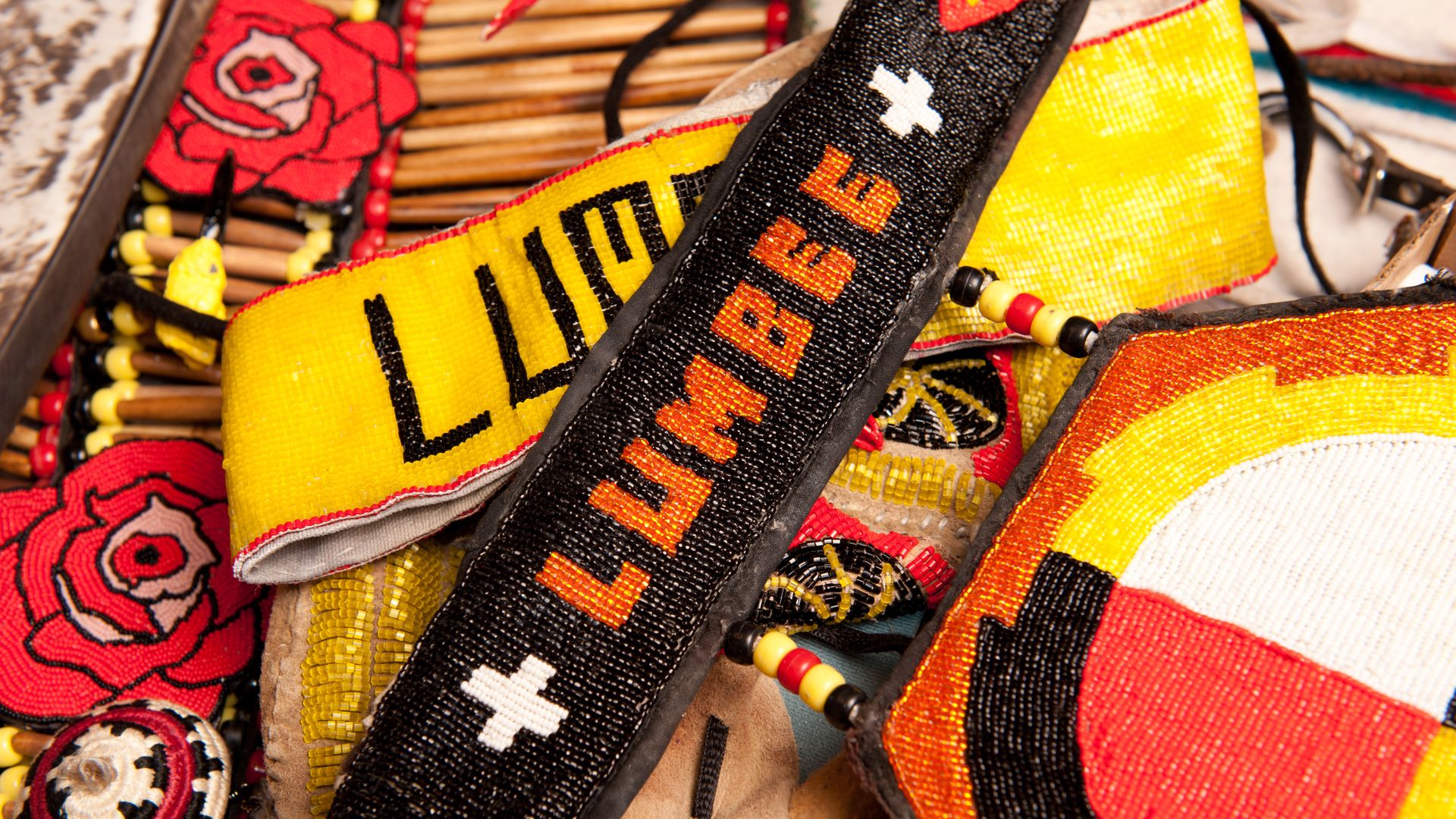
Regalia from the Lumbee, a North Carolina-recognized tribe that sought federal recognition for years. Photo: Edwin Remsburg/VW Pics via Getty Images
A bill that would preserve the Wounded Knee Massacre site is being blocked by Sen. Thom Tillis (R-NC) over his push to get federal recognition for a North Carolina tribe whose legitimacy is questioned by tribal nations.
The big picture: The Wounded Knee Massacre site on Oglala Lakota land in South Dakota is a mourning place for many tribes, and the blocking of a preservation bill could create more animosity toward the Lumbee, who want to circumvent traditional routes for federal recognition.
Catch up quick: Tillis put a hold on the Wounded Knee Massacre legislation last month after he accused certain tribes of not supporting a bill that would give the Lumbee federal recognition.
- He accused Native American tribes of being part of a "casino cartel" led by the Eastern Band of Cherokee Indians who want to stop the Lumbee from gaining recognition and possibly opening its own casino.
- "This is not about you. This is about your leaders," Tillis said on the Senate floor Nov. 21 in reference to the Oglala Sioux and Cheyenne River Sioux tribes, who suffered at Wounded Knee.
- "This is about (your leaders') underhanded, unfair treatment of a tribal nation that deserves recognition and that this country needs to atone for over a century of racism and neglect."
State of play: A hold on the Wounded Knee Massacre legislation prevents the consolidation of privately owned and allotted lands around the site of the Oglala Lakota Nation.
- Supporters say the consolidation would allow the Oglala Sioux and Cheyenne River Sioux tribes to preserve it how they see fit.
Zoom out: The U.S. Army in 1890 slaughtered 150 Lakota Indian men, women and children in the last chapter of the U.S. government's long war against Native Americans.
- Since then, the isolated site has become a place of mourning for many Native American tribes as it symbolizes the brutality many faced at the hands of the U.S. government.
The intrigue: Tribal leaders interviewed by Axios said members of Tillis' staff have told them that the Wounded Knee Massacre bill and other tribal legislation will continue to be held unless they support the Lumbee proposal.
- Shawnee Tribal Chief Benjamin Barnes tells Axios it's unfairly tying legislation that has nothing to do with each other. He says tribes have no problem with the Lumbee seeking federal recognition through the proper process.
- "This is not race policing or Indian policing," Barnes says. "If they can prove they have historical ties, then go for it, but to stall the Wounded Knee bill over this unnecessary."
- O.J. Semans, Sr., a member of the Rosebud Sioux and executive director of the Coalition of Large Tribes (COLT), tells Axios the Lumbee's silence over the Wounded Knee hold is telling and scary.
A spokesperson of Tillis did not immediately return an email from Axios.
Context: The Lumbee Tribe has been trying to get federal recognition for years to unlock millions of dollars for Native American services after being denied the ability to apply for federal recognition in 1987.
- The denial was based on the interpretation of a 1956 congressional act that acknowledged the Lumbee but stopped short of granting them federal recognition, per The AP.
- The Department of the Interior reversed that ruling in 2016, allowing the Lumbee Tribe to apply, but the tribe has sought recognition through congressional action since then.
- A tribe can gain federal recognition through the Interior Department after providing evidence of treaties, historical connections to lands or proof of existence before European contact, for example.
Between the lines: The Lumbee, which claims 50,000 members, has significant political influence in the swing state of North Carolina, and both Vice President Harris and President-elect Trump endorsed its push for federal recognition.
In a statement, Lumbee chairman John Lowery told Axios the tribe "will not back down in the face of these assaults and a well-funded lobbying campaign."
- Lowery told the AP that the Interior's application process is "flawed" and overly lengthy and it should be up to Congress to right what he calls a historic wrong.
The other side: Barnes and Semans said giving a tribe federal recognition through congressional action sets a dangerous precedent since any group can gather and create political pressure for something that is sacred only to historic tribal nations.
- "If you're able to see a race of people able to get identified as Native American, I'm telling you, we're gonna have, like, 100 different Cherokee tribes," Semans said.
Go deeper: The Lumbee Tribe's time is now. Maybe.
Editor's note: This story was corrected to reflect the Lumbee has 50,000 members, (not 500,000).
