Target to "offset" majority of tariff impacts, focus on value

Add Axios as your preferred source to
see more of our stories on Google.
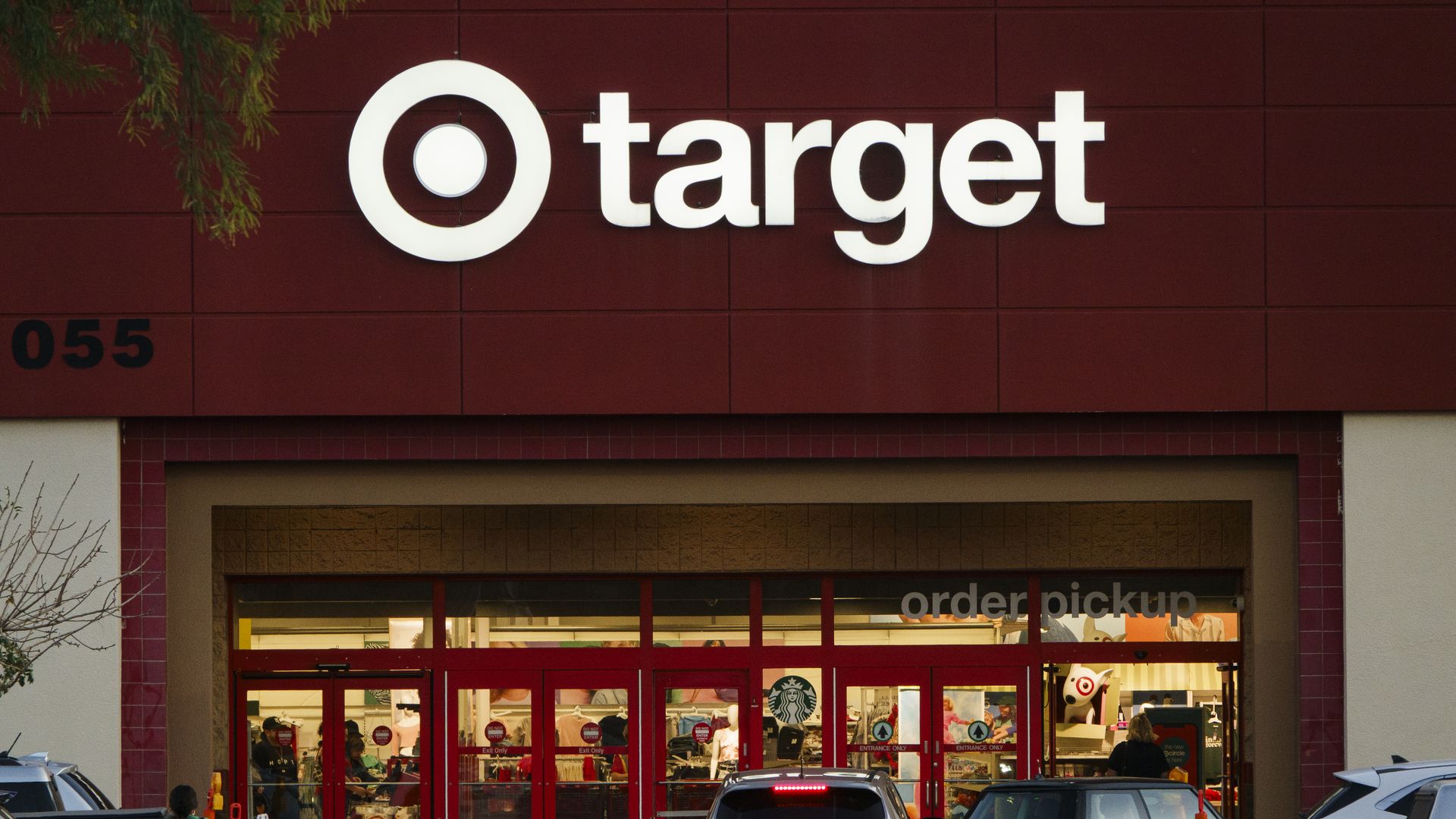
Target CEO Brian Cornell said "price is the last resort" for mitigating tariff impacts. Photo: Kevin Carter/Getty Images
Target officials said Wednesday they plan to "offset the vast majority" of tariff impacts to consumers and remain "price competitive."
Why it matters: The Minneapolis-based retailer saw sales decline more than expected in the first quarter of the year, and warned of a "high degree of uncertainty" between tariffs and consumer confidence.
- "We have many levers to use in mitigating the impact of tariffs and price is the very last resort," Target CEO Brian Cornell said on a call with analysts, adding the company is "focused on supporting American families as they manage their budgets."
The big picture: Target and Home Depot are both handling news about tariff pricing differently from Walmart, which last week said price hikes were inevitable.
- President Trump threatened Walmart on Saturday over its plan to raise prices in the face of tariffs, demanding it absorb the costs instead.
- Home Depot said Tuesday it doesn't plan to increase prices because of tariffs.
- Cornell warned in March that tariffs could cause food prices to rise.
Driving the news: Target saw comparable sales decrease 3.8% in the first quarter, which reflects same store sales decline of 5.7% and digital sales growth of 4.7%.
- Cornell said the retailer faced "several additional headwinds this quarter, including five consecutive months of declining consumer confidence, uncertainty regarding the impact of potential tariffs and the reaction to the updates we shared on 'Belonging' in January."
- Target announced it was pulling back on some of its diversity, equity and inclusion (DEI) efforts in January. The changes were unveiled days after Trump returned to the White House and have been met with calls for boycotts.
Yes, but: Target did have some bright spots, including 36% growth in same-day delivery.
- Cornell said the sales results from Target's limited-time design partnership with Kate Spade "were the strongest we've seen in a decade."
Catch up quick: For the next couple of months, the U.S. will slash the tariffs on Chinese goods to 30%, from the 145% levy in effect for the past month. China agreed to cut its rate on U.S. exports to 10% from 125%.
- American retailers have been growing worried that Trump's trade war and increased volatility will lead to empty shelves, higher prices and store closures as Chinese imports screeched to a halt.
- In an April 21 meeting, Cornell and the CEOs of Walmart and Home Depot privately warned Trump that his trade policy could trigger massive product shortages and price spikes.
Zoom in: Half of what Target sells comes from the U.S., and the company has been working on diversifying countries of production, especially on its private brand products, Rick Gomez, Target executive vice president and chief commercial officer, said.
- In 2017, 60% of Target's private brand products came from China, Gomez said.
- "We brought that down to 30% and we are well on our way to be less than 25% by the end of next year," Gomez said, noting the company is expanding into new countries and "exploring opportunities here in the U.S."
What they're saying: "Our strategy is to remain price competitive by leveraging the capabilities, long standing relationships and the scale that set us apart for many of our retail peers," Cornell said.
More from Axios:
