Venture capital roiled by H1-B visa changes

Add Axios as your preferred source to
see more of our stories on Google.
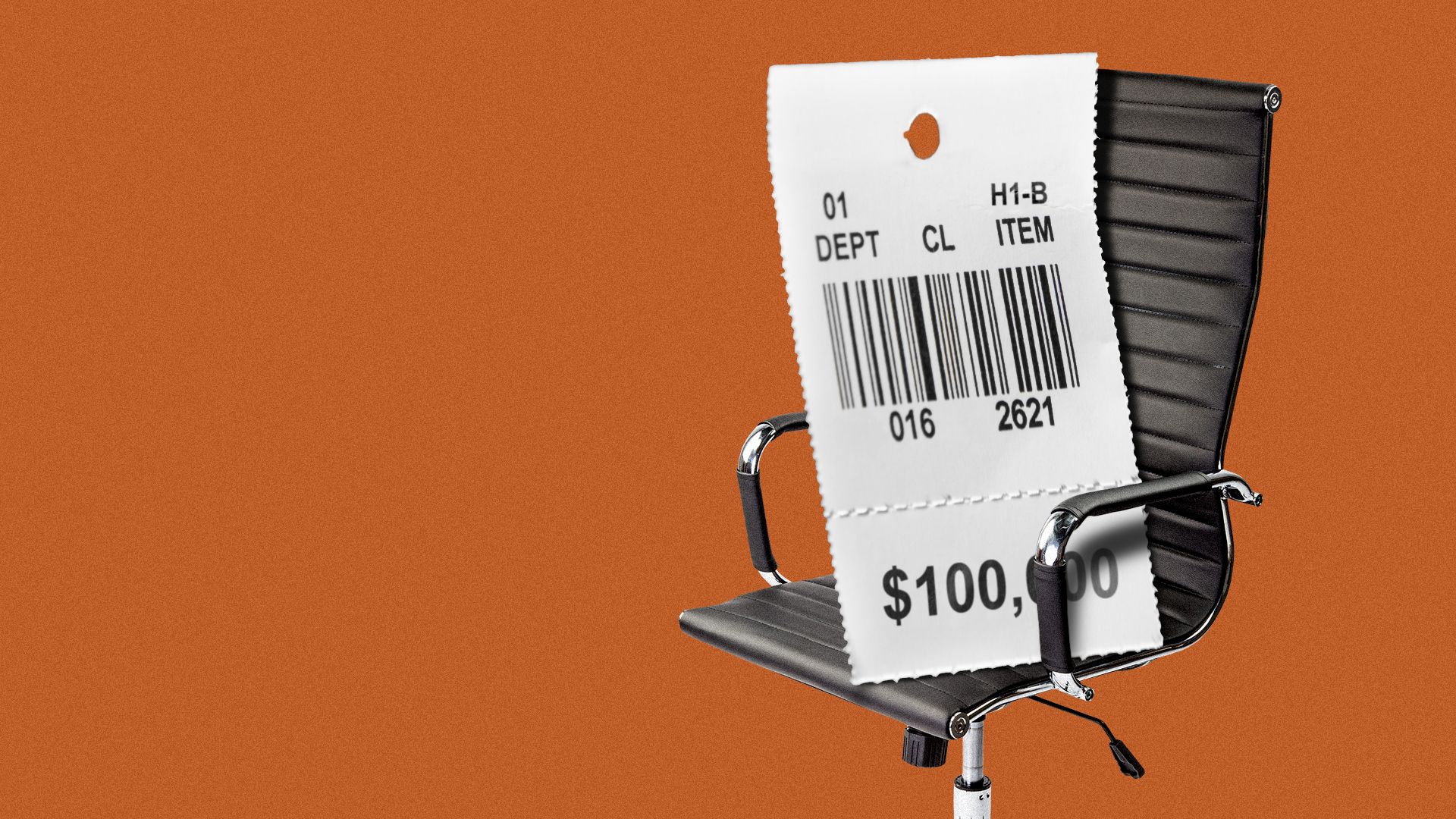
Illustration: Lindsey Bailey/Axios
Venture capitalists are buzzing over the Trump administration's plan to charge $100,000 for H1-B visas, and it hasn't quieted down after White House clarification that these will be one-time fees on new applications.
The big picture: Most VC reaction seems to be negative. Both because of the financial burden it could place on startups, making it that much harder to compete with richer incumbents, and also because of the longer-term risks it presents to American innovation.
- But the conventional wisdom isn't universal, as befitting an industry where some of the best bets are iconoclastic.
Why it matters: Venture capitalists aren't hiring managers, but they have portfolio-level views and ultimately foot the bill for startup budgets.
The bear case: A lot of America's top entrepreneurs and tech execs are immigrants, including those who utilized H1-B visas. People like Elon Musk and Satya Nadella.
- Putting up new roadblocks may prevent, or at least discourage, potential immigrants who would otherwise create the next great U.S. company. Much like restrictions on student visas.
- Already we're seeing recruitment posts from founders in emerging tech hubs like London and Toronto, while there's talk that some startups may just open remote offices in India (while some LPs may increase allocations to India-focused VC funds).
- In short, it presents a pipeline problem. Not only for H1-B visa holders who are sponsored by startups, but also for those who go to work for Big Tech and later leave to launch or join new companies.
- "The choice is simple: we can welcome and keep visionary founders and highly skilled talent in the USA with a much needed Startup Visa and other sound immigration policies, including H-1B's, or watch these new companies and the jobs they create begin overseas," says Bobby Franklin, CEO of the National Venture Capital Association.
The bull case: Startups use a relatively small portion of H1-B visas, and many of those are transfers that won't get hit by the new fee.
- Such hires are usually very specific people with very specific skills — the sorts of folks who can help make or break a business, rather than those coming via so-called "body shops." How could that individual not be worth an extra $100,000?
- Moreover, startups tend to utilize the H1-B program more as they grow, from dozens of employees to hundreds, thus lowering the financial resource strain.
- Finally, the U.S. government must do something to cut down on alleged H1-B visa abuses. This might not be the perfect solution, but it could actually increases the number of spots available to startups.
The bottom line: The wisdom of this change, and of others involving legal immigration, won't be known until most of today's decision-makers have long since retired.
