Maybe Cameo needs to join Cameo to make a few extra bucks.
The once-high-flying company — whose app allows celebrities to earn money by selling personalized videos to the public — is unable to pay a $600,000 fine as part of a new 30-state settlement.
Between the lines: Baron App, which owns the company, will be allowed to pay a reduced fine of $100,000 as part of the deal.
The company was accused of violating consumer protection laws and federal disclosure rules for paid endorsements.
Flashback: Cameo was valued at more than $1 billion in 2021, Business Insider reported, but "it has never been able to attract many A-list celebrities to its platform and had several rounds of layoffs in 2022 and 2023."
Crypto enthusiasts rubbing their hands in expectation of a flood of liquidity coming now that the world's two largest digital assets have been legitimized via ETF, might be waiting a while.
Why it matters: Unlike previous cycles in which a bullish wave in crypto lifted all coins, this time there will be more participants "left on the sidelines," EY's global blockchain leader, Paul Brody, tells Axios.
Between the lines: Bitcoin and ether have always had the deepest, most liquid markets among cryptocurrencies, Brody notes.
That's the reason both are now in ETFs. Their now being in ETFs doesn't change the dynamic across the wider cryptocurrency industry.
NASHVILLE — Any time you see that a gigantic, well-established company has announced a new crypto-related product, it's a safe bet that it's been in the works for a long time, according to PwC's Matt Blumenfeld.
Why it matters: Giant financial firms don't move quickly, so it demonstrates that interest in blockchain applications this time around is more than a fad.
Driving the news: Blumenfeld was one of many financial pros from notable firms talking crypto and accounting at a daylong gathering yesterday in Nashville where professionals discussed how to build classic financial controls and audit-readiness for the much-less-new-than-it-once-was world of business on the blockchain.
Economists anticipated lackluster economic growth last quarter. Instead, growth surged, a sign of the still-resilient economy.
Why it matters: The soft landing was very much intact this spring. Price pressures eased, but not at the expense of the strong economy and labor market.
The U.S. economy grew at a 2.8% annualized rate in the second quarter—a faster rate than economists expected as consumer spending increased and businesses built up inventories, the Commerce Department said on Thursday.
Why it matters: The new data raises confidence the economy has achieved a "soft landing" — healthy economic growth alongside cooling inflation.
Southwest Airlines is shifting to assigned seating and will offer some premium seating with extra legroom, the low-cost carrier announced on Thursday as part of a significant shakeup to its traditional business model.
Why it matters: The changes come the same day the airline reported second quarter results that beat some expectations following a bump from a summer travel boom but still "fell short" in other key areas.
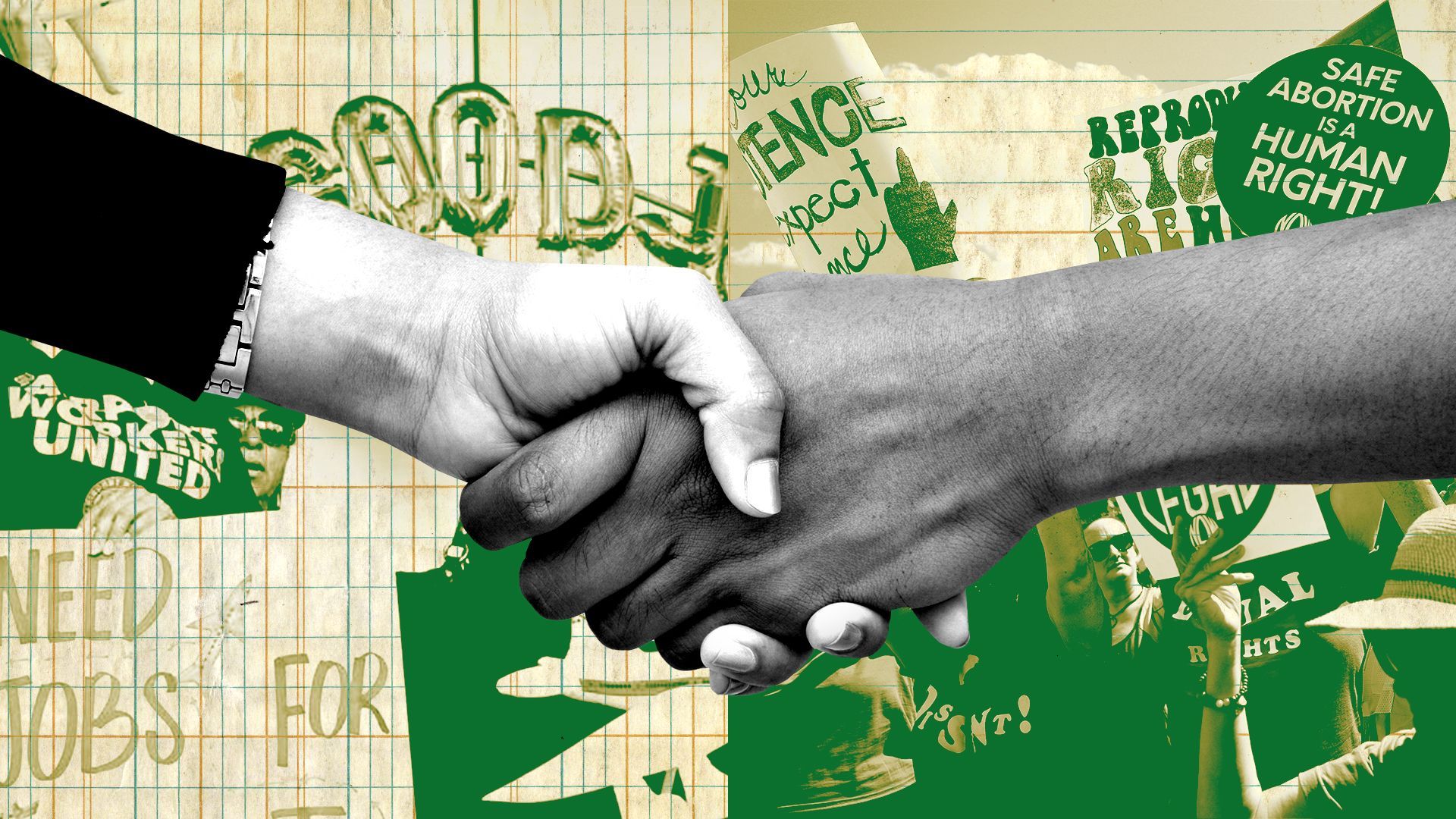
Why it matters: Though these two issues have been core to advocates for decades, they typically operated in separate lanes. The post-Dobbs environment and Vice President Kamala Harris' run for the presidency changed the equation.
Google parent Alphabet revealed yesterday that its capex will reach or exceed $24 billion for the rest of the year driven by investments to bulk up on AI.
That trajectory would put its 2024 total at more than $49 billion — or 84% more than what it's averaged annually over the past five years, WSJ notes.
What they're saying: "The risk of underinvesting is dramatically greater than the risk of overinvesting for us here," CEO Sundar Pichai told Wall Street yesterday.
The big picture: Like Tesla, this narrative failed to impress investors, who sold off the stock after-hours and throughout the day today, sending it down 5% at close.
Disappointment around Tesla and Google spread to all of the Magnificent Seven, which were anything but, today.
Their woes meant the rest of the major indices dragged too.
The S&P and Nasdaq had their worst day since 2022. The Dow closed down 1.3%.
Between the lines: Mag 7 earnings are of special interest to Wall Street as this small cohort is responsible for the bulk of this year's gains, CNBC notes.
But some analysts see the increased volatility as being driven by profit-taking and a "Great Rotation" into smaller stocks amid heightened expectations for rate cuts.
By the numbers: All seven of the Mag 7 stocks — including Apple, Microsoft, Amazon, Nvidia and Meta — finished in the red today, including Tesla's 12% and Alphabet's 5% drops.
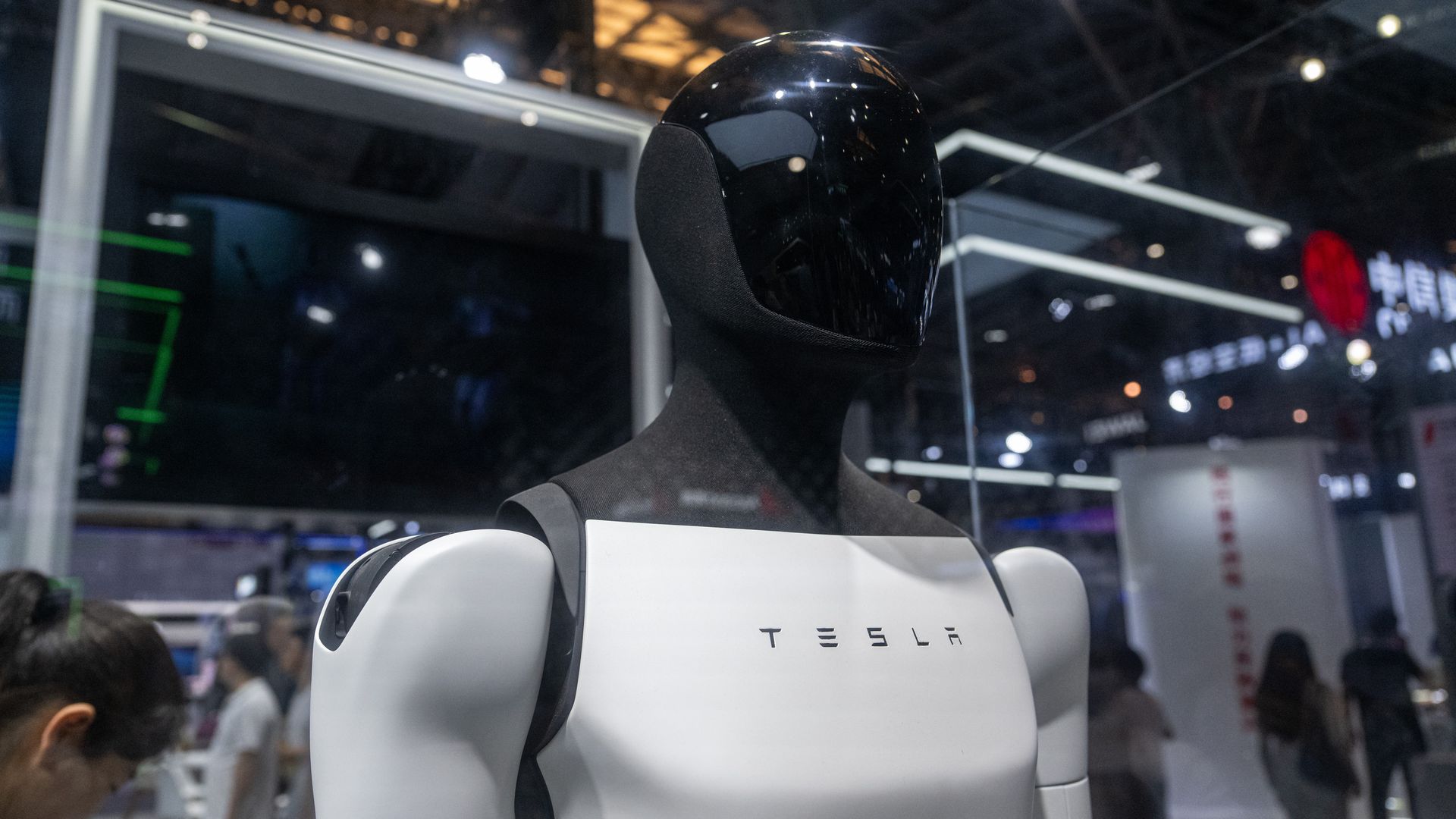
Forget cars. Tesla's future, based on CEO Elon Musk's latest explanation, will be built on robotics.
Why it matters: This new focus — however deviant and realistic — may be a necessity as the company's core business of EVs faces pricklier market and political conditions.
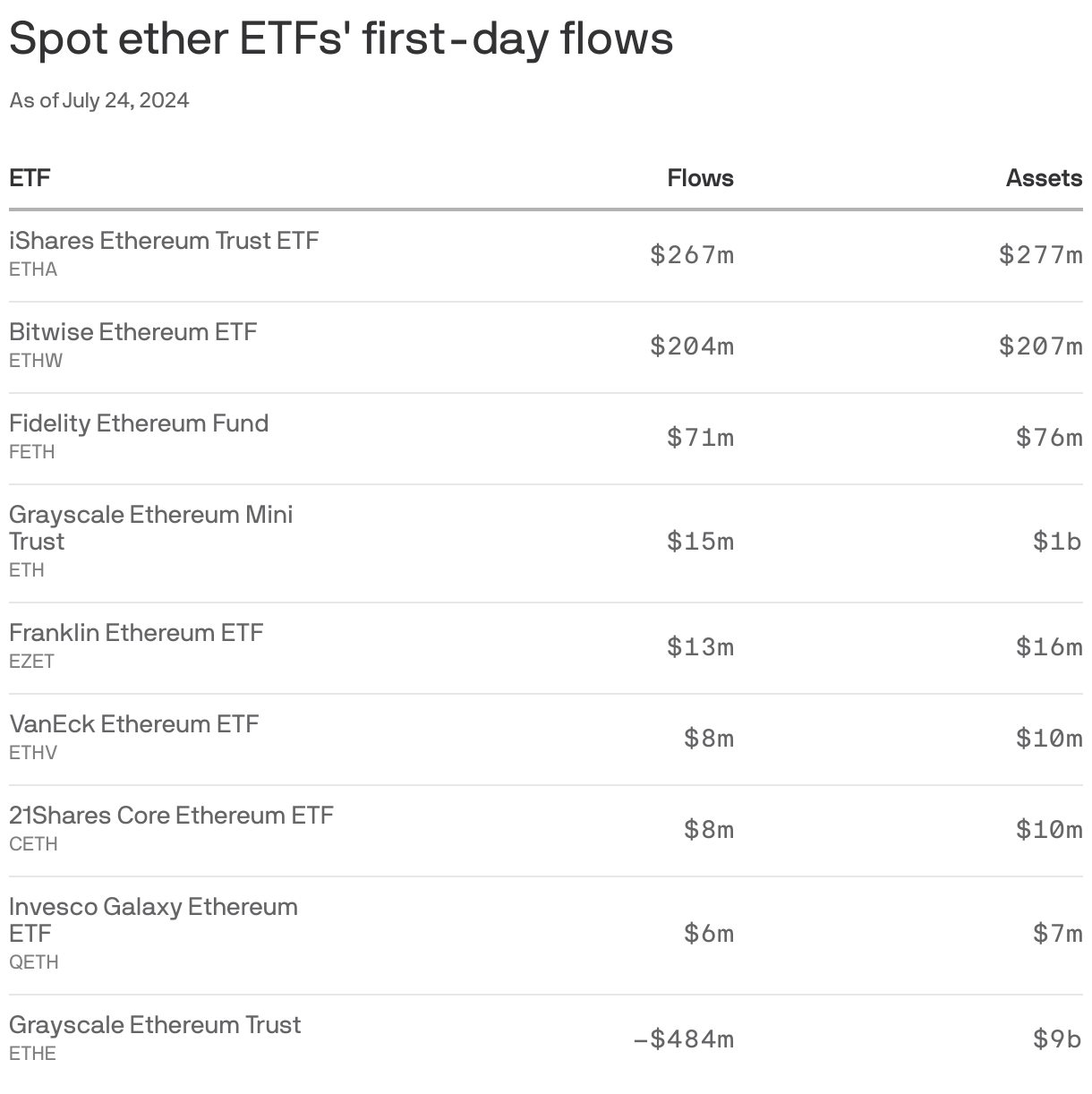
Ethereum ETFs collectively broke $1 billion in trading volume on its first day of listing on major exchanges — what a couple of issuers say was a better-than-expected showing.
Why it matters: Though ether's arrival on major exchanges echoes its larger brother's debut, the competitive dynamic has shifted.
The intrigue: 👆Boutique asset managers appear to have a fighting chance to compete with the juggernauts in the ether ETF race, more so than they did with bitcoin.
Move overmeme coins, there's political play all wrapped up in ETFs.
Why it matters: With Vice President Kamala Harris locking in as the Democratic party's presidential nominee, and President Biden out of the race, the upcoming election stands to be a "win" for crypto, regardless of the outcome.
Catch up quick: It helps that one of America's most high-profile businessmen, Mark Cuban, recently told Politico that feedback he was getting (though, not confirmed by the VP) was that Harris would be more "open" to things like AI and crypto.
The intrigue: "Harris is bullish for Bitcoin, and Donald Trump is bullish for Ethereum," VanEck's digital asset research head Sigel told Axios yesterday.
Harris' camp has reached out to Cuban with "multiple questions" about crypto policy, he told Decrypt.
Why it matters: The Democrats' presumptive presidential nominee appears to be freshening up on an issue that the party's ticket had, until now, been ceding to Trump.
Between the lines: While it hasn't been unanimous, several blockchain-loving venture capitalists have been tending toward the former president in the 2024 election, Brady has noted.
Last week Marc Andreessen and Ben Horowitz, the founders of Andreessen Horowitz (aka, a16z), caused a stir with their decision to back the Republican candidate, with their frustrations over crypto policy highlighted among their reasons.
"Inside Out 2" is now the highest-grossing animated film of all time globally, Disney announced Wednesday, breaking a record held by "Frozen 2" since 2020.
Why it matters: Theaters need broad-appeal blockbusters to draw audiences back after the pandemic and explosion of streaming services disrupted viewing habits.
WASHINGTON, D.C. – Building out more infrastructure and lowering costs are two main priorities for transportation officials in getting more electric vehicles on the road.
Axios business reporter Nathan Bomey and 1 big thing host Niala Boodhoo moderated conversations with Transportation Sec. Pete Buttigieg and Department of Energy official Michael Berube, which was sponsored by UL Standards & Engagement.
Why it matters: Despite progress being made in both areas, continued deployment of charging ports and reducing the price of EVs are two of the largest barriers to widespread U.S. EV adoption.
What they're saying: "We have 188,000 charging ports in the U.S. right now, that number has grown by 43,000 just in the last year," Berube said.
More Americans are buying EVs each year than the previous year, according to Buttigieg. "There really are two things we're doing to facilitate that process," he said.
"One is to make them cheaper. That's what the tax credit is all about. The other is to make sure that you can find a charger when you need one."
What's next: Lawmakers understand the strategic value of improving the U.S. EV manufacturing market when facing global competitors like China.
Buttigieg said China "understands the strategic value of trying to dominate the EV market" because that is the direction the automotive sector is heading.
"This is why it really harmed our economic security when the Trump administration all but deliberately gave China the advance in the EV market, and now we are working to reclaim it on American soil," he added.
Sponsored content:
In a View from the Top sponsored segment, David Martin, UL Standards & Engagement's director of government engagement, and Director of Data Science & Standards Engineering Denice Durrant noted that electric transportation such as e-bikes and e-scooters are affordable options for people to commute to work, especially in urban hubs.
"According to our data, it shows that over half of the consumers who purchase these devices are actually doing so for work purposes. So that's really key that we're maintaining access for those people to carry out their daily lives," Martin said.
The last four weekshave been a seismic period for U.S. politics. But in making economic decisions — whether to buy a house, take a new job, allocate retirement savings or invest in a business — it is usually better to leave your politics brain at the door.
Why it matters: It's not that political outcomes don't have economic effects — policy choices matter for the economy in the long term. It's just that those effects are slow-moving, frequently non-obvious and always contingent on many other unknowables.