Record-breaking July 4 travel expected

Add Axios as your preferred source to
see more of our stories on Google.
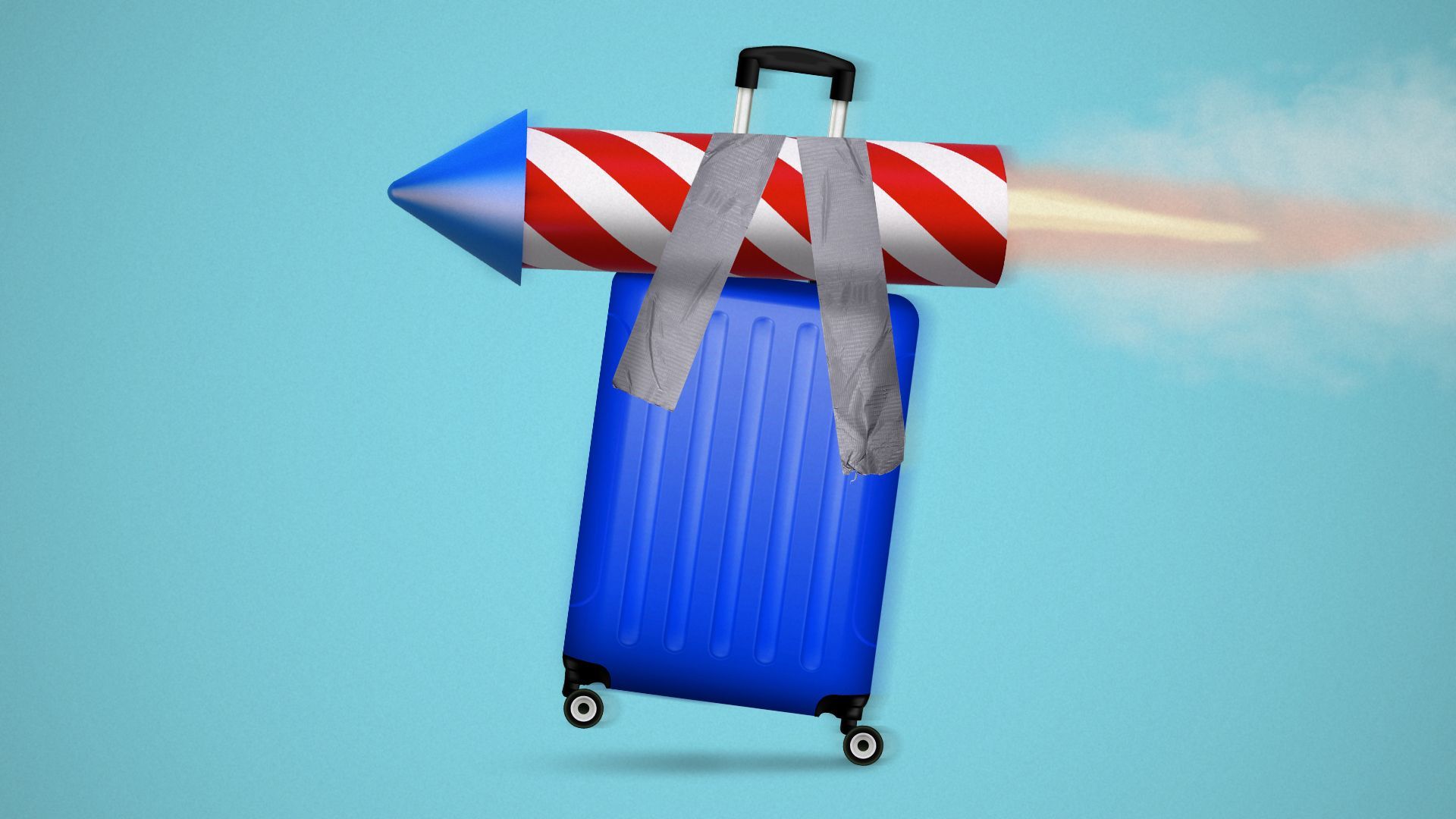
Illustration: Megan Robinson/Axios
If you're planning to travel during the Fourth of July holiday, be prepared for traffic congestion and delays.
The big picture: Nearly 71 million people are expected to travel during the holiday week, the AAA said on Thursday.
- That means some 5.7 million more people will be traveling during the holiday period this year compared to pre-pandemic levels in 2019, making for heavy traffic volumes on the roads and at airports, according to AAA.
What they're saying: "With summer vacations in full swing and the flexibility of remote work, more Americans are taking extended trips around Independence Day," said Paula Twidale, senior vice president of AAA Travel, in a statement.
- "We anticipate this July 4th week will be the busiest ever," she added.
By the numbers: A record 60.6 million people will travel by car, meaning almost three million more people will be on the roads compared to last year.
- The number of air travelers is also expected to set a new record, with 5.74 million people projected to fly to their July 4th destinations. That's an increase of nearly 7% compared to last year and a 12% rise from 2019.
- Another 4.6 million people are expected to travel by other modes of transportation, including buses, cruises and trains. That's up 9% compared to last year but is just shy of 4.79 million in 2019.
Zoom in: "Road trips over the holiday week could take up to 67% longer than normal," said Bob Pishue, a transportation analyst at INRIX, which provides transportation data and insights.
- The worst times to travel by car in the U.S. before and on July 4th are 2-7pm, according to INRIX.
- The worst delays will be in large metro areas on July 3 as people leave town and on July 7 when they return, per INRIX data.
- The best time to hit the road is in the morning, except for on July 8, when drivers should avoid rush hour traffic in the morning and afternoon.
The bottom line: "Travelers should monitor 511 services, local news stations, and traffic apps for up-to-the-minute road conditions," Pishue said.
- Airports will be packed throughout the entire week, and AAA recommends arriving at least two hours early, reserving parking ahead of time and traveling with carry-on luggage versus checked bags.
Go deeper: Treasure Island bans fireworks before July 4
