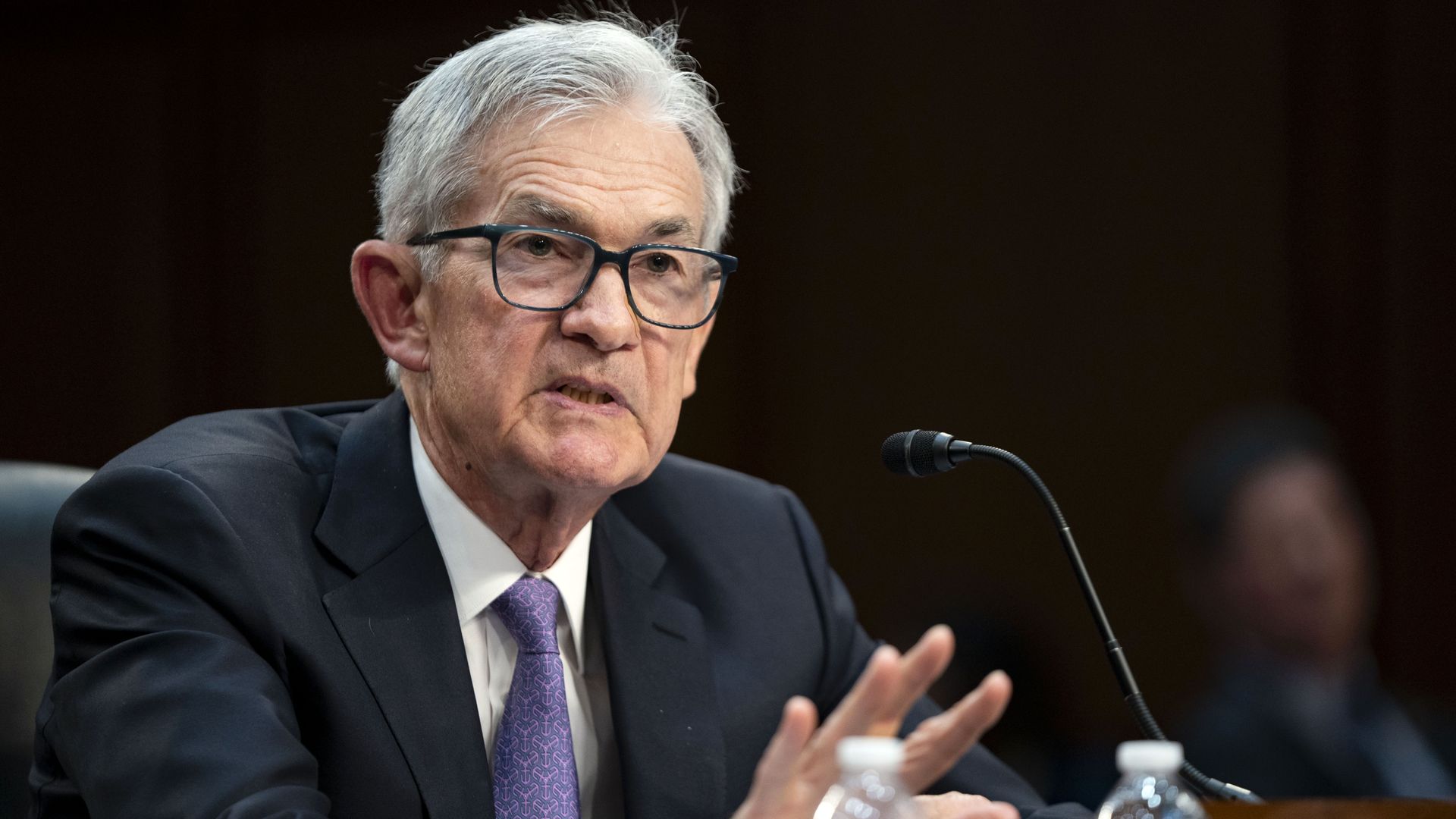
Sen. Cynthia Lummis (R-Wyo.) predicted at a gathering of original cryptocurrency fans Friday that Sen. Tim Scott (R-S.C.) would chair the Senate Banking Committee if Republicans took control of the Senate in this upcoming election.
Why it matters: That would mean a shift in the vision for regulation of all sorts of financial matters, particularly the $1.3 trillion Bitcoin economy, which Scott promised to treat with a "light touch."
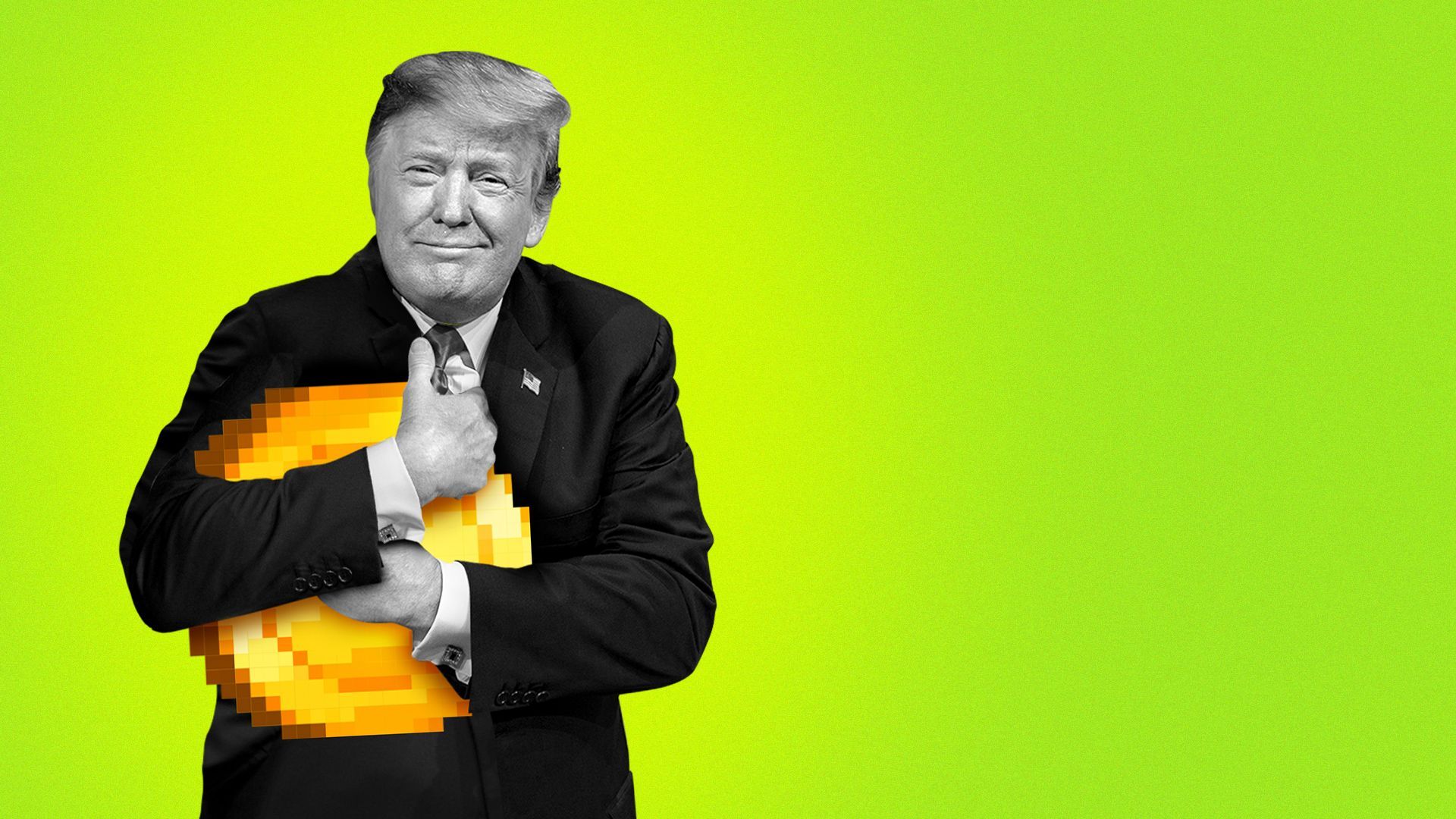
NASHVILLE, Tenn. — Donald Trump will deliver a keynote speech at a Bitcoin conference in Nashville Saturday.
Why it matters: His appearance at the United States' largest gathering of bitcoiners comes amid cryptocurrency's emergence as a wedge issue in the 2024 election. It's already caused some notable tech executives to pledge support — and donations — to the former president.
NASHVILLE — Bitcoin miners at Bitcoin 2024 came out of the gate striking back on the question of energy use, arguing that its critics are thinking about energy all wrong.
Why it matters: The question is one of the core points of contention between Bitcoin miners and the wider world, which still views the asset with suspicion — a fight that has gotten political at the highest levels in recent years.
What they're saying: "We should not be conservation maximalists," Harry Sudock of GRIID said on stage at one of the first sessions of the conference.
Sudock said that quality of life for humans and energy consumption are correlated — more power used equates to greater human flourishing.
Robert Mitchnick, head of digital assets at BlackRock, said on stage at Bitcoin 2024 that he expects major wealth advisers to start soliciting its bitcoin ETF this year, describing it as "likely."
Why it matters: Once major wealth advisers start showing the new instrument to clients, that should open a giant new wave of buyers — for products that came out of the gate stronger than any other ETF in history.
What they're saying: Mitchnick called out what he describes as the bitcoin "punditry community" for describing the cryptocurrency as a risk asset.
"One, I think it's fundamentally inaccurate and, two, I think it's massively unhelpful," he said on stage.
Ledger's latest hardware wallet, called Flex, is shipping, and a special edition is on sale in Nashville.
Zoom in: It's the second product from Ledger this year and is priced at a slightly more accessible $249. (It's not cheap but is less expensive than the now $399 Stax.)
👆 The special BTC edition of the Flex has that orange bar at the bottom.
Flashback: When Ledger's chief experience officer showed us the goods in New York a few weeks back, he said that the firm was indifferent to which one sells.
Some people drive Mercedes, others, Toyota, he said.
💭 Crystal's thought bubble: I prefer the feel of the Stax over the Flex.
One great economic question mark of 2024 has been whether the post-pandemic inflationary episode is well and truly dead or would prove to have more lives than a horror movie monster.
The big picture: Midway through the year, it looks like the monster has indeed been vanquished. Friday morning's new reading of the Fed's preferred inflation measure, the Personal Consumption Expenditures Price Index, confirm as much.
The Federal Reserve's preferred inflation index showed prices increased at a moderate pace last month — the latest indication that America's inflation crisis is nearing its end.
Why it matters: The data also showed that consumers spent at a healthy clip in June as income gains outpaced that of inflation, signs of a still-solid economy.
Maybe Cameo needs to join Cameo to make a few extra bucks.
The once-high-flying company — whose app allows celebrities to earn money by selling personalized videos to the public — is unable to pay a $600,000 fine as part of a new 30-state settlement.
Between the lines: Baron App, which owns the company, will be allowed to pay a reduced fine of $100,000 as part of the deal.
The company was accused of violating consumer protection laws and federal disclosure rules for paid endorsements.
Flashback: Cameo was valued at more than $1 billion in 2021, Business Insider reported, but "it has never been able to attract many A-list celebrities to its platform and had several rounds of layoffs in 2022 and 2023."
Crypto enthusiasts rubbing their hands in expectation of a flood of liquidity coming now that the world's two largest digital assets have been legitimized via ETF, might be waiting a while.
Why it matters: Unlike previous cycles in which a bullish wave in crypto lifted all coins, this time there will be more participants "left on the sidelines," EY's global blockchain leader, Paul Brody, tells Axios.
Between the lines: Bitcoin and ether have always had the deepest, most liquid markets among cryptocurrencies, Brody notes.
That's the reason both are now in ETFs. Their now being in ETFs doesn't change the dynamic across the wider cryptocurrency industry.
NASHVILLE — Any time you see that a gigantic, well-established company has announced a new crypto-related product, it's a safe bet that it's been in the works for a long time, according to PwC's Matt Blumenfeld.
Why it matters: Giant financial firms don't move quickly, so it demonstrates that interest in blockchain applications this time around is more than a fad.
Driving the news: Blumenfeld was one of many financial pros from notable firms talking crypto and accounting at a daylong gathering yesterday in Nashville where professionals discussed how to build classic financial controls and audit-readiness for the much-less-new-than-it-once-was world of business on the blockchain.
Economists anticipated lackluster economic growth last quarter. Instead, growth surged, a sign of the still-resilient economy.
Why it matters: The soft landing was very much intact this spring. Price pressures eased, but not at the expense of the strong economy and labor market.
The U.S. economy grew at a 2.8% annualized rate in the second quarter—a faster rate than economists expected as consumer spending increased and businesses built up inventories, the Commerce Department said on Thursday.
Why it matters: The new data raises confidence the economy has achieved a "soft landing" — healthy economic growth alongside cooling inflation.
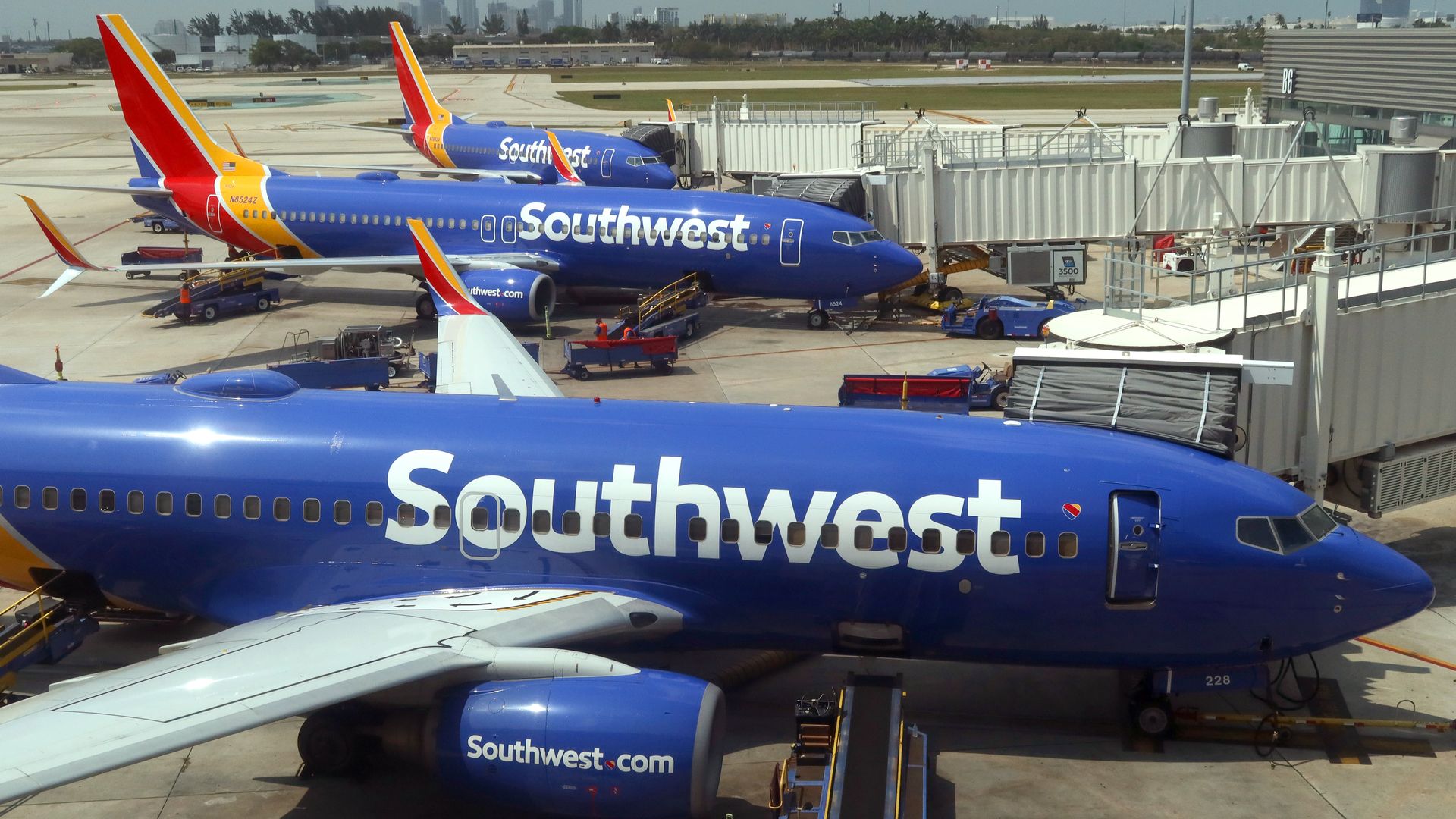
Southwest Airlines is shifting to assigned seating and will offer some premium seating with extra legroom, the low-cost carrier announced on Thursday as part of a significant shakeup to its traditional business model.
Why it matters: The changes come the same day the airline reported second quarter results that beat some expectations following a bump from a summer travel boom but still "fell short" in other key areas.
Why it matters: Though these two issues have been core to advocates for decades, they typically operated in separate lanes. The post-Dobbs environment and Vice President Kamala Harris' run for the presidency changed the equation.