The music industry has found a new way to squeeze revenue out of its biggest acts: "listening seats."
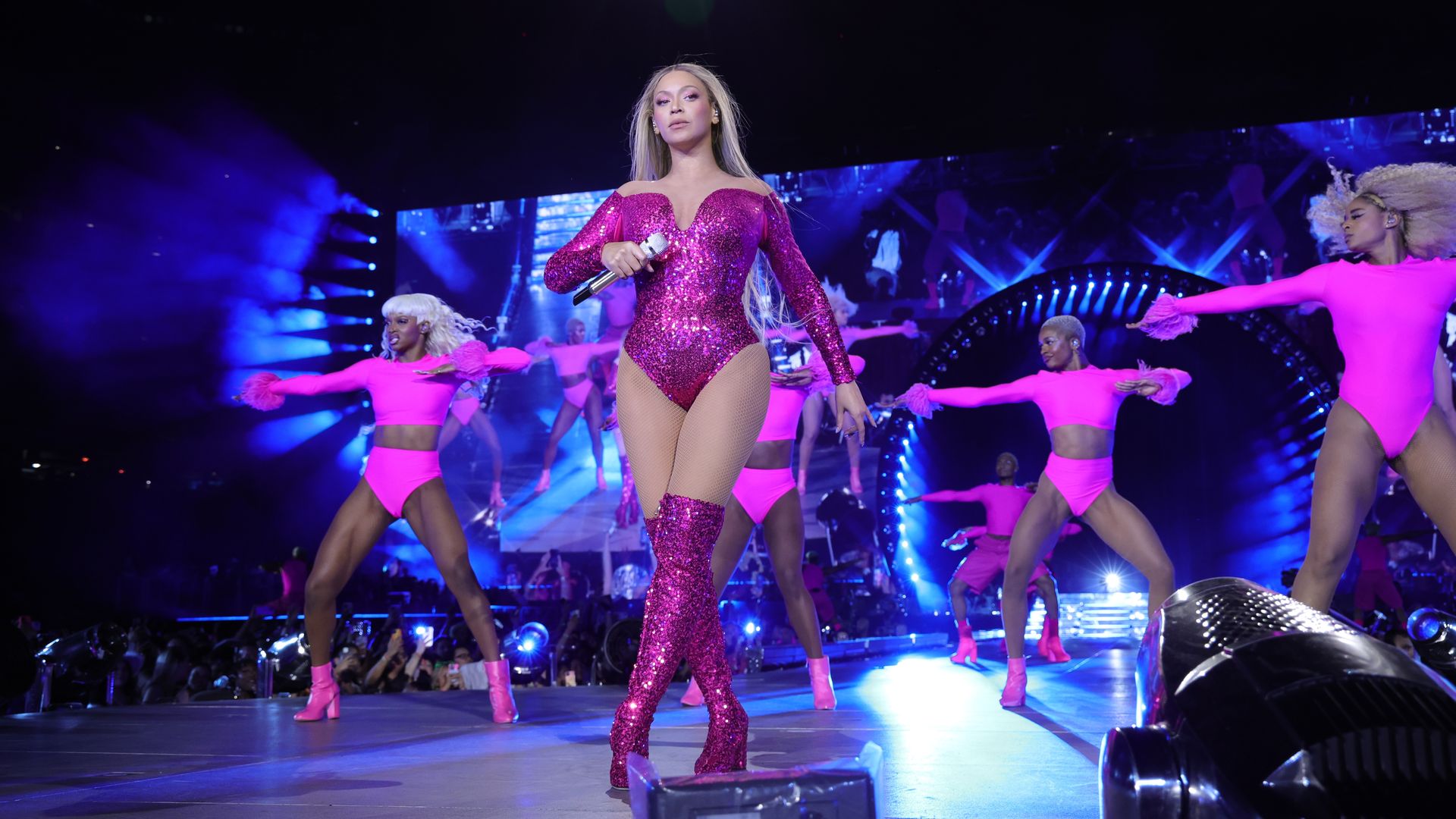
What's happening: Ticketmaster has been quietly selling "listening seats" or "listening-0nly" seats at some stops on Beyoncé's mega tour, listing them as having "no view" or "no stage view."
America's home-improvement boom is over, but people aren't exactly abandoning projects around the house.
Why it matters: The stay-at-home nature of the pandemic and the excess savings that came along with it fueled a huge increase in home-improvement spending, bolstering retailers like Home Depot and Lowe's.
Two global central banks made surprising decisions overnight: China slashed its policy rate while Russia hiked its own at an emergency gathering of central banking officials.
Driving the news: Russia's central bank raised rates by 3.5 percentage points, to 12% — an abrupt decision meant to address the sharp decline in the nation's currency.
The rouble is under pressure thanks, in part, to sanctions from Western nations that have crushed export revenues and higher military spending.
Meanwhile, China unexpectedly cut its key rates in an effort to shore up its economy facing a lackluster recovery from its zero-COVID lockdown measures.
A slate of data overnight paints a disappointing picture: Consumer spending is slowing, while industrial production rose by less than economists anticipated.
The country also said it would suspend publishing data on youth unemployment. In June, that rate hit a record high, underscoring trouble in the labor market.
The bottom line: Different economic issues plague Russia and China. Still, the surprising moves show they are ramping up actions to stem intensifying issues roiling their economies.
Earlier this year, U.S. consumers looked to be losing steam. But that was a head-fake: Shoppers have revved up spending, a sign that the U.S. economy might be picking up steam.
Why it matters: The resilient American consumer continues to support economic activity. Alongside disinflation, which has finally allowed for real wage gains, it may help boost spending.
What they're saying: The data is a "strong start to consumer spending for the third quarter as the economy shifts into a faster gear rather than hit the brakes," Ben Ayers, a senior economist at Nationwide, wrote in a note this morning.
"Rapid wage increases continue to boost consumer spending power, helping to extend the expansion but also raising the specter of lingering inflation," he adds.
By the numbers:Retail sales soared by 0.7% in July, a bigger burst of spending activity than economists anticipated. It is the strongest monthly figure since January, when sales soared by nearly 3%.
June's data increased by an upwardly revised 0.3%. The data is not adjusted for inflation.
Details: Last month's strong spending came as consumers spent more at online retailers (+2%, helped by Amazon Prime Day), restaurants (+1.4%), sporting goods stores (+1.5%) and clothing shops (+1%).
Consumers did pull back on bigger-ticket items, including furniture (-2%), and cars and auto parts (-0.3%).
Control retail sales — which feeds into gross domestic product calculations and strips out volatile components including autos, gas and building materials — rose by 1% in July after a solid 0.6% gain in June.
The intrigue: The yield on the two-year Treasury note, which is sensitive to changes in expectations around what the Fed will do, jumped after the release of the data. It briefly topped 5% before moving back.
"For a Federal Reserve seeking to better balance demand with supply, the retail sales report is not good news as consumer spending growth appears to have started the third quarter at a very strong pace," economists at Brean Capital wrote this morning.
The bottom line: Even after more than a year of aggressive rate increases by the Fed, robust consumer spending continues to lift the economy. The big question is how much longer that will carry on.
"Reduced excess savings, the resumption of student loan payments, and tight credit conditions will further weigh on households' budgets even if rapidly falling inflation should provide a tailwind to real wages," EY-Parthenon chief economist Gregory Daco noted.
Courier Newsroom, a local news group with a progressive perspective, is launching a new newsroom in Nevada Tuesday, and it's planning to launch two more newsrooms in Texas and New Hampshire in the coming months, said its publisher Tara McGowan.
Why it matters: Courier is open about its partisan lens and funding, which McGowan says differentiates its efforts from that of "pink slime" networks on the right and left.
Fantasy Life, the fantasy sports and sports betting media company founded by NBC Sports analyst Matthew Berry, has closed a $2 million friends and family round from a slew of big-name investors, including John Legend, Cincinnati Bengals quarterback Joe Burrow, Buffalo Bills quarterback Josh Allen and more.
Why it matters: The star power involved with Fantasy Life's raise speaks to the popularity of fantasy and sports betting among the establishment class in sports and tech.
Private market investors have taken a long timeto feel comfortable prepping portfolio company IPOs, and already the markets may be testing their resolve.
Driving the news:Stocks are having a chilly summer, with the S&P 500 and Nasdaq both down since July 4.
In the battle between strongmen and democracies, elected governments are pulling ahead — at least economically.
Why it matters: After the financial crisis of 2008 hobbled the U.S. and much of the West, China's strong economy prompted a flurry of commentary about the benefits of its style of state-led capitalism, which eliminated the inefficiencies that always accompany democracy.
The share of companies making moves to nearshore their production nearly tripled this year, according to McKinsey's annual survey of supply chain leaders, out Tuesday morning.
Why it matters: Supply chain resiliency is still a buzzword in corporate boardrooms — it didn't fall away as COVID-related snarls dissipated.
Driving the news: The rate of new credit card delinquencies has surpassed its pre-COVID level, clocking in at 7.2% in the second quarter, per a report out this month from the New York Fed.
Members of the New York Times' union on Monday evening briefed several dozen staffers from The Washington Post union about best practices they learned from The Times' union’s walkout last December, three sources familiar with the meeting told Axios.
Why it matters: The meeting suggests The Post’s union, which has grown in recent months following layoffs, is seriously considering a walkout as it continues to negotiate with management over a contract.