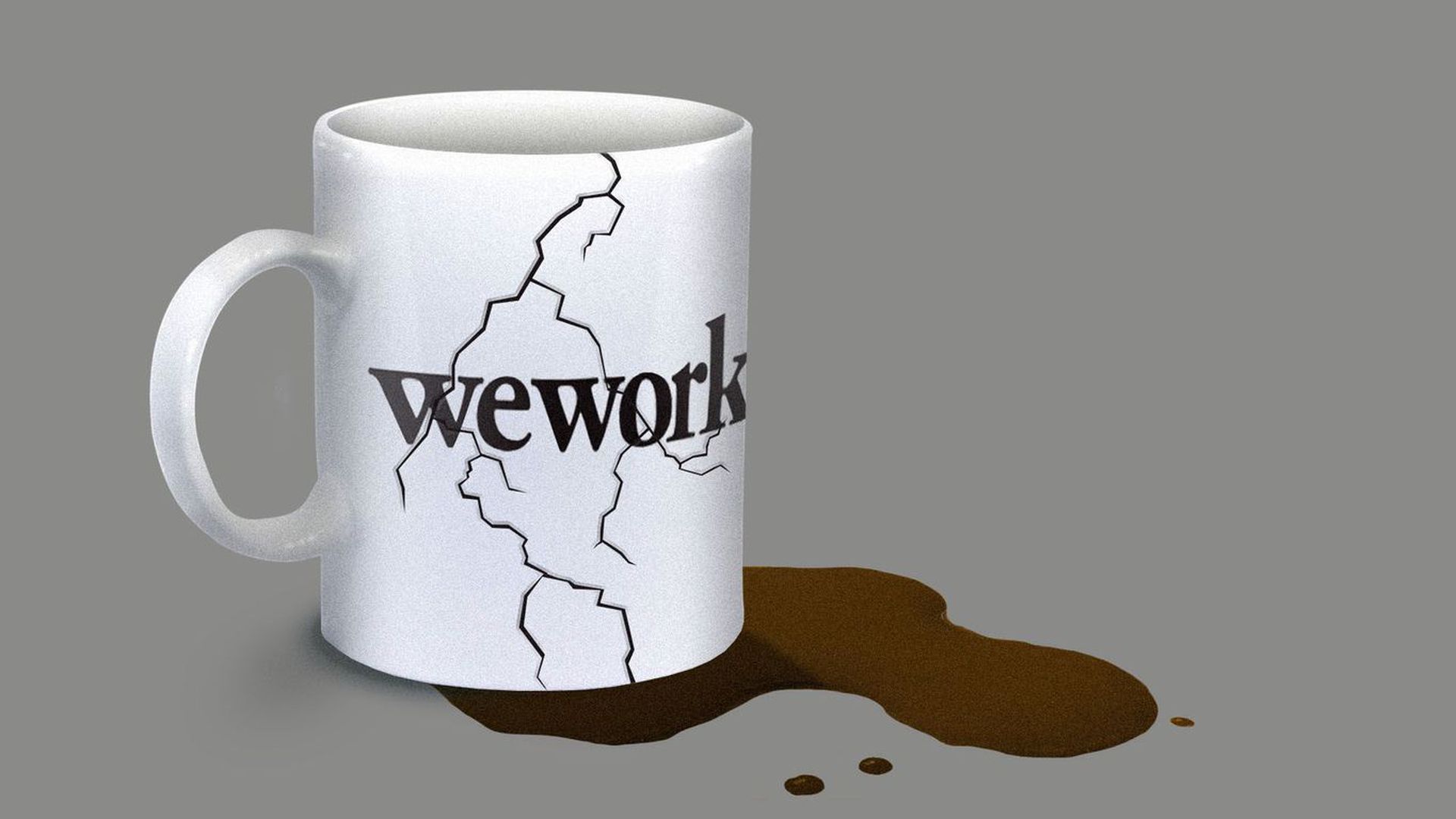
The pandemic at one point seemed like a boon to embattled coworking company WeWork, as it exponentially increased corporate America's desire for flexible office arrangements.
Yes, but: WeWork's challenges now appear to have been so fundamental that not even a widespread shift in office needs could fix them, even as similar companies have taken advantage of the circumstances.
In a desperate effort to combat a chronic teacher shortage and a housing affordability crunch, school districts across the country are getting into a new industry: homebuilding.
Why it matters: On their salaries, many teachers simply can't afford to live where they work, which can have repercussions on the quality of students' education, Becky Pringle, president of the National Education Association, told Axios.
Another star that burned brightlyduring the pandemic and dimmed just as quickly is virtual event software.
Driving the news: In the past two weeks, Hopin — once valued at $7.8 billion — sold its virtual event software to RingCentral for a mere $15 million (which could grow to $50 million if it meets certain targets).
WeWork may have "substantial doubt" about its long-term survival, but one thing appears clear: The iconic co-working company's woes don't extend into the sector at large.
Driving the news: This week, WeWork shook investors by declaring it may have to file for bankruptcy — a ignominious fall from grace for a company once valued at $47 billion.
When a company's bondstrade at 30 cents on the dollar, that's a good sign the market thinks it's toast. That's the average amount that bondholders recoverin the event of a default and/or bankruptcy.
Why it matters: Using that yardstick, WeWork was toast in March 2020. But then the bonds staged an astonishing comeback, climbing from 30 cents in March 2020 to 104 cents in June 2021.
AI will be at the center of future financial crises — and regulators are not going to be able to stay ahead of it. That's the message being sent by SEC chair Gary Gensler, arguably the most important and powerful regulator in the U.S. at the moment.
Why it matters: A paper Gensler wrote in 2020, while a professor at MIT, is an invaluable resource for understanding those risks — and how little regulators can do to try to address them.
Action and adventure movies have squeezed just about every other genre out of the box office.
By the numbers: Looking at the 100 highest-grossing movies of each year, action movies accounted for less than half of the box office in the 1990s. Now they account for 78% of those ticket sales, according to data from Box Office Mojo.