WeWork may be struggling, but the co-working sector is on the upswing

Add Axios as your preferred source to
see more of our stories on Google.
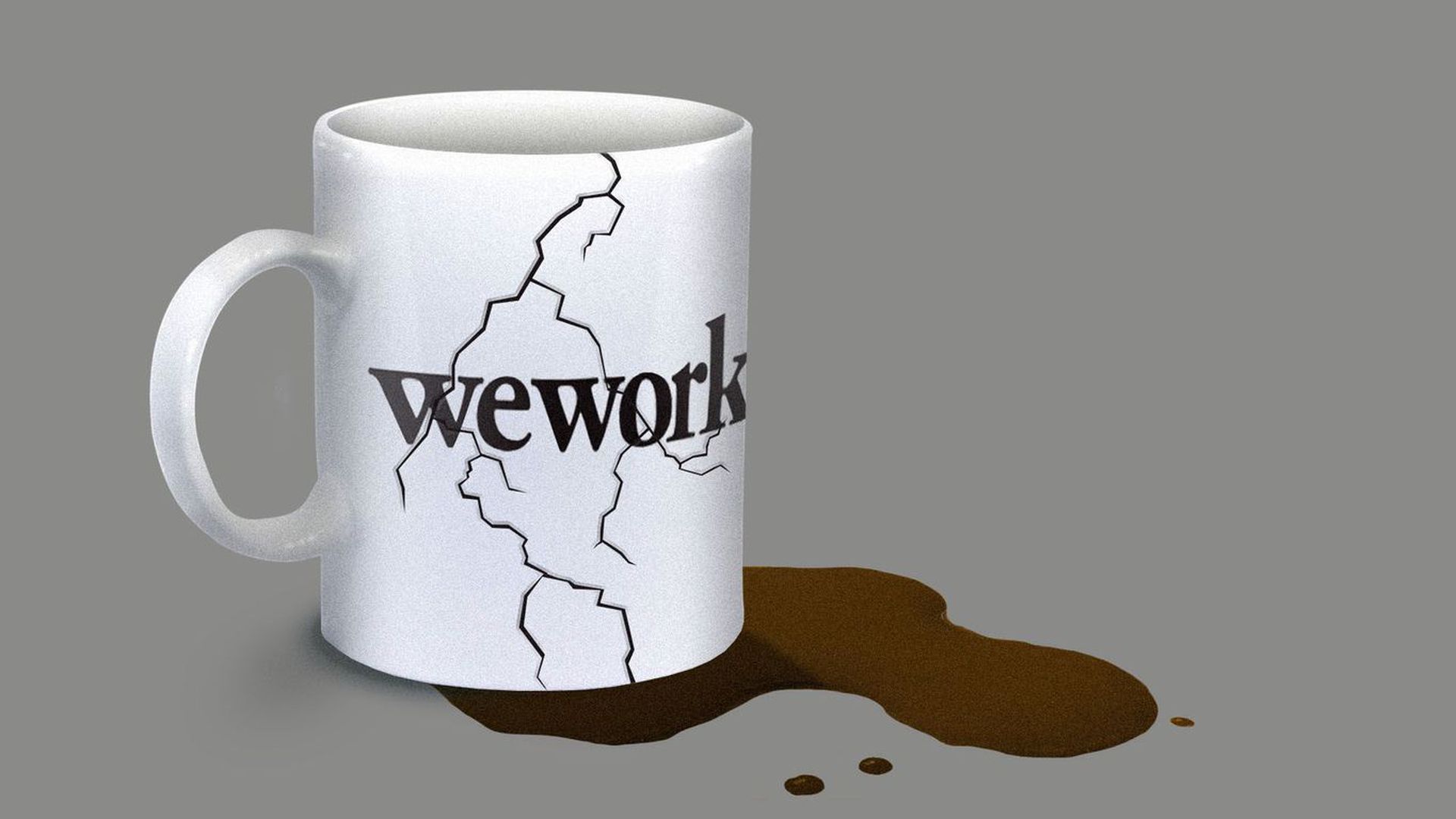
Illustration: Sarah Grillo/Axios
WeWork may have "substantial doubt" about its long-term survival, but one thing appears clear: The iconic co-working company's woes don't extend into the sector at large.
Driving the news: This week, WeWork shook investors by declaring it may have to file for bankruptcy — a ignominious fall from grace for a company once valued at $47 billion.
The big picture: The pandemic-era boom in remote work is fundamentally intact, despite all manner of coaxing, cajoling and threatening by employers to get workers back into the office (looking at you, Zoom).
- The work from anywhere dynamic is a miasma on the traditional office sector, with fewer employees utilizing once-bustling commercial buildings.
- In contrast, the future is relatively bright for the flexible workspace sector as a whole — and for co-working players like IWG and Industrious, which both have strong balance sheets and see business on the upswing.
- "Enormous numbers of customers are moving out of the long-term lease space" into flexible office arrangements, Jamie Hodari, founder of Industrious, tells Axios in an interview.
Zoom out: WeWork appears to have been undone by the extravagant ambitions of its ousted co-founder, Adam Neumann, rather than the vagaries of the business cycle or an uncertain economy.
- Since Neumann's departure, WeWork has floundered as a public company (the stock has lost a staggering 99% of its value since its 2021 initial public offering), and struggled to dig itself out from under a mountain of obligations.
- On the same day WeWork's announcement raised eyebrows, rival IWG (the largest company in co-working) posted a 48% surge in half-year profits.
In fact, the co-working market is big and growing, a trend that existed even before COVID.
- Market Reports World puts the size of the market above $14 billion, and forecasts a compound annual growth rate of over 17% until 2028.
- Regardless of what happens to WeWork, co-working spaces should continue to flourish in the post-pandemic era, especially as traditional offices fall out of favor, and fewer large-scale properties get built.
What they're saying: "This is definitely the strongest performance in the history of the company," Hodari says. (Disclosure: Axios' New York City office is housed in an Industrious co-working space.)
- Unlike WeWork and its lament about canceled contacts, Hodari sees "more demand for [flex working spaces] right now than at any time in the last decade. Our revenue has tripled since 2019, and our current revenue growth rate is between 35% and 40%," he adds.
In another sign of how business is booming, The Financial Times reported that IWG expects to break even in 2023 after three straight years of losses, helped by aggressive de-leveraging and ongoing customer interest in hybrid work arrangements.
- If people are "leaving their house they're looking for somewhere engaging, higher quality workplace experience…flex is doing really well because people have revealed a preference for working this way," Industrious' Hodari says.
The bottom line: For WeWork, the biggest irony is that "the most iconic flex company" is struggling to stay afloat "at a time when the industry is having its biggest wave of demand," says Hodari.
Editor's note: This story has been corrected to reflect that IWG is the largest company in the co-working space, rather than WeWork.
