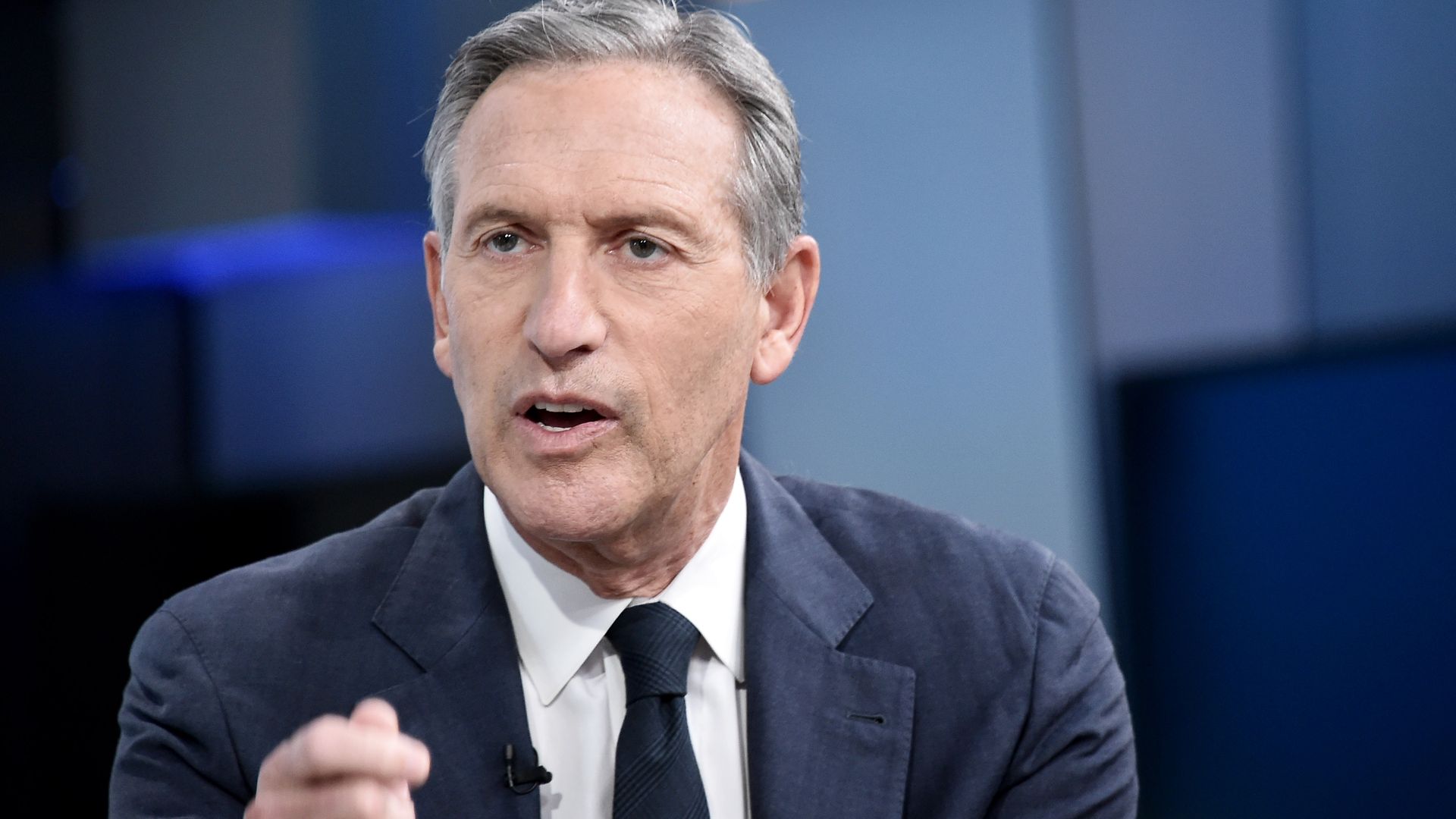
Starbucks' interim CEO Howard Schultz will appear at a Senate hearing on March 29 about the company's alleged union busting.
Why it matters: The coffee chain had resisted prior requests, arguing that because Schultz would be stepping down in March, it would make more sense for another senior leader to testify, CNBC reports.
The debate around spot-bitcoin exchange-traded funds, or ETFs, has hit U.S. courts.
Driving the news: The Securities and Exchange Commission (SEC) was in the hot seat Tuesday, fielding questions from U.S. judges sussing out its reasoning for rejecting Grayscale Investments' application to convert its bitcoin trust into an ETF.
Select eye drops have been recalled over concerns the products may not be sterile, notices posted on the Food & Drug Administration website show.
Why it matters: The recall notices for select lots of Purely Soothing 15% MSM Drops and Brimonidine Tartrate Ophthalmic Solution did not list any illnesses or injuries from the products but "using contaminated artificial tears increases risk of eye infections that could result in blindness or death," the FDA said.
For economic wonks and other data-watchers, every release of jobs, inflation and other indicators is important. But this upcoming round of data is extremelyconsequential.
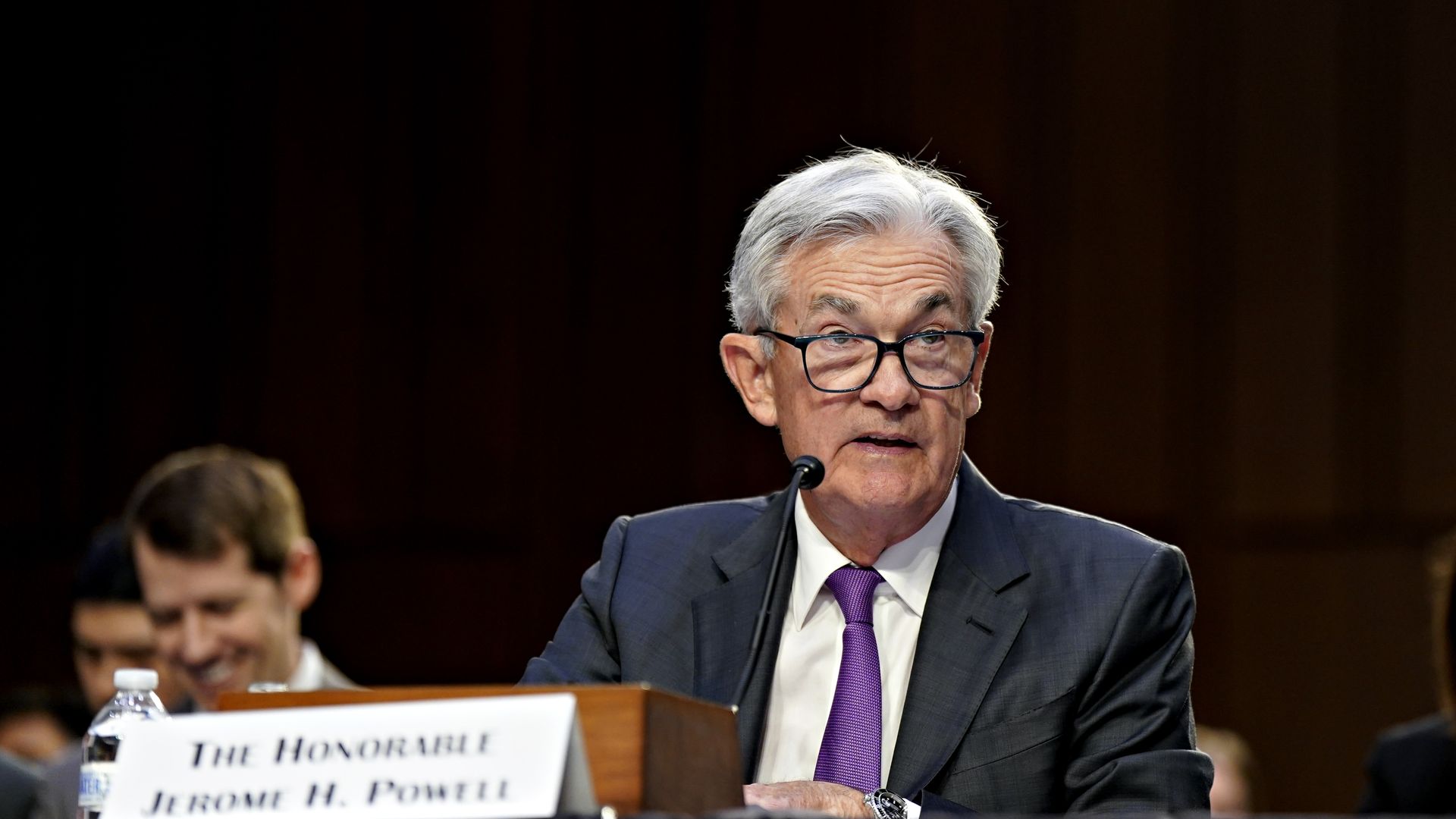
Why it matters: During an appearance before Congress on Tuesday, comments from Fed chair Jerome Powell suggest the central bank is on a knife's edge and may abandon a shift to more gradual monetary tightening that had been in the works for months — if the data confirms re-accelerating economic activity.
January's headline labor market numbers were off-the-charts strong, with 517,000 jobs added and a five-decade low in the jobless rate.
New data out Wednesday morning will give us a look under the hood of what was happening.
Driving the news: For the reasons described above, the upcoming Job Openings and Labor Turnover Survey has greater-than-usual significance. Forecasters expect it to show the number of job openings falling to 10.5 million, from 11 million in December.
That would be evidence of a meaningful slowdown in the job market in spite of January's booming figures.
In December, JOLTS surged unexpectedly from 10.4 million to 11 million — yet another indicator of a too-hot-for-comfort job market.
The intrigue: Job openings, however, have been a volatile indicator of the state of the labor market. They may not be the best indicator of what's really going on.
The rate of quits (people voluntarily leaving their jobs) and discharges (people leaving less-than-voluntarily) could be more instructive of whether there is softening in the job market underway not apparent in other data.
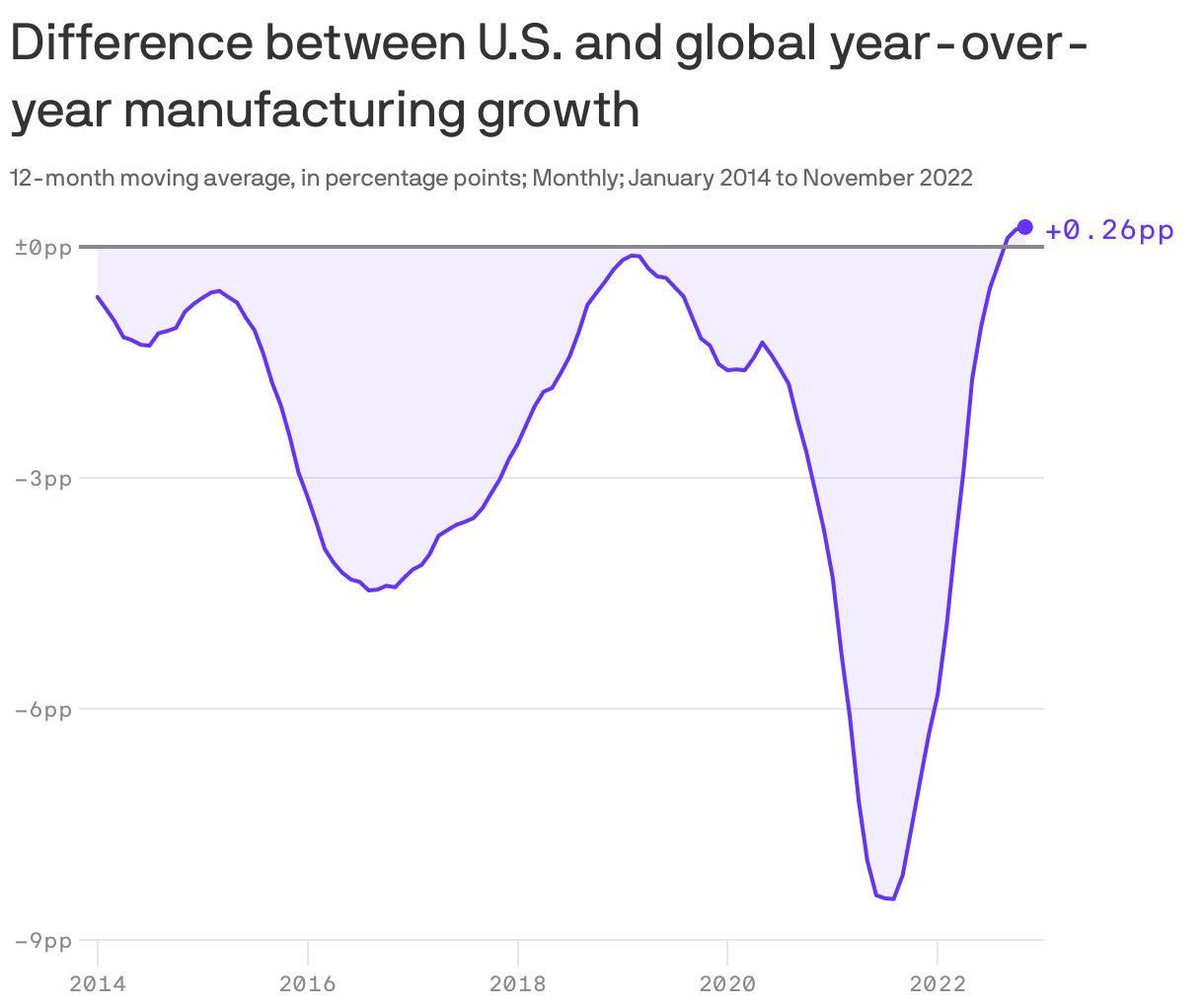
Data: Atlantic Council GeoEconomics Center; Chart: Madison Dong/Axios Visuals
American manufacturing growth started outpacing the rest of the world's growth at the end of last year — for the first time in recent memory.
The big picture: The reasons for the surprising flip-flop are primarily energy and COVID-related, according to the Atlantic Council GeoEconomics Center.
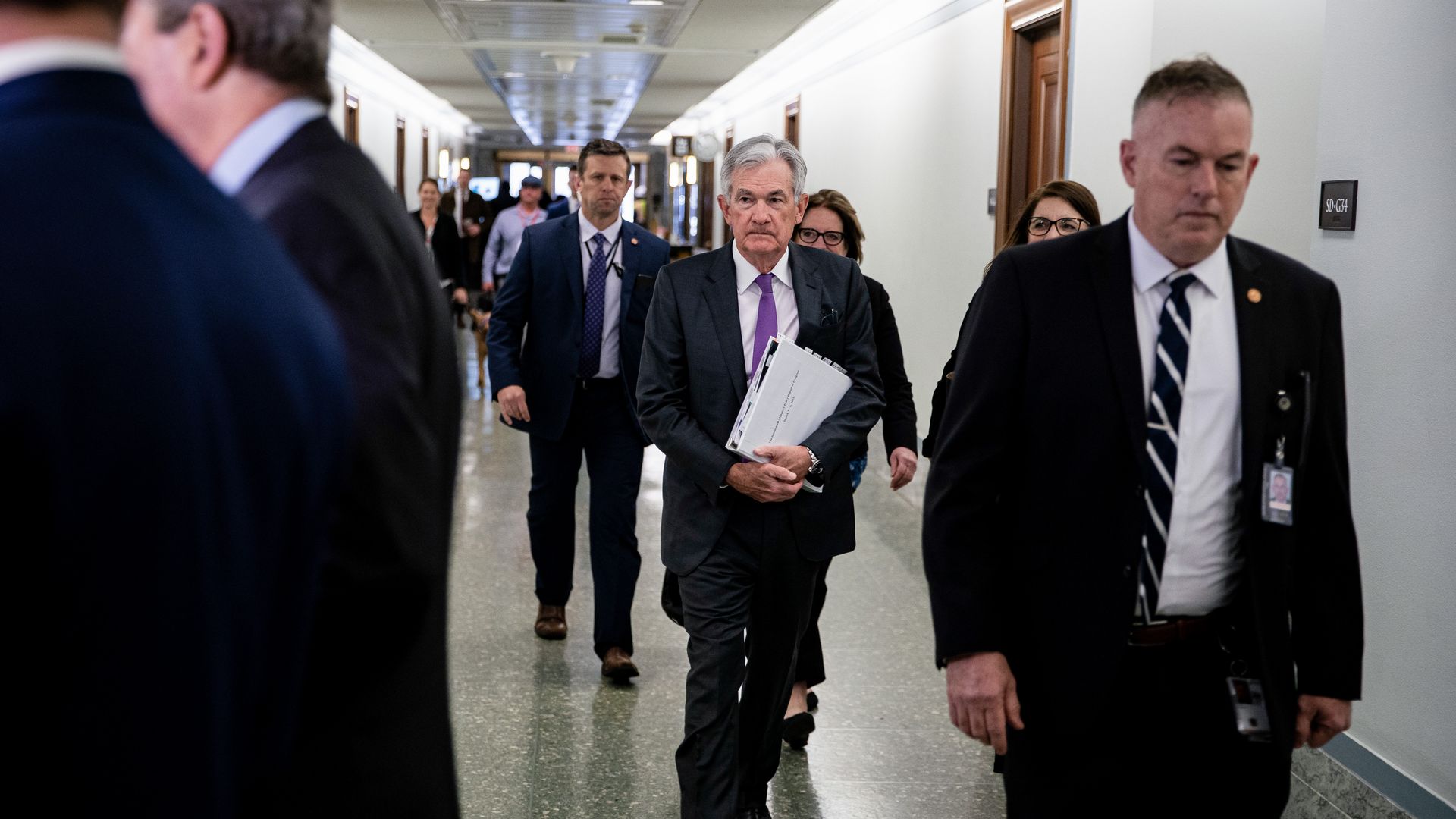
The Federal Reserve will likely raise interest rates to a higher peak than previously thought and may consider ratcheting back up the pace of hikes in an effort to cool down a resilient economy, chair Jerome Powell told Congress on Tuesday.
Why it matters: Powell's remarks underscore the importance of the incoming round of data on the labor market, inflation and consumer spending. If it suggests the economic activity is heating up, the Fed looks prepared to return to a more rapid pace of rate increases and push rates higher than expected.
Digital pharmacy, one of health tech's hottest sectors, is bulking up by slimming down.
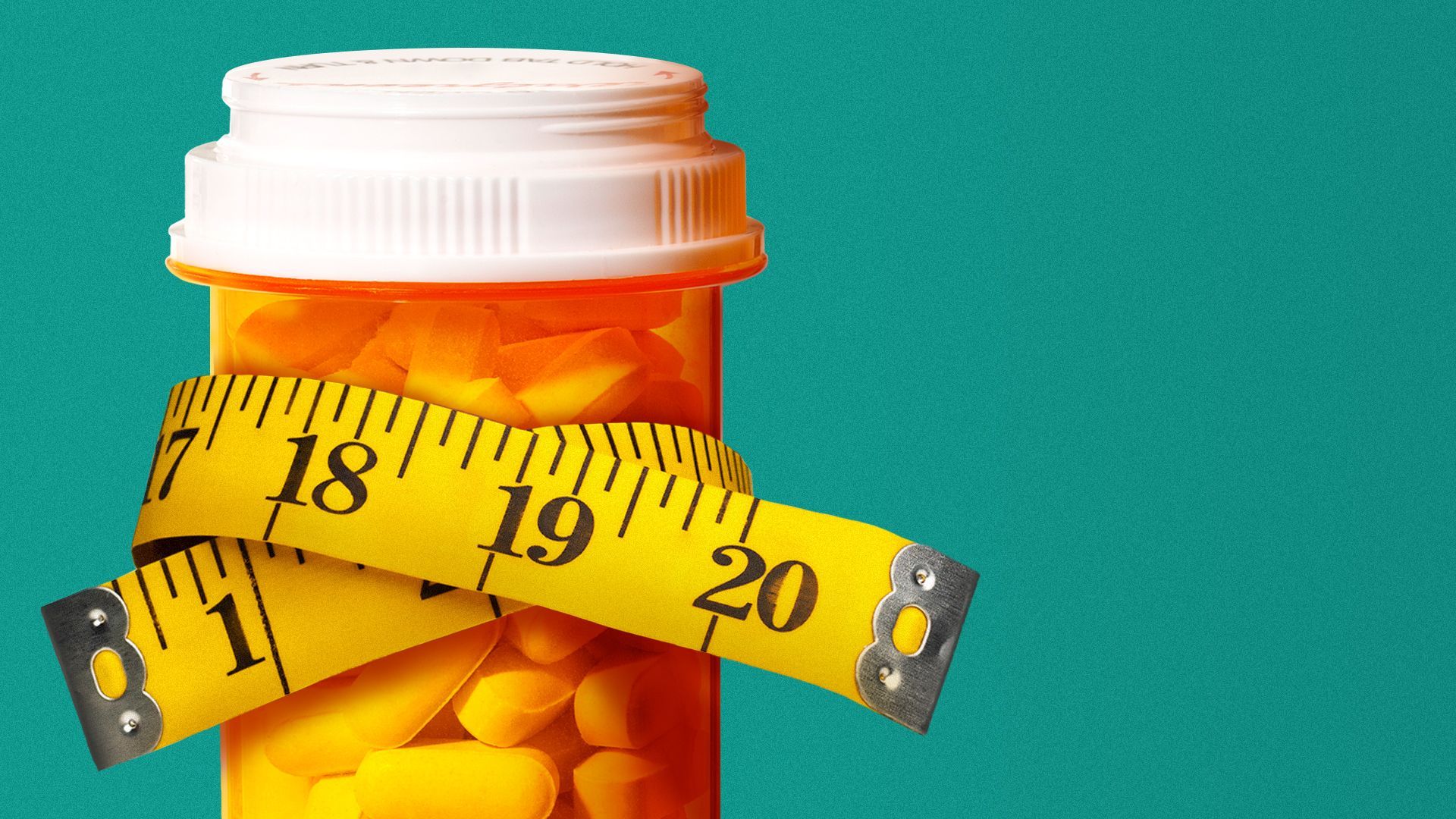
Driving the news: WeightWatchers on Tuesday agreed to buy the parent company of Sequence, a subscription telehealth platform that offers weight management programs and medication prescriptions, including for increasingly popular GLP-1 drugs like Ozempic and Wegovy.
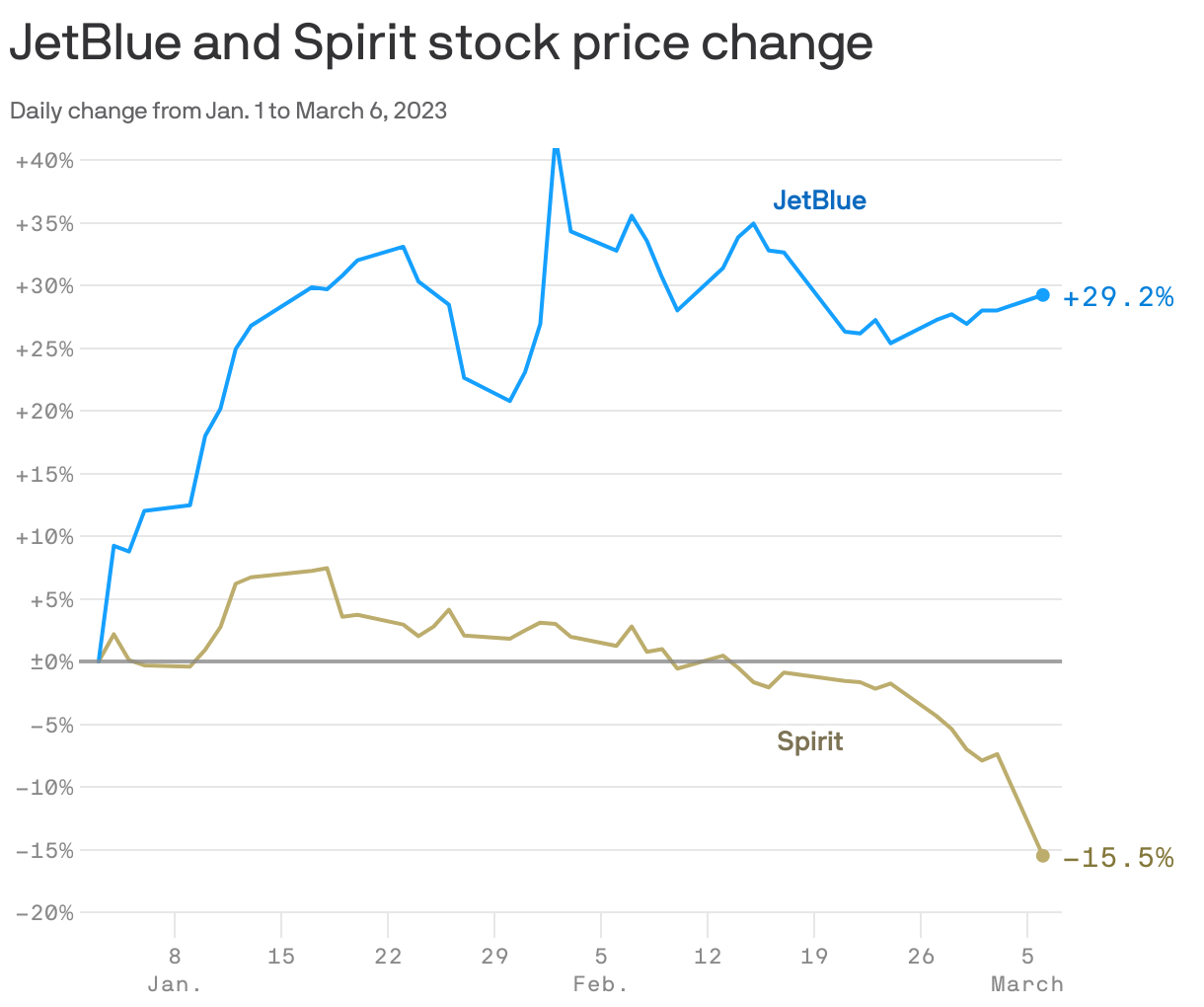
The Department of Justice filed an antitrust lawsuit on Tuesday to block JetBlue's planned $3.8 billion takeover of Spirit Airlines, alleging the merger of low-cost airline rivals would increase ticket prices and lessen options for travelers.
Why it matters:Critics of the deal — which would make JetBlue the fifth-largest domestic airline — have argued that it's against the public interest and would harm competition.
Air Mail, the subscription-based digital magazine company launched by former Vanity Fair editor Graydon Carter, is planning to expand into print as it looks to launch more editorial verticals, Carter told Axios in an interview.
Why it matters: The outlet isn't yet profitable, but Carter said it brings in more than $15 million in annual revenue and has "a significant amount of the money we raised in the bank" to continue expanding for the next few years.
The former executives in charge of The Week magazine are launching a new subscription-based climate media company on Wednesday called Heatmap News, its founders told Axios.
The big picture: It's the latest in a slew of climate-based media startups to launch in the U.S. in the past few years as climate becomes a bigger business and cultural imperative globally.
Data: Gannett company filings; Table: Alice Feng/Axios
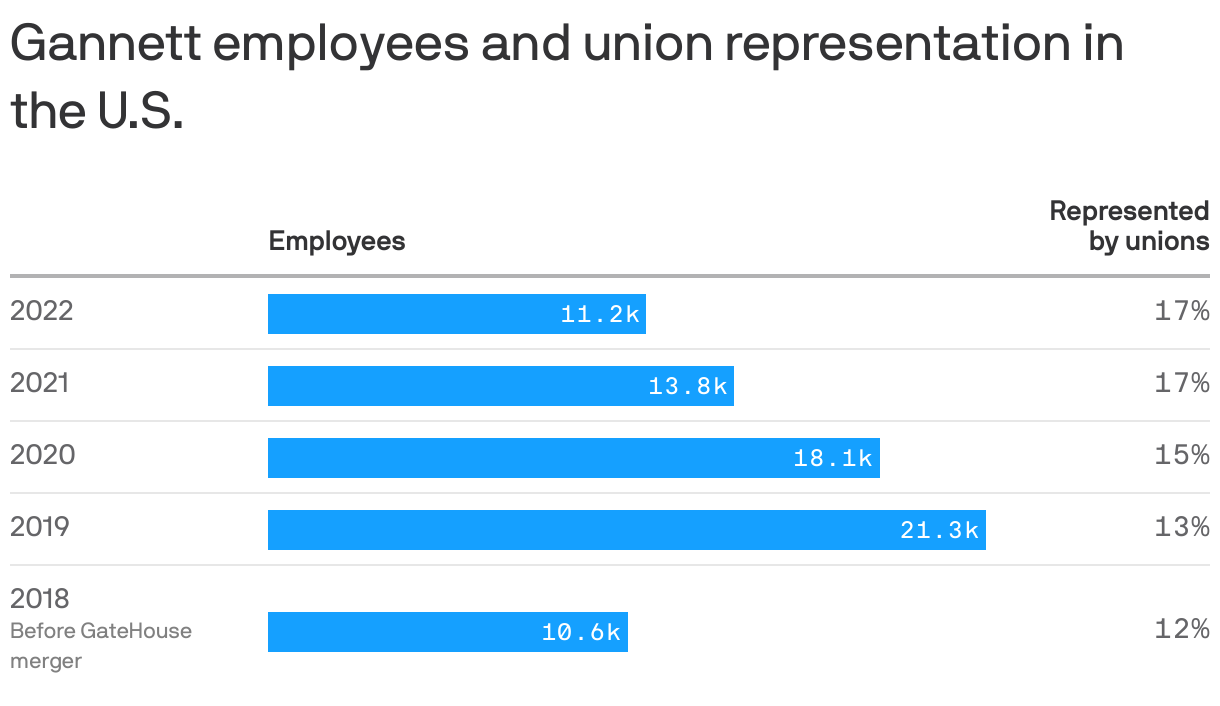
A major leadership shakeup at Gannett, along with drastic cost-cutting and strategy shifts, underscores just how much pressure the country's largest newspaper company is facing as it tries to appease stockholders and remain independent.
Why it matters: The debt accrued from its merger with GateHouse has forced Gannett to dramatically cut costs and bring its employee count nearly back to what it was prior to the 2019 deal.
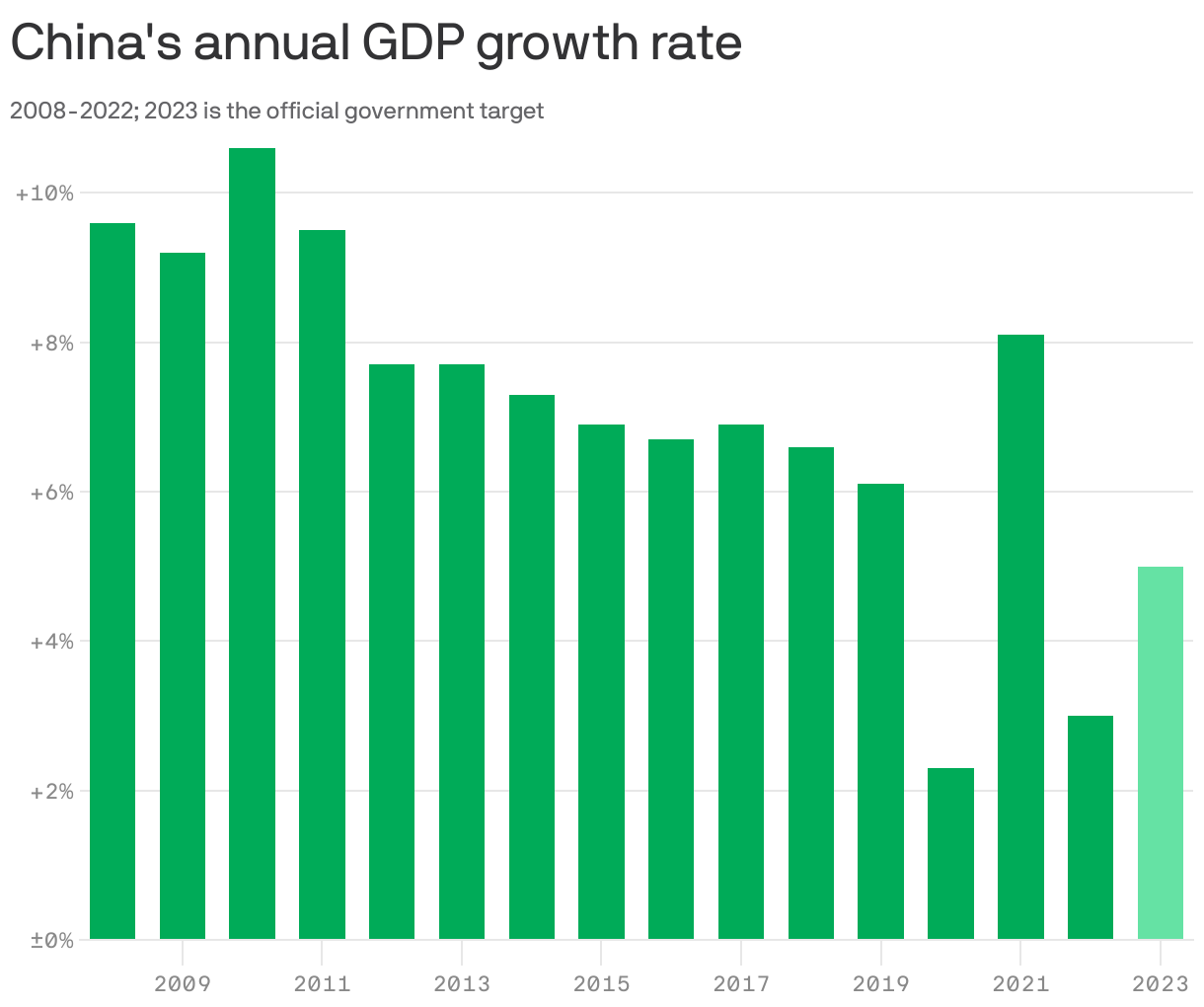
China's growth target for 2023 underwhelmed investors, economists and analysts looking for clues about how President Xi Jinping's officials will run the world's second-largest economy.
Why it matters: The modest growth goals suggestChina's economy may continue to weigh on global GDP this year, as the nation tries to put its COVID-related slowdown behind it.
When we're hit with big, bad news — like getting laid off or a troubling diagnosis — we often spring into action to deal with the problem.
But smaller things that irk us, such as a terse message from a manager or a sink full of dishes, add up. And they eventually have an outsized impact on our mental and physical health.
Why it matters: Most of us tend to ignore micro-stresses and just focus on the big stuff, but the small things require our attention too.
"None of these things evoke the fight or flight mechanism," says Rob Cross, a professor at Babson College and author of a forthcoming book about micro-stress. "They're all relatively small."
But even if we forget about them, our bodies don't, says Cross. In fact, small stresses trigger some of the same physical effects that big ones do, like elevated blood pressure and lower-quality sleep, he says.
Micro-stresses explain why we can feel exhausted or defeated at the end of a day even if nothing big went wrong.
Case in point: One fascinating study found that if even a relatively minor social stress is experienced within two hours of a meal, your metabolism of that meal is disrupted, and the effect is equivalent to adding 104 calories to that meal.
What to do: We can all take steps to be more aware of — and address — the micro-stresses in our lives.
Have a big conversation about a small(ish) thing: If your boss is routinely annoying you by not communicating deadlines or if your child is stressing you out by taking hours to respond to messages, consider bringing it up in a bigger conversation, Cross says. You'll likely be surprised at how much eradicating a small but repeated stressor boosts your mood.
Diversify your life. Cross' research showed that people with robust personal lives, filled with family, friends and hobbies, tend to be less affected by work-related micro-stresses.
Meditate. As we've reported, practicing meditation and mindfulness can clear your mind and do away with stresses — small or big.
The FBI issued more gun seizure orders in the past two years from people who shouldn’t have been able to buy them in the first place than at any other time in history, according to data released by the bureau.