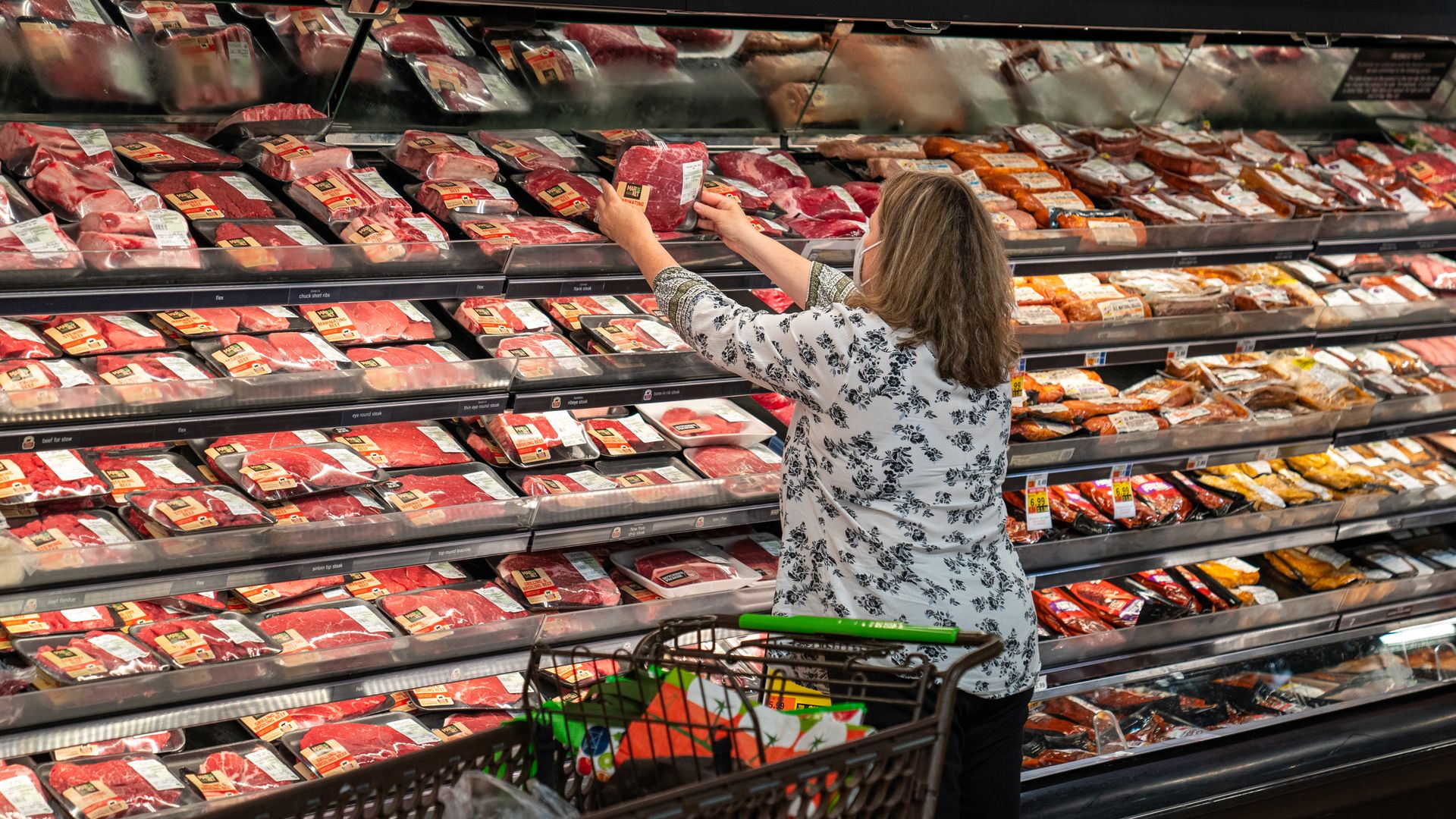
The USDA is considering a new rule that would allow for voluntary “Product of USA” and “Made in the USA” labels on meat, poultry or eggs only when they are “derived from animals born, raised, slaughtered and processed" in the country.
Driving the news: The federal agency released the proposed rule Monday and said it started its review after three industry organizations asked for revised guidance, saying the current voluntary label claim is “confusing to consumers.”
Altria Group has agreed to buy e-cigarette company NJOY for around $2.75 billion in cash, and exit its minority investment in vaping company Juul Labs.
Why it matters: The Marlboro maker is officially switching electronic horses, five years after burning $12.8 billion for a 35% stake in Juul.
On Friday, Axios looked at the strange situation facing the economy: Conditions are as robust as ever, despite the Federal Reserve's best efforts to slow demand and bring down inflation with aggressive interest rate hikes.
We raised a range of possibilities for why rate hikes aren't packing the same punch they have historically. That includes the shifting structure of the economy, the mechanics of financial markets, and higher wealth inequality.
Yes, but: Readers had lots of ideas of their own. Now we look at some of your theories on why tighter money isn't really translating into a slower economy (plus one from a top Fed official who was asked about it over the weekend).
What you're saying: "You seem to ignore the most basic reason why the economy has not slowed down more yet," Brad B. wrote us. "There is a 6-12 month lag effect correct?"
Yes, absolutely. Monetary policy famously does work with long and variable lags, just as Brad describes. It is entirely possible that rate hikes will start to pinch more as 2023 progresses, and this whole question will be moot.
That said, it's worth noting that some research points to those lags getting shorter given the ways the Fed now communicates its future intentions. And by that measure, this tightening campaign began in November 2021, a whopping 17 months ago.
Reader Erica P. writes, "I've wondered whether the seeming ineffectiveness of U.S. monetary policy has to do with the robustness of current fiscal policy."
"The federal government is spending a lot of money on infrastructure, which offers stability — in the form of lucrative government contracts — to a lot of different kinds of businesses for the coming years," she says.
There was indeed massive federal pandemic relief in 2021 that could still be influencing the economy; consumers with pent-up savings from that era, for example, and state and local governments still flush with federal grants.
At a minimum, the government is not implementing any kind of austerity agenda that might bring inflation down.
Ron L. of Baltimore writes, "I suspect that the Fed's actions have the desired long-term effect while having the opposite of the desired effect in the short term. Buyers want to buy before prices increase even more. For sellers, making the sale now outweighs getting a slightly higher price later."
Another reader, Dwight T.,argues that they were too slow. "When I run the numbers it is largely that the Fed has wanted it both ways (booming economy and low inflation) and they just started raising rates late," he writes. "If they had started rate increases a year earlier … it would probably have been quicker."
Finally, at an event at Princeton on Saturday, Harvard's Jason Furman asked San Francisco Fed president Mary Daly for her thoughts. "Is monetary policy losing its effectiveness because there's fewer interest-sensitive sectors?" Daly pondered. "I think that's worth continuing to think about."
That said, Daly went on, "I think it's too early to say that it's not working."
What explains this year's pop in consumer spending? Boomers might be at least partially to blame.
The big picture: Social security recipients (of which retirees make up an overwhelming share) received an 8.7% cost-of-living adjustment this year — the single-largest increase in more than four decades. That is helping support spending, according to new research from Bank of America Institute.
We now have an idea about crypto companies that have registered with the Securities and Exchange Commission (SEC), which lets us look at their subsequent success rate.
Why it matters: The SEC's pitch to companies has been that registration is as simple as a form on the agency's website. But according to a new list, only nine have attained some kind of registration with the agency. They've had mixed results afterward.
Under pressure from animal rights activists, HelloFresh will stop selling coconut milk sourced from Thailand in its meal kits in the coming months over monkey labor allegations, the company confirmed to Axios.
Driving the news: Major retailers, including Walmart, Costco, Target and Kroger, have already stopped carrying coconut milk from certain Thai suppliers accused of using monkeys for forced labor, but HelloFresh is taking it a step further by saying it won’t source any coconut milk from Thailand.
Why it matters: A whipsaw market and economic uncertainty are taking a toll on tech investing — and affecting venture capital's freewheeling zeitgeist.
1. Tech bubble watch: One late-stage VC humbly mentioned that he knew, even before the pandemic officially set in, that the tech sector was due for a reset.
His cue: The unusual number of tech execs and investors paying tens of thousands of dollars to play in the annual AT&T Pebble Beach Pro-Am charity golf tournament in February 2020. Among the participants that year (who actually sign up months earlier):
Bond Capital's Mary Meeker, Coatue's Thomas and Philippe Laffont, Qualtrics' Ryan Smith, SoFi's Anthony Noto, Silver Lake Partners' Egon Durban, Palo Alto Networks' Nikesh Arora, among several others.
2. VC fashion: Move over Patagonia (and Arc'teryx)—the new sporty jacket brand of choice for VCs these days is Cotopaxi, a Salt Lake City-based company founded in 2014.
State of play: Numerous VCs at the conference were sporting the multicolored, quilted Cotopaxi jackets, emblazoned with their firms' logos.
My thought bubble: Cotopaxi's jackets seem to be exactly what the times are calling for. They're a bit more affordable than their predecessors, and inject a bit of fun amid a gloomy market.
Editor's note: This story was updated to reflect that Workday's AneelBhusri was scheduled to participate in the annual AT&T Pebble Beach Pro-Am, but ultimately did not attend.
SiriusXM, the satellite radio company that is parent to Pandora and a minority investor in SoundCloud, announced Monday it is eliminating 475 jobs — or about 8% of its workforce — as part of a broader restructuring resulting from economic uncertainty and new business investments.
Why it matters: SiriusXM makes the vast majority of its revenue (roughly 80%) from subscriptions, but subscriber growth slowed in 2022 due to broader macroeconomic headwinds, including supply chain issues impacting new car sales.
Venture capitalists are pouring hundreds of millions of dollars into generative AI startups.
Driving the news: Reid Hoffman of Greylock Partners, an iconic Silicon Valley investor, just announced he's leaving Open AI's nonprofit board to avoid conflicts of interest with coming investments.
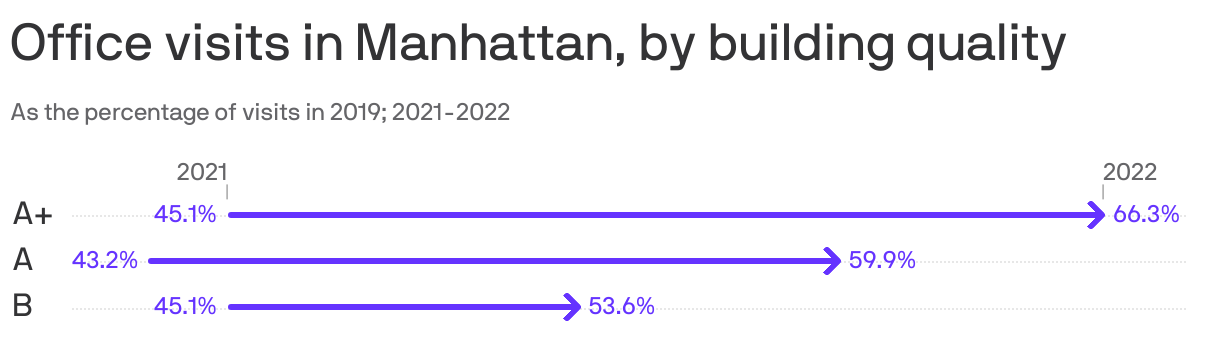
Data: Placer.ai, Building Classifications Determined by REBNY with assistance from Newmark Research; Chart: Rahul Mukherjee/Axios
Some companies are going all out to entice workers back to the office, and, as new data on New York City shows, a super-fancy office might help do the trick.
Driving the news: Visits to Class A+ buildings in Manhattan, i.e. the swankiest places to work, far outpaced visits to Class B buildings, or the less flashy locales, according to an innovative new dataset from the Real Estate Board of New York (REBNY).
In an attempt to reverse the socioeconomic harm of planning decisions made decades ago, the federal government is doling out $1 billion over five years to remove highways that divide communities.
Yes, but: That's a modest sum compared to the billions the government is pumping into new highway expansion projects that critics fear will repeat the same mistakes.
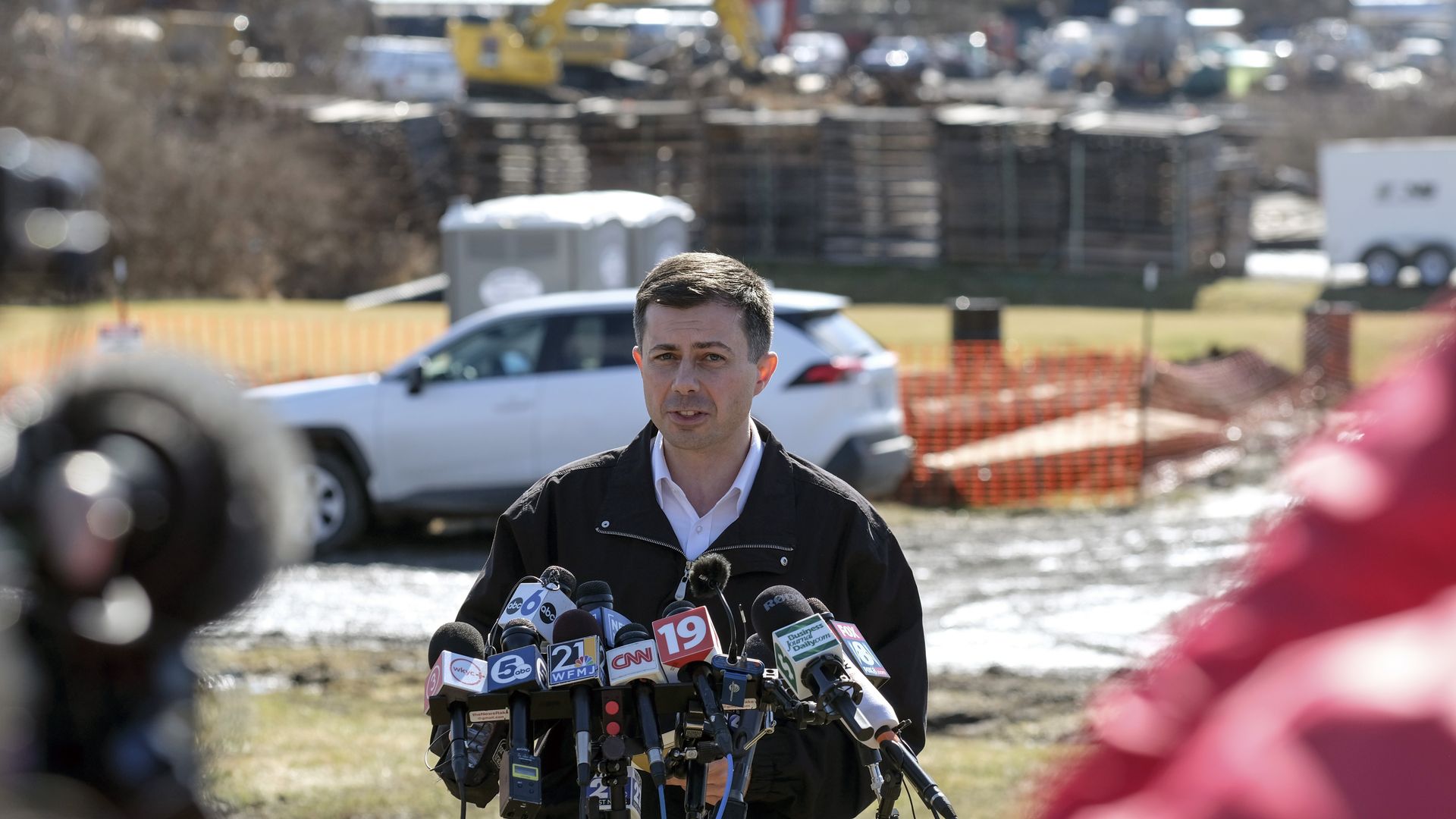
Transportation Secretary Pete Buttigieg told CNN Sunday he "failed to anticipate the political fallout from the toxic train derailment" in Ohio, as he pushed back on Republican criticisms of his response to the incident.
Why it matters: The 41-year-old faces a House Republican investigation over the Biden administration's response to the Norfolk Southern train derailment and Sen. Marco Rubio (R-Fla.) has pressed President Biden to seek Buttigieg's resignation over the matter, per Axios' Andrew Solender.