After an epic 2017, the three major U.S. stock market indices are trending toward a negative year in 2018, with a return to volatility and puzzling sell-offs after strong — but not astronomical — earnings numbers in formerly stalwart U.S. stock sectors.
Data: Money.Net; Chart: Harry Stevens/Axios
Between the lines: Maybe the valuations were a little too hot, or investors were spoiled by double digit returns.
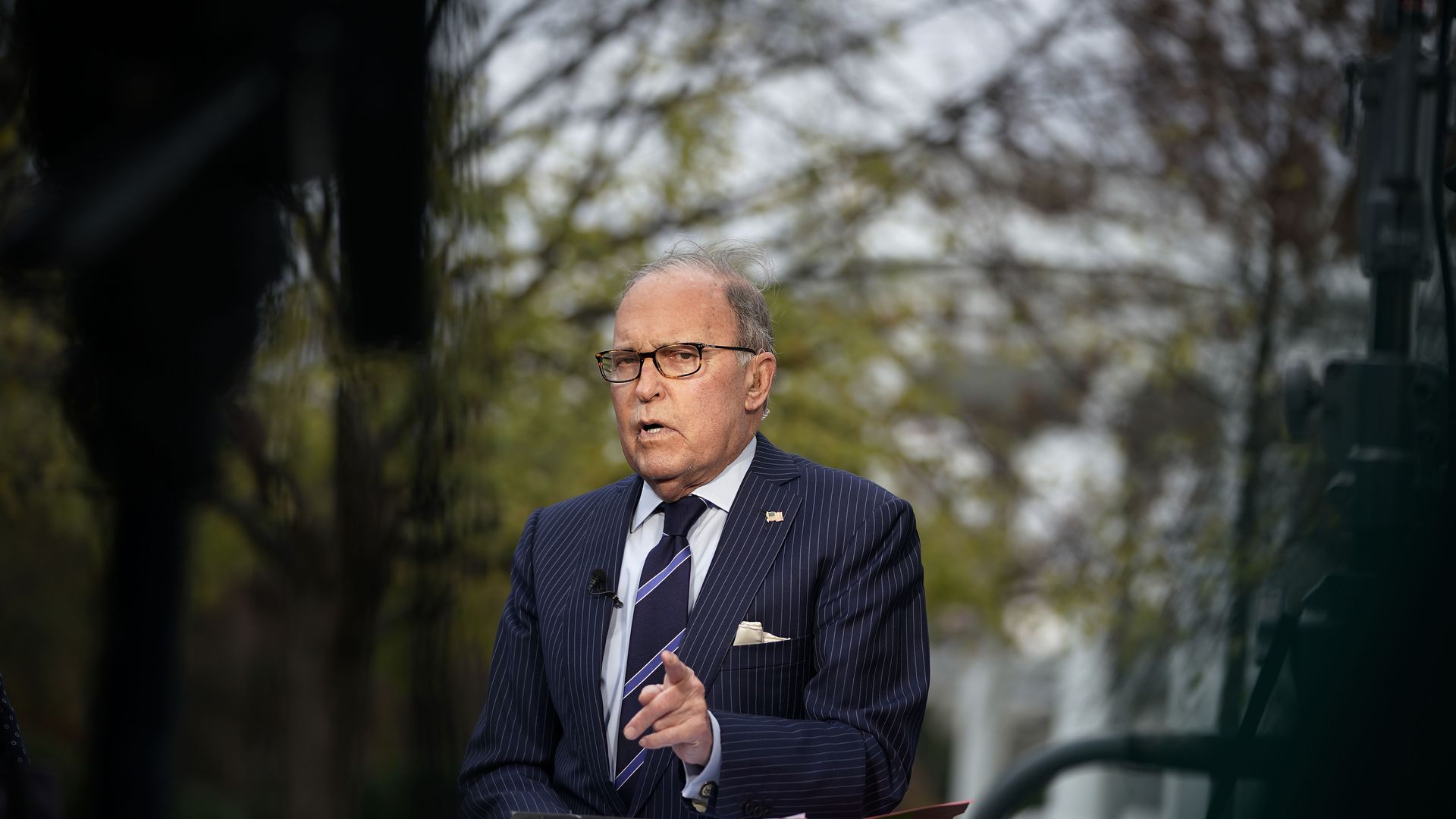
President Trump's top economic adviser Larry Kudlow said Tuesday that stock market corrections "come and go" and that the economy is on solid footing:
"My personal view, our administration's view, recession is so far in the distance I can't see it."
— Larry Kudlow, director of the National Economic Council, to reporters at the White House
The backdrop: Kudlow's comments came as stocks continued to drop sharply on Wall Street. And while the economy has been strong under Trump, Goldman Sachs and the Atlanta Fed are among those forecasting slower economic growth in coming quarters.
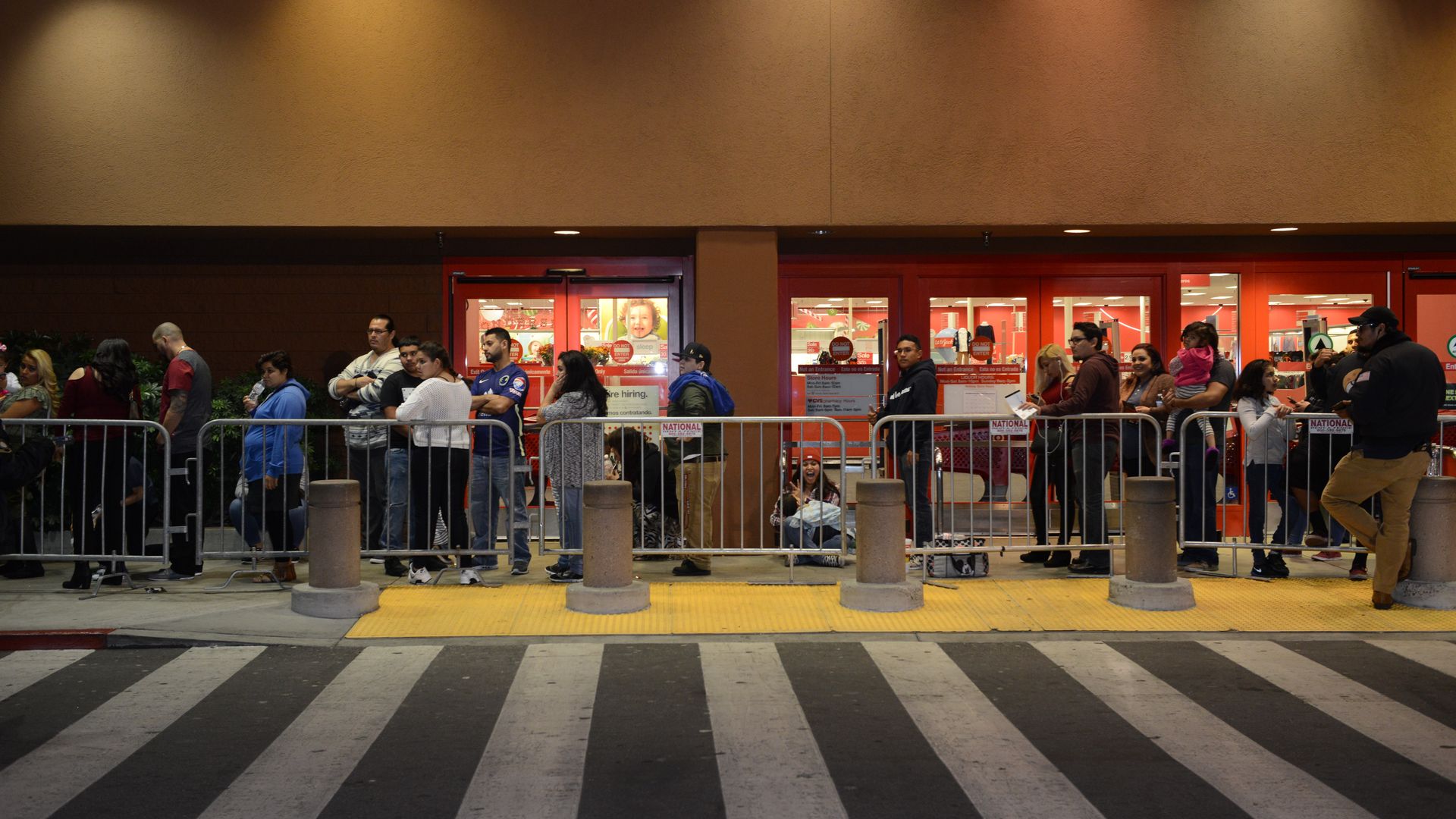
Target shares fell as much as 11% this morning after it narrowly missed analyst expectations for the quarter, as massive selling took all three major U.S. stock indices underwater for the year.
The big picture: In trading this morning, the Dow, the S&P and Nasdaq all wiped out their gains for the year. Retail stocks were hit hard just three days before Black Friday, the biggest brick-and-mortar shopping event of the year.
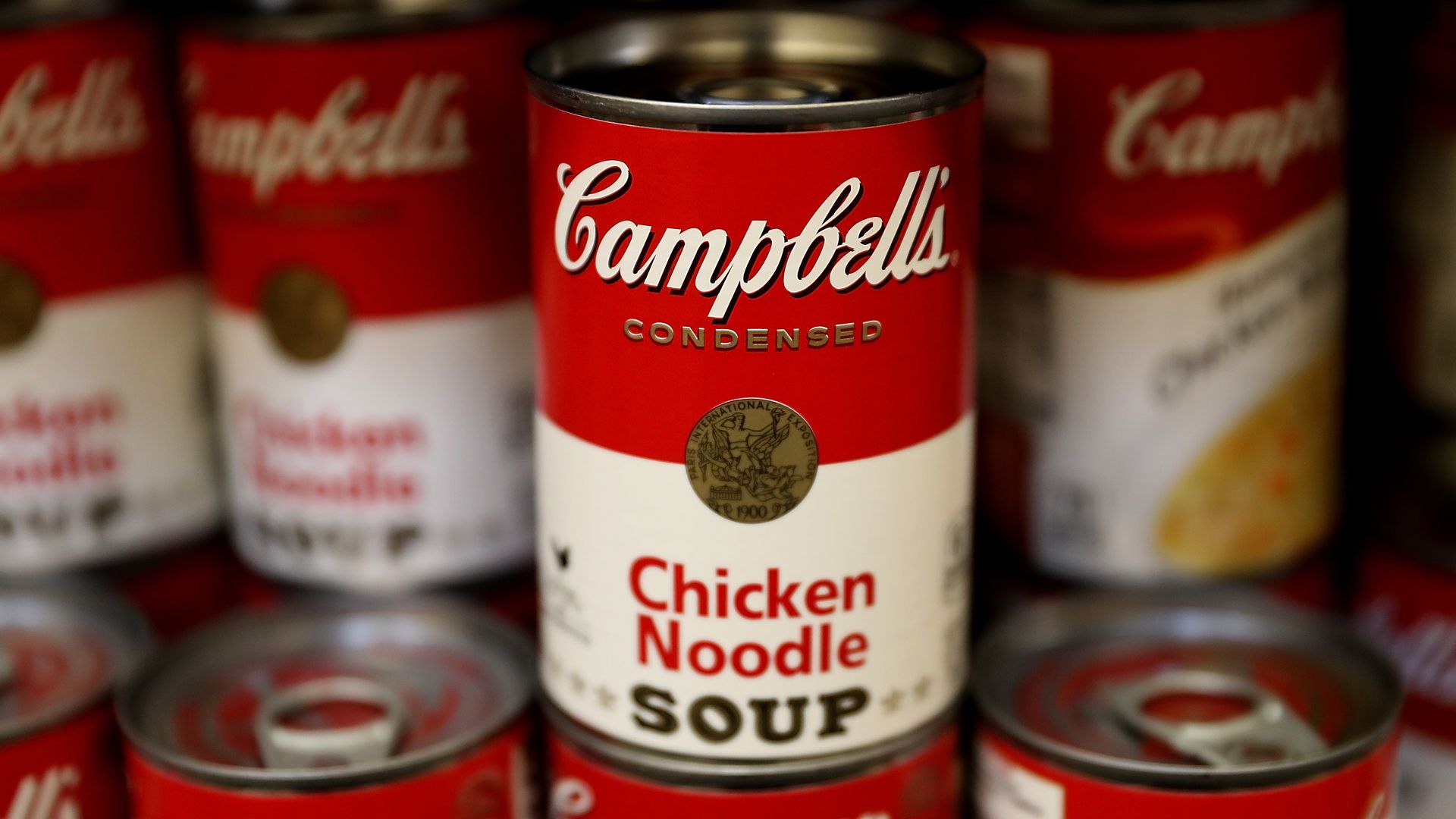
Campbell Soup got a rare win in its battle with activist investor Dan Loeb's firm Third Point, after the company reported strong sales in its snacks business and an improvement in its soup business in its latest quarter on Tuesday.
Why it matters: Campbell's proxy fight will face a key development next week when shareholders vote on Third Point's proposal to overhaul its board. Loeb has been calling for a breakup of the company after a string of disappointing quarters, and there's no guarantee that this quarter's results will be enough to prove to shareholders that the turnaround plan is working.
Economic and regulatory hurdles are forcing every media, ad and tech company to reposition themselves in Washington.
Why it matters: As a result, top media industry trade groups are in an intense battle over who will represent legacy brands, ad tech companies and direct-to-consumer upstarts.
PhRMA, the pharmaceutical industry's main lobbying group, considerably bolstered its political and financial position during President Trump's first year in office, new federal tax filings show.
The bottom line: PhRMA directed tens of millions of dollars toward conservative think tanks, political groups of all stripes and patient advocates with the hope of convincing the public that the industry isn't "getting away with murder," as Trump put it, and that others are to blame for the country's drug pricing maze.
Victoria's Secret CEO Jan Singer has resigned following three consecutive years of declining profits and sluggish sales, the company announced on an earnings call Monday. The WSJ first reported her departure last week.
What's next: John Mehas, the president of Tory Burch, will take over as CEO early next year, Victoria Secret's parent company, L Brands (LB) said Monday. The shakeup comes as Victoria's Secret continues to struggle competing with online companies like ThirdLove and True & Co., which have focused on women's comfort and have capitalized on technology to customize their bras and lingerie lines. Victoria's Secret chief marketing officer Ed Razek has also come under fire in recent days for comments he made in Vogue about deciding against casting transgender and plus-size models in the company's annual fashion show.
COLUMBUS, Ohio — Struggling with declining foot traffic, traditional mall retailers are debuting gimmicks and side businesses to get shoppers through their doors.
What's going on: Columbus' Easton Town Center, a massive outdoor mall, has become a testing ground to see if these ideas work. There's a nail and hair salon is inside of a DSW shoe store, and an ice box in Eddie Bauer, allowing customers to see if the brand's jackets will really keep them warm.
The case that the U.S. and China are entering an era defined by hostility and competition was bolstered this weekend when an annual gathering of Pacific Rim countries turned into a standoff between Washington and Beijing.
Why it matters: So deep do the distrust and divisions run that the 30th Asia-Pacific Economic Cooperation (APEC) summit was the first to end without a joint statement from the 21 participants. If economic barricades go up, and stay up, countries could be forced to choose between the globe’s two economic giants. “The entire world is worried," the summit's host, Prime Minister Peter O’Neill of Papua New Guinea said, per the NYT.
The Nasdaq closed down more than 3% on Monday, amid a broader market sell-off.
The Dow lost 395 points, or 1.56%, while the S&P 500 dropped 1.66%.
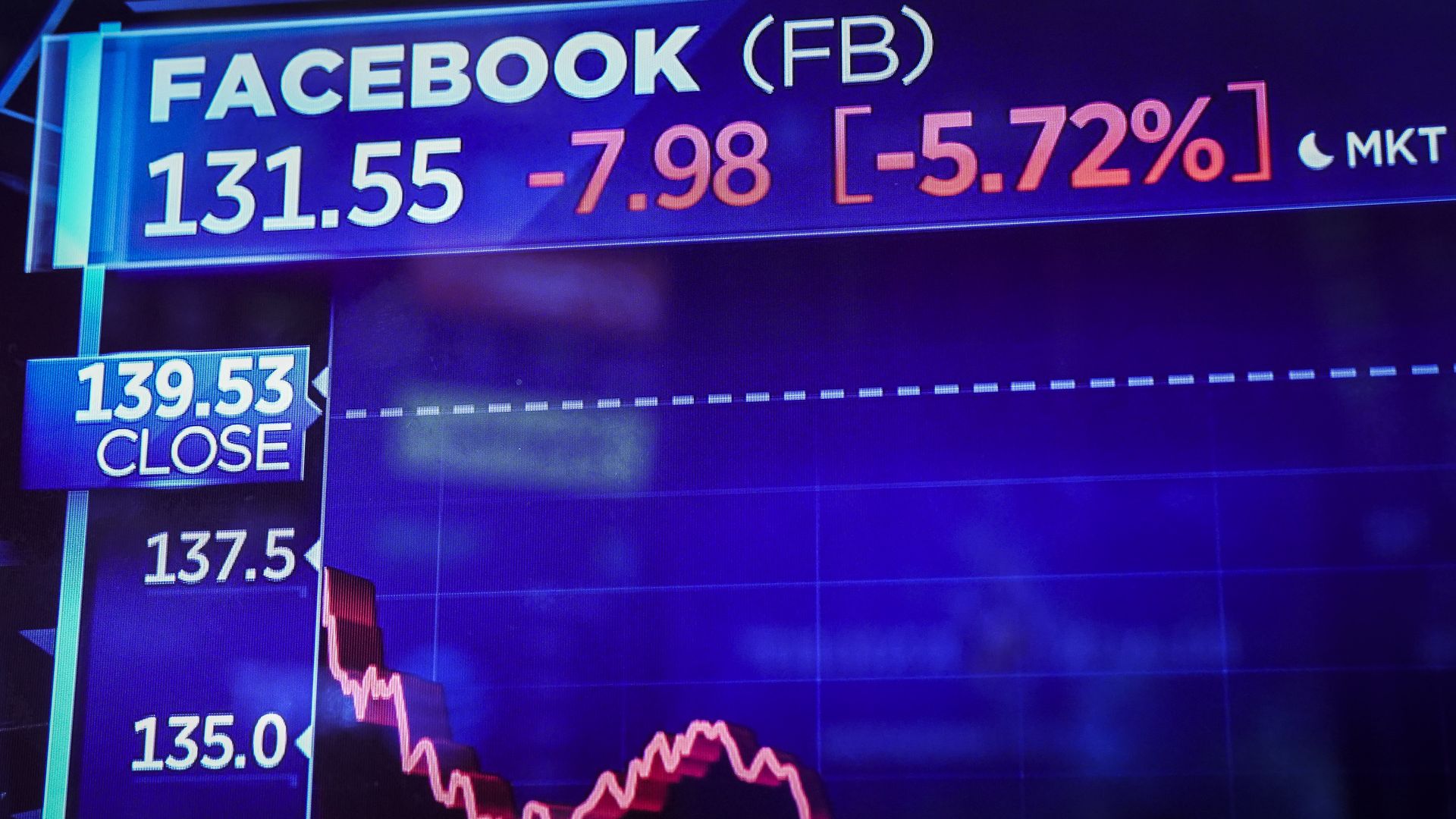
What's happening: It's a culmination of bad news for technology stocks. Apple dropped 4% following a report the company cut production orders for iPhones, while Facebook shares closed 5.7% lower after a Wall Street Journal story about company turmoil. Other big losers were Amazon (off 5%) and several chipmakers.
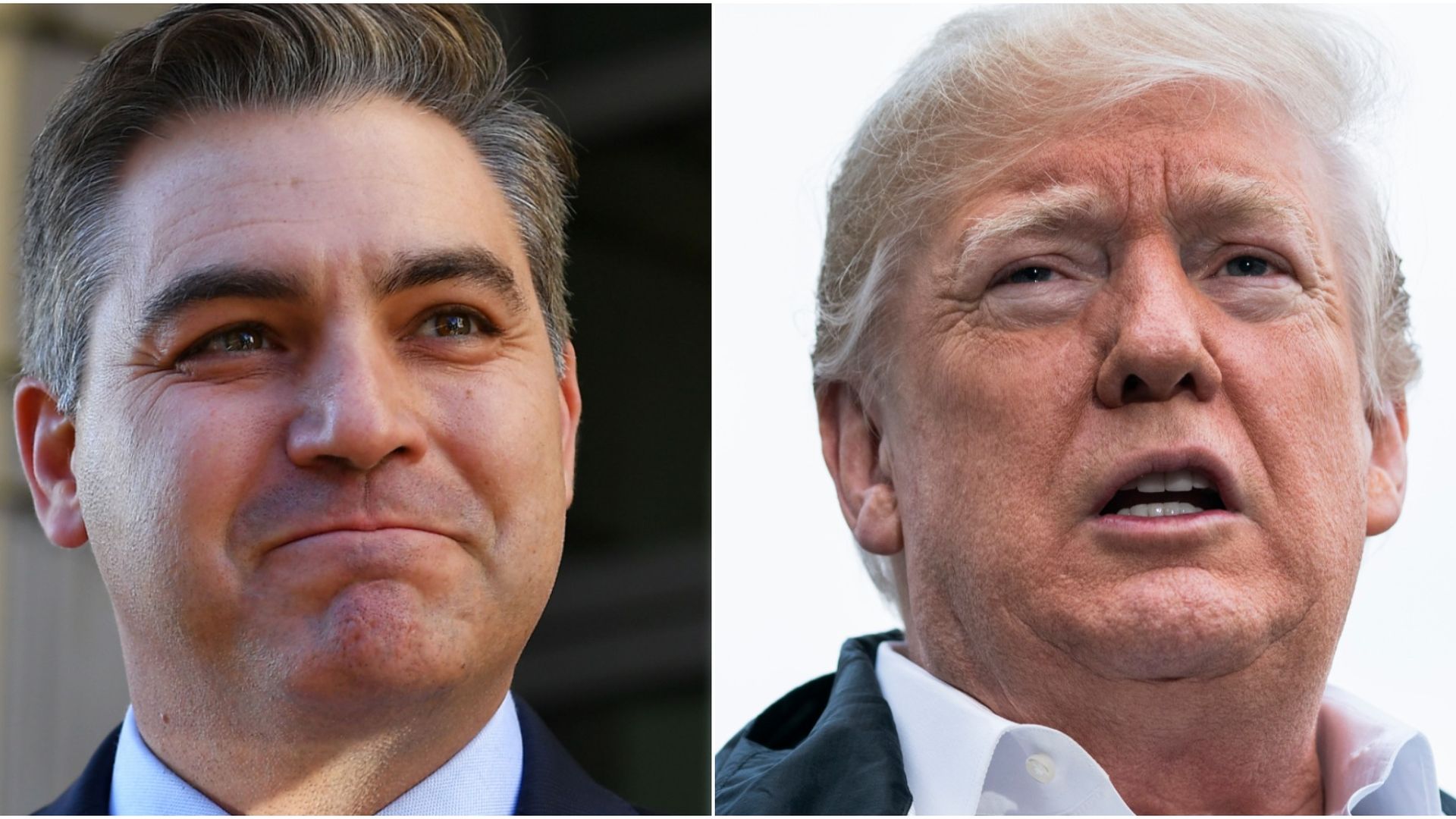
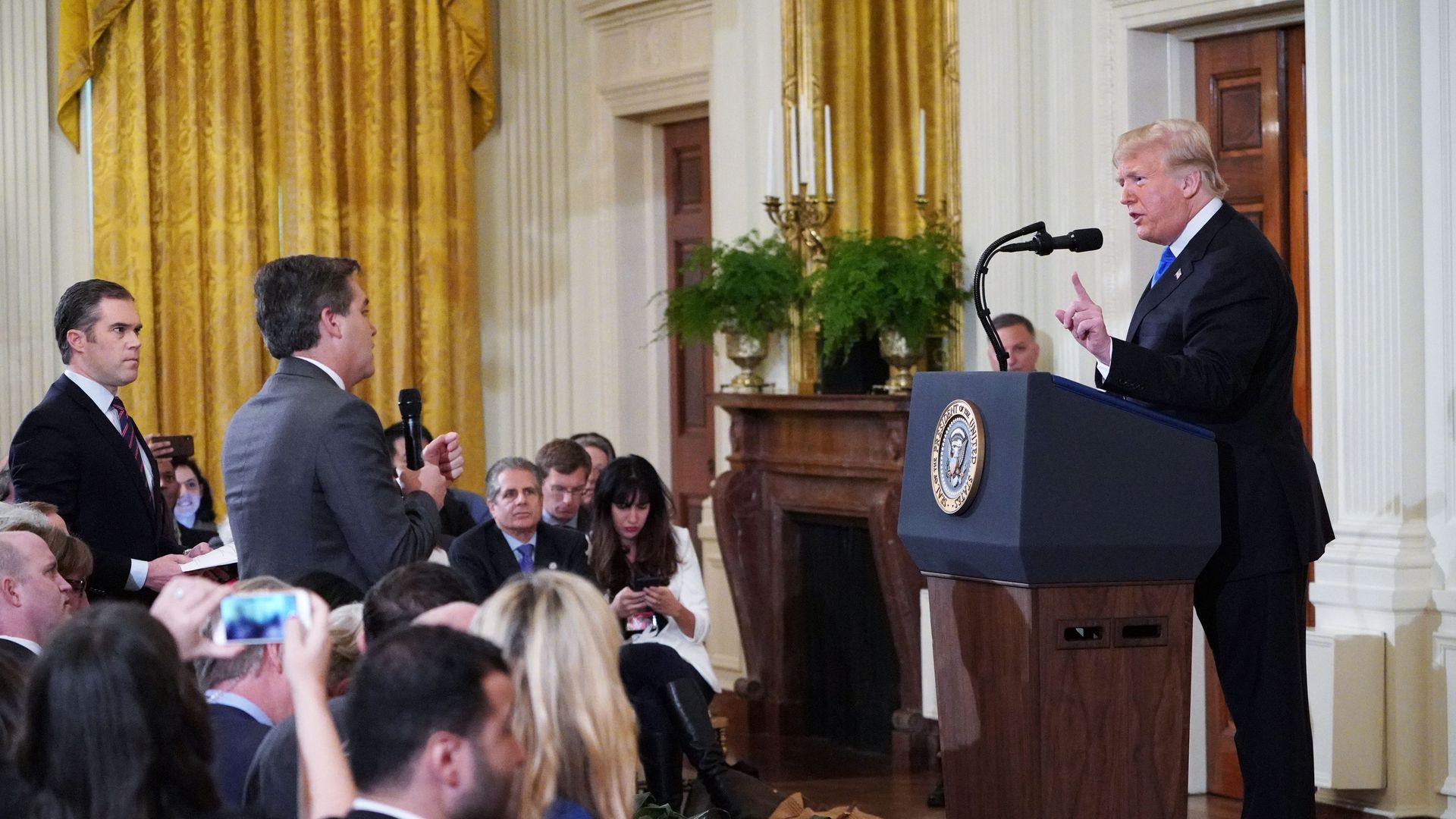
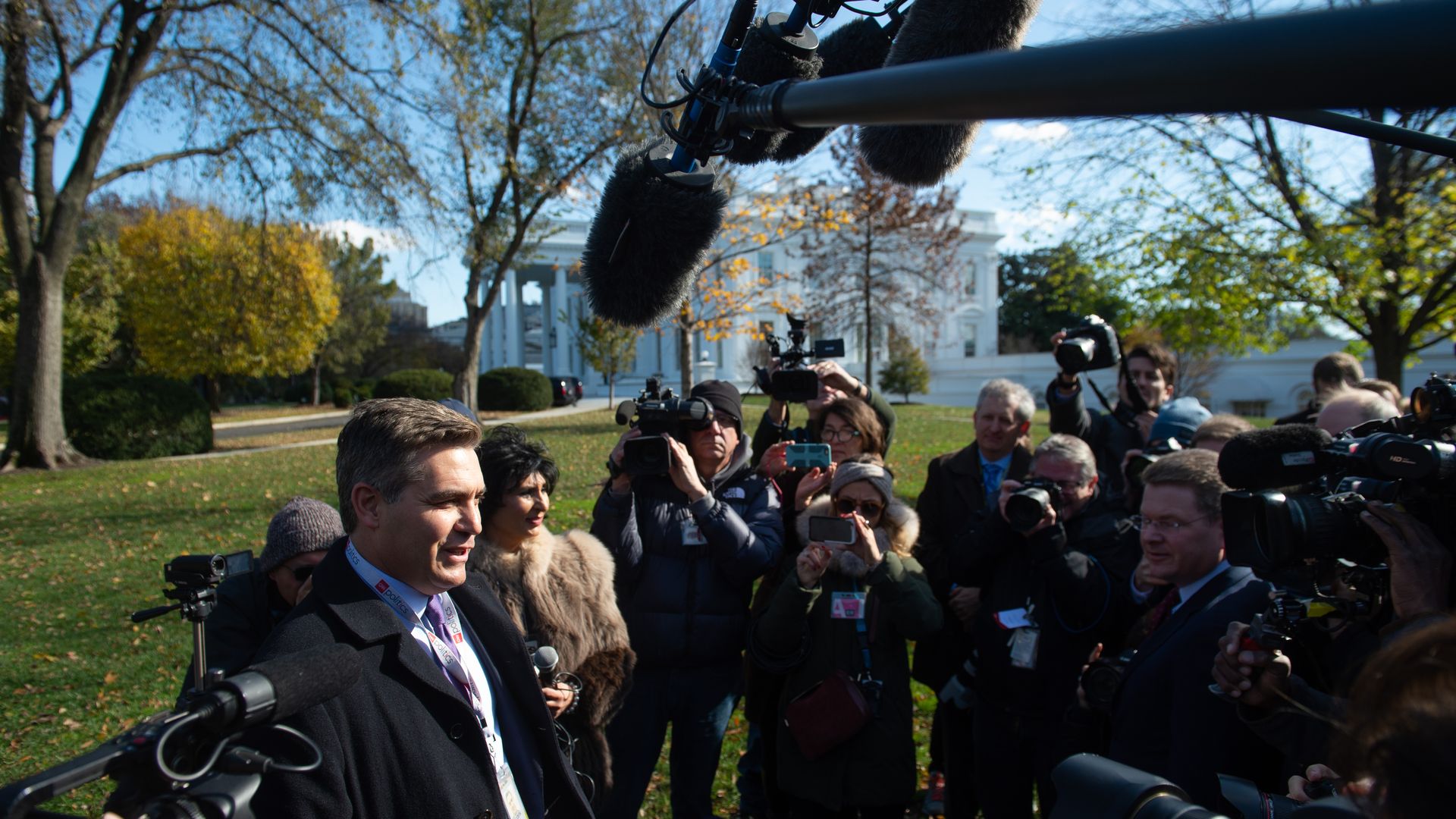
The White House has sent a letter to CNN's Jim Acosta informing him that his hard pass has been restored, CNN reports.
Why it matters: The press office still claims they have a right to revoke Acosta's press credentials in the future if he violates new rules laid out in the letter. Press access to the White House is grounded very much in tradition rather than in plain-letter law. A future court fight could potentially result in a precedent that curtails freedom to cover the most powerful official in the world from the literal front row.
The White House Correspondents' Association announced Monday that author Ron Chernow will be the featured speaker at next year's White House Correspondents' dinner on April 27.
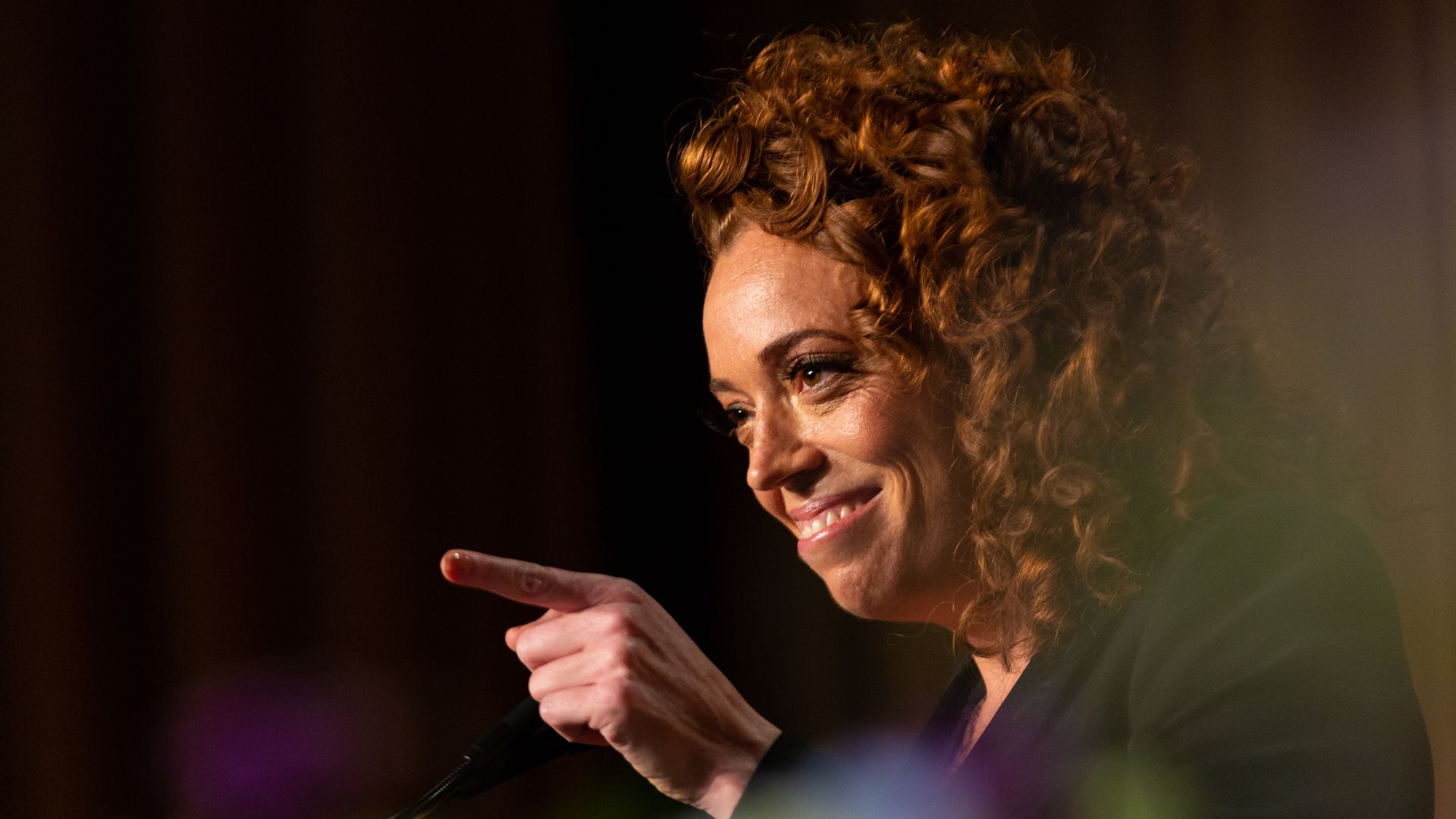
The backdrop: Last year's dinner was overshadowed by controversy after comedian Michelle Wolf's roast of President Trump and his aides, especially White House Press Secretary Sarah Sanders, drew sharp criticism.
CNN requested an emergency hearing in federal court on Monday after the White House sent its chief White House correspondent Jim Acosta a letter last week — signed by Sarah Sanders and Bill Shine — informing him that the administration intends to once again suspend his press pass at the end of the month.
After a federal court ruling on Friday restored the White House press pass of CNN's Jim Acosta, the West Wing moved almost immediately to once again contest his access, sources involved in the negotiations tell me.
What's happening: The White House sent CNN a letter Friday giving a chance for Acosta to make the case for continued access. A White House official said a decision will be made after hearing the case.










/2018/11/20/1542672470885.gif?w=3840)