The Trump administration unveiled plans for new offshore oil drilling projects off the coasts of California and Florida that in areas that haven't seen drilling in decades — or ever.
The big picture: The proposal, which the Interior Department says is needed to address the nation's "growing energy needs," quickly drew criticism from conservation groups and lawmakers, who warned of risks to coastal communities and wildlife.
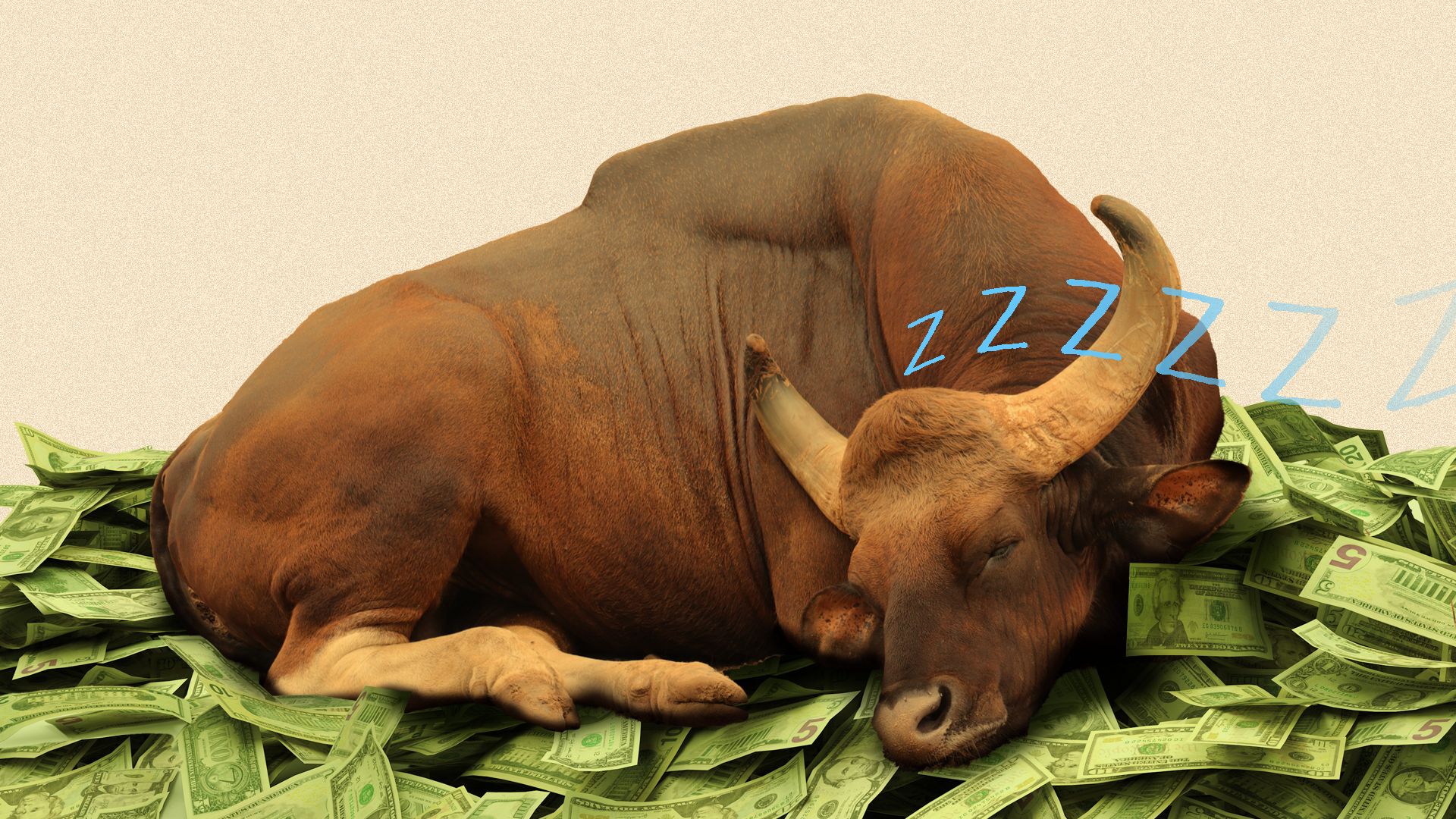
Market bulls, briefly roused Thursday morning, have slipped back into a fall hibernation.
Why it matters: The world's largest retailer, world's most valuable company and world's largest economy all showed signs of life — but not enough to shift the mood of increasingly jittery investors.
Companies are spending more on CEO security — everything from bodyguards to home security systems and armored cars, per a report out Thursday on executive pay.
Why it matters: High-profile shootings have executives on alert, a simmering fear that jumped considerably last year after the deadly shooting of UnitedHealthcare's Brian Thompson.
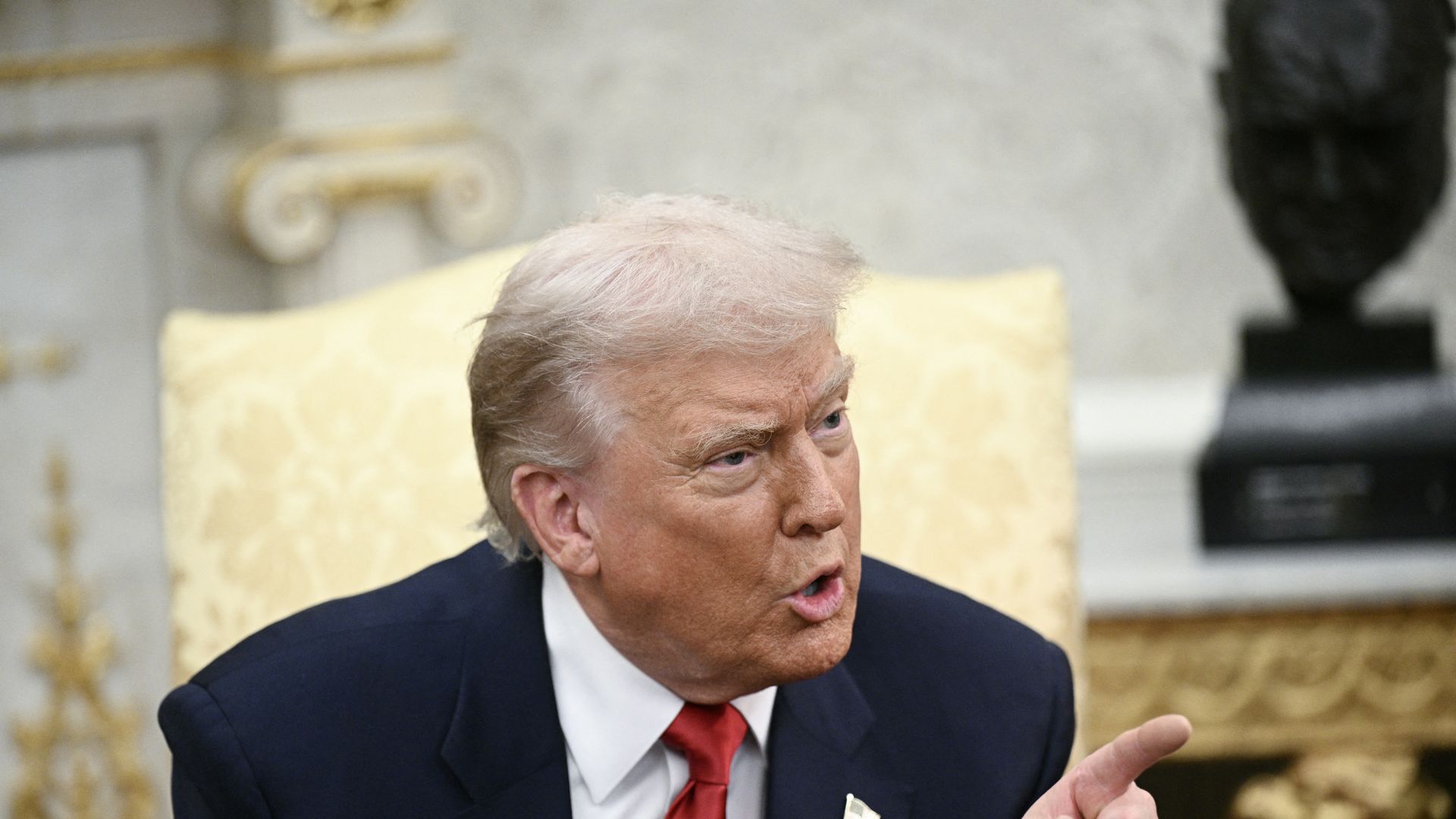
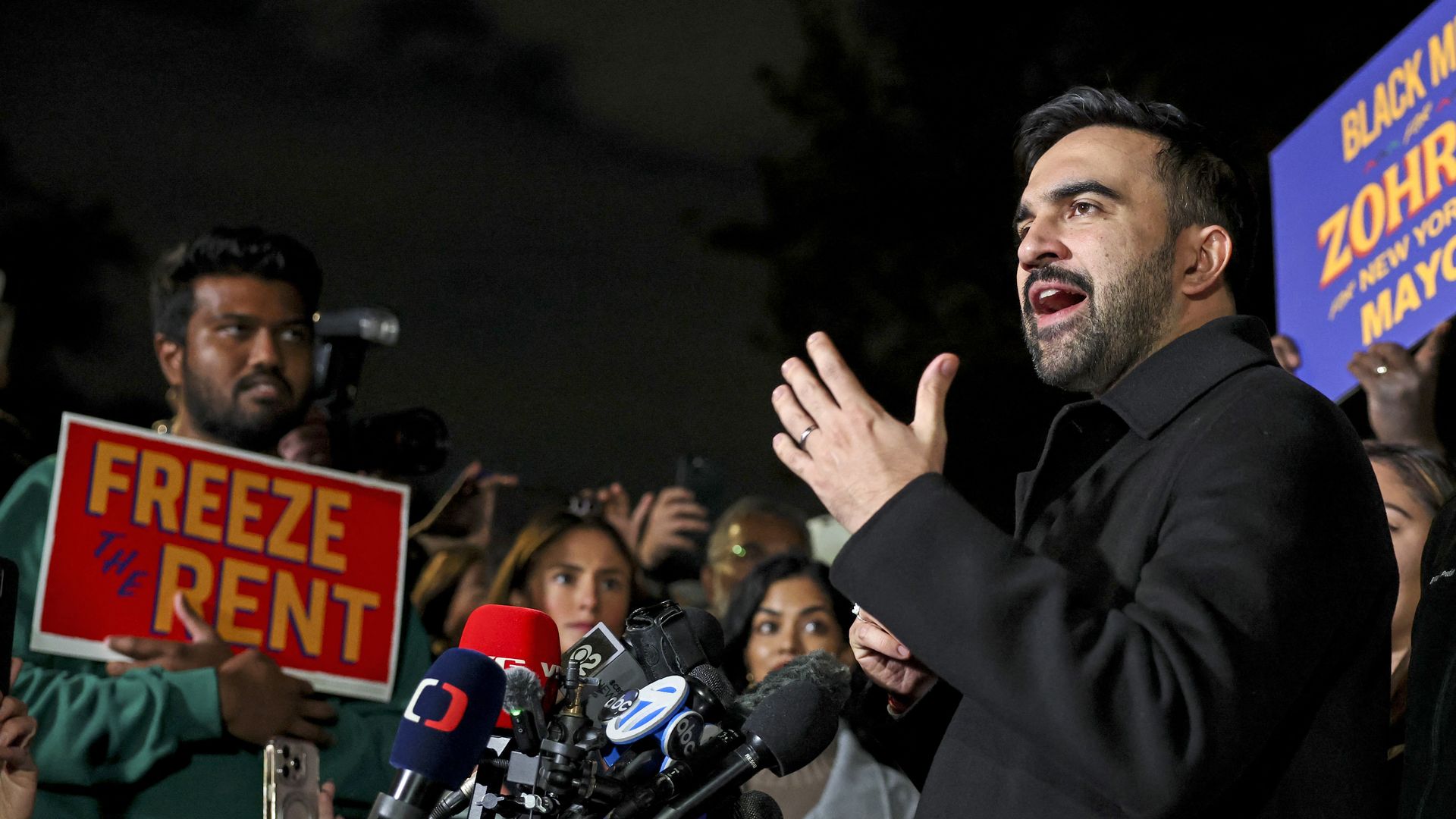
The White House once again falsely called New York City Mayor-elect Zohran Mamdani a "communist" Thursday ahead of the two leaders' expected meeting on Friday.
Why it matters: President Trump and Republicans have cast the democratic socialist as a boogeyman bent on destroying capitalist values, and their rhetoric signals the two opposing figures may be headed for a headline-grabbing Oval Office meeting.
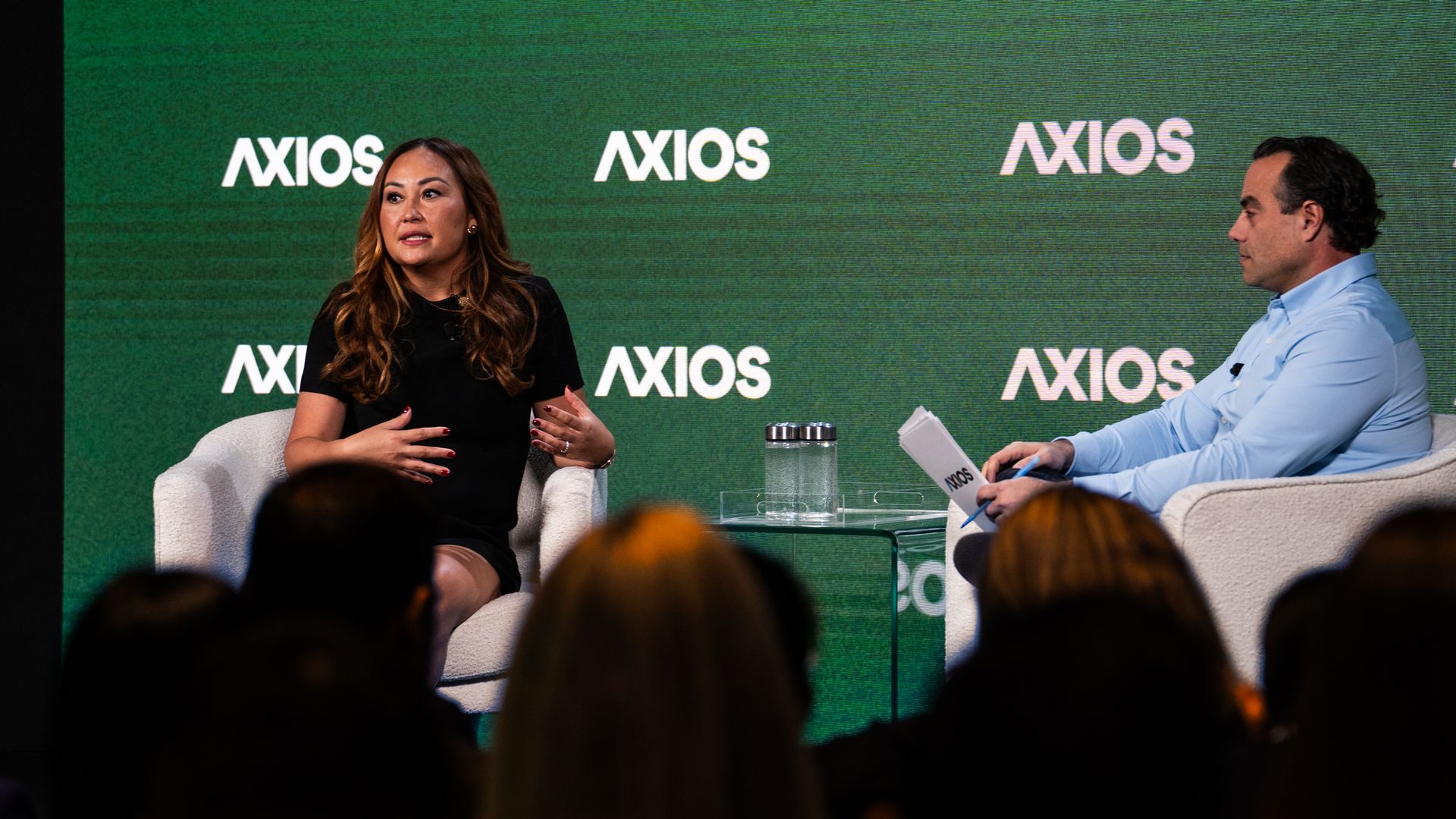
NEW YORK — Artificial intelligence and shifting markets were top of mind at the Axios BFD summit on Nov. 18, as was adapting to changing political headwinds.
Why it matters: Rates, regulations and AI are transforming how money moves, with decisions by power players playing an outsized role in determining market stability and economic opportunity in the United States and beyond.
The event was sponsored by Bayer and the Center for Audit Quality.
Here are seven key takeaways:
Sequoia Capital's Roelof Botha told Axios' Dan Primack that SpaceX has a "bigger chance of being the most valuable company" than OpenAI. "SpaceX, by itself, is responsible for 80% of all mass moved into orbit last year. It dominates that particular industry," whereas OpenAI has trade competition.
Coinbase President and COO Emilie Choiexclusively told Axios' Dan Primack her company contributed to President Trump's White House ballroom project to "keep good relations with" the administration.
Private credit is less susceptible to hidden problems than public markets, Blue Owl Capital's Marc Lipschultz said, and isn't as likely to be spooked by hidden "cockroaches." "Our documents, our covenants, our restrictions on what that company can do are far, far tighter than the public market equivalent," he said.
Investors shouldn't worry about sports gambling scandals, said Gerry Cardinale, founder and managing partner of RedBird Capital Partners, despite NBA and MLB investigations and arrests involving athletes and games.
Hugging Face CEO Clem Delangue warned it is large language models, and not AI, that are the bubble waiting to burst in the year ahead.
Affirm's Max Levchin shared the company's mindset toward its prospective and existing borrowers: "You behave like an adult, and we'll treat you like one, and if you can't play by the rules, we're not interested in transacting with you."
The Center for Audit Quality CEO Julie Bell Lindsay told Axios publisher Nicholas Johnston that CAQ expects the Securities and Exchange Commission to issue a proposal soon on quarterly reports and whether they will remain mandatory.
"Auditors are not one-trick ponies," she said. "It's the data analysis. It's the professional skepticism. It's the independence."
Bayer Pharmaceuticals worldwide COO and Bayer U.S. president Sebastian Guth shared that the corporation is focused on cancer, cardiovascular and women's health care because those conditions affect almost everyone.
"The biopharmaceutical industry is the crown jewel of American industries," Guth said, but "China is catching up."
The Jordan Brand is showing love to three iconic U.S. cities for its next exclusive sneaker drop, but these aren't the usual suspects.
Why it matters: The shoe company intentionally steered away from top markets New York, Los Angeles and Chicago to spotlight customers in less-served cultural hubs.
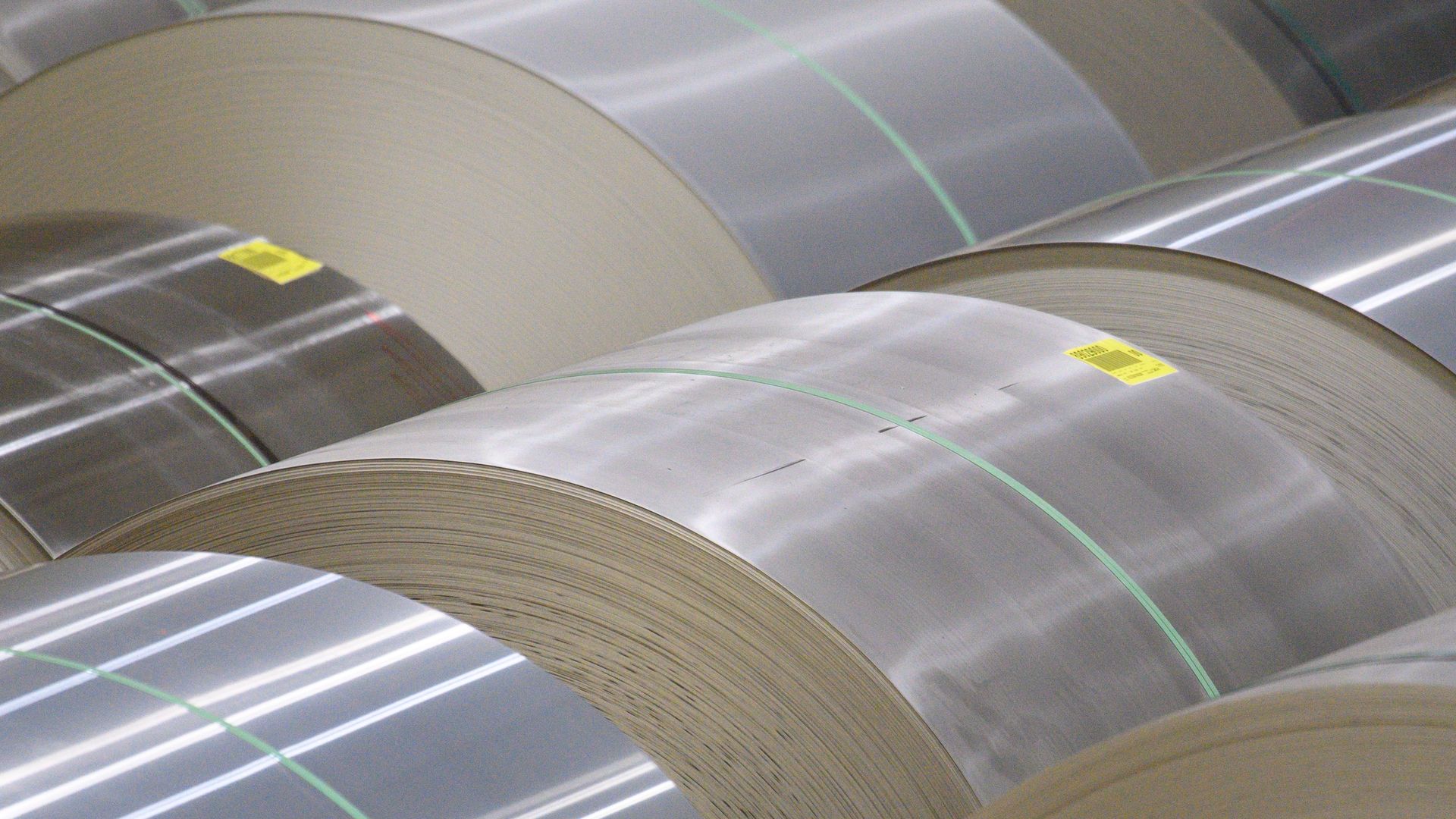
Another fire broke out Thursday morning at a key aluminum supplier to the auto industry, a potential setback to the recovery from an earlier blaze that was already going to cost Ford $2 billion in lost production this quarter.
Why it matters: The Novelis plant in Oswego, N.Y., supplies 40% of the aluminum used by the U.S. auto industry, and Ford, with its lightweight aluminum-body F-series pickups, is its biggest customer.
A bipartisan group of lawmakers is demanding answers from fast-fashion giant Shein over the possible sale o U.S. consumers of dolls "with a childlike appearance."
The big picture: The rare cross-party scrutiny piles onto years of criticism the Chinese-founded online retailer has faced over its environmental and labor practices and comes as it contends with new trade barriers to its sale of ultra-cheap goods.
Big Tech has defeated its bipartisan critics, setting itself up to get even bigger.
The big picture: There is widespread agreement in D.C. that a small handful of companies have become uncomfortably powerful.
But almost all efforts to stem the tide have failed, leaving politicians with few deliverables beyond viral videos of CEOs being berated during congressional hearings.
Time is partnering with Galactic to launch a prediction market platform, executives from both companies told Axios. It will leverage Galactic's Predictor.io platform to bring its real-time journalism to predictors around the globe.
The big picture: More media companies are inking prediction market deals as a way to expand their audiences and earn licensing revenue.
Walmart raised its full-year outlook after another strong quarter, powered by double-digit e-commerce growth, as outgoing CEO Doug McMillon prepares to hand off to U.S. president John Furner.
Why it matters: The results underscore Walmart's transformation from a low-price superstore into a tech-driven global powerhouse.
There's been a gender flip in the workforce: Men now make up the majority of workers who are juggling employment and caregiving, a survey out Thursday finds.
Why it matters: It's not a sign of any big leap in gender equality. Instead, the shift appears to be the latest evidence that women are leaving the workforce altogether, as it becomes harder to manage work and family in the face of the return-to-office push, rising care costs and other big pressures.
The economy added 119,000 jobs in September, while the unemployment rate edged up to 4.4%, the Bureau of Labor Statistics said on Thursday in a release delayed by the record-long government shutdown.
Why it matters: The labor market was in better shape than previously thought in September, complicating the economy's current picture.
The 2025 market rally has been largely powered by a small set of tech stocks.
The big picture: Investors have to decide whether the blockbuster earnings Nvidia reported on Wednesday are enough to calm the AI bubble fears that have weighed on the market. No pressure.
Nvidia, the most valuable company in the world, delivered record earnings results for the third quarter, with revenue up 62% year over year, impressing even the lone analyst on Wall Street with a sell rating on the stock.
Why it matters: The results, and the market reaction thus far, indicate that nothing is stopping the Nvidia train.
What they're saying: "It was a good quarter, I give them full credit for that," Jay Goldberg, the lone bear and senior analyst at Seaport Research Partners, told Axios after the earnings release Wednesday.
"Honestly, I thought it was going to be a much stronger guide. But this is still a decent guide," he said, adding the guidance beat may not be enough for investors forget the recent tech headwinds.
On the call, Nvidia CFO Colette Kress said the firm expects half a trillion dollars of revenue from its Blackwell and Rubin chips through 2026.
"Blackwell sales are off the charts, and cloud GPUs are sold out," Nvidia CEO Jensen Huang said in a statement in the earnings release.
Zoom out: The broader question of whether the market is heading full speed ahead into an AI bubble lies on Nvidia's back, given that it makes up 8% of the S&P 500 and 1% of the global market.
Huang addressed this at the top of his remarks on the call: "There's been a lot of talk about an AI bubble. From our vantage point, we see something very different."
He then talked about examples of returns on AI investment, mentioning everything from Meta's advertising business to expansion opportunities for OpenAI.
Reality check: The results are still not enough to make Goldberg change his sell rating, he said, since he is still concerned about how long customers can keep spending billions on Nvidia chips.
He is concerned about the path forward for neocloud players in particular.
"The sort of growing looming question is how long can they keep this up?"
What to watch: Whether the results lift the broader market.
Headwinds facing Nvidia and the broader AI ecosystem were "not put to rest" with these results, Dan Morgan at Synovus Trust wrote in a note.
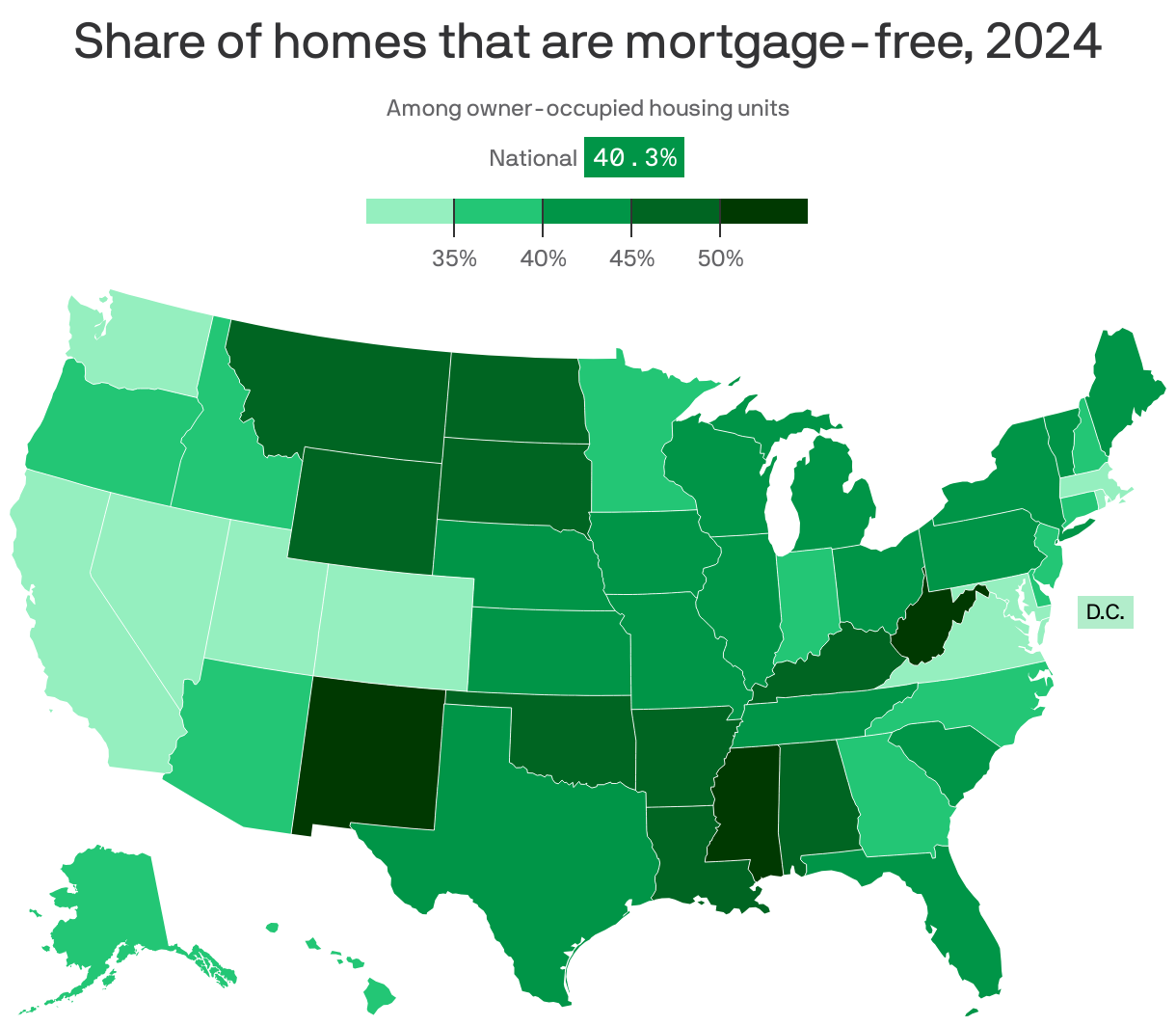
Virginia ranks among the lowest in the U.S. for homes owned outright, according to new Census Bureau data.
Why it matters: The numbers underscore how rising housing costs are keeping many Virginians — especially younger homeowners — from fully owning their homes, contributing to higher debt loads and financial strain.
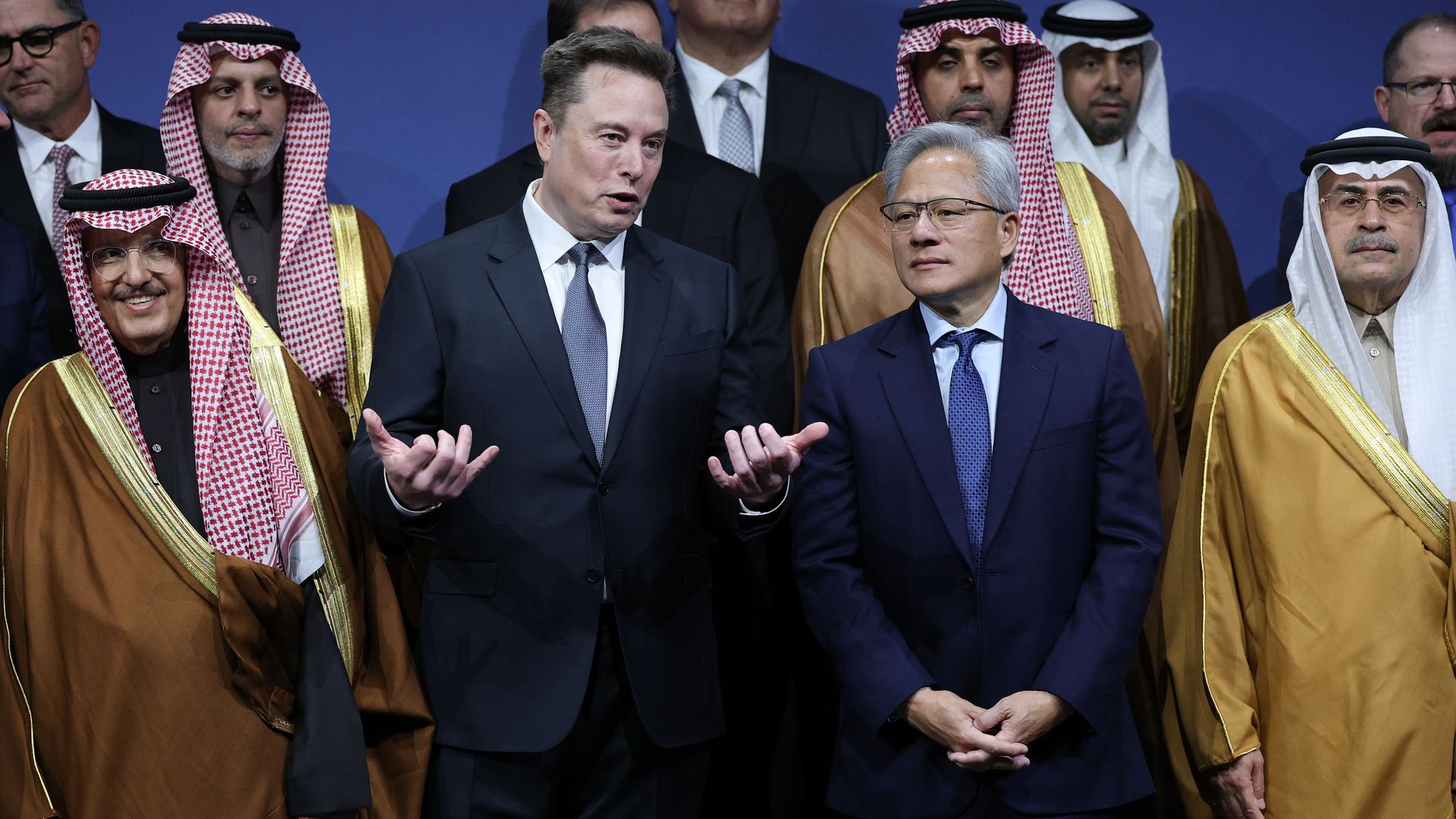
The Middle East is fast becoming not just a deep-pocketed investor in AI but a hot spot for data centers, highlighted by a new wave of Saudi deals announced Wednesday.
Why it matters: Allowing these deals is part of a strategic effort to ensure Saudi Arabia and other countries in the Middle East adopt U.S. technology rather than AI systems from China.
Your financial situation — not just what you earn but whether you're in over your head — is strongly linked to how you feel about democracy, according to a significant new study by Gallup and the Charles F. Kettering Foundation.
Why it matters: Inflation, rising debt, affordability and the current state of politics are shaking Americans' views about their system of rights, freedoms and governance, though most don't have a better alternative in mind.
Consumers scrambling to take advantage of expiring tax credits for electric cars drove a record-breaking quarter of U.S. clean-energy investments, according to a new report.
Why it matters: It shows that policy matters, especially if it's coming or going.
Major League Baseball has struck a new set of three-year distribution deals with Netflix, ESPN and NBCUniversal, the league announced Wednesday.
Why it matters: The new arrangement finally brings some of MLB's local games to a single streaming service with ESPN, making them broadly accessible to fans on a single platform.