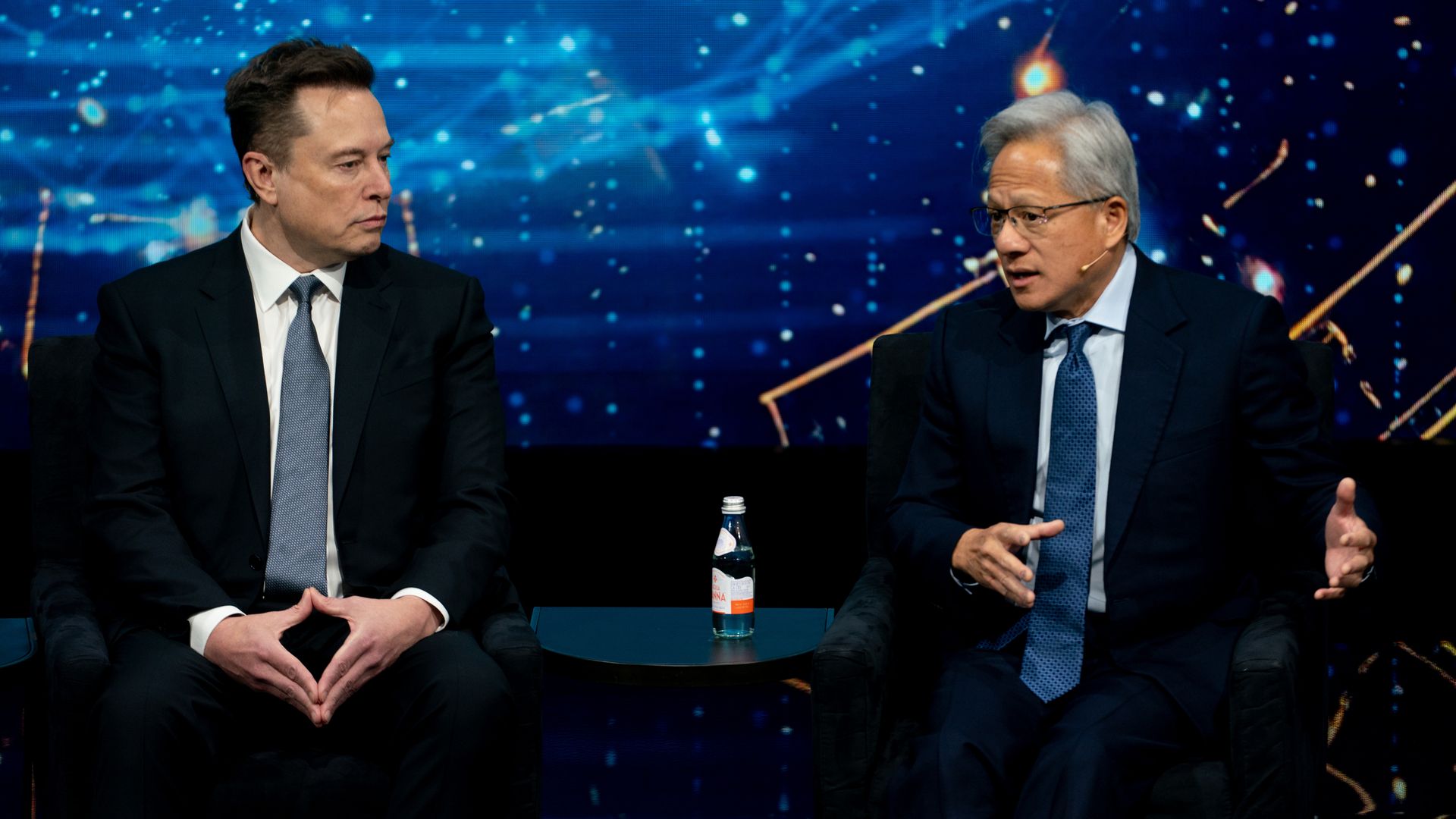
Nvidia delivered record revenue and profit in the third quarter, exceeding expectations as CEO Jensen Huang reported "off the charts" demand for its advanced Blackwell chips.
Why it matters: Nvidia is positioned in the center of the tech universe — and its earnings are closely watched as an indicator of health of the booming AI economy.
The next anti-Trump protest hitting Washington, D.C., will demand the president's impeachment and removal against a backdrop of live music and standup comedy.
Why it matters: This latest protest comes during a record-setting year for U.S. demonstrations amid growing discontent throughout the administration.
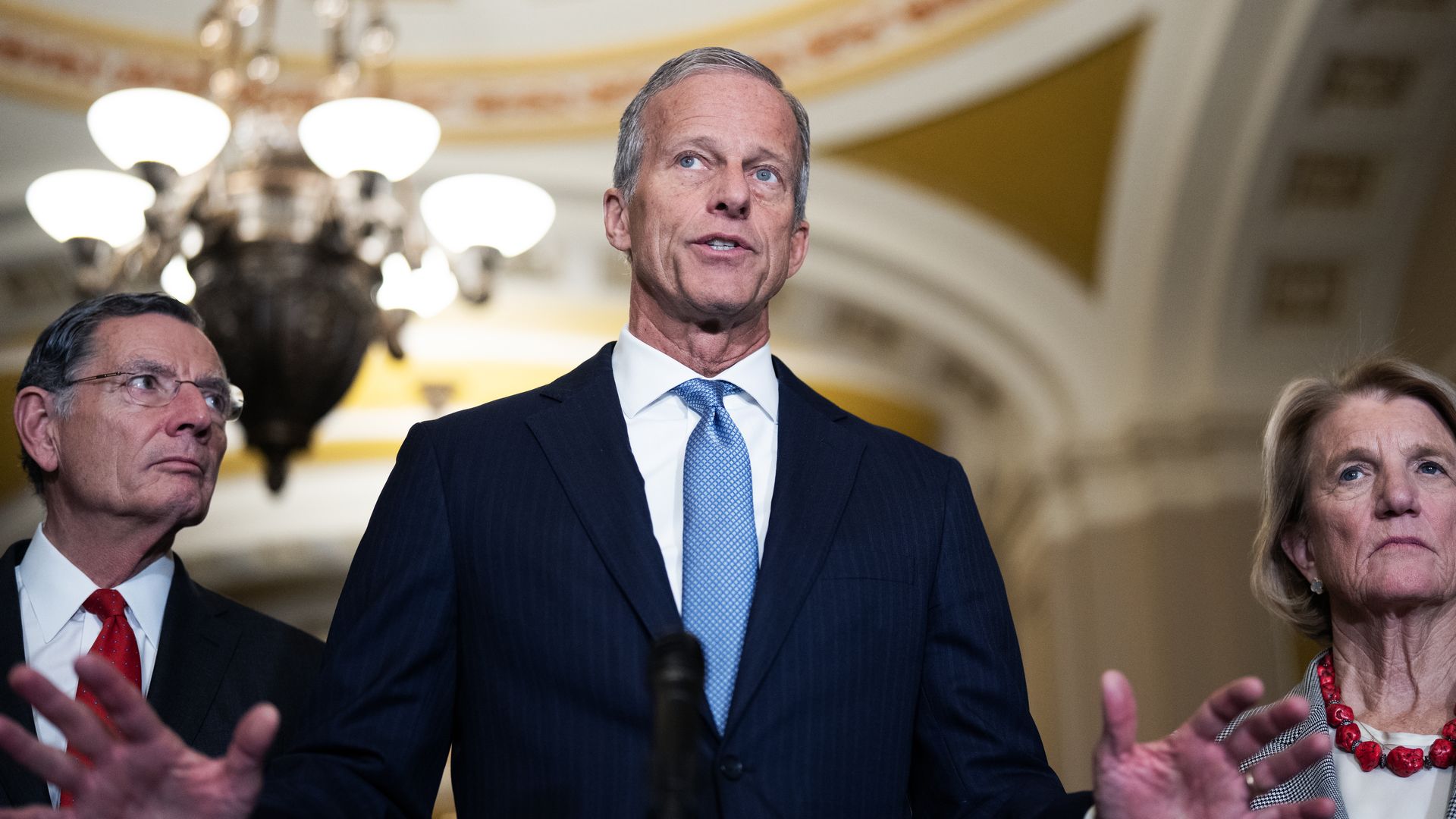
President Trump's idea for $2,000 tariff rebate checks is falling flat with Senate Republicans.
Why it matters: Many senators think such a move would require Congressional authorization, and they'd rather see the money go toward reducing the deficit.
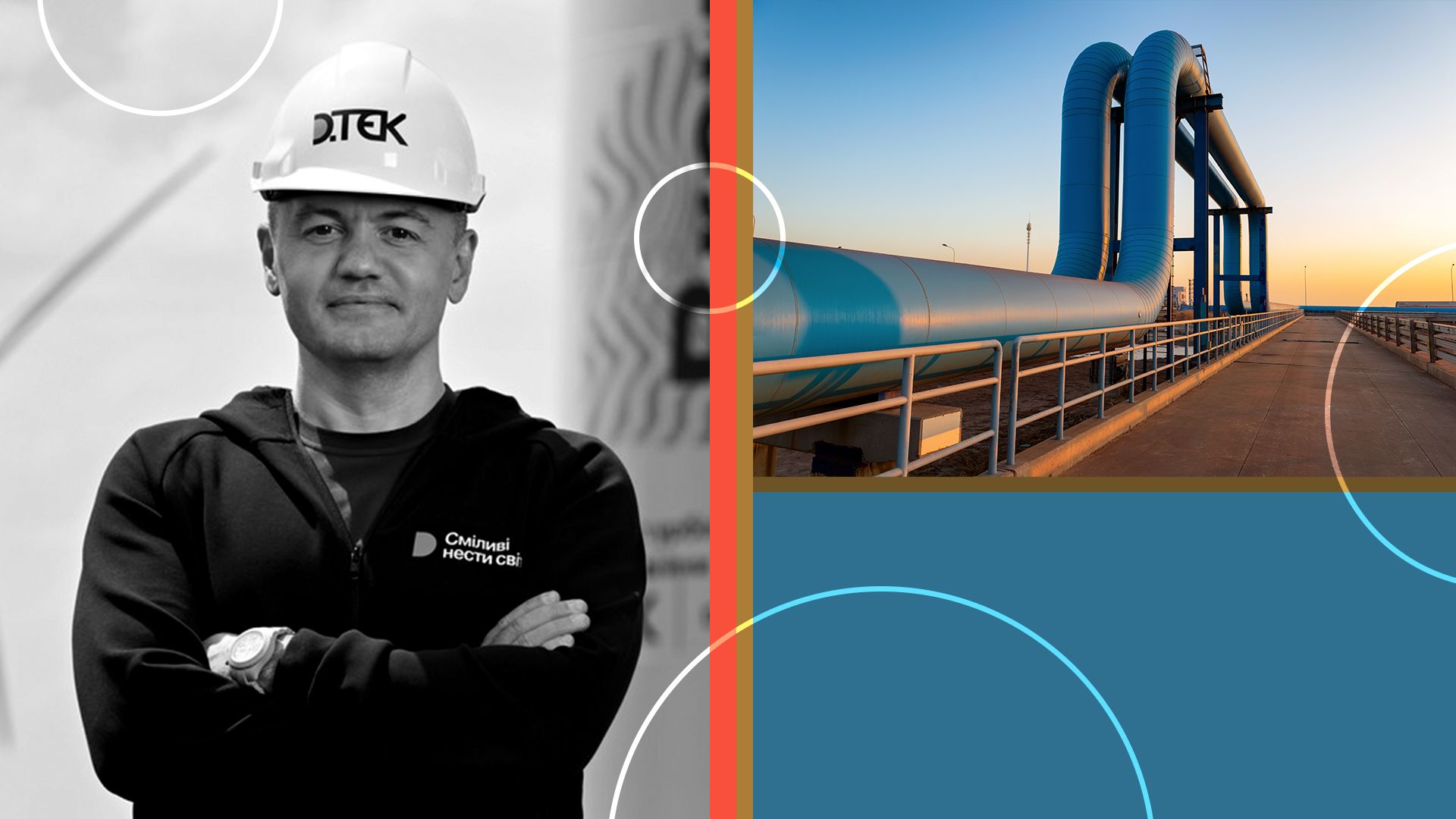
The head of Ukraine's largest private energy company says a recent U.S. liquefied natural gas shipment could help his country get through a tough winter — as long as Russian attacks don't cripple his ability to get power to customers.
Why it matters: Maxim Timchenko, CEO of DTEK, is racing to bring enough energy online for winter, in part by importing more from the U.S.
OpenAI is pushing further into schools with a new ChatGPT designed for K-12 teachers.
Why it matters: ChatGPT's launch three years ago sparked a war over cheating in schools, and now OpenAI hopes to woo teachers on the front lines with its tools.
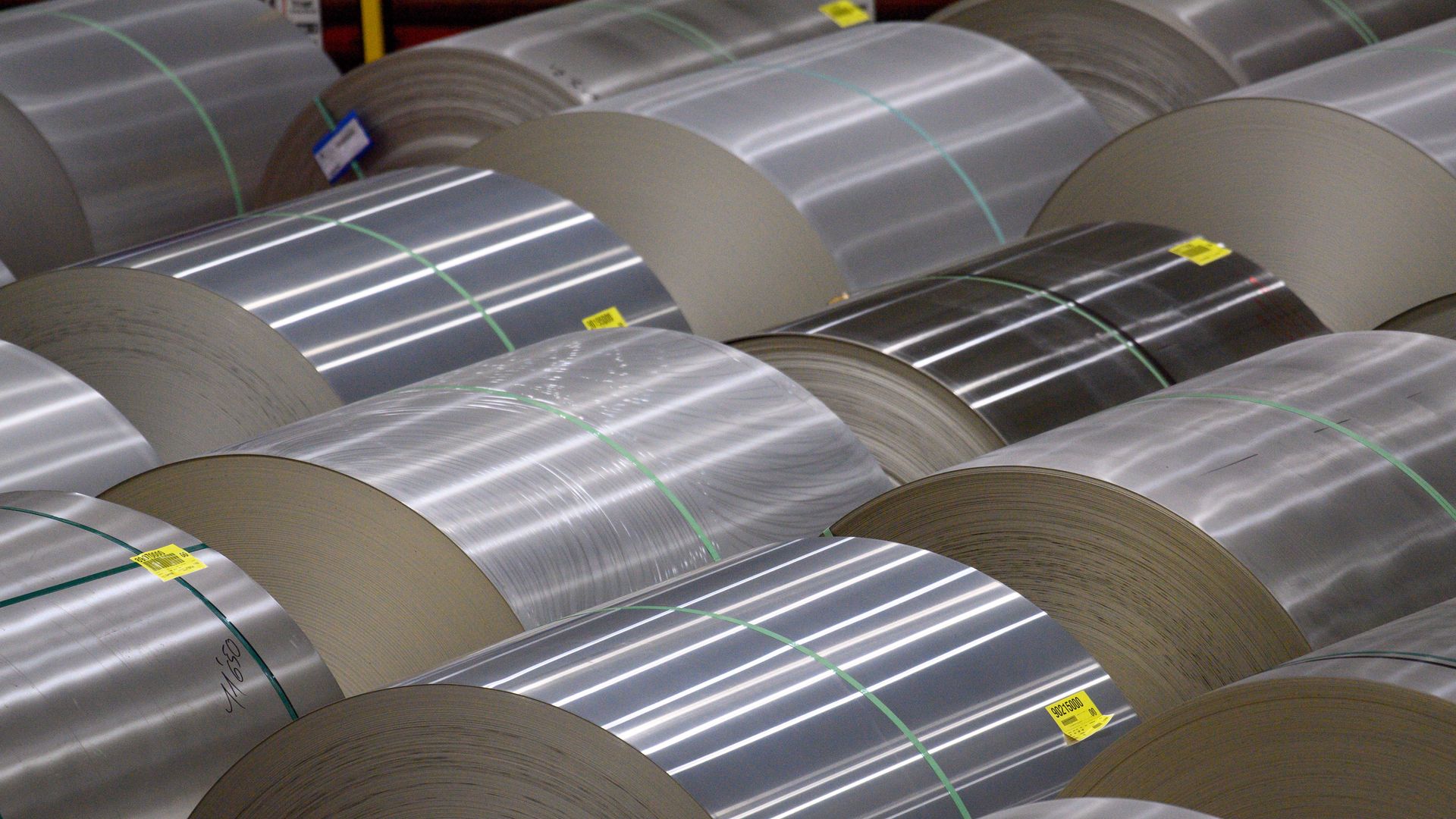
Automakers will do whatever it takes to keep their factories running — even if it means absorbing the extra cost of flying highly tariffed aluminum, two gigantic coils at a time, on airplanes from across the globe.
Ford and a key supplier have been taking such extraordinary steps in order to keep producing the best-selling and highly profitable F-series pickup trucks, after a devastating fire at an aluminum mill in upstate New York.
The big picture: Aluminum is in high demand, especially in the auto sector, as carmakers shift to lighter-weight hybrid and electric vehicles.
California is reassessing plans to phase out gasoline cars by 2035, even as it vigorously fights President Trump over its right to do so.
Why it matters: California's strict emission rules, blocked by the Trump administration in June, had been a template for other states that share its ambitious climate goals.
Amazon has started disbursing automatic refunds from its $2.5 billion settlement with the Federal Trade Commission, the agency has confirmed.
The big picture: $1.5 billion of that money — which settles allegations that the company enrolled its customers in Prime subscriptions without their consent — is going directly to Prime subscribers, capped at $51 a person.
Target's incoming CEO Michael Fiddelke plans to cut prices and invest billions in stores and technology to fight a slump that forced the retailer to trim its profit outlook for the year on Wednesday.
Why it matters: Fiddelke's turnaround plan will test whether Target can invest its way out of declining sales.
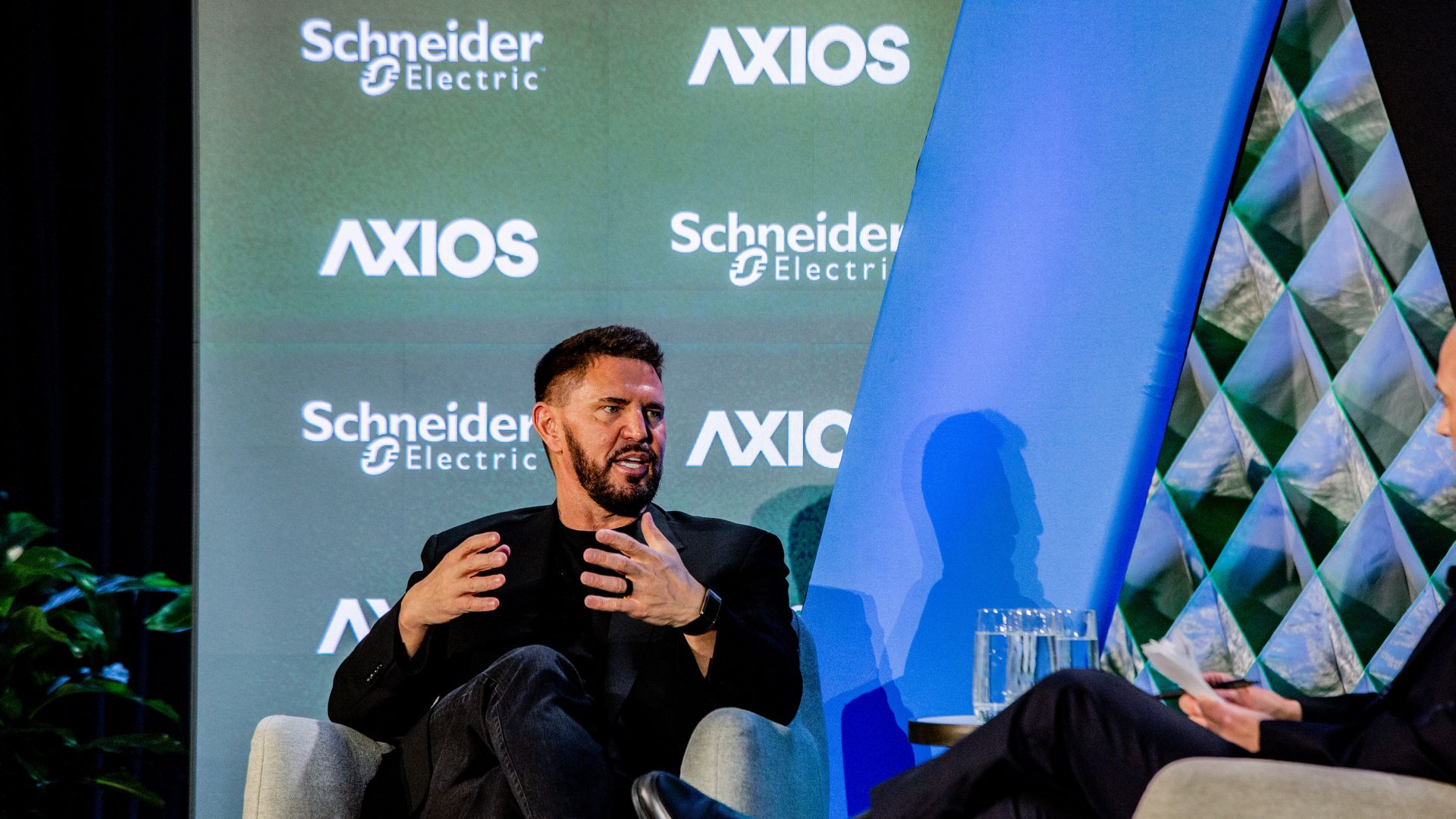
LAS VEGAS — AI energy needs will accelerate commercial fusion power by "two or three decades," said Rob Roy, founder and CEO of data center heavyweight Switch.
Why it matters: Tech and data center heavyweights are helping fund and signing power deals with fusion startups, in addition to other nuclear agreements.
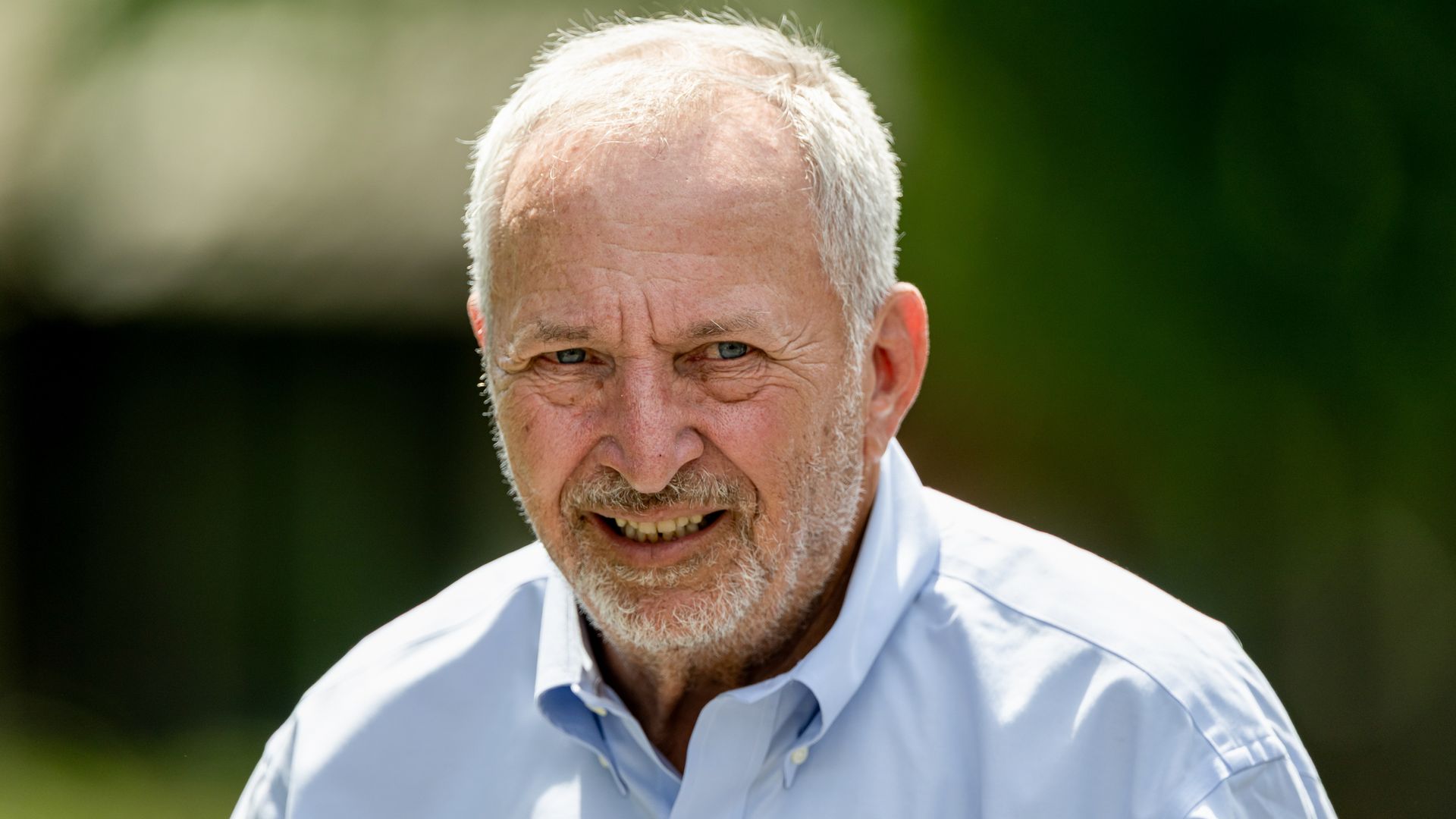
Former Treasury secretary and Harvard president Larry Summers has resigned from the OpenAI board, he and the company told Axios in separate statements Wednesday, amid new revelations about the depths of his ties to Jeffrey Epstein.
The big picture: The Epstein fallout continues to balloon, now coming for Summers, once one of the nation's pre-eminent economists.
Target will let shoppers browse and buy products directly in ChatGPT, becoming one of the first major retailers to turn the AI chatbot into a shopping platform, the company said Wednesday.
Why it matters: The launch marks another step in the rise of "agentic commerce," where AI anticipates what shoppers need — and checks out on their behalf.
Method Security, a dual-use company combining cyber expertise with artificial intelligence speed, raised $26 million across its seed round and Series A.
Why it matters: Much national-security energy today is paid to drone-and-missile stockpiles, shipbuilding and the like. But digital breaches — something like China's Volt Typhoon, which jeopardized critical infrastructure — could upend it all.
Soaring home prices and a shrinking supply of affordable housing are making it increasingly difficult for families across the U.S. to secure stable homes.
Why it's important: The lack of affordable housing puts families at risk of financial instability, disrupts employment and educational opportunities, and constrains regional economic growth.
JPMorgan Chase on Wednesday announced more than $40 million in philanthropic funding to increase America's housing supply, including more than $20 million in grants and $20 million in flexible loans.
Why it matters: The funds will support innovative financing and construction models to expand and preserve housing, as well as home improvement loans for low- and moderate-income families.
A tech-friendly group, the AI Infrastructure Coalition, will launch Wednesday evening with a reception near the White House, to advocate for "every layer of the AI tech stack — from semiconductor manufacturers and energy providers to hyperscalers, data-center operators, private equity, and AI model developers."
Why it matters: AIIC, which debuts as data centers are becoming a flashpoint nationwide, tells Axios the group will push for President Trump's AI Action Plan and push back on increased scrutiny of the industry.
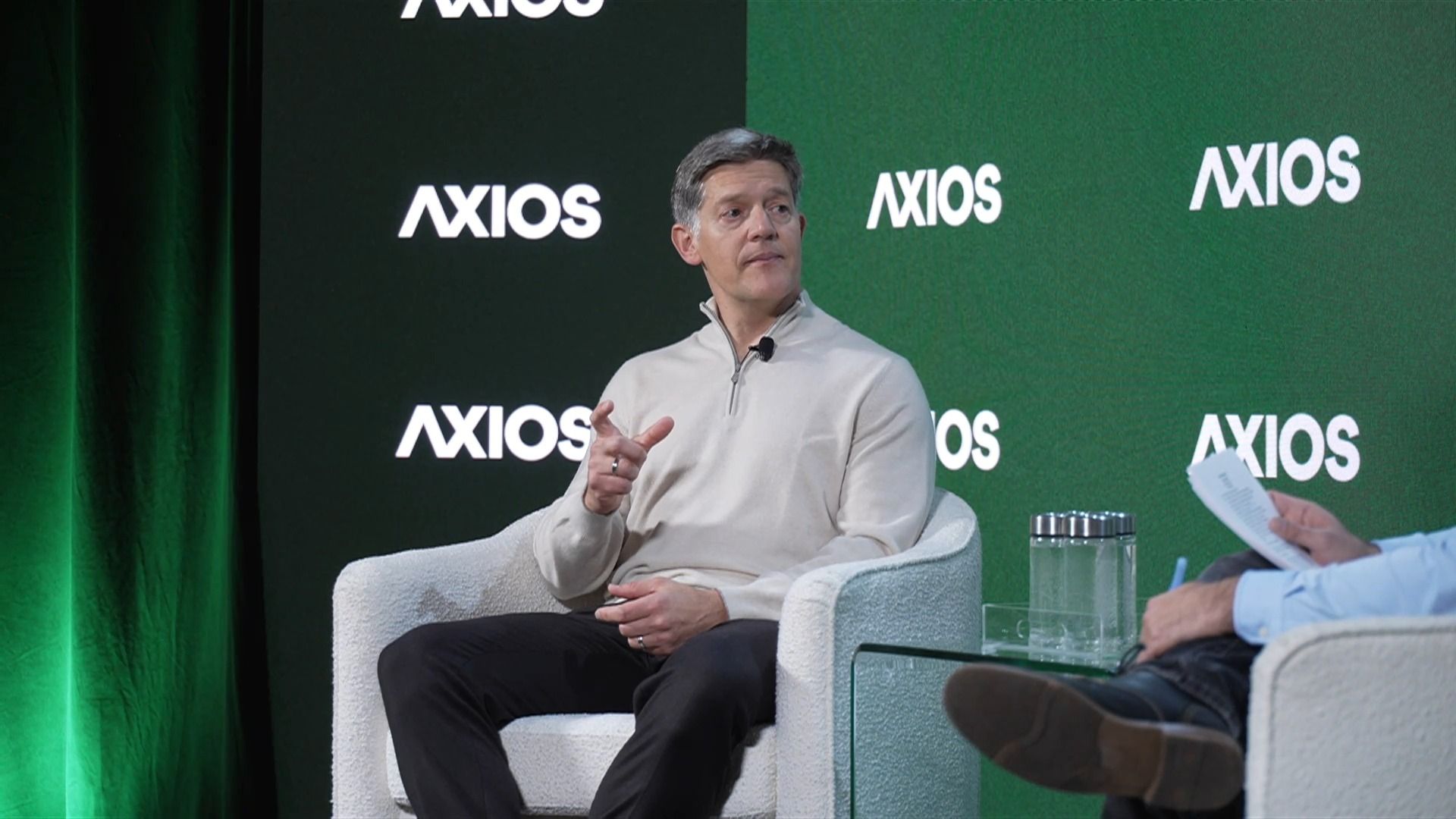
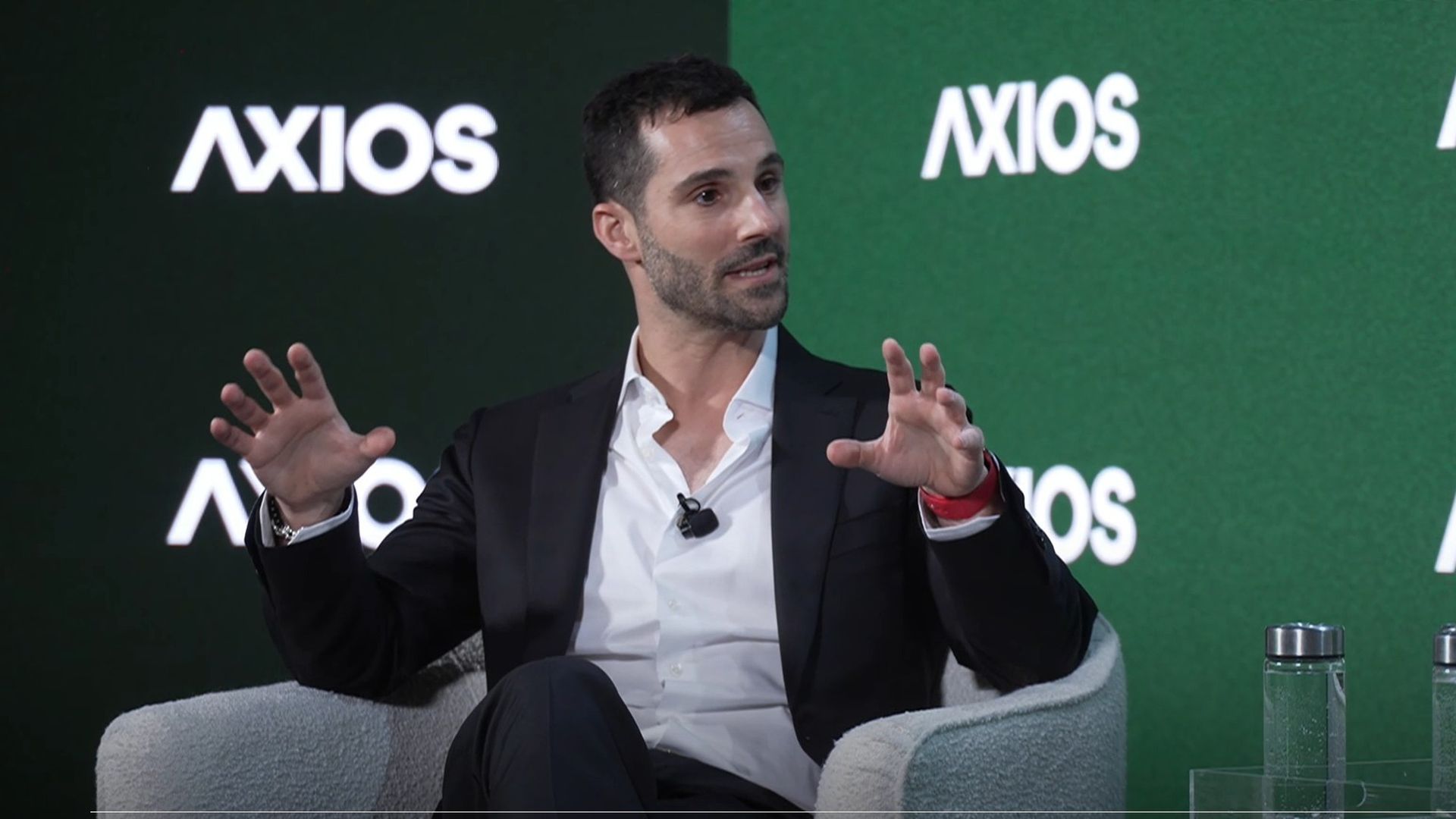
AI is far too transformative for society — and disruptive to legacy industries — to fixate on a near-term bubble, some of the world's top private investors said at Axios BFD on Tuesday.
The big picture: Financial markets may be nervous now. But the people who invest billions for the long term believe in what they're seeing.
"I was in Silicon Valley in '98, '99. I saw what happened with the dotcom era. I saw what happened with mobile, saw what happened with cloud computing. This surpasses all of them and more," said Sequoia Capital partner Roelof Botha, one of the world's top venture capitalists.
"You have so many industries that are relatively ossified and ripe for disruption," Botha said. "And AI isn't just a new distribution mechanism or a new interface. It is fundamentally a set of capabilities that can upend industries."
Case in point: Creatives fear the impact AI could have on entertainment and the arts, but those who are using it right now to change businesses say rejecting it isn't the answer.
"The reality is, the world's not going to stop and AI is coming, so you have a choice, you could put your head in the sand or you can embrace it," said Gerry Cardinale, managing partner of RedBird Capital Partners, which helped finance the Skydance acquisition of Paramount.
"I don't think AI is going to replace Robert Plant and Jimmy Page. I just don't think that's happening. And, and similarly it's not gonna replace Ben Affleck and Matt Damon. However, it has to be harnessed."
Reality check: Even those deepest in AI and the world of large language models (LLM) concede that there could be some froth, as Google CEO Sundar Pichai did when he told the BBC Tuesday there was some "irrationality" in the market.
"I think we're in an LLM bubble, and I think the LLM bubble might be bursting next year," said Hugging Face CEO Clem Delangue, whose company helps people build models for AI.
But even so, Delangue said, LLMs are "just a subset of AI" when it comes to broader applications across science, technology and media.
The bottom line: "'The bubble' is a pejorative term," Sequoia's Botha said.
In the long run, he said, it's the fundamental change to the way so many industries operate that matters.
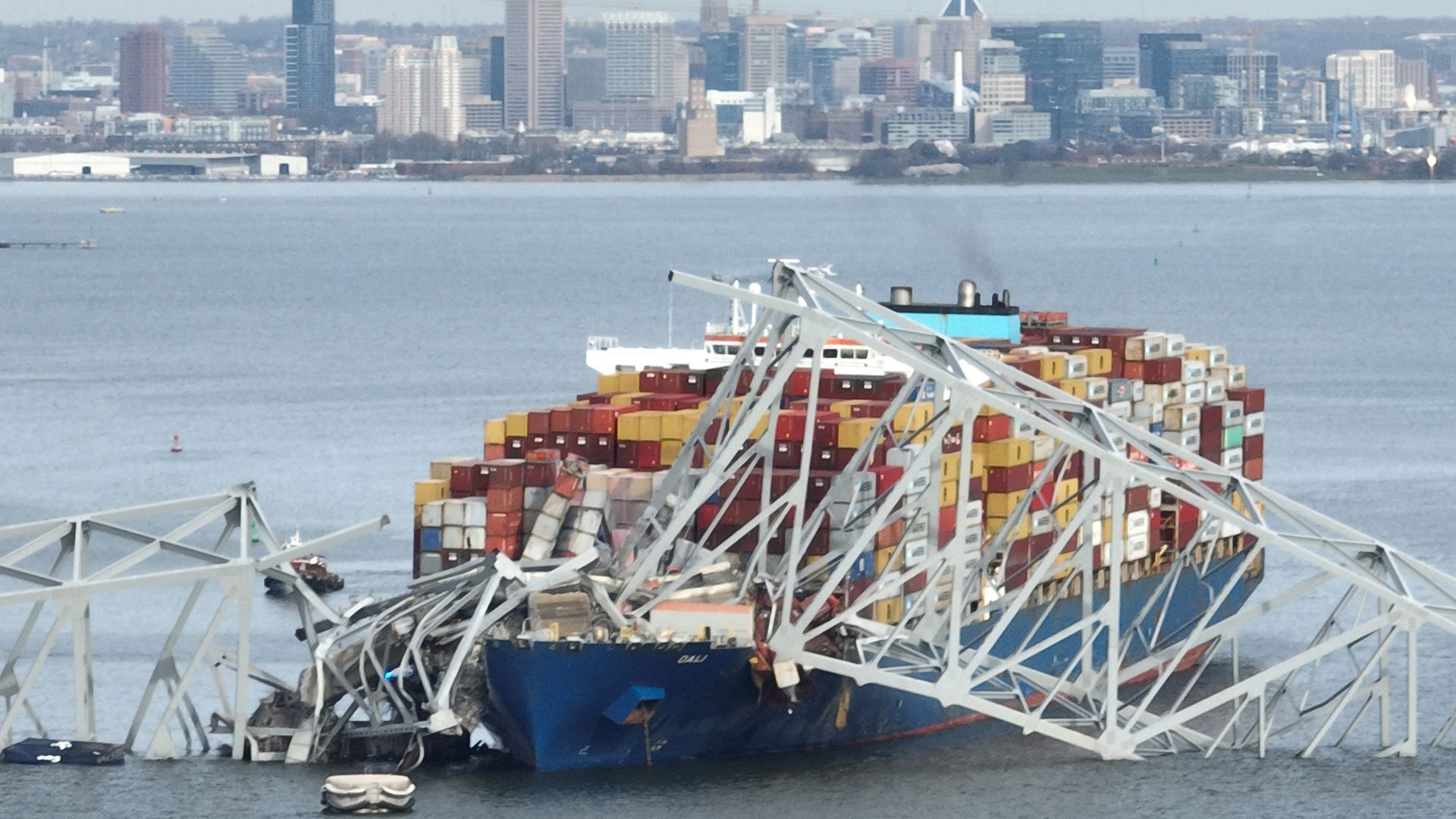
A single loose wire on a cargo ship caused a power outage that led to the Baltimore bridge collapse that killed six highway workers last year, a National Transportation Safety Board (NTSB) report released Tuesday found.
The big picture: "This tragedy should have never occurred," NTSB Chair Jennifer Homendy said at a Tuesday hearing on the agency's findings into how the Dali ship crashed into the bridge, leading to its collapse that blocked full access to the Port of Baltimore's main shipping channel until June.
Gustav Klimt's "Portrait of Elisabeth Lederer" sold at Sotheby's inaugural auction at the Breuer Building in New York City for $236.4 million, the auctioneer announced Tuesday.
Why it matters: The six-foot-tall painting by the Austrian painter is now both the "most valuable" modern artwork and the second-most expensive piece ever to be sold at auction, per a Sotheby's statement.
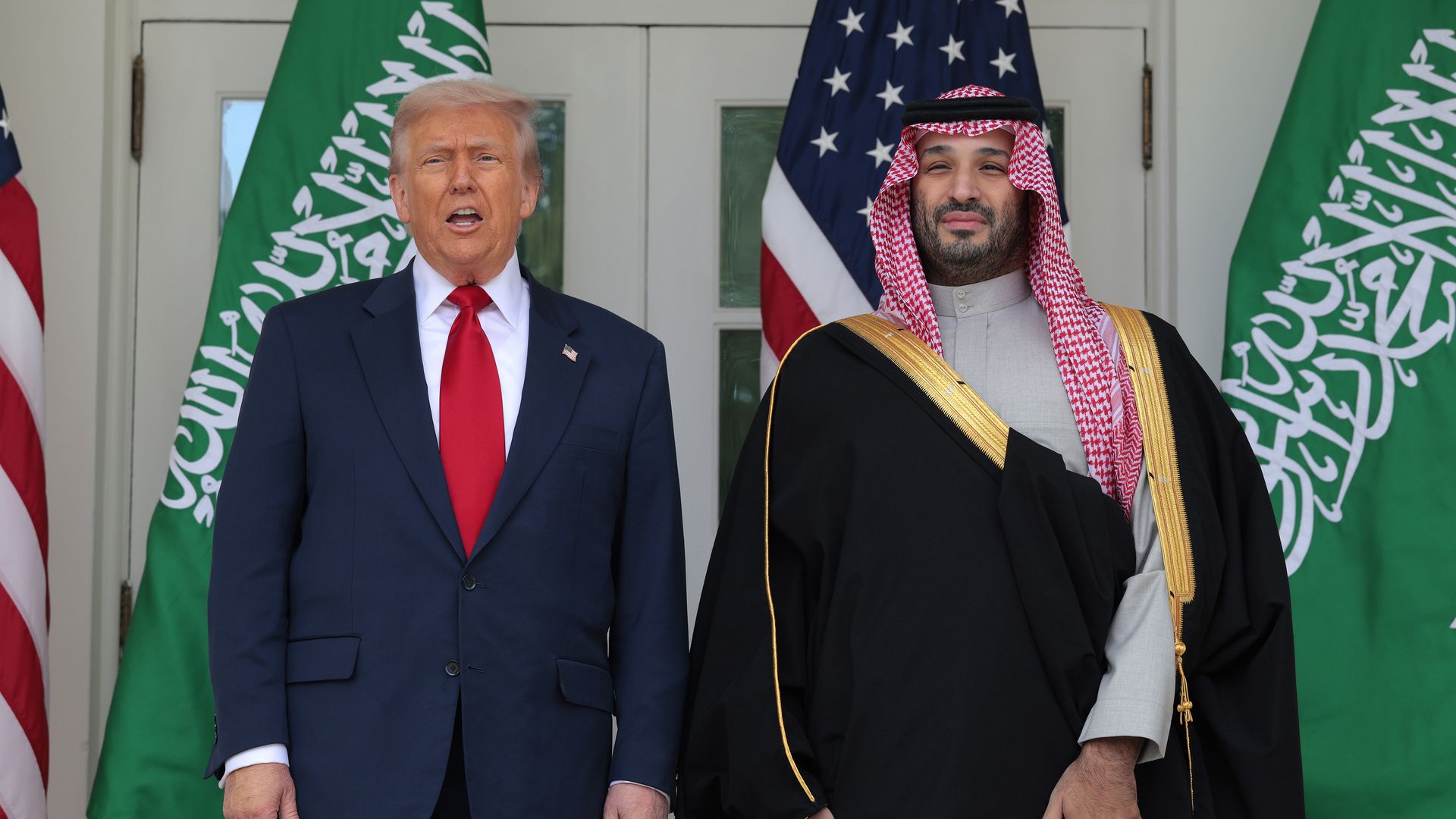
President Trump said Tuesday evening that he has formally designated Saudi Arabia as a major non-NATO ally, aiming to deepen military cooperation between the two nations.
The big picture: The announcement follows Trump's meeting with Saudi Crown Prince Mohammed bin Salman (earlier on Tuesday, when MBS pledged to up Riyadh investments in the U.S. from $600 billion to $1 trillion.
Saudi Arabia committed to buying hundreds of U.S.-made tanks, part of a larger spending-and-security conversation between the two countries, the White House said.
Why it matters: It's a massive, long-term commitment — and one that appears to shrug off doubts regarding the tank's role on the battlefield of the future.
Jesse Cohn of Elliott Investment Managementdefended the firm's active investing during Axios' BFD event on Tuesday, arguing it pushes companies to perform better.
Why it matters: Cohn argued that passive investors hold a controlling interest in too many American companies, which leaves company management with little accountability.