Ford's expensive heavy metal problem

Add Axios as your preferred source to
see more of our stories on Google.
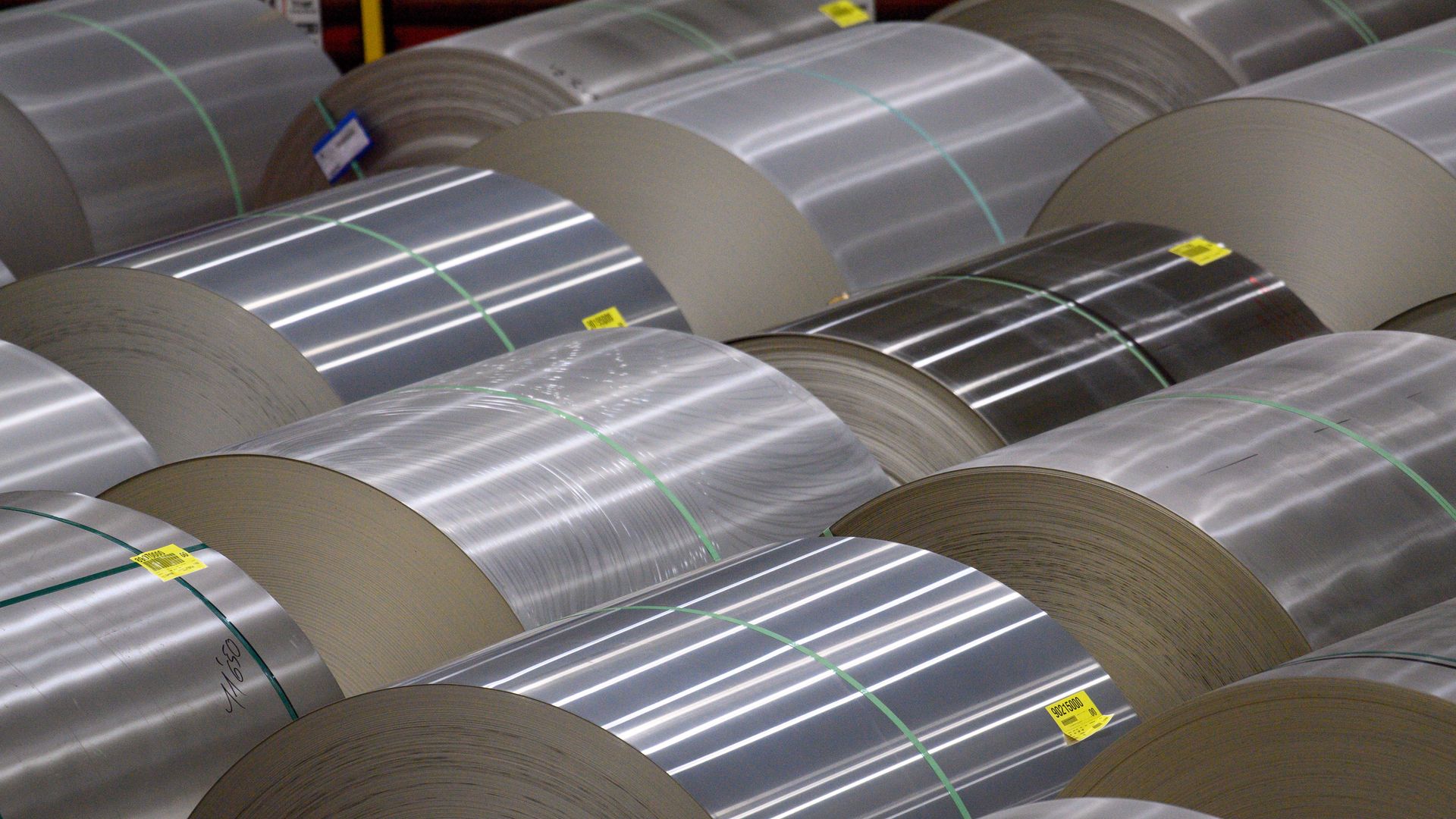
Rolls of aluminum at a Novelis plant in Europe. Photo: Klaus-Dietmar Gabbert/picture alliance via Getty Images
Automakers will do whatever it takes to keep their factories running — even if it means absorbing the extra cost of flying highly tariffed aluminum, two gigantic coils at a time, on airplanes from across the globe.
- Ford and a key supplier have been taking such extraordinary steps in order to keep producing the best-selling and highly profitable F-series pickup trucks, after a devastating fire at an aluminum mill in upstate New York.
The big picture: Aluminum is in high demand, especially in the auto sector, as carmakers shift to lighter-weight hybrid and electric vehicles.
- But producing aluminum is extremely energy intensive, one reason the U.S. has closed all but four of its two dozen aluminum smelters over the past decade.
- Instead, the U.S. relies mostly on Canada or China for smelting.
Yes but: manufacturers are reeling from President Trump's decision to slap 50% tariffs on aluminum imports.
- So when one of the few domestic sources of rolled aluminum goes down — as happened in September, when Novelis' plant in Oswego, New York, caught fire — carmakers have few options.
Air freight is an expensive last resort that carmakers typically use only to fly high-value parts like electronics or specialty equipment to the U.S.
- It's a different equation when you need to fly humongous, 24,000-pound rolls of aluminum sheet across the ocean.
- But given the choice between idling vehicle production or paying through the nose to expedite critical materials, manufacturers will swallow the extra costs every time, explains Jason Miller, a supply chain professor at Michigan State University.
- "This is not a cheap proposition," he tells Axios. "But shutting that plant down is far more expensive."
Between the lines: Air freight is typically 10 times the cost of ocean freight, Miller says.
- A back-of-the-envelope calculation, assuming a shipment of 40,000 pounds of aluminum from Europe to the U.S. at the going rate of about $1.89 per kilogram, puts the air freight cost at more than $34,000, he figures.
- Moving that same freight domestically by truck would cost a couple thousand dollars, he says.
Plus, aluminum prices in the U.S. are at record highs, driven by Trump's import tariffs and tight supplies globally.
- "This is coming at the worst time imaginable for aluminum prices," Miller says.
Zoom in: Novelis supplies about 40% of the aluminum sheet used by the domestic auto industry. Ford, its largest customer, has been especially hard-hit by the fire.
- The carmaker redesigned its popular F-series pickups in 2016 with high-strength aluminum body panels to boost fuel efficiency.
- Each Ford F-150 uses approximately 700 pounds of aluminum.
- By that measure, one 24,000-pound roll of aluminum sheet is enough to produce roughly 34 trucks.
Where it stands: Crews have been working around the clock to restore Novelis' damaged hot mill, where aluminum ingot and scrap are melted and rolled into thin sheets that automakers later stamp into vehicle parts like doors, hoods and truck beds.
- Novelis says the mill should resume production before the end of the year — faster than originally expected, a company spokesperson tells Axios.
- In the meantime, Novelis will continue to ship aluminum to the U.S. from other plants in Switzerland and South Korea, while repurposing plants that produced aluminum beverage cans.
- Two new rolling mills are slated to open next year in Alabama and Mississippi — the first new U.S. mills since 1980 — boosting U.S. sources.
What to watch: Ford says it will likely lose about 100,000 units of F-series production in 2025 as a result of the disruption, with a hit to profits of $1.5 billion to $2 billion.
- But the company will add about 1,000 jobs early next year to recoup those lost units. The net financial impact over two years will be less than $1 billion, Ford has said.
