A new documentary narrated and executive-produced by Lily Gladstone, Oscar-nominated star of "Killers of the Flower Moon," tackles the Blackfeet Nation's fight to restore buffalo to their land.
The big picture: "Bring Them Home/Aiskótáhkapiyaaya," set to air on most PBS stations on Monday, comes amid similar battles between ranchers, conservationists and tribal elders over land use on Indigenous reservations.
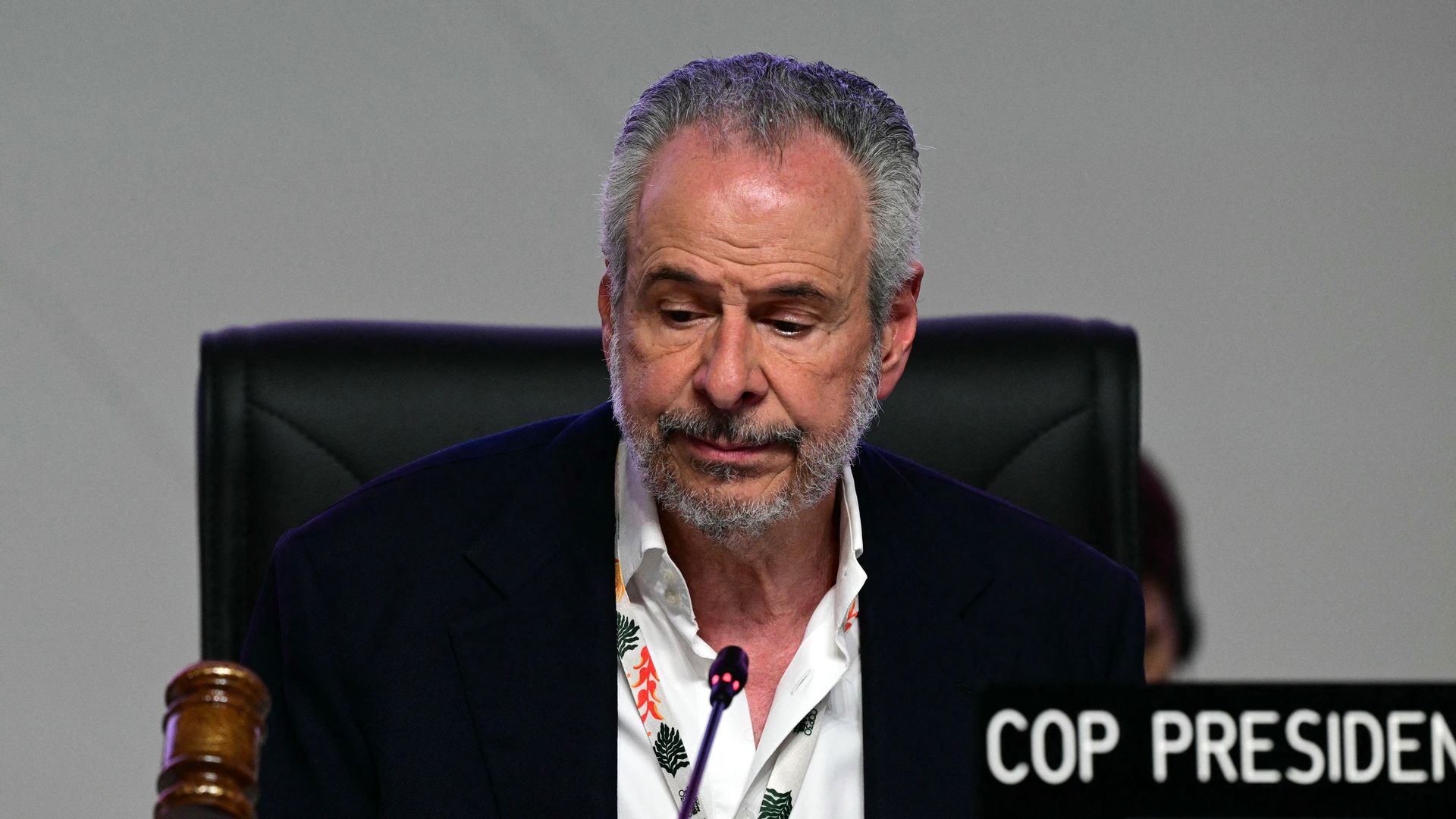
UN climate talks in Brazil are wrapping up Saturday with a push to help move nations away from fossil fuels, but the deal lacks explicit mention of the CO2-spewing energy sources.
Why it matters: The compromise underscores the Paris Agreement's limited ability to move from aspiration to stronger real-world action.
A string of recent attacks on ABC personalities by President Trump has helped set the stage for the President's media regulator, Federal Communications Commission chairman Brendan Carr, to introduce heavier oversight measures on broadcast companies.
Why it matters: ABC is particularly vulnerable to the president's attacks because its local broadcast affiliates are regulated by the FCC.
A group of congressional Democrats with national security backgrounds say threats coming into their offices have surged dramatically after President Trump said comments they made are "punishable by DEATH!"
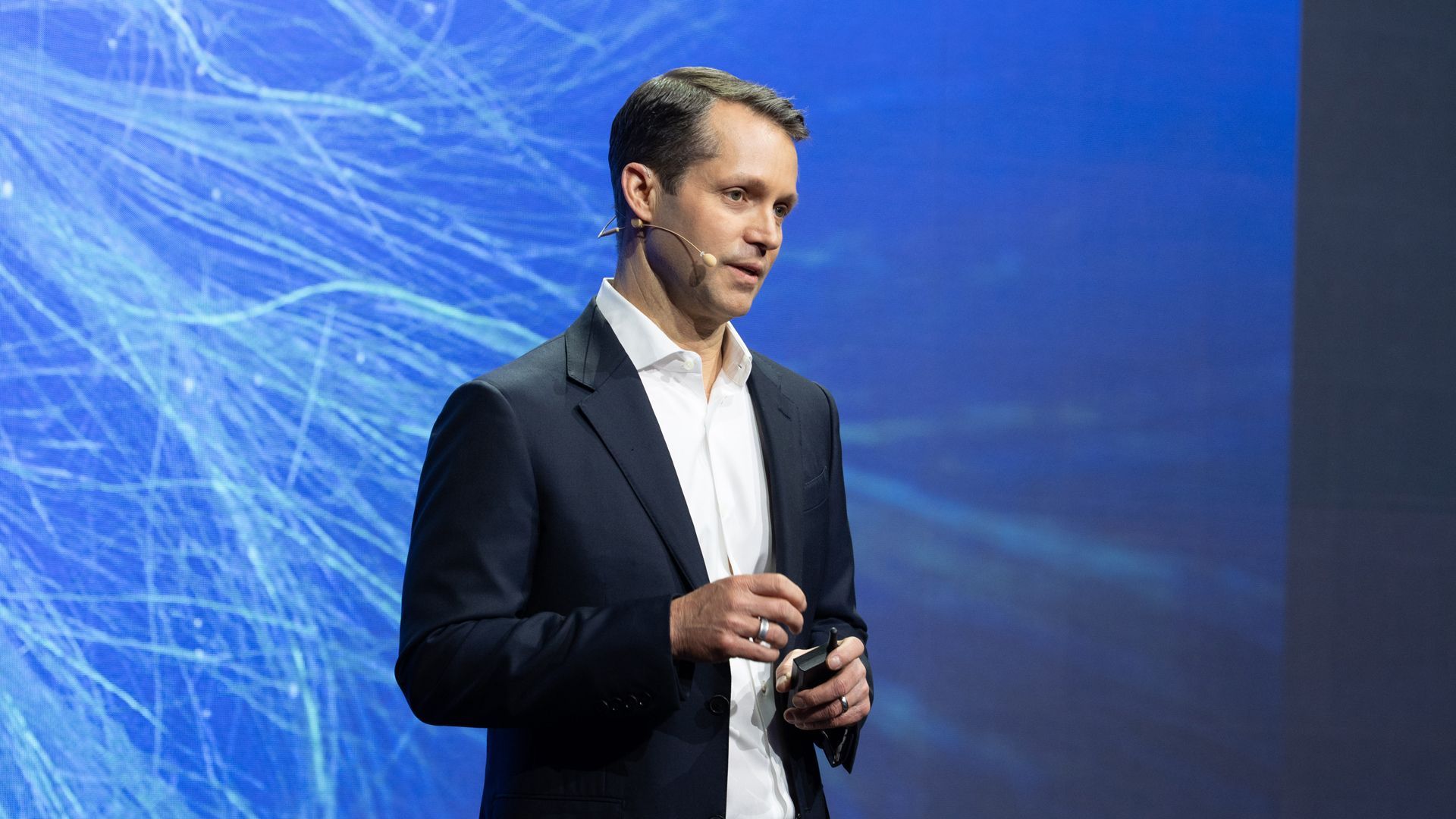
Nokia just hosted its 2025 Capital Markets Day in New York, where it announced a new strategy and a simplified operating model to position the company on a strong path to lead, innovate, serve its customers and create shareholder value.
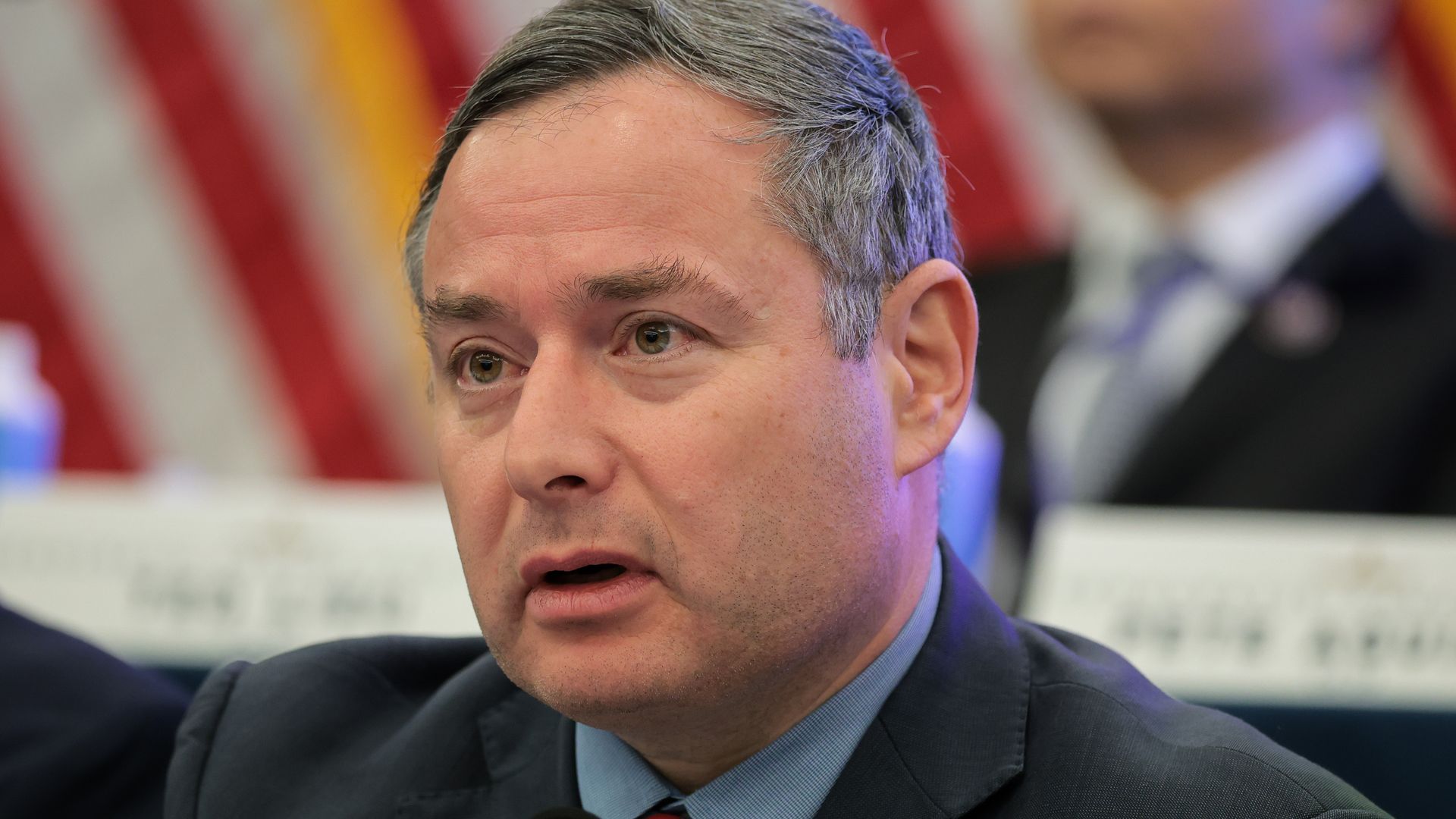
Rep. Eugene Vindman (D-Va.) urged President Trump to release the "shocking" transcript of a 2019 phone call with Saudi Crown Prince Mohammed bin Salman (MBS) following the murder of Washington Post journalist Jamal Khashoggi.
The big picture: Vindman's request comes just days after Trump hosted MBS in the Oval Office and said "a lot of people didn't like" Kashoggi, when asked about the murder. U.S. intelligence previously concluded that MBS ordered Khashoggi's killing.
Joby Aviation is suing its biggest air taxi rival, Archer Aviation, claiming Archer used information stolen by a former Joby employee to interfere with a confidential real estate deal.
Why it matters: Joby and Archer are bitter rivals in the race to certify electric air taxis, and the companies are competing to open future vertiports in major cities.
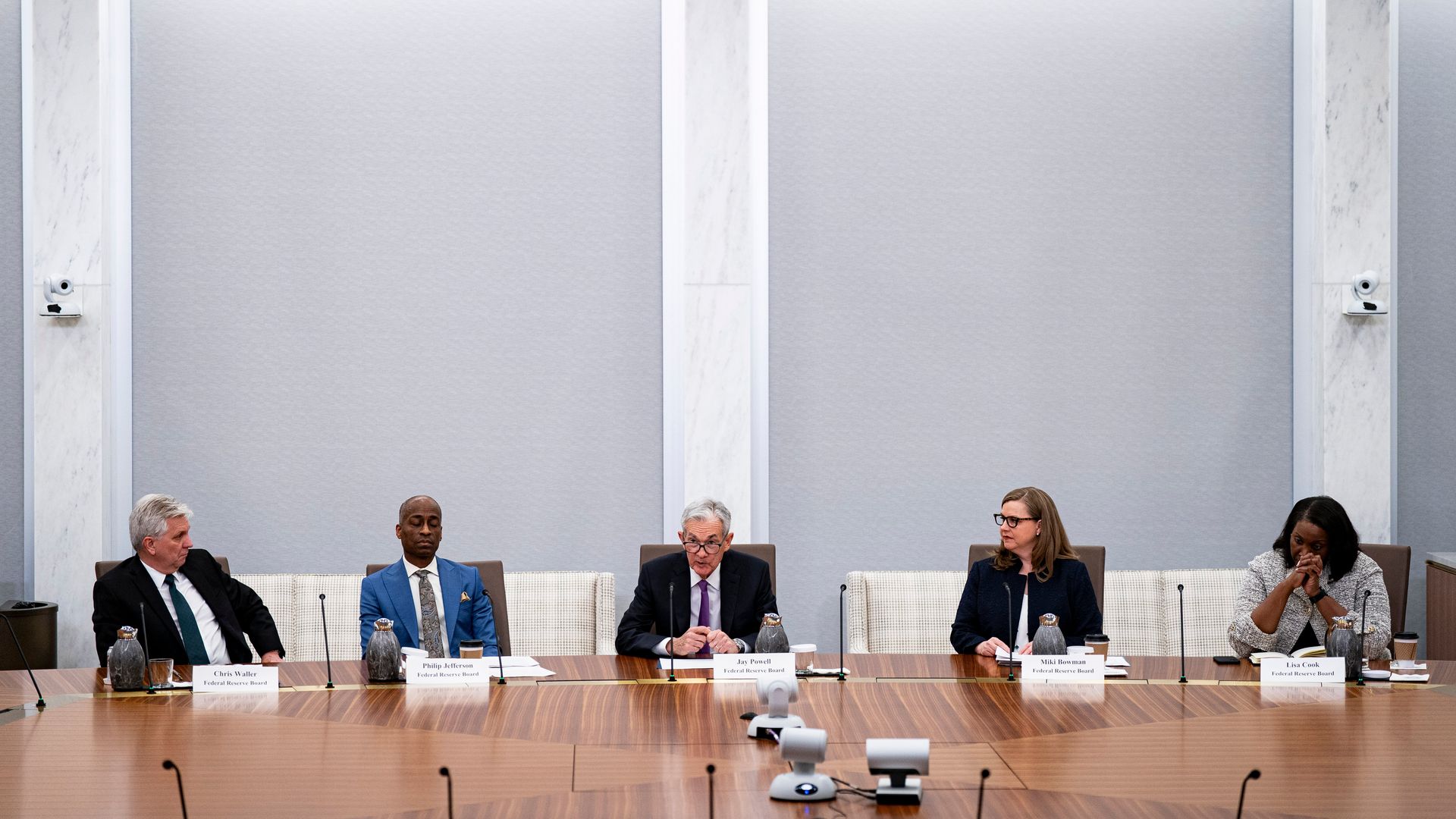
The Federal Reserve is deeply divided right now between officials who think it should cut interest rates next month and those who don't. One plausible result of the vote would create a stunning irony.
The big picture: Usually, as a Fed watcher, you don't spend much effort counting votes. The policy committee reaches a consensus decision, and if there is a dissent or two, that is a footnote at best.
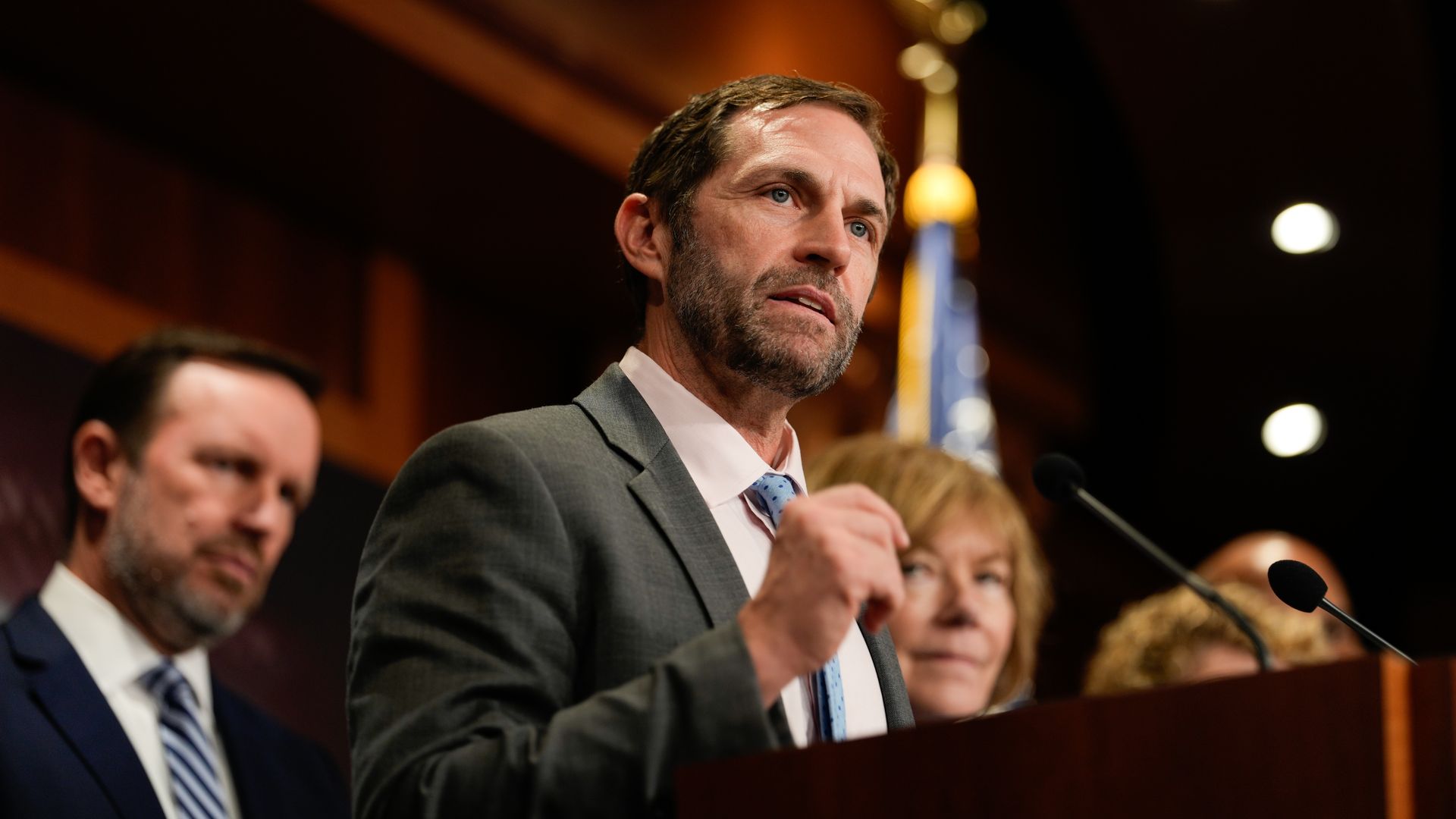
Rep. Jason Crow's (D-Colo.) office is seeking a U.S. Capitol Police investigation into President Trump for what they described as "intimidating, threatening, and concerning" social media posts he made.
Why it matters: It's highly unusual for a member of Congress to request a police investigation into a sitting president of the United States.
Nvidia's powerhouse earnings weren't quite enough to pause a tech-driven selloff on Thursday. Instead, it took comments from a top Federal Reserve apparently confirming an interest rate cut in December to support the market, at least in Friday morning trading.
Why it matters: So much of the market, and the economy, has relied on a single company, and its earnings didn't do enough to dispel AI bubble concerns.
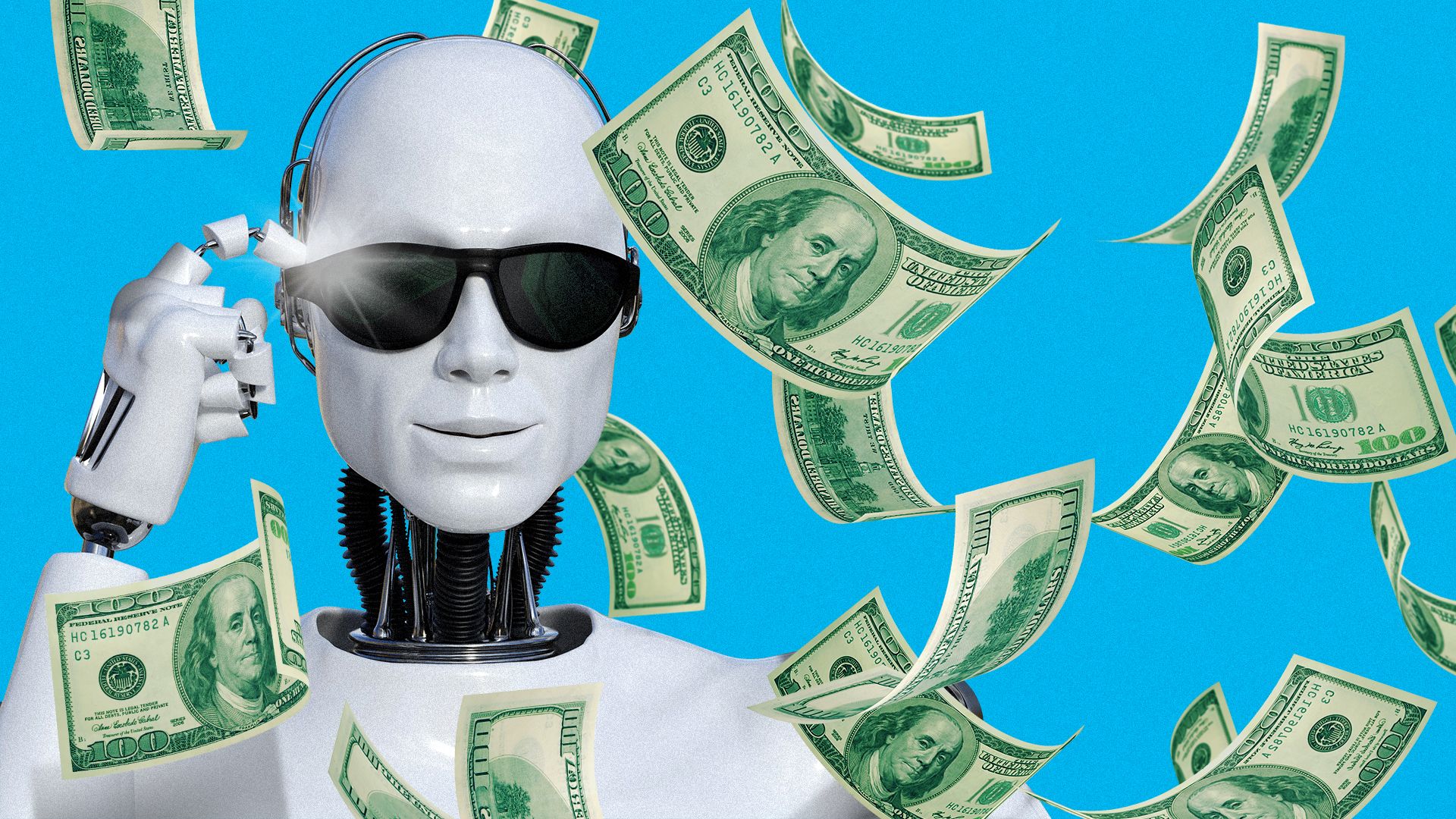
Physical Intelligence, a San Francisco-based developer of AI software for robots, has raised $600 million led by Alphabet's CapitalG at a $5.6 billion valuation.
Why it matters: There's tons of talk about how AI could lead to a white-collar jobpocalypse, in a reversal of the 1980s and 1990s factory automation boom. "Learn to plumb, not to code."
But VCs are pumping a ton of cash into marrying AI and robotics, which suggests that all collar colors could get singed.
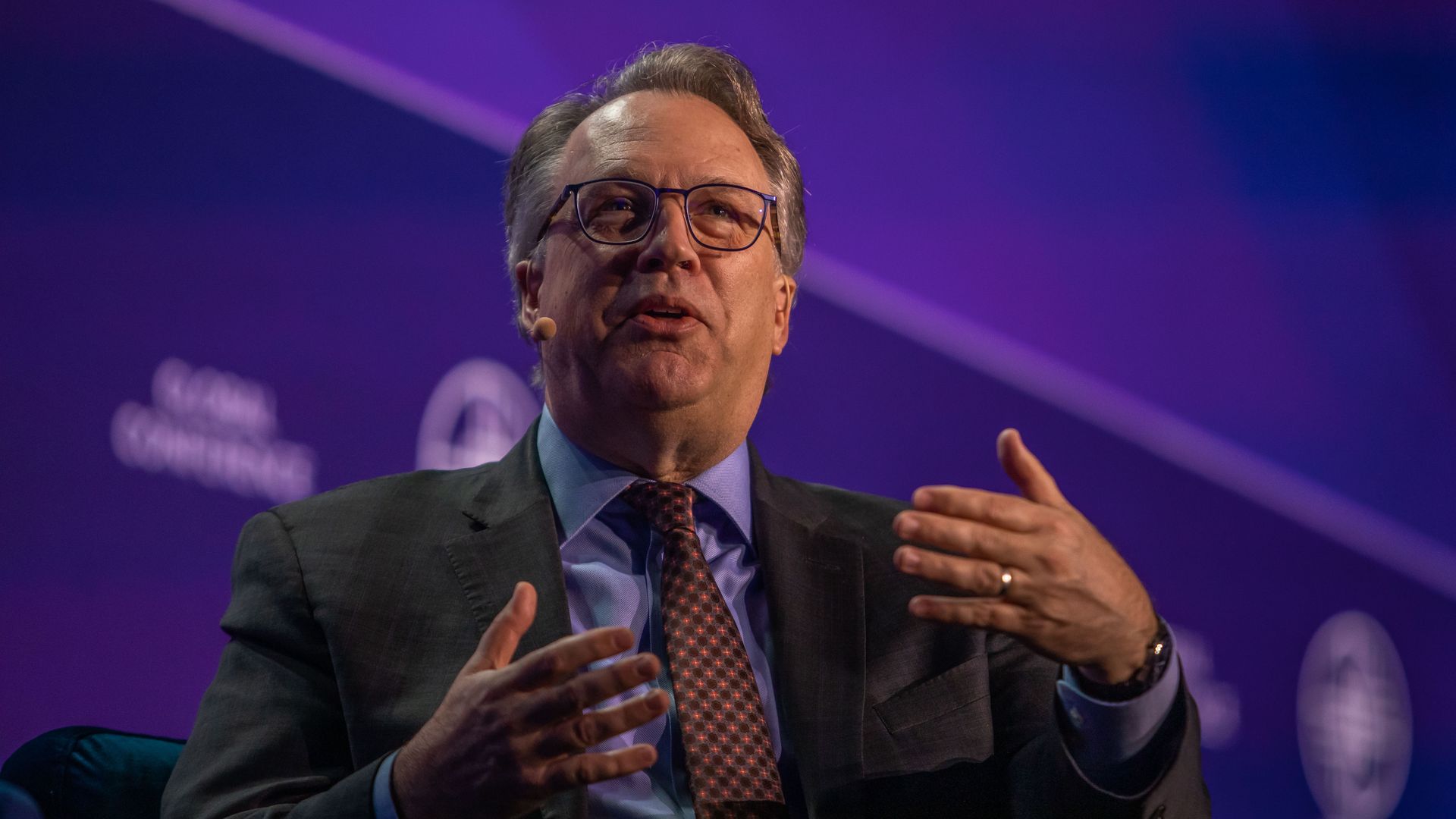
New York Fed president John Williams on Friday signaled support for another rate cut "in the near term," an important endorsement as the central bank faces historic division over whether to slash borrowing costs again.
Why it matters: The signal from Williams, who is also vice-chair of the Fed's rate-setting committee, sent the stock market up in early trading and put a December rate cut — all but written-off earlier this week — back on the table.
A plunge in cryptocurrency assets accelerated Friday morning, led by bitcoin, which has lost more than a third of its value since setting an all-time high in October.
Why it matters: The bloodbath has left no corner of the market untouched, and is reviving the debate about crypto as a long-term asset.
European defense could be an alternative tech play as AI stocks in the U.S. come under pressure, J.P. Morgan Private Bank says in its 2026 outlook.
Why it matters: Defense budgets are technology budgets now, particularly in Europe as nations there work to shore up their militaries and infrastructure in the face of the Russian threat.
What they're saying: The market isn't pricing European defense "as a secular story like it is AI, and we think it's on the same level," Jacob Manoukian, U.S. head of investment strategy at J.P. Morgan Private Bank, tells Axios.
Defense spending in Europe could double from current levels, he says. European countries are shoring up power supplies amid the AI boom.
That could fuel investments across electrification and industrial firms, as well as across the traditional defense sector, according to the outlook.
The European defense sector has rallied over 20% this year as the "sell America trade" ballooned, but is in "year three" of a "decade trend."
Zoom in: Higher wholesale prices and reliance on energy imports make electricity prices higher in Europe compared with the U.S.
That problem could be exacerbated by AI, which requires lots of energy.
Europe also lost 30% to 40% of its electricity input from Russian pipeline gas following the invasion of Ukraine, according to Manoukian.
Europe, he says, will have to spend more to build LNG import terminals to ensure lower energy costs in a fragmented world centered on AI.
Between the lines: The bet on Europe is also about diversification.
"The investment opportunity in European names is differentiated relative to the story in the U.S.," says Stephen Parker, co-head of global investment strategy at J.P. Morgan Private Bank.
Zoom out: Investing internationally becomes "that much more important" as the world's superpowers step back from globalization, Manoukian says.
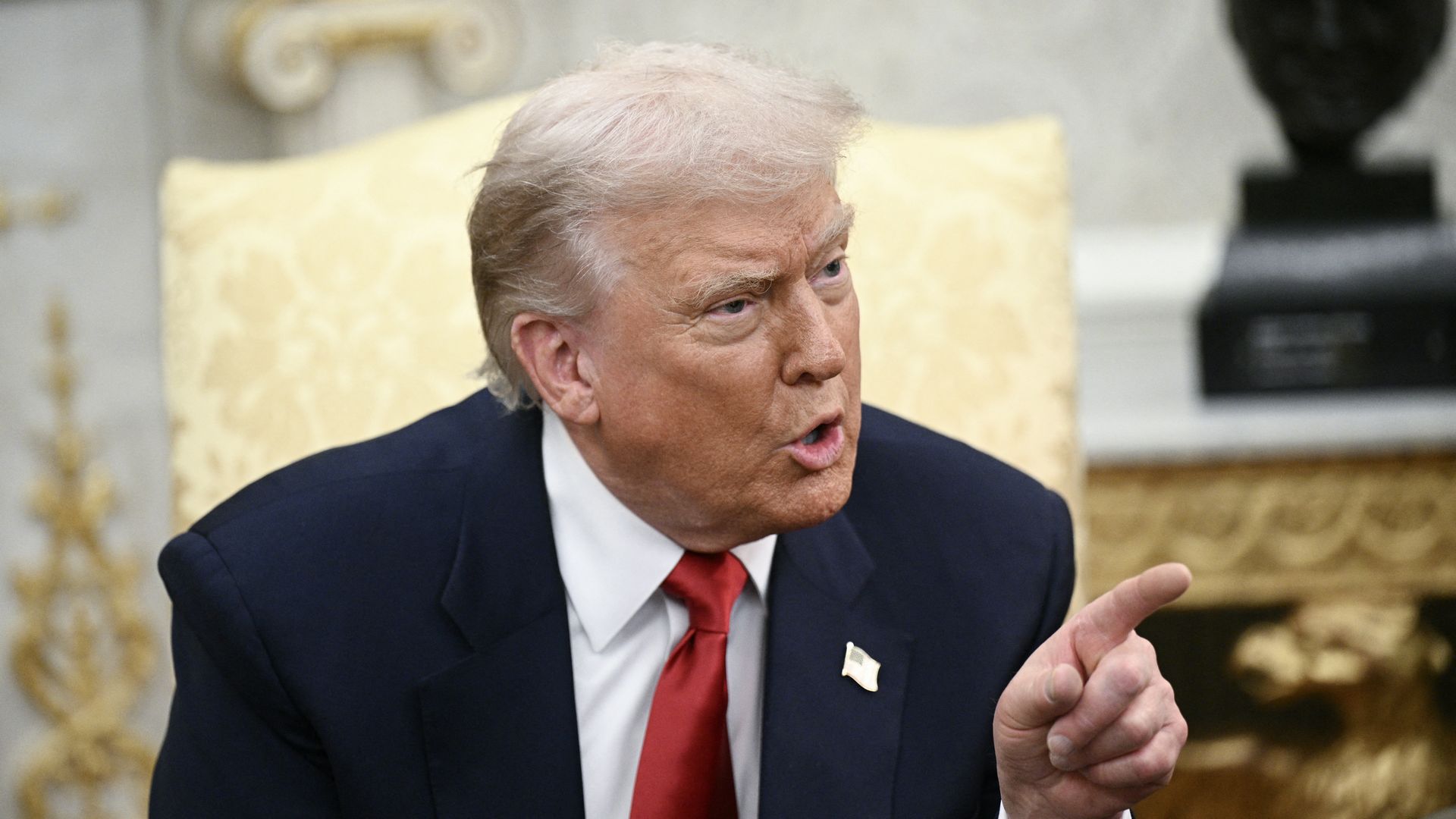
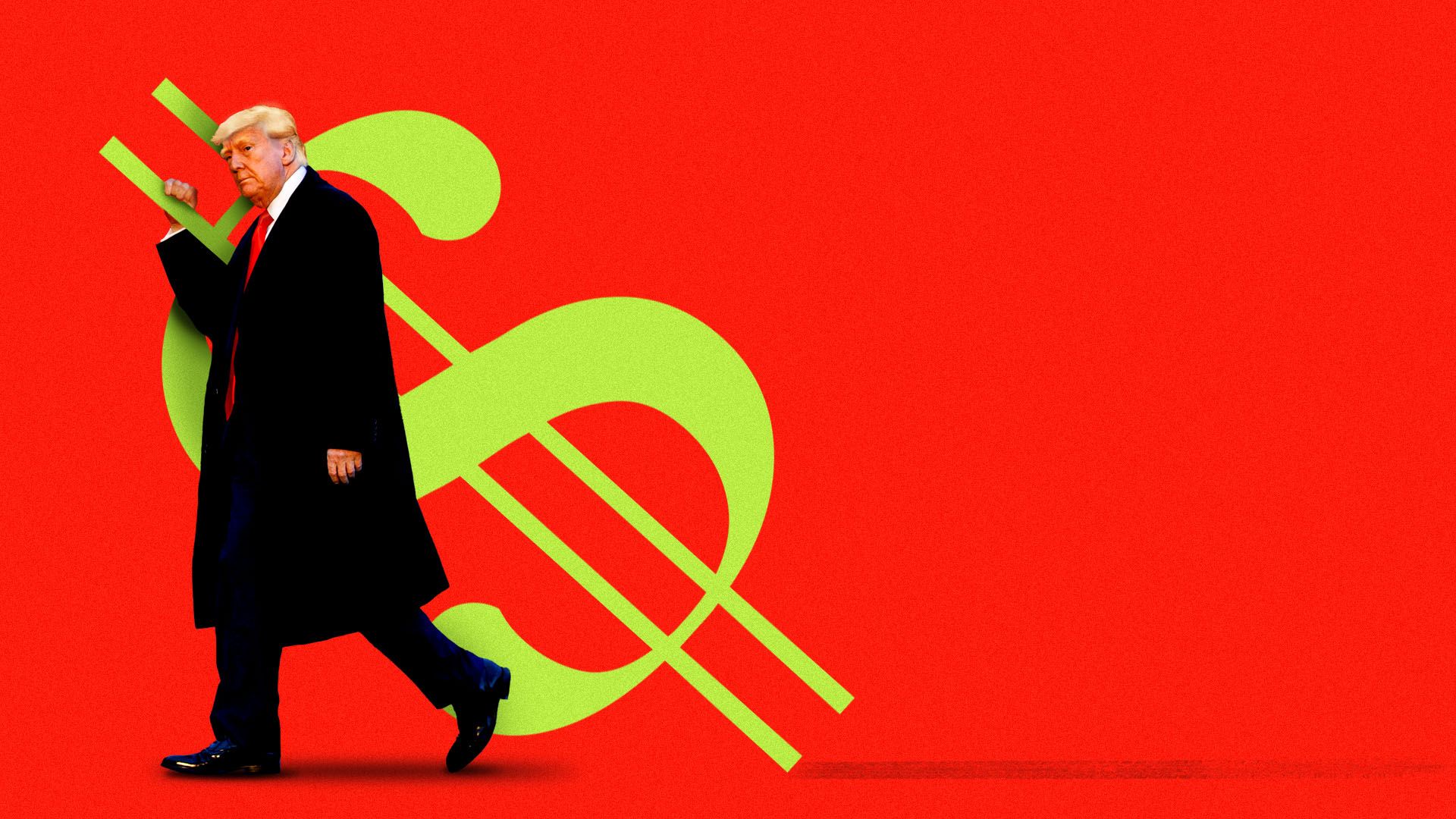
Wall Street is now looking past President Trump's policy proposals meant to address the affordability crisis, from stimulus checks to 50-year-mortgages.
Why it matters: Market participants doubt whether the recent ideas will go anywhere and, if they do, whether they would actually address the problems of affordability.
What they're saying: "Well into a second administration, investors have developed a filter for the president," Joe Brusuelas, chief economist and principal at RSM US, tells Axios.
Investors are familiar enough with Trump's approach to differentiate between "extreme statements" and "more substantial decisions," he adds.
State of play: The White House has made several policy proposals meant to address the affordability crisis.
Zoom in: The market didn't move meaningfully off any of these proposals.
The bond market in particular would have been primed to react to the tariff checks, given revenue from the levies is meant to eat away at the deficit.
But both the bond market the stock market are relatively sanguine, with the latter too focused on Nvidia and all things AI to care about Washington.
The other side: The White House declined to comment on the stock move yesterday.
Threat level: The proposals may not fix the problems they aim to address.
Stimulus checks fueled inflation coming out of the pandemic, according to a study from the Federal Reserve.
Longer-term mortgages can decrease monthly payments, but increase the overall cost of home ownership, according to Moody's.
Food prices "weren't necessarily going up just because of tariffs," National Economic Council director Kevin Hassett said on ABC "This Week."
Between the lines: "The problem with the government trying to solve market problems is that it's always a supply issue, and the government is not great at solving supply issues," Norton of Empower tells Axios.
"That's where the private market is much, much better," she adds.
Reality check: This was also a criticism from Wall Street during the Biden administration with regard to stimulus checks doled out amid the pandemic and increased government spending via the Inflation Reduction Act.
What to watch: How the market responds to Washington as the year ends. Investors seem too dazed by the AI bubble to consider much else right now.
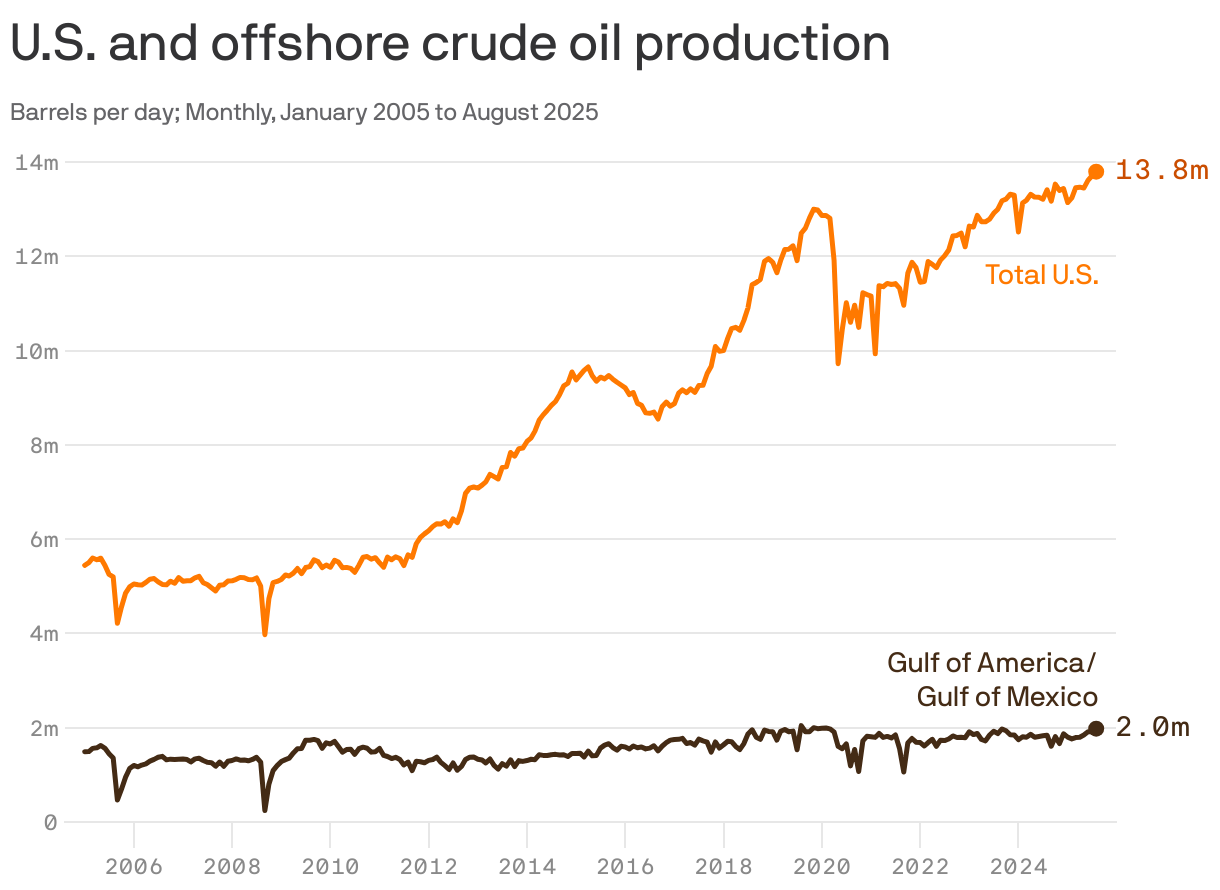
If you lease it, will they come? Oil companies could soon(ish) start answering that question under President Trump's new plan for offshore drilling lease auctions.
Why it matters: The Interior Department proposal envisions vast expansion in federal waters beyond the Gulf of America (renamed from Gulf of Mexico), where almost all action occurs today.
Hollywood's biggest competition this year isn't at the box office, it's in the Warner Bros. Discovery boardroom.
State of play: A trio of Hollywood power players submitted bids to buy all or part of WBD Thursday, launching what is sure to be a dramatic and historic media merger fight.
The mayors of Phoenix and Melbourne, Australia, are leading a global commitment with eight other mayors to ensure that companies build AI systems more sustainably.
Why it matters: Mayors are on the front lines of the global data center boom. They respond to residents' concerns, rising energy prices, water management issues and other infrastructure demands.
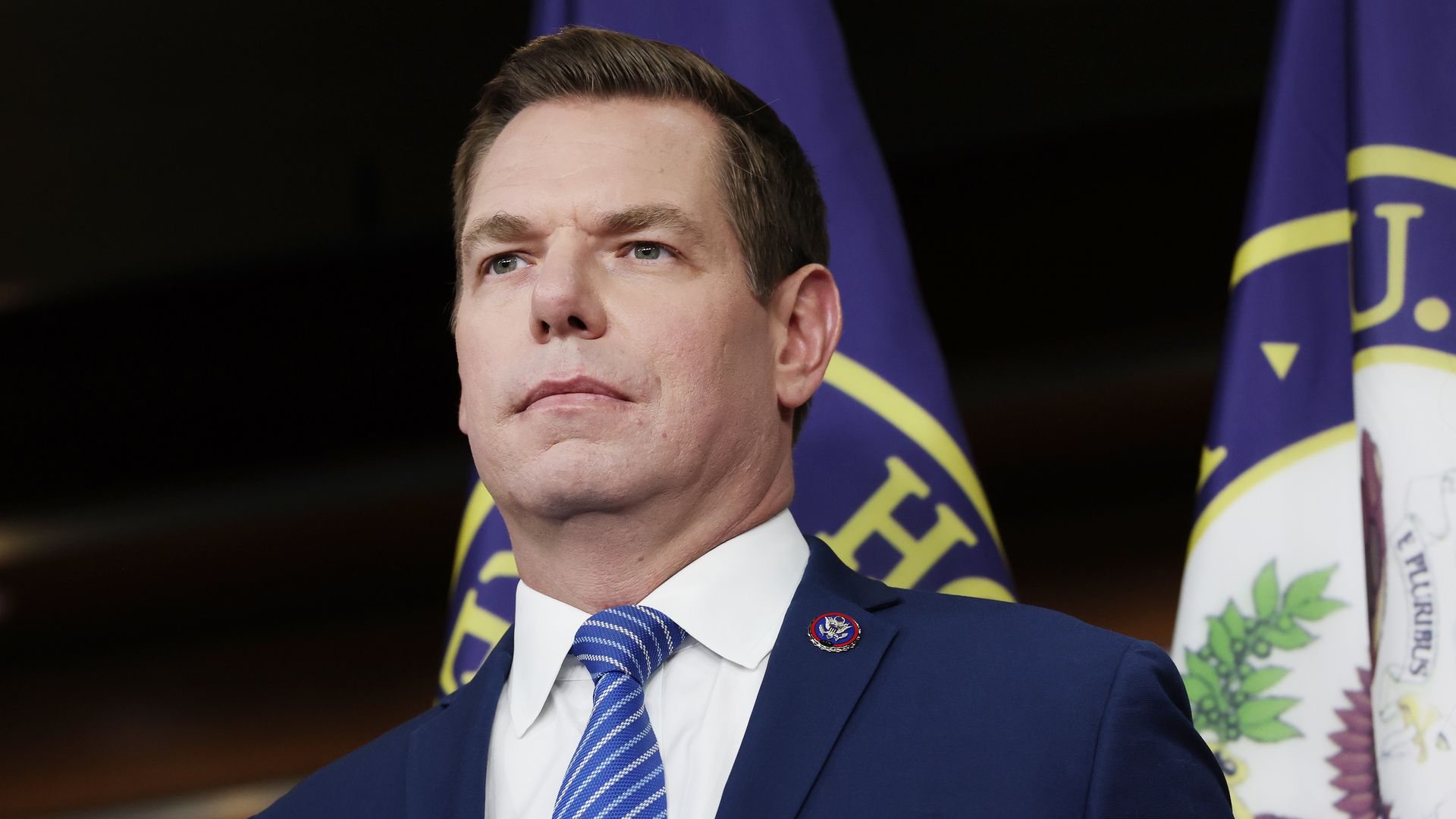
Rep. Eric Swalwell (D-Calif.) is joining the 2026 California governor's race, he announced on "Jimmy Kimmel Live" Thursday night.
The big picture: Swalwell joins a crowded field of more than 20 candidates, including Democratic megadonor Tom Steyer, who are seeking to replace California Gov. Gavin Newsom (D), who is term-limited.
About 7% of all air traffic controllers who continued working during the country's longest-ever government shutdown will receive President Trump's $10,000 "perfect attendance" bonus.
The big picture: The National Air Traffic Controllers Association expressed gratitude for those being rewarded, but the union told Axios it's "concerned that thousands" of workers "who consistently reported for duty" during the shutdown while working without pay "were excluded from this recognition."
The federal government will soon require carmakers to test vehicle safety systems using advanced crash test dummies that more accurately represent female bodies.
Why it matters: Women face a much higher risk than men of being seriously injured or killed in a crash — but most vehicle safety systems are tested using male crash test dummies.