The White House has launched a new Drudge Report-like website devoted to promoting pro-Trump news stories.
Why it matters: The site, called White House Wire, represents the administration's latest effort to circumvent the mainstream media and present itself in a positive light.
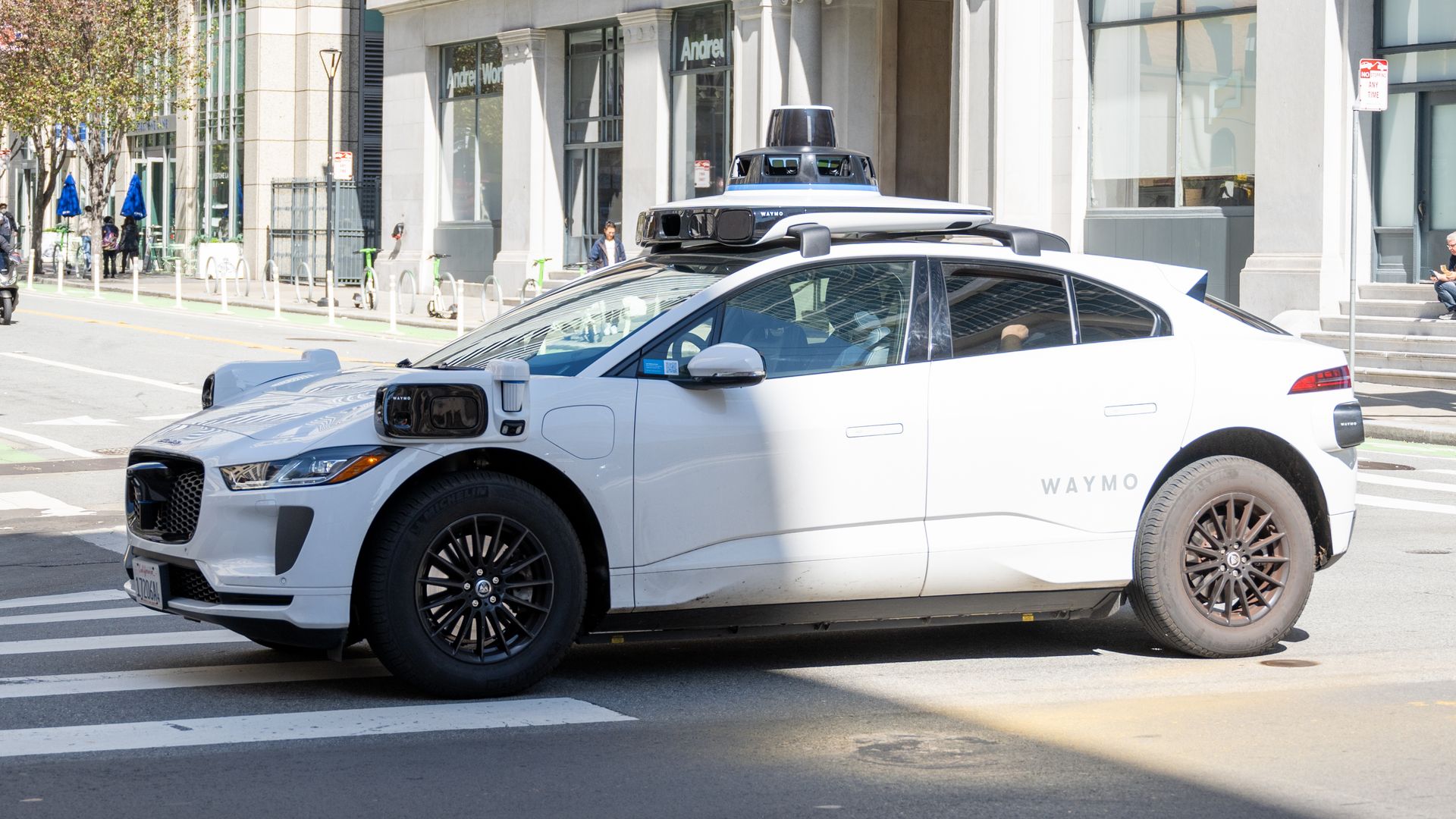
Toyota announced a preliminary partnership with Waymo on Wednesday that could result in the Japanese automaker collaborating with the Alphabet unit on autonomous vehicle technology.
Why it matters: As the world's second largest automaker by sales and an industry leader in manufacturing efficiency, Toyota has the heft and the industrial prowess to make new technology a reality.
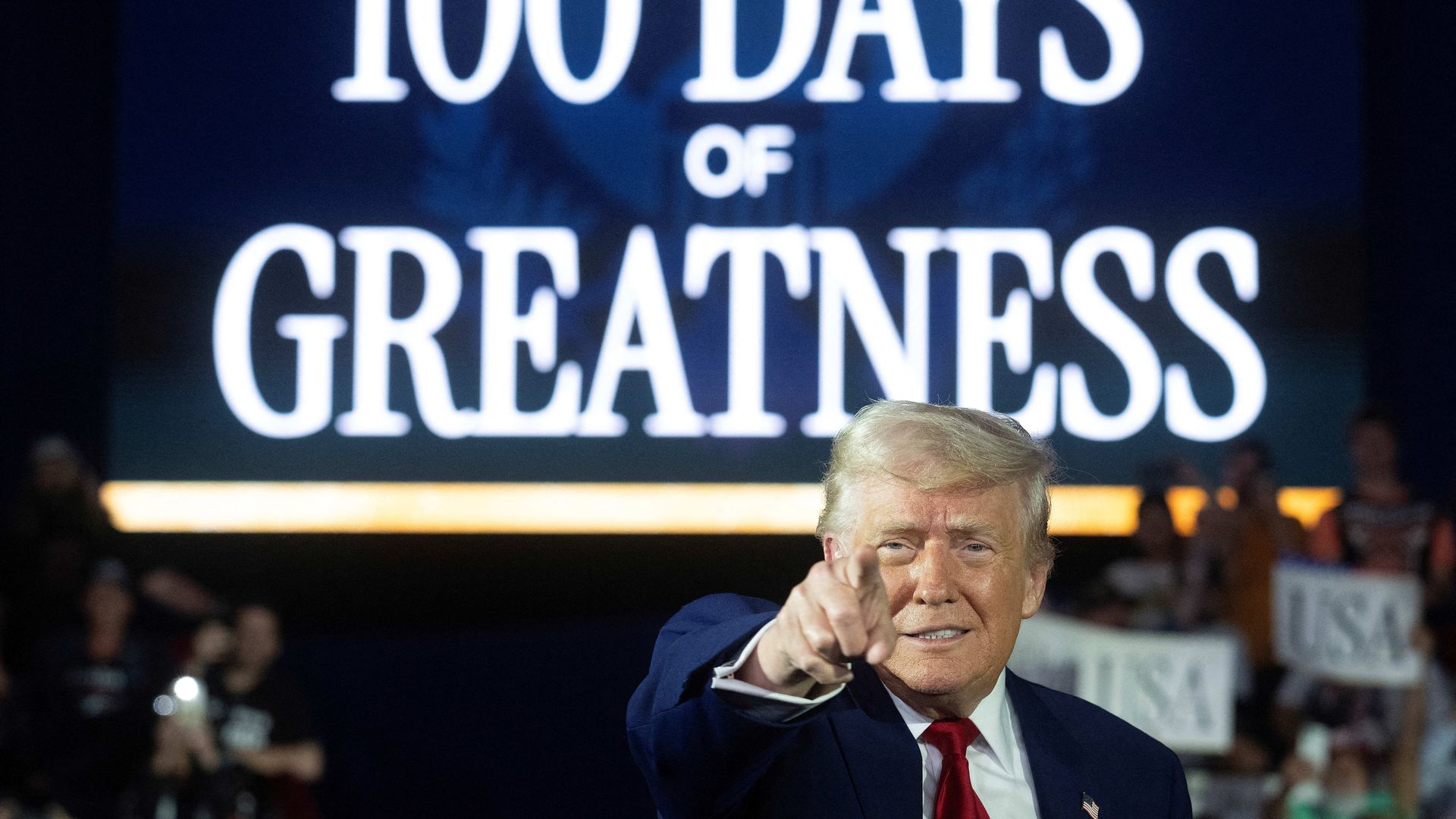
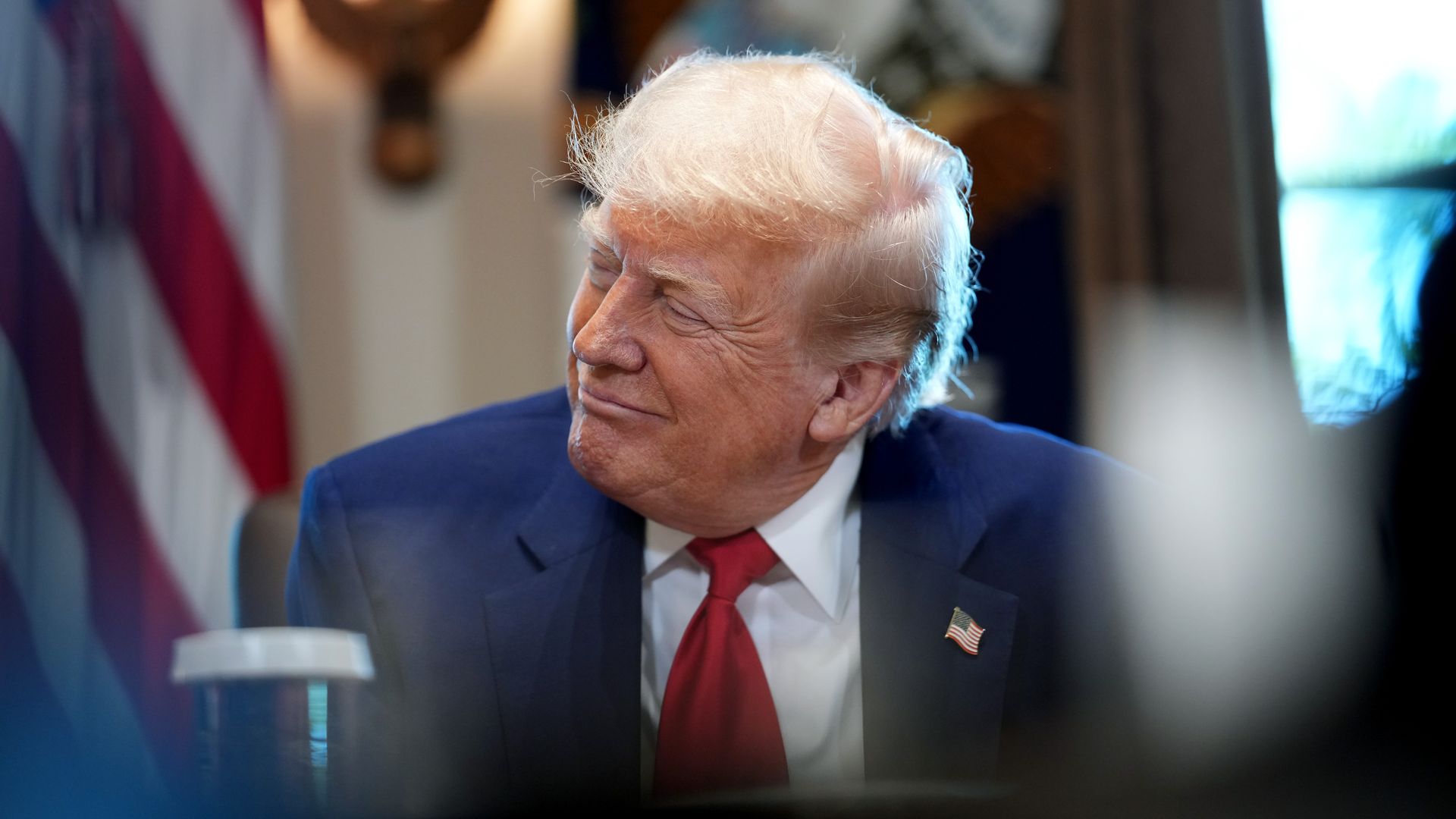
President Trump followed up the weak first GDP report of his second presidency with a Cabinet meeting full of spin on policies from his first 100 days.
Why it matters: The U.S. economy shrinking represents the first contraction in three years, a step backward from which Trump is eager to divorce himself.
Shares of Microsoft and Facebook owner Meta Platforms jumped Wednesday after the companies separately delivered strong earnings reports despite concerns about the economy.
Why it matters: Economic uncertainty stemming from President Trump's trade war is hovering over the stock market as investors look for signs of how increased tariffs are affecting businesses.
President Trump appeared to acknowledge Wednesday that toy shortages are possible as his tariff hikes ripple through the economy.
Why it matters: American retailers are growingworried that the president's trade warand increased volatilitywill lead to empty shelves, higher prices and store closures as Chinese imports screech to a halt.
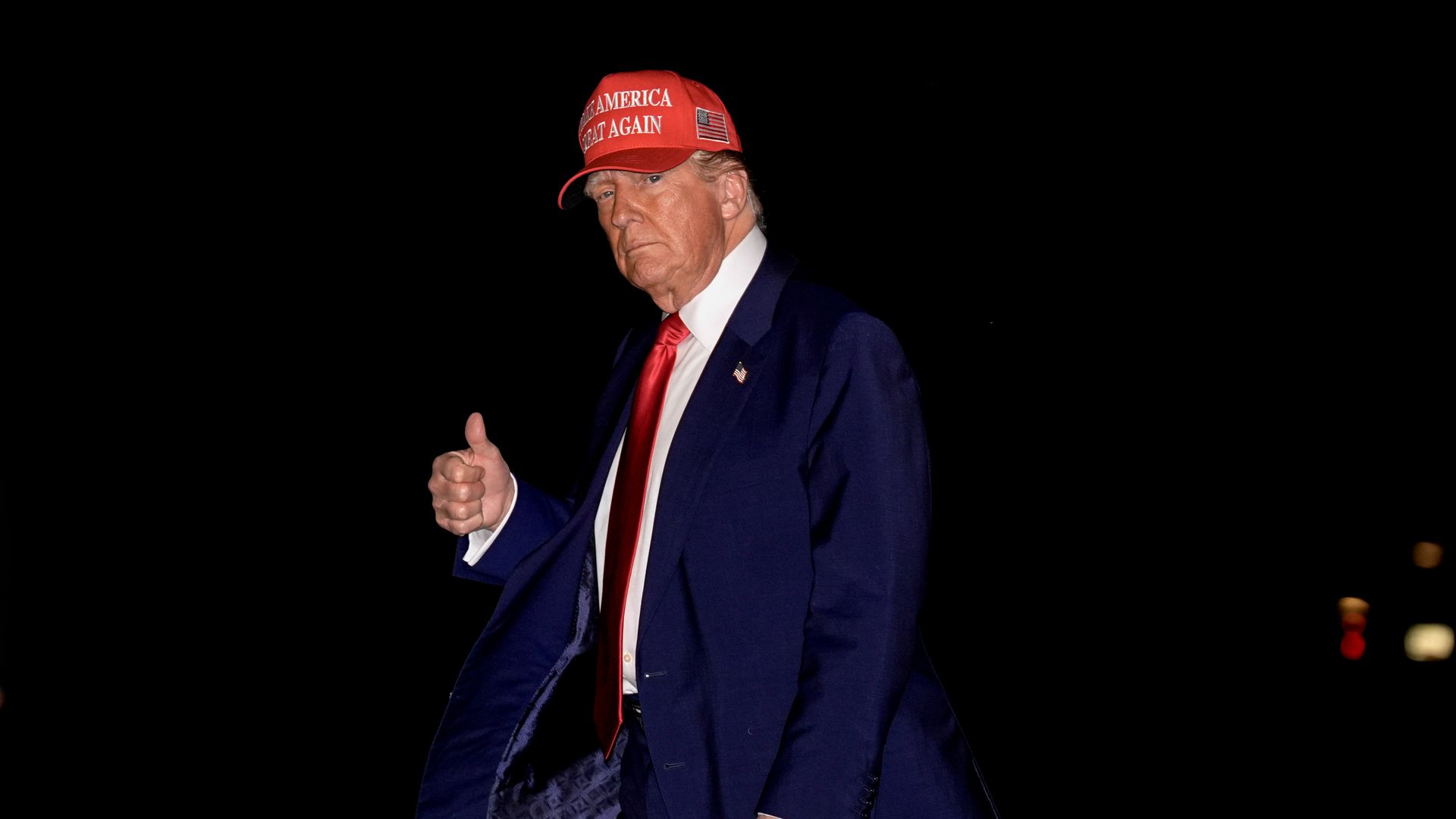
President Trump rejected any blame for the stock markets's slide this year in a post Wednesday morning: "This is Biden's Stock Market, not Trump's. I didn't take over until January 20th," he wrote on Truth Social.
But in January 2024, when the market was doing well, but he wasn't even president yet, he had a different take: "THIS IS THE TRUMP STOCK MARKET BECAUSE MY POLLS AGAINST BIDEN ARE SO GOOD THAT INVESTORS ARE PROJECTING THAT I WILL WIN, AND THAT WILL DRIVE THE MARKET UP."
Why it matters: It's typically tricky to tie a U.S. president's actions to stock market performance — equities move for all kinds of reasons – but Trump's connection to the ups and downs of U.S. indexes this year is pretty clear cut.
President Trump on Wednesday said the New York Times should be held liable for "interference" in his ongoing lawsuit against CBS News.
Why it matters: The threat is the latest Trump has made against a news outlet whose coverage he dislikes or disagrees with, and the Times quickly pushed back on it.
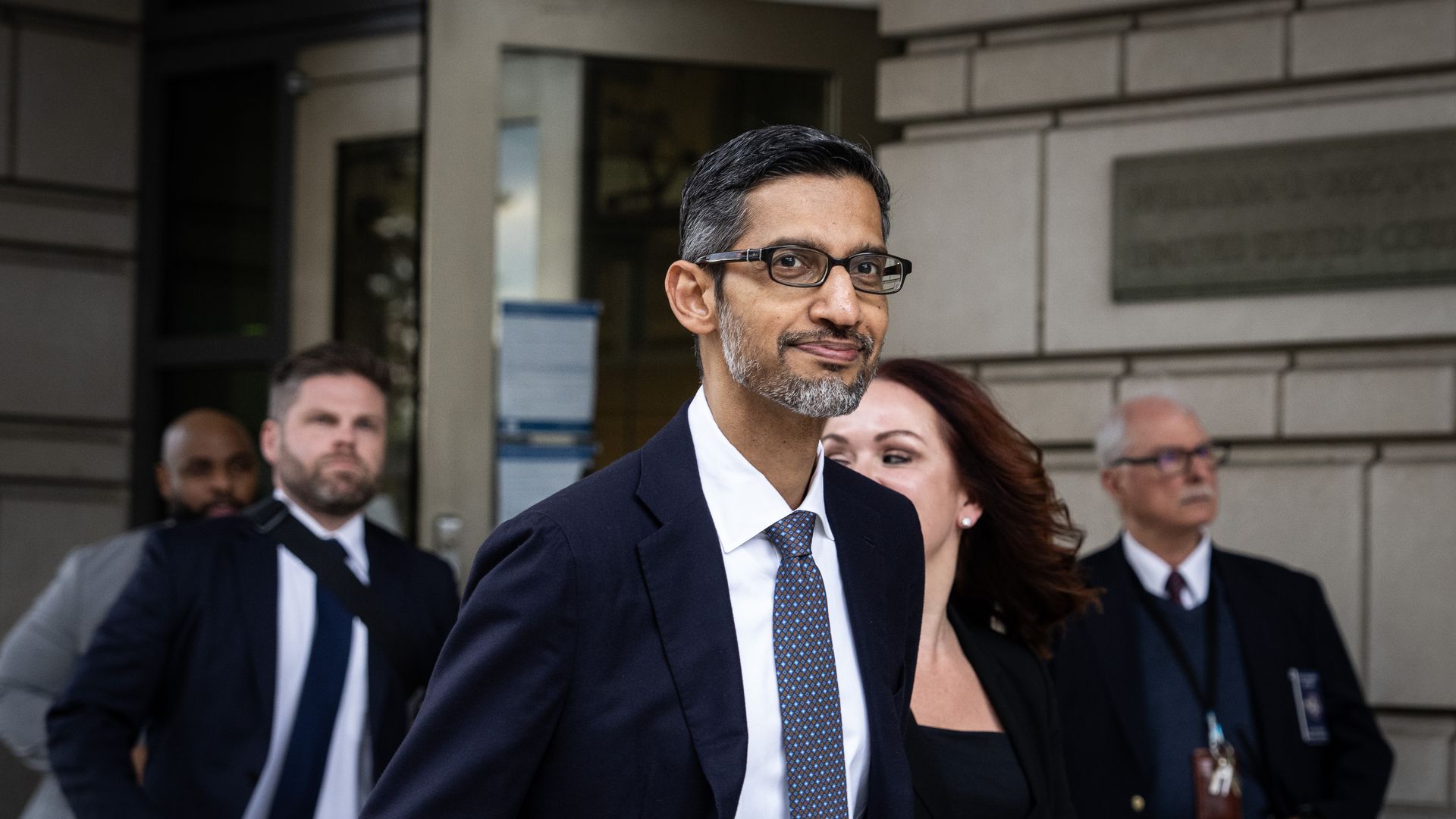
Gemini AI will be a part of paid agreements with other companies to feature Google's products, just like Google Search has been, CEO Sundar Pichai said in federal court Wednesday.
Driving the news: Pichai testified in a federal court in Washington, D.C., as part of the DOJ's search antitrust case against the tech giant.
With his sweeping tariff and trade policies, President Trump envisions a U.S. manufacturing renaissance that will bring back good-paying, working-class jobs to America's auto industry.
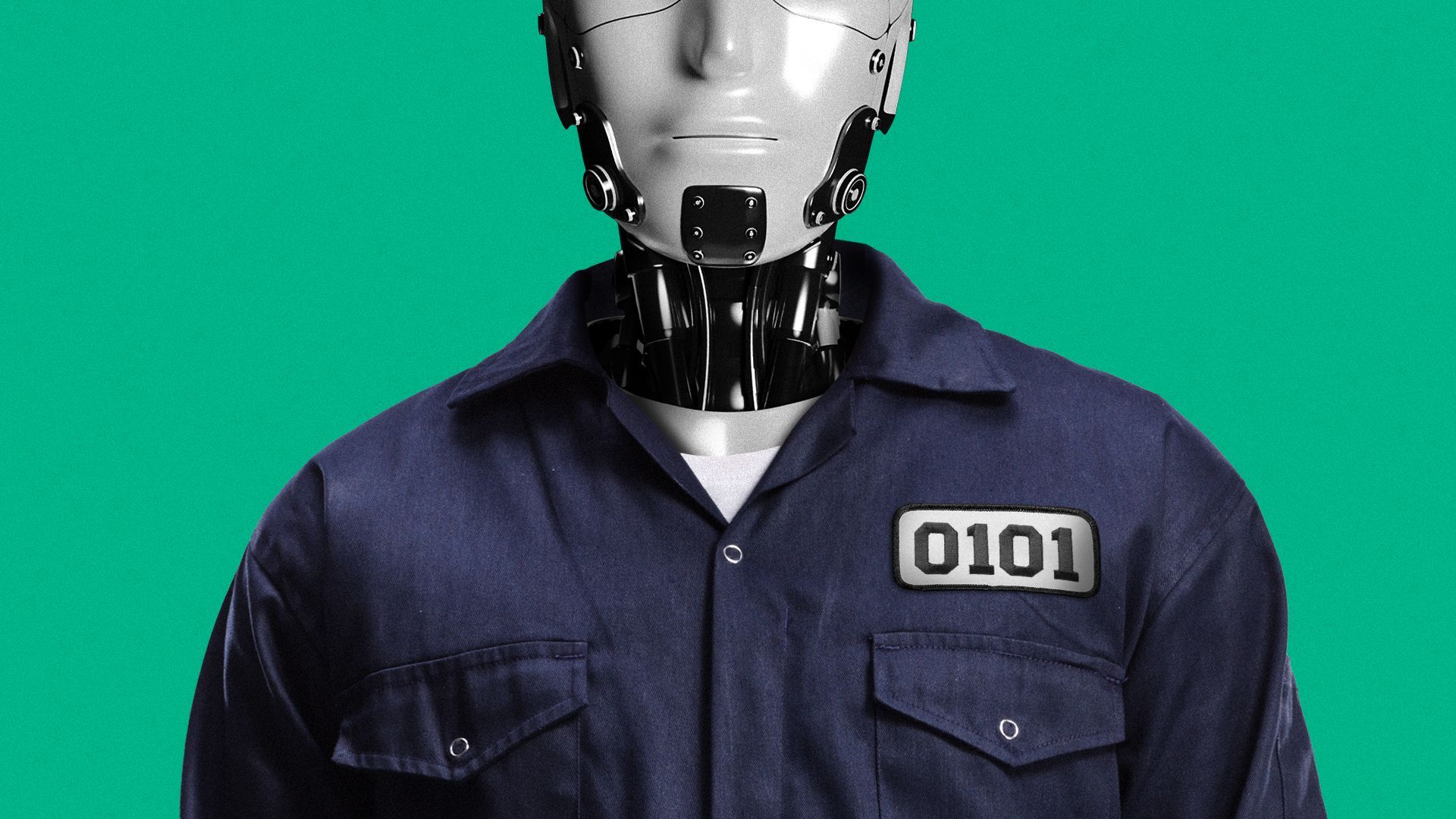
But advances in AI and other technologies paint a different picture of the future: Armies of robots — some in human form — doing difficult or repetitive tasks once done by people, who instead put their brains to work in different ways.
Driving the news: Humanoid robots are inspiring much fascination at the moment, with Morgan Stanley projecting 1 billion of them walking around by 2050, starting first in factories and warehouses.
Despite the hype, though, their practical use in manufacturing is still a few years off.
Elon Musk told investors April 22 he expects "thousands" of Optimus robots operating in Tesla factories by the end of this year, but when pressed for details, said the bots are still in development and that Tesla might build "a few" this year.
BMW has been testing Figure AI's humanoid robots at its Spartanburg, South Carolina, factory, but isn't saying when it might integrate them into its production lines.
A more realistic view of the future is Hyundai Motor Group's new $7.6 billion factory near Savannah, Georgia, arguably the world's most technologically advanced vehicle assembly plant — for now, at least.
It started building electric vehicles last November, and plans to build as many as 500,000 cars a year by 2031.
It's designed for flexibility to build both EVs and hybrids, as demand warrants, starting with the Hyundai Ioniq 5, the Kia EV9 and Waymo's next-generation robotaxi (based on the Ioniq 5).
Zoom in: Instead of human-operated forklifts or tuggers, autonomous mobile robots (AMRs) roam freely around the plant, delivering parts, modules and vehicle bodies to the right place at the right time.
Elsewhere, giant robot arms twirl tires, seats and center consoles in the air before dipping into the belly of unfinished cars to attach them in a single sweeping gesture.
Instead of gloved inspectors feeling for surface imperfections, Spot, the four-legged robot from Hyundai-owned Boston Dynamics, scans the exterior to check quality against specifications and transmits real-time feedback to the assembly robots. (Robots helping robots!)
At the end of the line, flat robots looking like giant Roombas work in pairs tocarry cars away. (Musk says Teslas can drive themselves off the line.)
All of those jobs used to belong to humans.
Boston Dynamics' Spot robots use sensors to look for imperfections in an unfinished car body before painting it. Image: Courtesy of Hyundai
Follow the money: Using robots, instead of people, to move parts or inspect quality can mean huge savings, according to manufacturing experts at Oliver Wyman, which analyzes every carmaker's labor cost per vehicle.
"Your labor costs per vehicle could be $100 lower, and if you're making 300,000 vehicles a year, that's big bucks," Oliver Wyman vice president Jim Schmidt tells Axios.
"Yeah, there's a big up-front investment in equipment, but the payback is fast, and after that, it's all gravy."
What they're saying: The United Auto Workers union doesn't object to automation, especially if it makes jobs safer or less taxing, but it wants a say in how robots are implemented, says Jason Wade, a senior advisor to UAW President Shawn Fain.
The union wants to protect paychecks and ensure workers whose jobs are replaced by robots are retrained to oversee them, he said.
By the numbers: When fully up to speed in Savannah, Hyundai expects to employ about 8,500 people building 500,000 vehicles a year.
Ford's F-150 plant in Kansas City, which produces about the same number of vehicles, has just over 9,000 employees.
With his sweeping tariff and trade policies, President Trump envisions a U.S. manufacturing renaissance that will bring back good-paying, working-class jobs to America's auto industry.
But advances in AI and other technologies paint a different picture of the future: Armies of robots — some in human form — doing difficult or repetitive tasks once done by people, who instead put their brains to work in different ways.
Driving the news: Humanoid robots are inspiring much fascination at the moment, with Morgan Stanley projecting 1 billion of them walking around by 2050, starting first in factories and warehouses.
After months of pleading, U.S. automakers got a little relief from Trump's tariff regime, but they're not exactly jumping for joy.
Why it matters: The tariffs that remain are still going to hurt, requiring some reshuffling of supply chains and even relocating of assembly plants. (More robot jobs, potentially?)
These actions are not free and take time to achieve.
Driving the news: Trump said Tuesday the government would reimburse automakers a portion of the tariffs paid on imported parts for cars finished in the U.S.
Plus, auto tariffs will not be stacked on top of other levies, such as those on steel or aluminum.
Few people would disagree that electric vehicles, with an average price tag of $59,000, are too expensive.
But do people really want a stripped-down EV for one-third the price?
I'm talking no paint, crank-handle windows, no radio or infotainment system — just a couple of brackets to mount your phone or Bluetooth speakers on the dashboard.
Why it matters: If Jeff Bezos-backed Slate Auto is correct, there's a big market for such low-cost EVs, especially if buyers can customize them with add-on accessories.
Catch up quick: Slate rolled out a no-frills, two-door electric pickup last week in Los Angeles that will go on sale in late 2026 for under $20,000.
🚖 Waymo and Toyota are exploring a deal to develop a new autonomous vehicle platform, and also to use Waymo's self-driving technology in personally owned Toyotas. Learn more in Waymo's blog post.
👮🏼 By loosening rules on self-driving vehicles, the Trump administration is taking the first steps toward a federal AV policy in a race to compete with China.
⚡️ House Republicans could vote as soon as today to try to overturn the EPA waiver enabling California's EV mandate. Carmakers support the move, saying the EV sales targets are unrealistic.
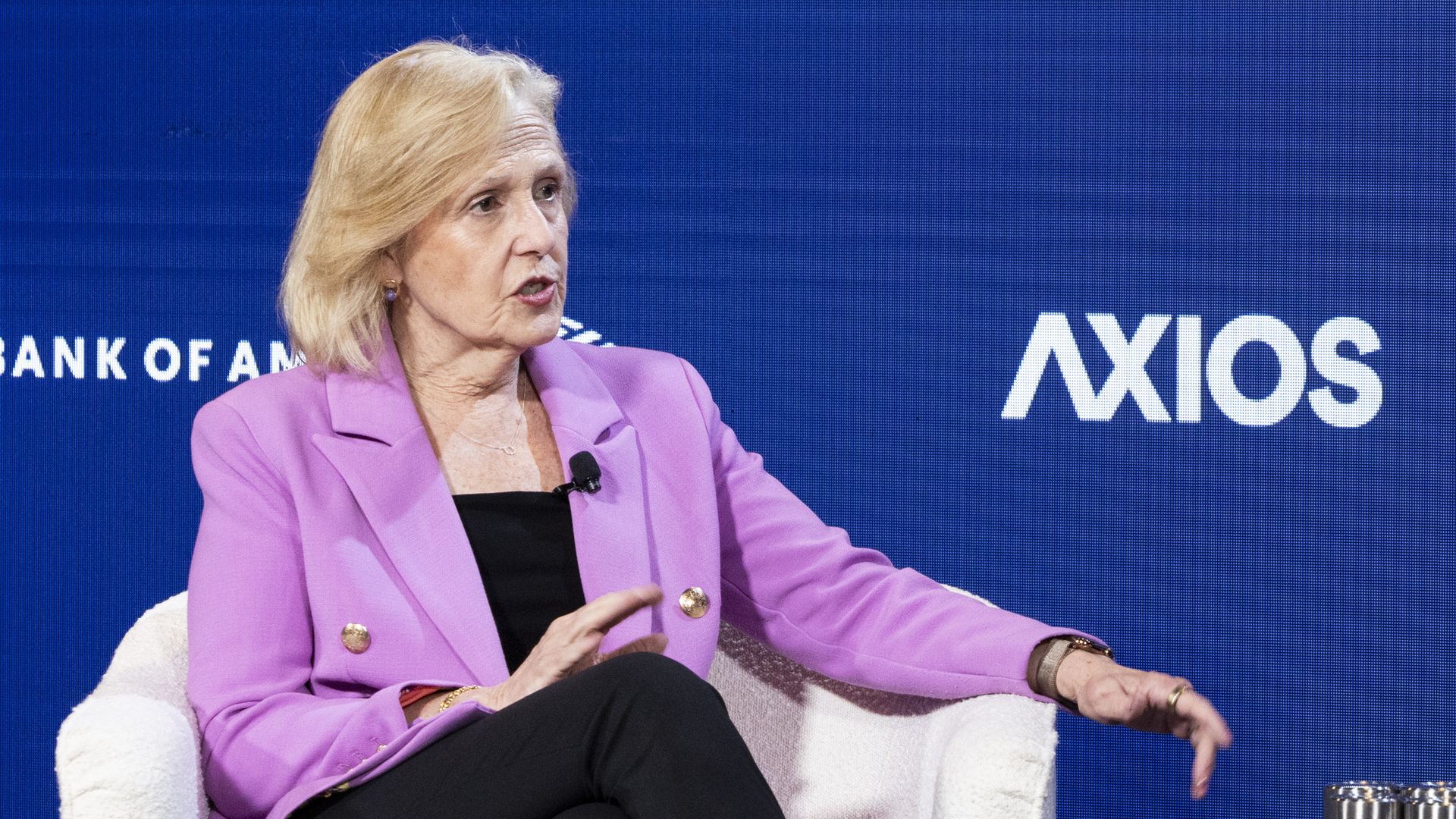
PBS CEO Paula Kerger said she was prepared to "vigorously" defend the independent broadcaster's board, when asked if she would sue the Trump administration if it tried to fire any of PBS' board directors.
Why it matters: On Tuesday, the Corporation for Public Broadcasting, which allocates around $535 million in federal funding annually to NPR and PBS, sued Trump and several administration officials for attempting to fire three members of CPB's board. A federal judge granted it an emergency injunction hours later.
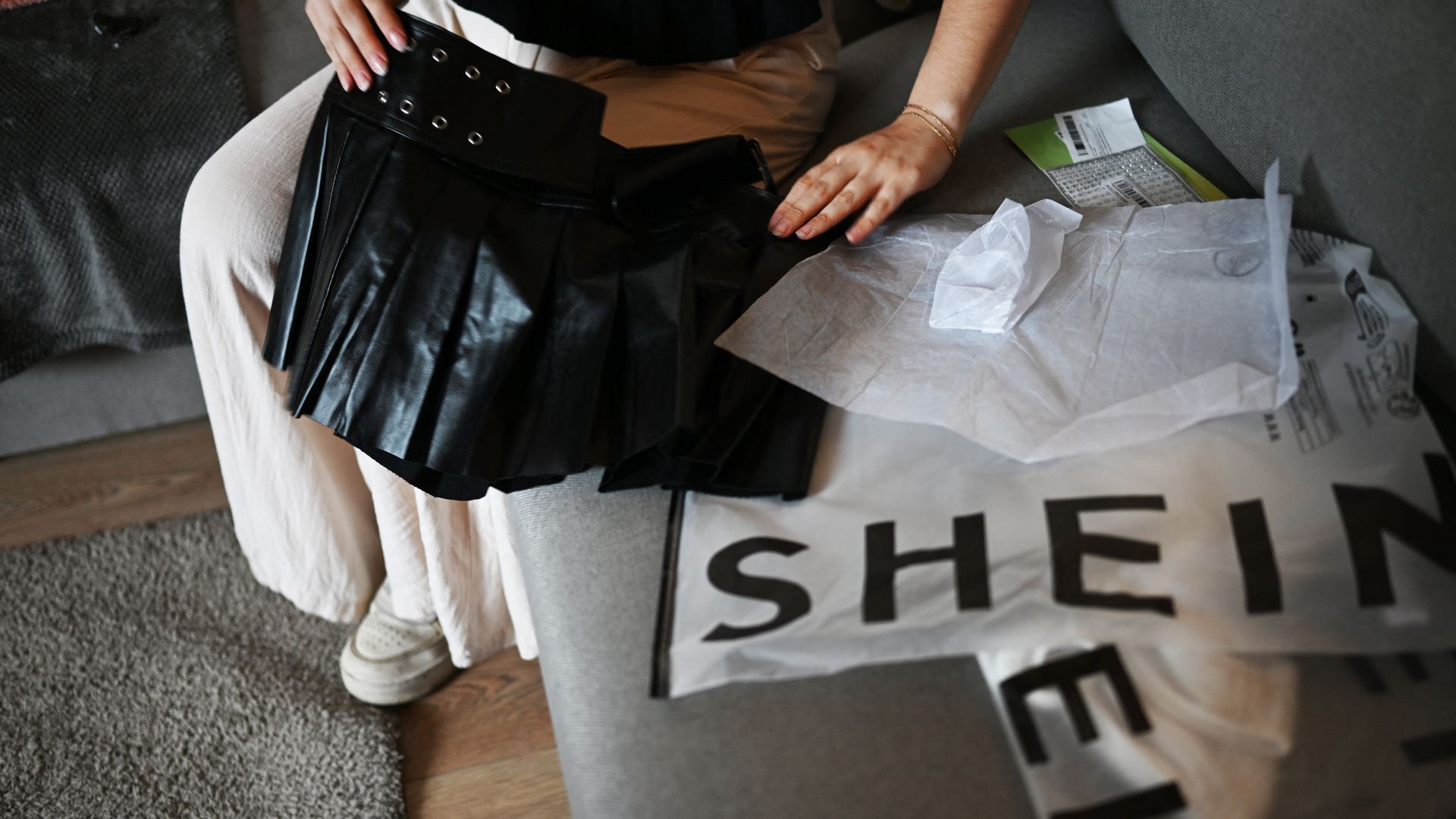
Low-cost apparel retailer Shein is exploring ways to restructure its business in response to new tariffs, including the diversion of U.S. market manufacturing to countries outside of China, according to the FT.
Why it matters: This almost certainly would delay Shein's IPO on the London Stock Exchange, which has been expected to occur within months.
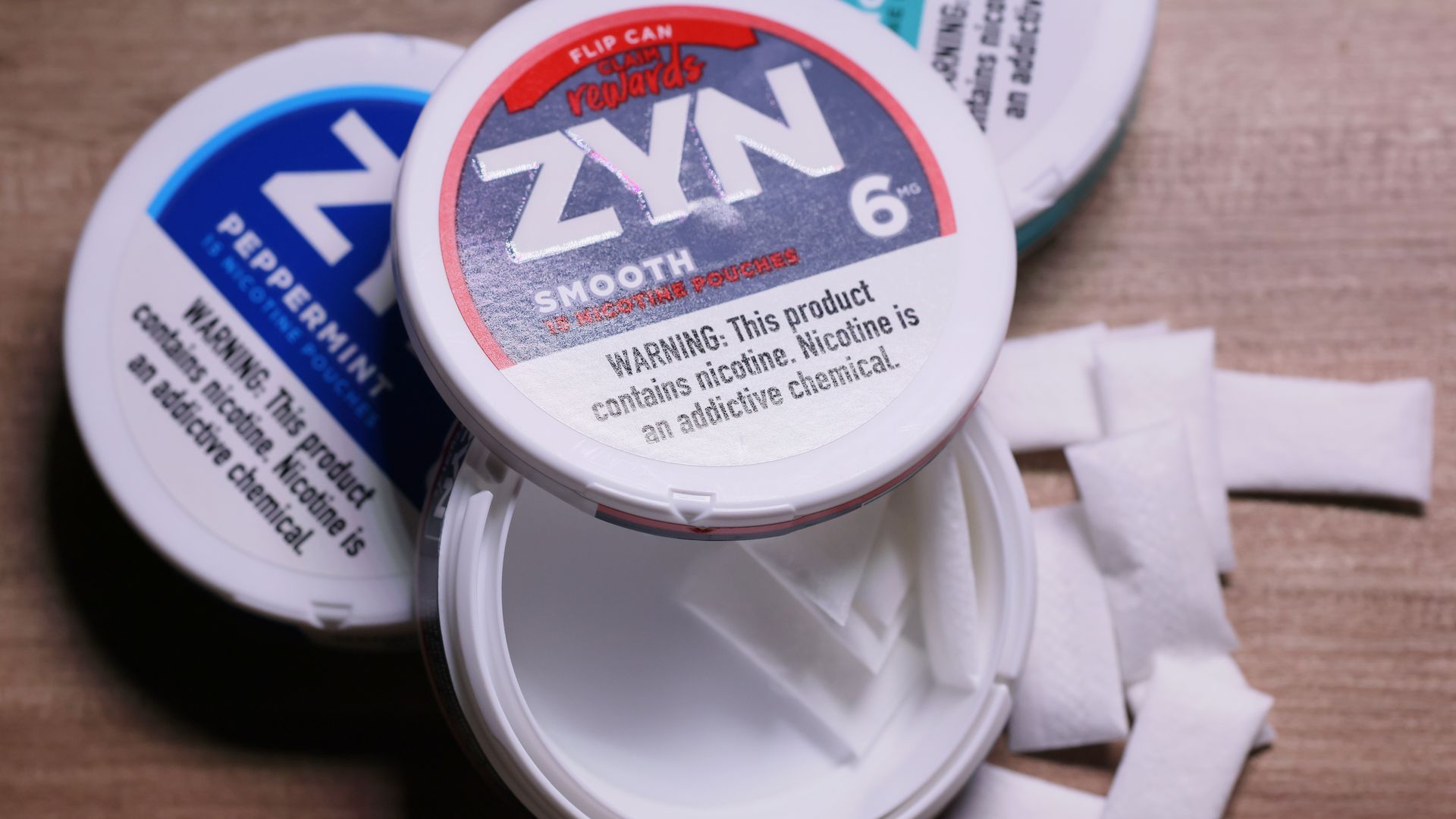
The CEO of Philip Morris International's U.S. business argued that nicotine is "misunderstood" and contains "cognitive benefits," contending that American regulators should embrace smoking alternatives as the company pursues its goal of eliminating cigarette sales.
Why it matters: The Trump administration is shaking up the federal government, putting newly appointed Health and Human Services Secretary Robert F. Kennedy Jr. in a position to reshape the regulatory framework for Big Tobacco if he wants to.
The quest to exploit deep-sea mineral resources — and debates over benefits and harms — is intensifying in D.C. and internationally.
Why it matters: U.S. regulators are now weighing an actual proposal after The Metals Company on Tuesday said it submitted applications for exploration and extraction in a swath of international Pacific waters.
President Trump's global trade war is only a few weeks old, but even if it stopped today, the effect on supply chains could eventually be measured in months and years.
Why it matters: The U.S. economy is at risk of repeating pandemic-era scenes of empty shelves and shortages of popular goods.
MAGA media erupted over a reported plan by Amazon, which the retailer denied, to display tariff costs on its website — just as Big Tech is working to align itself more closely with President Trump.
Why it matters: Tuesday's hullabaloo shows that deep skepticism of Big Tech remains a potent force within Trump's movement.
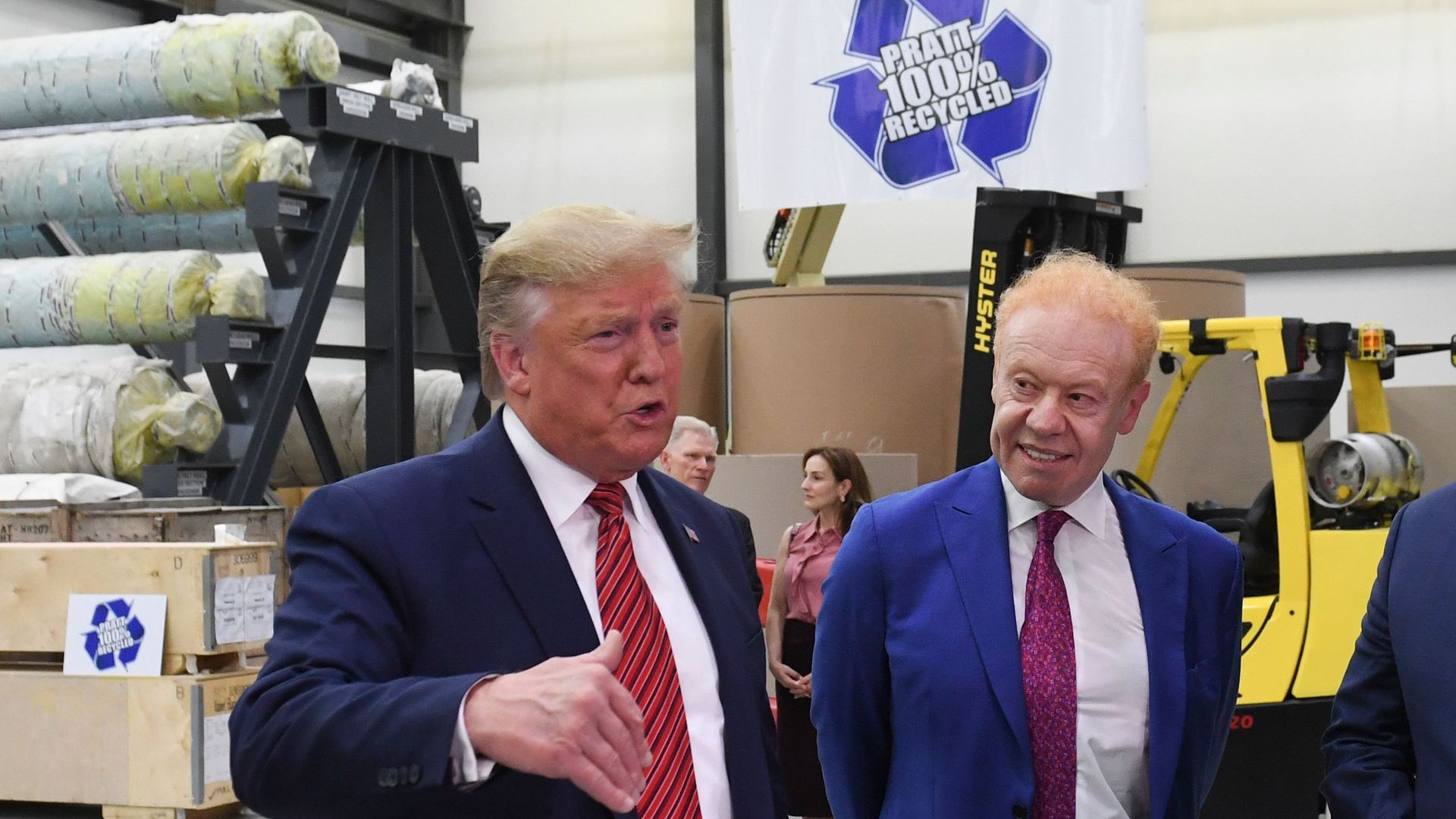
Packaging magnate Anthony Pratt pledged Wednesday to invest $5 billion to support President Trump's "call to reindustrialize" the U.S., according to an emailed Pratt Industries statement.
Why it matters: The pledge by the executive chair of the largest privately held 100% recycled paper and corrugated box manufacturer in the U.S. will result in 5,000 new manufacturing jobs at Pratt Industries "across key industrial states," including Ohio, Michigan, Pennsylvania and Arizona, per the statement.
The U.S. is hurtling toward a reckoning over teen use of artificial intelligence, with both the government and the tech industry promoting AI adoption in schools while child safety advocates demand better safeguards for chatbots.
Why it matters: Kids and parents who have barely begun to get familiar with the new technology are getting mixed messages about the opportunities and threats of AI use.
President Trump defended his handling of the economy and sweeping tariffs as he declared during an ABC News interview airing Tuesday evening, "the country's doing great."
Why it matters: ABC's ' Terry Moran noted during their interview that tourism numbers were down as he suggested Trump's policies may have caused reputational damage — particularly with neighboring Canada, where Prime Minister Mark Carney said after his Liberal Party was re-elected on Monday the "old relationship of integration" with the U.S. was "over."
President Trump told Terry Moran he's "not being very nice" during a heated interview marking his first 100 days in office, as the ABC journalist challenged him on the detention in El Salvador of a Maryland father.